曼殊院 White Stone Rivers

When you live in Kyoto temples have a tendency to blur into one-another. It’s easy to get into the mindset that once you’ve seen one you’ve seen them all. Hopefully through my blog you’ve learned that actually almost all the temples in Kyoto have an interesting history or quirk that makes them special. They also have their unique stamp of course. That being said, the act of visiting a temple is often the same; have a wander around, get a stamp done, take pictures of things that look interesting and then on to the next one, so it’s always pleasant when you find something truly different, or just something you haven’t done before. On Saturday I found one of those temples.
map

Manshu-in 曼殊院 is a temple near Shugakuin and was number 4 on our ‘temple trail’. It was the only temple that we paid an entrance fee for and it will certainly stick in my memory. The reason being that this is one of those wonderful sprawling temples with passageways and rooms and a zen garden; you pay your money and then you go into the temple itself in your socks to explore.

In Japanese houses and temples you certainly don’t wear shoes, ever, but the temple floors were very cold! They had a basket of very warm looking knitted socks at the entrance but I didn’t realise that they would be necessary until my feet were already turning to ice. Despite my feet complaining at the unforgiving freezing wooden floor, I really enjoyed looking around and seeing all the artwork, artifacts and architecture the temple had to offer.

P1040493 P1040462 P1040455

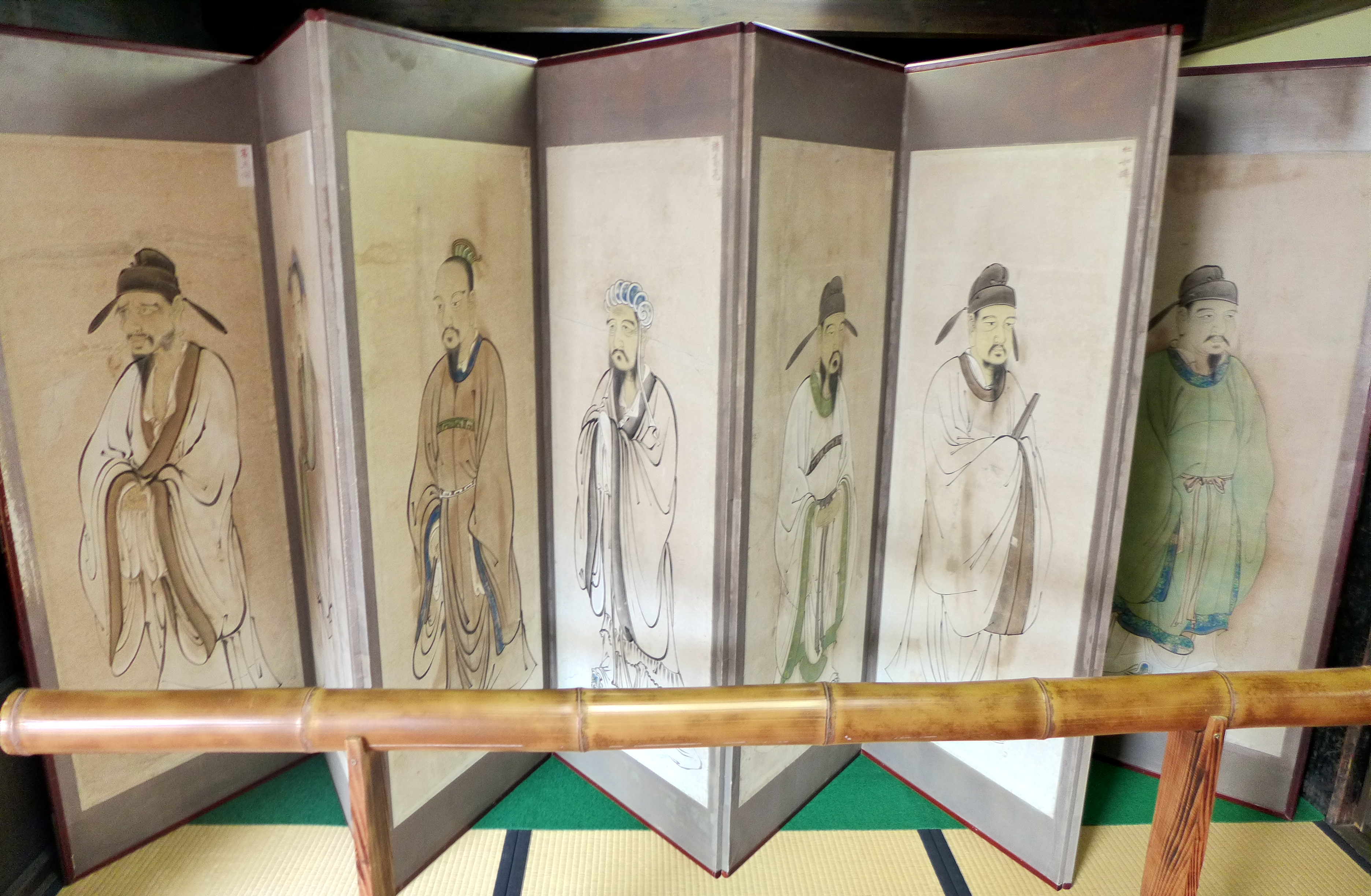
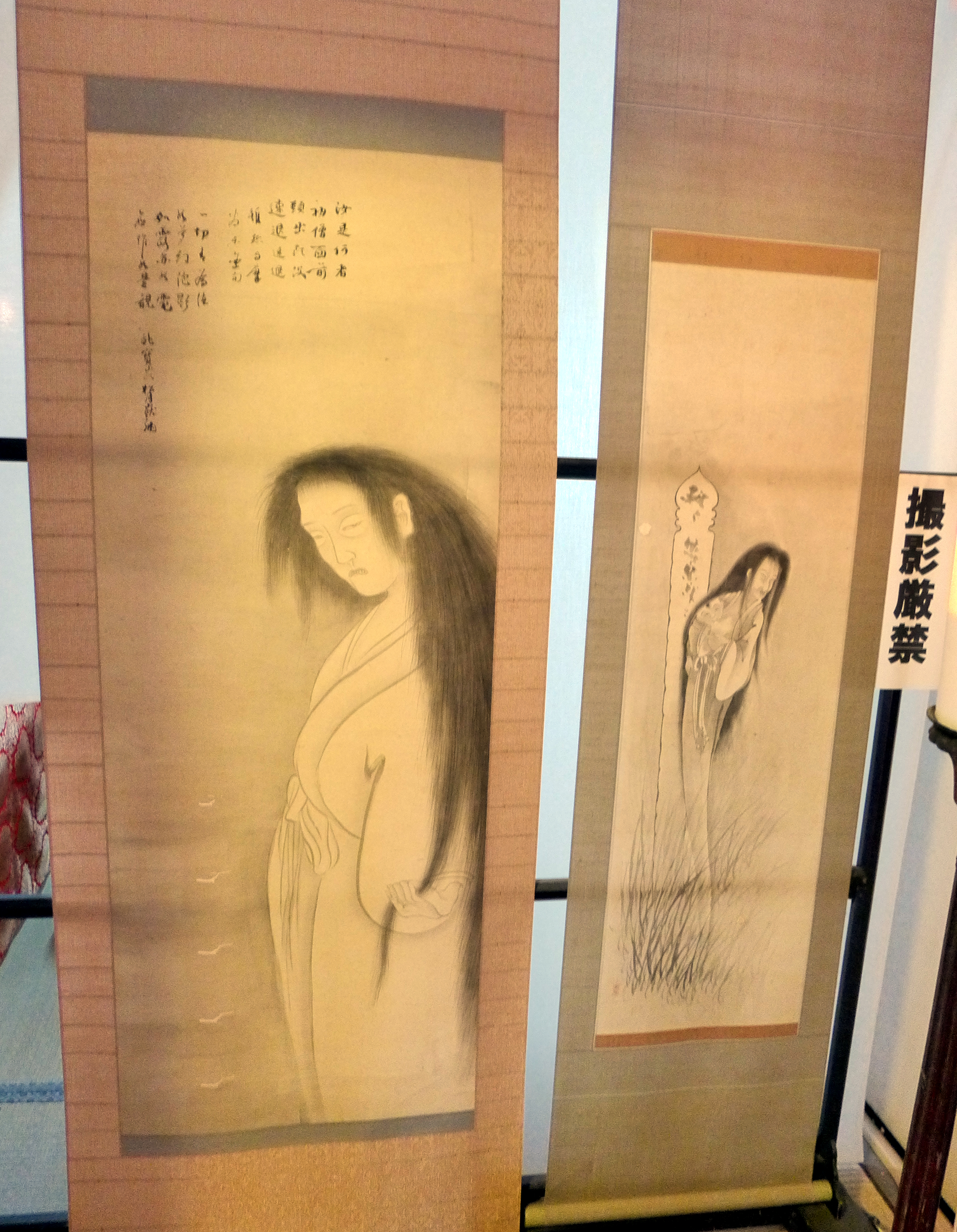
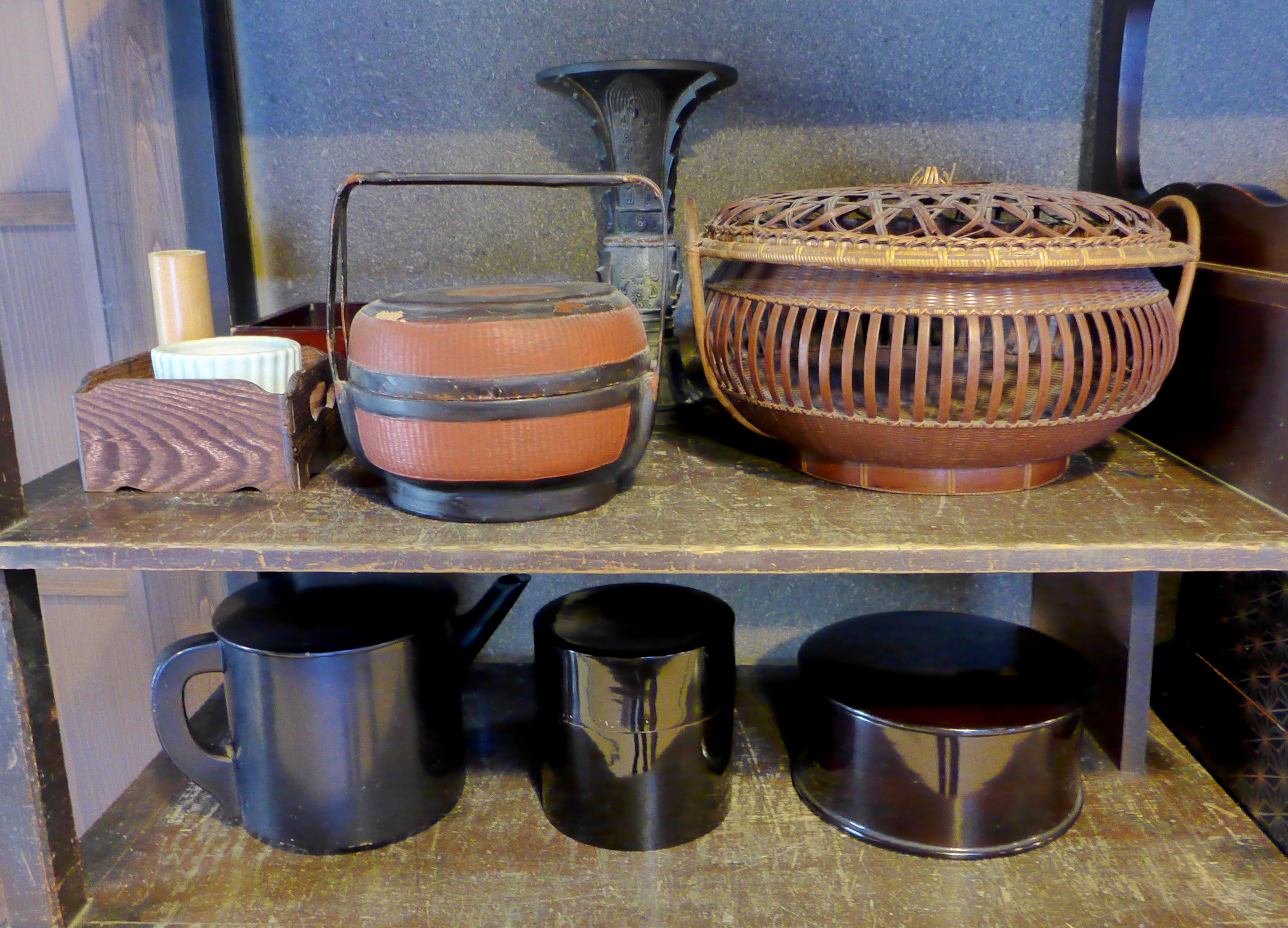
This temple allows you to take photos of the garden but does not allow photos of the inside or artwork. I only realised this after I’d taken some pictures and I’m sure they won’t mind too much if I share them with you – after all you may choose to visit after seeing them! Manshu-in has screen paintings done by several very famous Edo period artists, such as Kano Tanyu, Kano Eitoku and Kanyu, each with their own distinct style. The screens were beautiful and definitely worth going to see. There were also several Buddhist artefacts as well as a collection of old cooking equipment. There were a few signs in Japanese explaining the exhibition but not very much and nothing in English. Bear in mind that there were far more screens and objects than those pictured here as due to aforementioned photo-ban I didn’t take pictures of most of them.  In fact the writing in photo number two to the right of the screen reads ‘photography prohibited’ in Japanese… whoops!

P1040459 P1040453 P1040449 P1040452

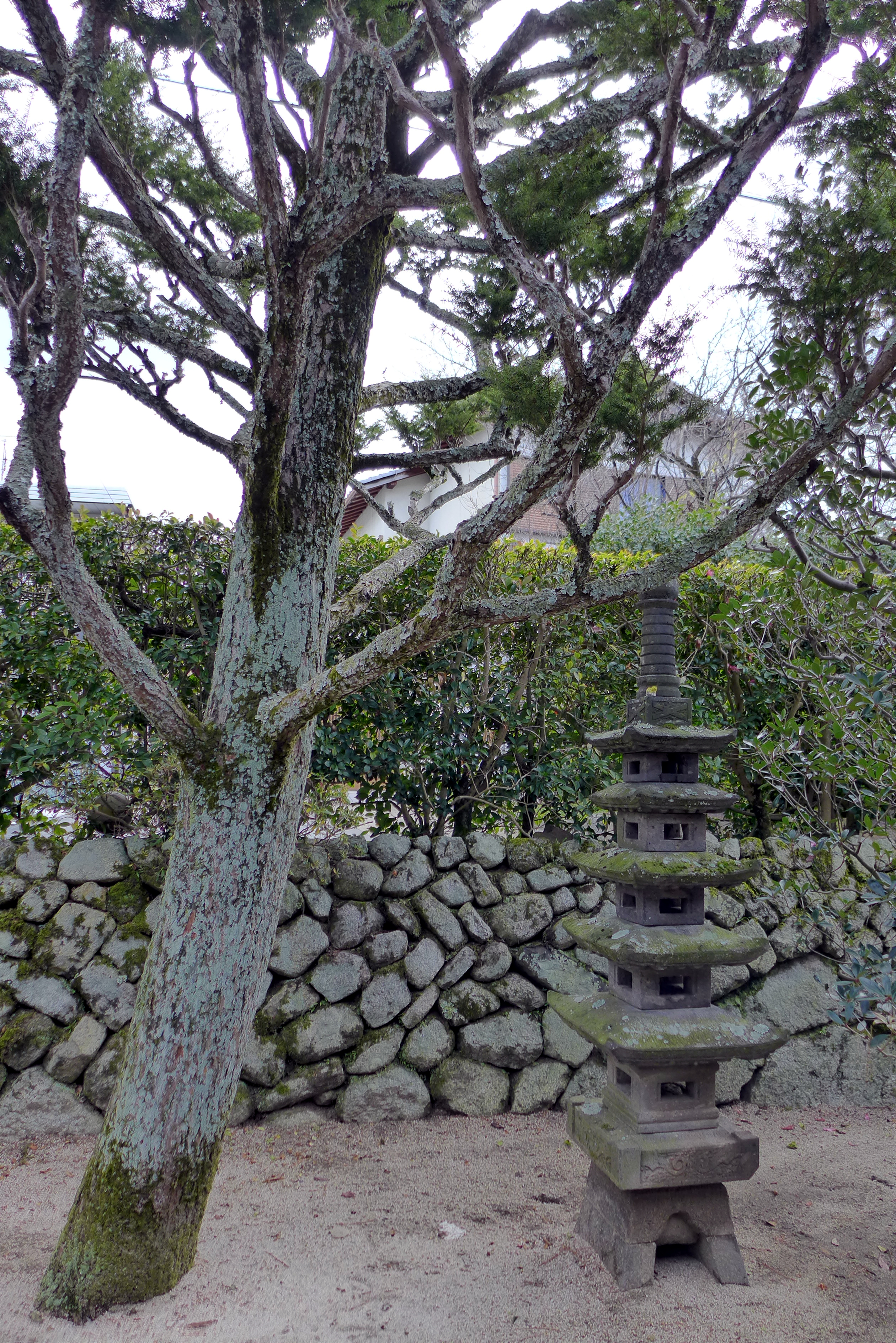
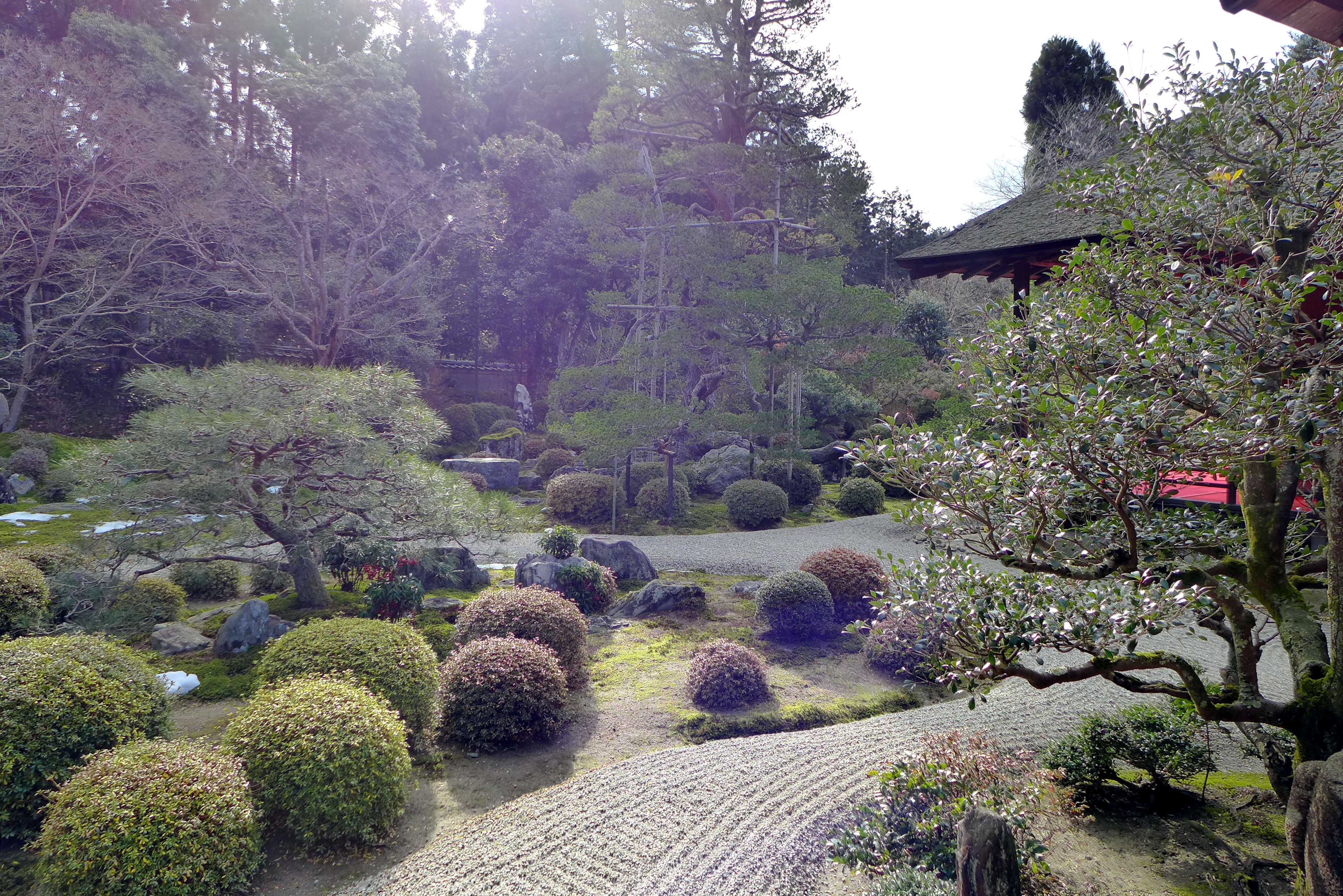
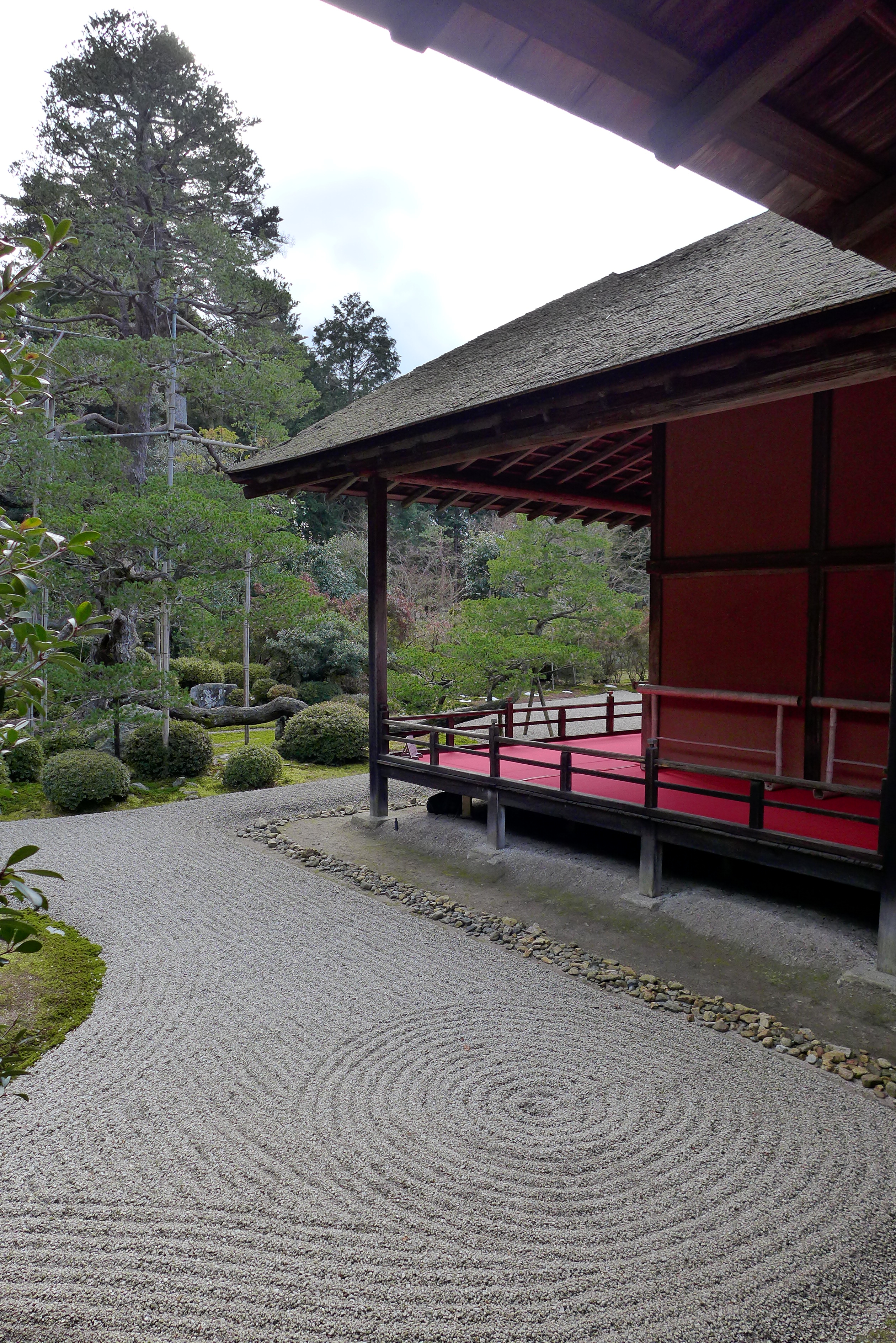
All around Manshu-in is a beautiful Zen garden, complete with raked gravel, rocks and trees. In fact, it has an ancient spreading white pine tree that is 400 years old! It’s being propped up but seems to still be going strong. The gravel parted the islands of greenery like a river and the red matting on the temple decking made me feel like I was on the set of a Japanese historical drama. Unsurprisingly this garden has been designated a national place of scenic beauty. Unlike a lot of Zen temples you are not allowed to sit on the outer decking to contemplate the gravel, but to be honest in the winter you wouldn’t want to expose your backside to the cold that your feet are already going through. These photos are guilt-free as you are allowed to take pictures of the outside.
P1040477 P1040475 P1040470 P1040468

Manshu-in was founded in the 8th century but it was moved to its present location in 1656. It is often called Manshu-in Monzeki 饅衆院門跡; Monzeki is a honourific granted to a temple if it traditionally has a member of the royal family as a high priest and Manshu-in’s first head priest was the Emperor’s nephew.

It is also linked to Buddhist royalty as it was founded by Saicho, the founder of the Tendai school, a great figure in Japanese Buddhism. I even had to write an essay on him in my first year of university. He travelled to China (like a lot of monks did, remind you of my previous post?) to bring back Buddhist texts. Two of the ships sent to China sank but Saicho’s made it, sealing the future of Japanese Buddhism.

P1040461 P1040458

Tendai is still one of the main schools of Japanese Buddhism and (without going into specifics because I really don’t understand all the varying Buddhist strands) they believe in a comprehensive approach to Buddhism, supporting all ways to reach enlightenment while also reconciling Shinto beliefs with Buddhsim by declaring that Shinto gods are simply a representation of universal Buddhahood and therefore acceptable to worship. Apparently Saicho was also the first to bring tea to Japan, which if it’s true was pretty monumental and probably as important as bringing Buddhist teachings (depending on who you ask).

P1040472 P1040465P1040527

We also met a very nice cat outside Manshu-in which would not stop meowing. Very pretty cat. I think cats like temples because I see them around temples a lot. Or maybe it’s because I live in Kyoto and temples are everywhere.

P1040480

Definitely a fun temple to wander round at your leisure, looking down passageways and coming across tiny courtyards with gardens in the middle as well as the garden round the outside. The temple entrance fee was 500円 (£2.80) and worth it in my opinion – being allowed to walk around the inside of a temple is fairly rare and were the artwork in a museum you’d probably pay the same just to see the paintings without the garden or the temple.
修学院 Gods of the Guiding Stars

On Saturday my friend and I elected to take the day off from worrying about the upcoming end-of-term exams (next week), and went on the hunt for temples. I had recently bought “Exploring Kyoto: on Foot in the Ancient Capital” by Judith Clancy, which has 30 different walks all around Kyoto. These walks cover loads of temples and contain a lot of information about the temples and even recommends places to eat. I would strongly recommend this book for people visiting or living in Kyoto. We decided to follow the Shugakuin area walk, and although we ended up deviating from it quite a bit this book was definitely a great starting point; I hadn’t heard of any of these temples before.

P1040530

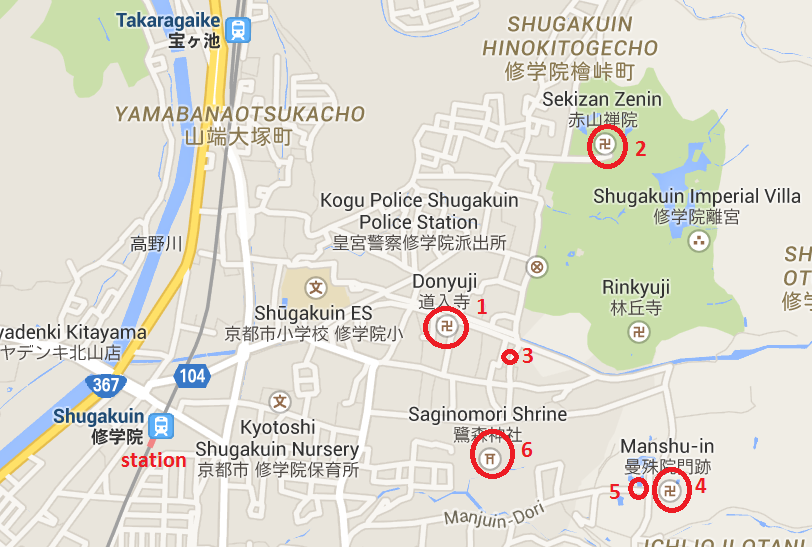
Today I will talk about two of the temples we saw and soon I’ll write about the rest; we visited 6 temples and got 4 stamps which is probably a personal best for me! It also only took about 3 hours to go round all of them. Observe my wonderful map to see where we went.

map

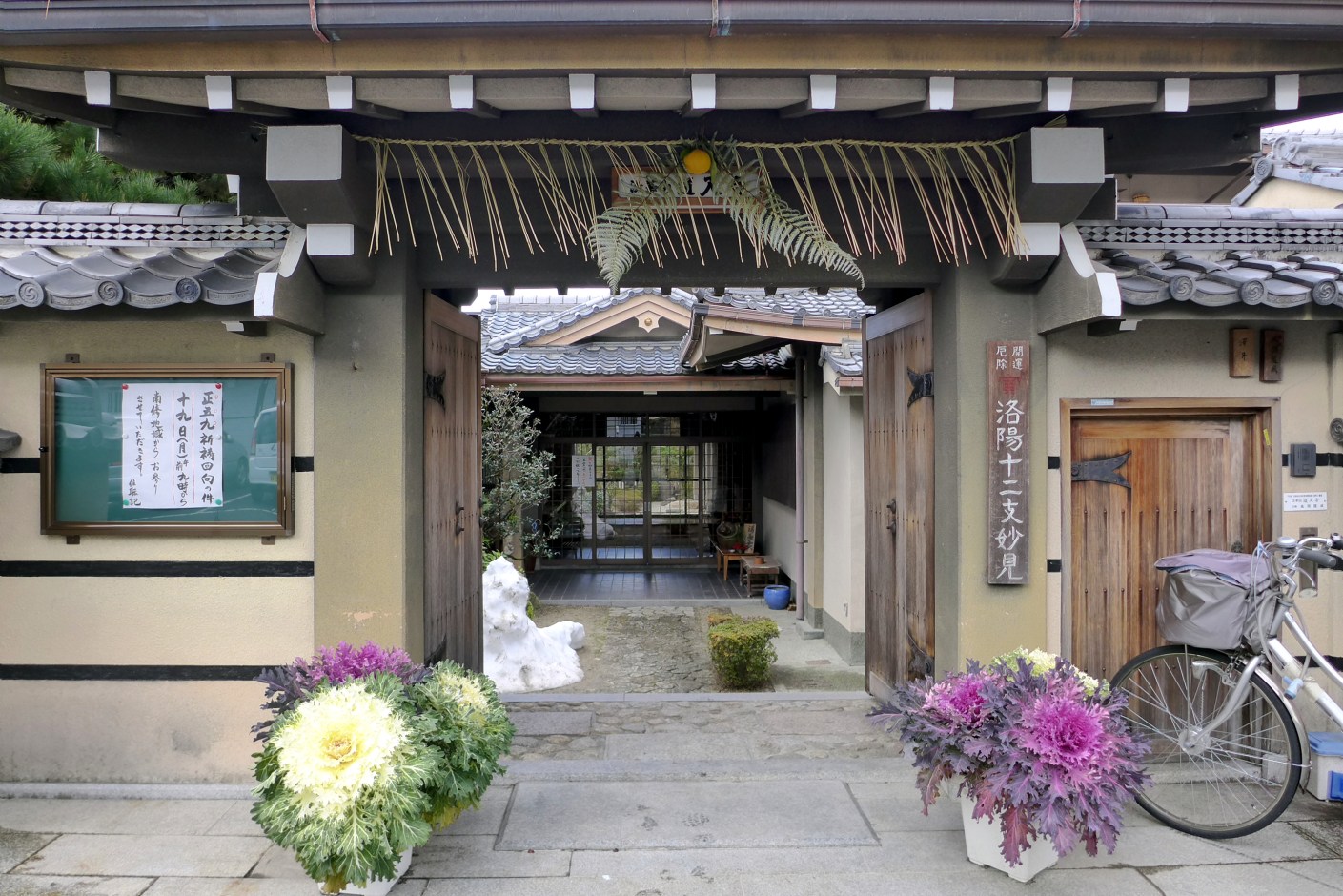
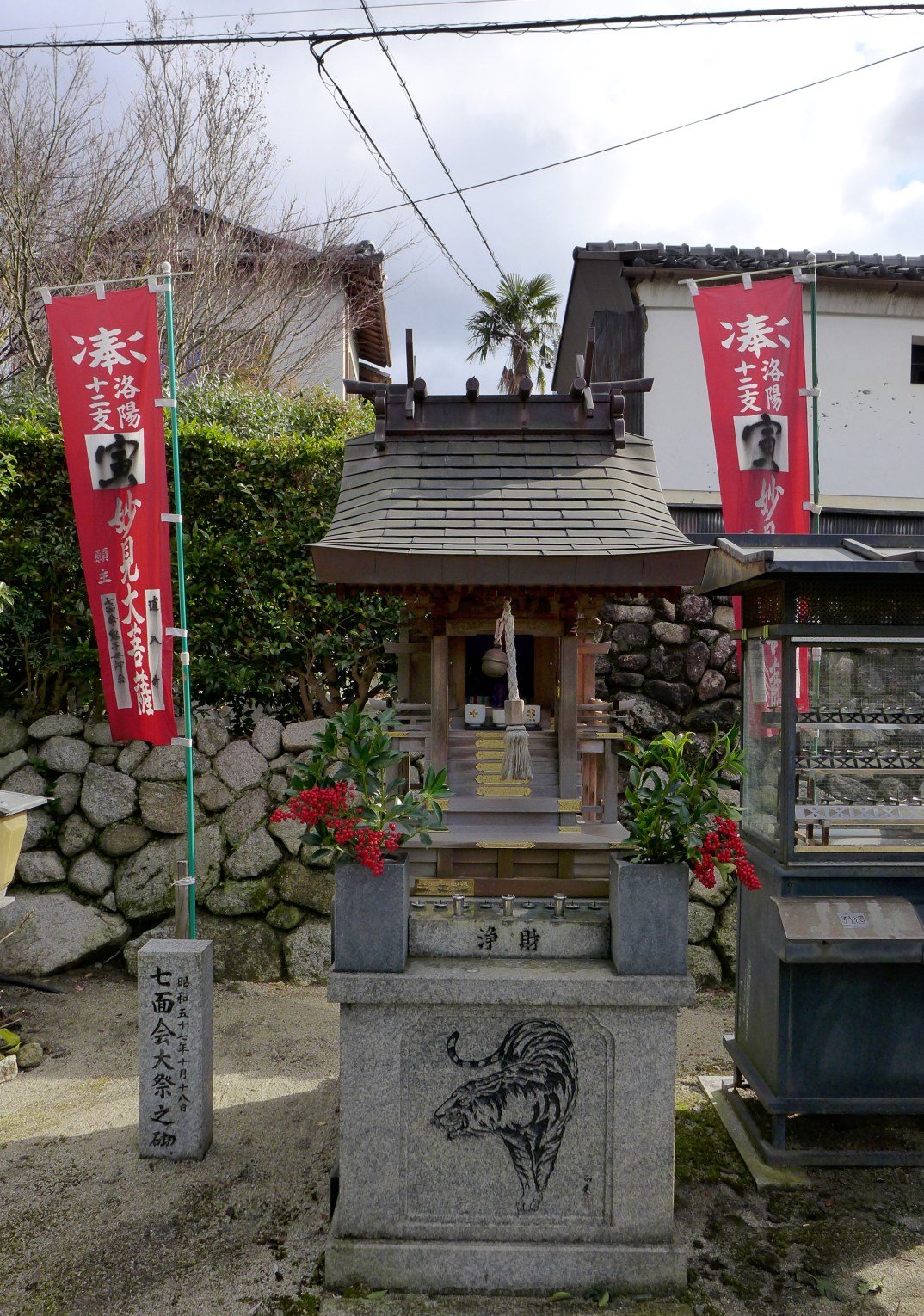
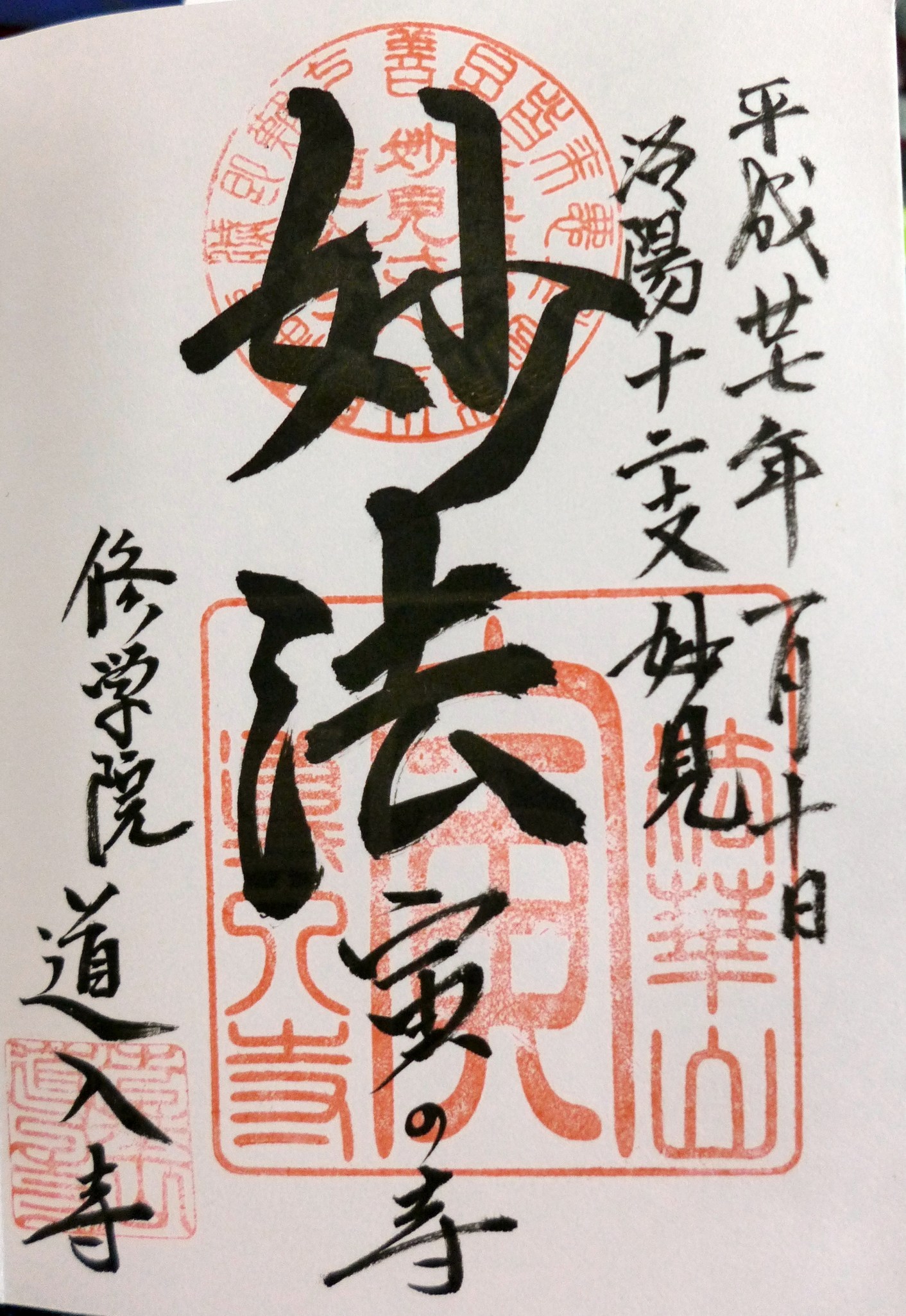
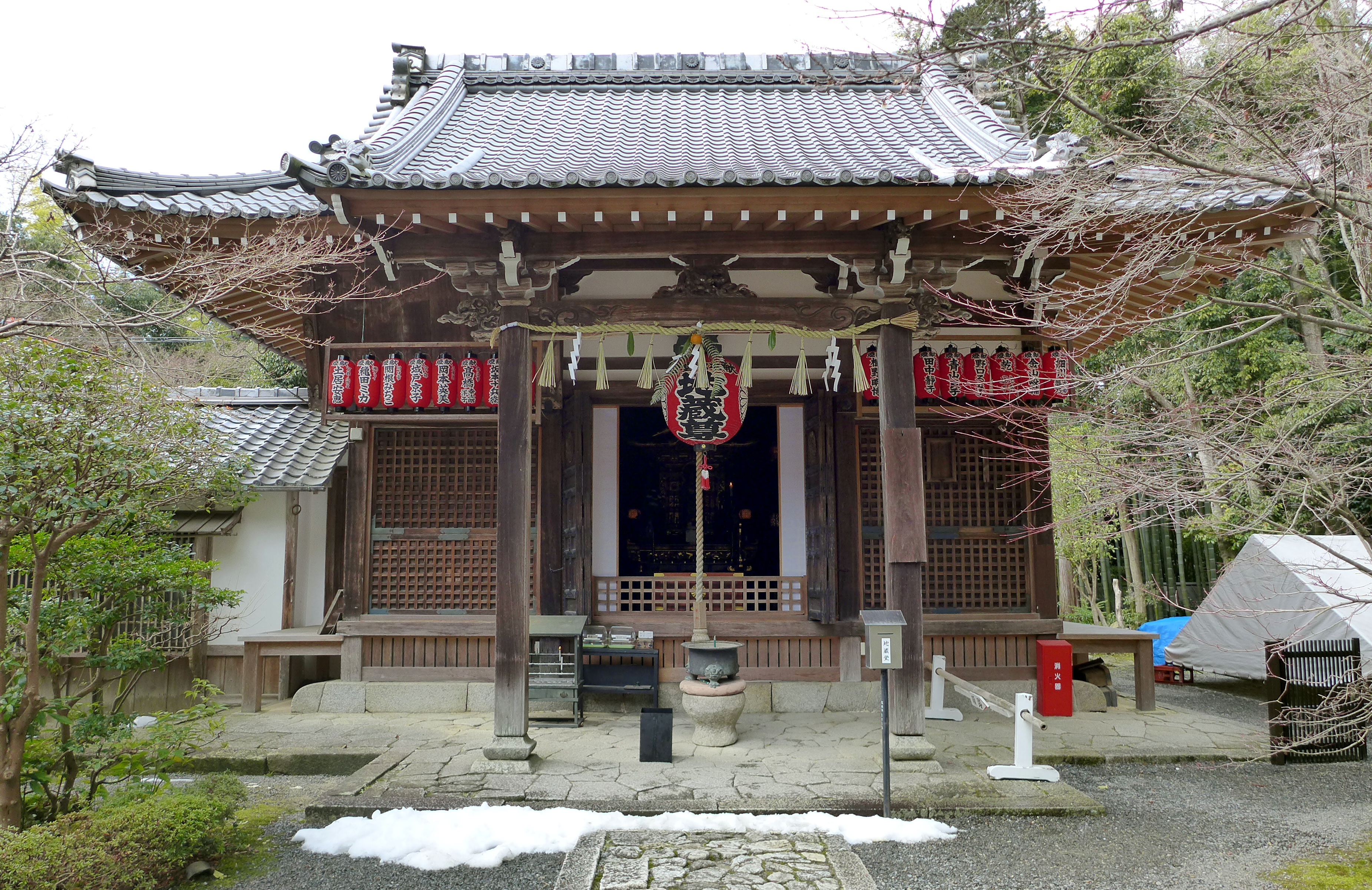
The first temple we went to wasn’t actually on the walk route at all, but google maps informed me it was nearby, and as we were keen to see as many temples as possible, we stopped to check it out. This temple was Donyu-ji 道入寺, a temple dedicated to the tiger, the third animal of the Chinese zodiac. This temple is part of a 12 temple pilgrimage around Kyoto, with each temple dedicated to one of the animals of the Chinese zodiac.

P1040318P1040327

The purpose of the pilgrimage is to honour the god Myoken, the bodhisattva that is the incarnation of the North star. This was a popular pilgrimage prior to 1868 but its practice waned with the anti-Buddhist campaigns in the early Meiji period (see this post for more information on the division of Shinto and Buddhism in 1868). This practice was revived by the Nichiren Buddhist sect in 1986 and is now a relatively popular pilgrimage circuit in Kyoto.

P1040322 P1040319

The idea is that you start your pilgrimage at the temple of your birth sign, I would be the rooster as I was born in 1993. You can also start it on the current Chinese zodiac year, which is currently the year of the horse (it will become the year of the sheep in February). I failed to start on either so I haven’t done it properly and probably won’t get any long life or happiness out of it. I would still like to visit all the temples, as I like the animals. The temples on the pilgrimage route sell a scroll that you can get stamped at each temple on the pilgrimage, it cost 3,500円 so I decided to pass.

P1040334 P1040529P1040326P1040323

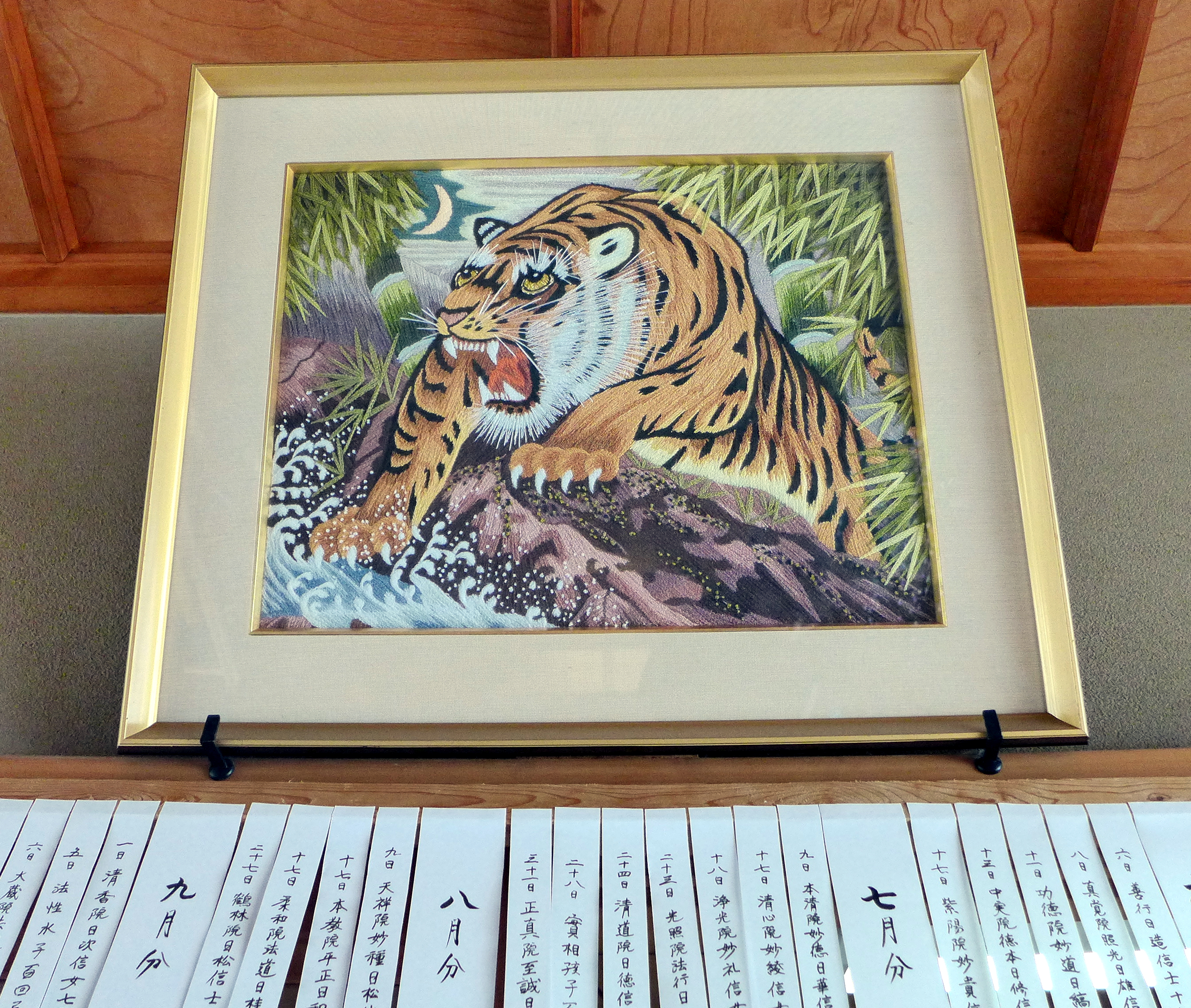
There were quite a few tiger pictures in the temple and a very nice garden out the back. We had to ring the bell to get our stamps done but the lady was very nice and complemented us on our Japanese as old ladies are wont to do.

P1040525

The fat tiger statue in the entranceway was supposed to bring long life and happiness. I’m not sure if fat tigers in the wild have long happy lives, perhaps those in captivity do though. I’m sure there’s a poignant message on today’s society or the meaning of life there somewhere.

P1040330P1040332

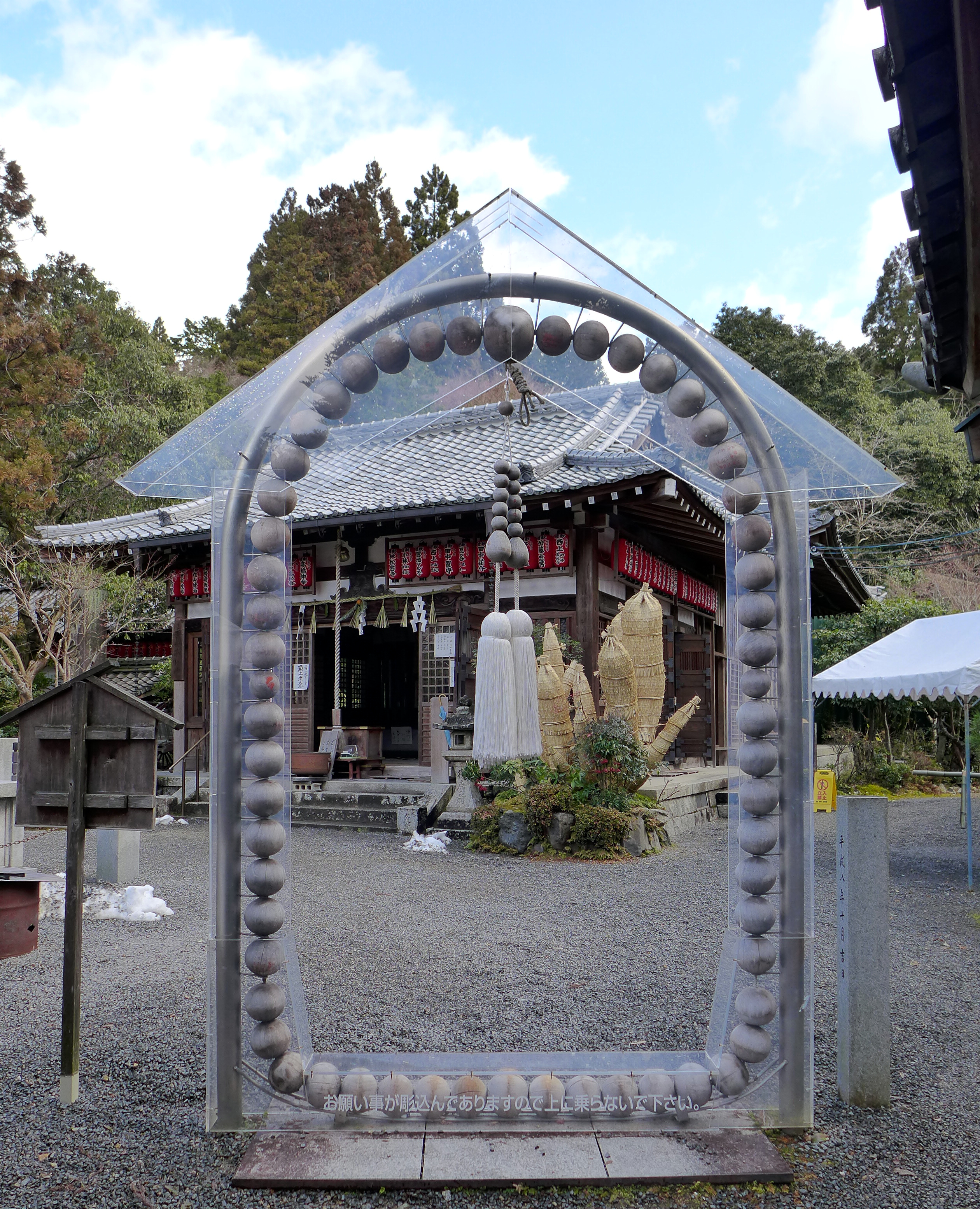
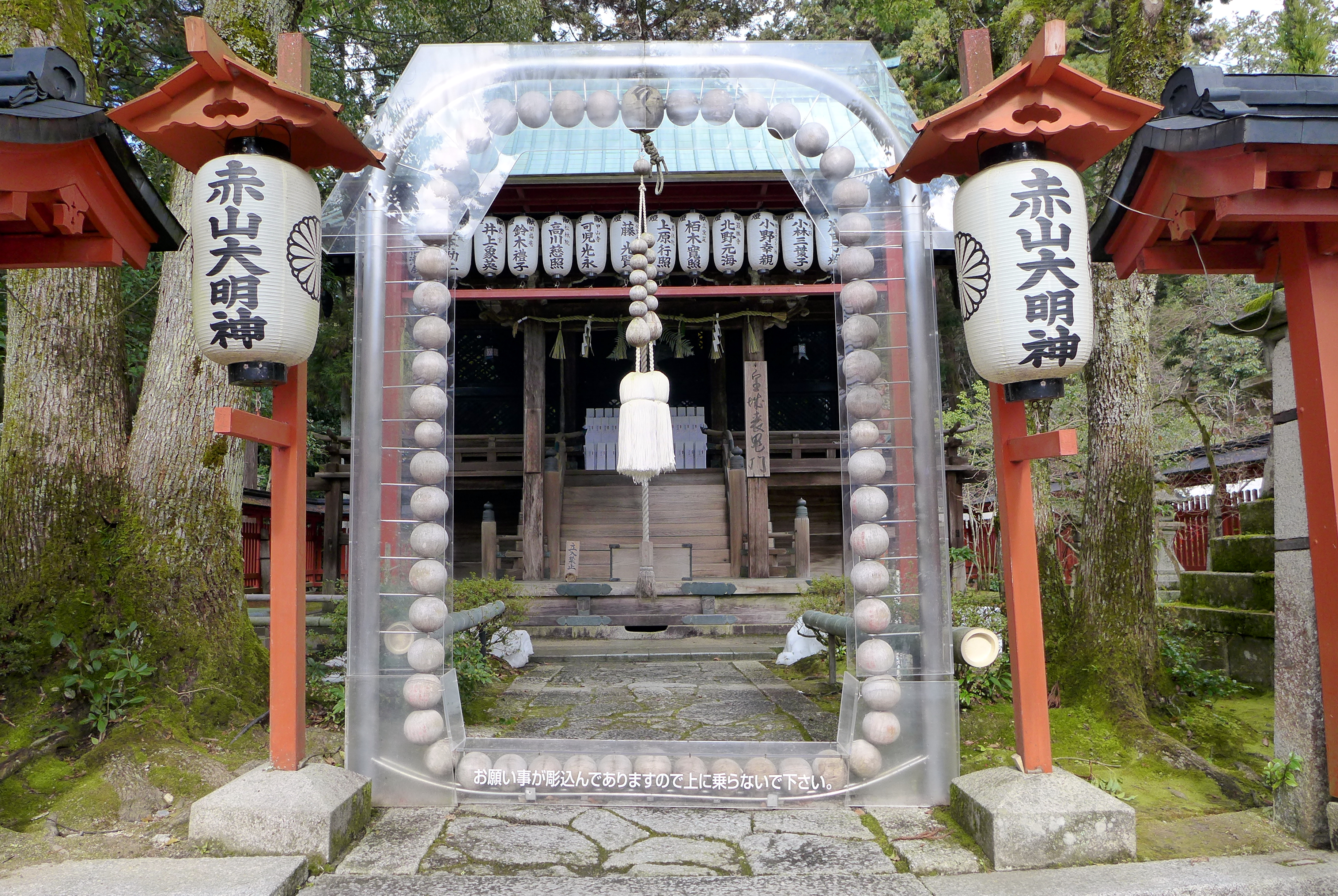
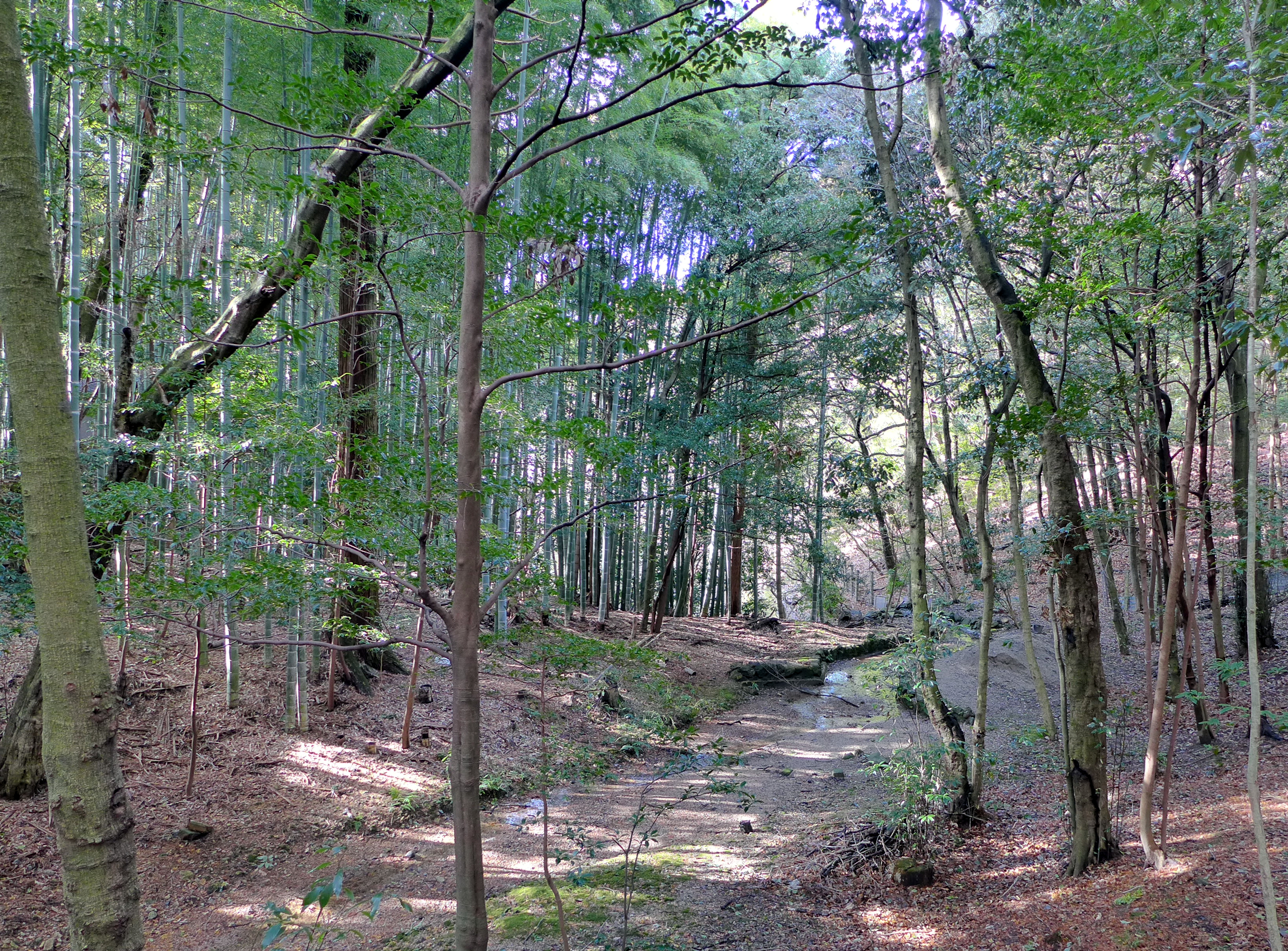
The second temple we visited was North of Donyu-ji, and was much larger. I kept calling it the ‘mossy temple’ when I was sorting my pictures for this post because it was very lush and green everywhere around the temple. It was slightly higher up towards the mountains and was submerged in nature in a way that temples in the town are not. It is located in the North-East, the so called ‘Devil’s Gate’ 表鬼門 direction, infamous in Chinese tradition for letting in bad luck and evil spirits. This temple is said to guard the city from these spirits.

P1040339 P1040340 P1040352 P1040354P1040356P1040359P1040360P1040362P1040368P1040370

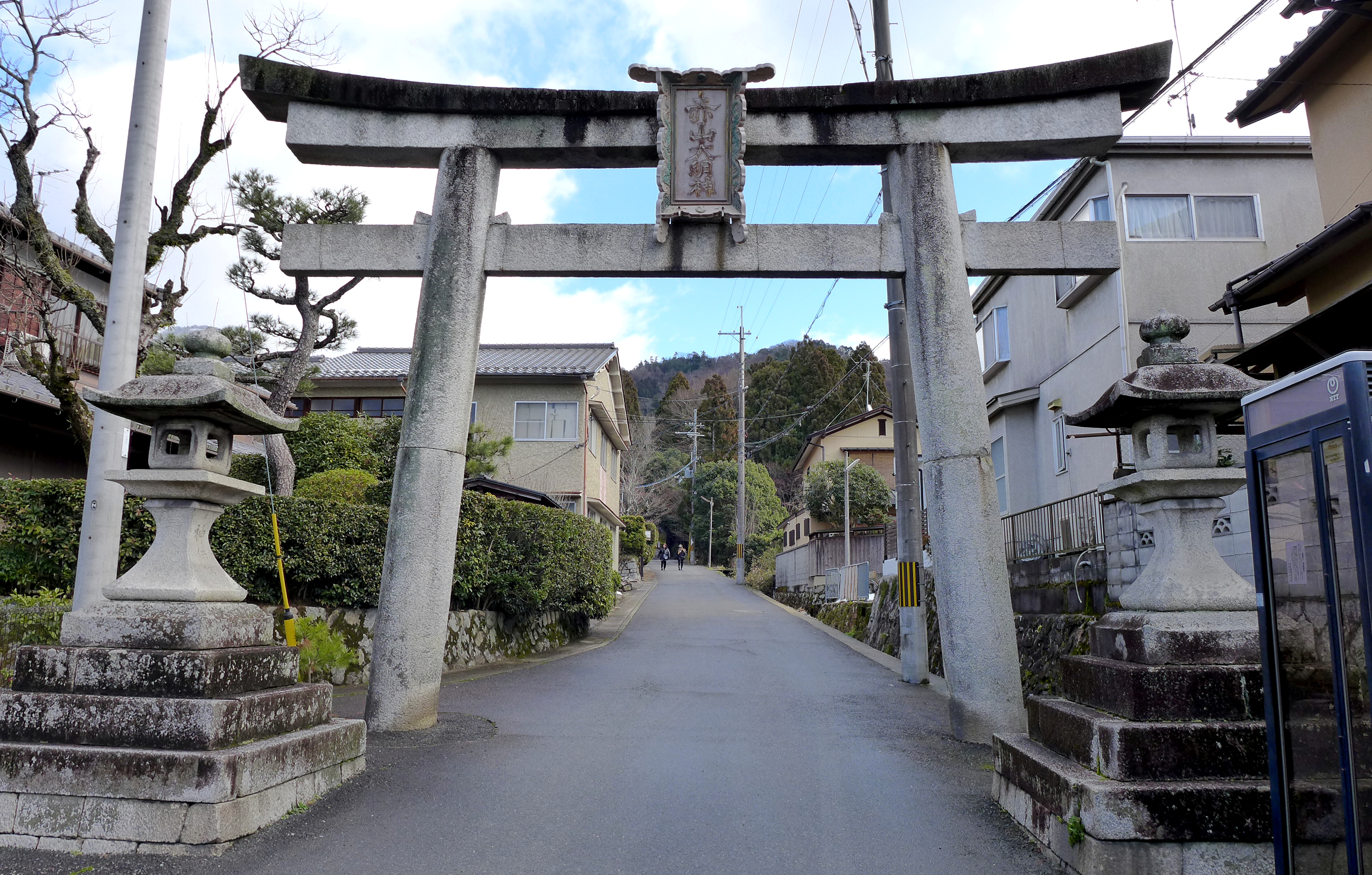
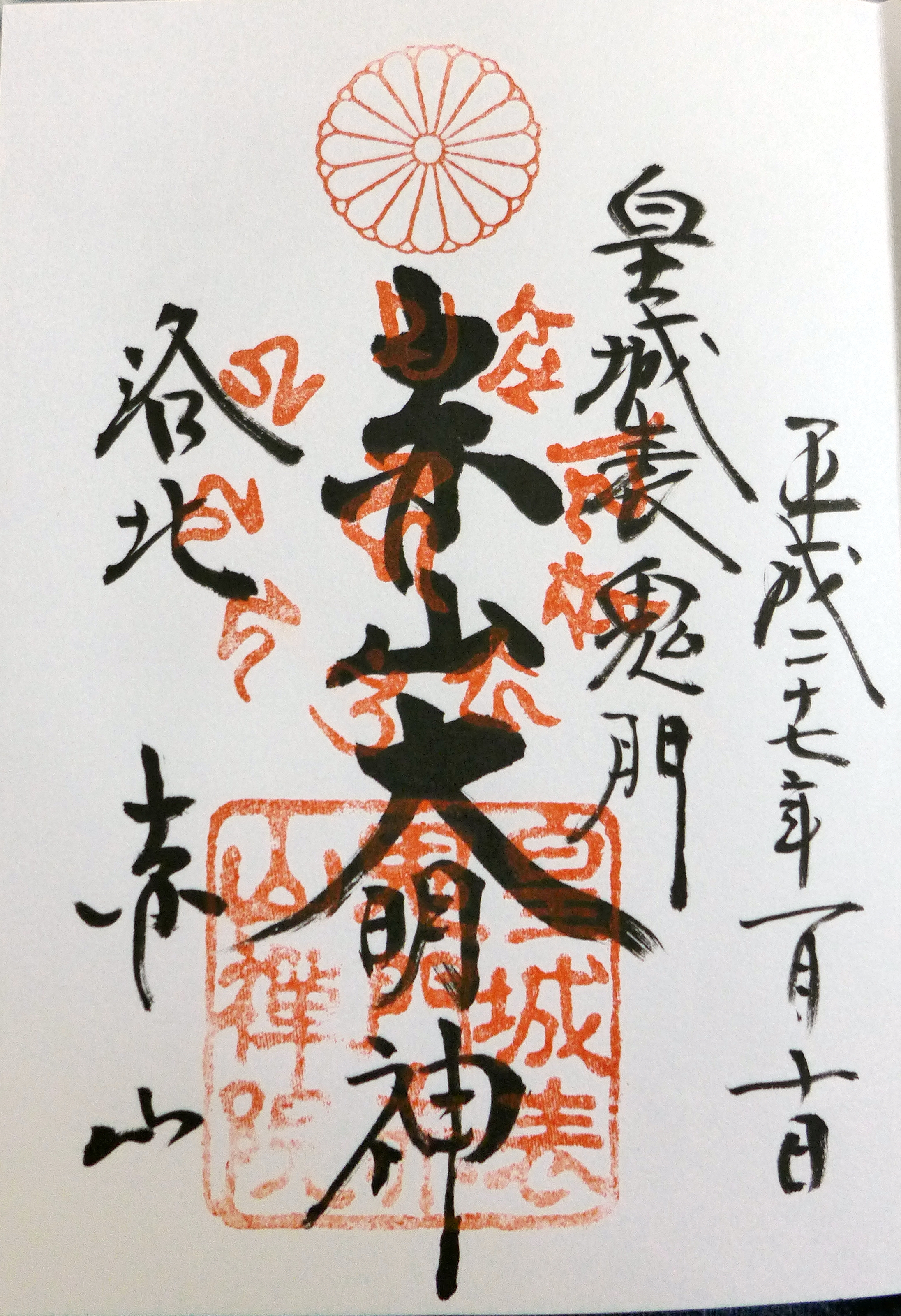
This temple was Sekizan Zenin 赤山禅院, a Buddhist temple belonging to the Tendai sect, which was founded in 888. Like most temples it has its foundation story. The famous monk Ennin, a great priest of the Tendai school, travelled to China to bring back important Buddhist texts. Upon his return his ship was turned back twice by terrible storms. Desperate to return to Japan alive, Ennin prayed to the god Sekizan Myojin, a Chinese god, promising that should he return safely to Japan he would build a temple in the god’s honour.

P1040378 P1040377 P1040376 P1040373P1040351P1040386 P1040390P1040395P1040398P1040372

Ennin returned safely to Japan on the third try but he became busy with Tendai business and failed to construct the temple to the god that had helped him. On his deathbead he requested that a temple be built in Sekizan Myojin’s honour, resulting in the construction of Sekizan Zenin. Some scholars question the existence of a Chinese god of that name and suggest that the god Sekizan Myojin was made up in the conflict between the mountain and temple schools of Tendai Buddhism; the temple branch already exclusively had the god Shinra, so perhaps Sekizan was invented to even up the playing field.

P1040344P1040348P1040413 P1040407 P1040345P1040408 P1040403P1040379P1040380

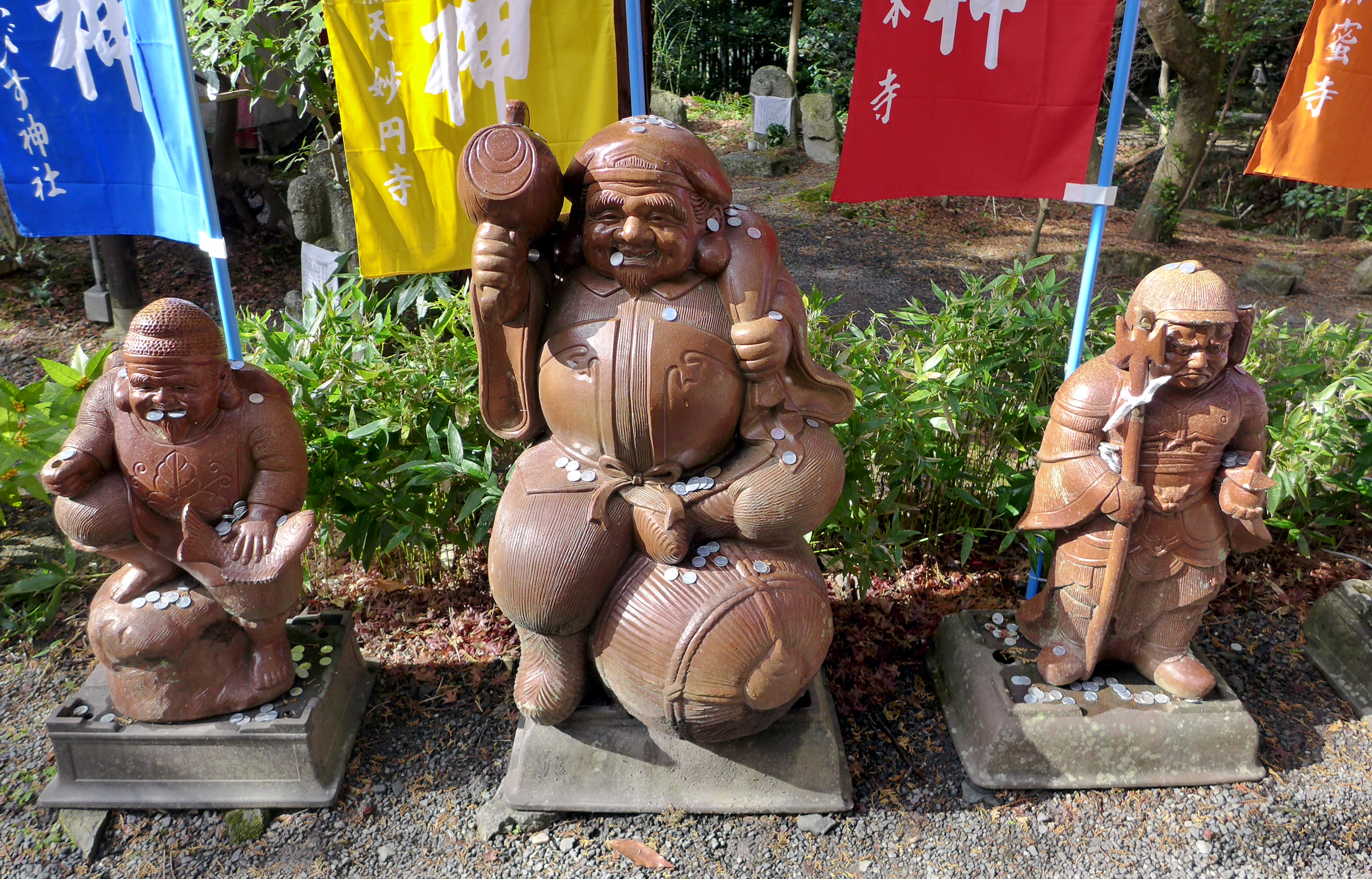
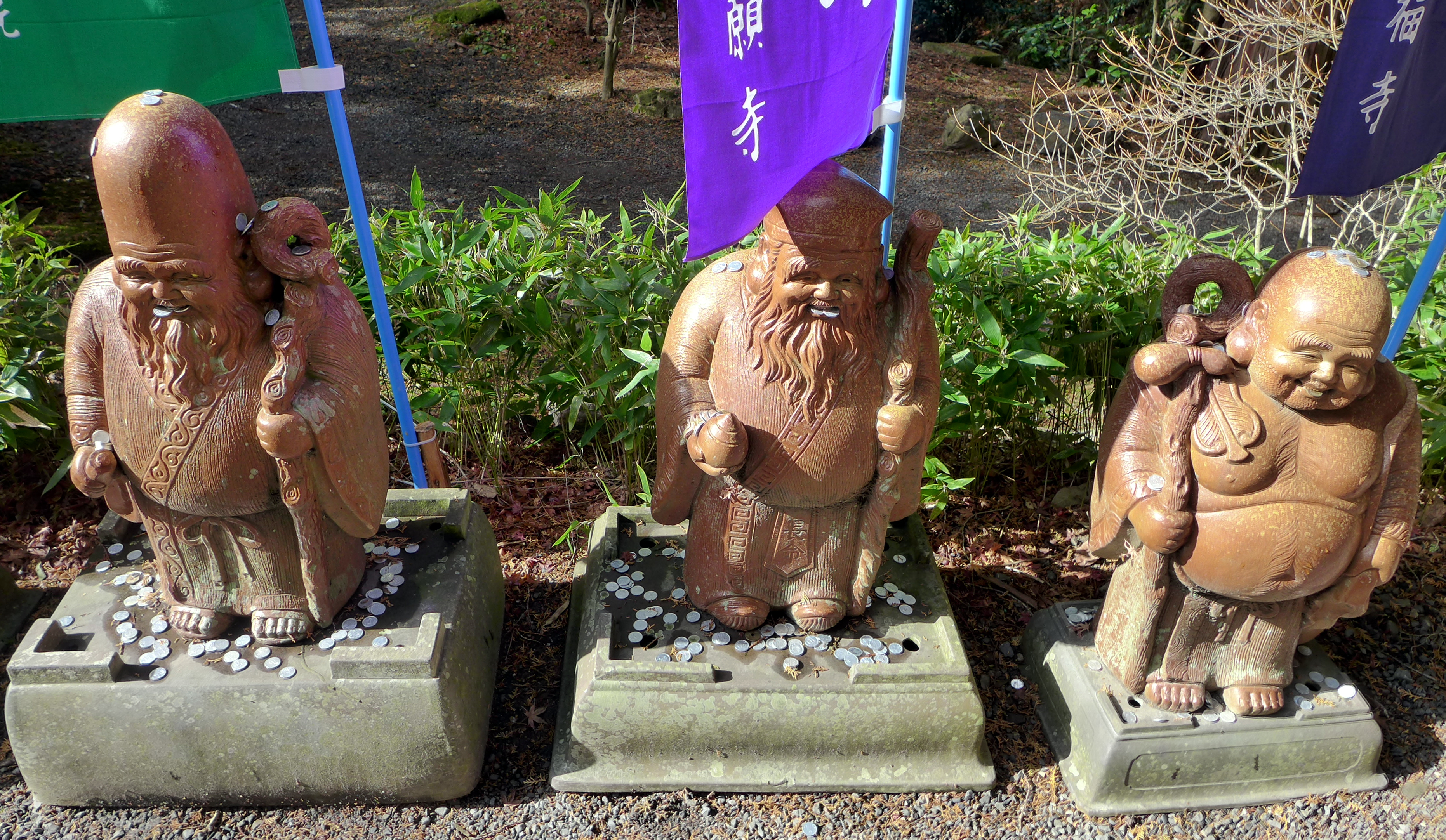
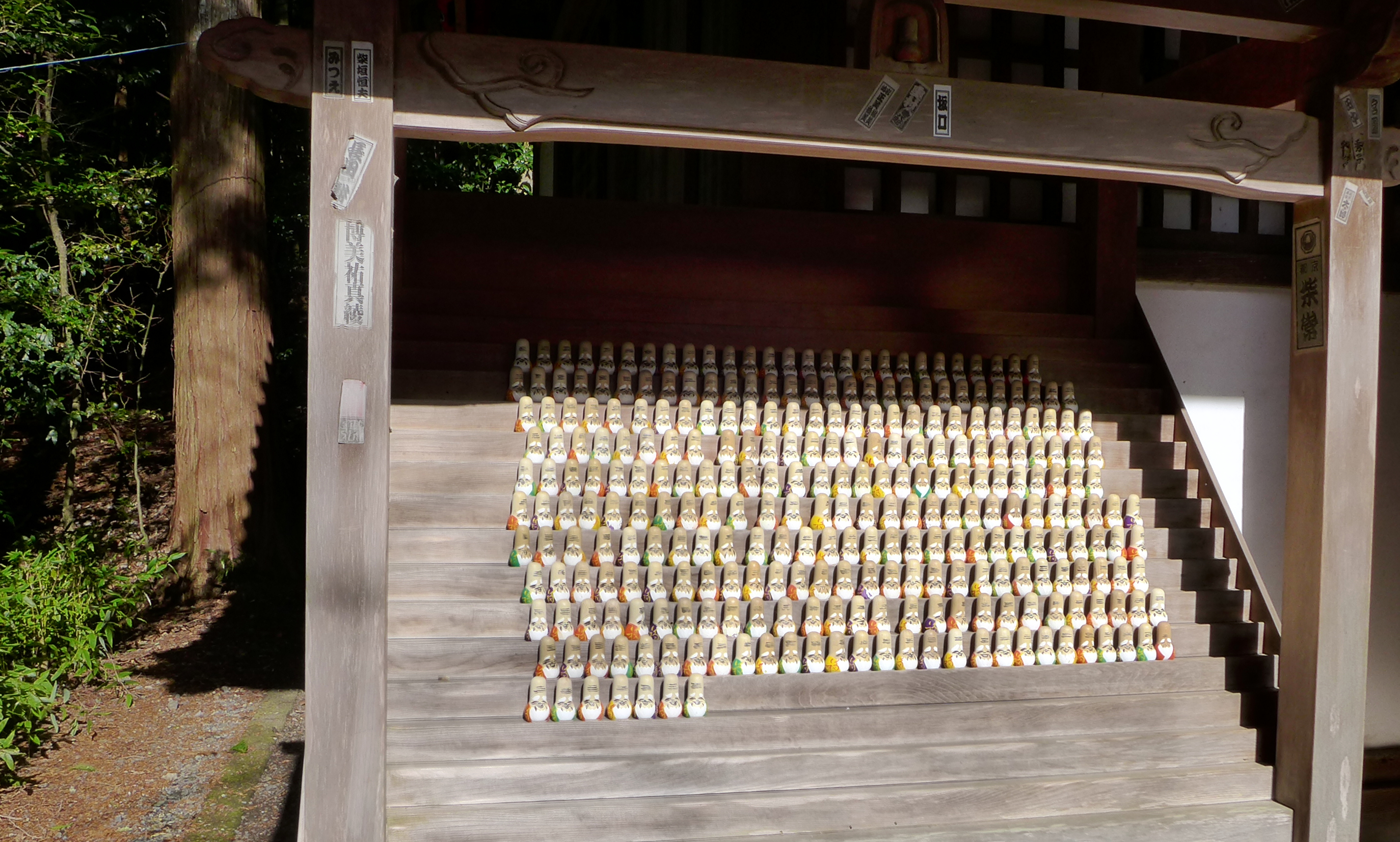
 In addition to the god Sekizan, the temple is also dedicated to the god Fukurokuju 福禄寿, the god of longevity. His name literally means ‘happiness’ 福 ‘Wealth’ 禄 and ‘longevity’ 寿. He is the opposite of our friend Myogen of the Zodiac, in that he is the incarnation of the Southern Pole-star. He is probably an amalgamation of the Chinese three pole star gods, Fu, Lu and Shou, that also represent happiness, wealth and longevity. Fukurokuju is often depicted carrying a book which is said to contain the lifespans of every person. He is represented by animals that symbolise longevity, a crane and a turtle, as well as a black deer because deer are said to go black if they are over 2000 years old (probably because they are zombies). There were statues of Fukurokuju and his friends, the other 6 gods of fortune, everywhere in the temple. I  think his rather phallic head is meant to represent how wise he is, though if I were him I’d get a brain scan or something just to be safe.
P1040353 P1040393 P1040394 P1040385 P1040382P1040402P1040401P1040396Sekizan zenin

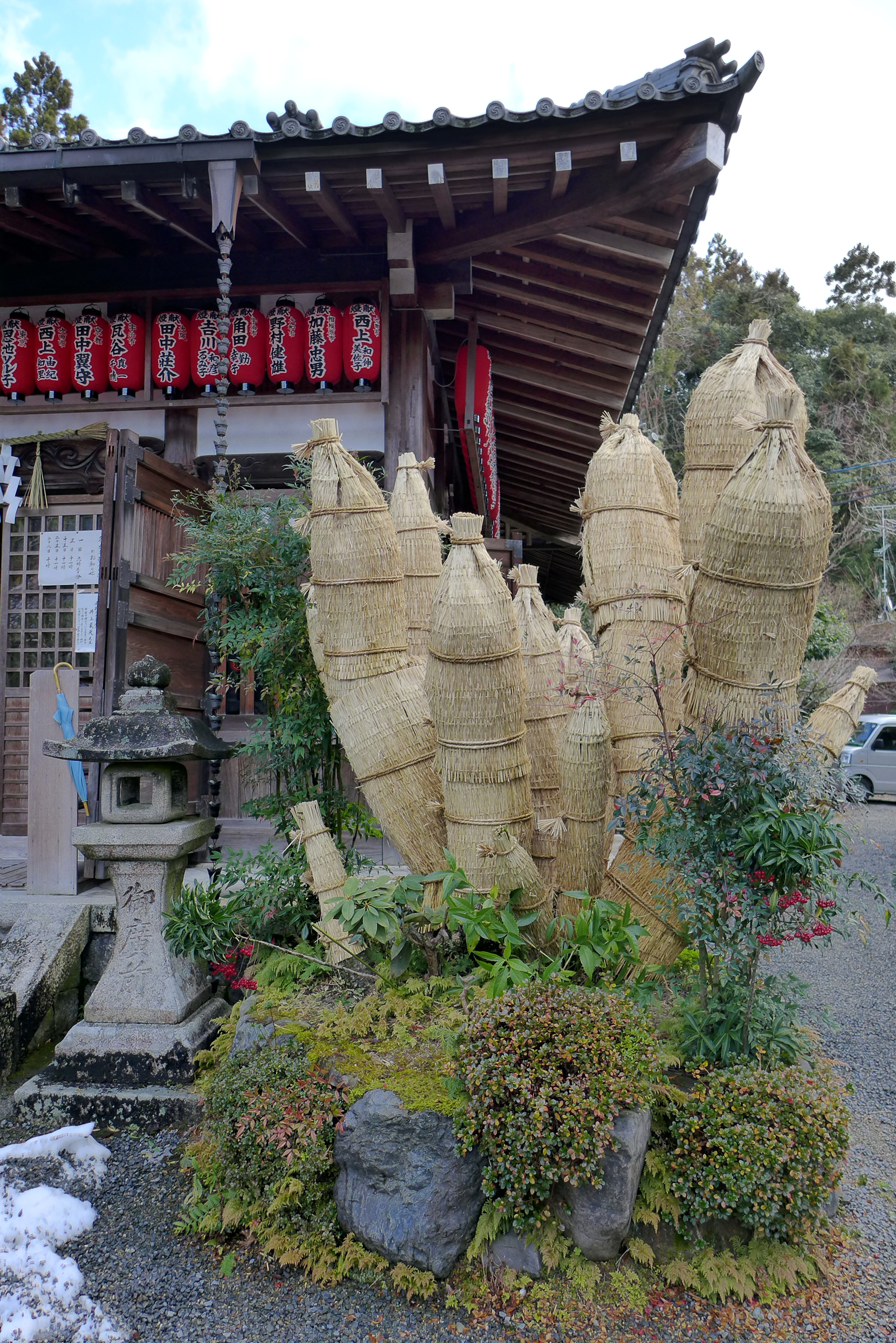
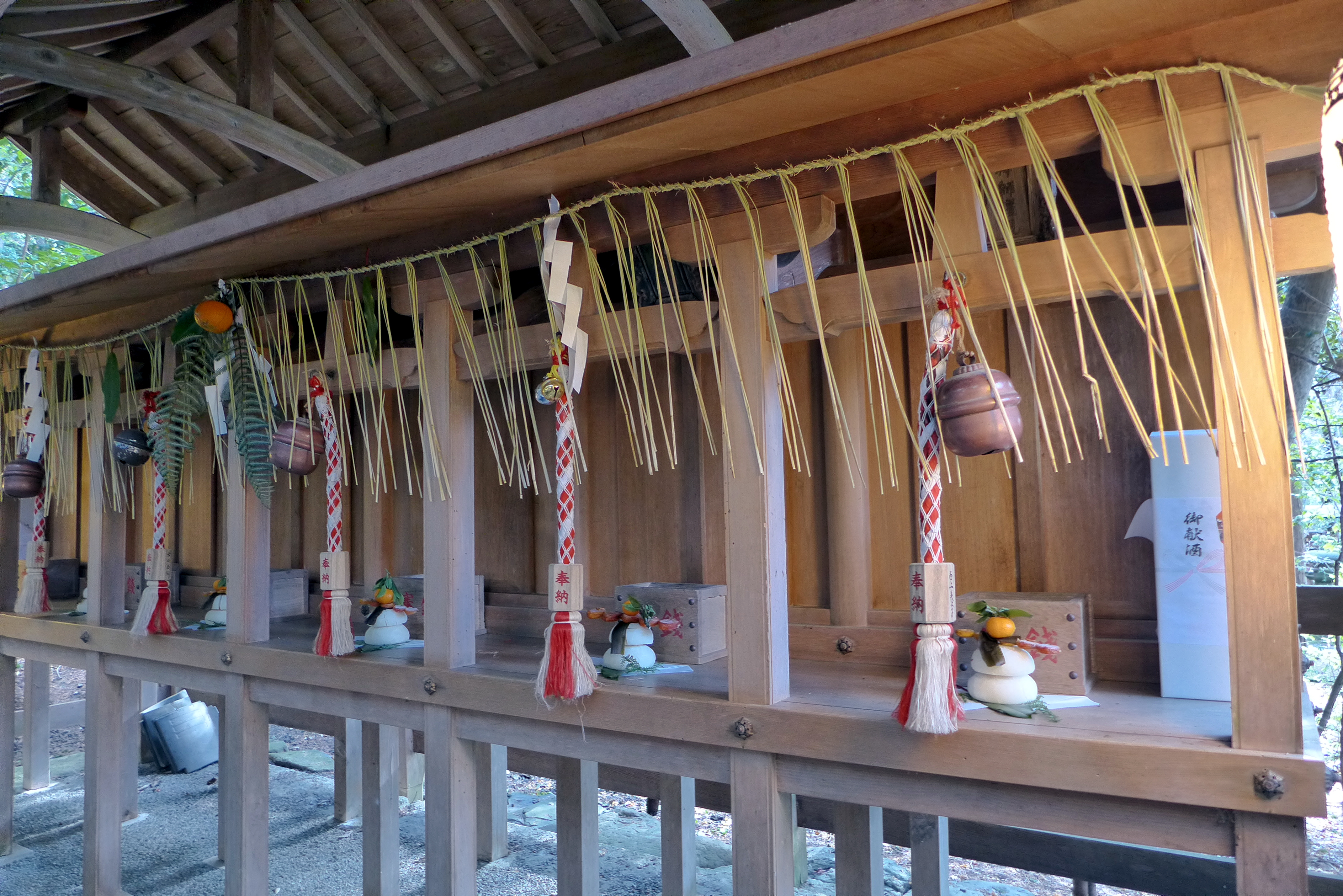
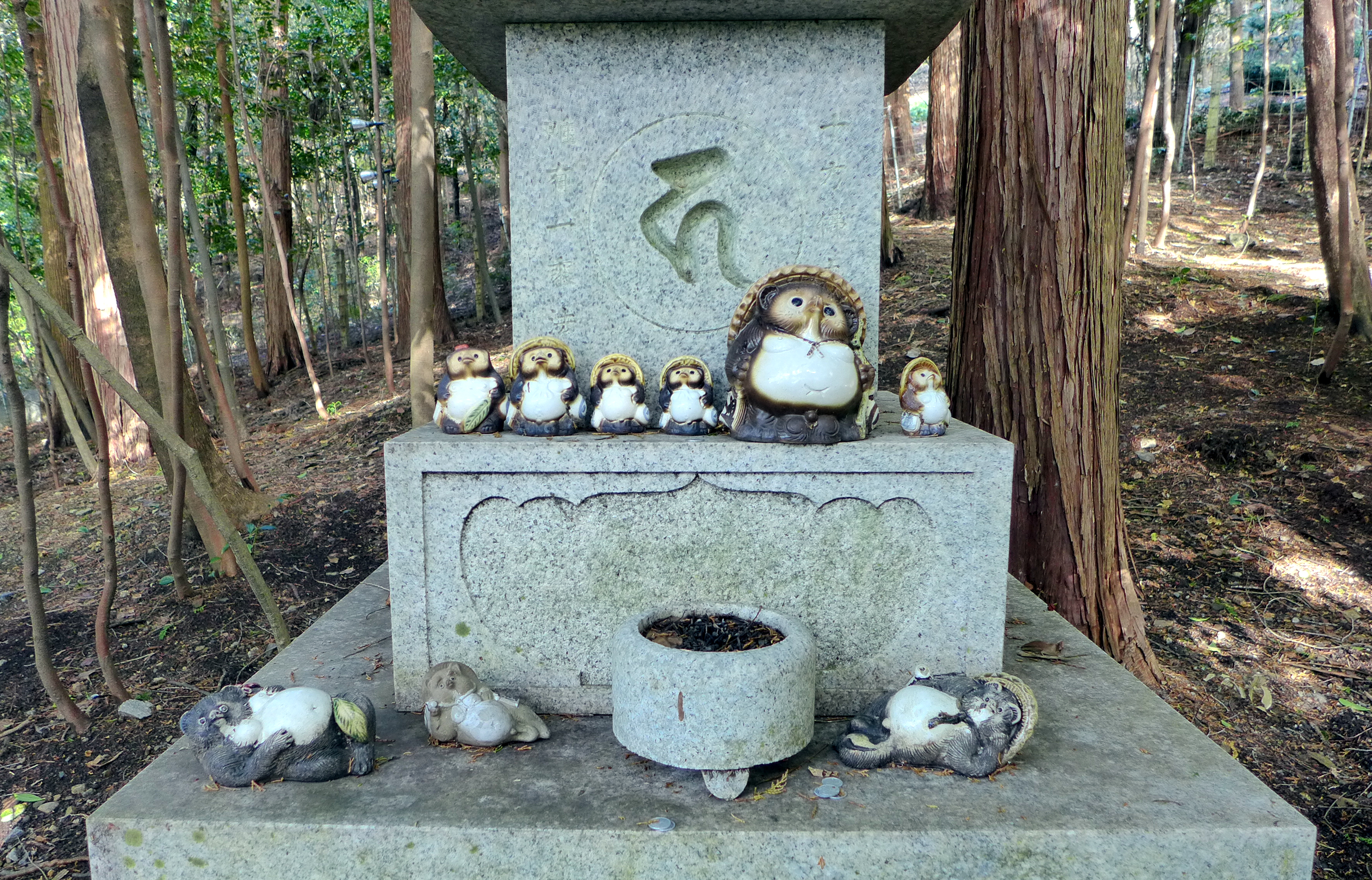
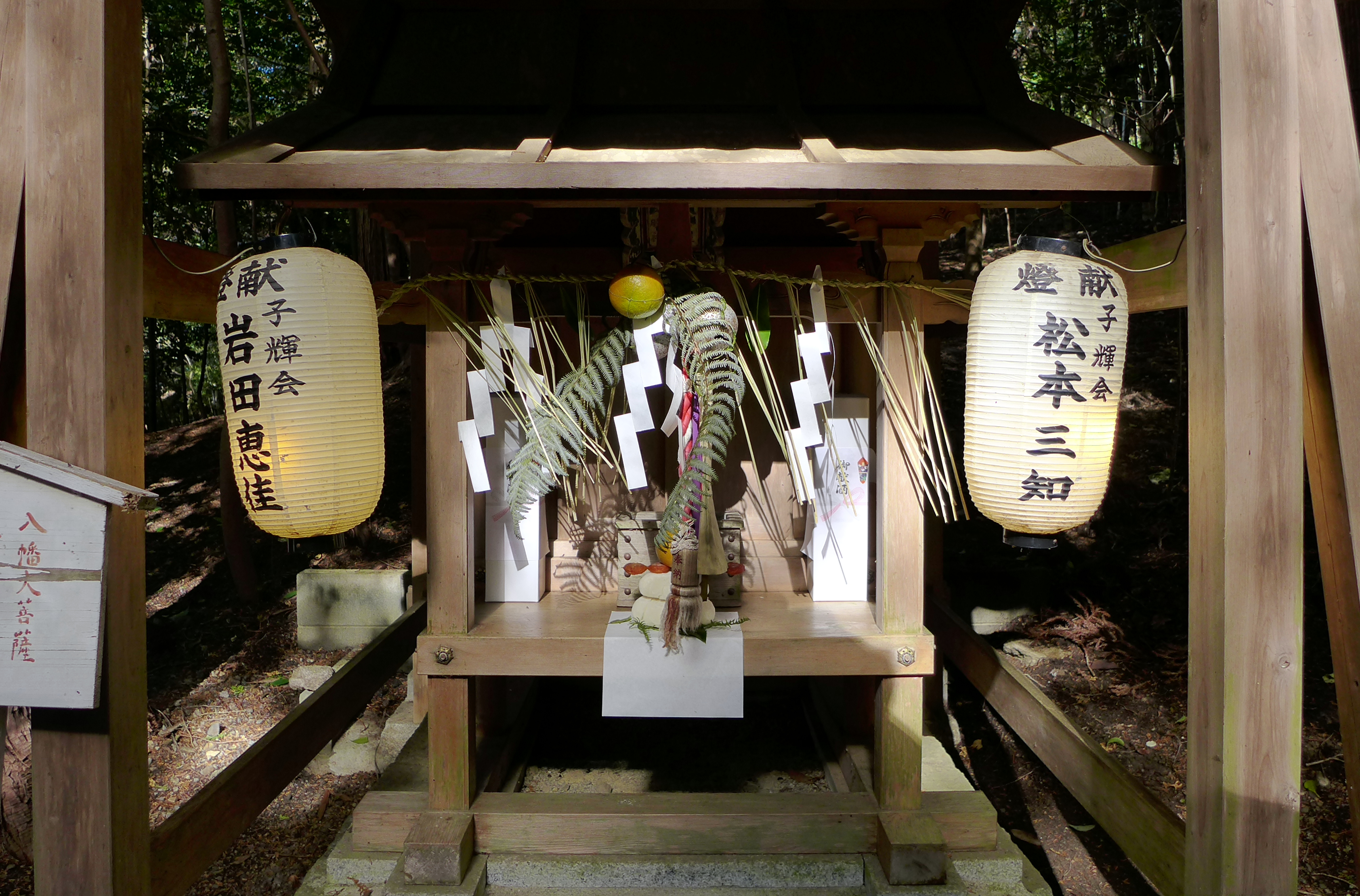
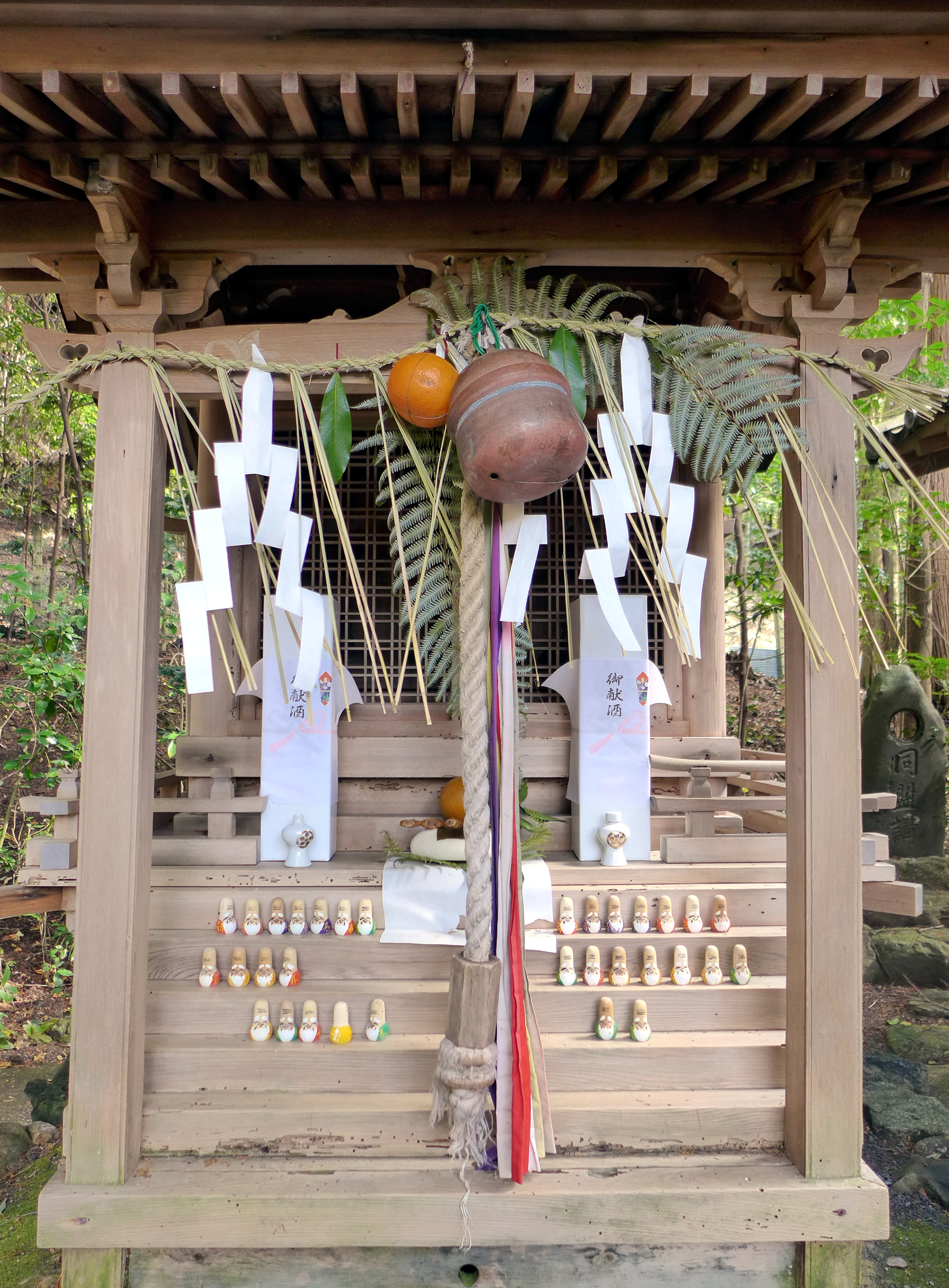
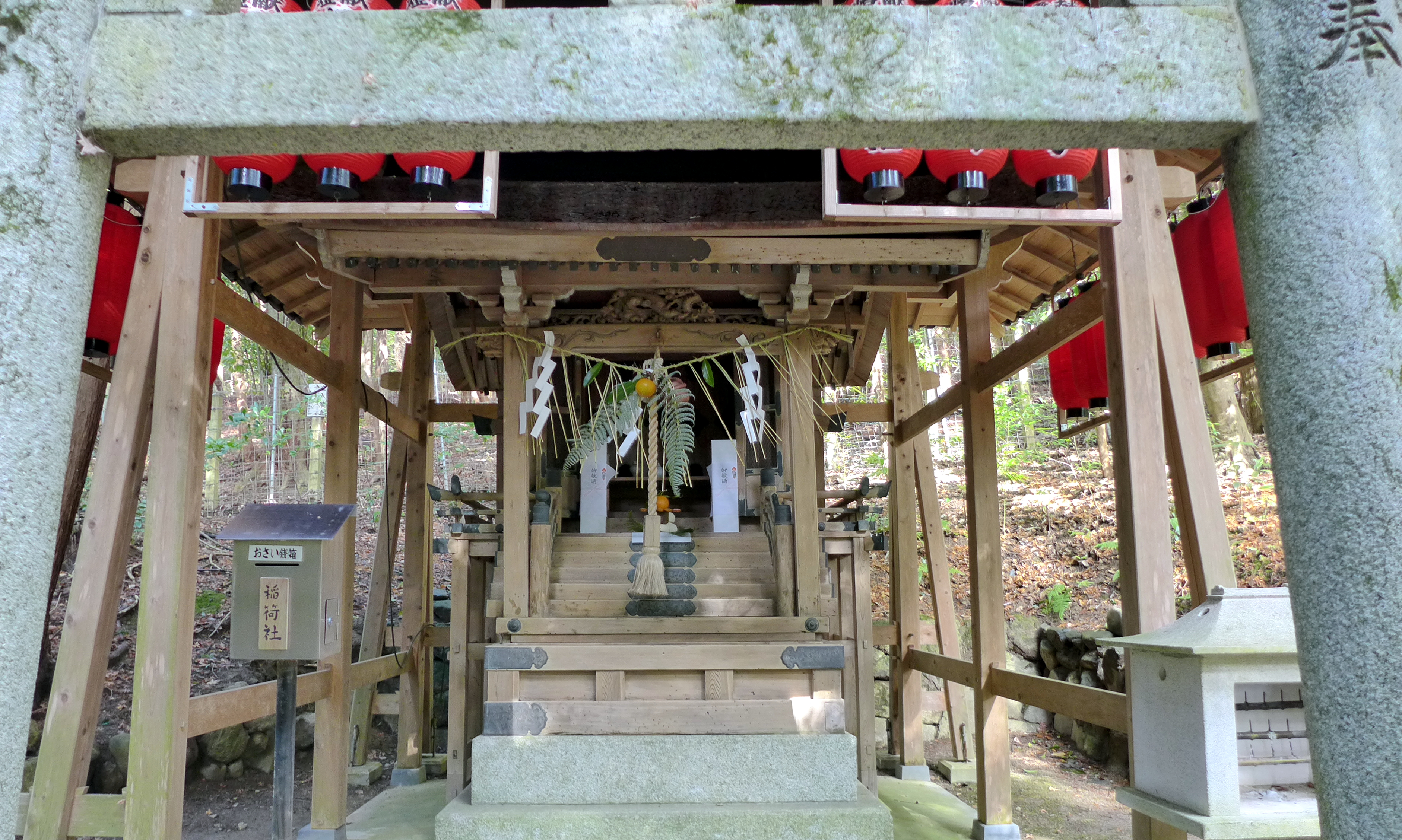
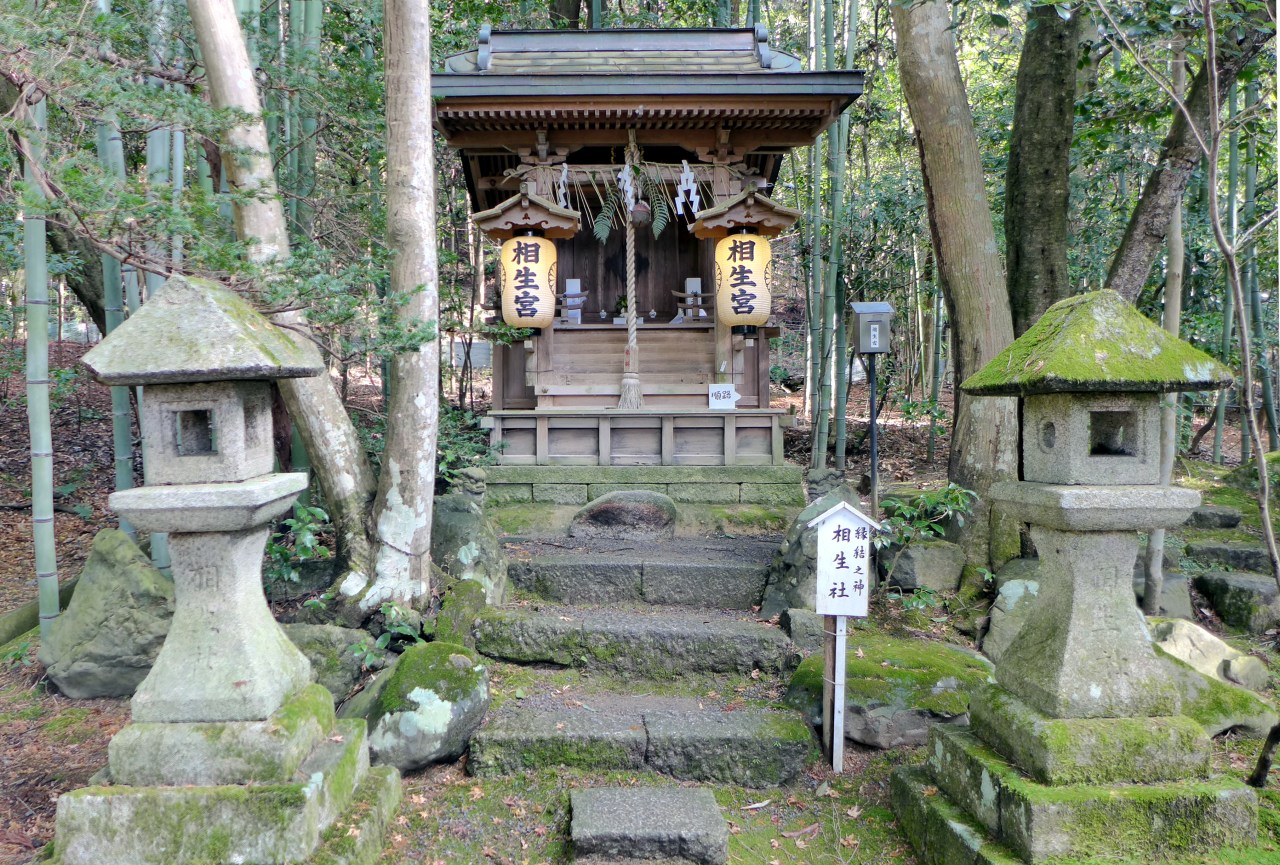
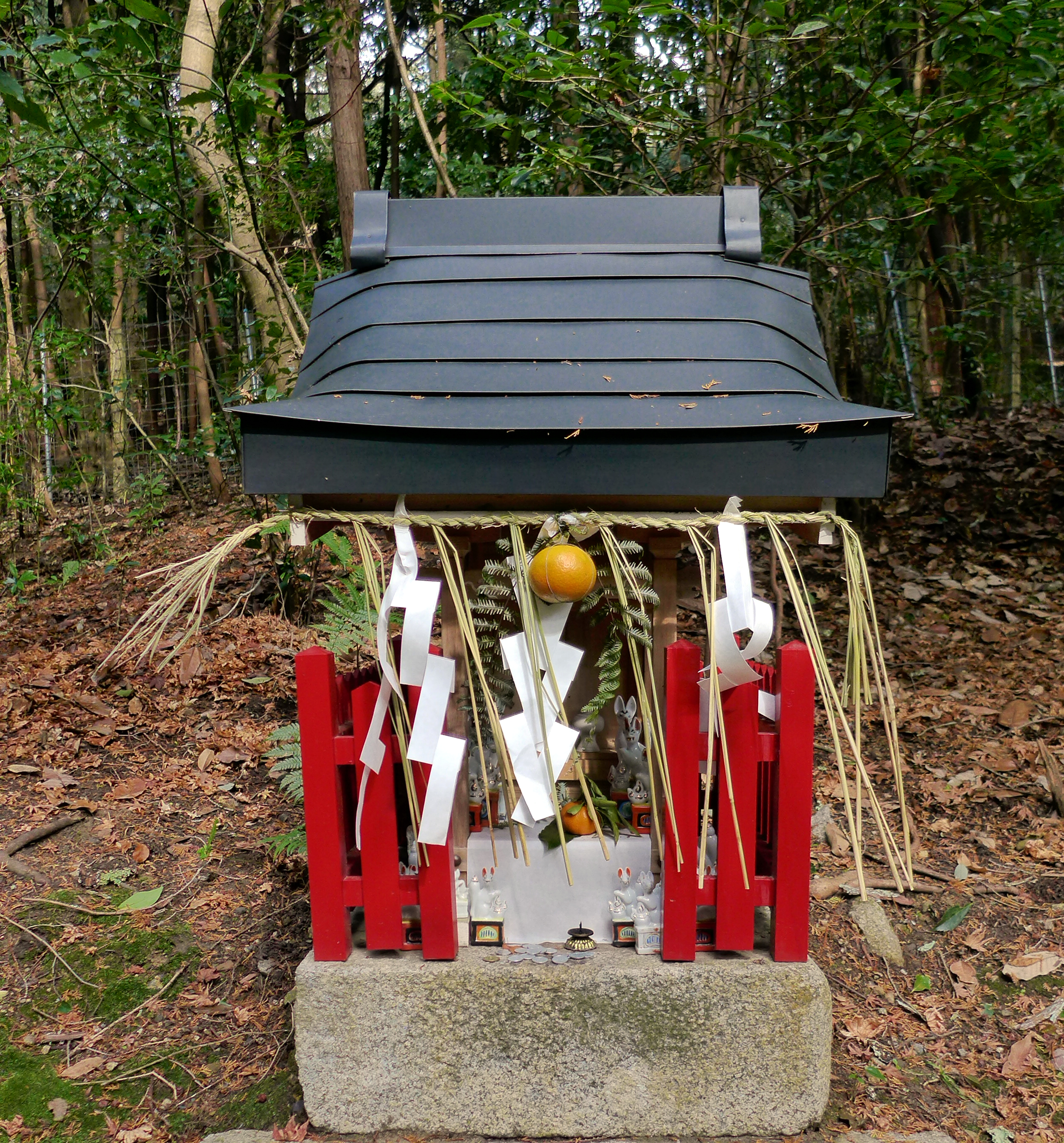
The temple was fun to explore with many small shrines in the woods as well as some larger buildings. The architectural styles were both Shinto and Buddhist, showing that they used to be intertwined religions. Definitely a good temple to visit as there is lots to see, all surrounded by a beautiful forest which is presumably fantastic in Autumn. Also its free!