京都 Snapshots: October

Visiting places in Kyoto usually involves lots to see and do at just one location and as a result I can usually dedicate a whole blog post to one subject, but if I only published posts on each big topic I would inevitably miss out photos and moments that aren’t worthy of a whole post by themselves. This post is for those pictures that would otherwise never get published despite being interesting. I will probably create a post like this for each month so this one will be for October.

 先斗町 Pontocho

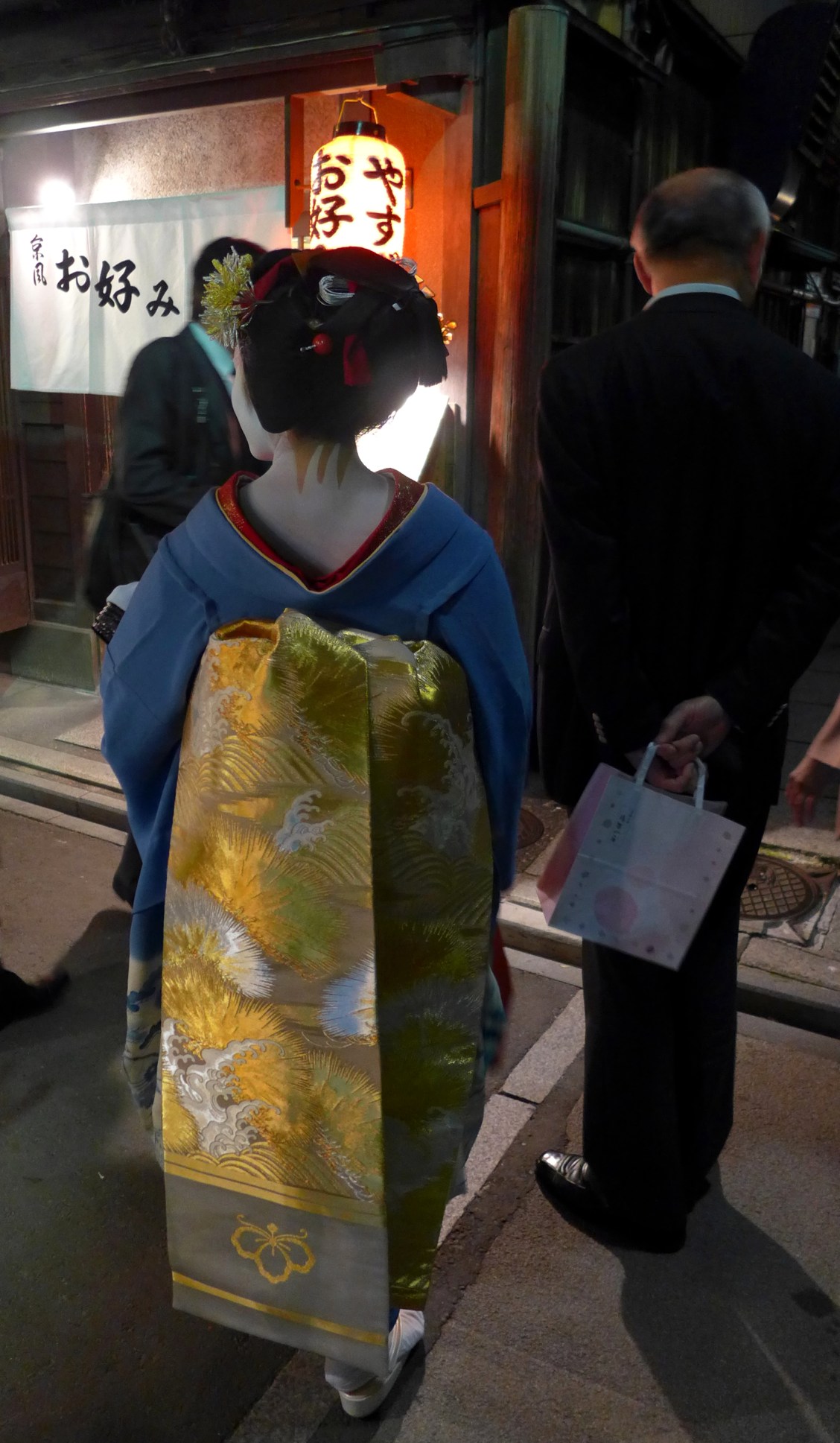
While I will probably revisit Pontocho as it is a very interesting area, I would like to at least introduce it a little now. Those who have read ‘Geisha‘ by Liza Dalby will recognise the name at least. Pontocho is one of the areas of Kyoto where it is possible to see Geisha. Geisha are women that entertain businessmen through conversation, dance and music. The word ‘geisha’ (芸者) literally means ‘artist’. Contrary to outside perception Geisha are not normally prostitutes, instead they are considered entertainers and most do not sleep with clients. Their kimono are beautiful and cost  thousands of pounds and they can be seen travelling between appointments in both Pontocho and nearby Gion (just across the river from Pontocho). While it feels a bit awkward to take pictures of people who are clearly travelling between jobs I did take a few when we came across geisha waiting to meet a client.
 P1010129

Pontocho itself is worth a visit simply for the huge variety of restaurants and the beauty of the street itself – it is a narrow pedestrian street lined with restaurants on either side, each displaying a lantern. In the summer the restaurants on the river side of the street have seating on porches over the river. Most of the restaurants are reasonably priced and many have menus in English. A few have amusing displays like the miniature food pictured below. I’m not entirely sure where I took the second picture but I have a feeling it was somewhere near Pontocho. No, I have no idea what’s going on either.

P1010133P1000131

鴨川 Kamogawa

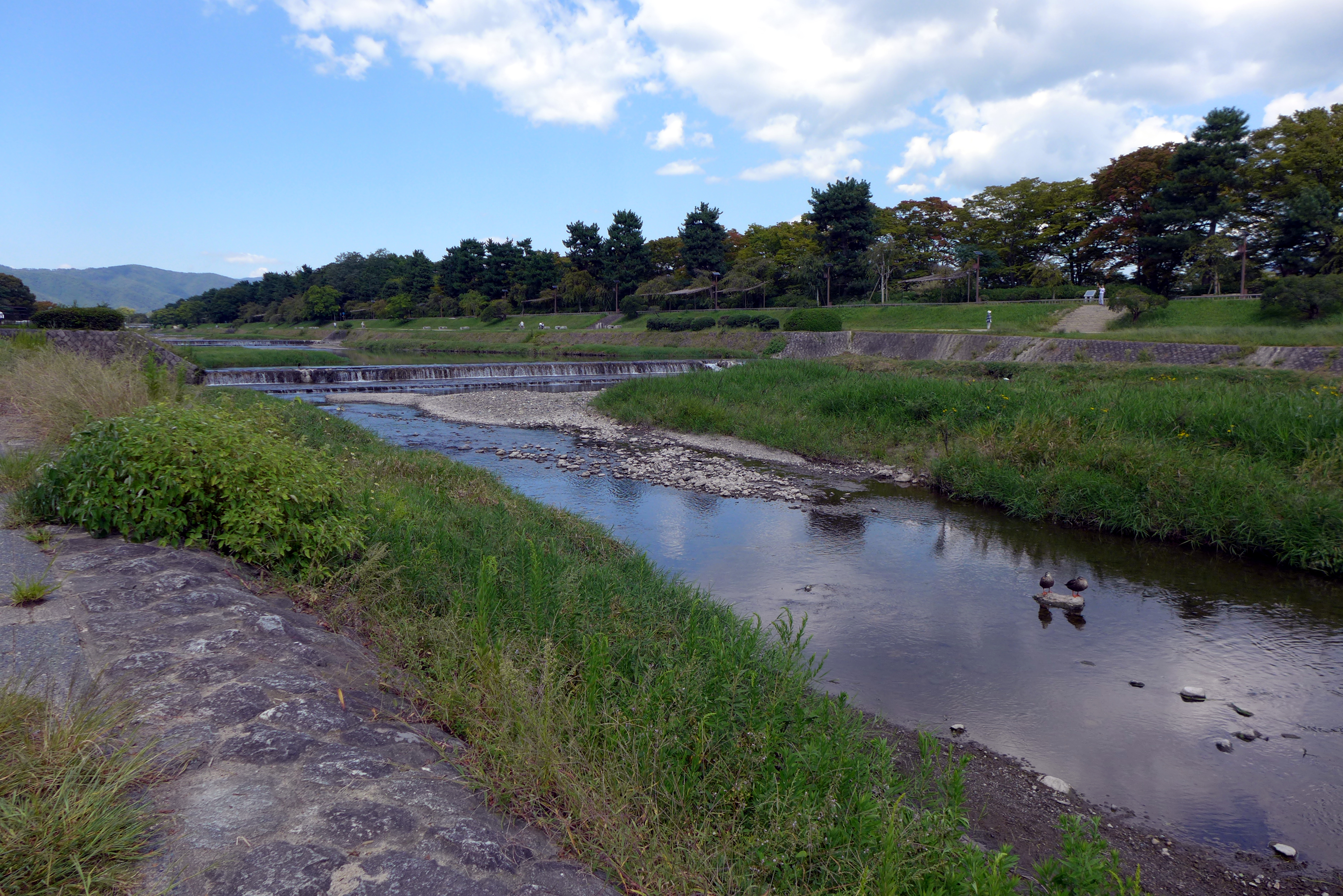
The Kamo river is something I have already talked about before but it is ever-changing with the time of day and season and it’s always beautiful. There is a huge variety of wildlife on the Kamogawa, especially birds – I’ve seen herons, egrets, mallards and kites alongside many other unfamiliar birds. There are also giant salamanders upstream – I hope to see one before I leave! If you want to see how huge they get check out this article – this salamander had to have a policeman keeping an eye on it so the public weren’t scared.

P1000024 P1000113 P1000019 P1000023 P1000017

京都タワー Kyoto Tower

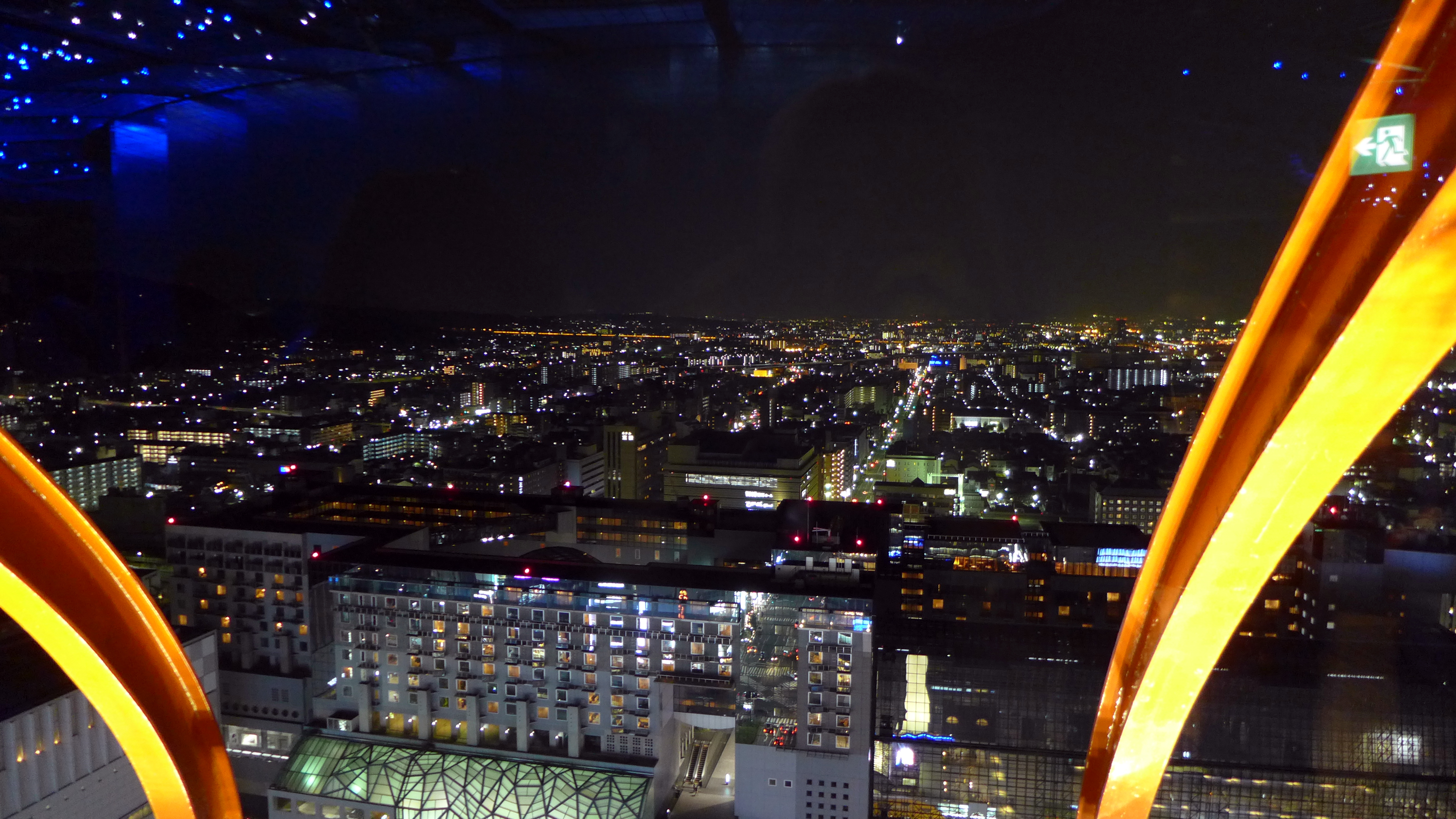
Anyone who  has visited Kyoto has at least seen Kyoto tower – it’s slap-bang in front of Kyoto Station. Though I’ve been twice, both times were at night and so I didn’t get to see quite as far as it is possible to in the daytime, however, looking at all the lights in Kyoto sprawling out around you gives a real sense of how big Kyoto actually is. Kyoto has a tendency to feel more like a town than a city if you live outside the centre and seeing that it stretches all the way from the mountains in the West to the East is spectacular. If you do go up at night try to spot To-ji (東寺) pagoda which is lit up at night. Tickets for adults cost 770円 and it’s definitely worth a visit.

P1000042P1000048

嵐山 Arashiyama

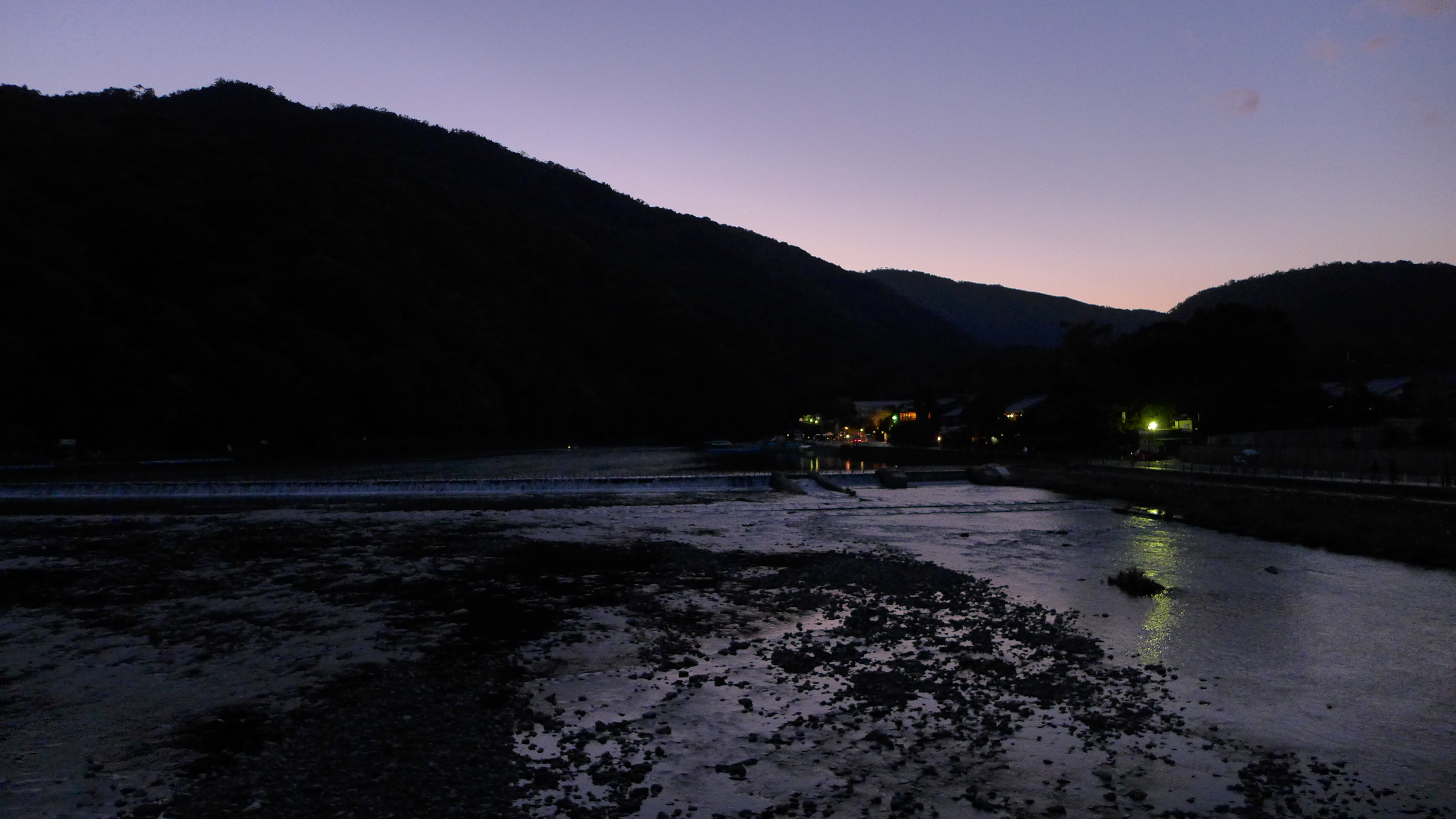
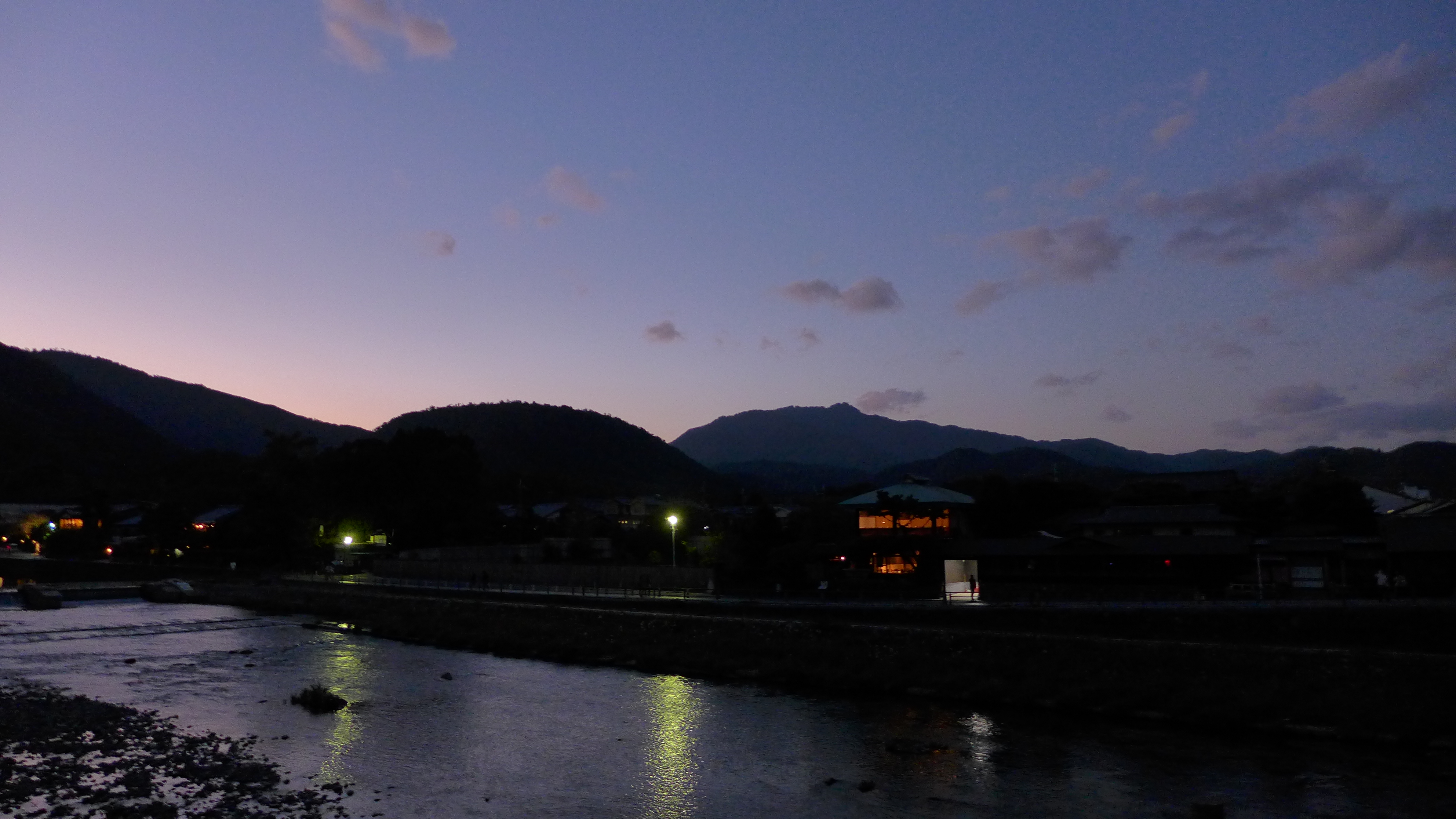
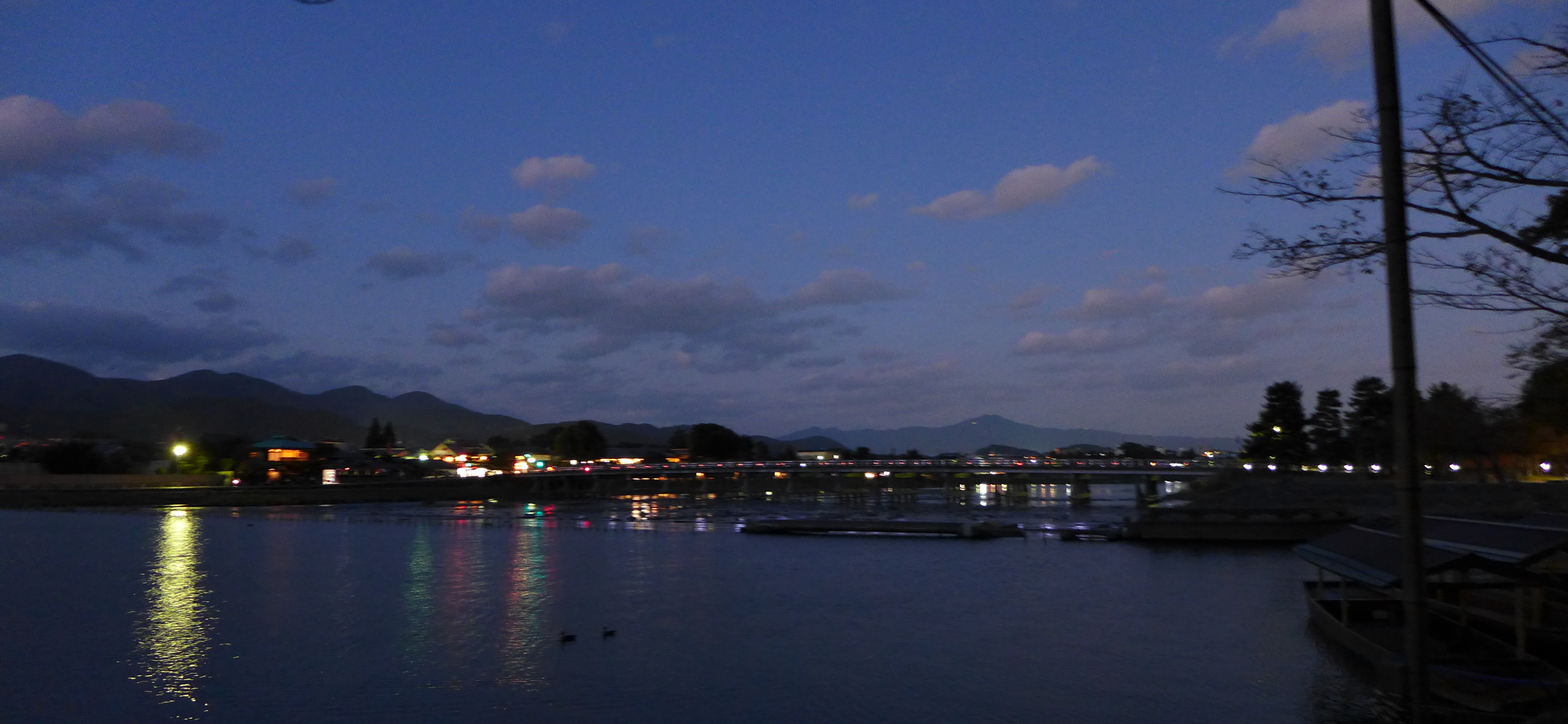
While I will definitely be going back to Arashiyama in daylight, I would like to share some of the pictures I took at night. Arashiyama is to the West of Kyoto and is home to loads of temples, a bamboo forest and a monkey park – you can easily spend the whole day there (and I intend to). When we arrived (I went with my parents) it was just starting to get dark and though I wouldn’t really recommend going at night as everything shuts and you can’t really see, it was lovely to watch the sun set over the Ōi River (大堰川), a river much larger than the Kamogawa.

P1010050C P1010059 P1010061 P1010074c広隆寺 Koryu-ji

Koryu-ji is a temple in West Kyoto that probably doesn’t get many visitors owing to the fact that it’s completely out-of-the-way of everything else (though it is on the way to Arashiyama if you’re willing to get off the train). The main attraction of Koryu-ji is the impressive collection of buddhist statues it has on display in one of the halls. The exhibition costs around 500円 and consists of one room, but there are a lot of statues with some dating back to the 11th century. Worth a visit if you enjoy Buddhist art and historical artifacts. The temple grounds are large and it has a beautiful mossy forest garden. Perhaps not worth the journey for some but it was enjoyable nonetheless.

P1010028P1010032e P1010038e

京都御所 Following Imperial Footsteps

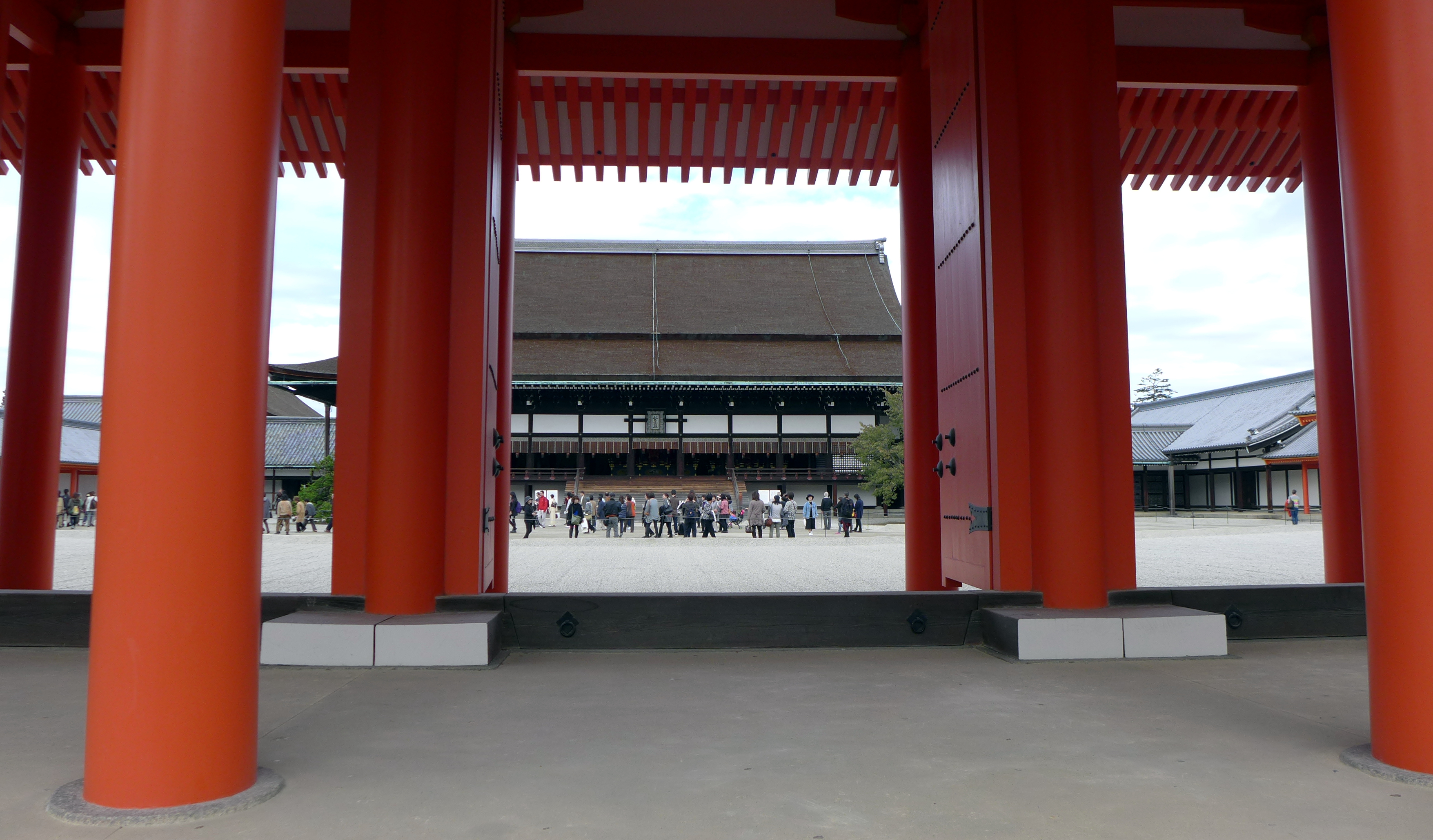
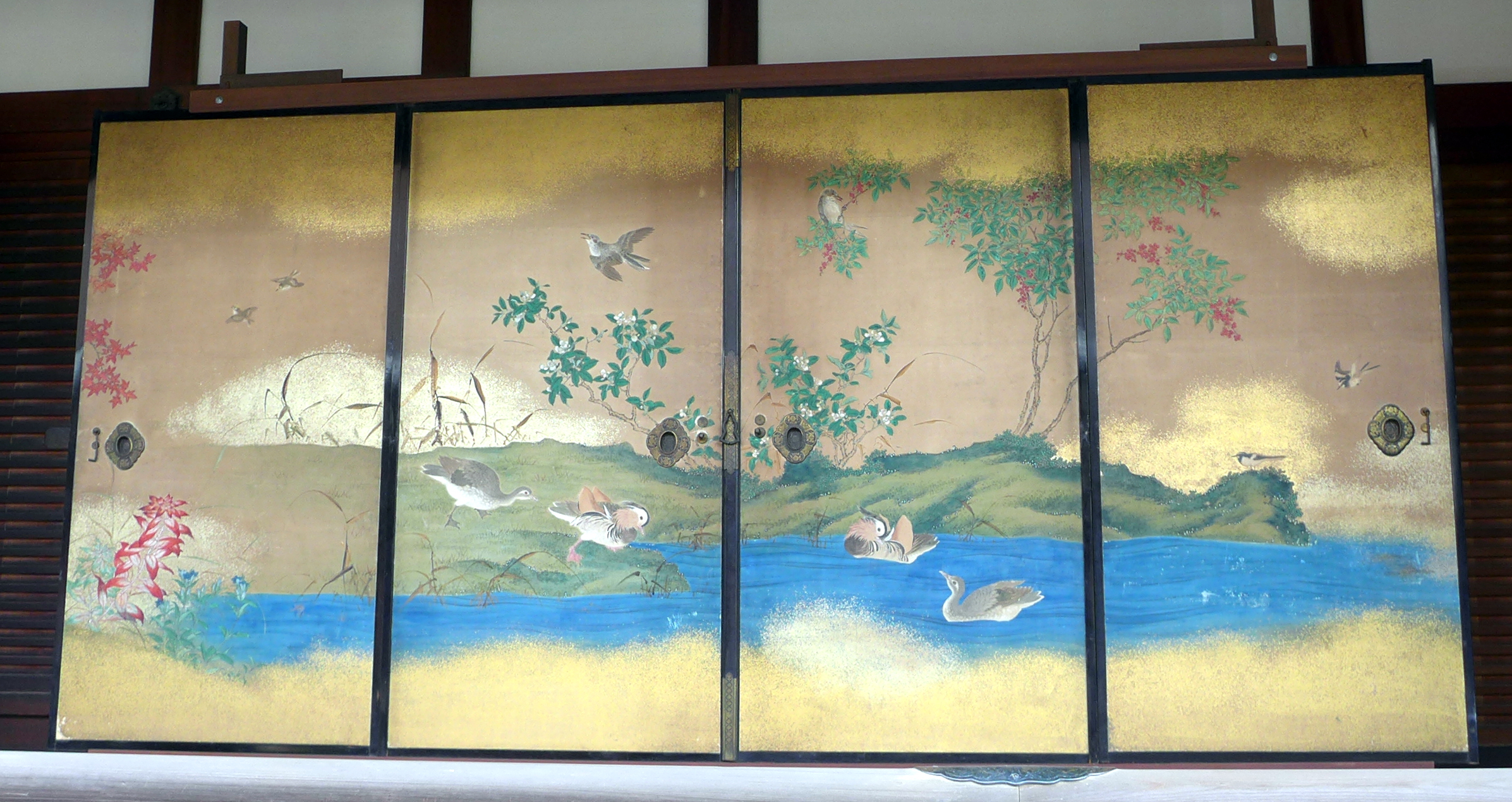
Yesterday I was lucky enough to go around Kyoto Imperial Palace – though usually closed to the public without prior appointment, the Imperial Household Agency opened up the palace for the Autumn viewing this week (30th Oct – 5th Nov). These viewings are infrequent (twice a year) so it was an opportunity not to be missed and was definitely worth seeing. The Imperial Palace or 京都御所 (Kyoto Gosho) is located in the Imperial Palace Park which happens to be right next to where I live. The park itself is beautiful, covering around 24 acres. Within it are two restricted areas – the Imperial Palace and the Omiya Palace (the palace for retired emperors and empress dowagers – today it is used as the official visiting residence when the Emperor visits Kyoto).

 This post may end up being somewhat of a history lesson as it concerns Kyoto’s past as the Imperial capital, hopefully you’ll find it as interesting as I do, though if not there are loads of pictures below. While I’ve studied Japanese history before I find we looked at specific events without pulling together a continuous narrative – by looking at one building’s history you can get a good sense of Japanese history as a continuous timeline and really appreciate how old Kyoto actually is. I’ll talk about the history in between the pictures as it breaks up an otherwise daunting wall of text. Also the pictures give you a better idea of what I’m talking about.

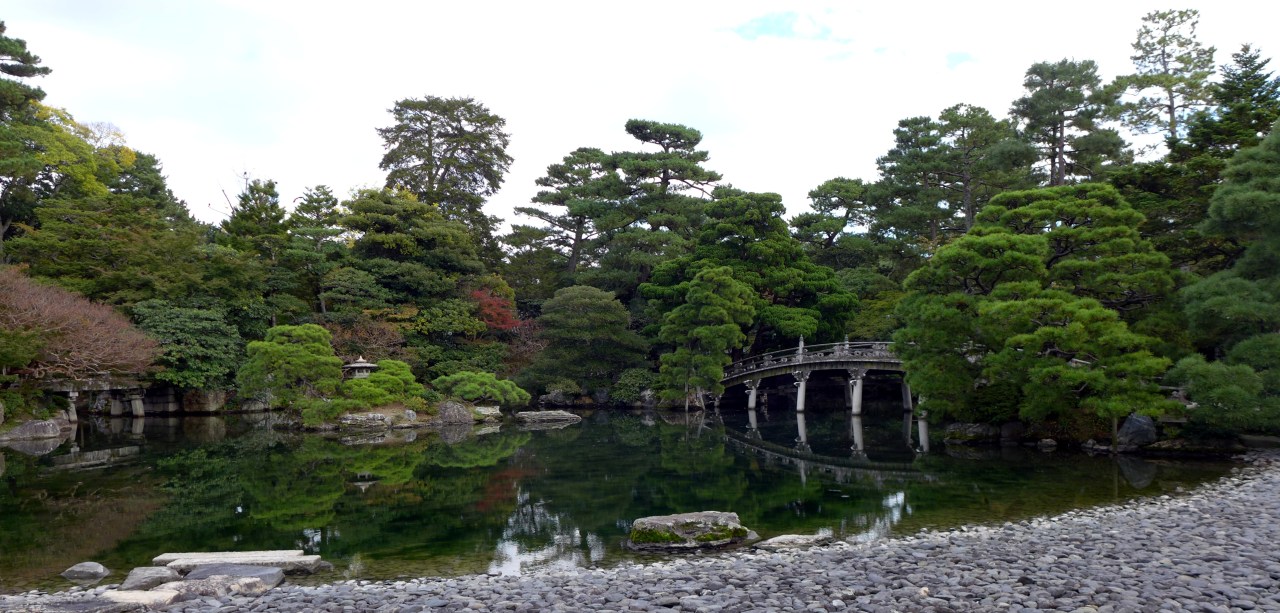
The palace itself is beautiful with amazing gardens. I was given an English-language leaflet when I entered but it turns out that they have directly copied everything from the Wikipedia article on the palace – obviously  they’ve hired a lazy translator or they didn’t want to pay for one. The palace includes the buildings used for coronation ceremonies (only the current Emperor was crowned in Tokyo, the others were crowned in Kyoto) and the residences themselves. You can’t actually go inside any of the buildings but they have opened up the screens for the public to see. There are also beautiful stroll gardens that are worth the trip alone.

P1010496 P1010476P1010481 P1010478P1010473e P1010508E P1010513 P1010531

The Kyoto Imperial Palace is no longer the residence of the Emperor; the Emperor moved to the capital Tokyo after the Meiji restoration in 1868 as he (in theory) was now in power. Prior to this the Emperor was based in Kyoto as a figurehead while the Bakufu (Samurai-based Shogunate) held government in Tokyo. Though the Emperor moved to Tokyo it is debatable how much power he actually obtained, however this marks the shift in Japanese history away from Shogunate-based government towards a government centred around the Emperor. The Meiji restoration in itself is fascinating and worth reading about as it is the birth of modern Japan – in order to understand Japanese history up to WWII you should probably start with the Meiji restoration and its causes.

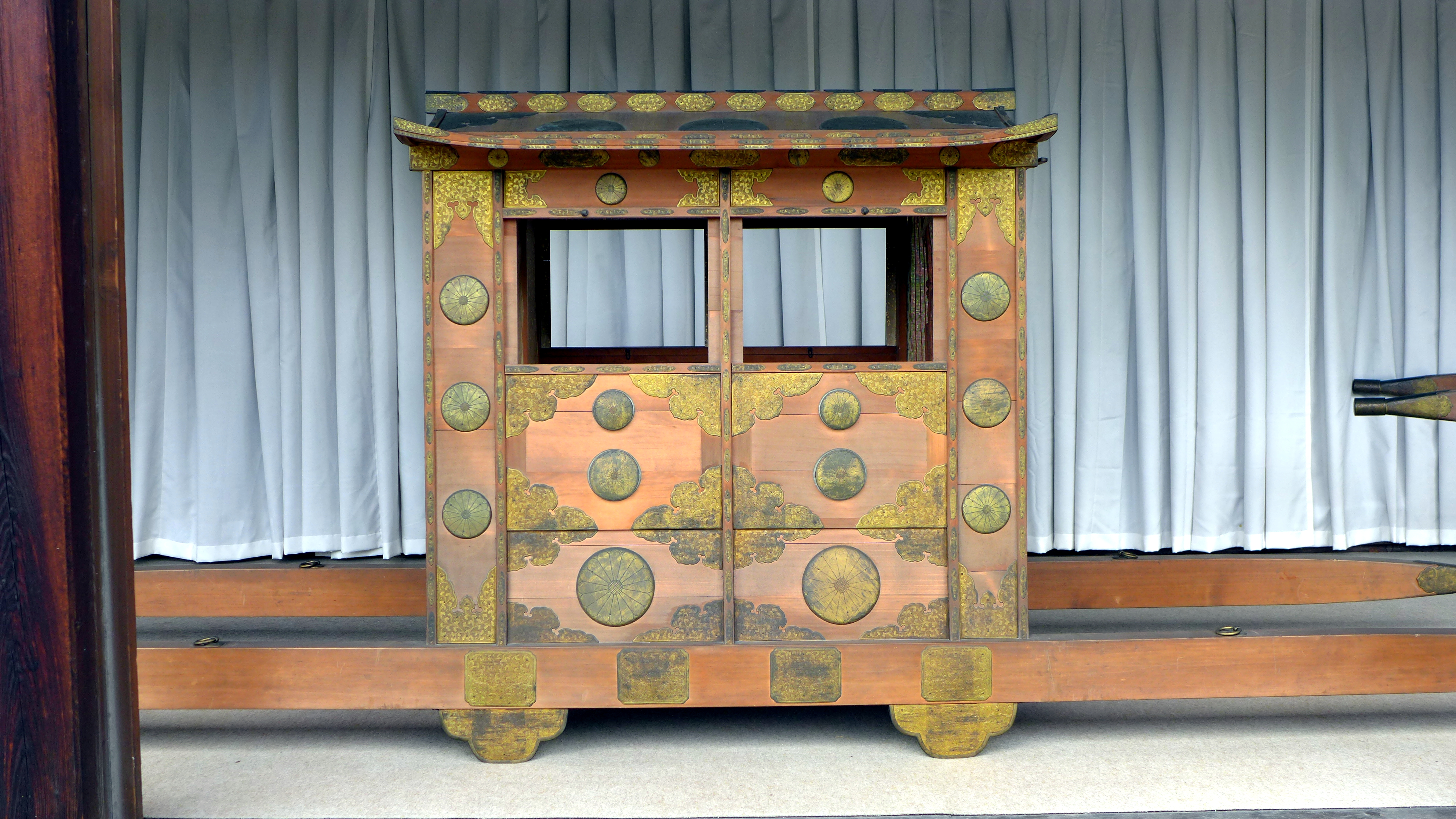
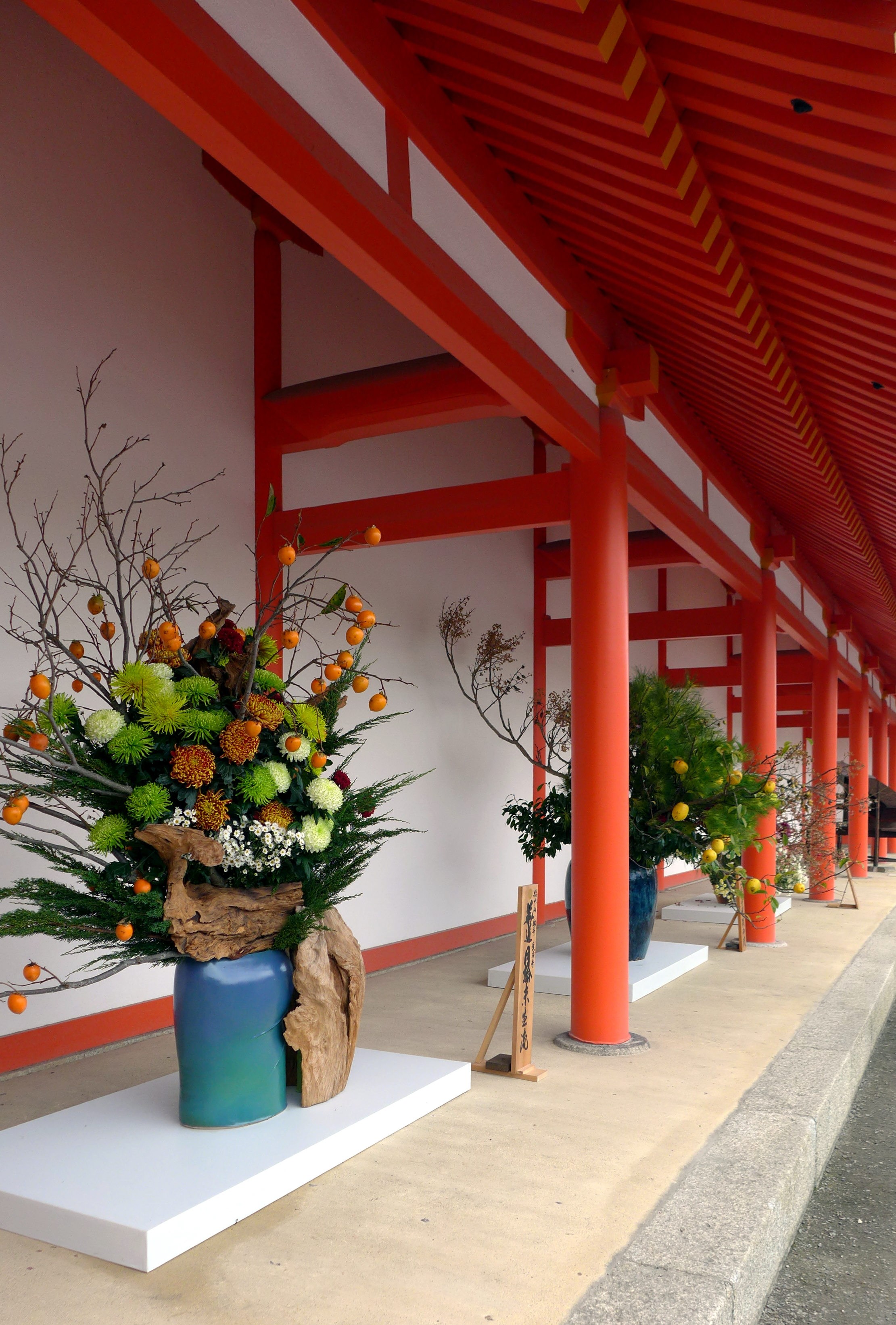
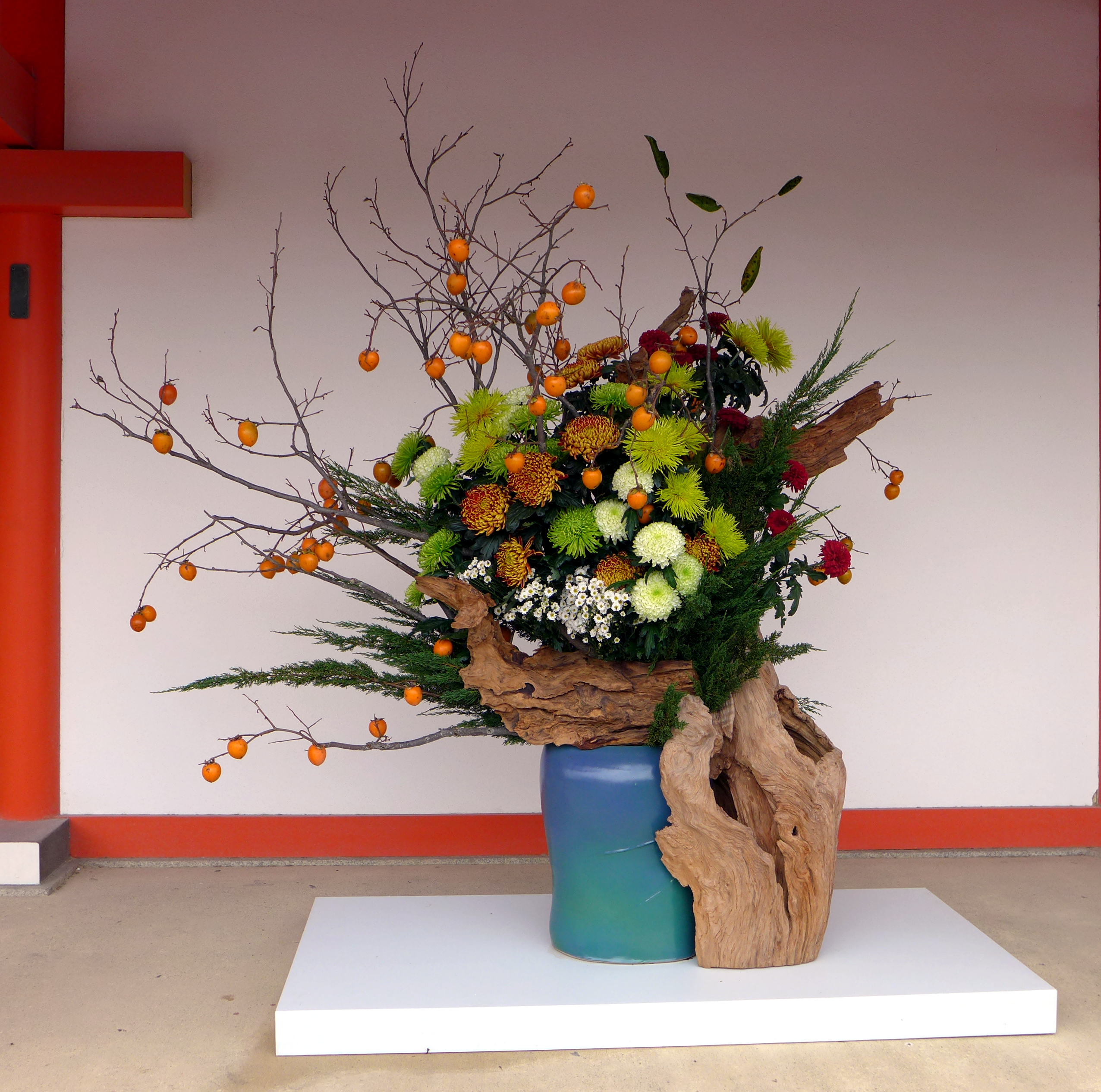
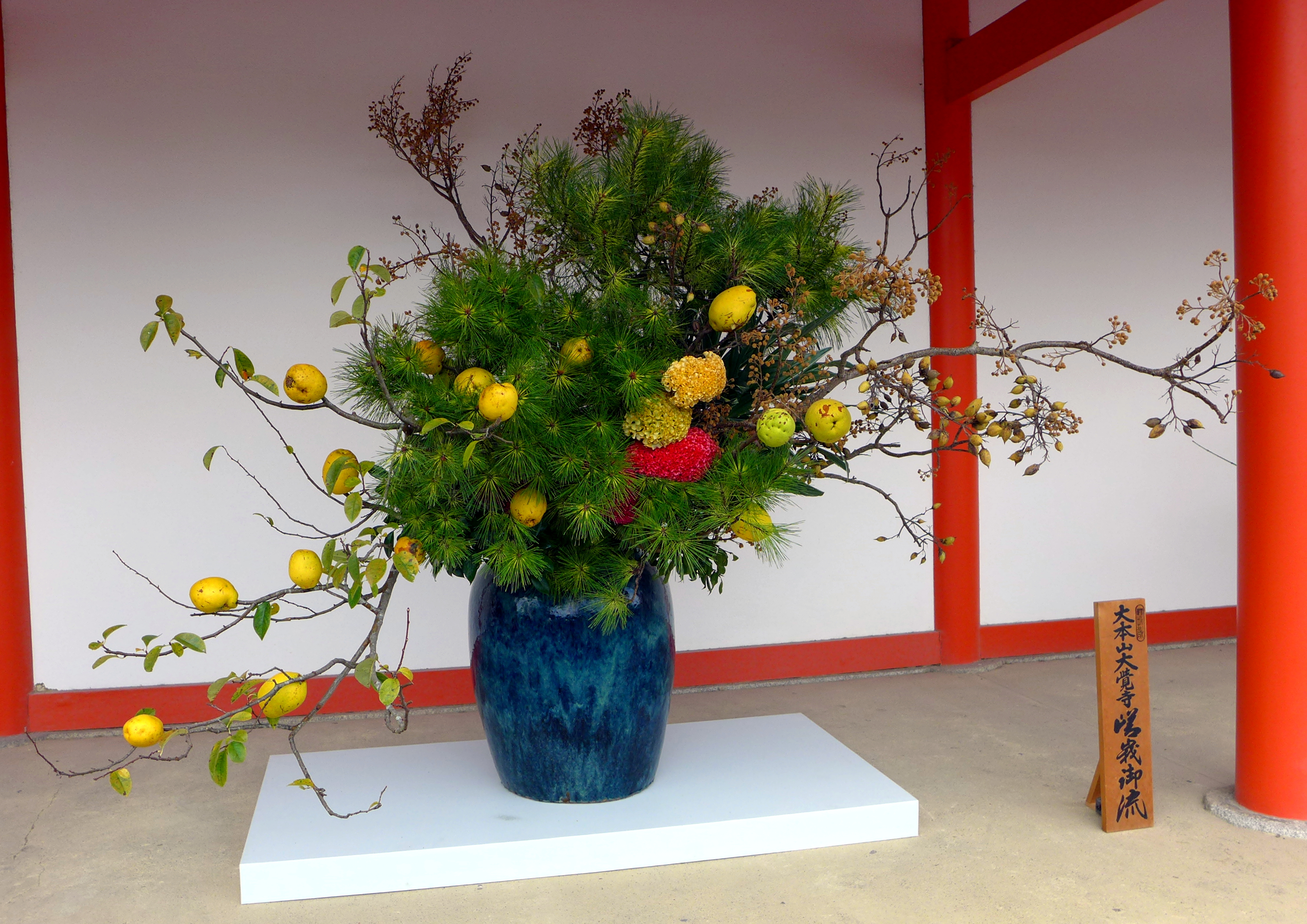
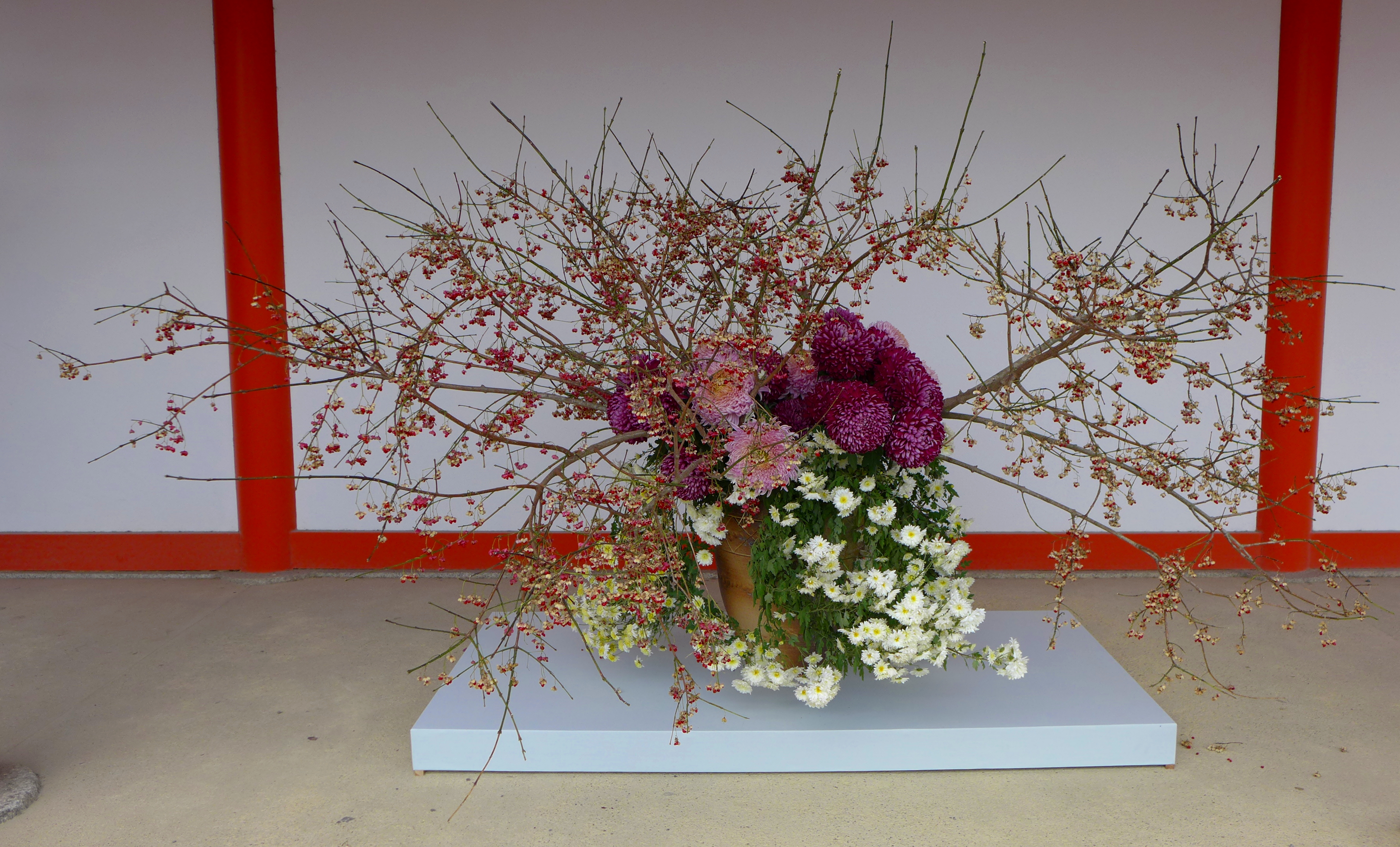
Along with the opening of the grounds, there were also various displays of flower arrangements and historical artifacts. The sedan chair used by the Empress to travel from Kyoto to Tokyo in 1868 was on display; it took her 20 days to get there and the chair was pretty small – I doubt she was in a good mood when she arrived. The flower arrangements were incredible. I knew that flower arranging or 生け花 (ikebana) was an art form in Japan but I never realised how beautiful it was. These aren’t just picking nice colours and putting flowers in a vase – the Japanese pay attention much more to the form of the flowers and creating an overall structure as well as the colour scheme, making it more like painting or drawing with flowers.

P1010560 P1010561e P1010490P1010518 P1010521 P1010523 P1010529

The Kyoto Imperial Palace is not the original building that was constructed in 794 – Japan has always suffered from fires and natural disasters and it burned down 6 times in the Edo period alone (a period spanning around 250 years). However, the palace has been faithfully reconstructed time and time again in the Heian architecture style (Heian period: 794 – 1185). Originally the palace was a ‘secondary residence’ of the Emperor but became used more and more frequently until it became the official Imperial residence in 1331 with the coronation of  Emperor Kogen. The palace was therefore the primary residence of the Emperor and the Imperial Court for 537 years.

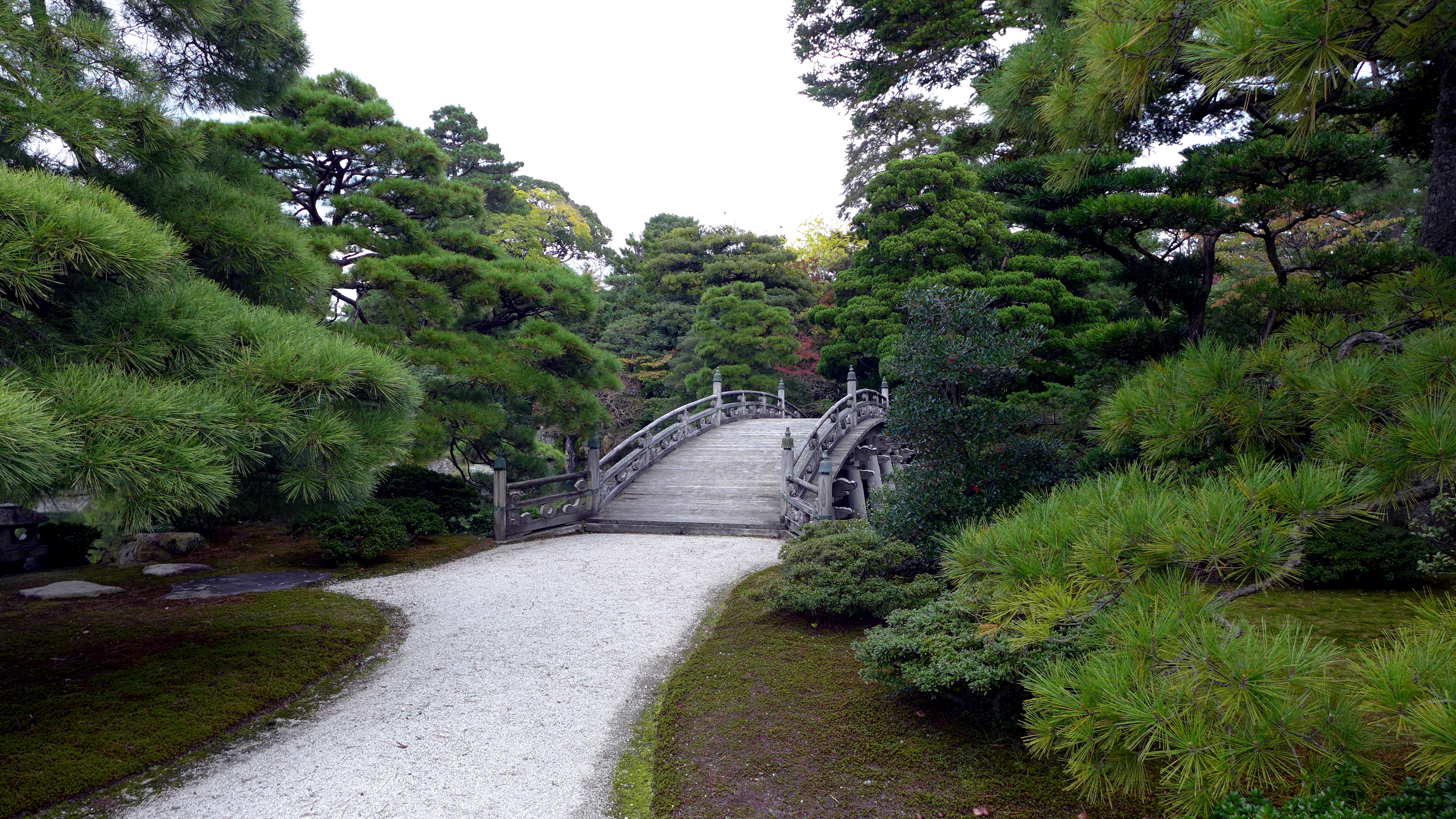
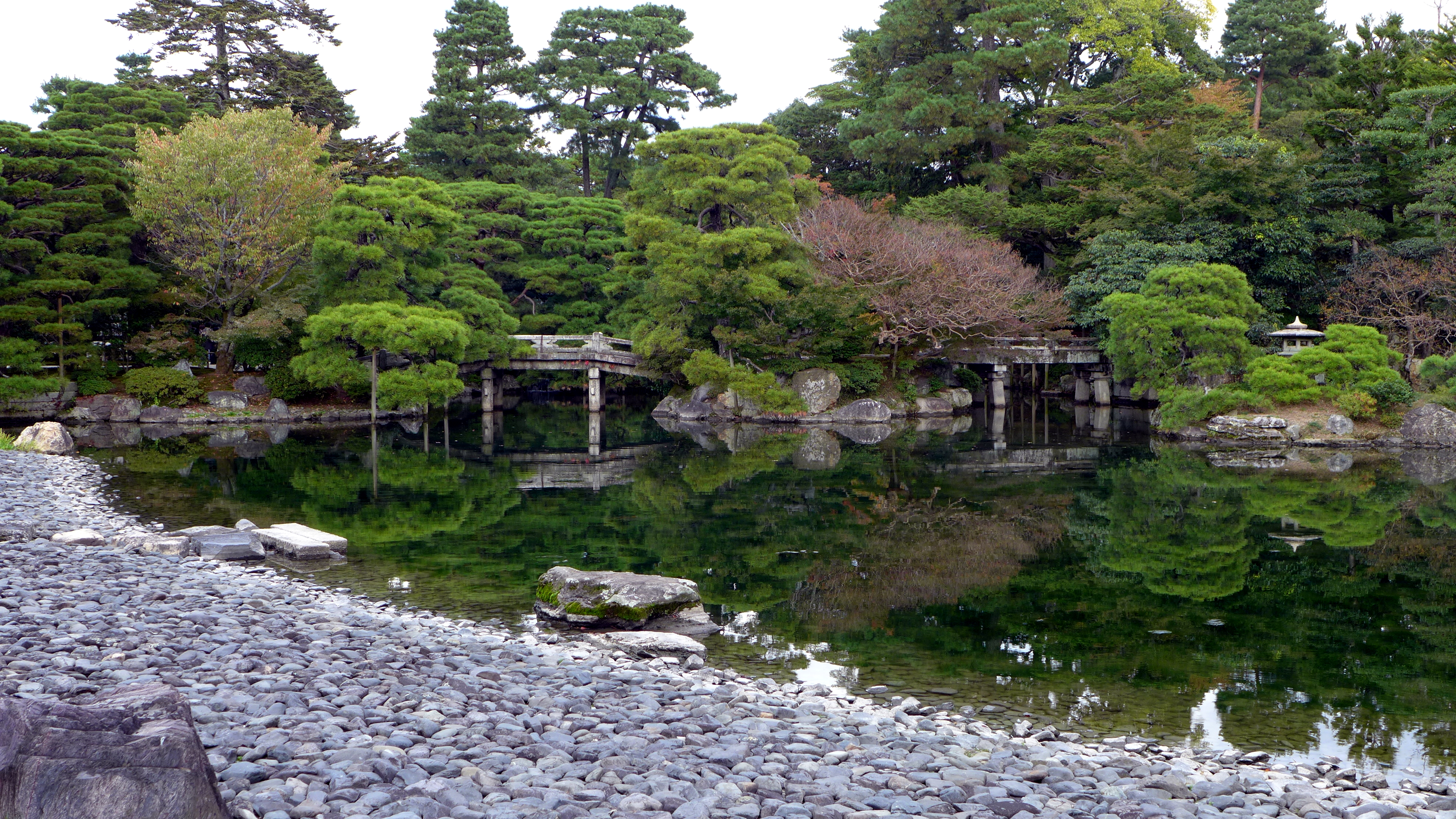
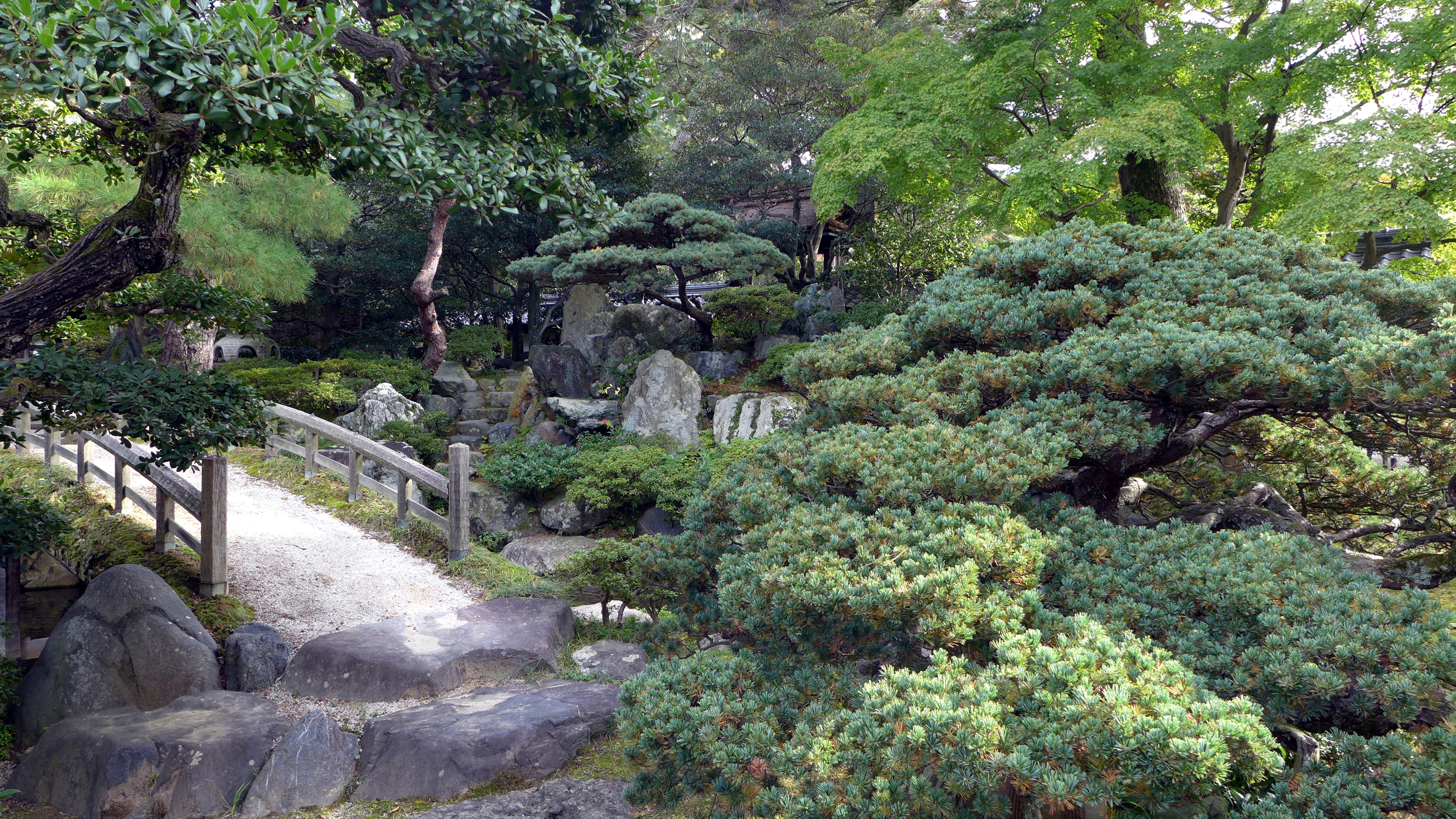
The stroll gardens were also fantastic. A bit like the flower arranging the focus is on form and ‘nature’. I say nature in quotes because every tree and bush has been pruned to perfection, giving the impression of a garden that has grown exactly as it is meant to, as if all the trees and plants know the same rules and are following them. The bridges seemed to blend in with the nature, not standing out as man-made or out-of-place – the creation of a natural garden has also been taken to artistic levels.

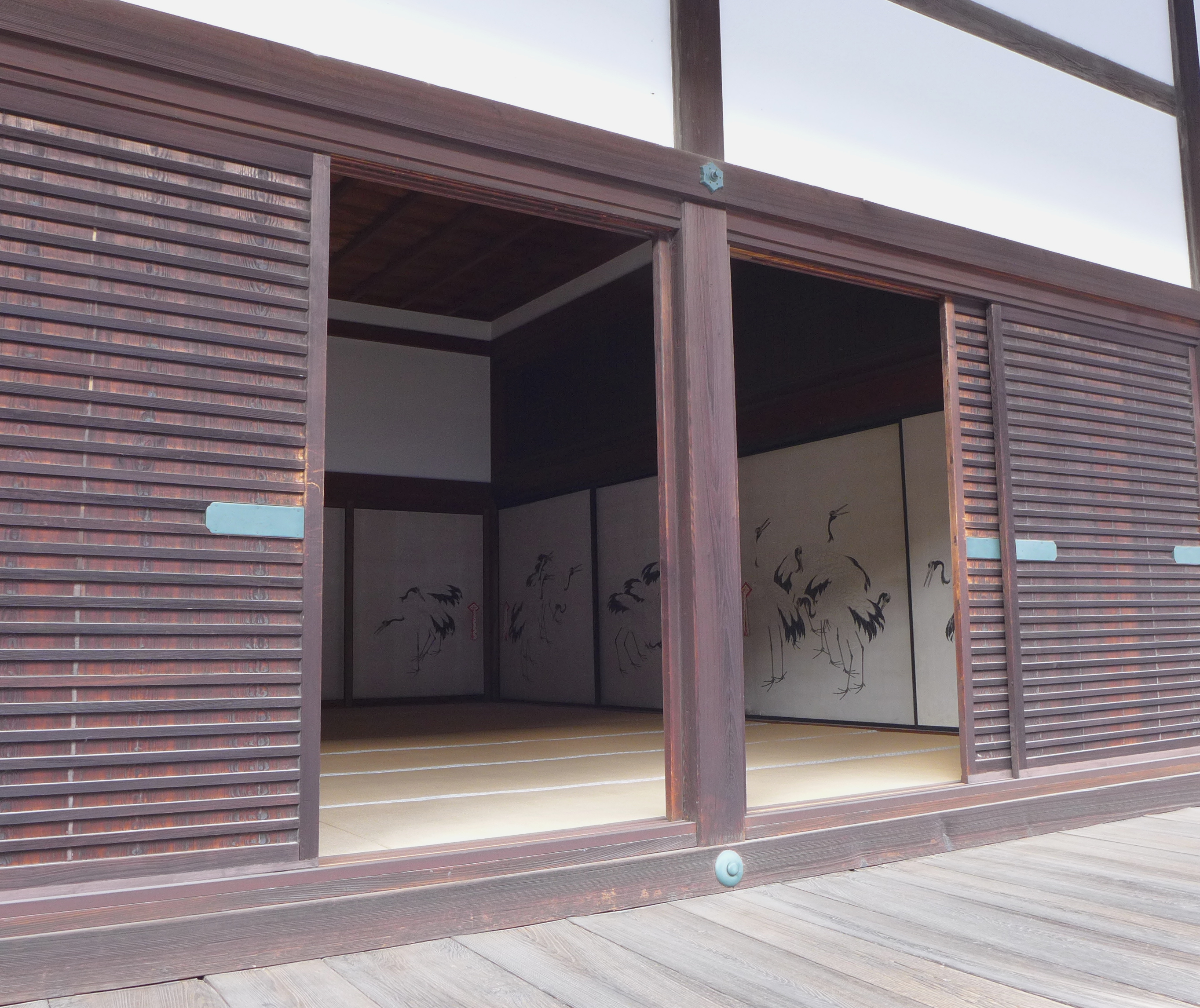
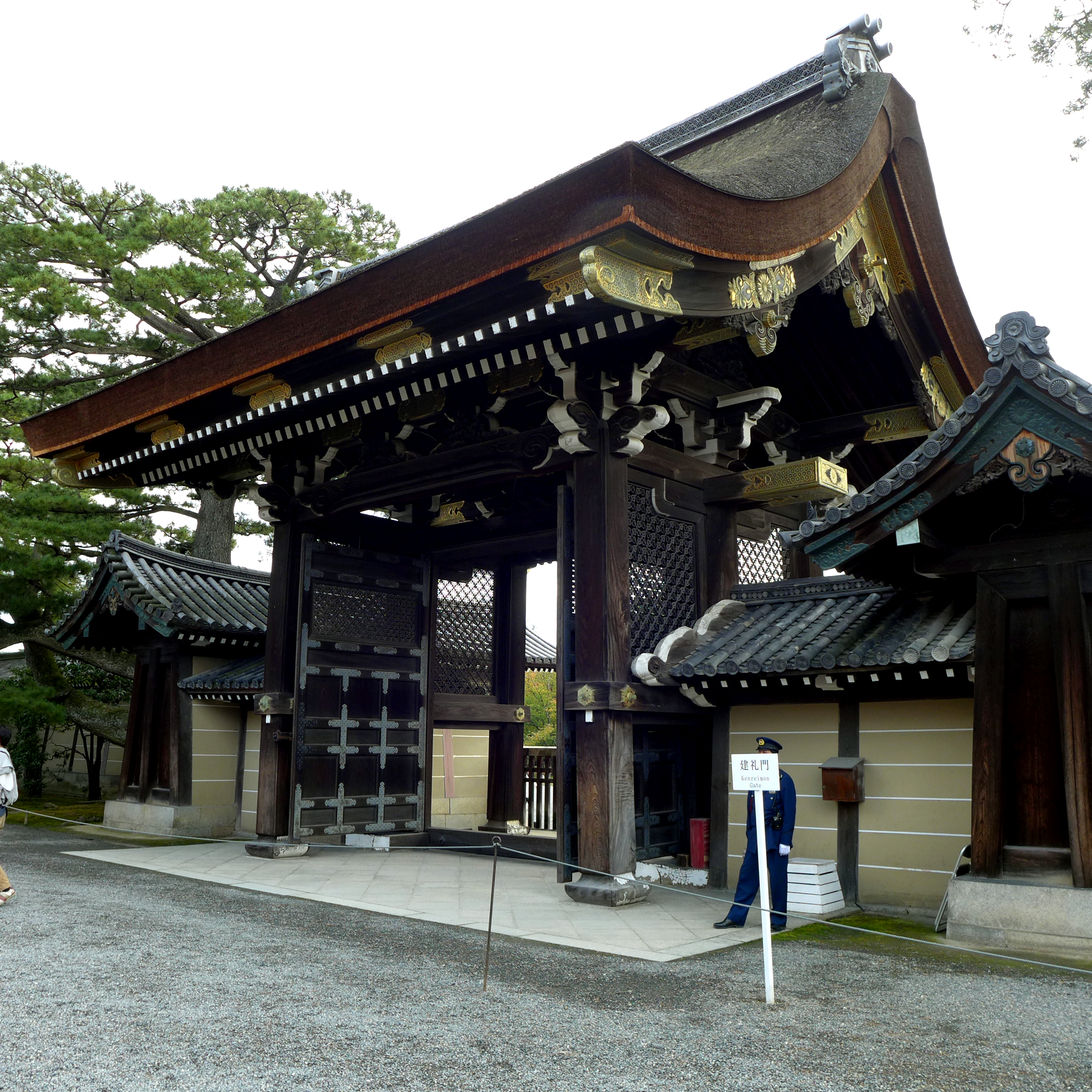
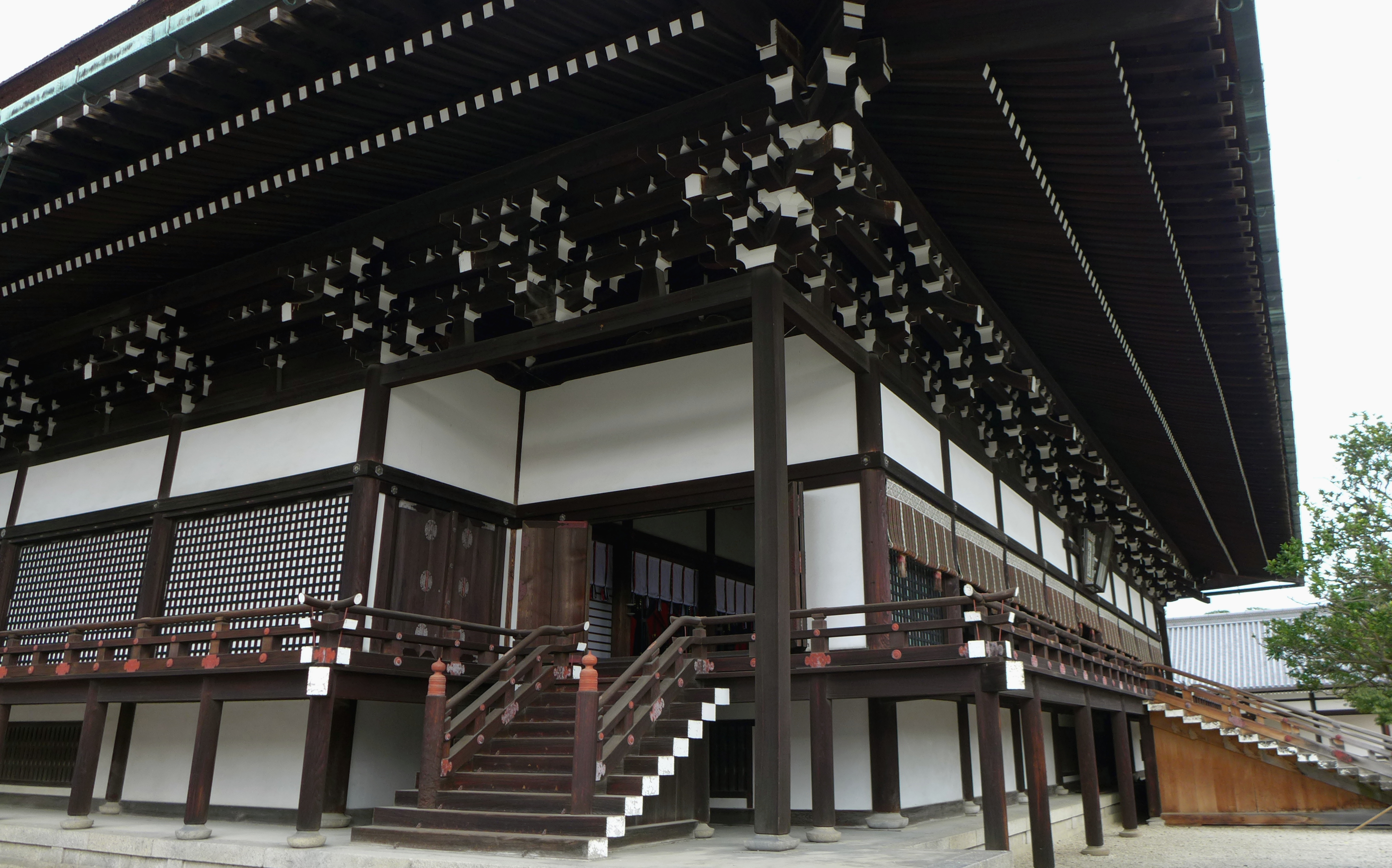
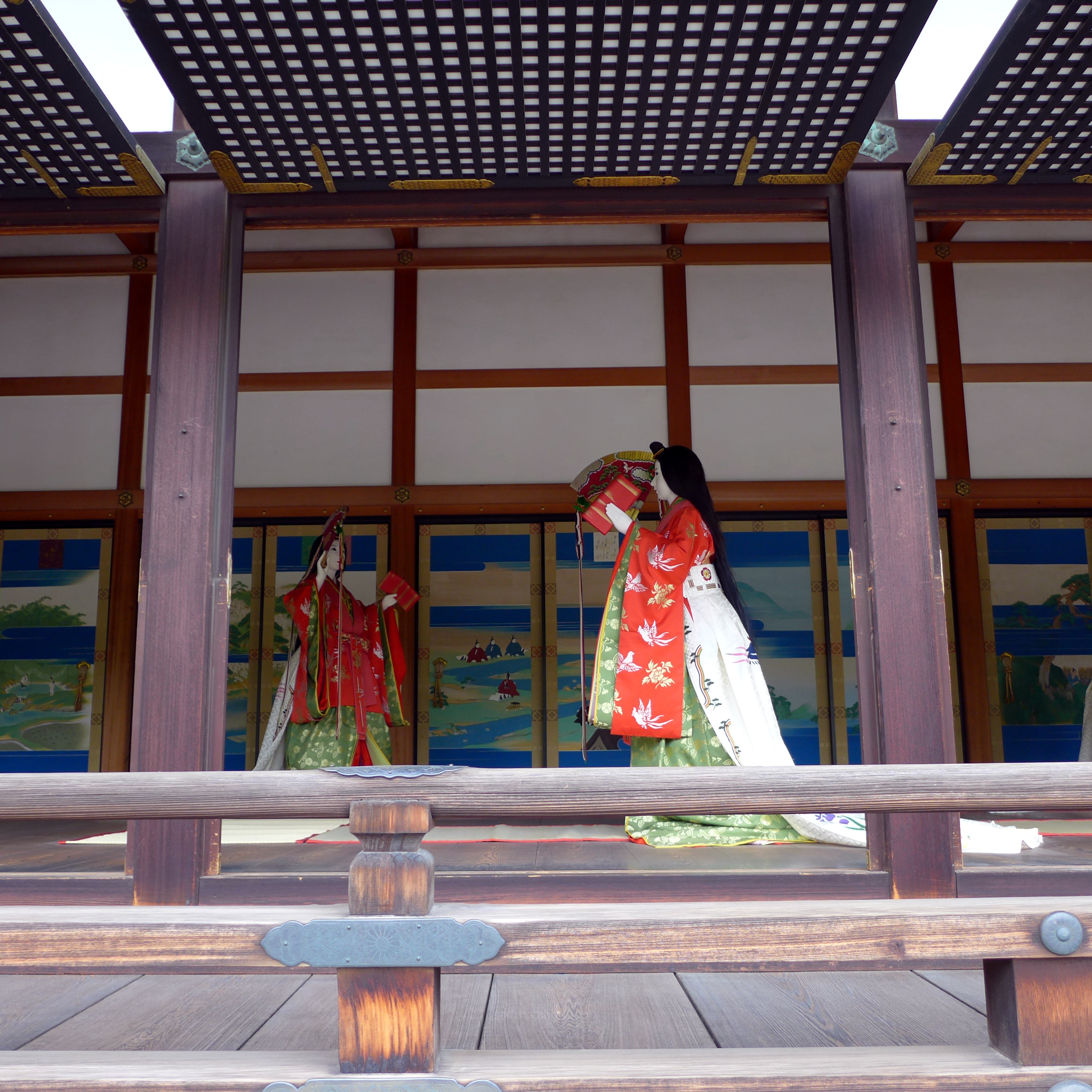
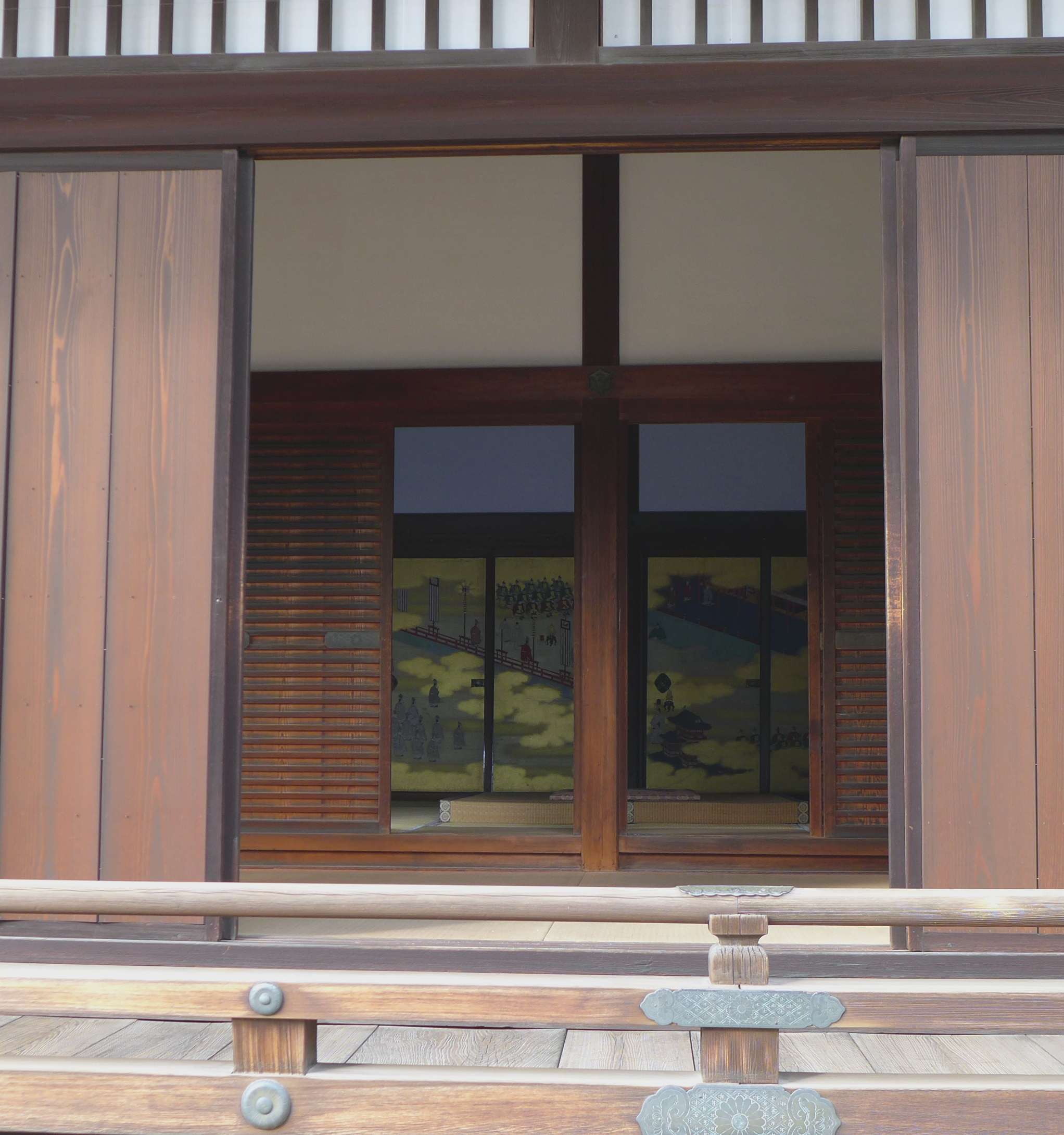
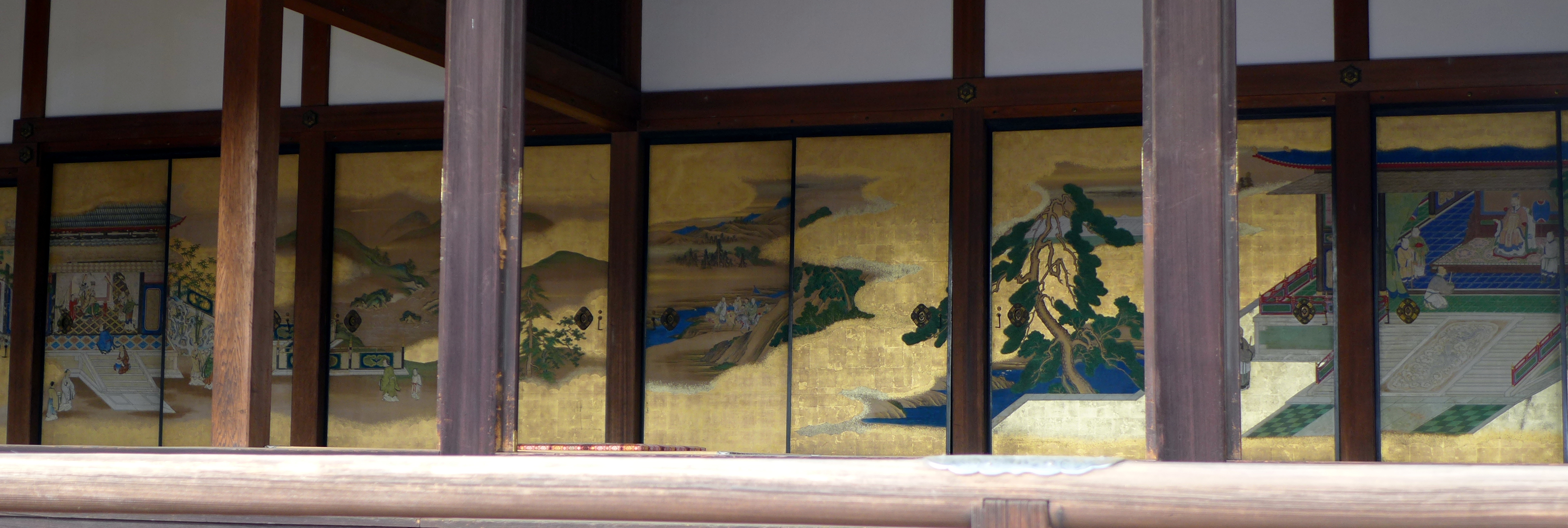
P1010571P1010584P1010586 P1010595 P1010599 P1010602 P1010606 P1010612The architecture itself was impressive – hundreds of wooden supports underneath the roofs made them seem as if they were sitting on nests. The pattern of sliding doors and screens that went into the palace in layers showed how everything could be opened up or sectioned off to allow privacy. The screens themselves were beautiful and some appeared to be decorated with gold leaf. The Imperial Household Agency had also put up a number of figures wearing the clothes of the time to show what people would be wearing as they lived in the palace.

P1010531P1010542 P1010558 P1010575P1010621eP1010616P1010618P1010623

Sadly I missed the opportunity to watch the ancient game of Kemari – basically a game of keep-me-up with a deerskin ball. Japanese nobles would try to keep the ball in the air for as long as possible using their feet, head, hands etc. The game was non-competitive but I can imagine it got pretty heated. They would play wearing traditional court clothes of the era – think large kimonos with long sleeves, hardly ideal sports attire.

My visit to the palace was actually pretty short – it took me about an hour to go round everything thoroughly. Despite it being quite a short tour I would strongly recommend it. Even if you are visiting Kyoto when the palace is shut you can book a free tour with the Imperial Household Agency – you just have to do it a few days in advance and you can book online in English.