大原 Pure Voices in the Mist

Today I would like to talk about the other three temples I visited with my parents when we went to Ohara, a town just North of Kyoto. These three temples are united in their purpose, as all three are Tendai sect temples dedicated to the practice of Shomyo, a type of Buddhist chant that has existed in Japan since the 9th century.

The first temple I would like to talk about is also the oldest of the group. Raigo-in 来迎院, was founded by the great teacher En-nin in the 850s especially for monks to practise the new art of Shomyo 声明 (meaning ‘pure voice’). Shomyo is a Buddhist chant practised by both Tendai and Shingon sects. The chants follow a pentatonic scale, also known as the Yo scale, which follows the pattern D E G A B in Western musical notation. This means there are no semitone gaps (such as a black and white key next to each other on a piano), instead there are gaps of two or three semitones. This makes the scale sound ‘happy’ and prevents any clashing chords. Shomyo is said to have influenced a lot of Japanese folk music and vocal style.


While Raigo-in itself was not particularly spectacular, featuring a simple garden and hall with statues of worship, the path behind the temple leads to a beautiful waterfall known as 音無の滝 – “waterfall without sound”. It was given this name when Ryonin, another great teacher, came to visit Raigo-in. He went to meditate by the falls and declared in a magic spell that the falls must not drown out the sounds of the Buddhist chants. The falls are said to have fallen silent. I can tell you that the falls are definitely not silent, and make the normal amount of noise for a waterfall, so perhaps the spell has worn off. Nevertheless, they are very pretty.


The next temple on our musical pilgrimage is Jikko-in 実光院, my favourite temple of the three. This temple was founded in 1013 and was also intended for Shomyo practice. As we entered we were instructed to ring a gong, presumably as part of the tradition of this particular temple. We bought tea tickets (temple entrance fee + tea fee) and sat in the temple building looking out into the gardens. The gardens feature cherry blossoms that bloom all year round, with a spectacular weeping cherry right in the centre.


The pond at Jikko-in was designed so that the nearer side of the pond represents everyday life and the further side represents paradise. The pond is also said to be in the shape of the tradditional Chinese character for heart 心, though I couldn’t really tell. Really beautiful gardens and definitely worth visiting – it is very close to Sanzen-in, the main attraction of the area, so it could be a good secondary stop.


Finally we visited Shorin-in 勝林院, very close to Jikko-in. This temple was founded in 1013 by En-nin’s disciple. It was also intended to allow monks to practice Shomyo and the temple featured a Shomyo audio display (you press a button and shomyo chants play in the temple hall). This temple is famous for the Ohara Mondo, or Discussion at Ohara, in which Kenshin of the Tendai sect invited a teacher of Pure Land Buddhism (a rival sect) to discuss faith. It is said that during their discussion the principle Buddha statue of the temple dispersed light from his hand and enlightened the listening masses.


This temple is also not as spectacular as those surrounding it but the hall itself was beautifully carved with images of dragons and flowers. The sound display inside also gave us an idea of what all these temples are dedicated to.


After we had visited the 5 temples I have covered so far in today’s and yesterday’s blogs, we set off for a walk through the mountains to Kurama (which I have covered here and here). We followed the Tokai Nature Trail, a trail that spans over 1,000 miles of Japan. We got a little lost initially and ended up walking along the road for a good portion, but we eventually found the path.


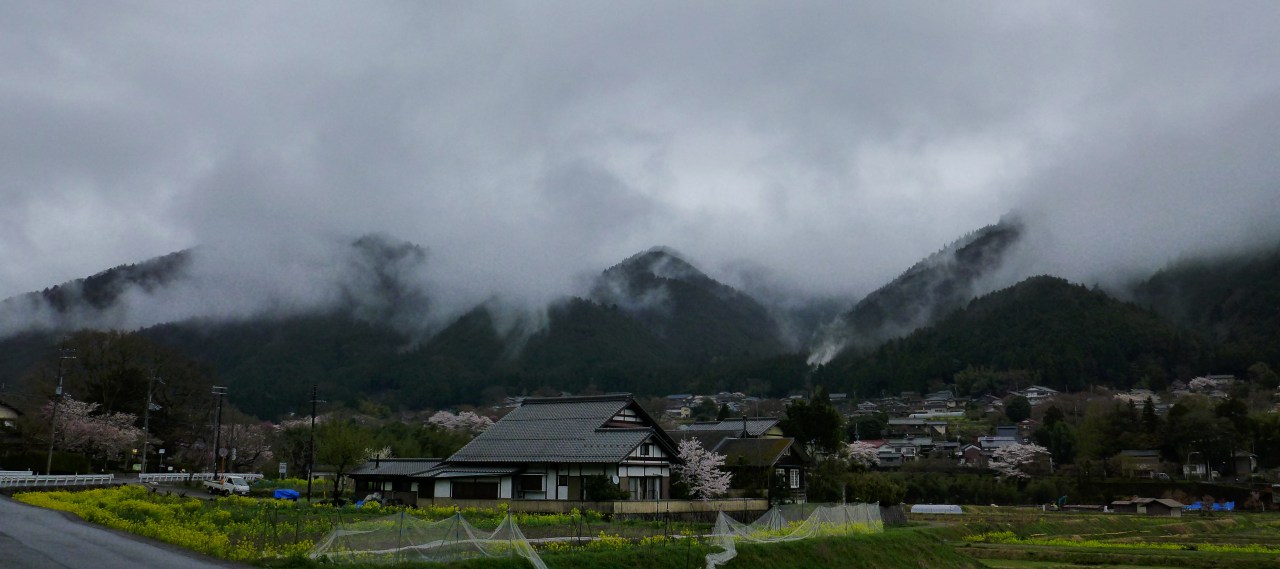
It was a rather rainy and misty day, and we got a little damp, but I really liked the effect of the mist on the mountains. We saw some parts of the mountains in Kyoto that most people don’t visit and got a good amount of exercise (those hills are steep!). We were a little nervous about the signs that warned about bear sightings in the area, though I understand that they are very rare and the Japanese subspecies is much smaller than those in the rest of Asia, weighing 60 – 120kg. I still wouldn’t want to run into one, but they seem less scary than a grizzly bear.


We also met a very pretty cat that was hiding from the rain in a bush by the path.


There were a number of small travellers’ shrines on the path through the mountains, including one shrine that told the tale of a monk walking through the mountains who had seen a vision of the Buddha. A convenient story as no one else was around, but he got his little plaque on a mountain road nonetheless. We were hoping for a view of the town from the top but the trees were so tall and thick we couldn’t see anything.


We eventually arrived in Kurama after around two and a half hours of walking and got the train back down to Demachiyanagi station. It was a really good day out despite the weather.

Apologies if this blog took longer to load; I’ve had to switch image hosting from WordPress to Dropbox due to running out of space. I will be compressing my images in future so as to save space and hopefully improve loading times. 
横須賀 The False Fuji

久しぶり!It’s been a long time! (久しぶり, hisashiburi, is something you say in Japan when you meet someone you haven’t seen in a while). You can blame my absence on my parents – they visited me from the 1st until yesterday (the 9th), and that, combined with the start of the spring semester at my university has left me with no time to write. I have been to see loads of cherry blossoms and I’ve nearly filled up my stamp book, so look forward to lots of blog posts in the near future!

Today I will pick up where I left off, in Yokosuka visiting my friend in March. I may choose to mix up the next few posts and alternate between Yokosuka and Kyoto, but we shall see what takes my fancy. This will be the story of the False Fuji.

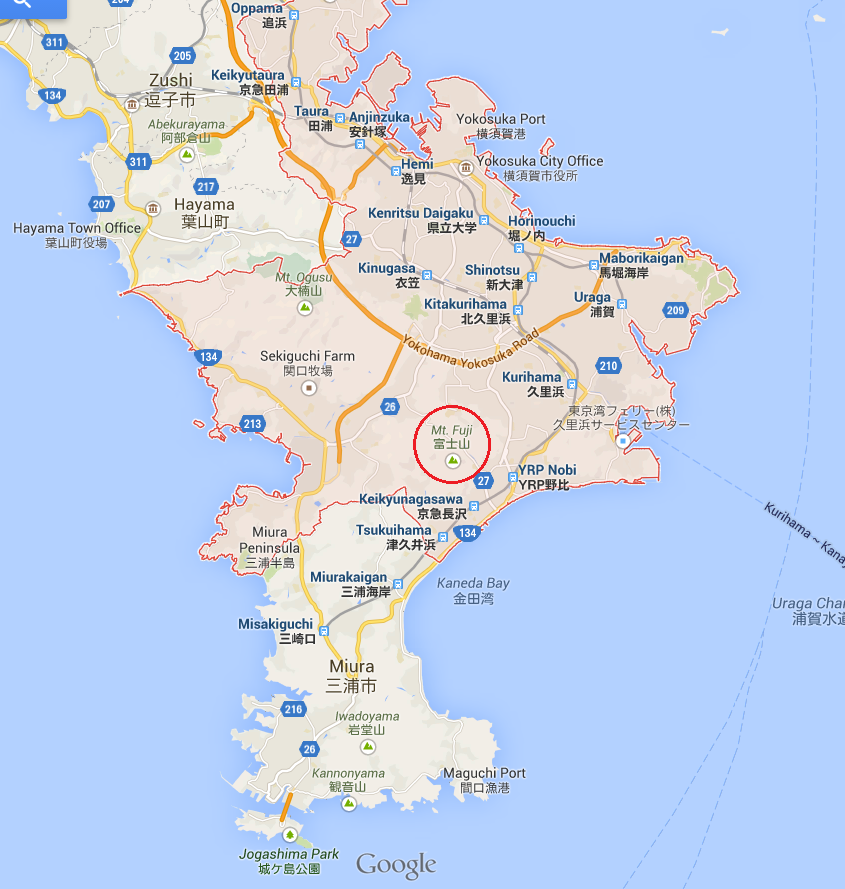
When visiting Yokosuka I looked at Google maps for inspiration for a day out, something I do a lot and has led me to a lot of great adventures. I noticed a mountain to the south of us called 富士山, Mt Fuji. Clearly the real Mt Fuji is not in Yokosuka, I checked it was in its proper place myself when I passed it on the Shinkansen on the way there. But there it was, Mt Fuji the 2nd. The lesser, the pretender. As I am nowhere near physically fit enough to make the 12 hour trip up the real Mt Fuji, we thought it would be fun to check out this one. That way I can honestly say that I have climbed Mt Fuji, just not the one everyone thinks about.
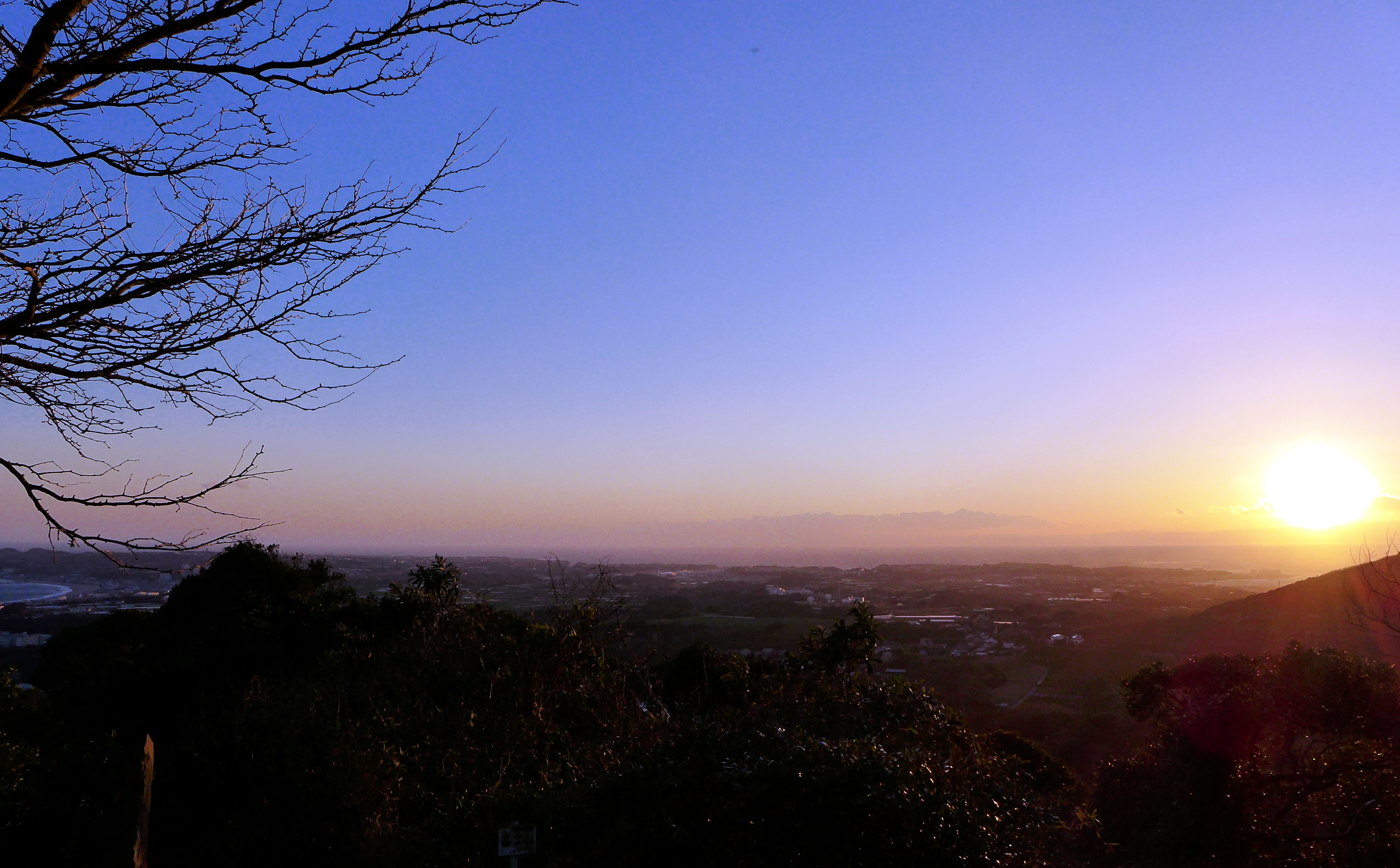
Photo 28-02-2015 11 46 17 am (1)fujifake

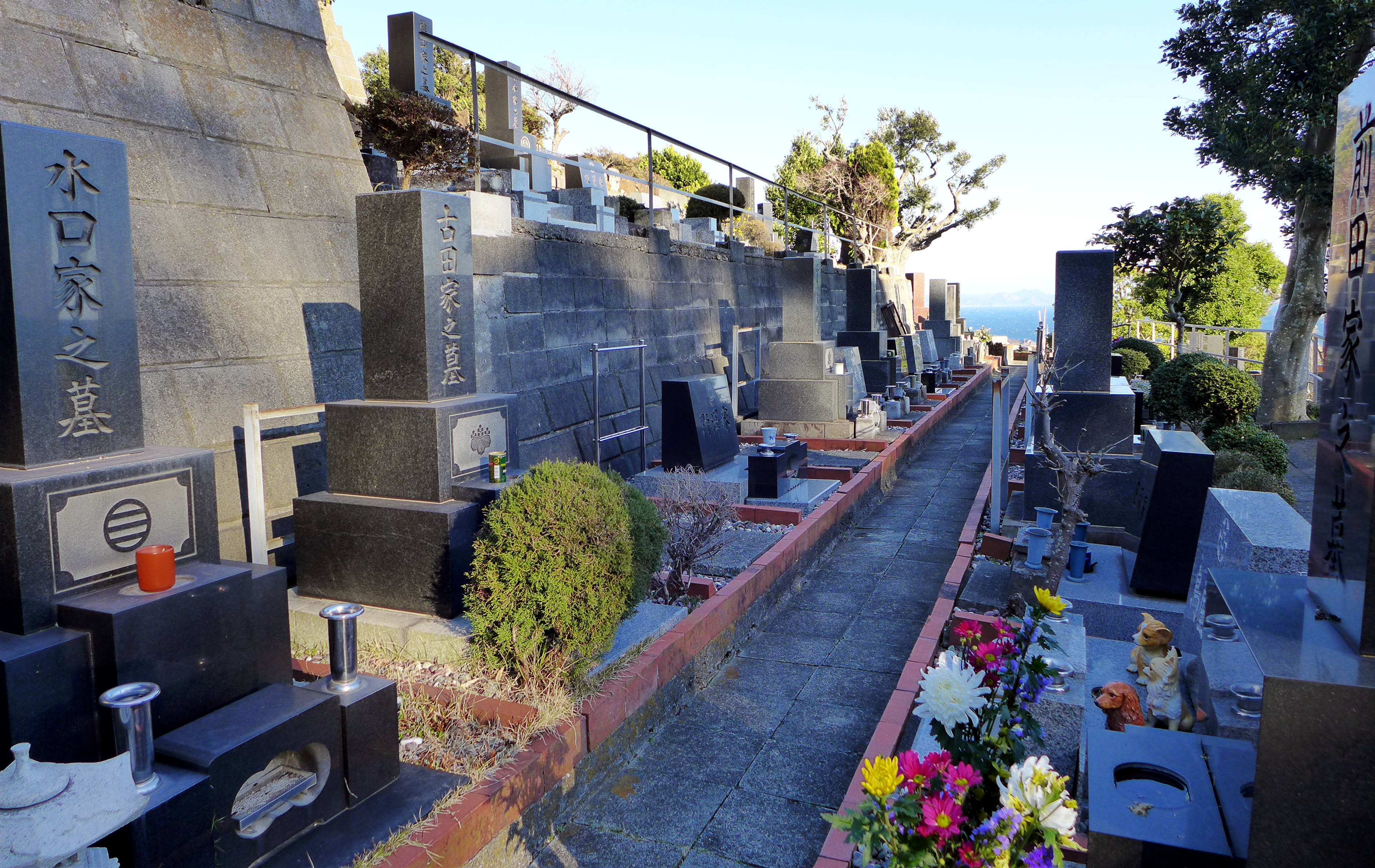
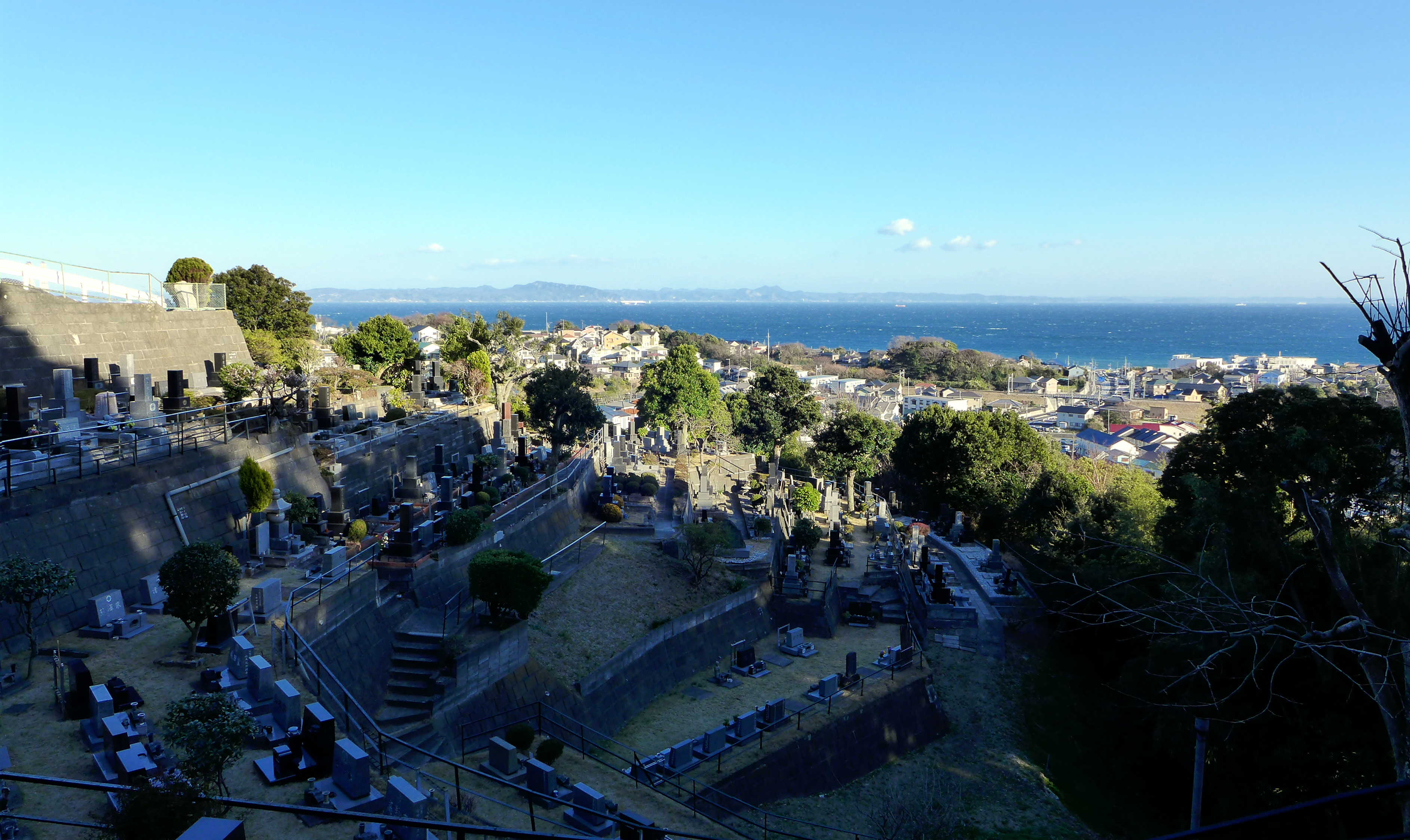
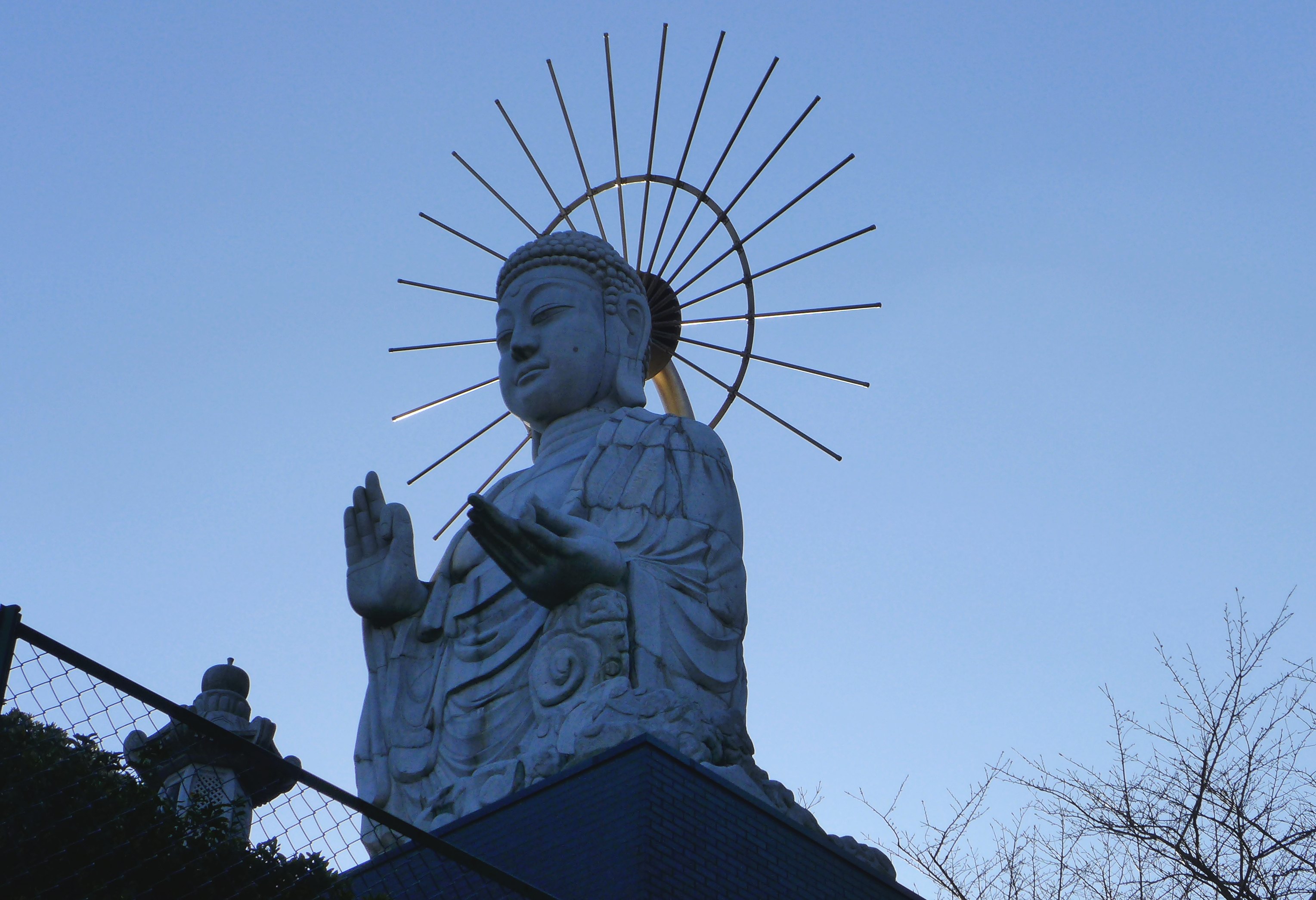
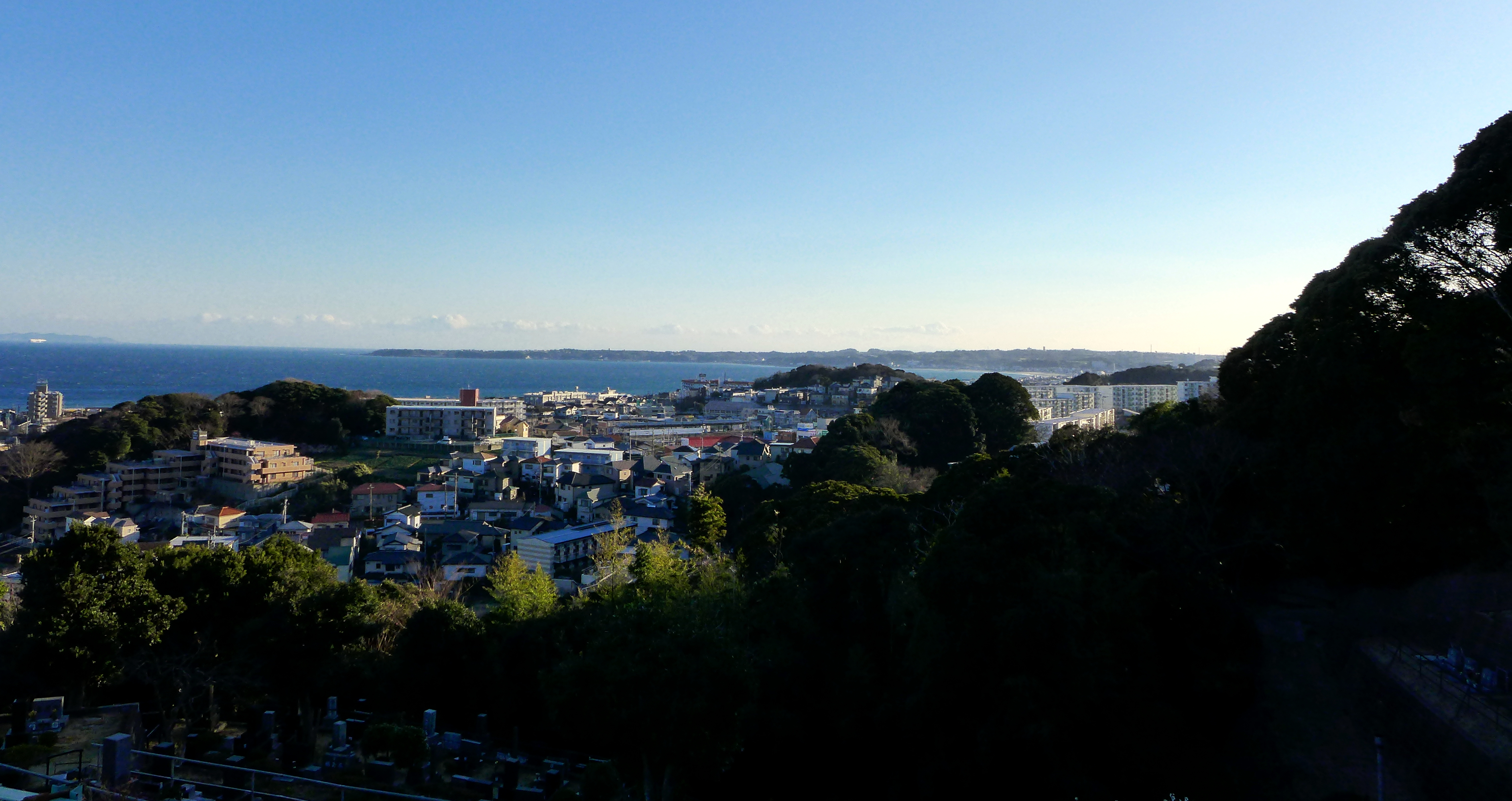
We made our way to the vicinity of Fuji 2.0, walking towards the mountain and looking for a way up. We noticed that sat atop the mountain was a figure. A rather familiar figure by now, it was yet another giant Buddha. This is my third giant Buddha since coming to Japan (one of which I saw in Hong Kong, the other in Kamakura). We managed to find the entrance to the way up the mountain, and discovered that it was a large mountainside graveyard. Undeterred, we climbed up to the Buddha anyway, enjoying the view from the path.

P1060463 P1060455 P1060458 P1060464 P1060467 P1060468

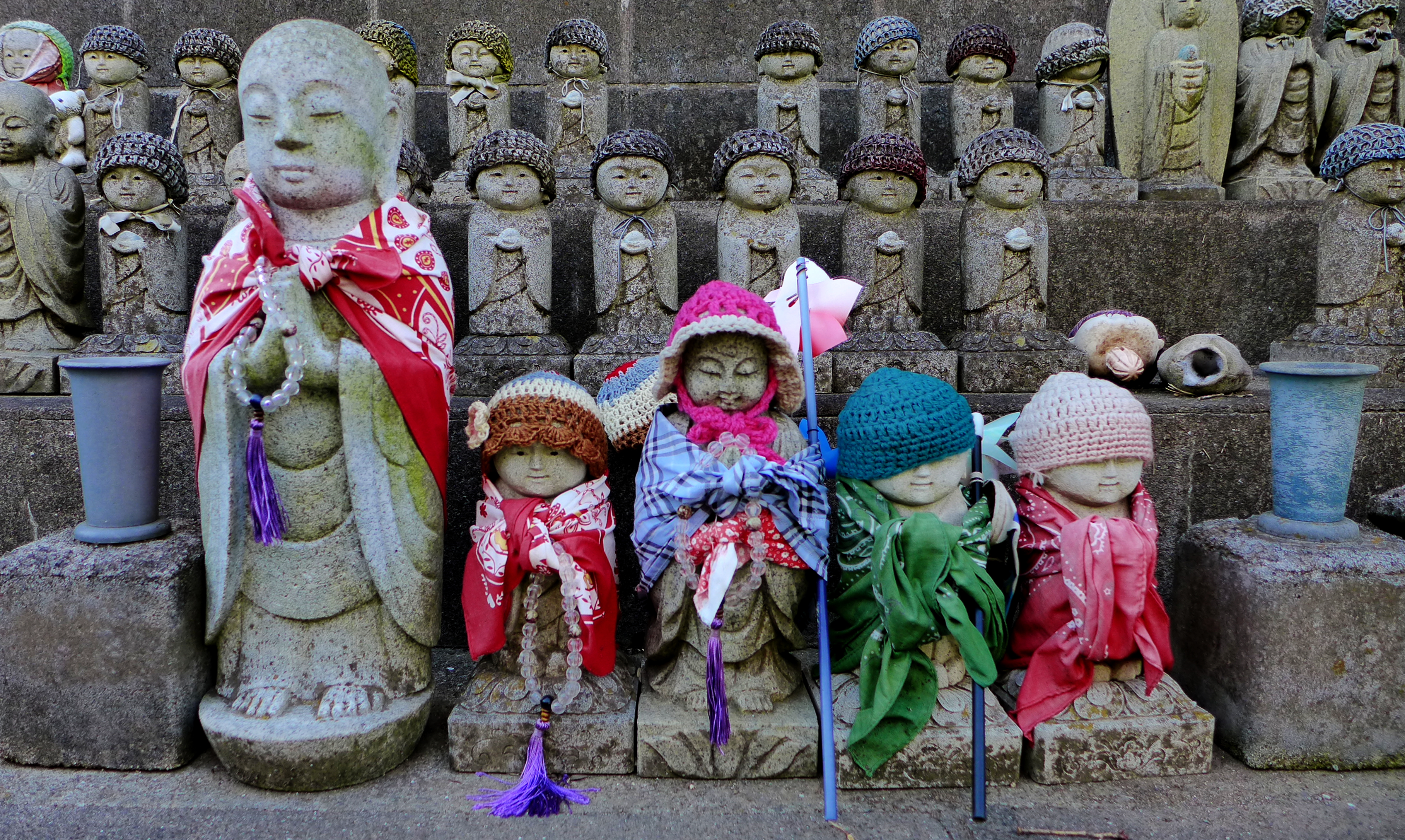
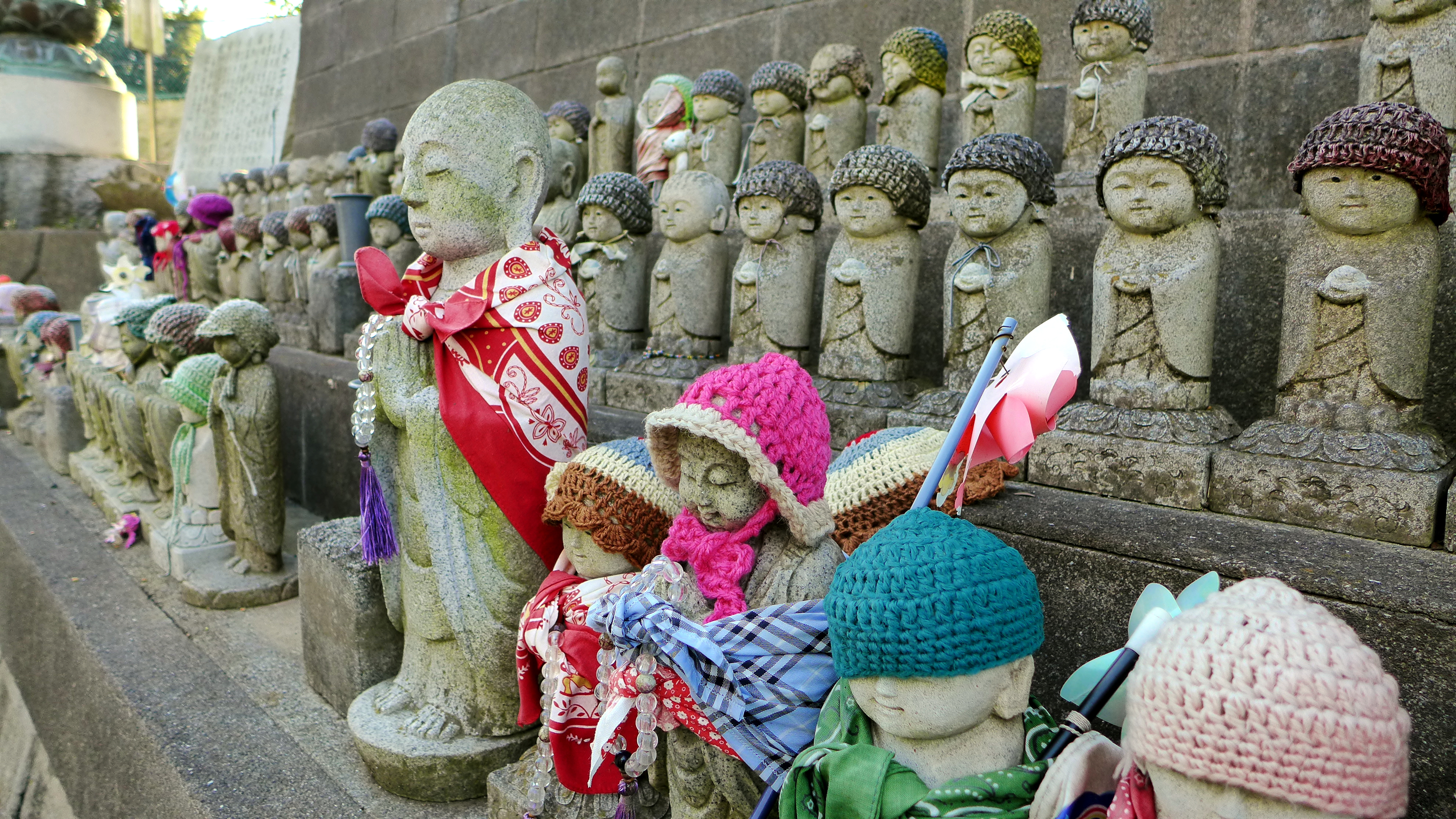
Japanese graves are not the same as those in the West; They  are often a small stone tower with wooden markers sticking out the back, and offerings of flowers and sake in front. I did some research into what the wooden markers signify and it turns out they are actually new names given to the deceased. The idea is that if you are given a new name when you die, if someone says your name you won’t come back to life (presumably as a terrible zombie). Temples charge for these names, and the higher your donation the more elaborate and cool-sounding your post-departure name is. One’s real name is also written on the gravestone, and sometimes even the name of one’s spouse is engraved while they are living to save money (one engraving is cheaper than two). The spouse’s name is painted in red to signify they are still living, and the red paint is removed when they die. It probably isn’t a great feeling to know your name is already written on your grave-stone, waiting for you.
P1060469 P1060471 P1060472 P1060477 P1060476

The graveyard was fairly uniform, which is hardly surprising as 91% of funerals in Japan are Buddhist. Japanese funeral customs are unique, and while a foreigner will probably never have to partake in a Japanese funeral, these customs are felt in every day life. There are a few things you should be careful to avoid doing in Japan, as they are considered a social faux-pas, and are very easy to do.

For example: Your mum wants to try some food on your plate, so you pass her the food from your chopsticks to hers. This reminds Japanese people of passing bones chopstick-to-chopstick in traditional Japanese post-cremation ceremony, so don’t do this. Later you go to a Ryokan, a traditional Japanese hotel, and you are given a yukata, a lightweight kimono-style garment, to wear. You cross the two flaps over right over left, not thinking about it. Soon, a Japanese person sees you and helps you correct it to left over right. This is because only the dead wear their kimono right over left. In addition, sticking your chopsticks vertically into your rice is also reminiscent of offerings of food to the dead, which is offered with the chopsticks in this position, so best to avoid doing that as well. As you can see, you learn a lot about Japanese funeral customs from daily life in Japan without ever going to one. 

P1060475 P1060490P1060481P1060486 P1060488P1060491P1060493P1060473

I would recommend the film Departures (おくりびと) for anyone who wants to know more about Japanese funeral customs. While it is a morbid topic, it’s interesting seeing how other cultures deal with death, and the film itself is actually light-hearted, funny and has beautiful cinematography. I strongly recommend it, even if you have no interest in the funeral practices, and it’s won several awards, so I’m not alone in this recommendation.

P1060503 P1060506P1060484P1060487x

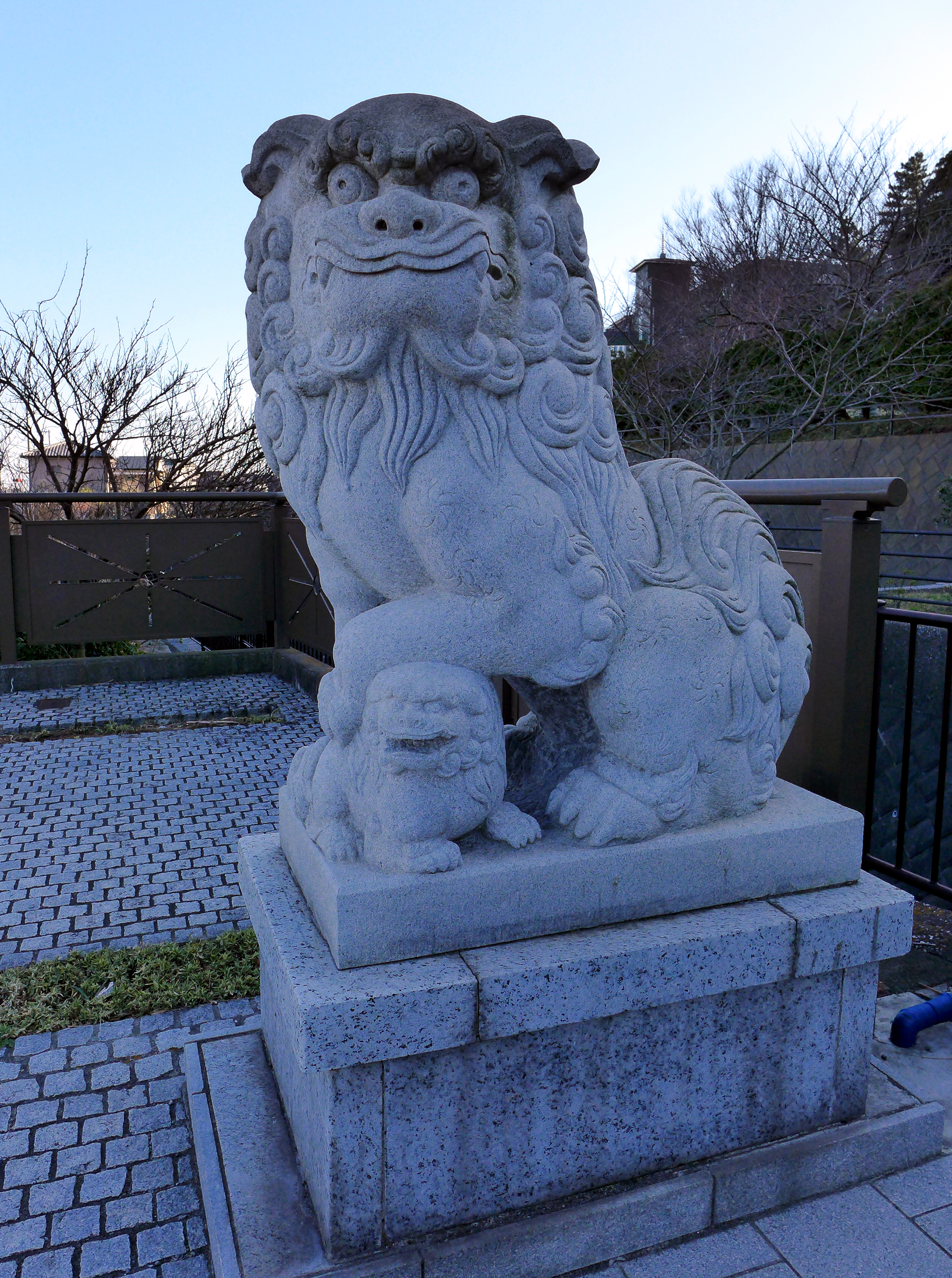
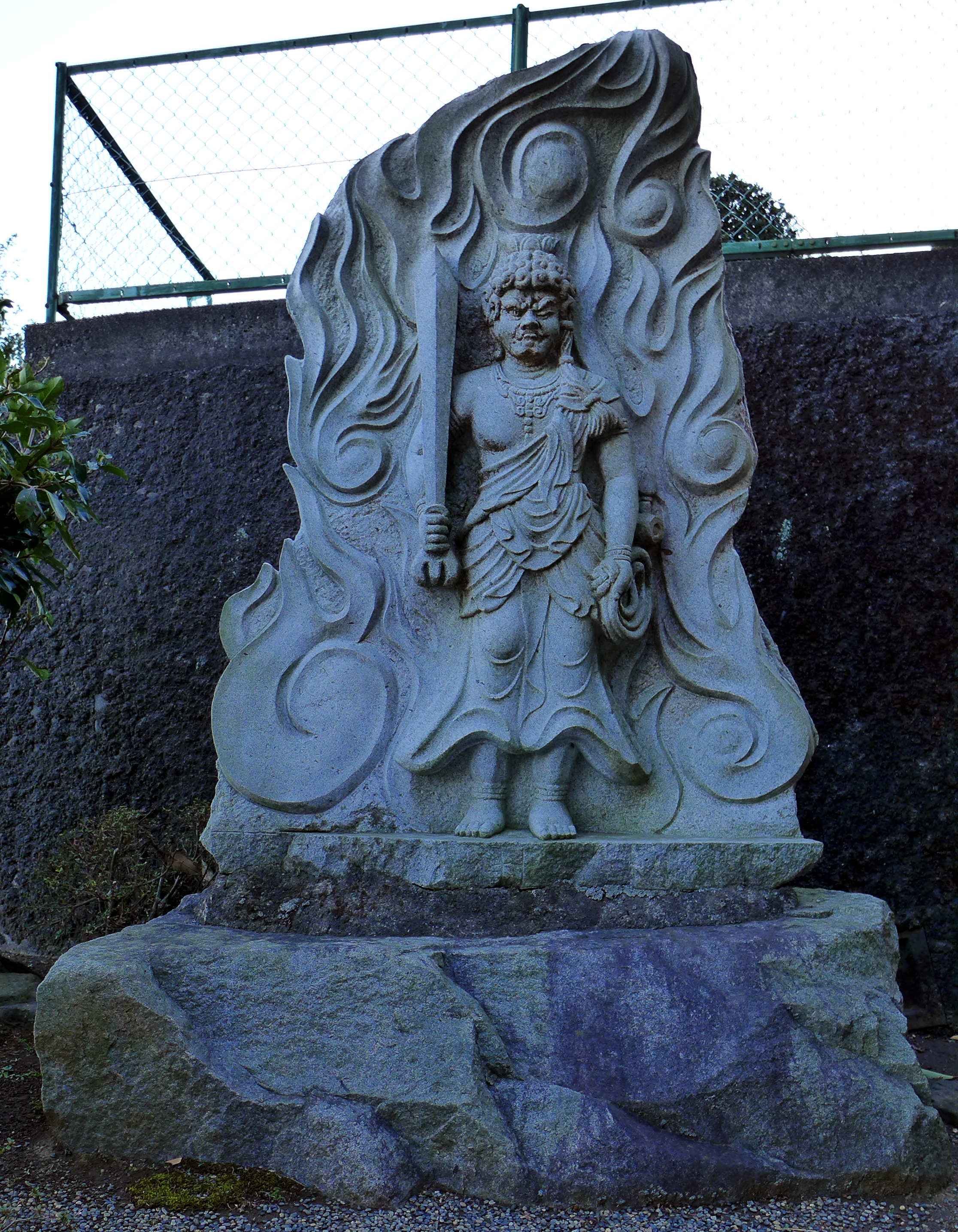
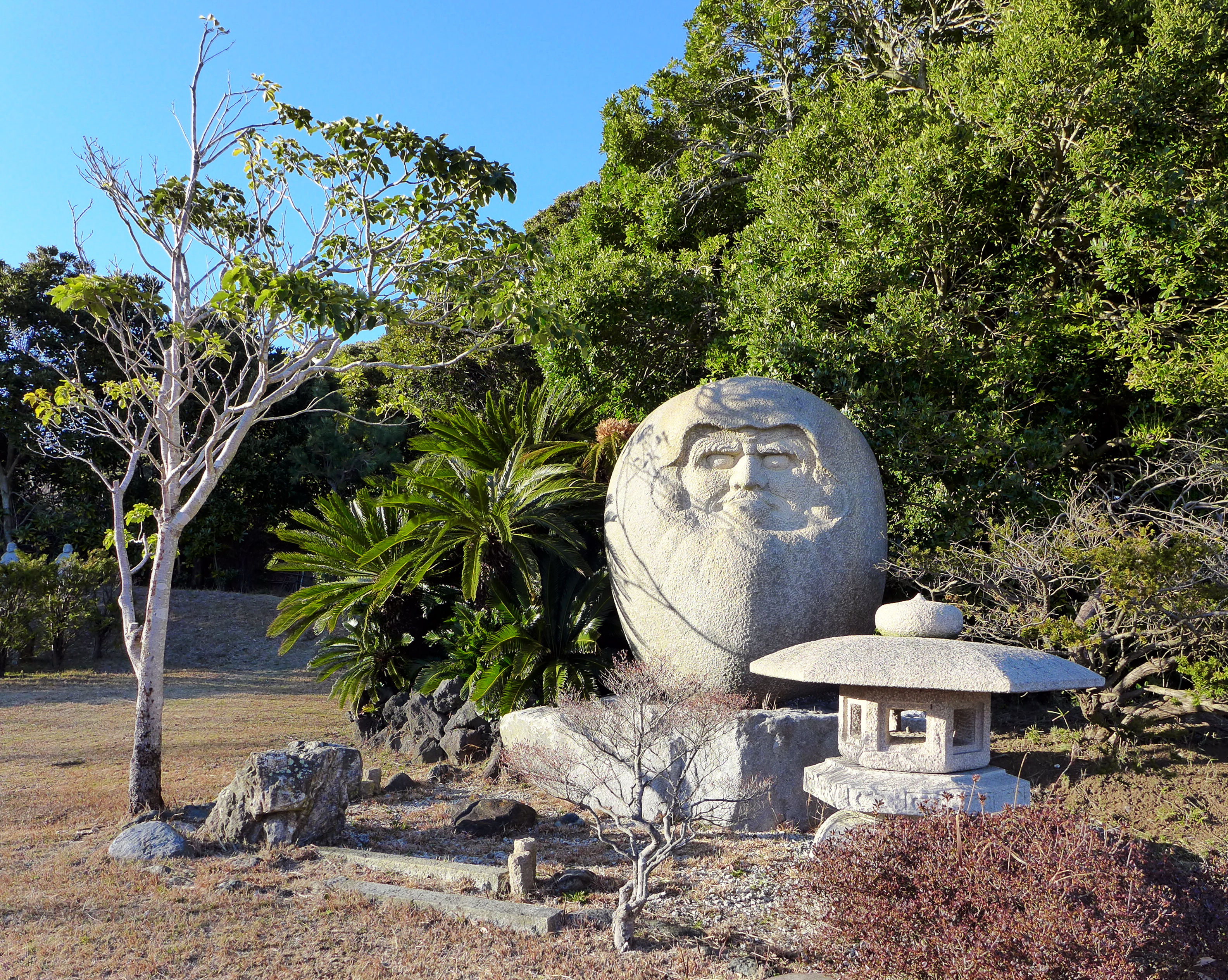
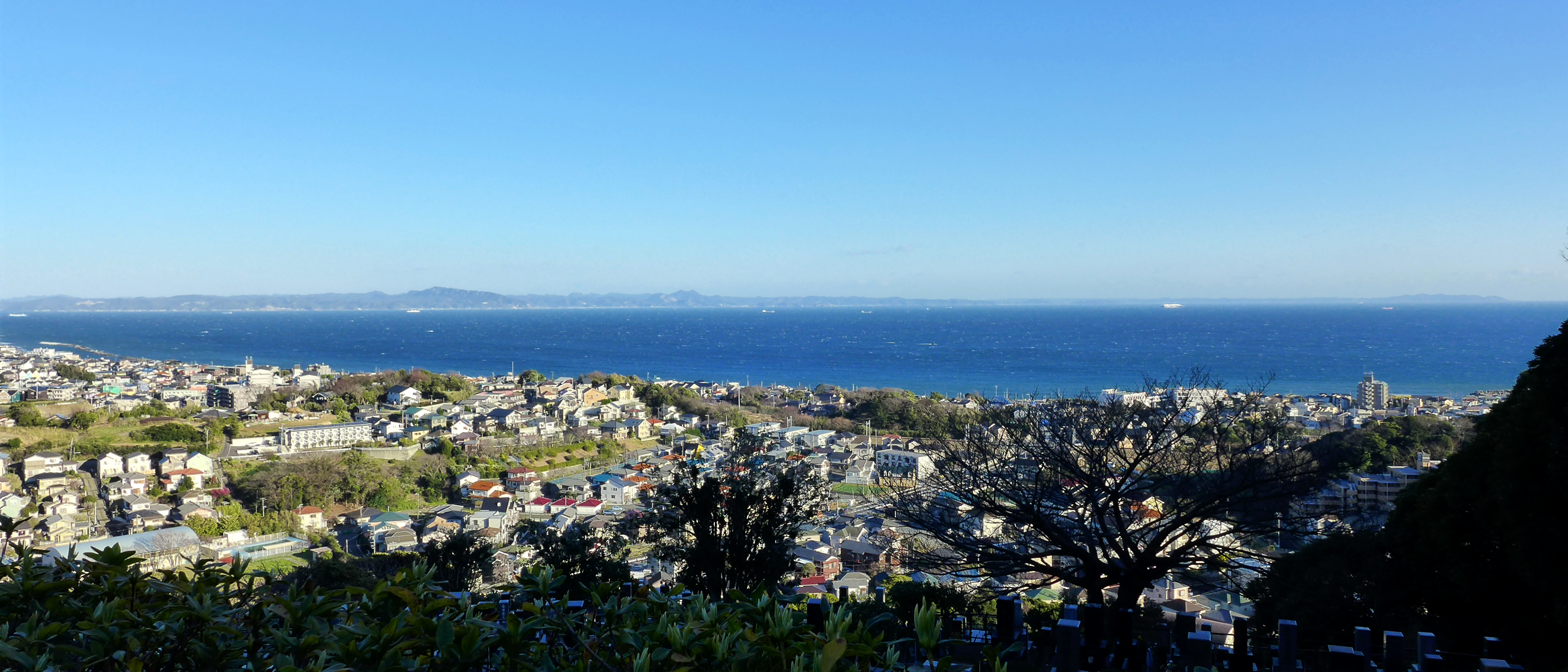
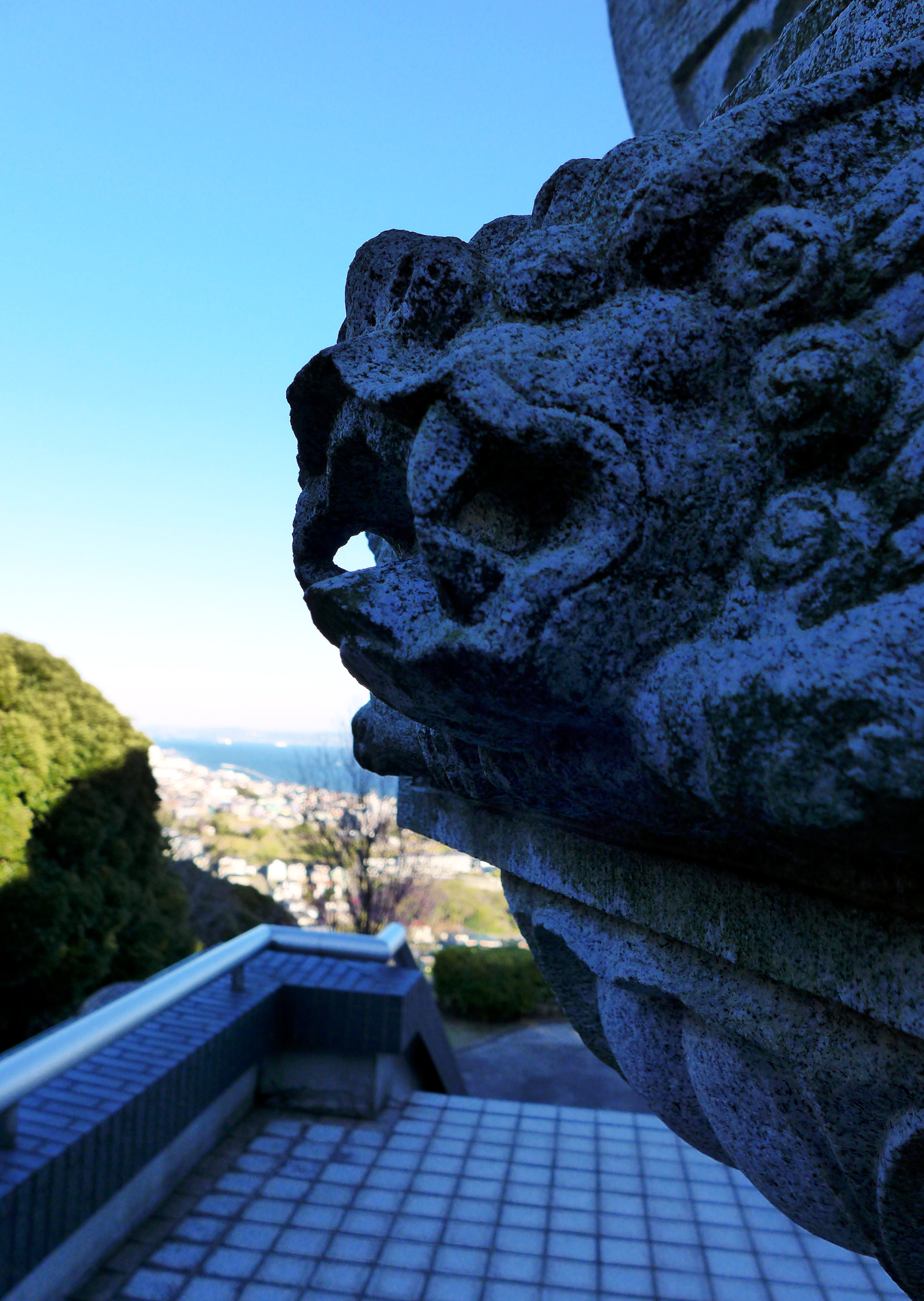
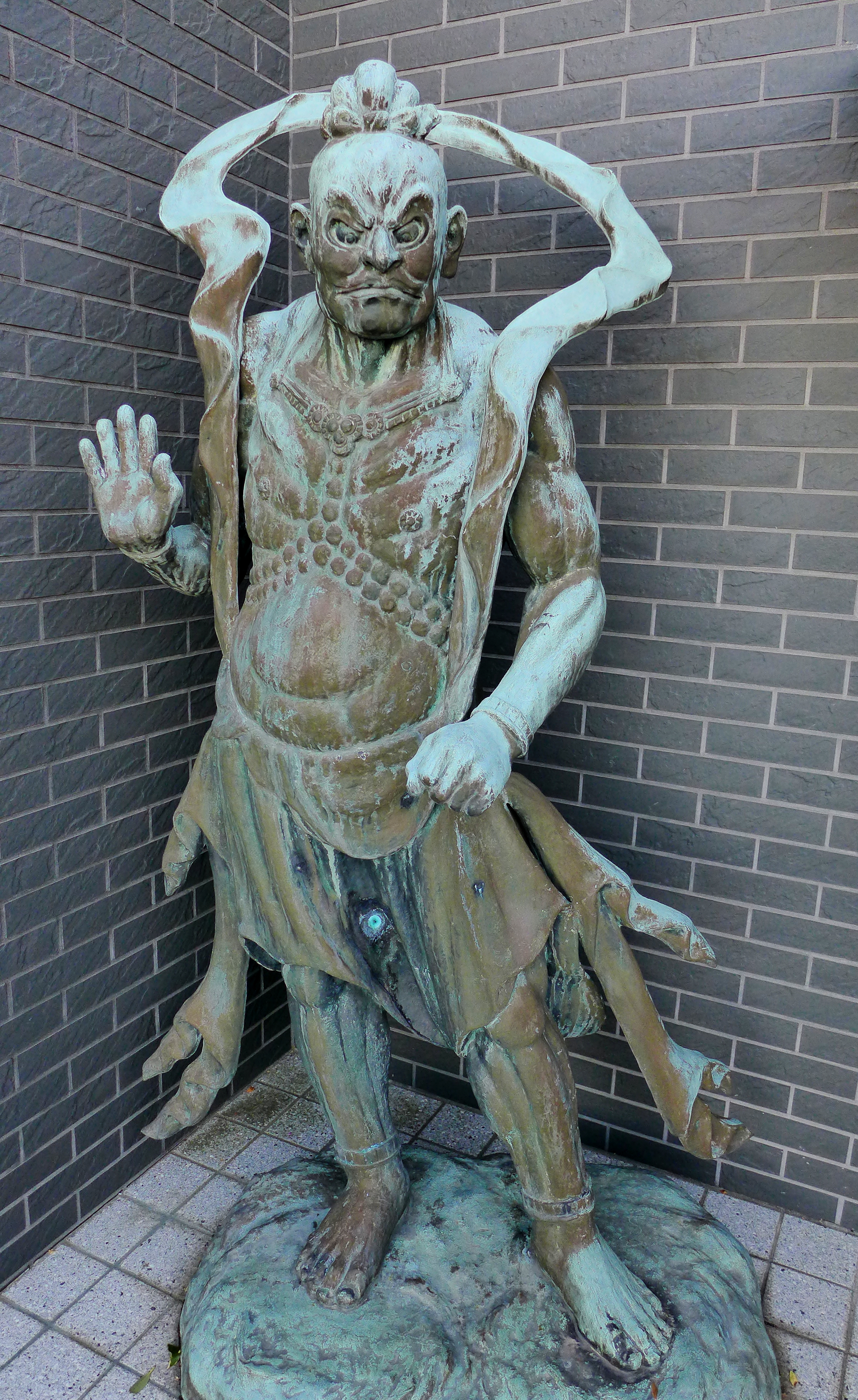
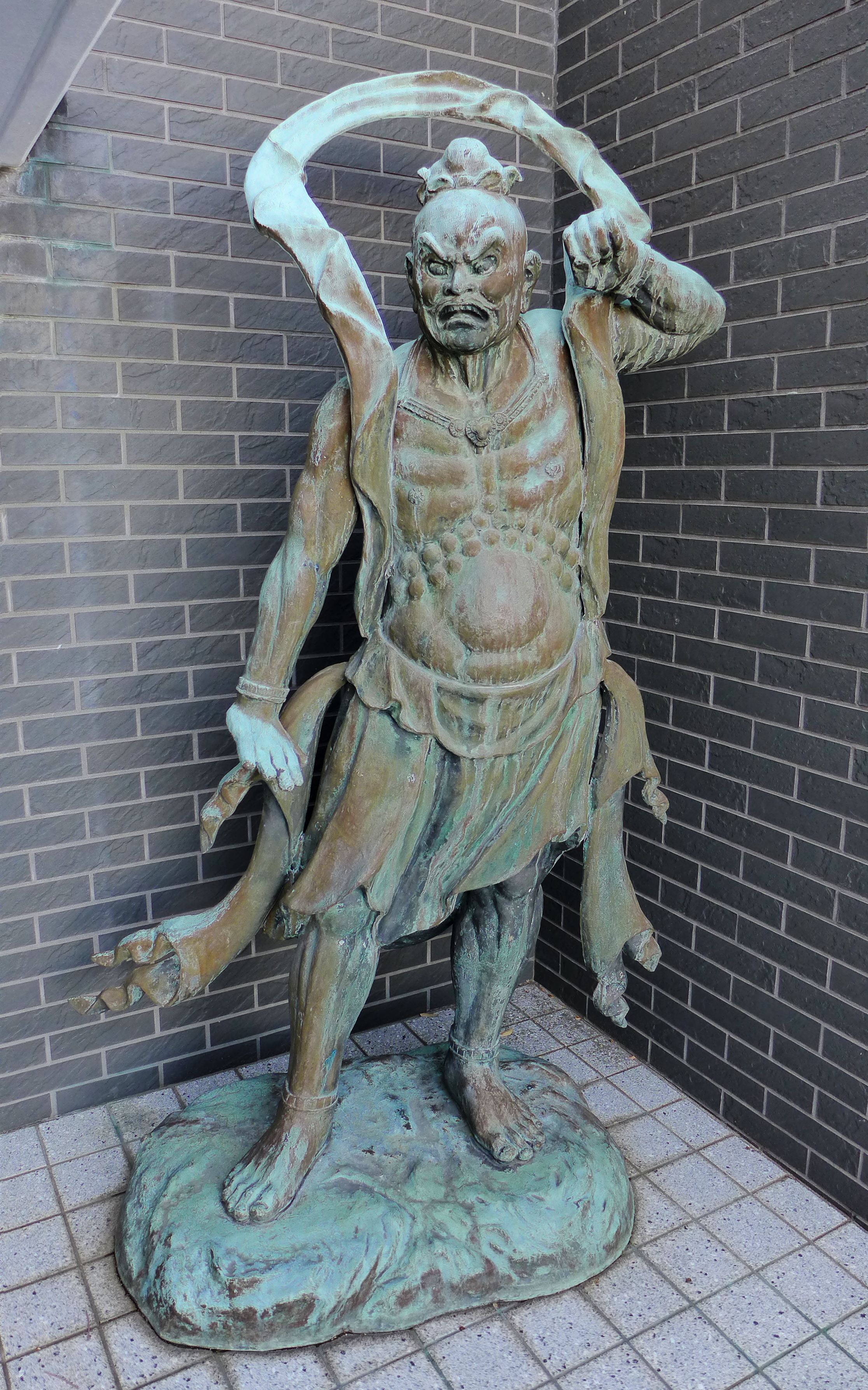
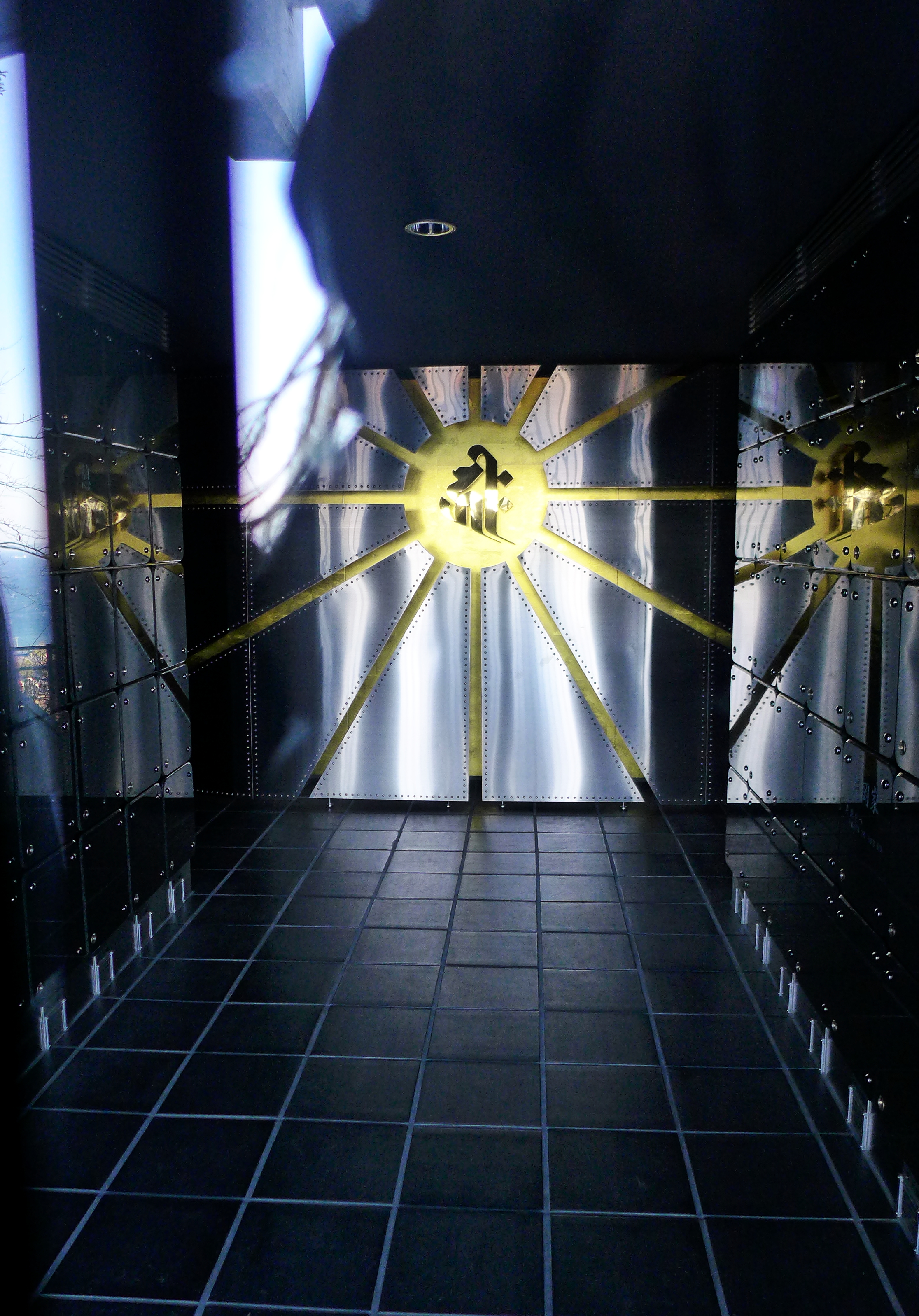
We made it up to the top of the hill and discovered a pagoda and the large Buddha statue. The statue watched over the graveyard and looked out to sea, giving the sense that the graveyard was in safe hands. Under the Buddha was a gated hall, and the inside seemed to be a well kept lobby or a vault. We were unsure what was inside but it seemed like it could be a secret spy den, or illuminati related. Or something related to Buddhism and funerals, but I still think it was suspicious. It was guarded by two demon-like statues that seemed determined to keep people out.

P1060495 P1060496 P1060497 P1060499

They even had a memorial for pets, which was a really nice thing to see, though it made me sad, as my family dog, Jasper, died a few weeks prior. The inscription just says ‘thank you, thank you’ and there was a memorial wall next to it with pets’ names and the date. It was a lovely way of remembering pets and the joy they brought their families.

P1060509

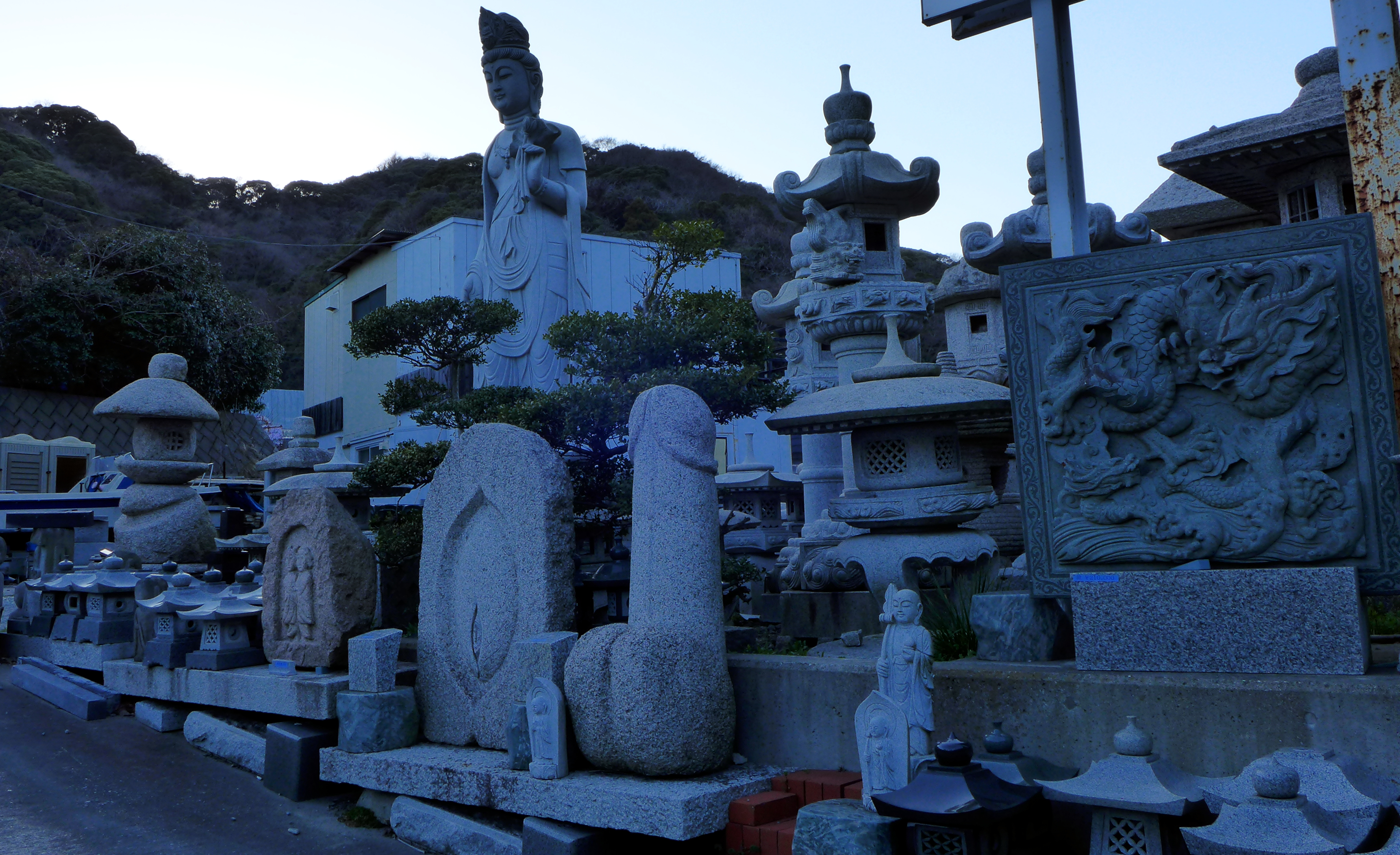
Once we’d climbed that mountain we decided to head round to see if there was another path up. On the way round we came across a place that made statues – graves, statues for gardens, and a pair of rather… intimate, statues. I’ll let you spot them.

P1060513P1060510P1060511P1060512

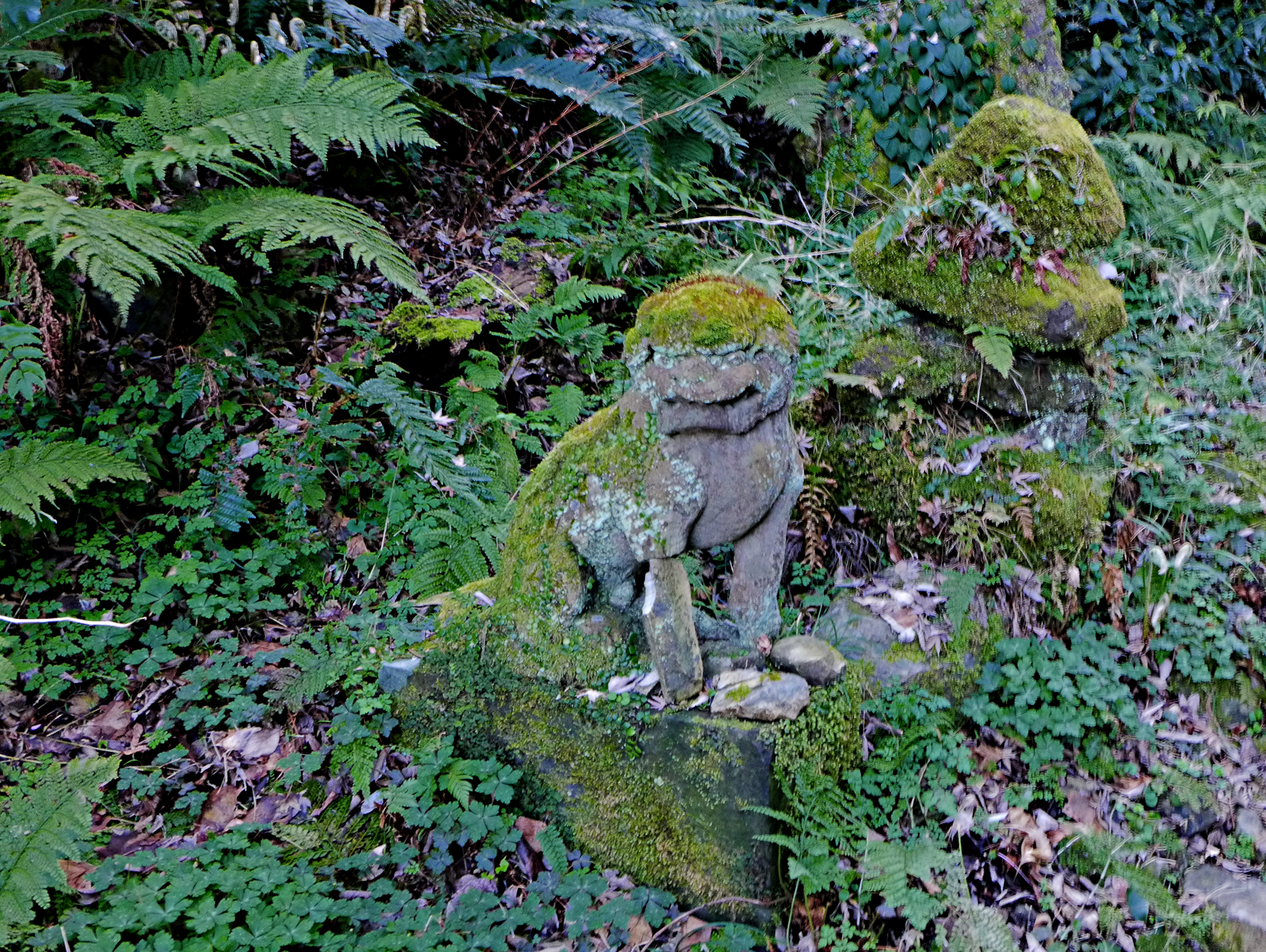
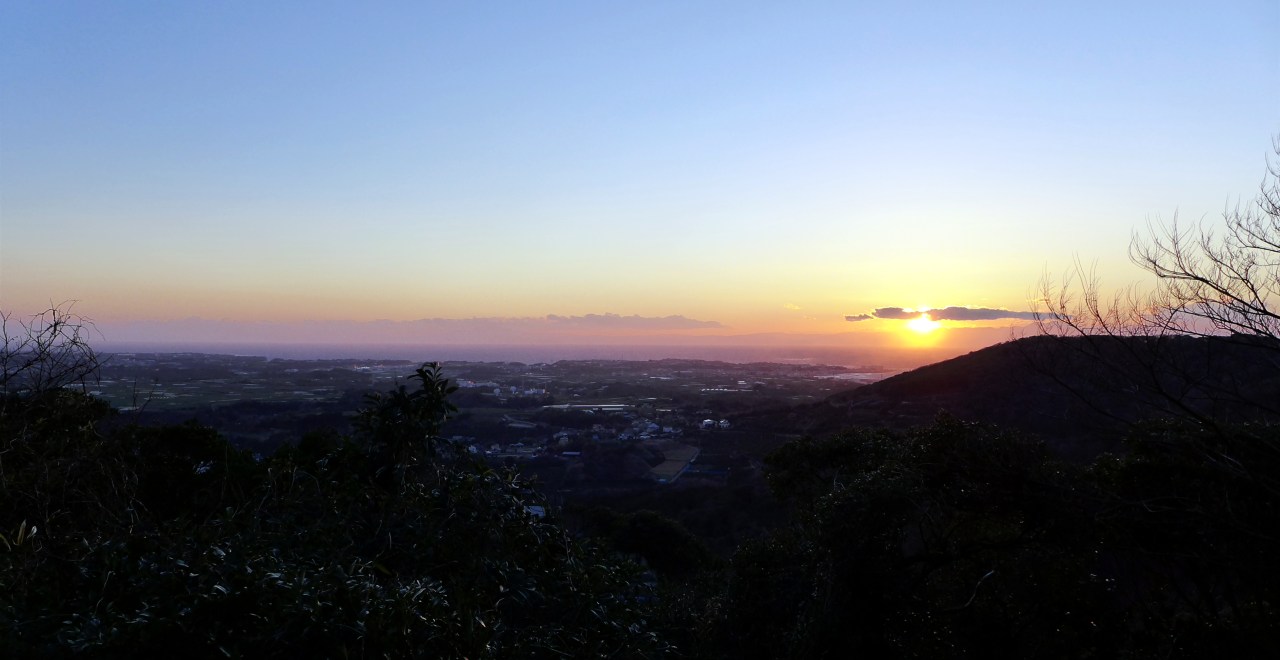
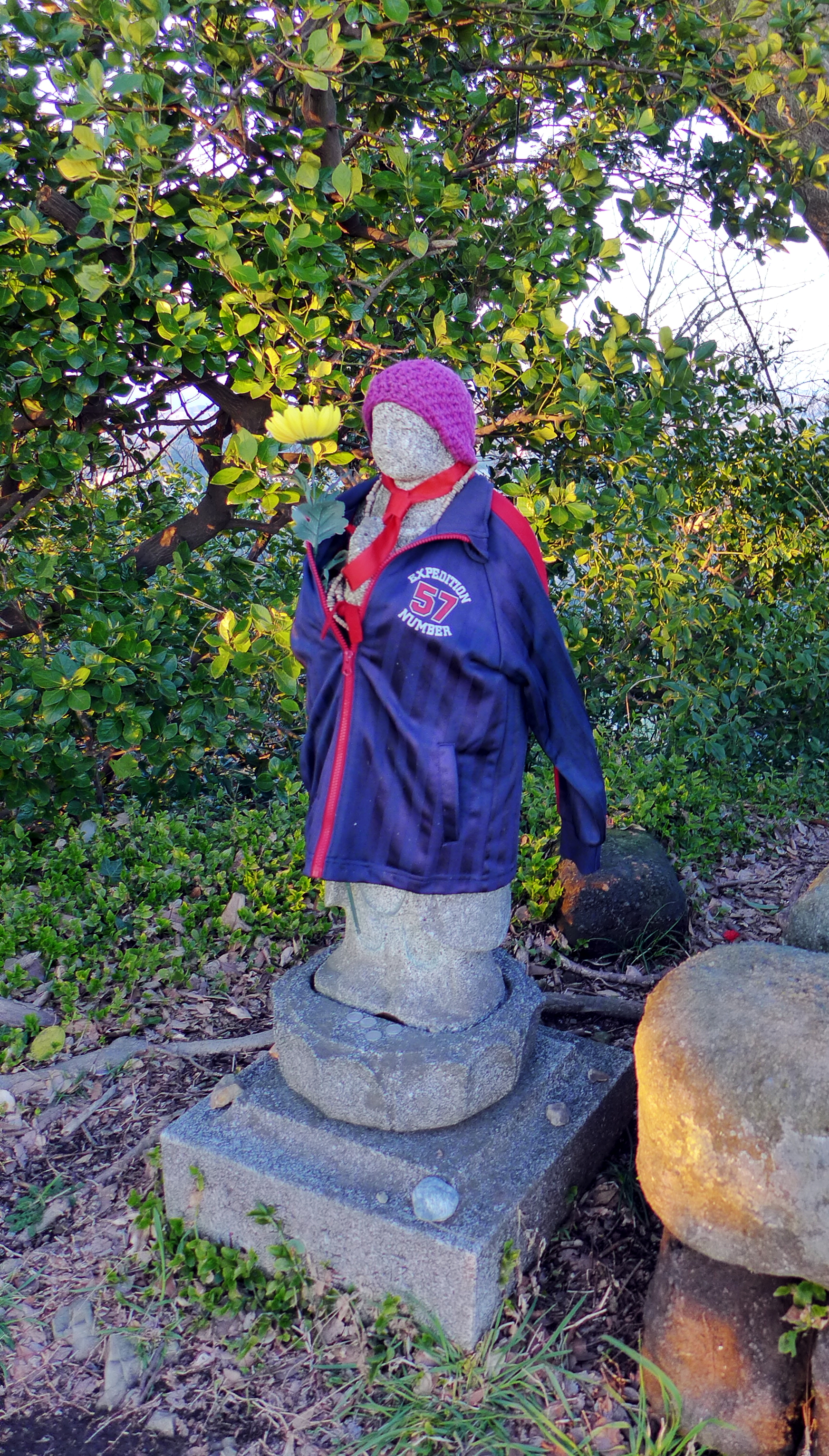
I wanted to see the shrine that was on the other side of the mountain (according to Google maps), but it turned out to not be a real shrine but a collection of old statues in the woods and a stone alter at the peak. We climbed up False Fuji, a little slowly as it was steep, muddy, and I’m pathetic, making it up in time to see the sunset from the top. I think had the sun been out of the way, we would have been able to see the real Mt Fuji from the top. Many mountains in Japan are named ‘Fuji’ or have ‘Fuji’ in their names if you can see the famous mountain from the top.

P1060515 P1060518 P1060521 P1060522 P1060523P1060528 P1060525P1060529

We made it down the mountain just before it got really dark, taking it slowly as the steps were uneven and very muddy. I really enjoyed getting off the beaten track and going on an adventure, especially as it turned out to be a great experience.