

On Wednesday I returned to Kurama for the fire festival (鞍馬の火祭り – Kurama no himatsuri), an annual event that sees thousands of people flock to the tiny town of Kurama in the north of Kyoto to enjoy all things flammable. Japanese Wikipedia informs me that the festival was established by order of the Emperor in 940 in order to distract the people of Kurama from the alarming frequency of earthquakes and subsequent natural disasters. The Kurama fire festival is on the same day as the Jidai Matsuri (時代祭), a festival that celebrates Japanese history. I will talk about this in a different (shorter) post as otherwise this will be very long and very picture heavy (its picture heavy anyway). Suffice to say that by the time it was time to go to Kurama I was already pretty worn out.
Lexi and I went to Kurama early, setting off from Demachiyanagi station (出町柳駅) around 4. I would highly recommend going early as it gave us the chance to enjoy the town before it became crowded and look around the area before it got dark. The train was packed out even with us leaving early, but we were lucky enough to get seats. On arrival it was clear that they were expecting a flood of people – there were hundreds of officials wielding what look like lightsabers – glow in the dark batons for directing, as well as megaphones. There were also braziers and torches waiting to be lit everywhere. It was already pretty busy but the crowds thinned out as we left the station and walked through the town. The first picture here is of tanuki, a creature native to Japan, though I’m sure normally their expressions aren’t quite so pained.

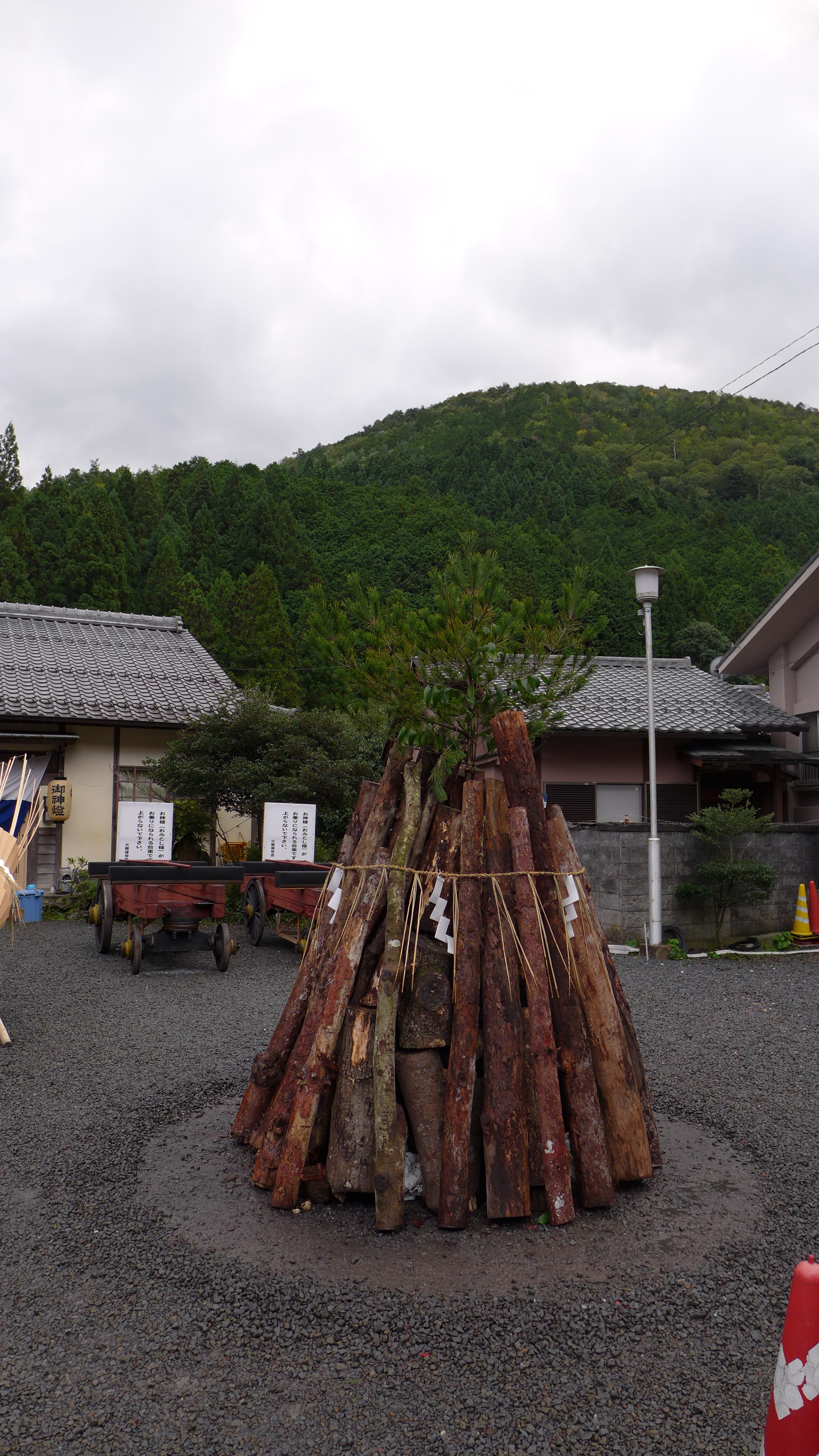


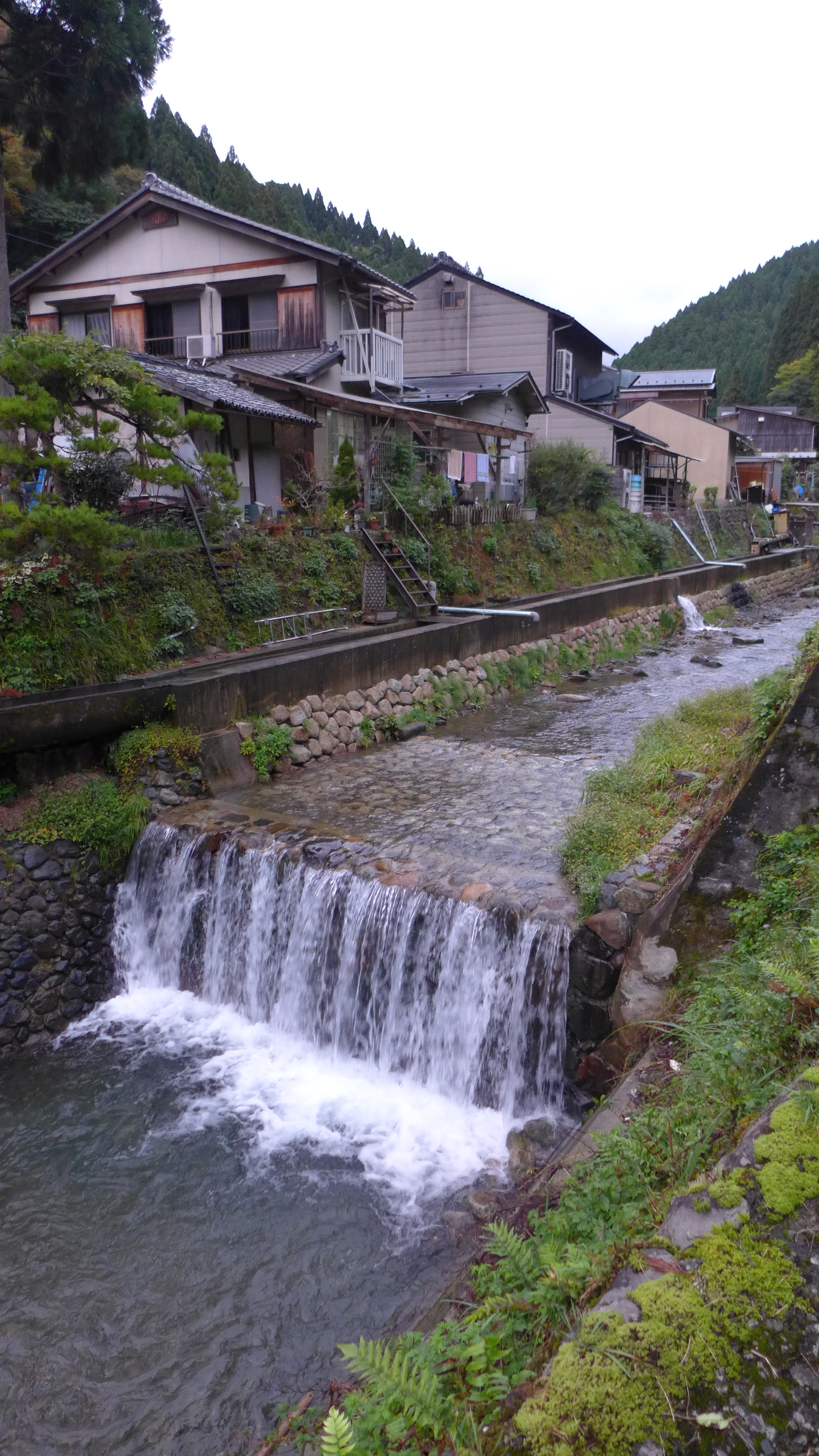
The first time we visited Kurama we went straight to the shrine without exploring the town so I really enjoyed looking around. It is surrounded by tall evergreens and has a stream running through it. We crossed the stream and walked down by the trees for a while. The trees loomed over us like Mirkwood – I got the feeling that if we went in we would never find the path again.




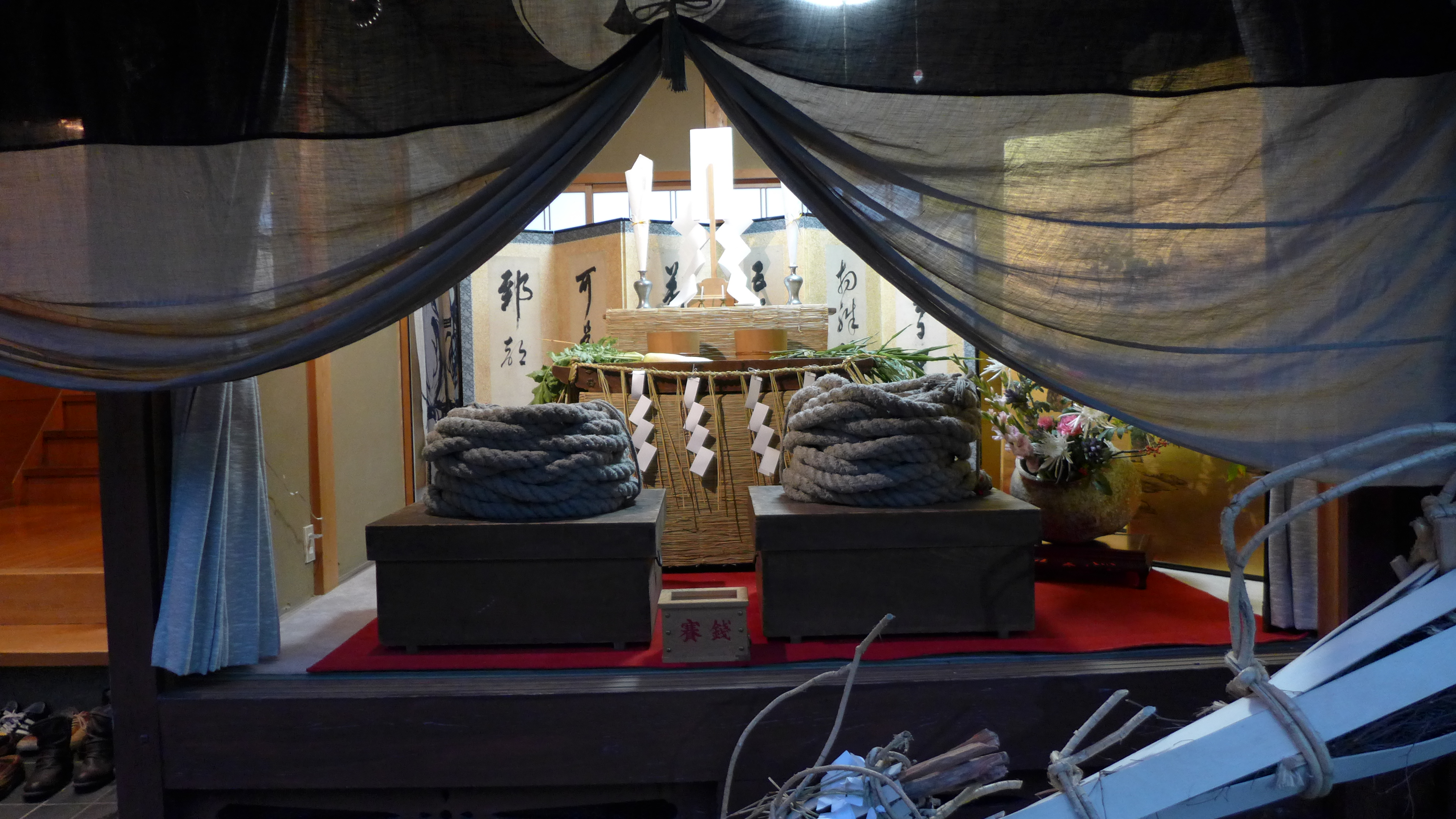
As we walked through town we saw that many of the houses had put up special displays for the festival; they had opened the sliding shutters at the front of the house to display screens, flowers and antiques in their front rooms. As we had arrived early we were able to wander down the street looking them.


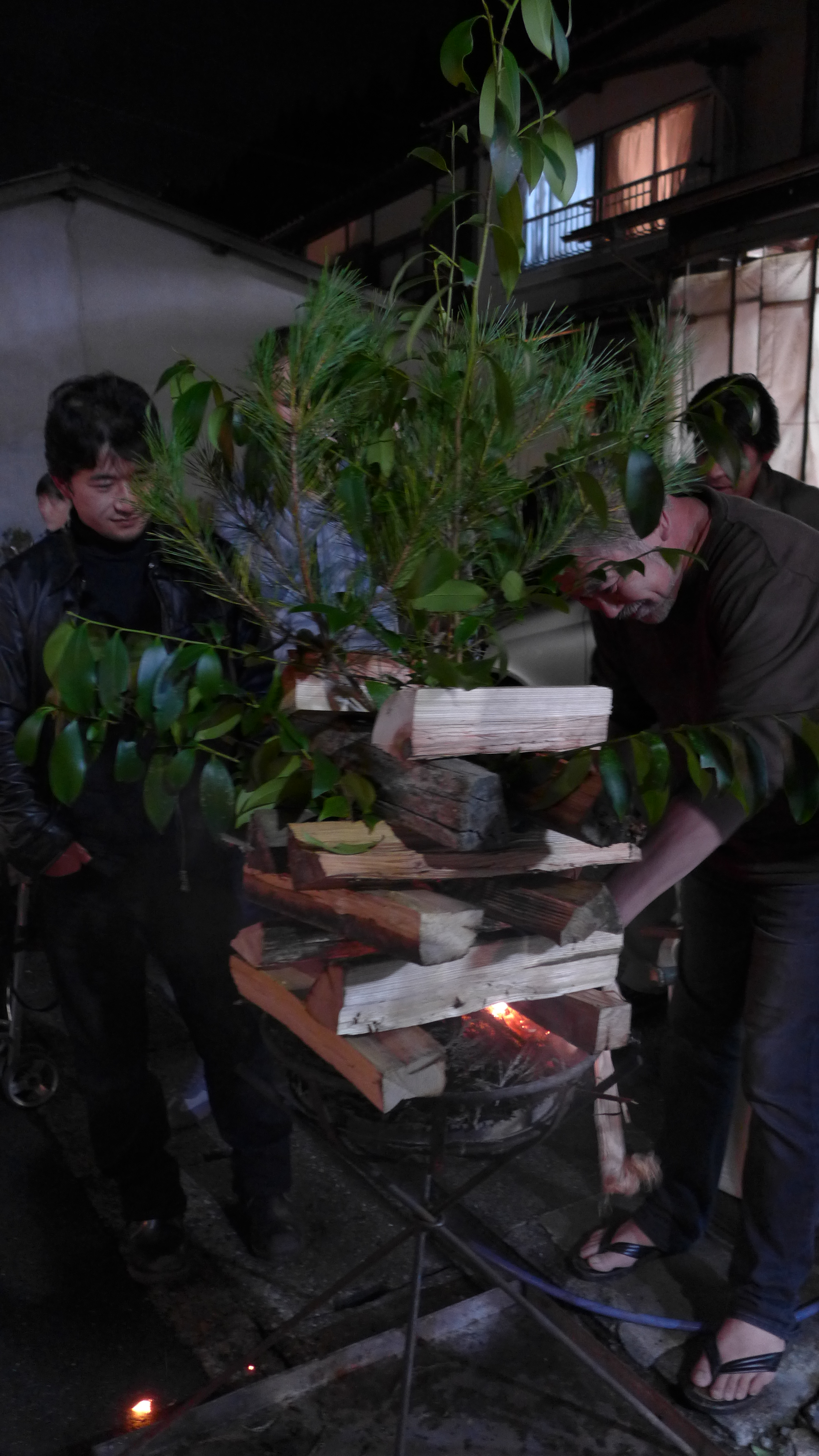
 The night began at 6:00 with a man robed in white walking down the street heralding the start of the festival and calling for the torches to be lit. After this the children began the festival by carrying torches (with the help of parents and older siblings) and calling out ‘Sairei Sairyo!’ (祭礼最良 – literally meaning: festival, the best. In the hope that this festival will be the best one). It was quite windy at this point and it was a bit worrying seeing children as young as 3 or 4 carrying big burning torches with sparks flying everywhere. The light-saber-wielding attendants were shouting to the festival-goers that ‘fire is dangerous, please be careful!’ which apparently satisfies Japanese health and safety standards. To be fair, the parents kept a careful eye on their children and any torches or embers falling to the floor were quickly extinguished by a local.



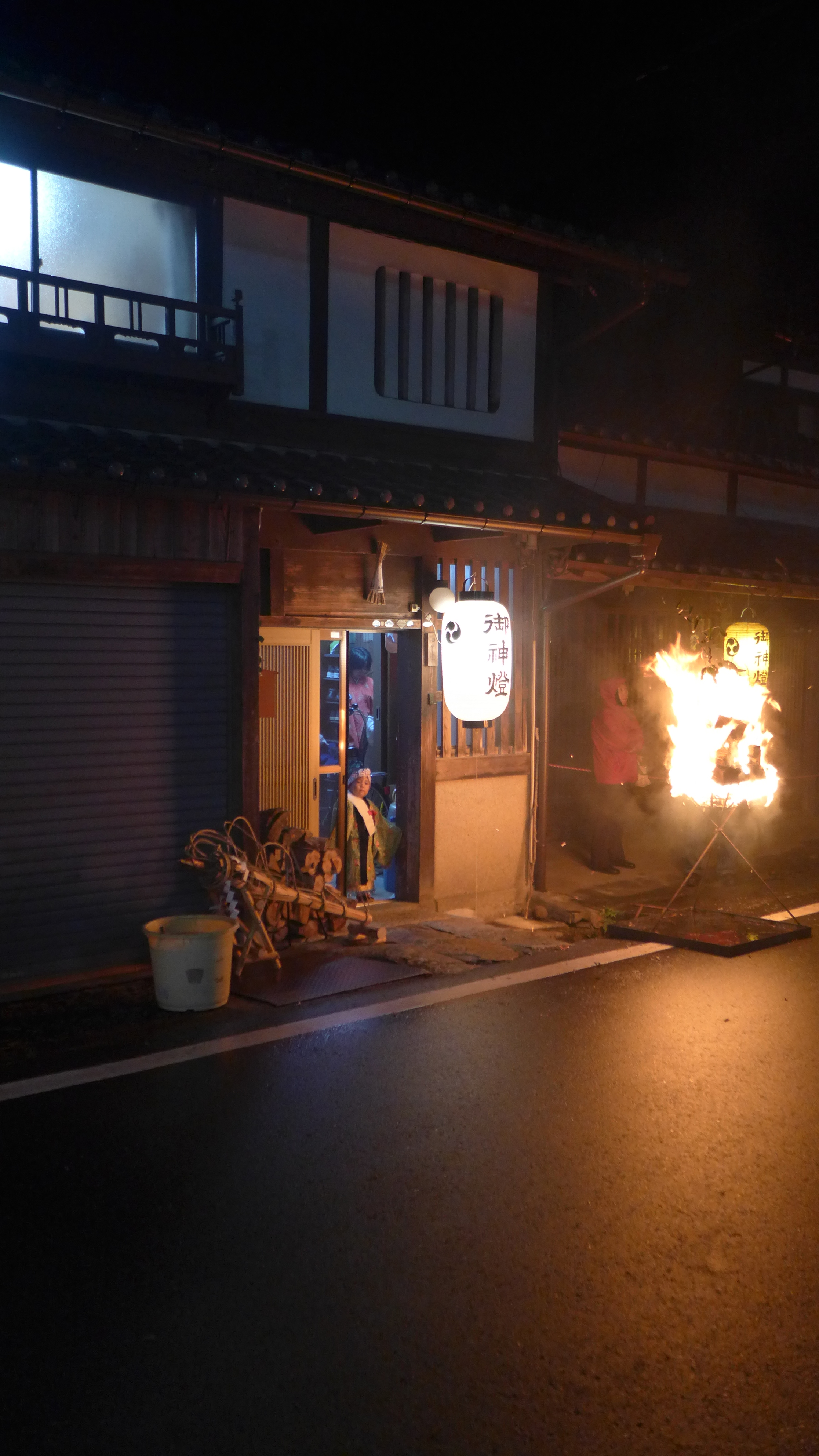
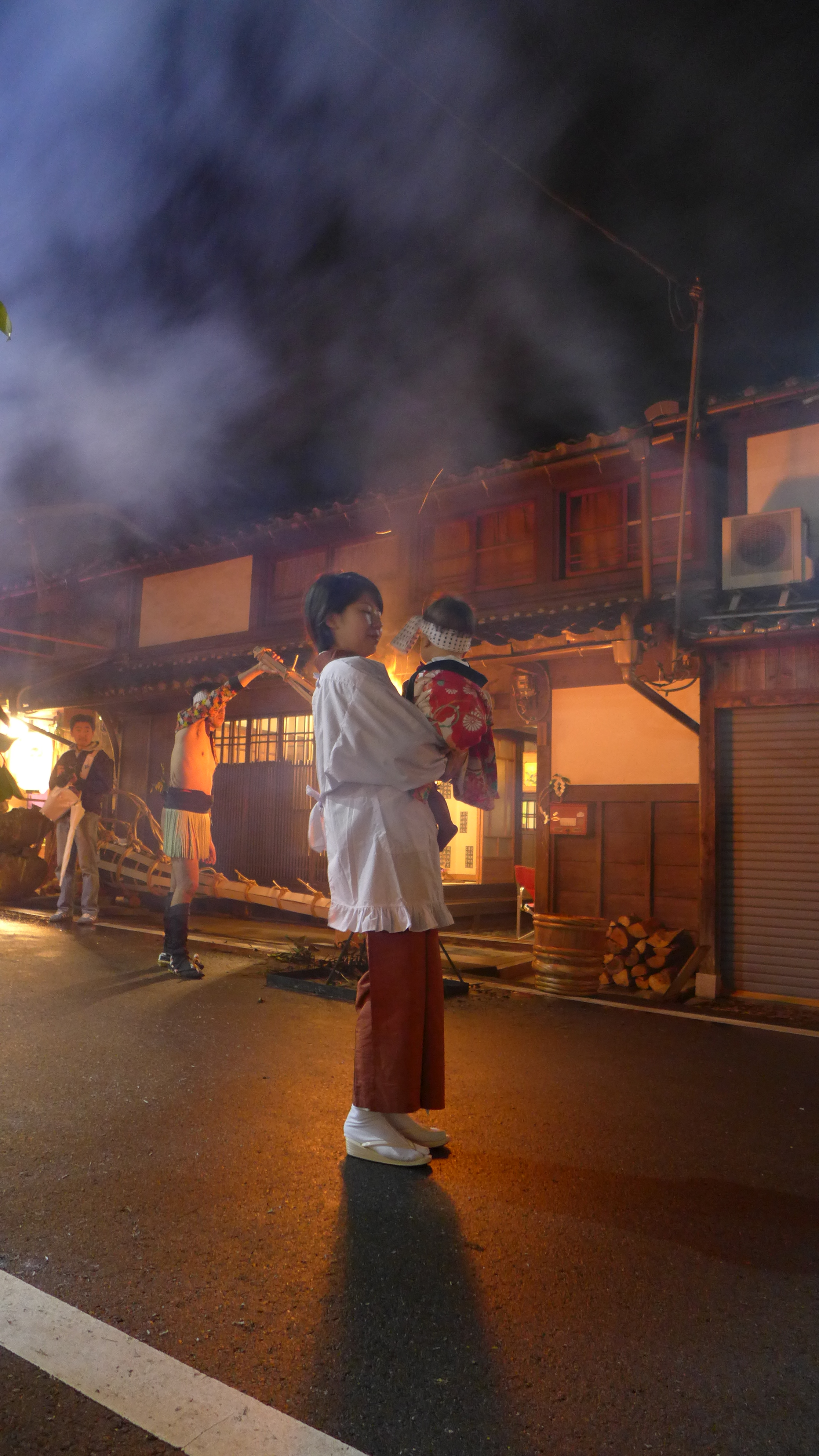


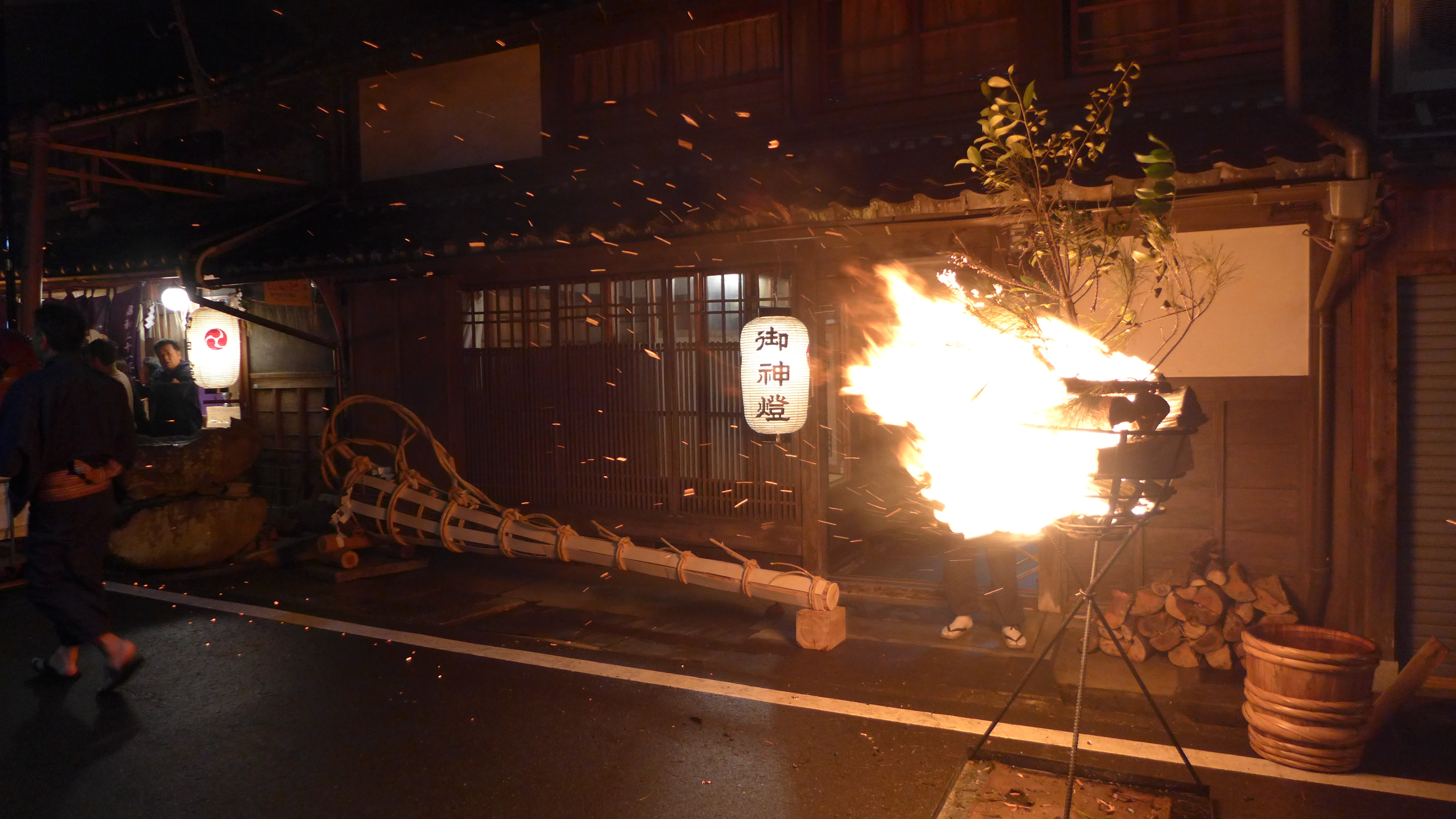


After a while we moved from where we were sitting and walked down the hill further into town as it looked like something interesting was happening. This was a mistake – we ended up in a horrific queuing system that took us off the road where the festival was and round the backs of the houses to the bottom of the hill. This detour took about 20 minutes and involved a lot of mud and penguin shuffling while the officials used their megaphones to warn us about the mud and the danger of falling into the stream.
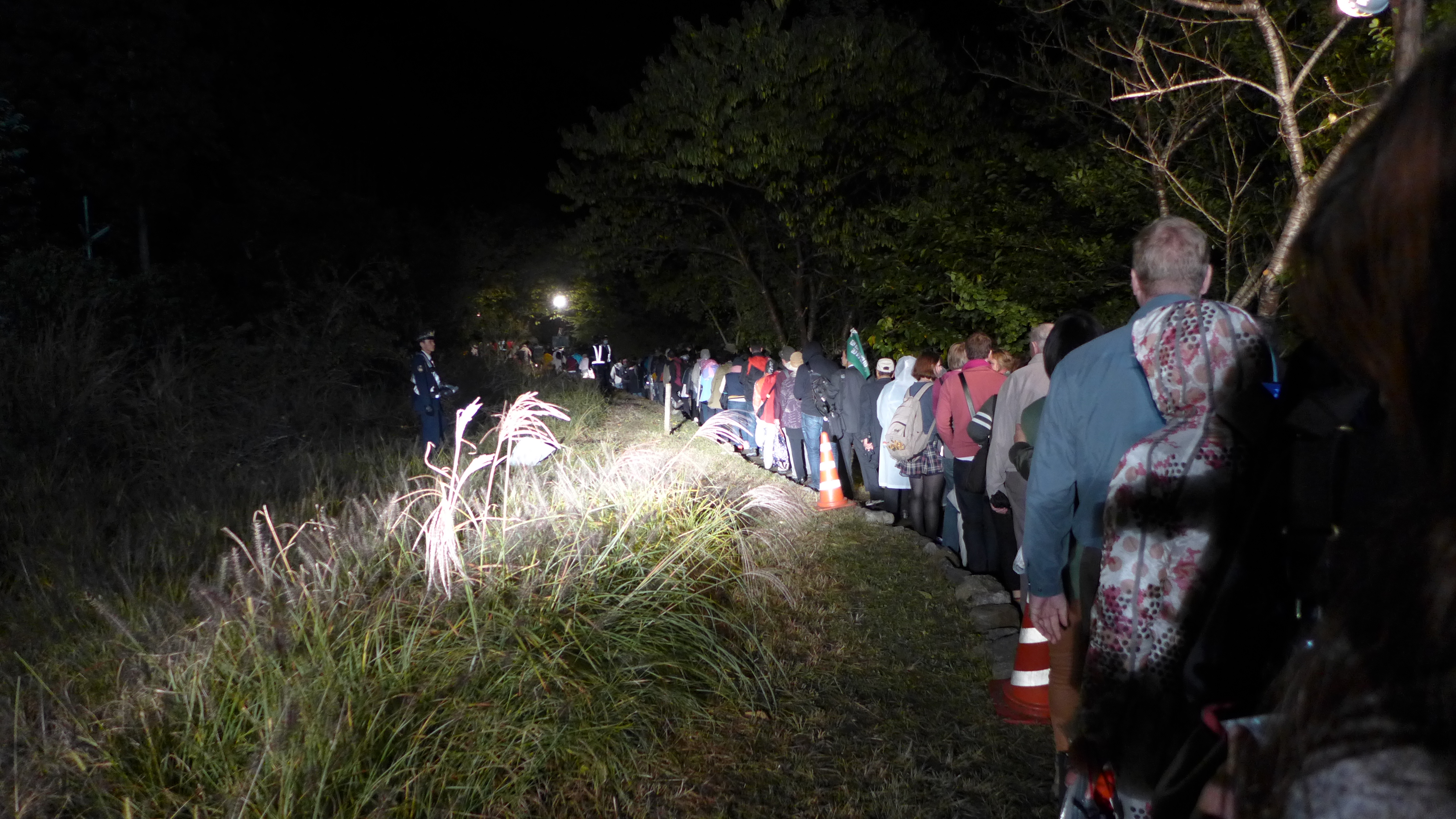
Such Fun
After escaping the line we found ourselves back at the station and subsequently heading back up the hill. The benefit of this brief foray into the mud was that we got to see a more active part of town, including the bonfires. The small children were now safely back indoors and the men were carrying huge torches up through the town – the main festival was beginning. Also I failed to mention earlier but a lot of the men were wearing skirt-like things that were left open at the back to expose their bums. I don’t think they’re in any of the decent pictures I got so you are likely spared the sight, though if you want you can try to find one in the above or following pictures. It’s a good thing it was a fire festival or they’d be freezing.


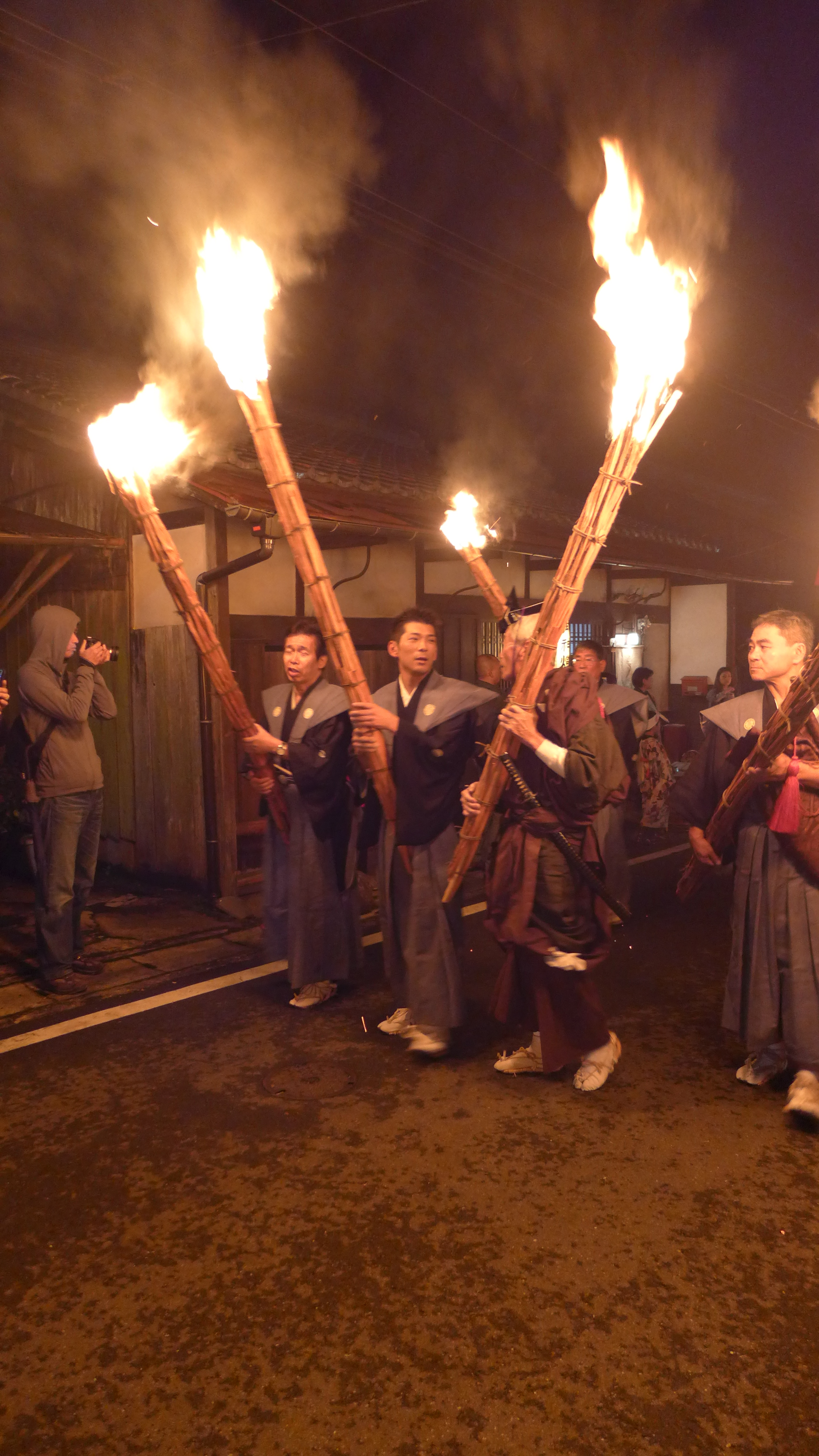
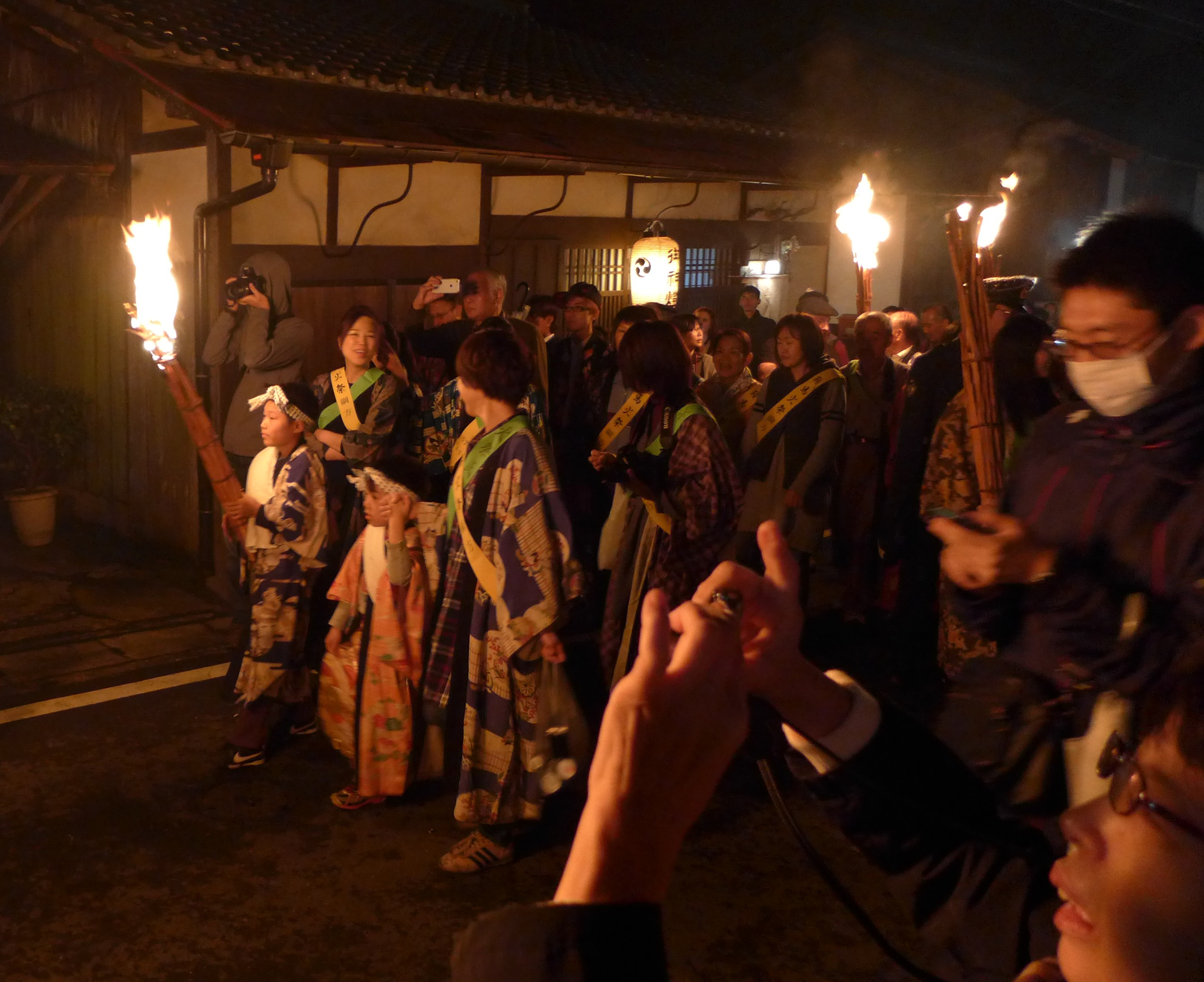
We came to the end of the torch procession and joined the throng following the giant torches up the hill to the shrine. At this point the street was packed with people and we had no choice but to walk forward with everyone else. Though Japan is usually a very polite country there was a considerable amount of pushing (often done by tiny old ladies) and other people shouting not to push 押すな!(osuna!). We stopped when we reached the first shrine and watched the men hike the huge torches vertically into the air (they had been carried up the hill horizontally). There was some more shouting of Sairei Sairyou and drumming. They then continued on up the hill followed by the ever-growing crowd.

 At this point it was around 9:45 and we had been in Kurama since 4. As a result my feet were in pain and I was pretty exhausted. We decided that we should go back to the station when we passed it, as otherwise we would probably not make it back to the station until the festival was fully over – the current of the crowd could not be fought. As it was we made it onto the train about 45 minutes later (it took us about half an hour to cover what is usually a three-minute walk and we got into the train queue just as it started to get really busy). The train was packed so we had the joy of standing the half hour journey back to Demachiyanagi station. We stopped off at a cafe on the way back for some dinner, as sandwiches from the Konbini (コンビニ = convenience store) are not particularly nourishing.
Kurama fire festival is well worth a visit despite the volume of people attending. I would certainly say that we enjoyed it much more because we arrived early; otherwise your experience may be limited to standing at the back of a long procession and being able to vaguely see torches and hear drumming but very little else. Kurama itself is a great town with a beautiful temple complex (see this blog post) and well worth a visit outside the festival.





 japangie