哲学の道 Trial by Fire, Snake and Pillow

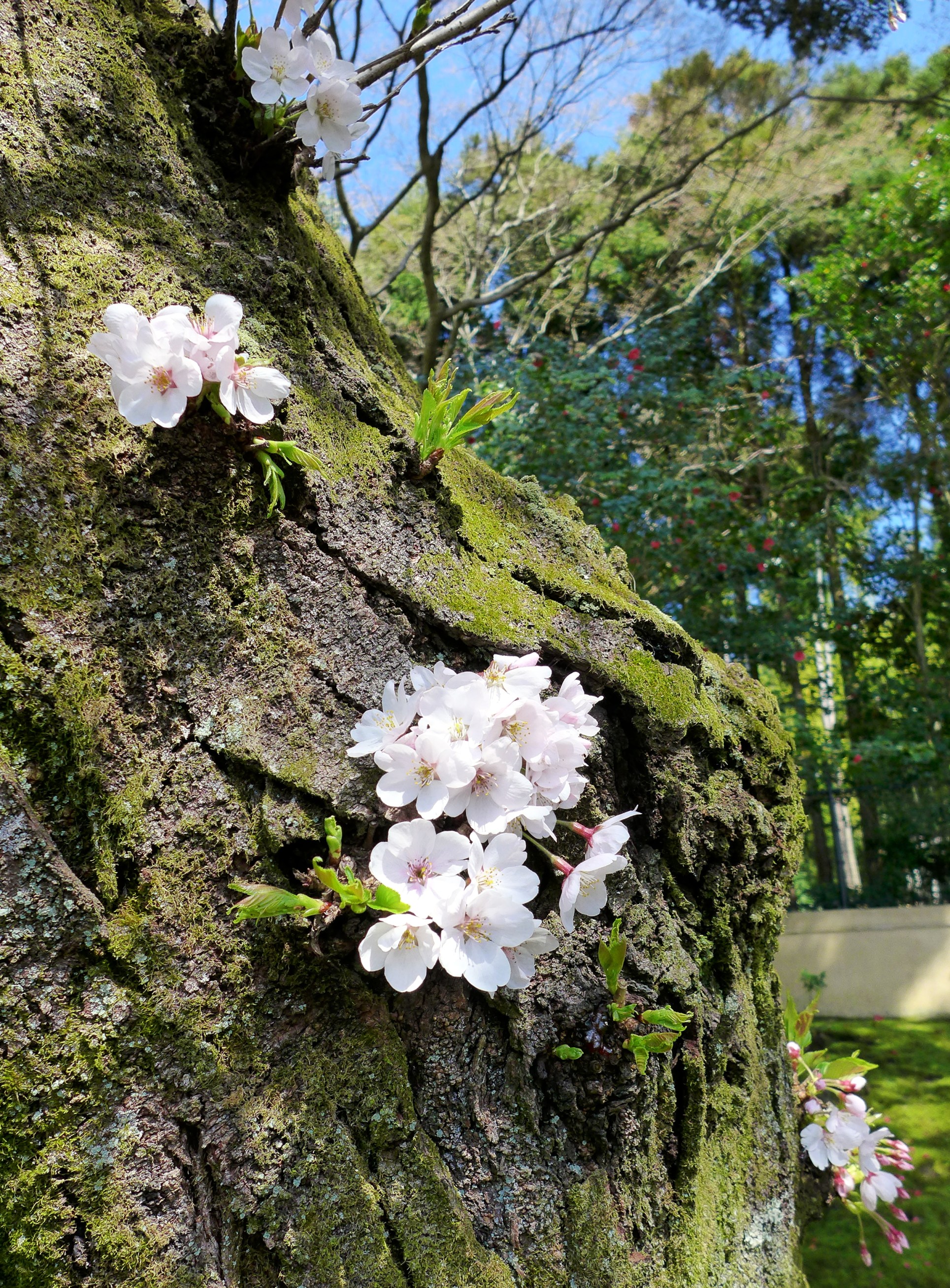
The last few weeks in Kyoto have been the weeks of 花見, hanami – the time when you can see the spectacular cherry blossom or sakura that coats the city in a pale pink cloud. My parents and I took the opportunity to visit Philosophers walk, 哲学の道 (Tetsugaku no michi), a path from North to South down the Eastern portion of Kyoto that is awash with sakura in the spring. That day we visited 6 different temples so I will cover all of them in a few different posts. Today I want to focus on one temple and one shrine, both with a rich history and links to interesting people from throughout Japanese history. This kind of temple is always fun to research because you find out about figures in Japanese history that are not considered pivotal enough to be covered in any lecture, but have their own amusing aspects and kept the historical thread running, even if they didn’t alter the pattern.

These happen to be the fourth and fifth temples we visited, so they are located pretty close together. I will start with Reikan-ji 霊鑑寺, a nunnery belonging to the Rinzai-Zen sect which was founded in 1654 by Retired Emperor Gomizunoo. This Retired Emperor, whose name when ruling was Emperor Go-Yozei, oversaw the end of the sengoku-jidai, the century of civil war faced by Japan in the 16th Century, and was still on the throne when the country came under the control of Tokugawa Ieyasu, the final unifier of Japan and the founder of the Tokugawa Shogunate that would rule Japan for 250 years.

P1070013 P1060999 P1070001P1070017

The main temple building was donated by Tokugawa Ienari, the 11th and longest serving shogun of the Tokugawa shogunate. He was not a great unifier like Tokugawa Ieyasu, and his reign was characterised by natural disasters, court excesses and a great famine. This excess should really have been anticipated when, upon succeeding to the title of shogun, Ienari locked himself in the inner sanctuary of the castle and refused to leave for 18 days. When bakufu councillors tried to force him to do his duty, he held them off with 600 women of the harem armed with pillows. These women held the entrance to the inner quarters for three days before he was captured.
P1070002 P1070008 P1070010 P1070014

While Ienari was certainly a fun-loving guy, the series of natural disasters under his rule and a series of revolts due to famine caused people to lose faith in the Shogunate. His rule was 1773 until 1841, and as the shogunate fell in 1868, it seems his rule laid the foundations of problems that led to the bakufu’s destruction. While he could not prevent American involvement in opening up Japan, the shogunate was already on shaky footing due to its inability to cope well with internal disasters, causing some to feel like the shogunate may have lost its mandate to rule.

P1070020 P1070022 P1070024P1070038

Ienari was also the shogun that expelled the first woman to visit Japan, Titia Bergsma, a Dutch woman that travelled with her husband to trade with Japan (the Dutch were allowed to visit Japan in limited capacity, and women were not allowed). While she was on Dejima, the man-made island that the Dutch were permitted to stay on while trading with Japan, over 500 images were made of her, making her an icon in Japan at the time. She was expelled within 5 days of landing in Japan. Unfortunately for the Tokugawa Shogunate, expelling foreigners became much harder after the ‘friendly visit’ paid by the American ‘black ships’ in 1851.

P1070027 P1070029 P1070034P1070041

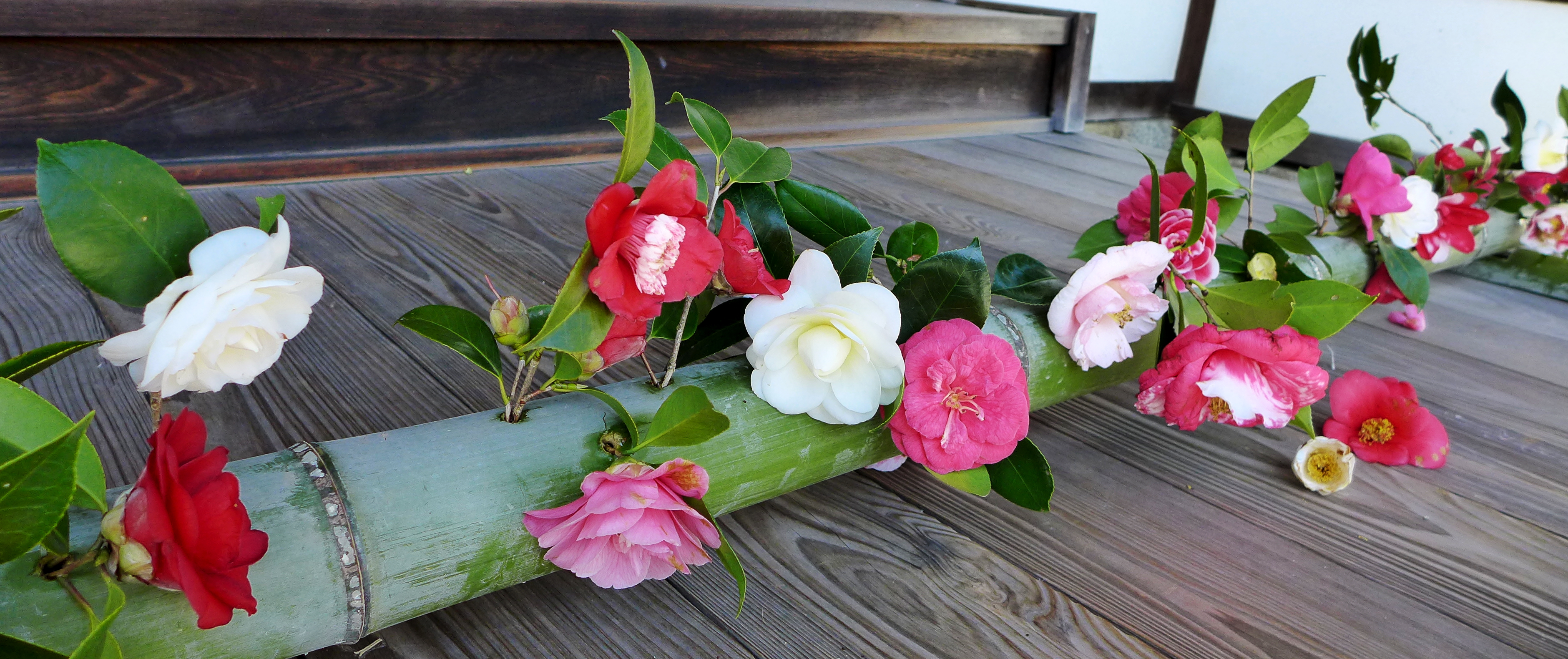
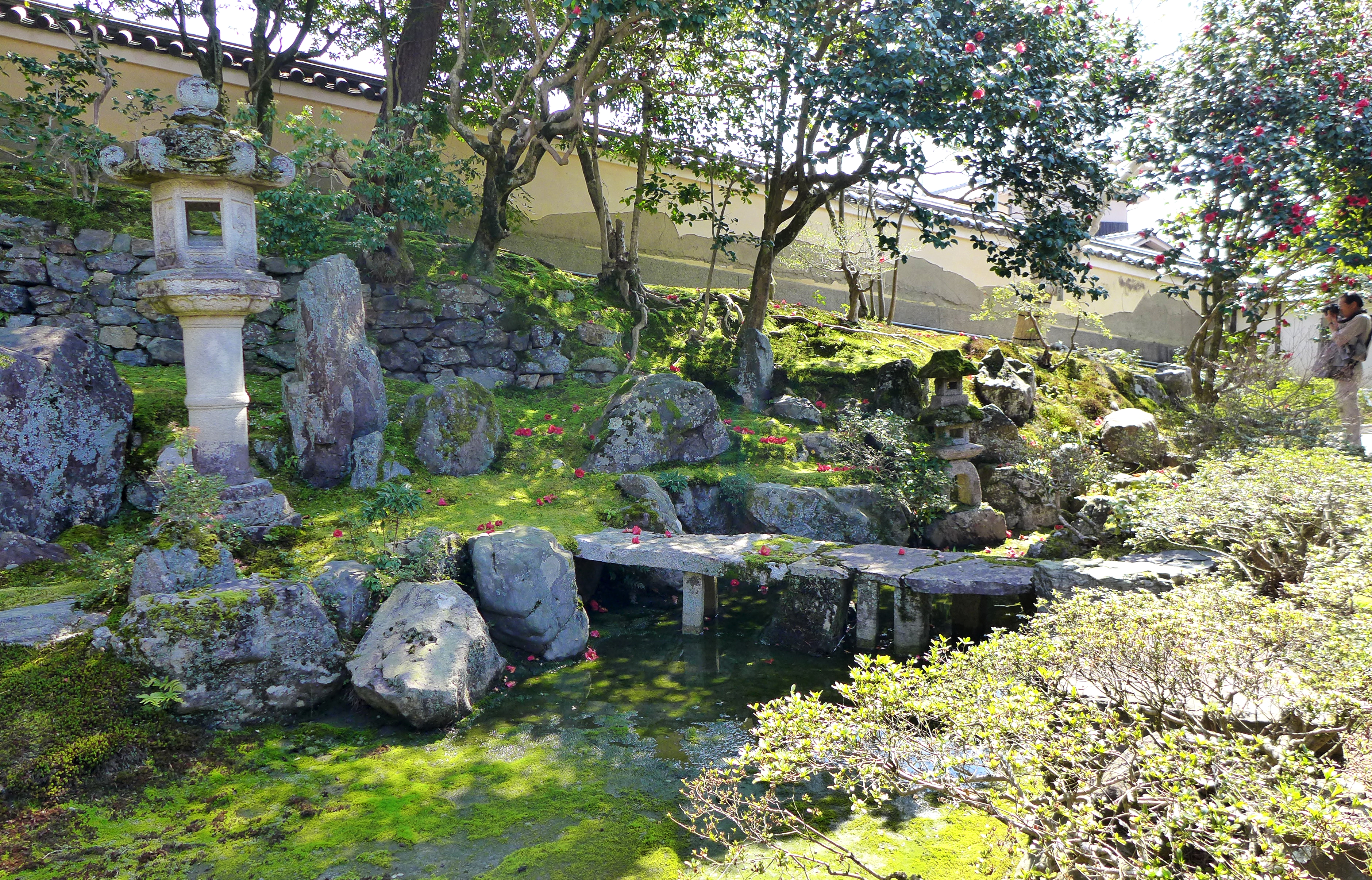
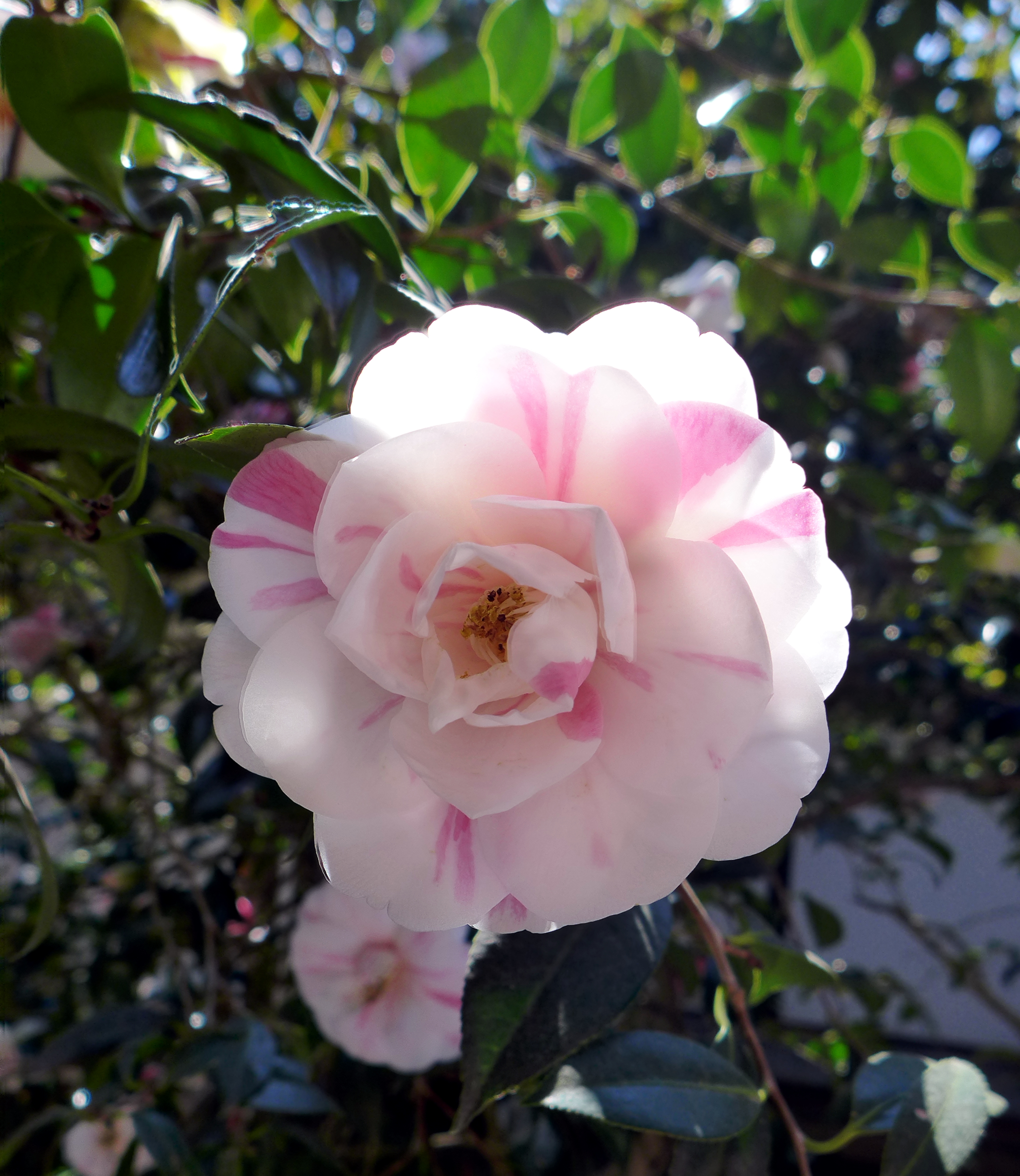
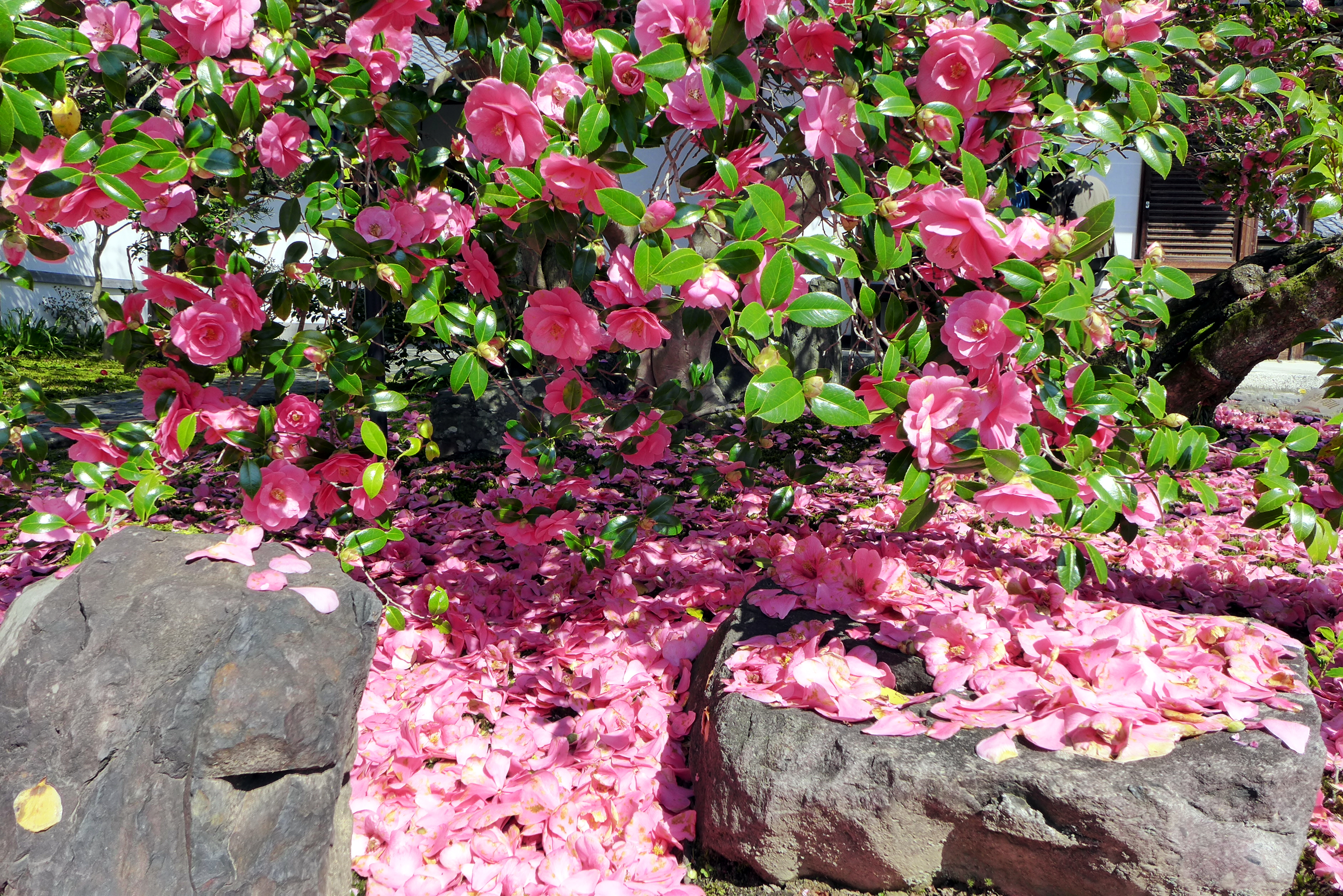
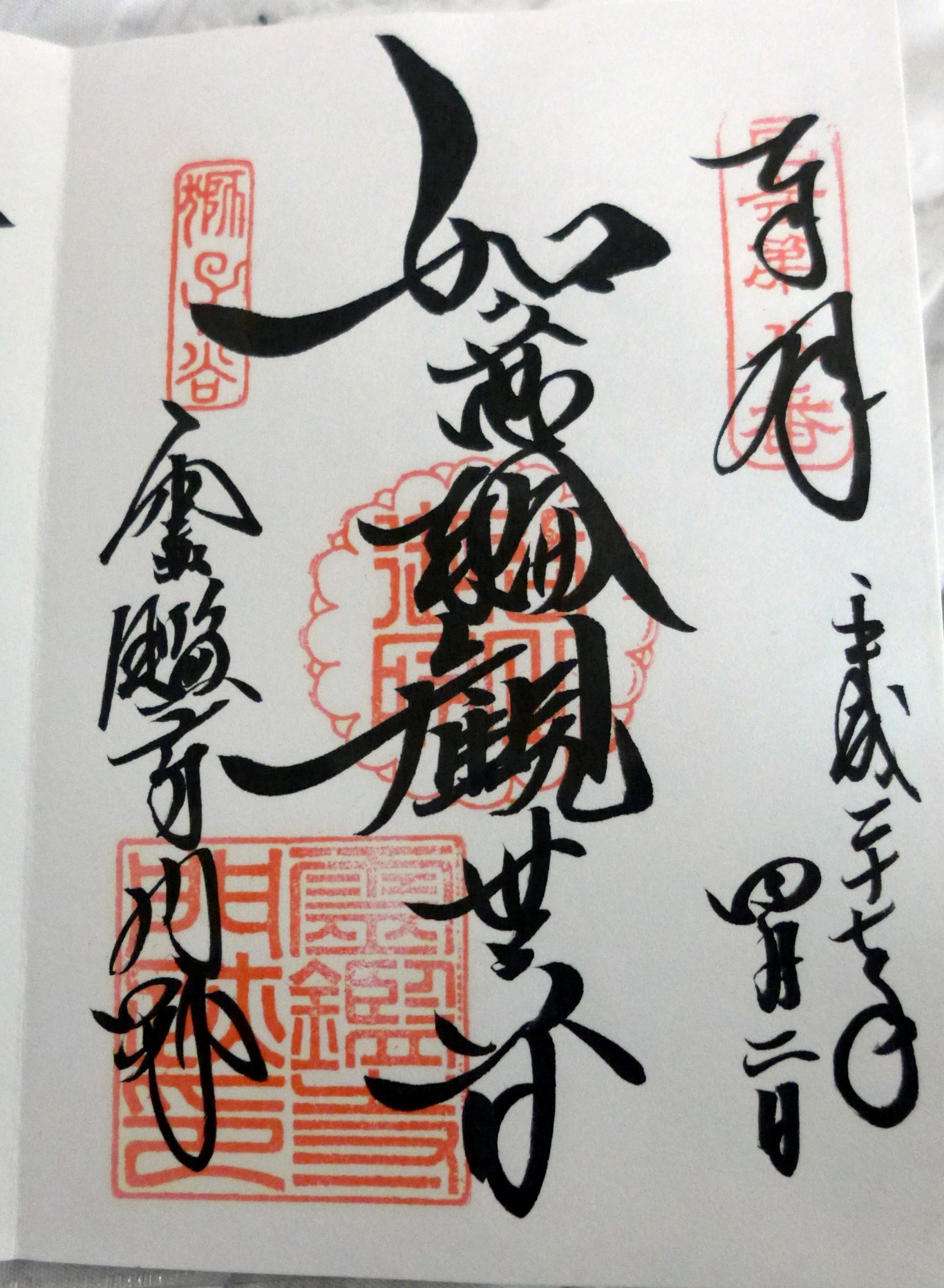
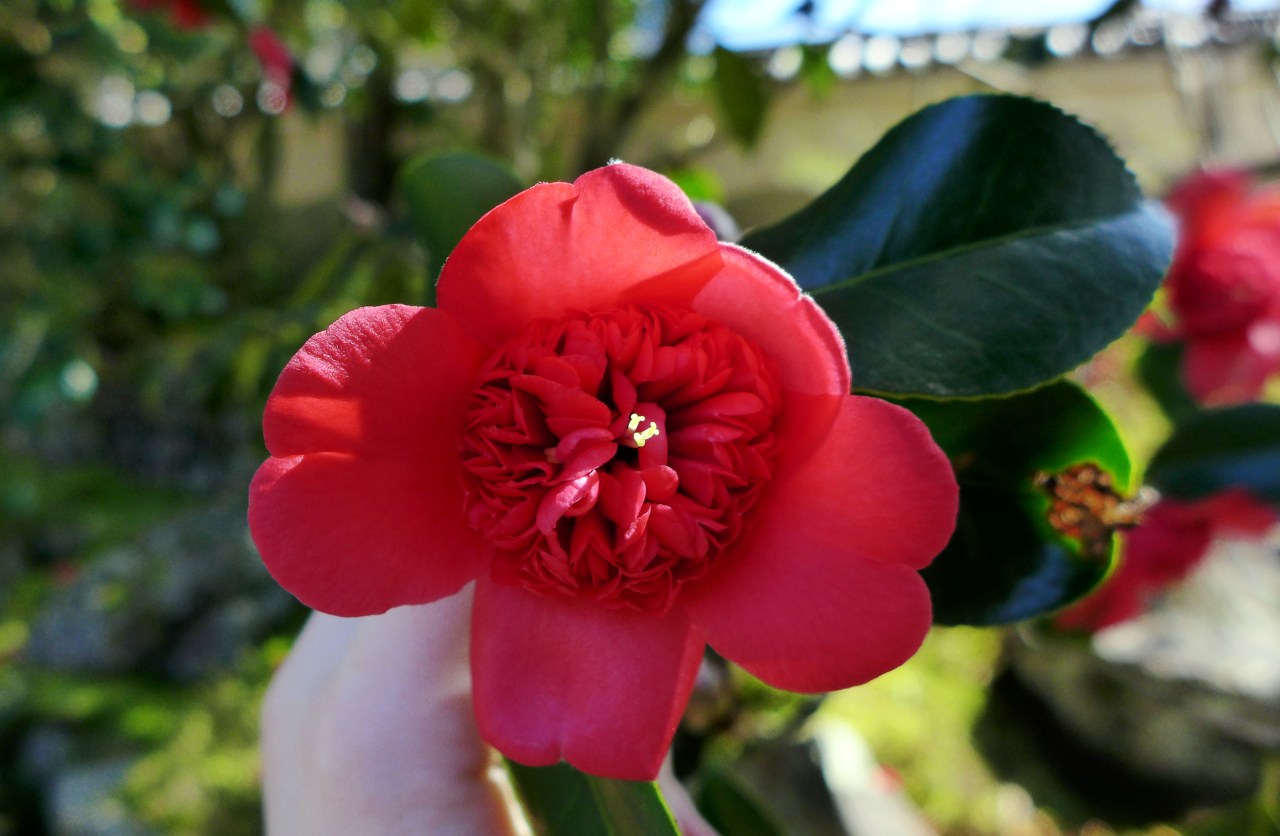
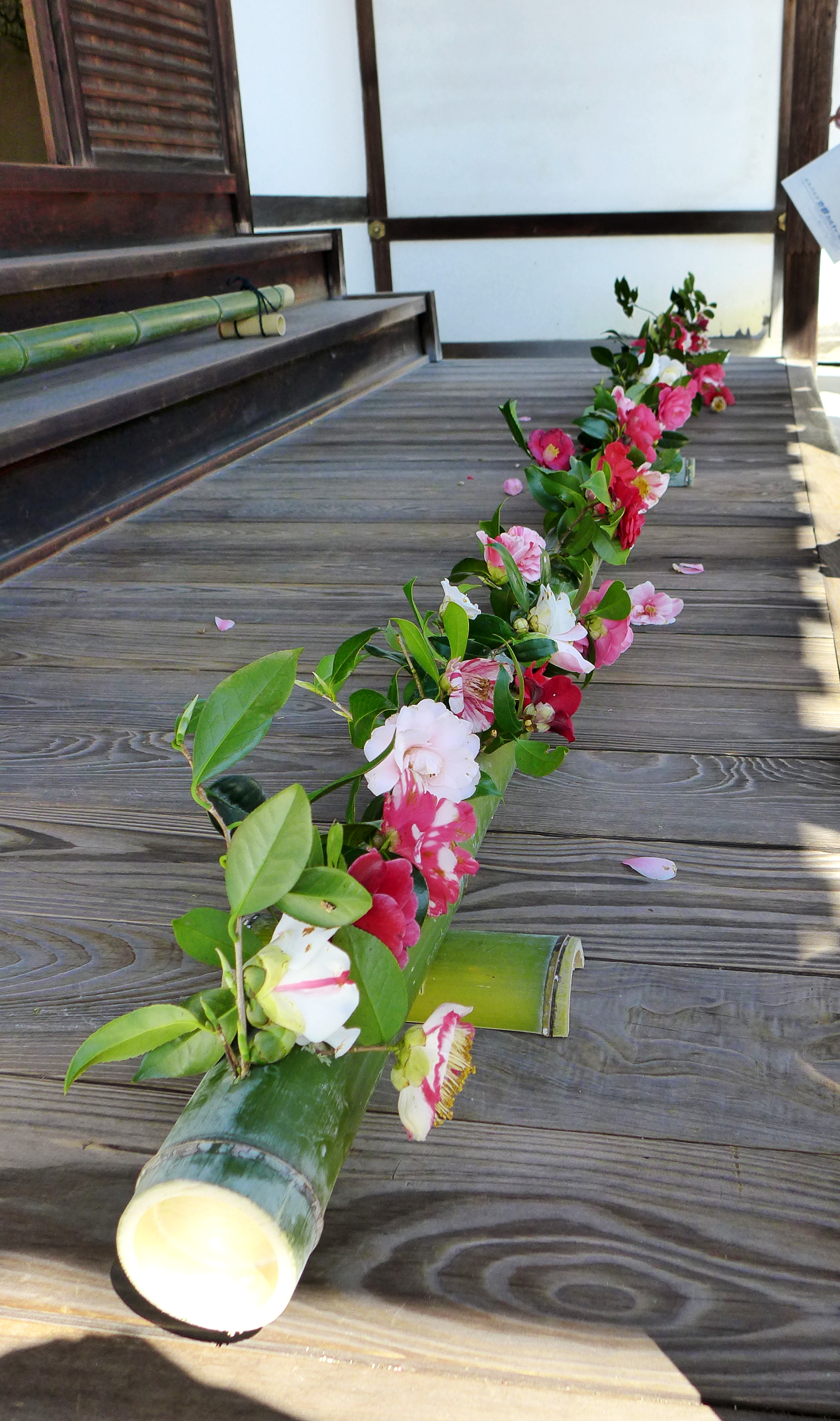
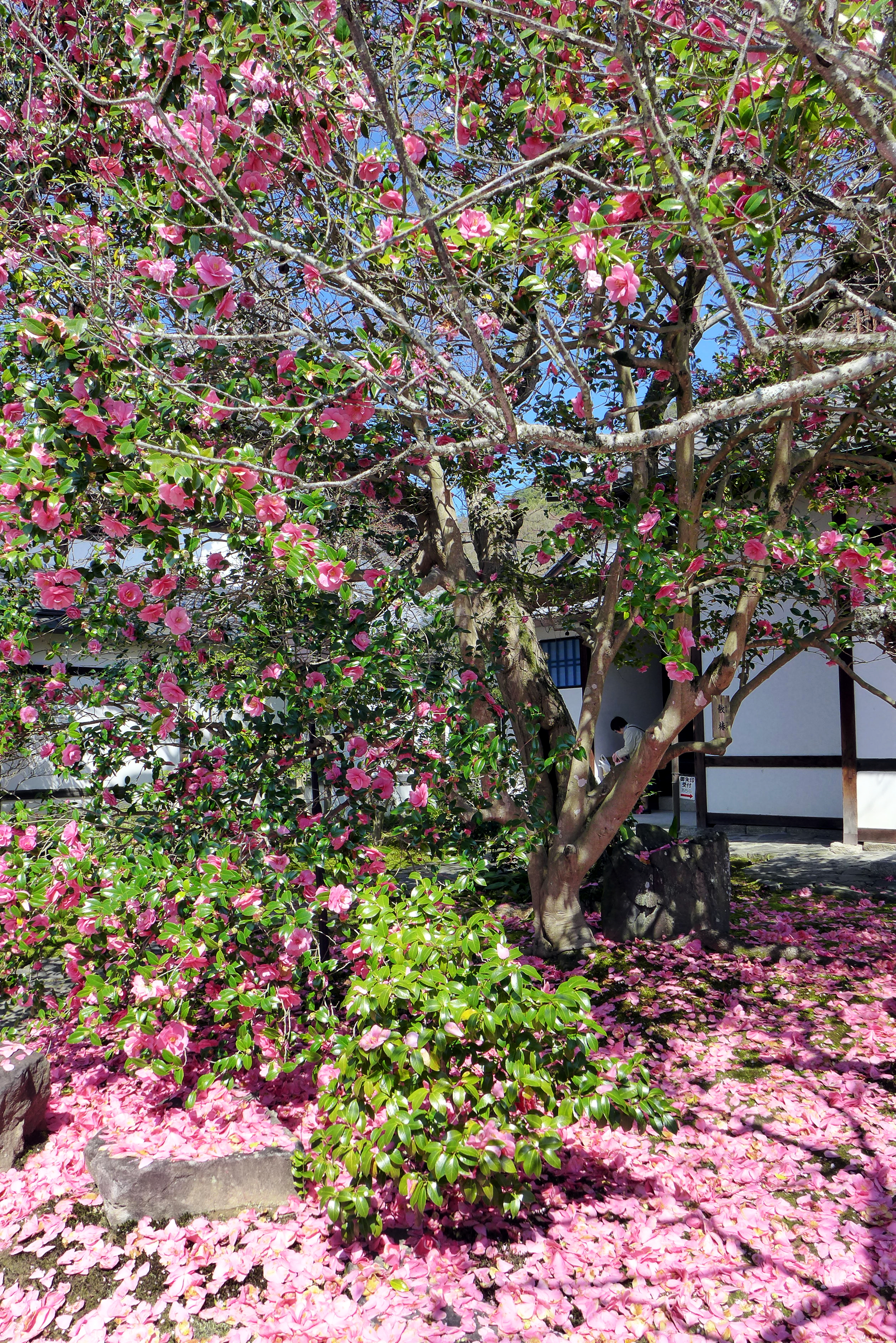
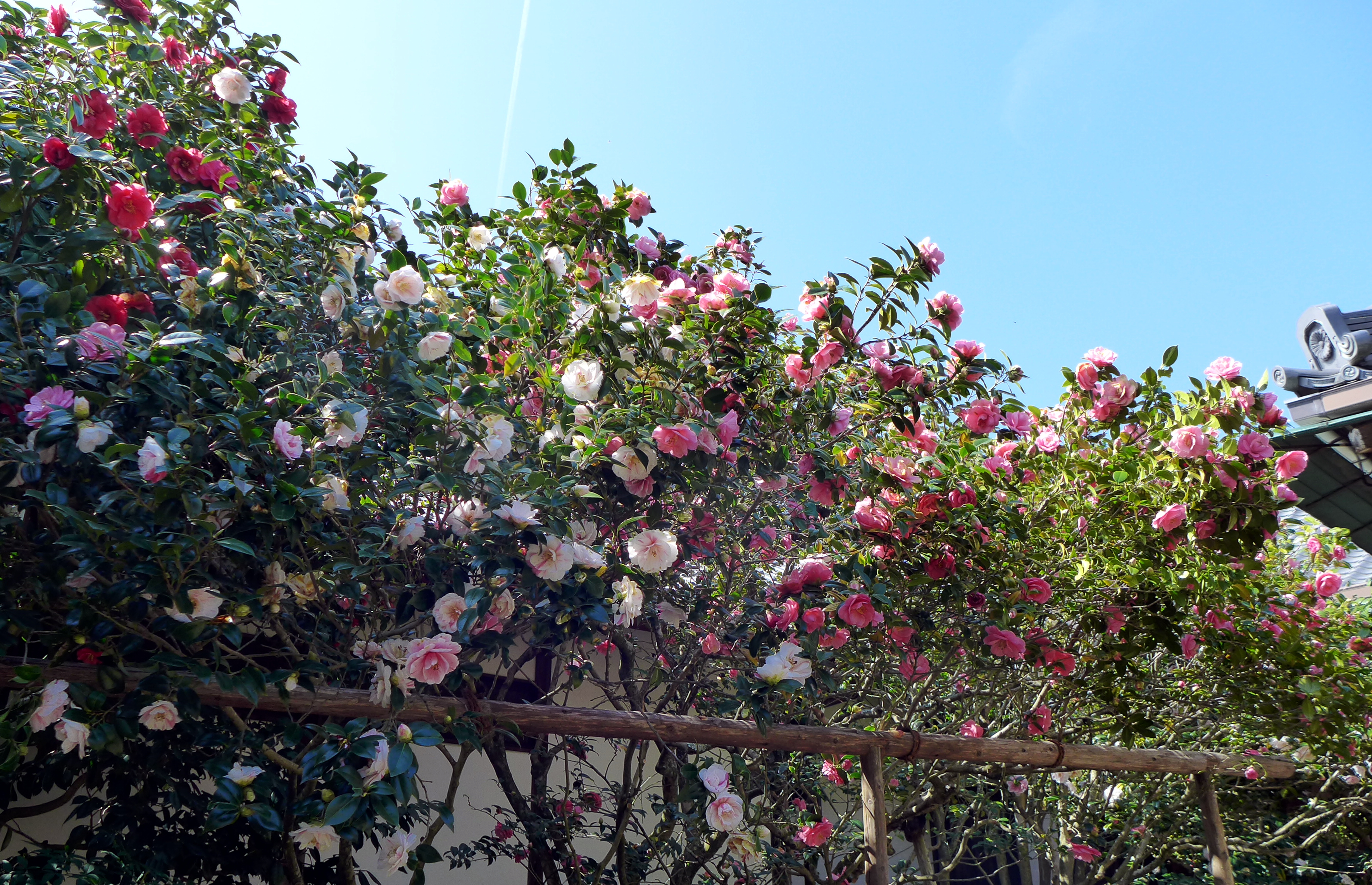
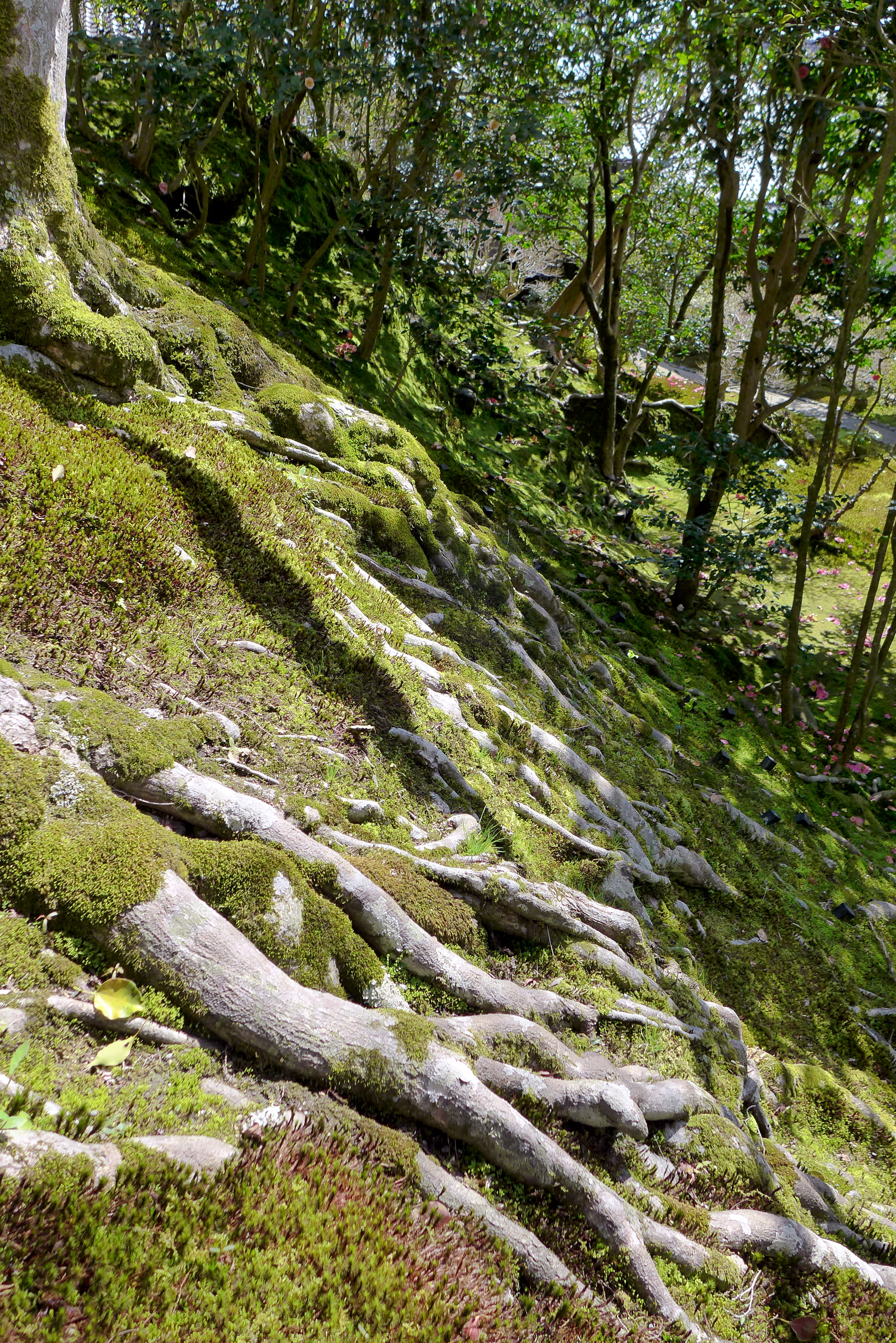
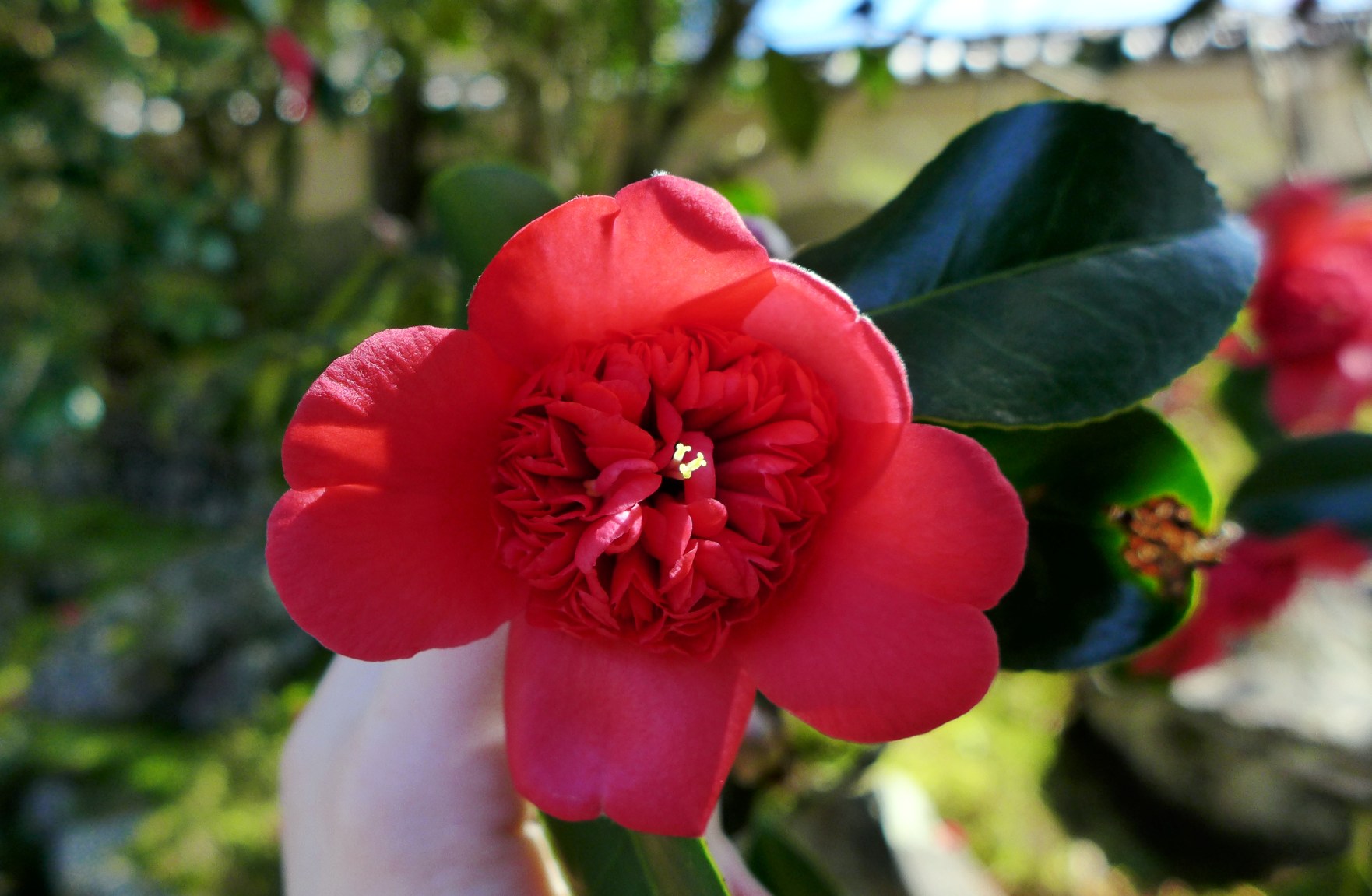
The temple itself was beautiful, with spectacular gardens full of camellias. It is said that the founding Retired Emperor Gomizunoo loved camellias so he had many planted there. His patronage also ensured that princesses and granddaughters of the imperial line were priestesses here for centuries. The stamp I got at Reikan-ji is one of my favourite stamps in my stamp book. I would strongly recommend this temple if you visit in late winter or spring, though check when it opens as apparently it is shut for most of the year.
P1070007P1070015P1080046

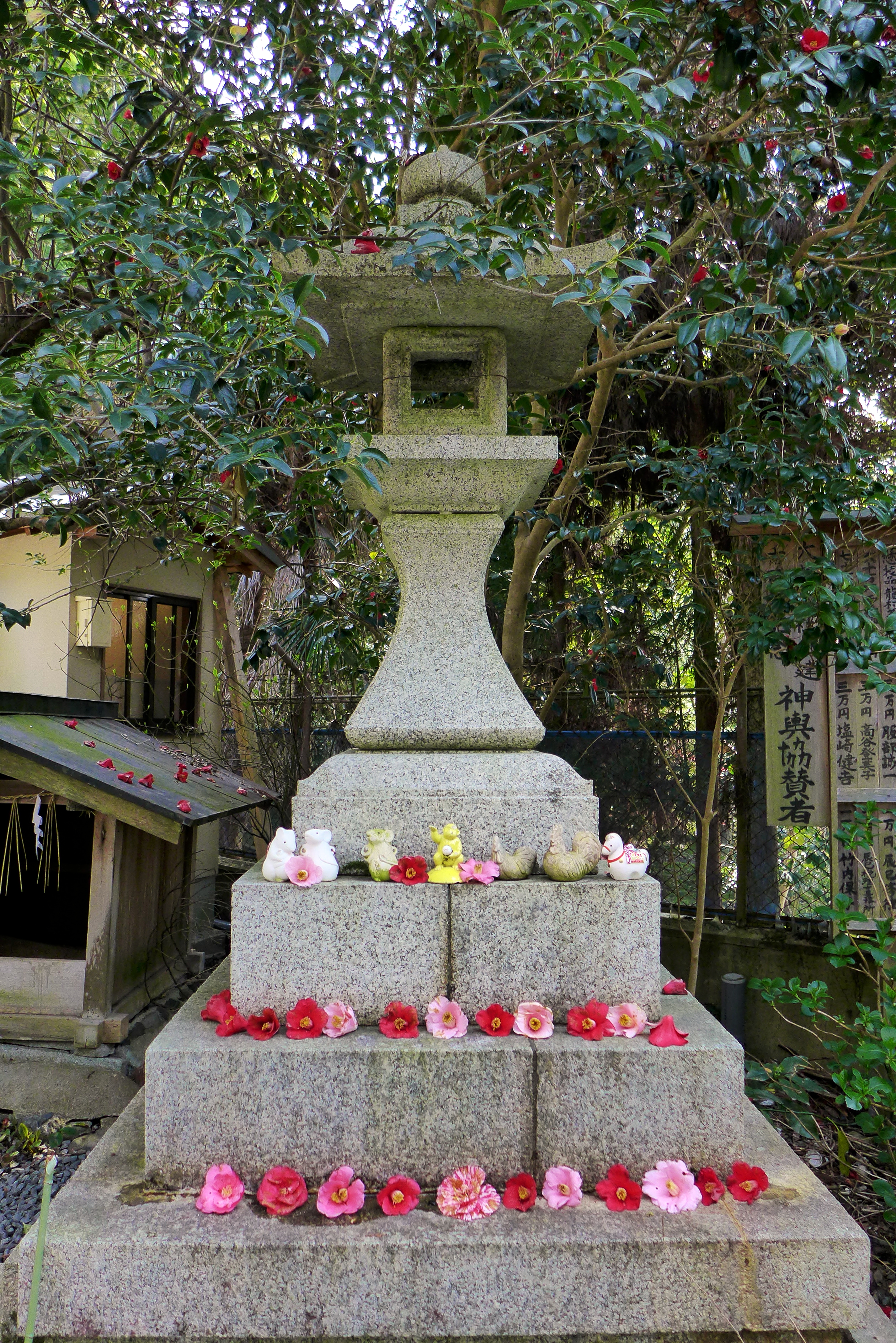
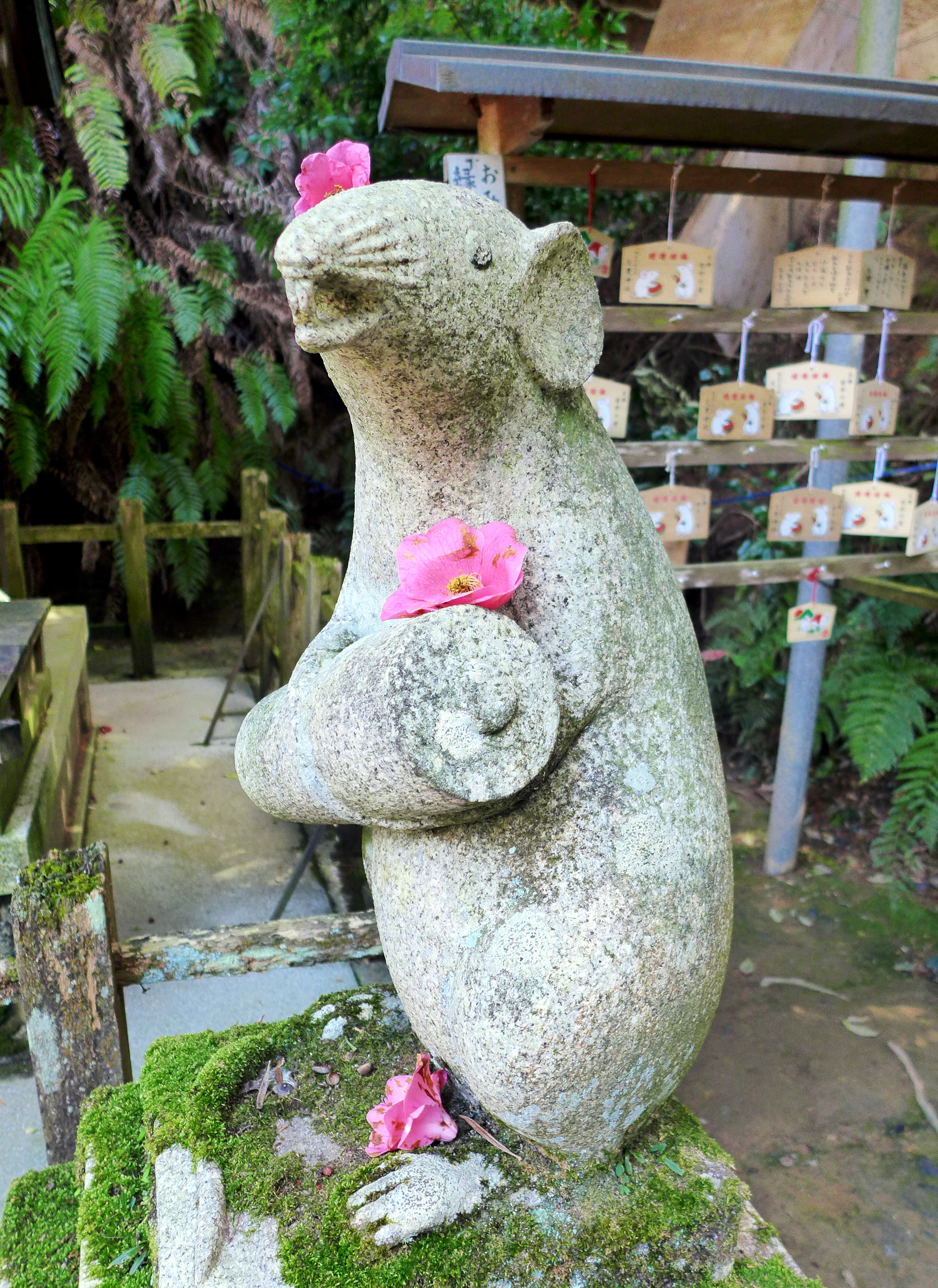
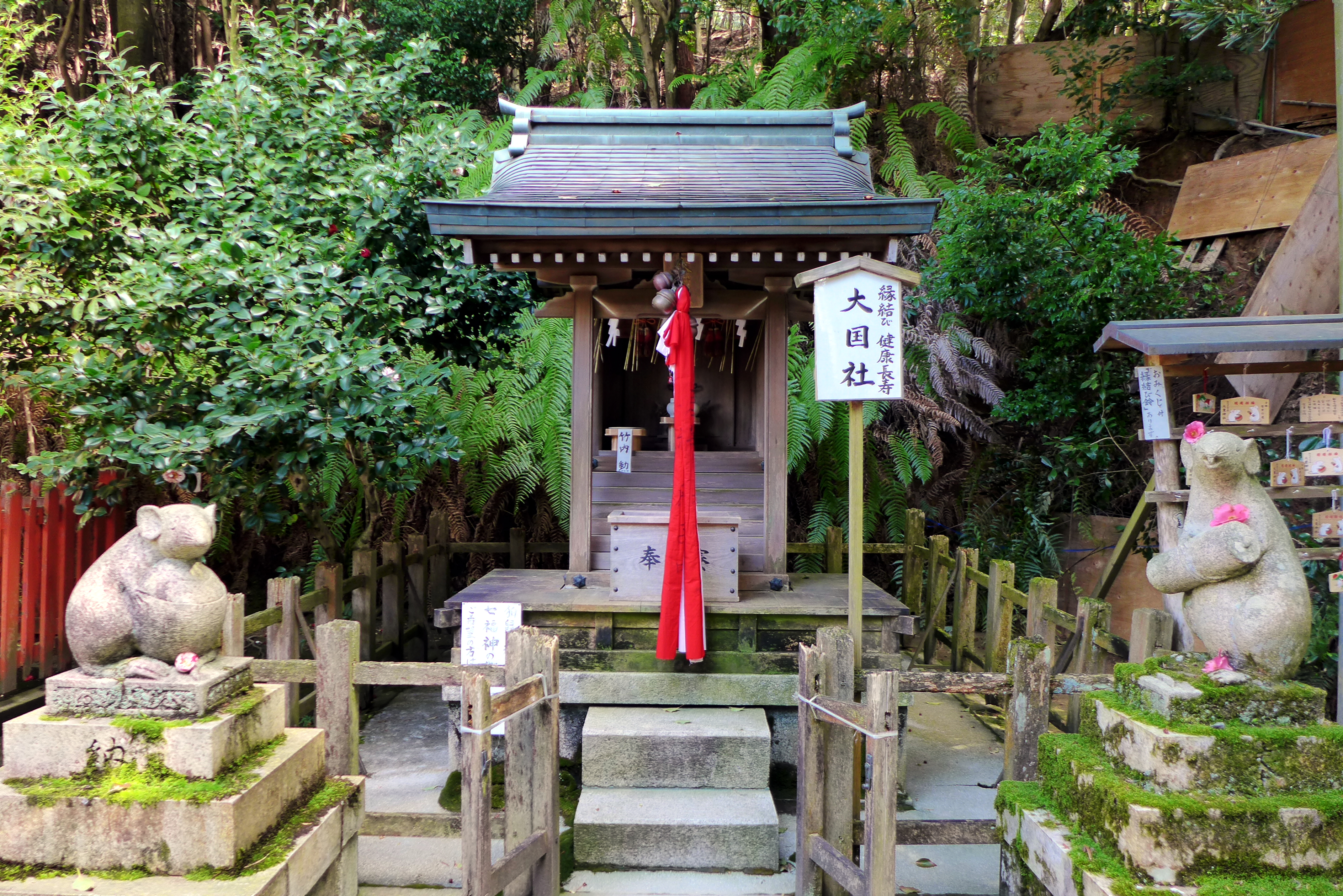
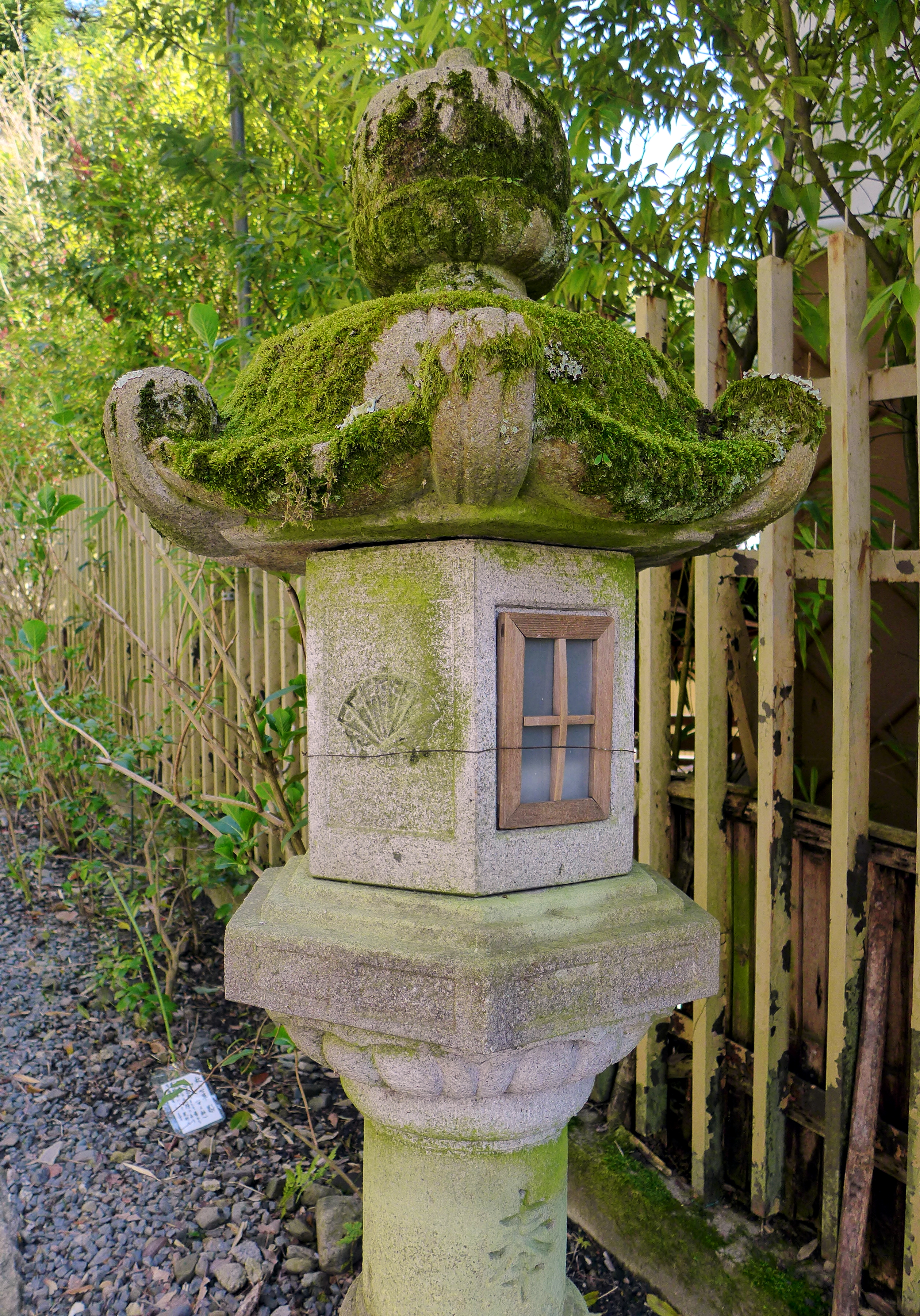
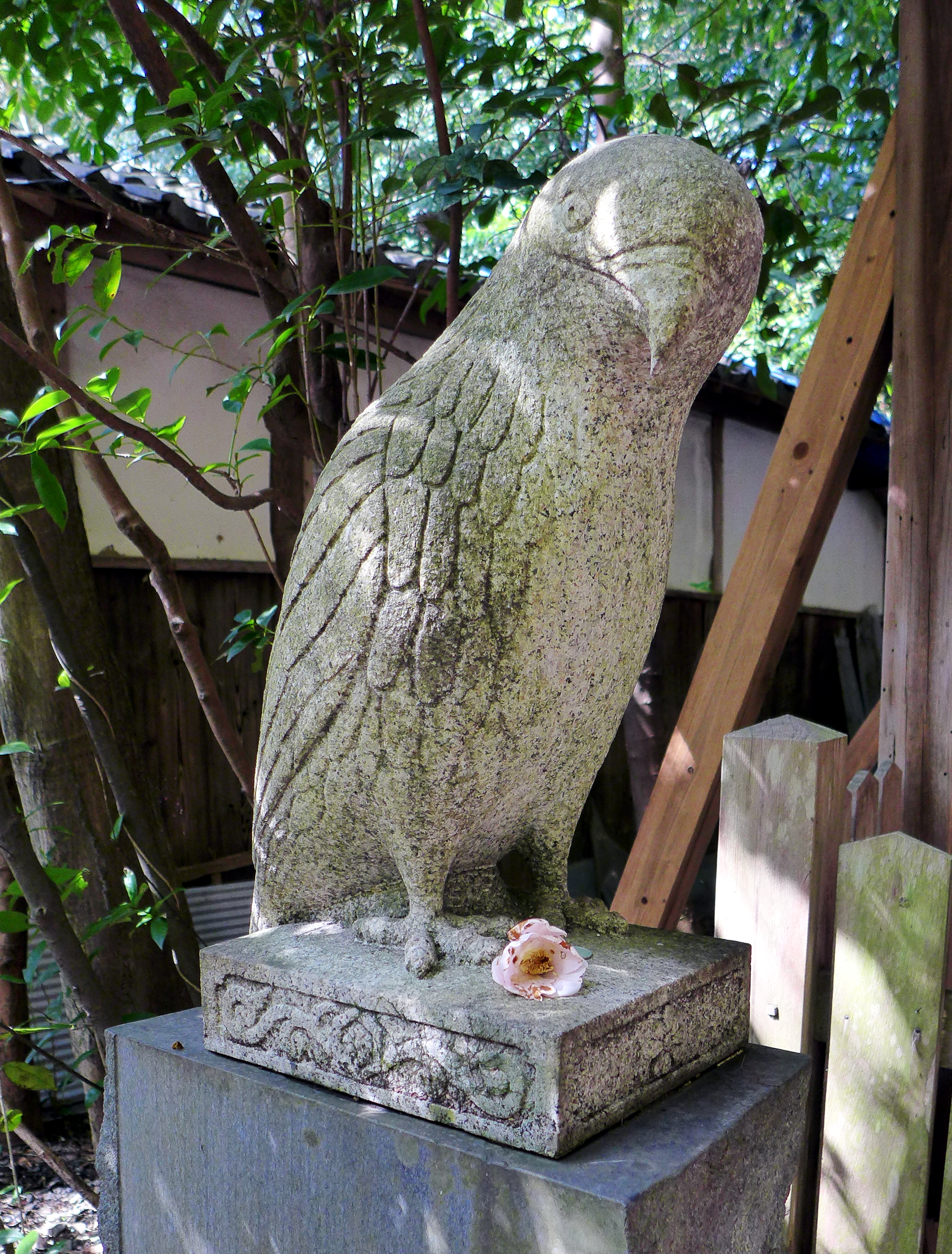
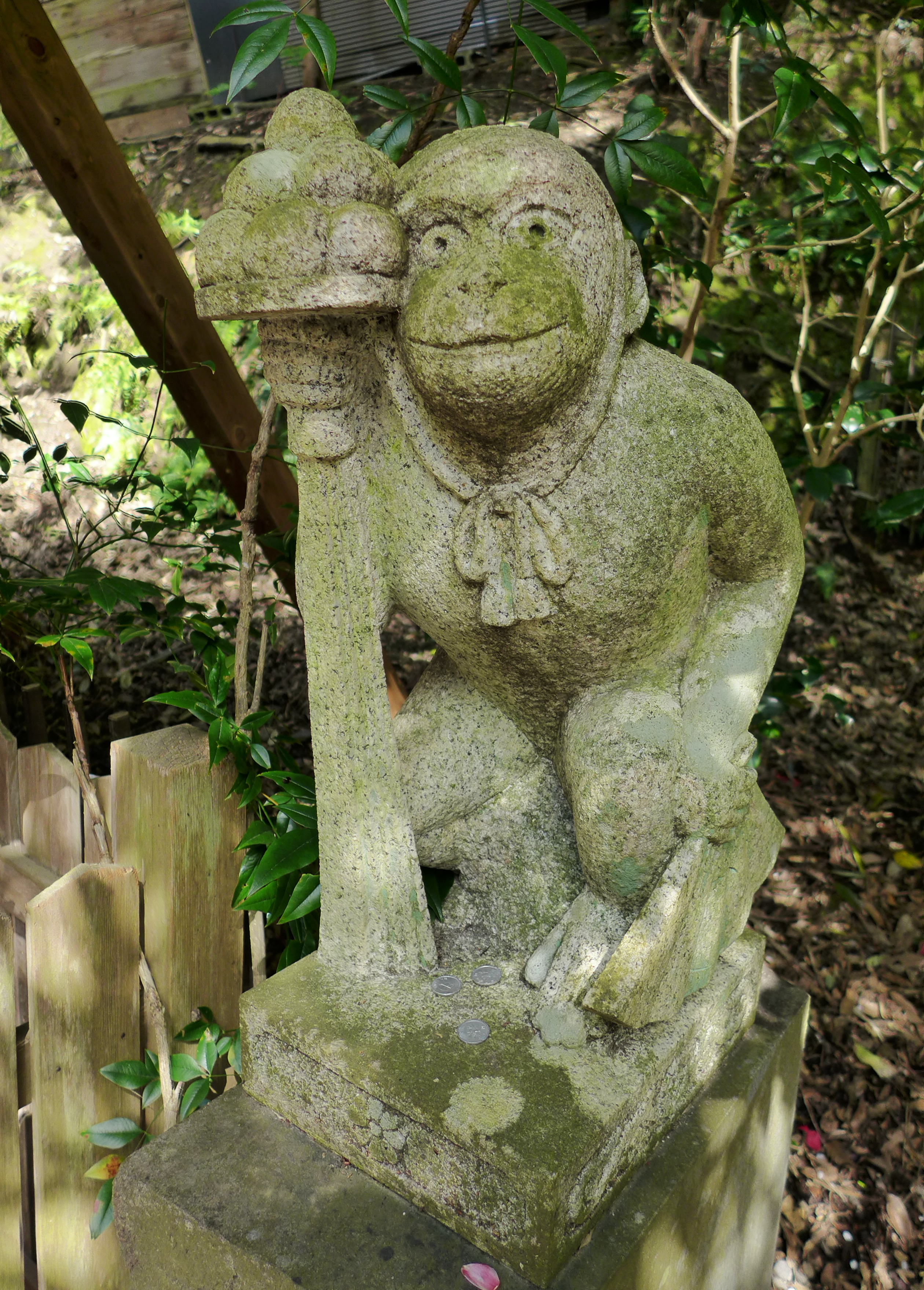
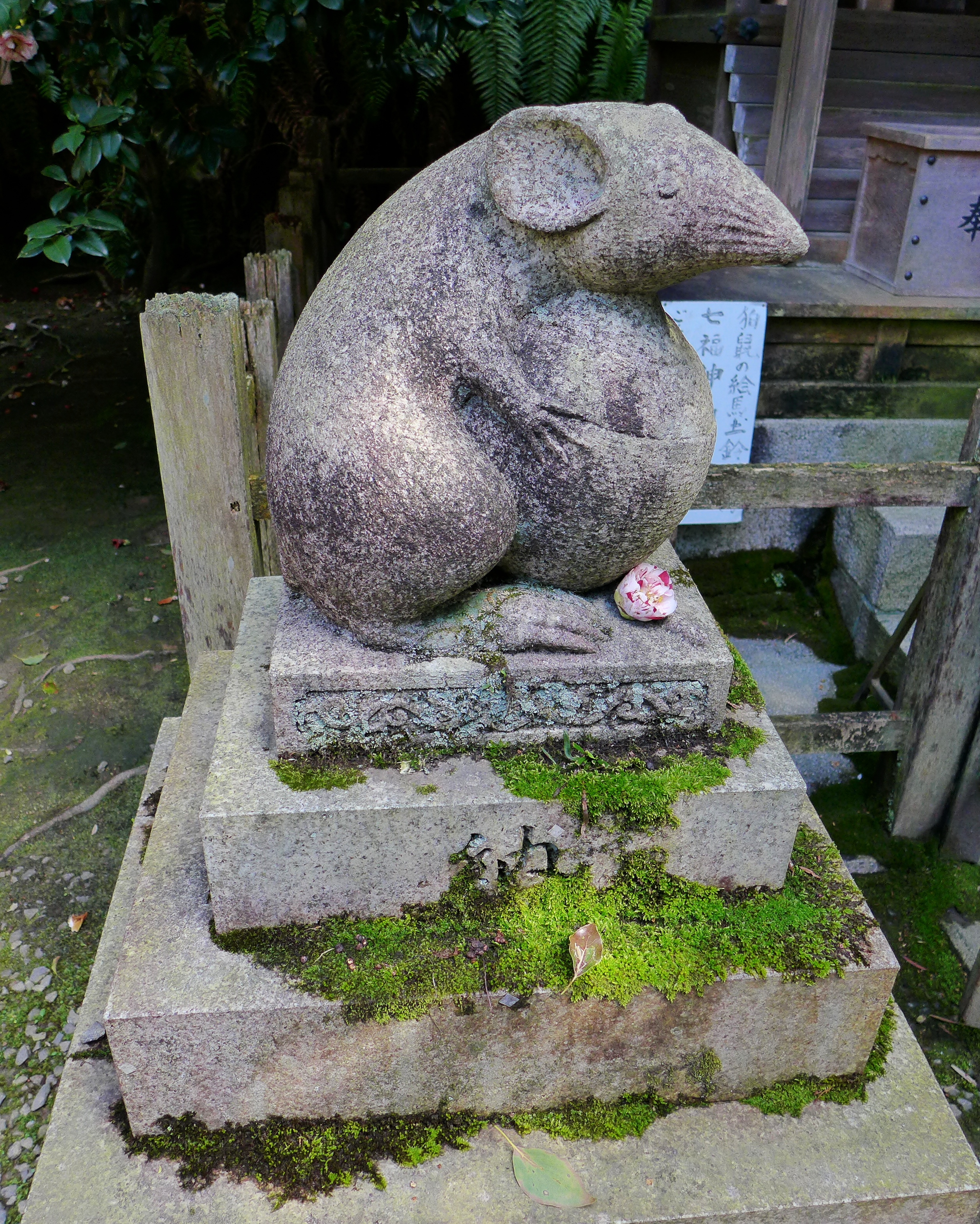
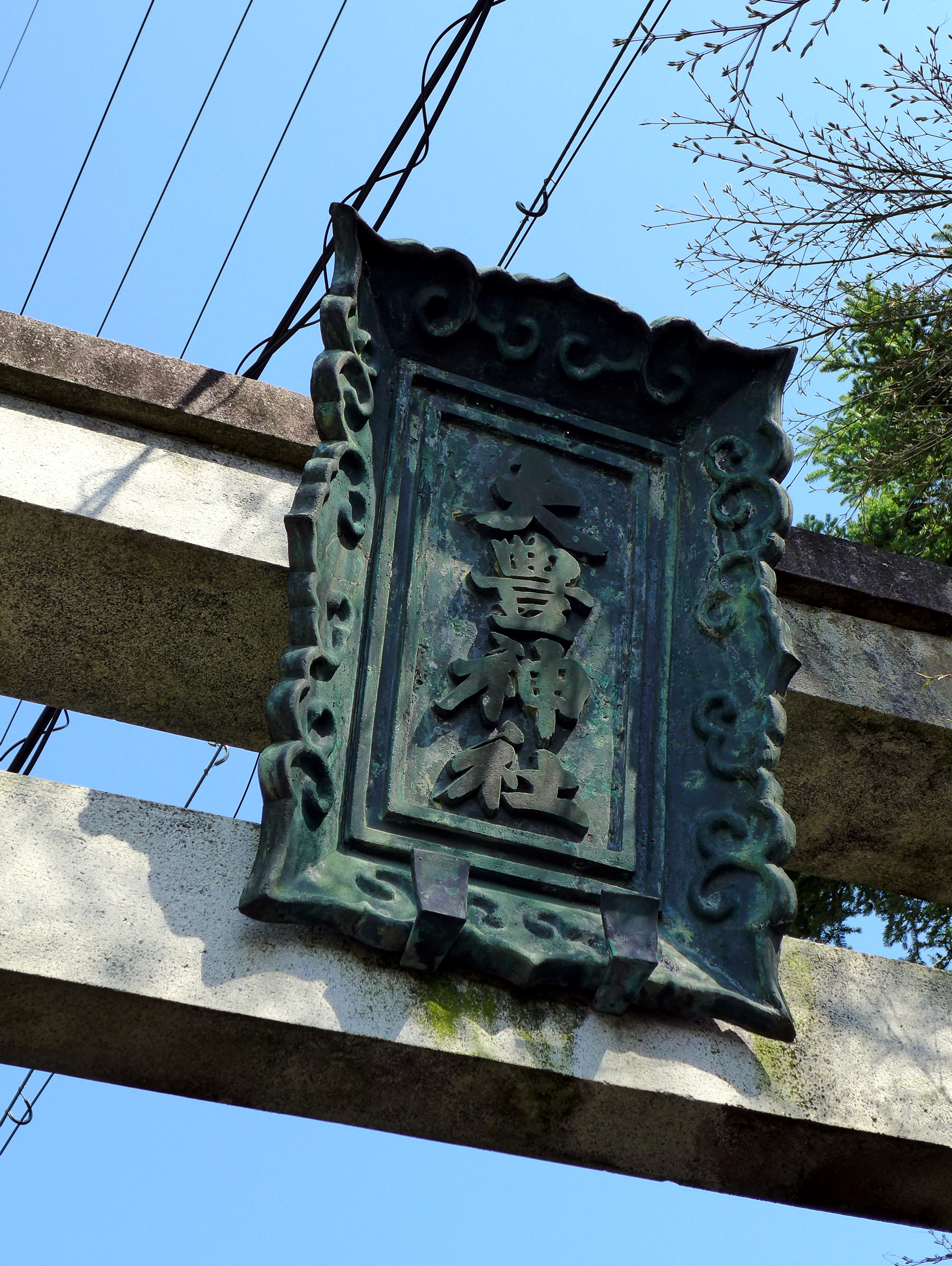
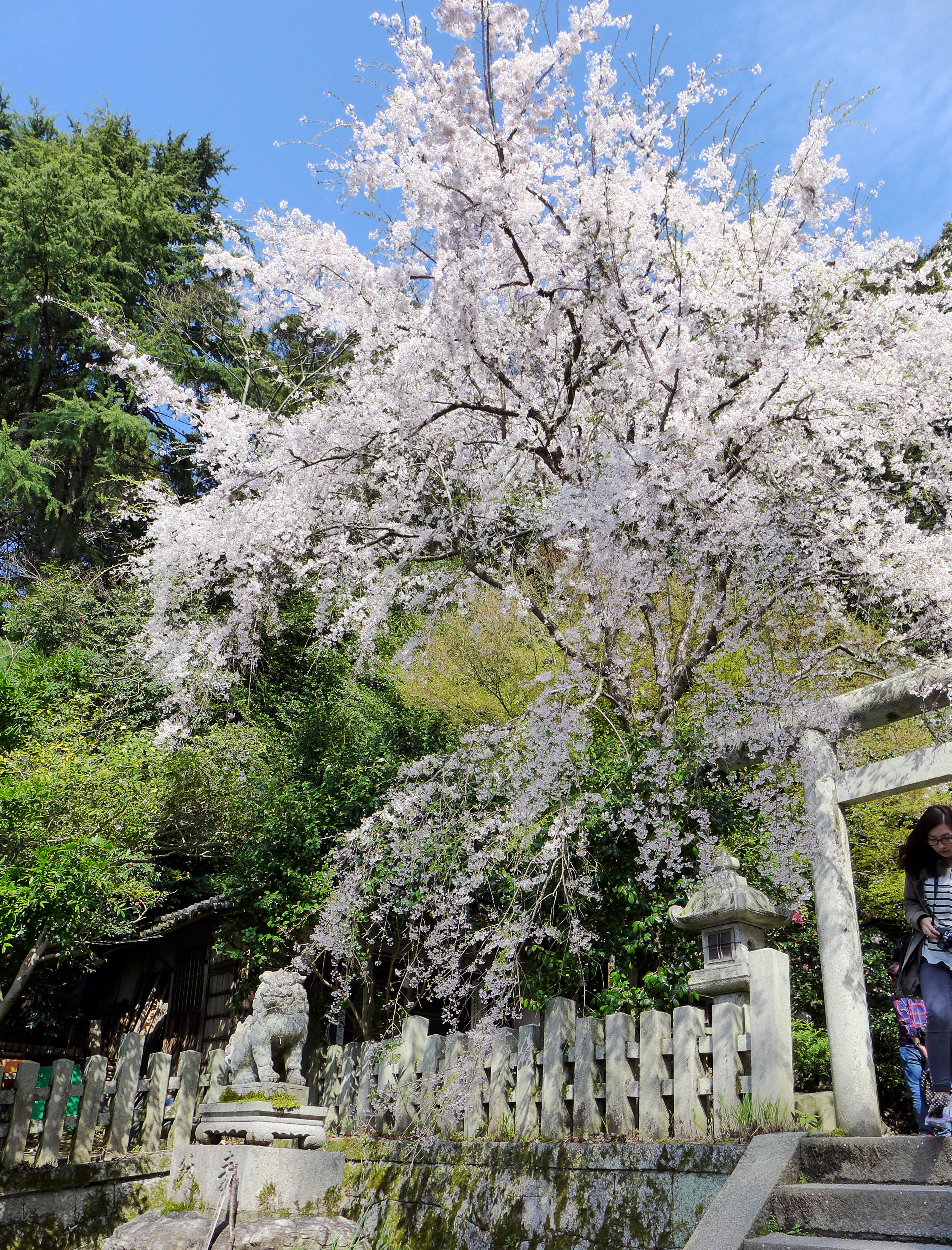
Just along the road from Reikan-ji is Otoyo-Jinja 大豊神社, or in my mind, ‘the mouse shrine’, founded in 887. This is because rather than the standard foxes, this shrine also has mouse guardians, kite guardians and guardian monkeys, making it a little more interesting than the Japan standard Inari shrine. There are foxes too, of course.
P1070049P1070048P1070075 P1070073 P1070074

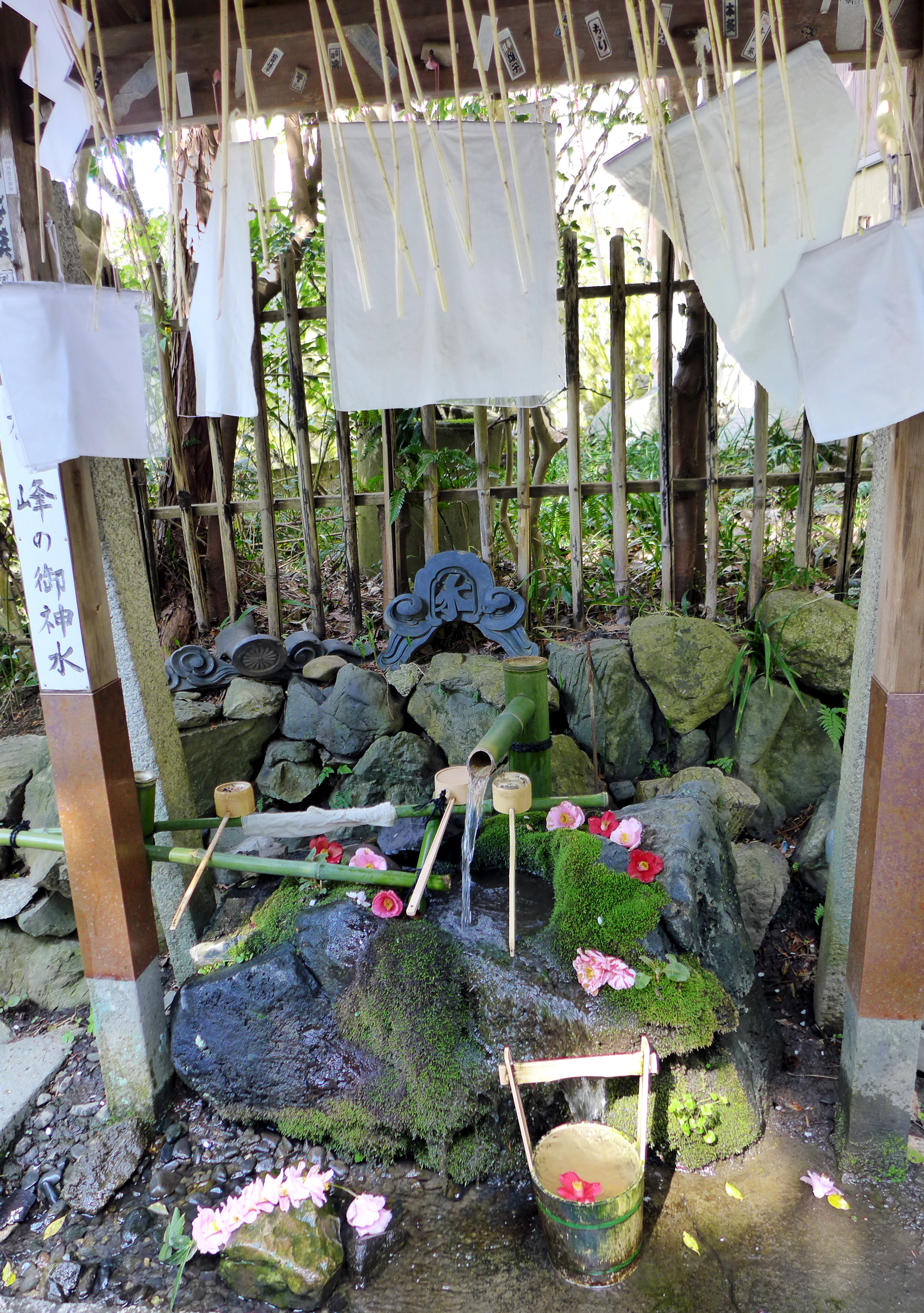
This shrine’s mice come from a legend surrounding Okuninushi-no-mikoto also known as Taikoku, whom we have met before, remember the story of the white rabbit? Well our hero went on to fall in love with a beautiful princess, but, as many young men have found, he had issues with her dad. In order to win Princeess Suseri, Okuninushi had to pass a series of tests. First, Suasanoo, her father, challenged him to sleep in a room full of snakes. Luckily Princess Suseri gave him a scarf to wear and it protected him. You may say he would be fine as gods cant die anyway right? But actaully this particular god had already died twice before chasing a different girl, but that is a story for another time.
P1070055 P1070056 P1070057P1070054 P1070053 P1070052

Having survived the first trial, Okuninushi was then challenged to find an arrow that Susanoo had shot into a vast field. As he was hunting for the arrow Susanoo set fire to the field and it looked as though Okuinushi may die for a third time. He was saved by a small mouse, who showed him a hole in the ground in which he could hide. Once the fire had passed overhead the mouse brought him the arrow and he was able to marry his princess. Thus the mouse became his symbol and guardian.
P1070060 P1070061 P1070063 P1070064 P1070065

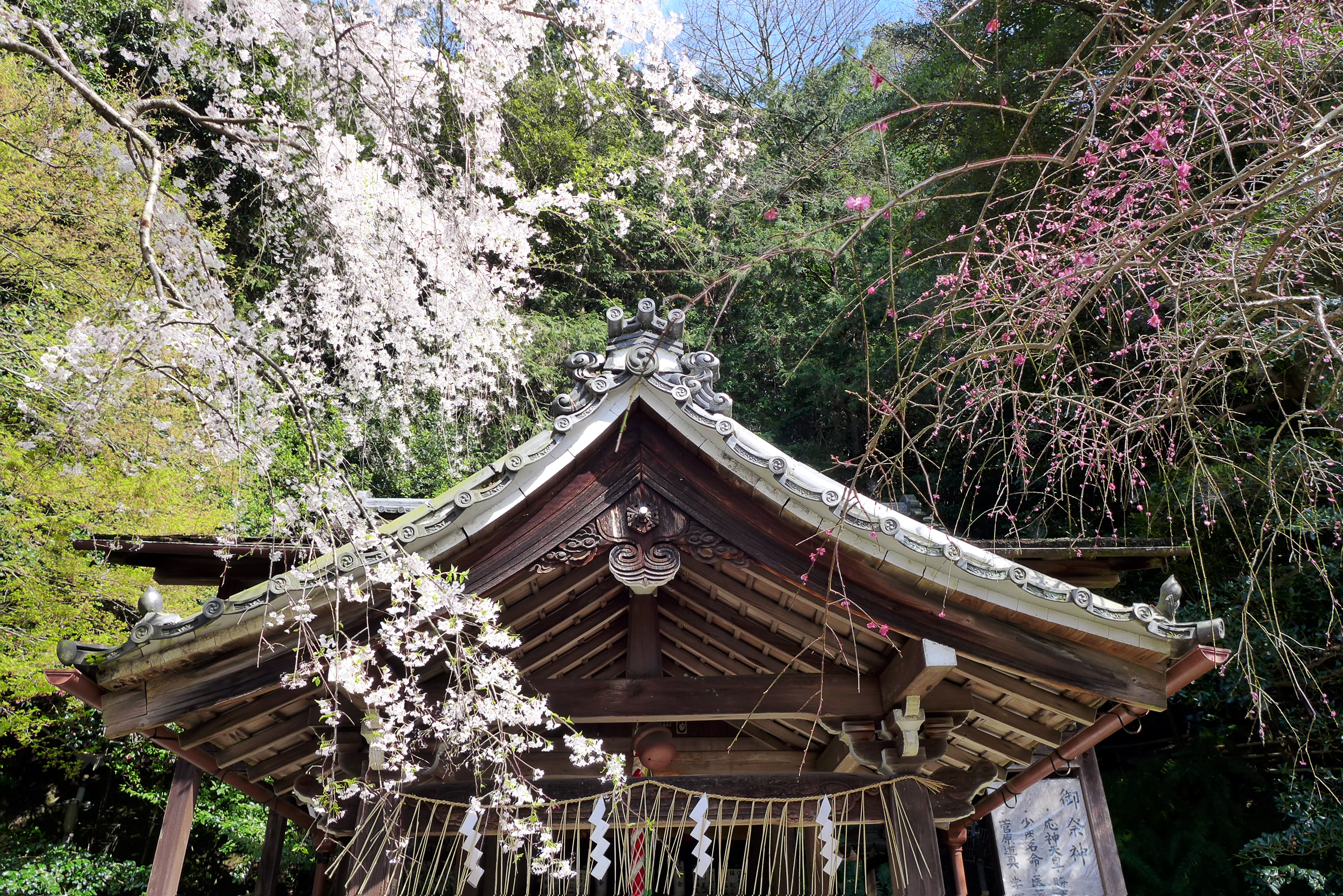
Also enshrined at Otoyo-jinja is Emperor Ojin, the 15th Emperor of Japan. Though he falls into the category of ‘legendary Emperors’ meaning he was potentially made up by the authors of the Nihonshoki and Kojiki (early historical chronicles) to make Japanese ancestry seem longer, he is towards the more believable side of the timeline, and historians believe he probably ruled around 200AD. He was allegedly the son of the 14th Emperor, however it is said that he was conceived and then the Emperor died. While pregnant his mother went on a quest to find the ‘Promised Land’ for three years, and upon her return gave birth to him. As such it is pretty unlikely that this was a miraculous birth and it is more likely that he was not a descendent of the imperial line. This is one of many probable breaks in the chain of the Japanese ‘continuous imperial line’.

P1070062 P1070069 P1070072

While not the most exciting shrine in comparison to the garden of Reikan-ji, it is pretty and has lovely statues so I would definitely stop by if you are taking a stroll down Philosopher’s walk. I’m not sure why there are monkey and kite guardians so if anyone knows please enlighten me.
横須賀 The False Fuji

久しぶり!It’s been a long time! (久しぶり, hisashiburi, is something you say in Japan when you meet someone you haven’t seen in a while). You can blame my absence on my parents – they visited me from the 1st until yesterday (the 9th), and that, combined with the start of the spring semester at my university has left me with no time to write. I have been to see loads of cherry blossoms and I’ve nearly filled up my stamp book, so look forward to lots of blog posts in the near future!

Today I will pick up where I left off, in Yokosuka visiting my friend in March. I may choose to mix up the next few posts and alternate between Yokosuka and Kyoto, but we shall see what takes my fancy. This will be the story of the False Fuji.
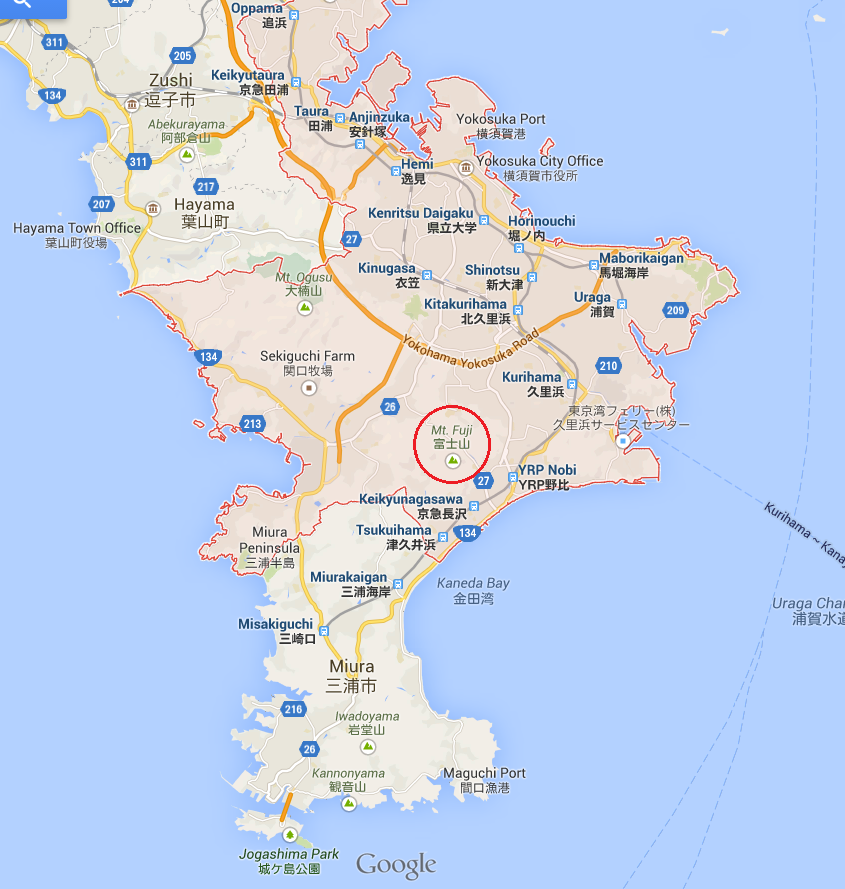
When visiting Yokosuka I looked at Google maps for inspiration for a day out, something I do a lot and has led me to a lot of great adventures. I noticed a mountain to the south of us called 富士山, Mt Fuji. Clearly the real Mt Fuji is not in Yokosuka, I checked it was in its proper place myself when I passed it on the Shinkansen on the way there. But there it was, Mt Fuji the 2nd. The lesser, the pretender. As I am nowhere near physically fit enough to make the 12 hour trip up the real Mt Fuji, we thought it would be fun to check out this one. That way I can honestly say that I have climbed Mt Fuji, just not the one everyone thinks about.

Photo 28-02-2015 11 46 17 am (1)fujifake

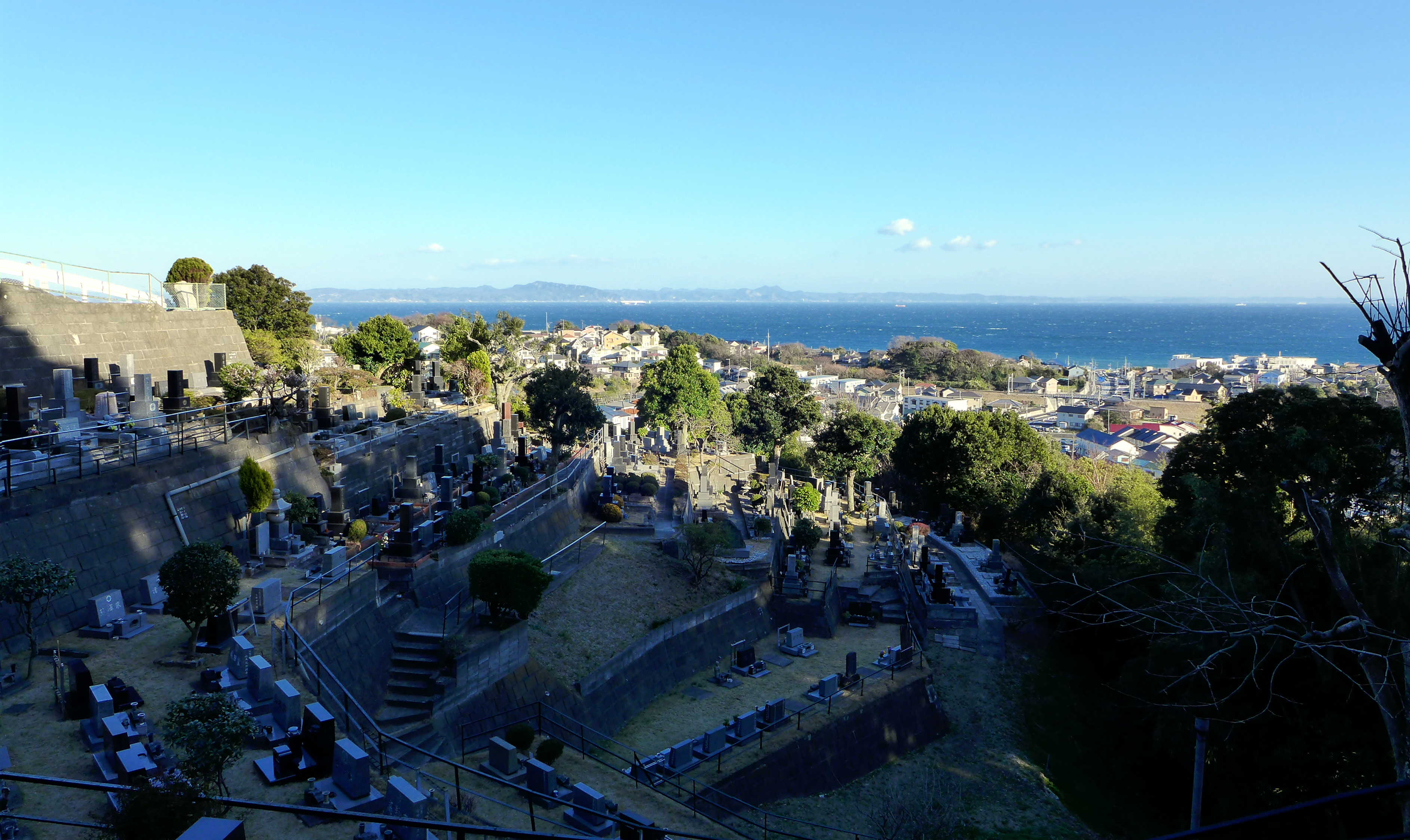
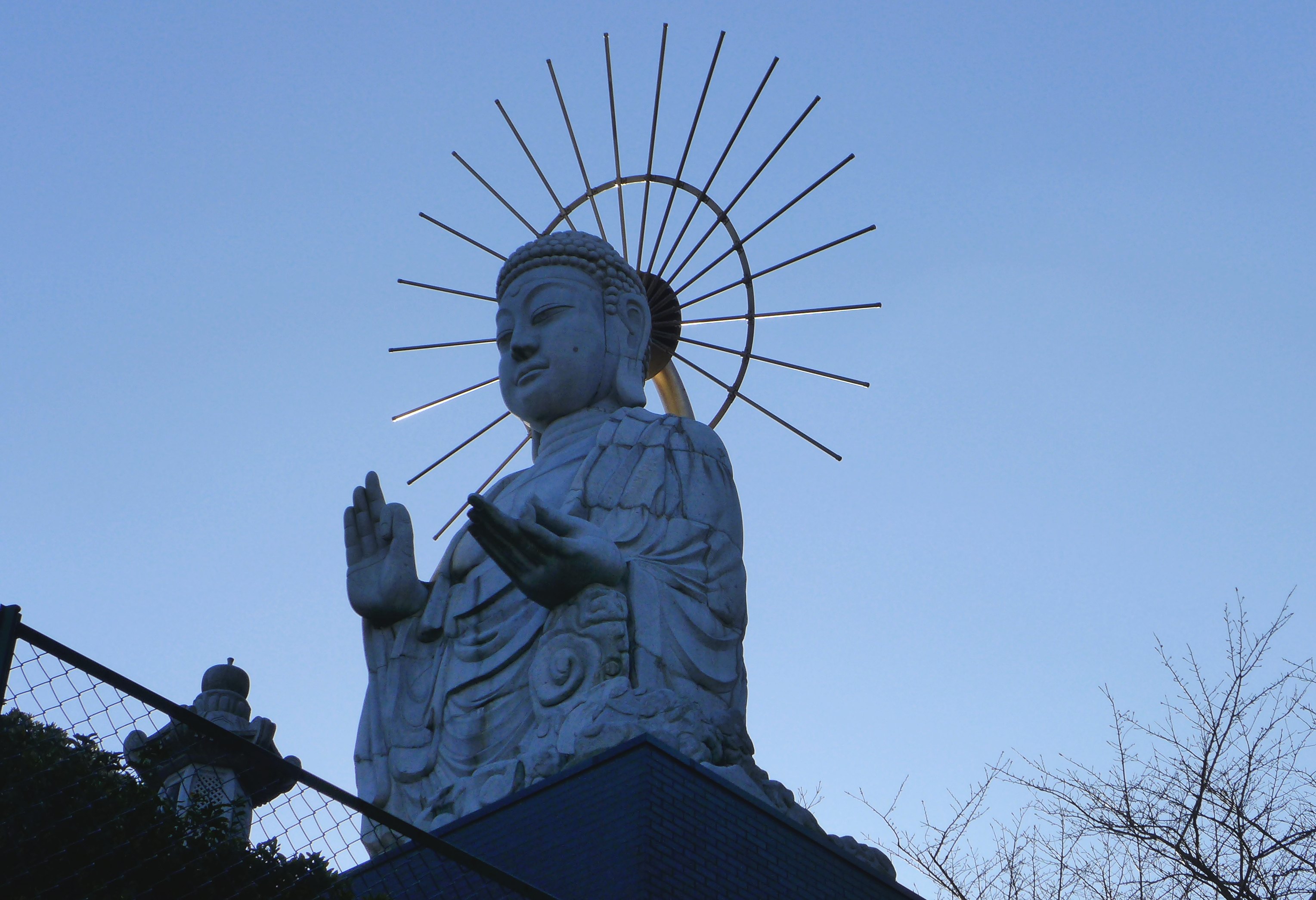
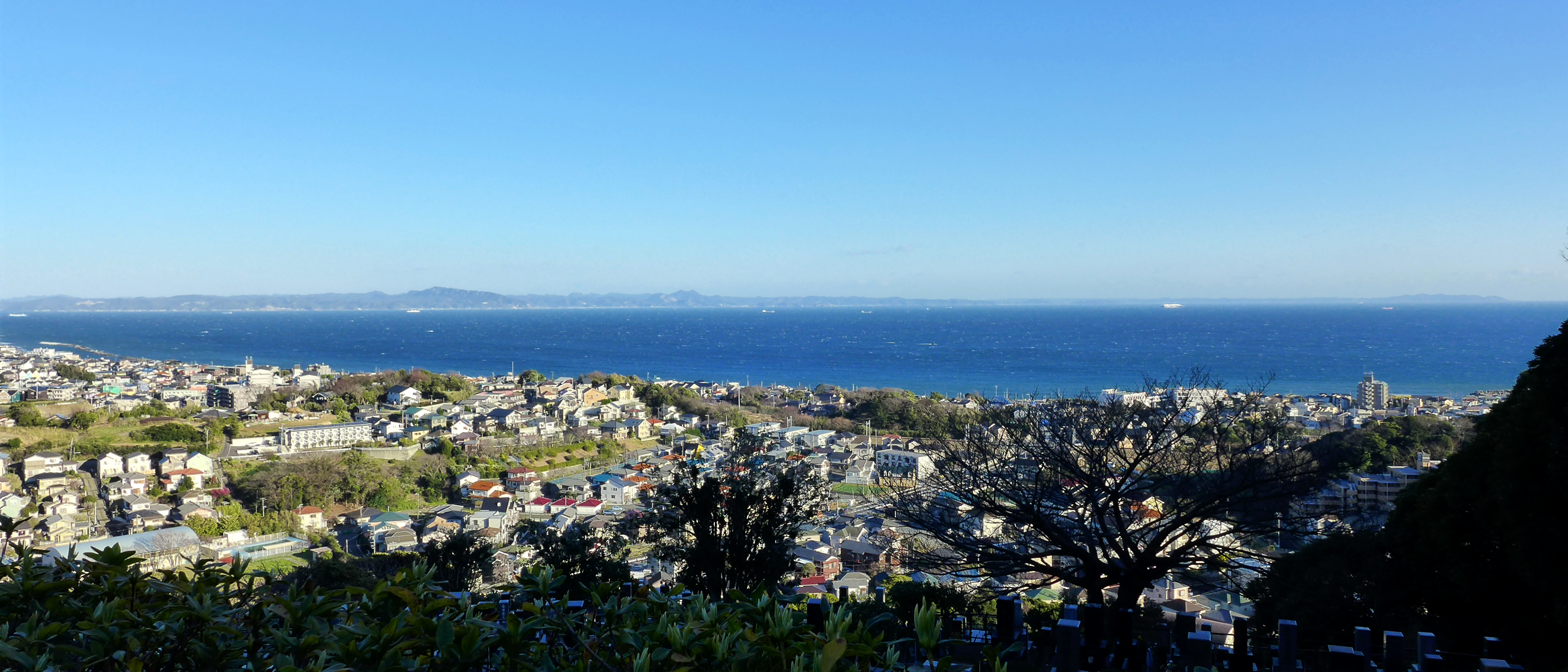
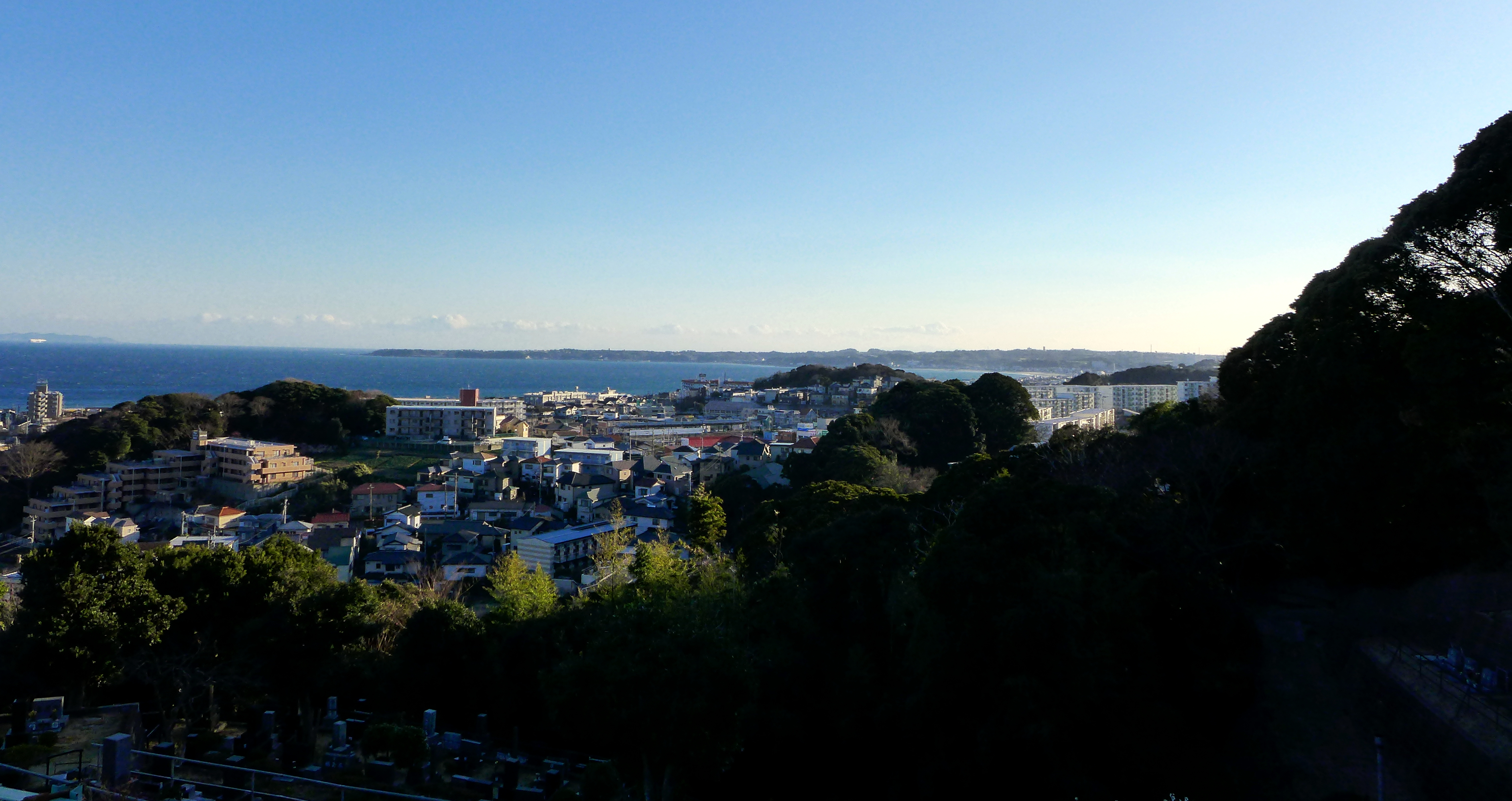
We made our way to the vicinity of Fuji 2.0, walking towards the mountain and looking for a way up. We noticed that sat atop the mountain was a figure. A rather familiar figure by now, it was yet another giant Buddha. This is my third giant Buddha since coming to Japan (one of which I saw in Hong Kong, the other in Kamakura). We managed to find the entrance to the way up the mountain, and discovered that it was a large mountainside graveyard. Undeterred, we climbed up to the Buddha anyway, enjoying the view from the path.

P1060463 P1060455 P1060458 P1060464 P1060467 P1060468

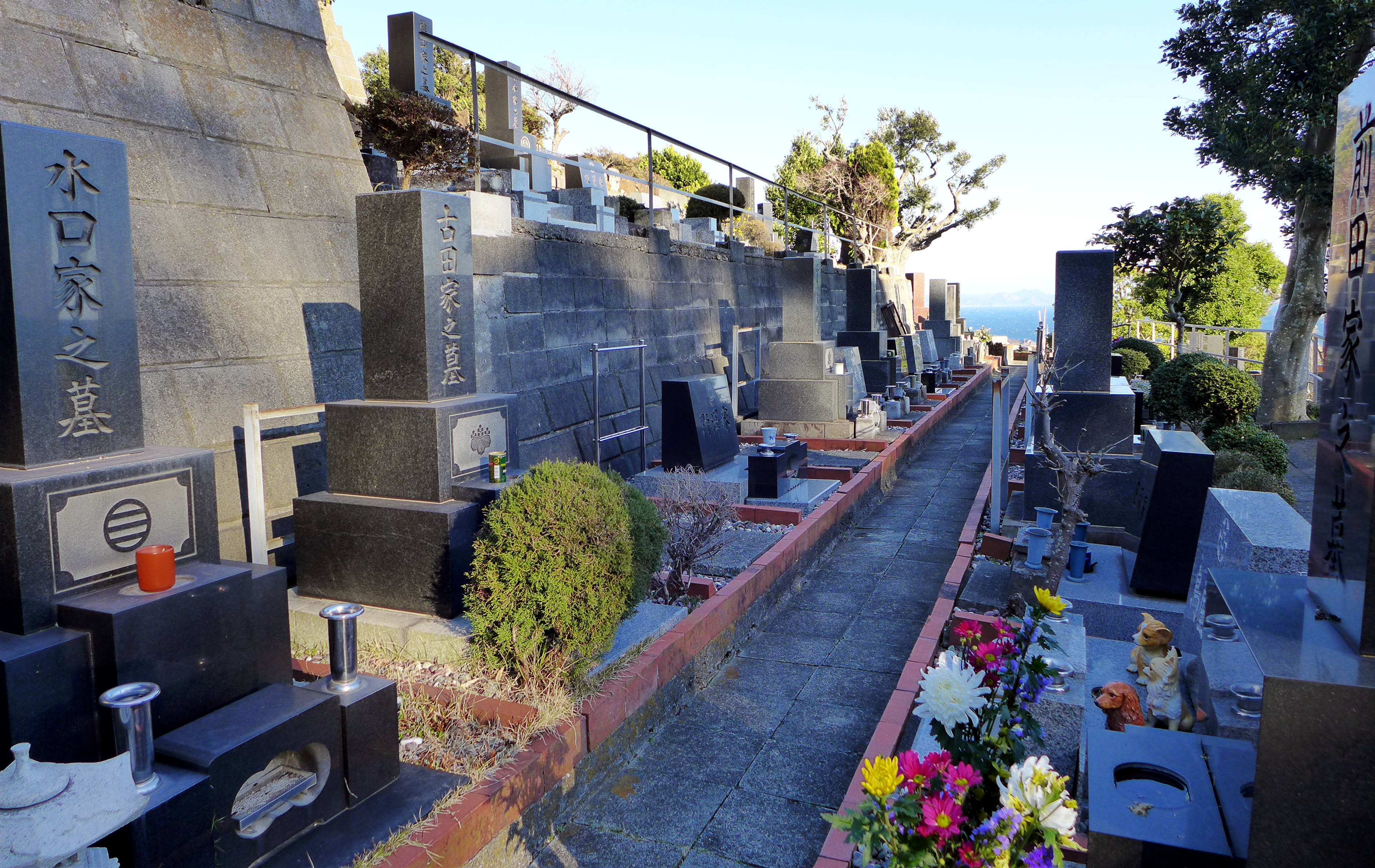
Japanese graves are not the same as those in the West; They  are often a small stone tower with wooden markers sticking out the back, and offerings of flowers and sake in front. I did some research into what the wooden markers signify and it turns out they are actually new names given to the deceased. The idea is that if you are given a new name when you die, if someone says your name you won’t come back to life (presumably as a terrible zombie). Temples charge for these names, and the higher your donation the more elaborate and cool-sounding your post-departure name is. One’s real name is also written on the gravestone, and sometimes even the name of one’s spouse is engraved while they are living to save money (one engraving is cheaper than two). The spouse’s name is painted in red to signify they are still living, and the red paint is removed when they die. It probably isn’t a great feeling to know your name is already written on your grave-stone, waiting for you.

P1060469 P1060471 P1060472 P1060477 P1060476

The graveyard was fairly uniform, which is hardly surprising as 91% of funerals in Japan are Buddhist. Japanese funeral customs are unique, and while a foreigner will probably never have to partake in a Japanese funeral, these customs are felt in every day life. There are a few things you should be careful to avoid doing in Japan, as they are considered a social faux-pas, and are very easy to do.

For example: Your mum wants to try some food on your plate, so you pass her the food from your chopsticks to hers. This reminds Japanese people of passing bones chopstick-to-chopstick in traditional Japanese post-cremation ceremony, so don’t do this. Later you go to a Ryokan, a traditional Japanese hotel, and you are given a yukata, a lightweight kimono-style garment, to wear. You cross the two flaps over right over left, not thinking about it. Soon, a Japanese person sees you and helps you correct it to left over right. This is because only the dead wear their kimono right over left. In addition, sticking your chopsticks vertically into your rice is also reminiscent of offerings of food to the dead, which is offered with the chopsticks in this position, so best to avoid doing that as well. As you can see, you learn a lot about Japanese funeral customs from daily life in Japan without ever going to one. 

P1060475 P1060490P1060481P1060486 P1060488P1060491P1060493P1060473

I would recommend the film Departures (おくりびと) for anyone who wants to know more about Japanese funeral customs. While it is a morbid topic, it’s interesting seeing how other cultures deal with death, and the film itself is actually light-hearted, funny and has beautiful cinematography. I strongly recommend it, even if you have no interest in the funeral practices, and it’s won several awards, so I’m not alone in this recommendation.

P1060503 P1060506P1060484P1060487x

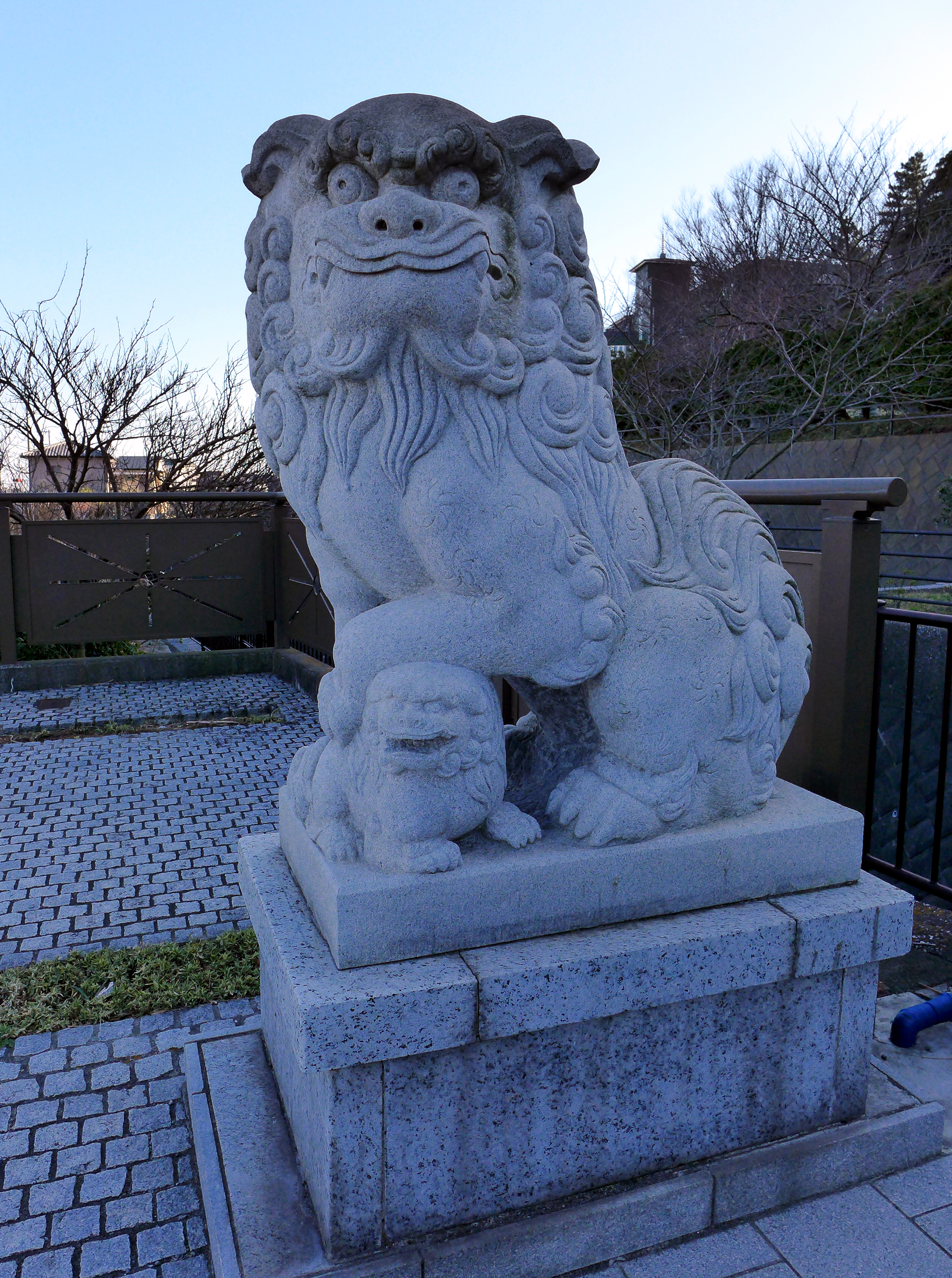
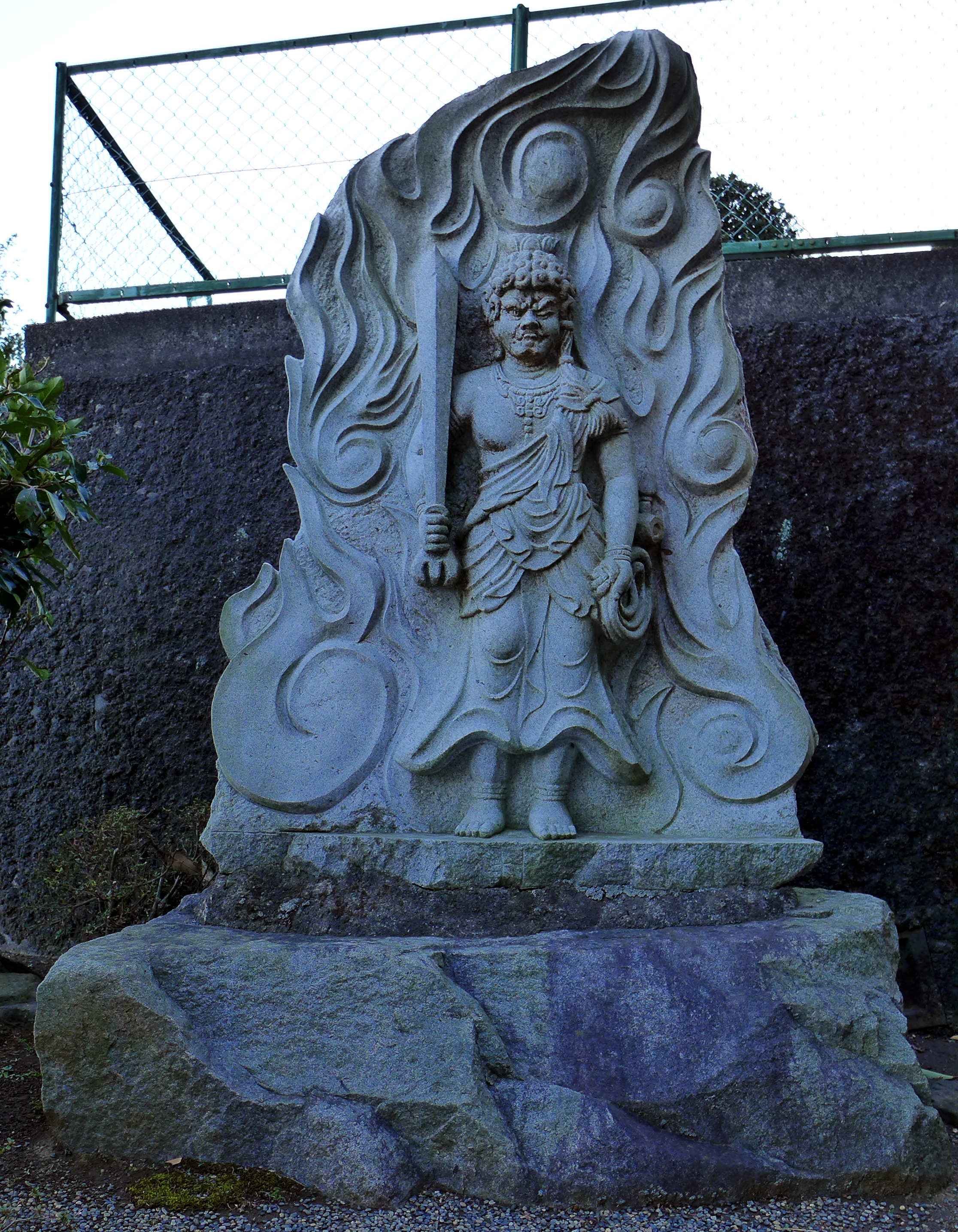
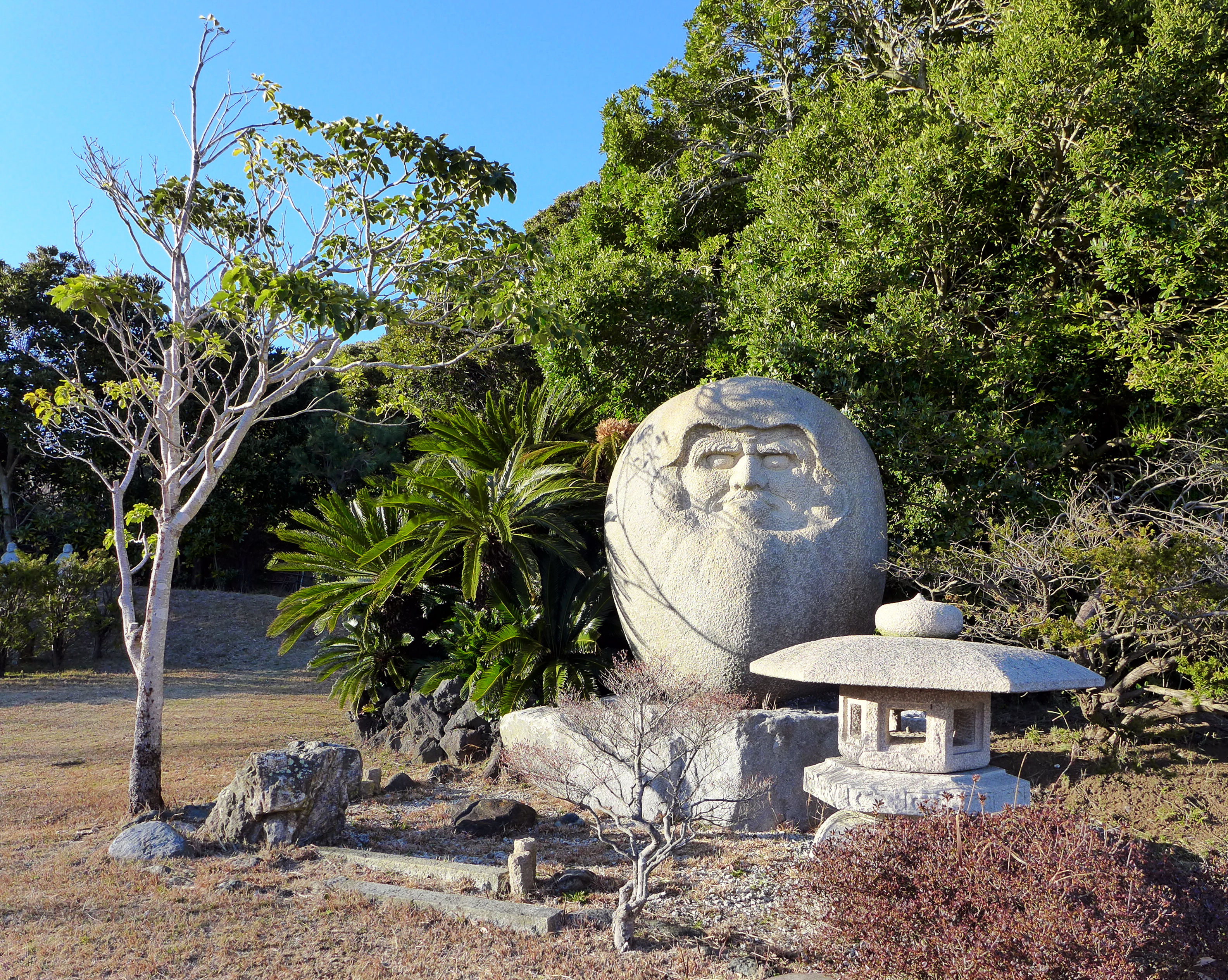
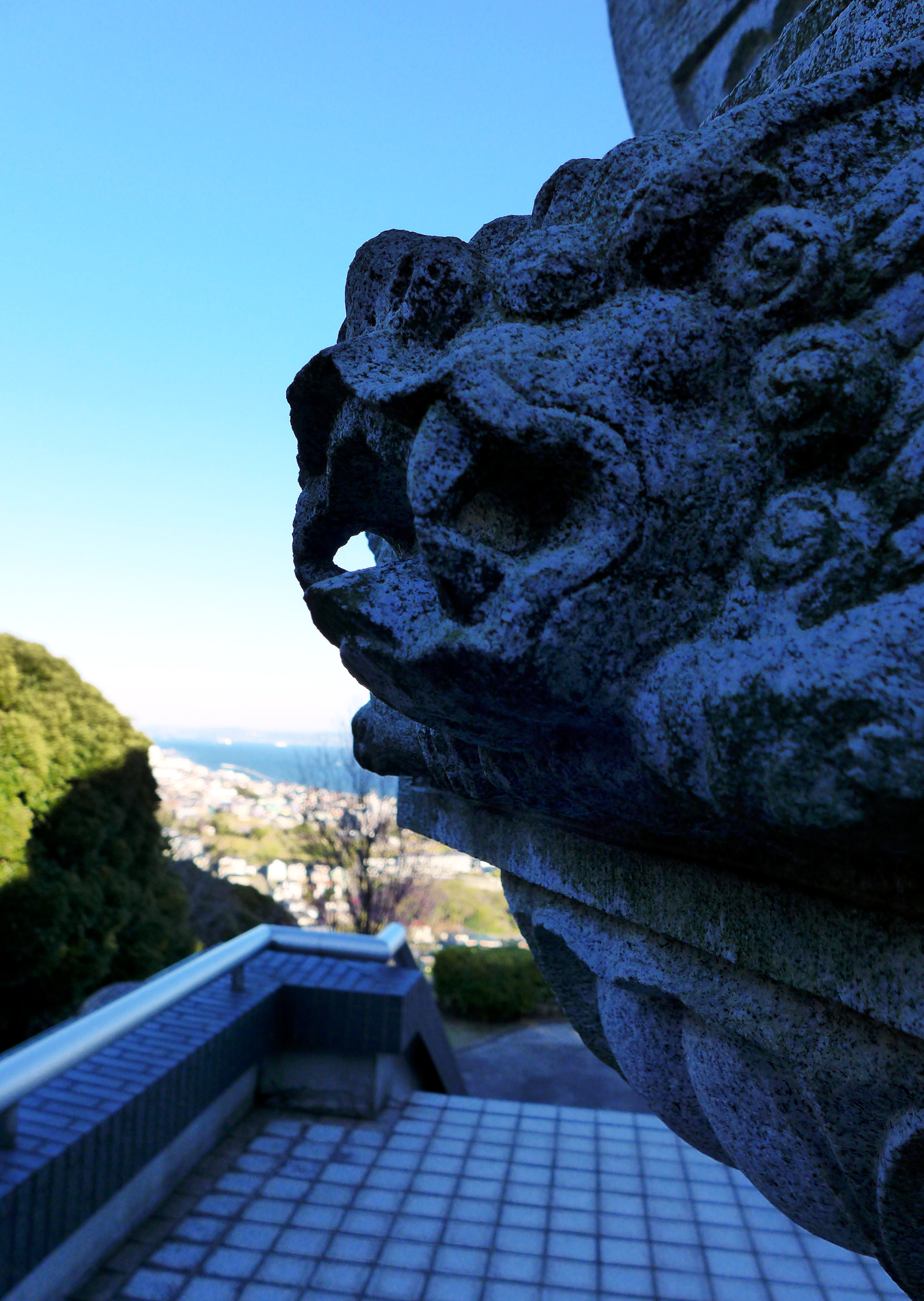
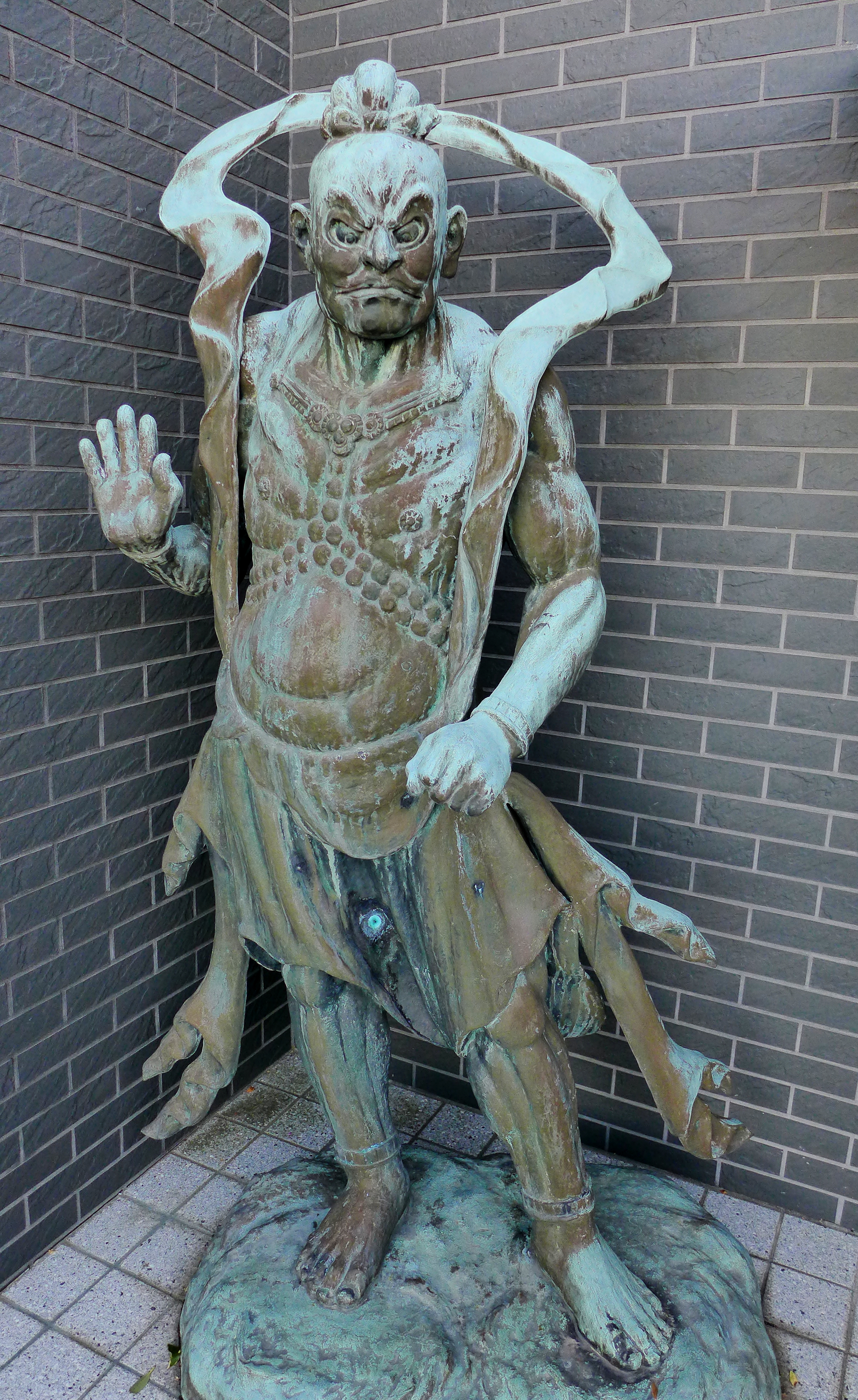
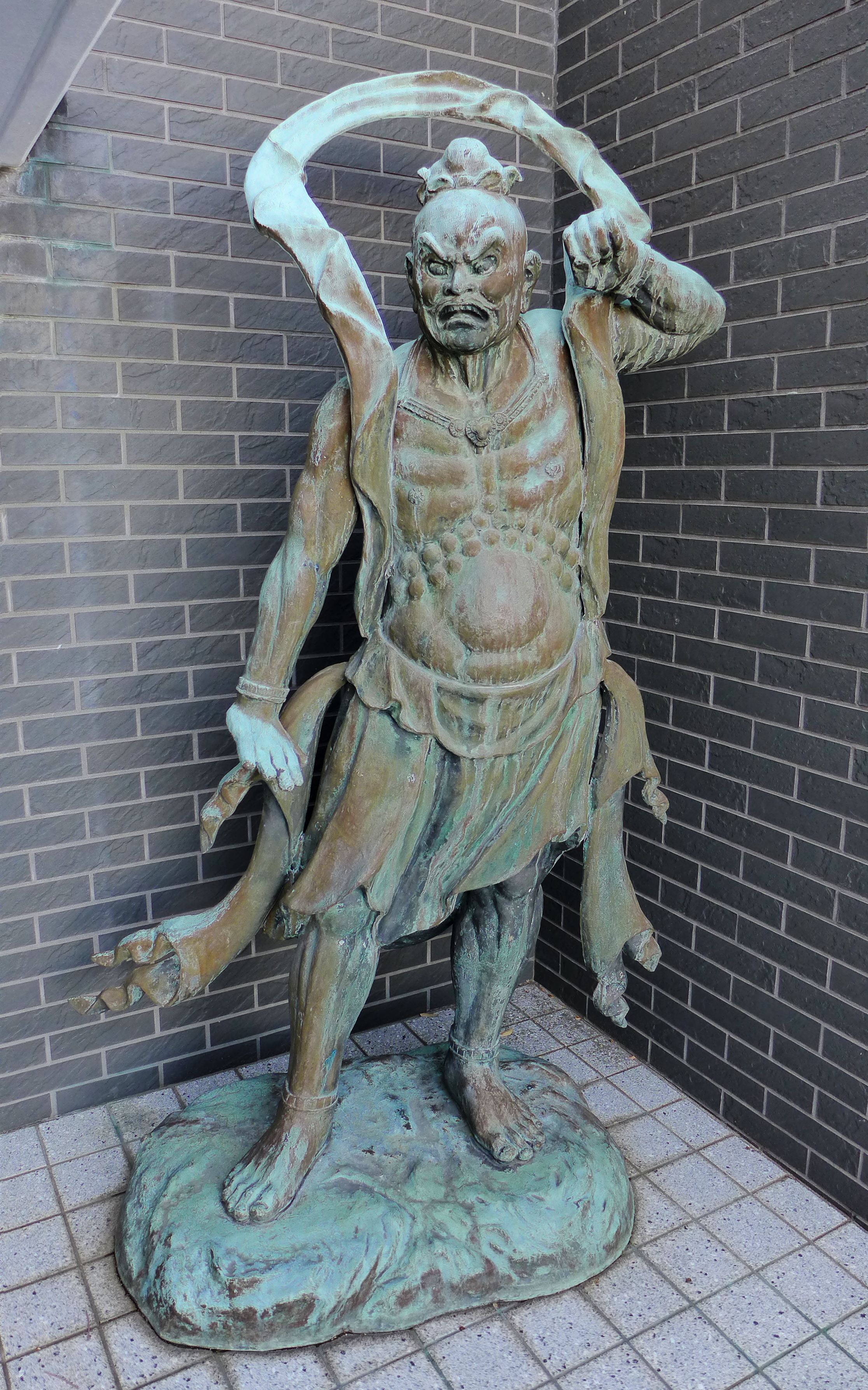
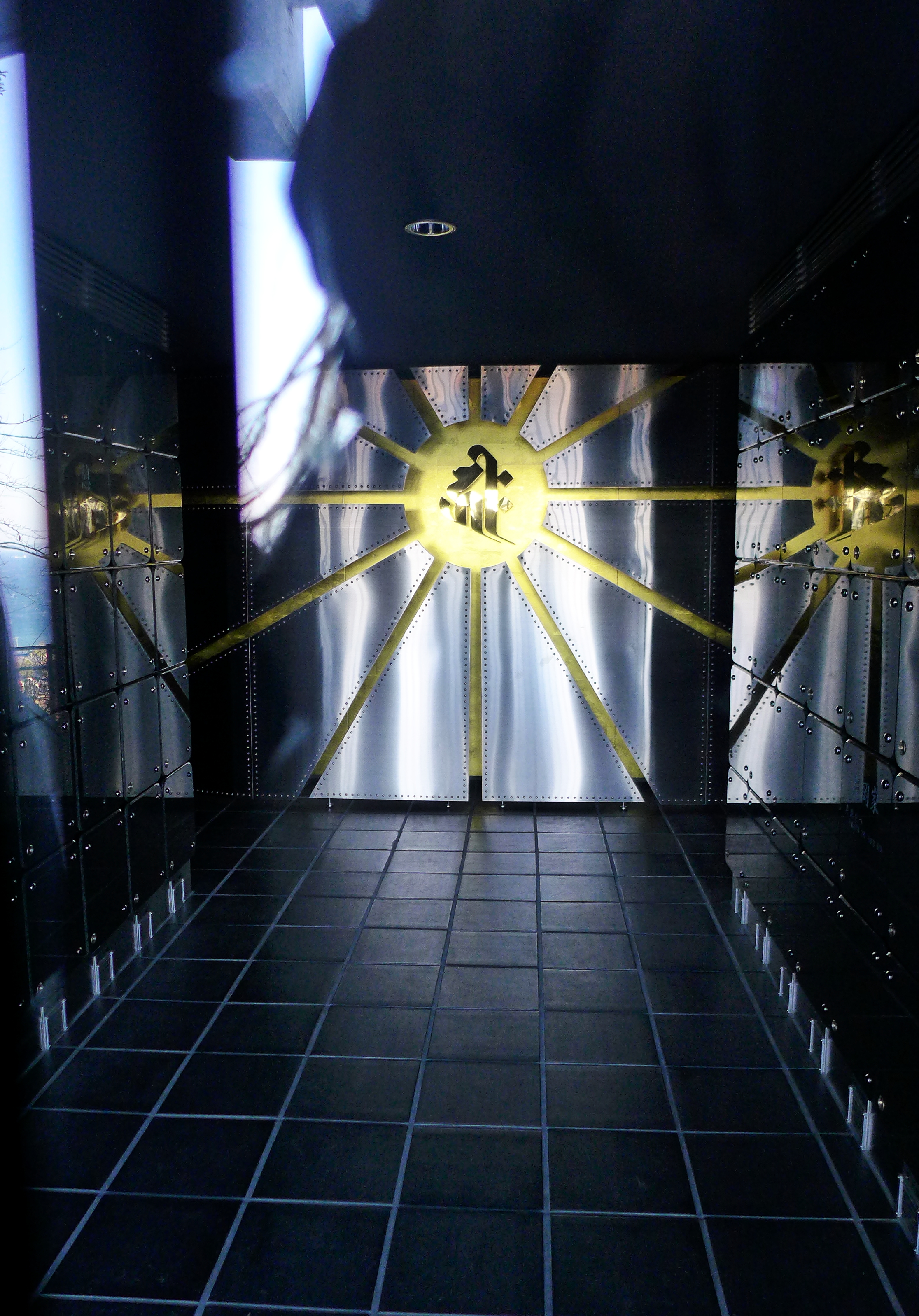
We made it up to the top of the hill and discovered a pagoda and the large Buddha statue. The statue watched over the graveyard and looked out to sea, giving the sense that the graveyard was in safe hands. Under the Buddha was a gated hall, and the inside seemed to be a well kept lobby or a vault. We were unsure what was inside but it seemed like it could be a secret spy den, or illuminati related. Or something related to Buddhism and funerals, but I still think it was suspicious. It was guarded by two demon-like statues that seemed determined to keep people out.

P1060495 P1060496 P1060497 P1060499

They even had a memorial for pets, which was a really nice thing to see, though it made me sad, as my family dog, Jasper, died a few weeks prior. The inscription just says ‘thank you, thank you’ and there was a memorial wall next to it with pets’ names and the date. It was a lovely way of remembering pets and the joy they brought their families.

P1060509

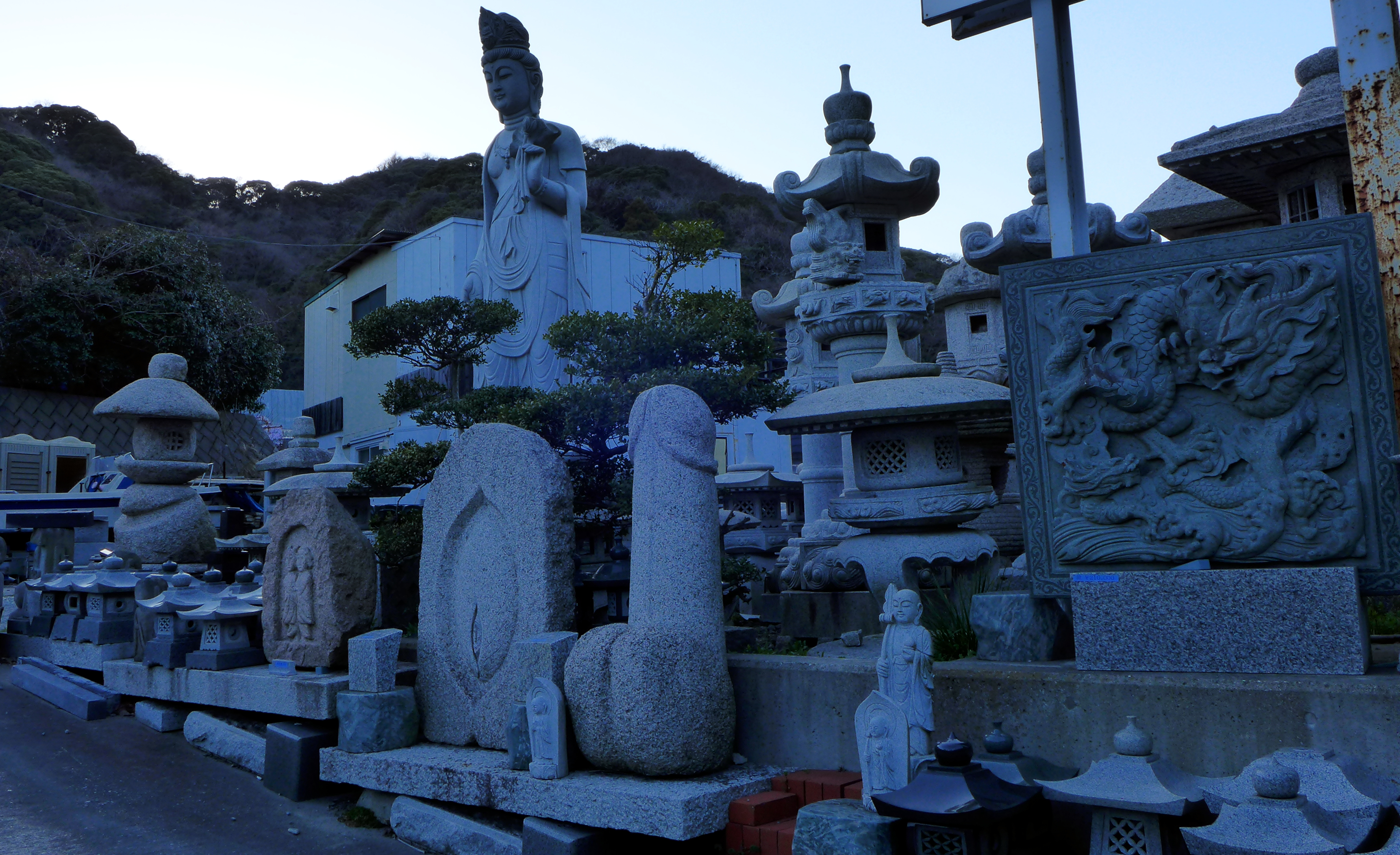
Once we’d climbed that mountain we decided to head round to see if there was another path up. On the way round we came across a place that made statues – graves, statues for gardens, and a pair of rather… intimate, statues. I’ll let you spot them.

P1060513P1060510P1060511P1060512

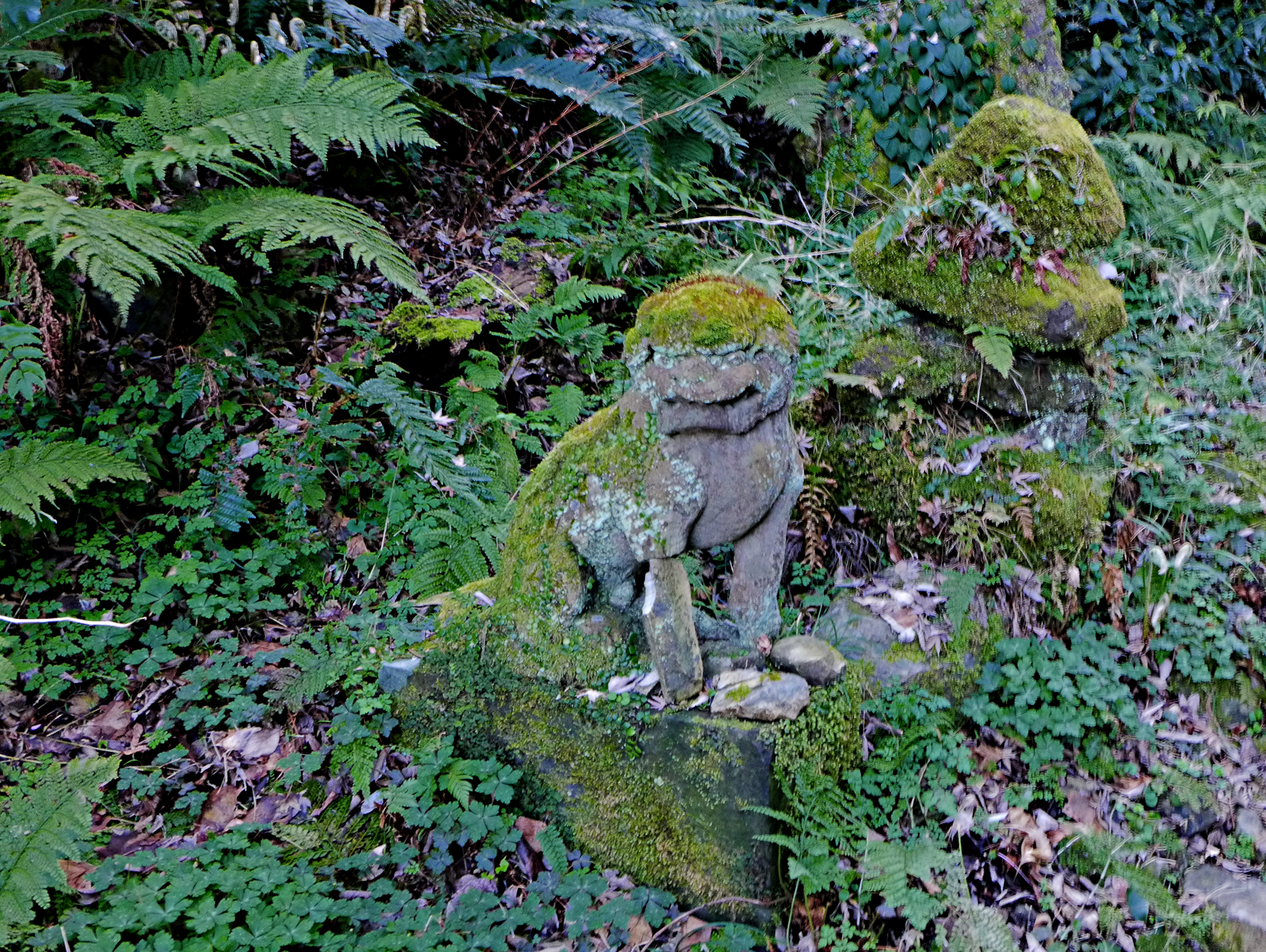
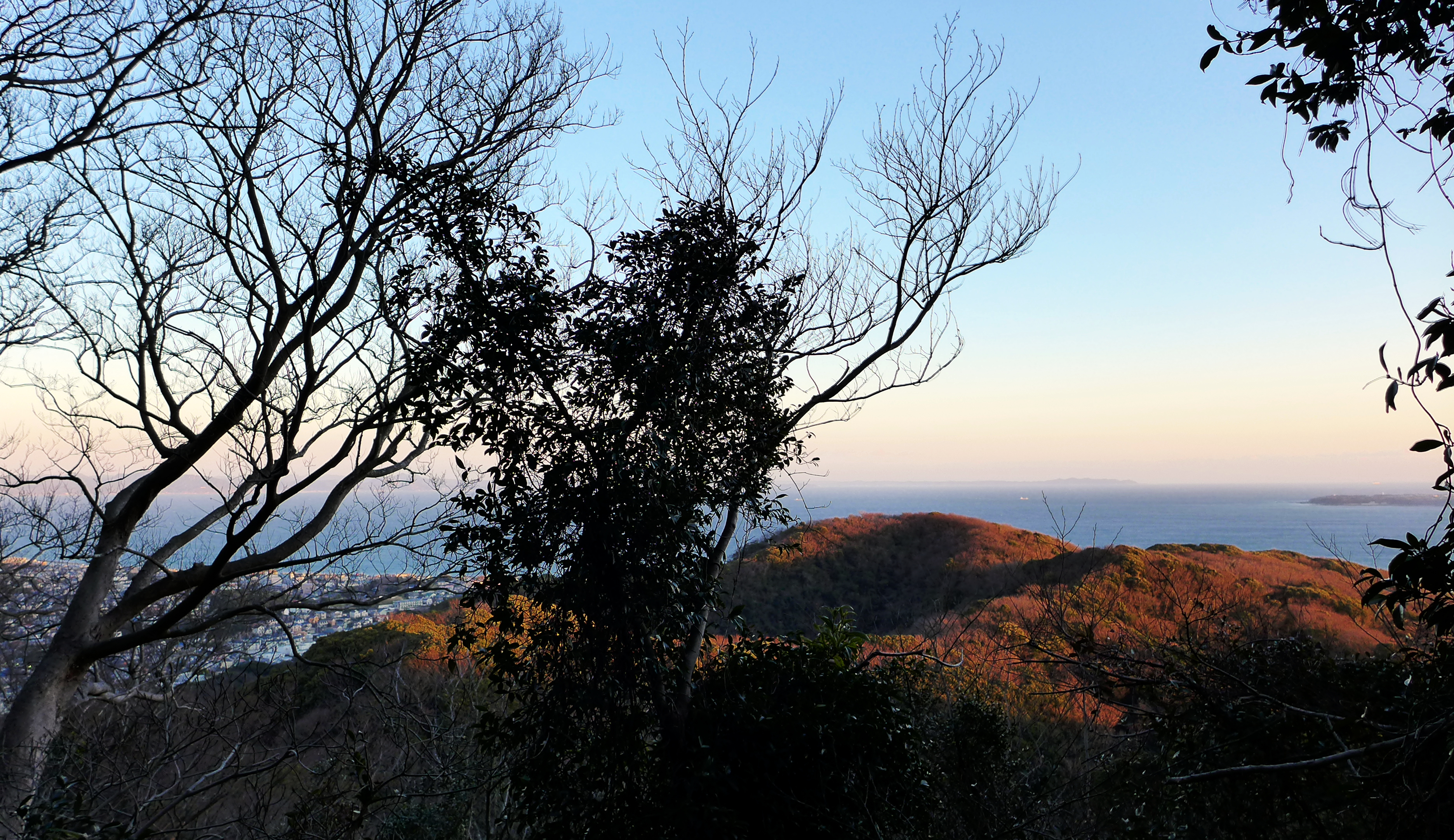
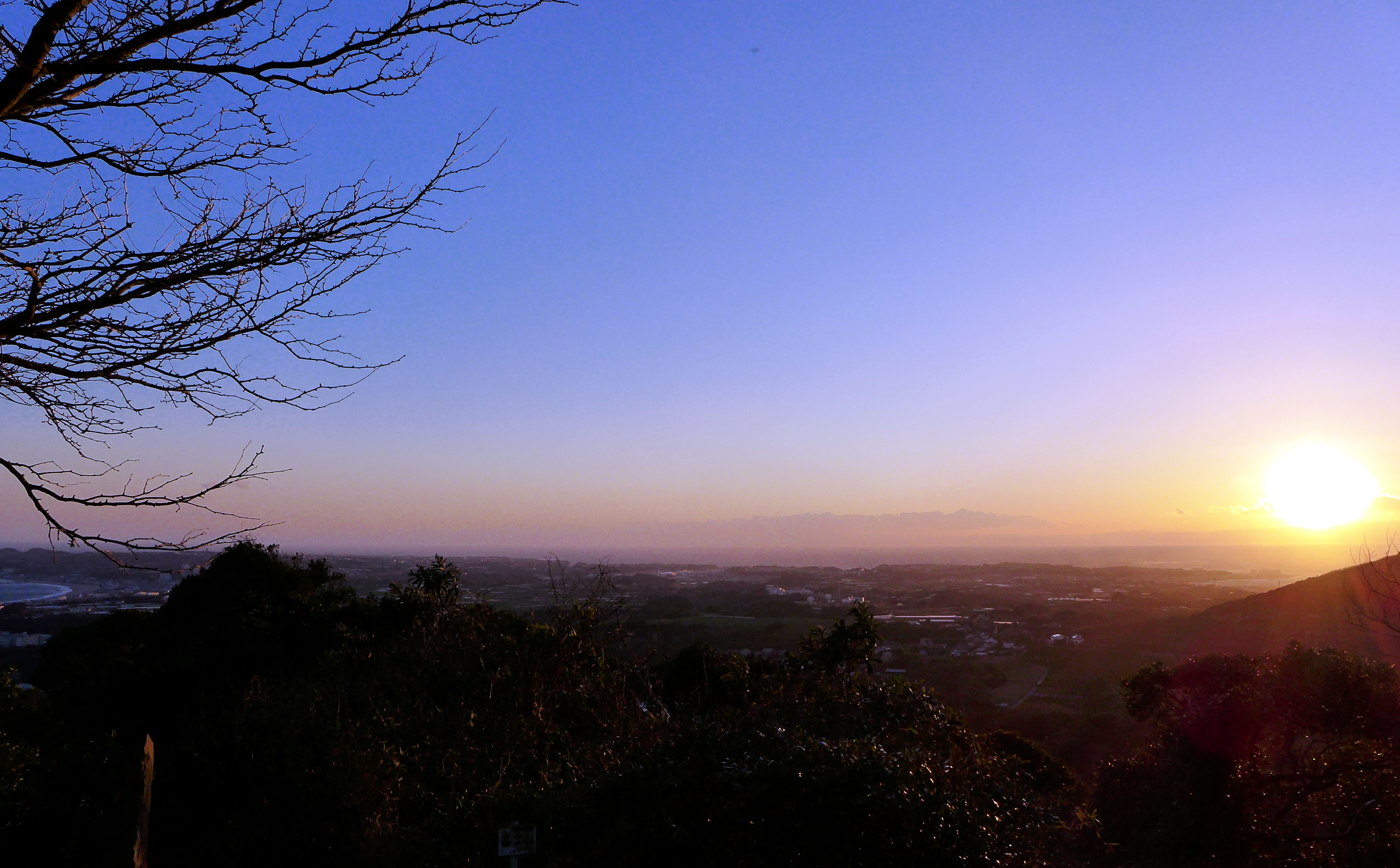
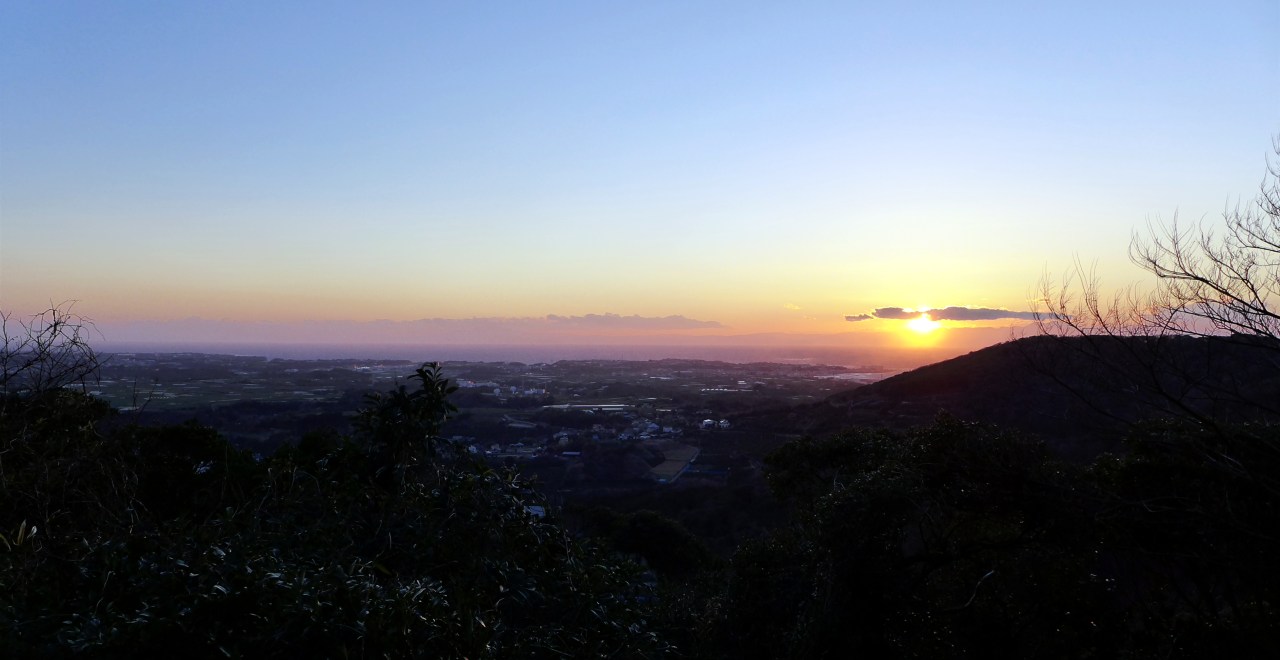
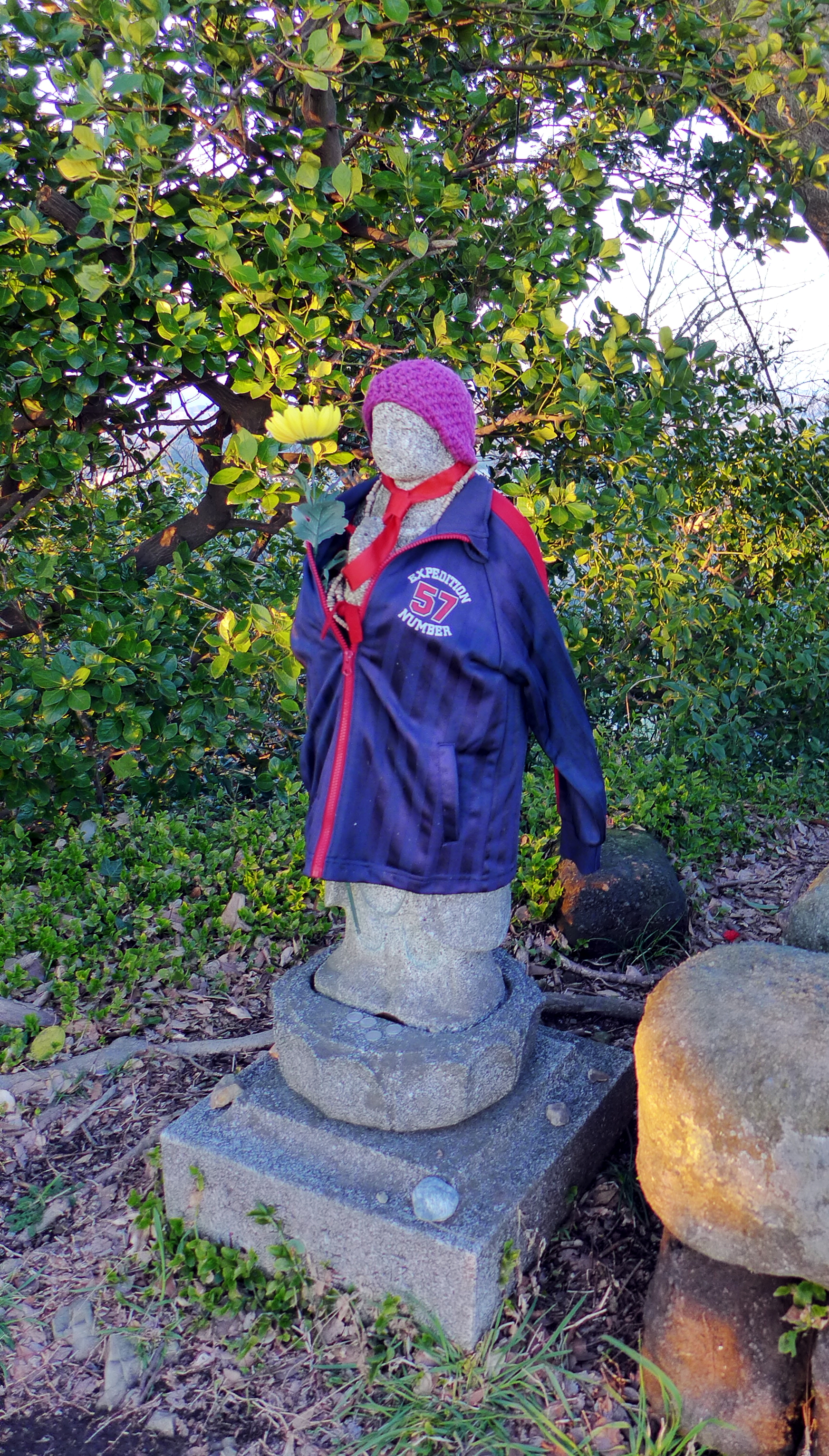
I wanted to see the shrine that was on the other side of the mountain (according to Google maps), but it turned out to not be a real shrine but a collection of old statues in the woods and a stone alter at the peak. We climbed up False Fuji, a little slowly as it was steep, muddy, and I’m pathetic, making it up in time to see the sunset from the top. I think had the sun been out of the way, we would have been able to see the real Mt Fuji from the top. Many mountains in Japan are named ‘Fuji’ or have ‘Fuji’ in their names if you can see the famous mountain from the top.

P1060515 P1060518 P1060521 P1060522 P1060523P1060528 P1060525P1060529

We made it down the mountain just before it got really dark, taking it slowly as the steps were uneven and very muddy. I really enjoyed getting off the beaten track and going on an adventure, especially as it turned out to be a great experience.