浅草寺 Gates of Thunder

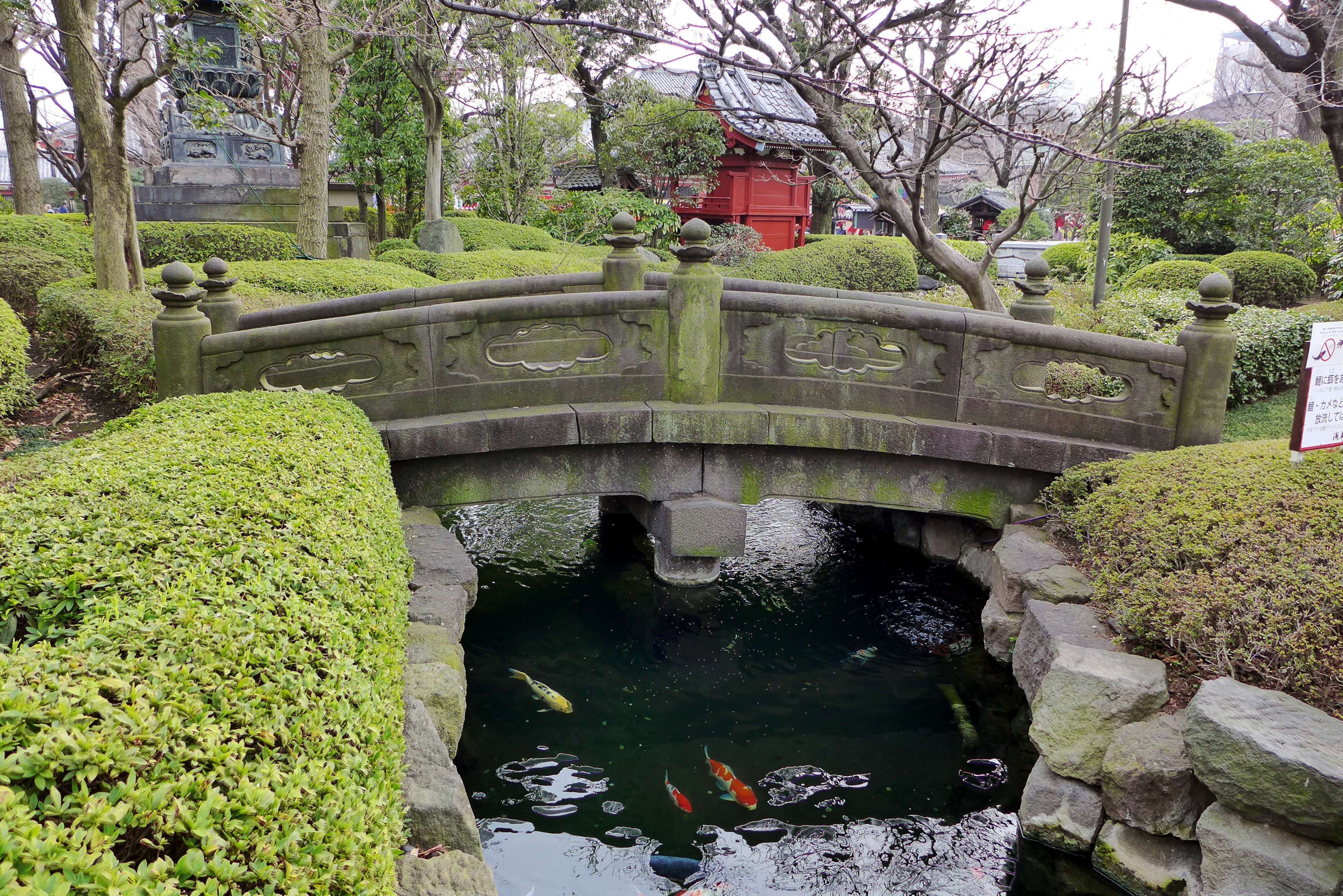
While visiting Tokyo, I returned to one of my favourite temples in Japan, Senso-ji, better known to Western tourists as the Thunder Gate. This temple is pretty spectacular; there is a long approach with market stalls, two impressive gates with huge lanterns hanging in them, a large temple complex and a beautiful surrounding garden. I simply had to revisit this temple while on my year abroad.

Senso-ji, 金龍山浅草寺, founded in 645, is the oldest temple in Tokyo. It is said that two brothers were fishing in the Sumida river (which flows through Tokyo) and found a statue of Kannon, the Bodhisattva of mercy. They brought the statue to the village where a wealthy man decided to enshrine the statue in his own house, turning it into a temple for villagers to visit and pray. This temple, like many in Tokyo, was destroyed by the 1945 air raids and rebuilt in the post-war period. It became a symbol of rebirth for the Japanese people.

P1060553P1060563

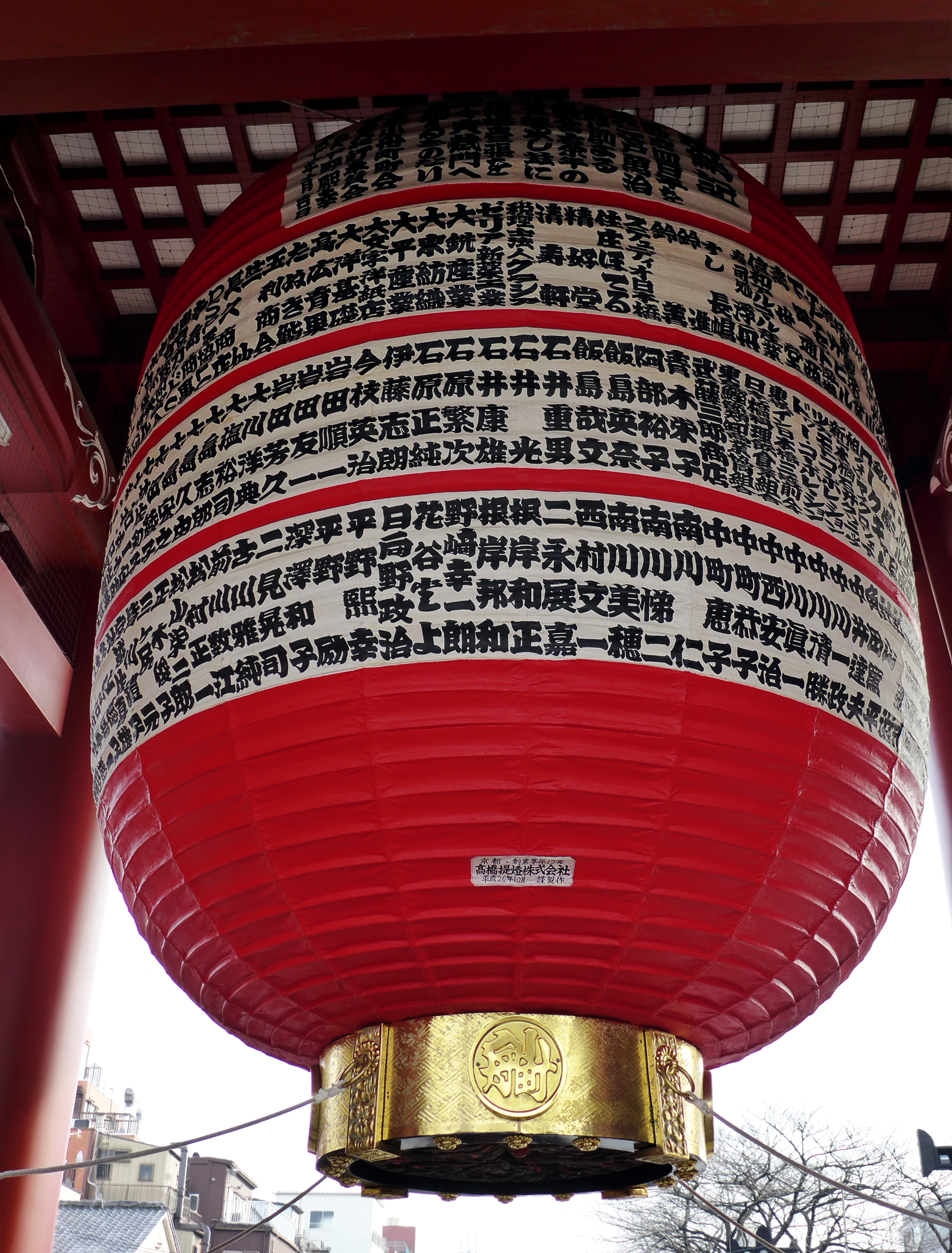
Senso-ji is most famous for the large gates and lanterns. There are two gates on the approach to the temple, the first is Kaminarimon 雷門, the Thunder Gate, which was built in 941 by a military commander. The current structure dates back to 1960. The gate bears a huge lantern with the characters ‘雷門’ written on it, which mean Thunder Gate. The lantern weighs 670kg and measures 3.4m in circumference. The gate is flanked by the figures of Raijin and Fujin, the gods of thunder and wind. It is believed that Fujin, the god of wind, actually originates from the Greek god Boreas – the image of the Greek wind god carrying a bag of wind was transmitted down the silk road, eventually reaching Japan as Fujin, who also carries a wind bag.

P1060534 P1060535 P1060533 P1060540

The second gate, the way into the inner temple, is called Hozomon 宝蔵門, Treasure House Gate. It was built by the same military commander as the Thunder Gate, and when it was rebuilt after the air raids of 1945 it was rebuilt with flame-resistant materials. Because of this, this gate houses the treasures of Senso-ji, which include a copy of the lotus sutra and a collection of Buddhist scriptures. There are also lanterns hanging from this gate, the main one bears the characters ‘小舟町’ Kobunacho, the name of the town in which Senso-ji is situated.
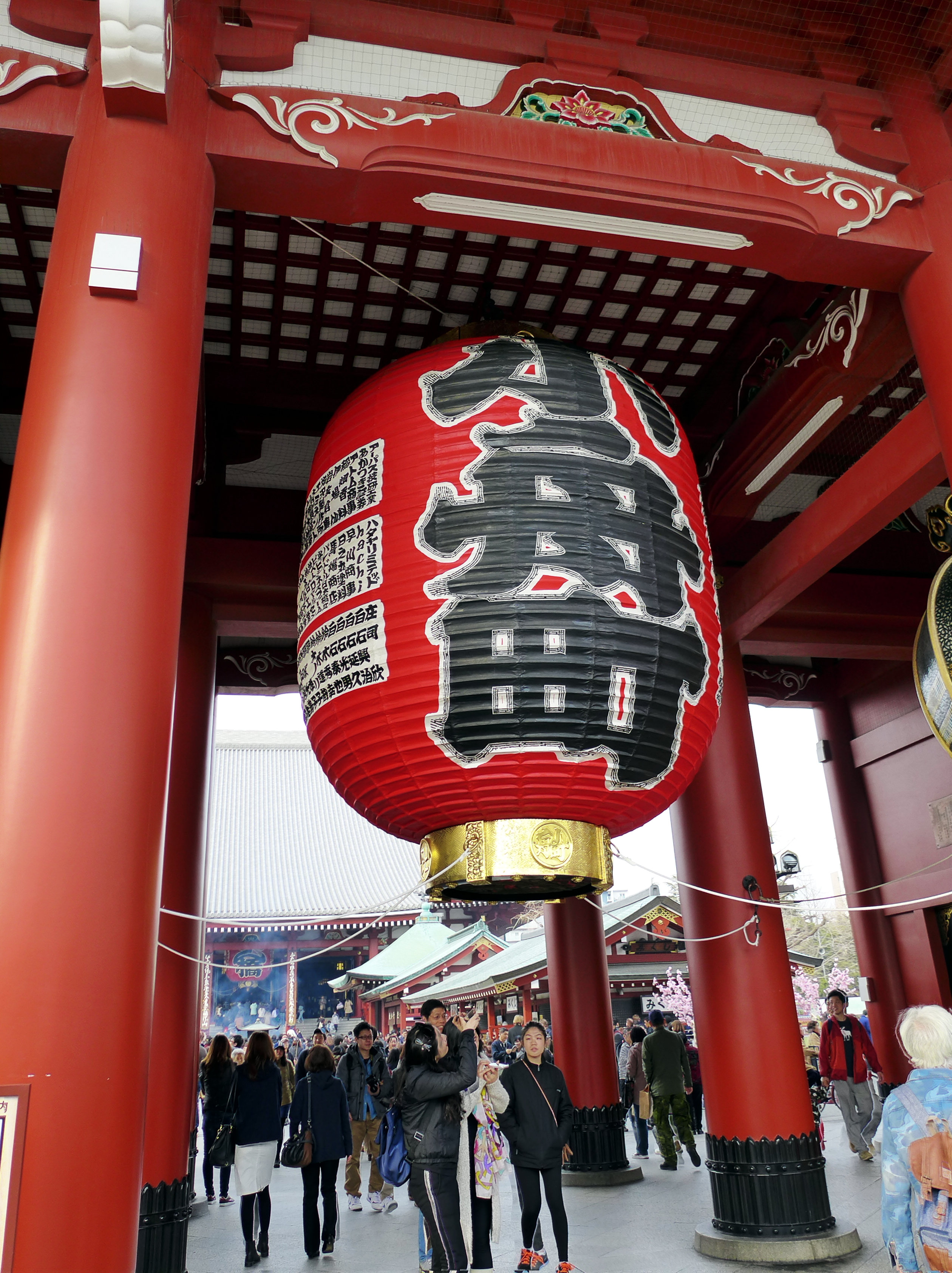
P1060544 P1060545 P1060542P1060547P1060550

Between the two gates there is a long market street called Nakamise-dori 仲見世通り, which has around 100 different shops, with goods ranging from snacks, to wood-block prints, to kimono. This is an excellent place to buy souvenirs or presents for friends and family. This shopping street arose in the 18th century when locals were permitted to set up shops on the approach. Though it has changed a lot through war, rebuilding and restructuring, people have been buying the same things on this street for centuries. You can also take a rickshaw ride around the streets near the temple if you want to sit back and let someone do all the work of getting through the crowds for you.

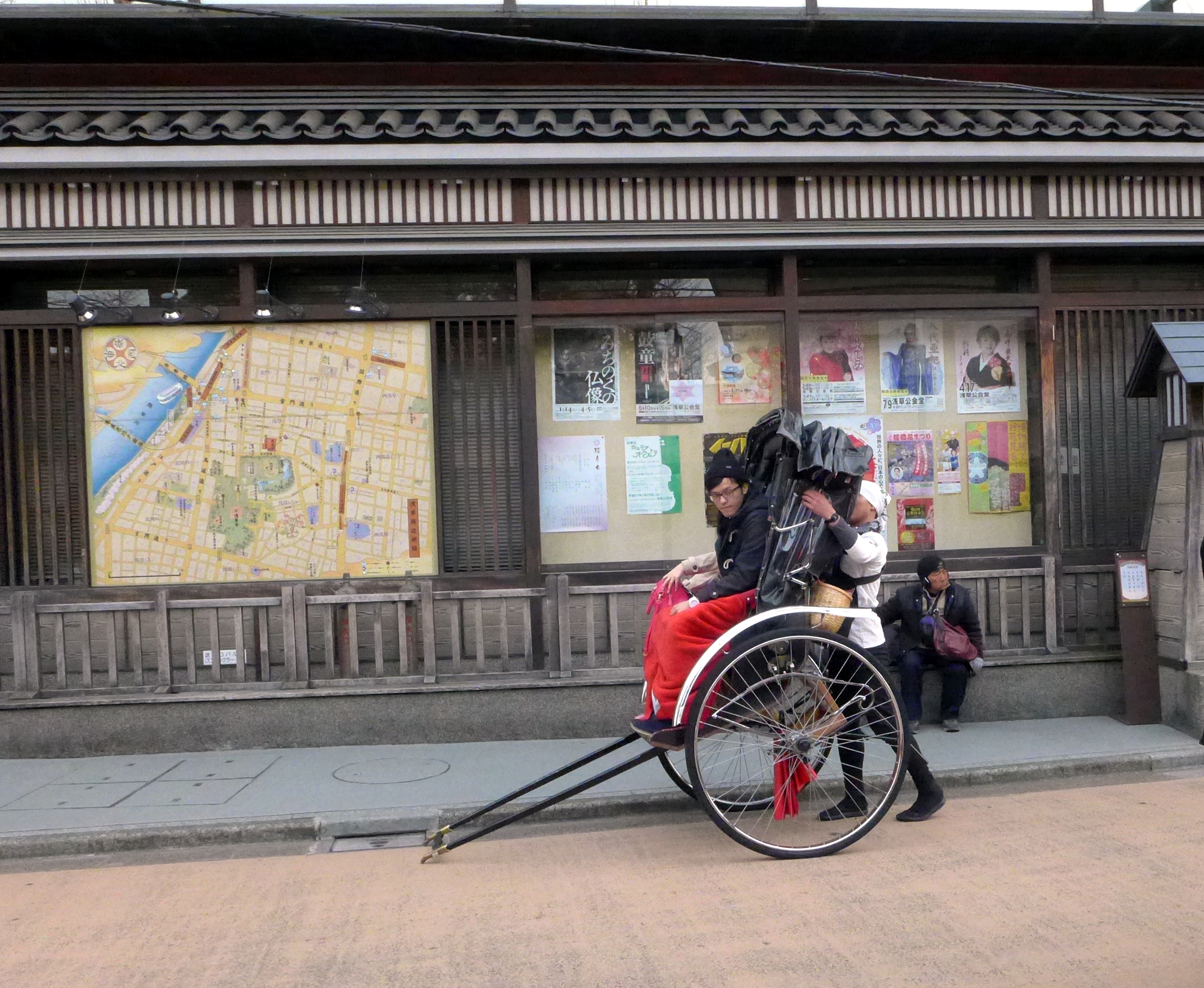
P1060536  P1060538P1060537P1060559P1060569P1060558

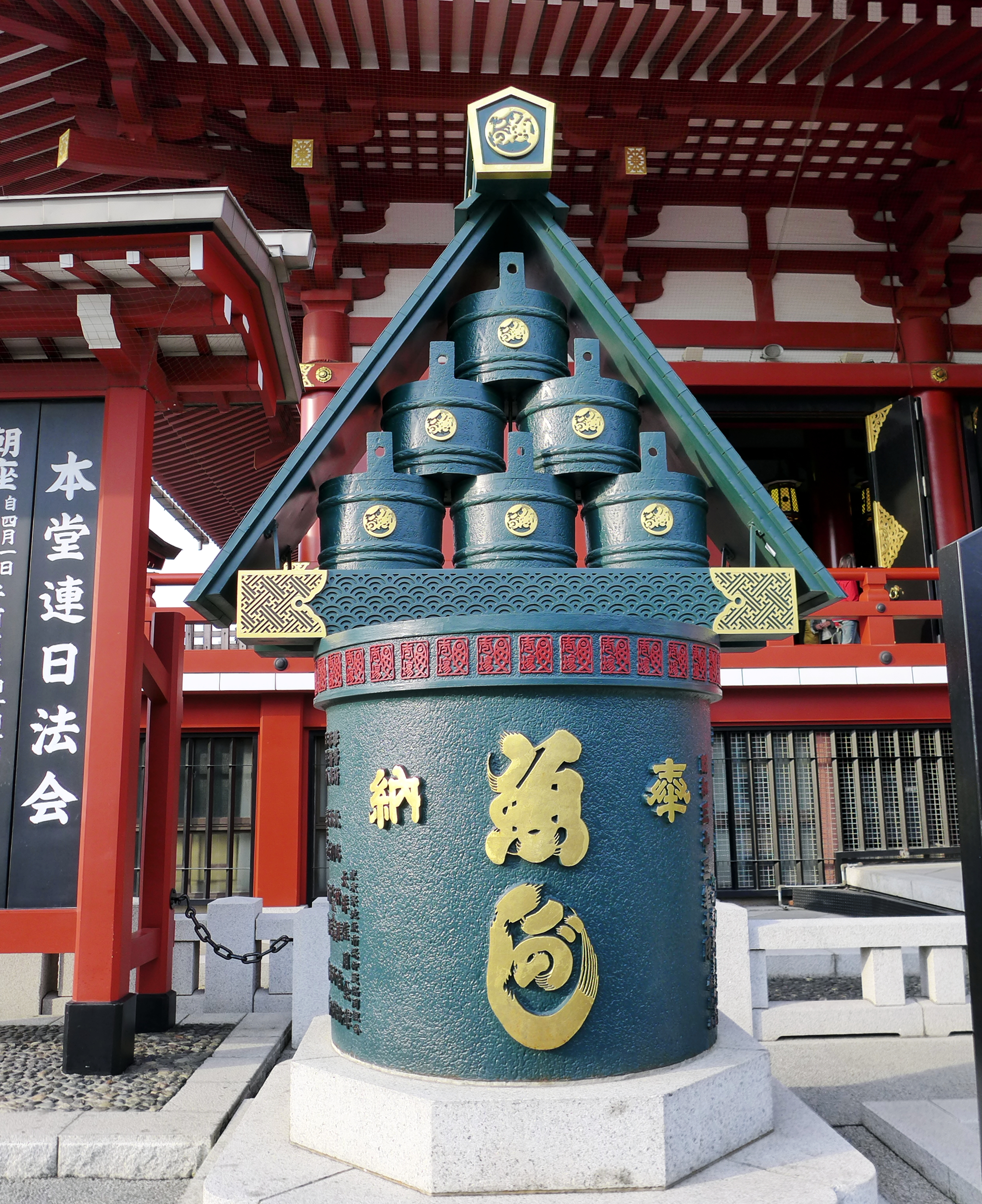
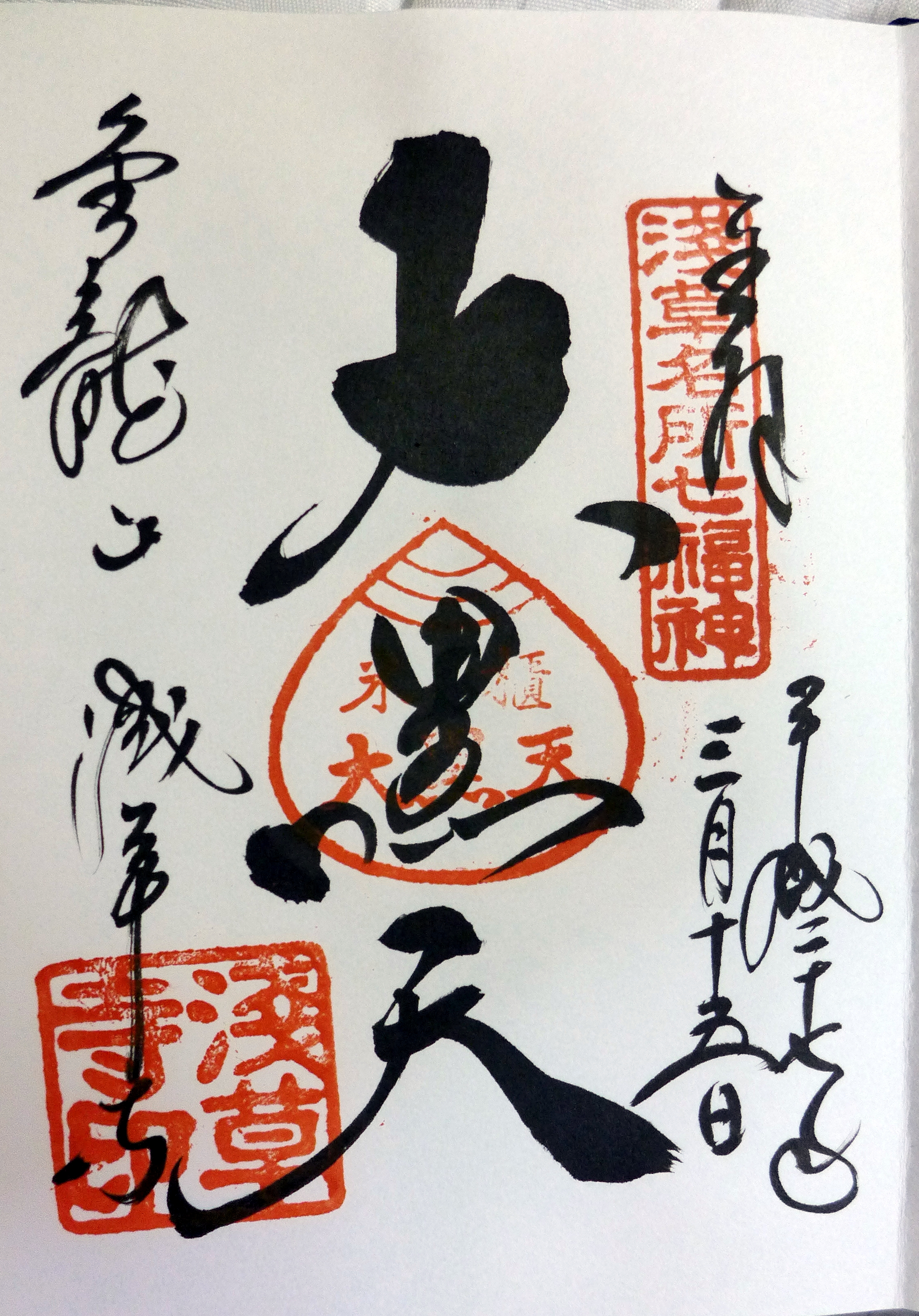
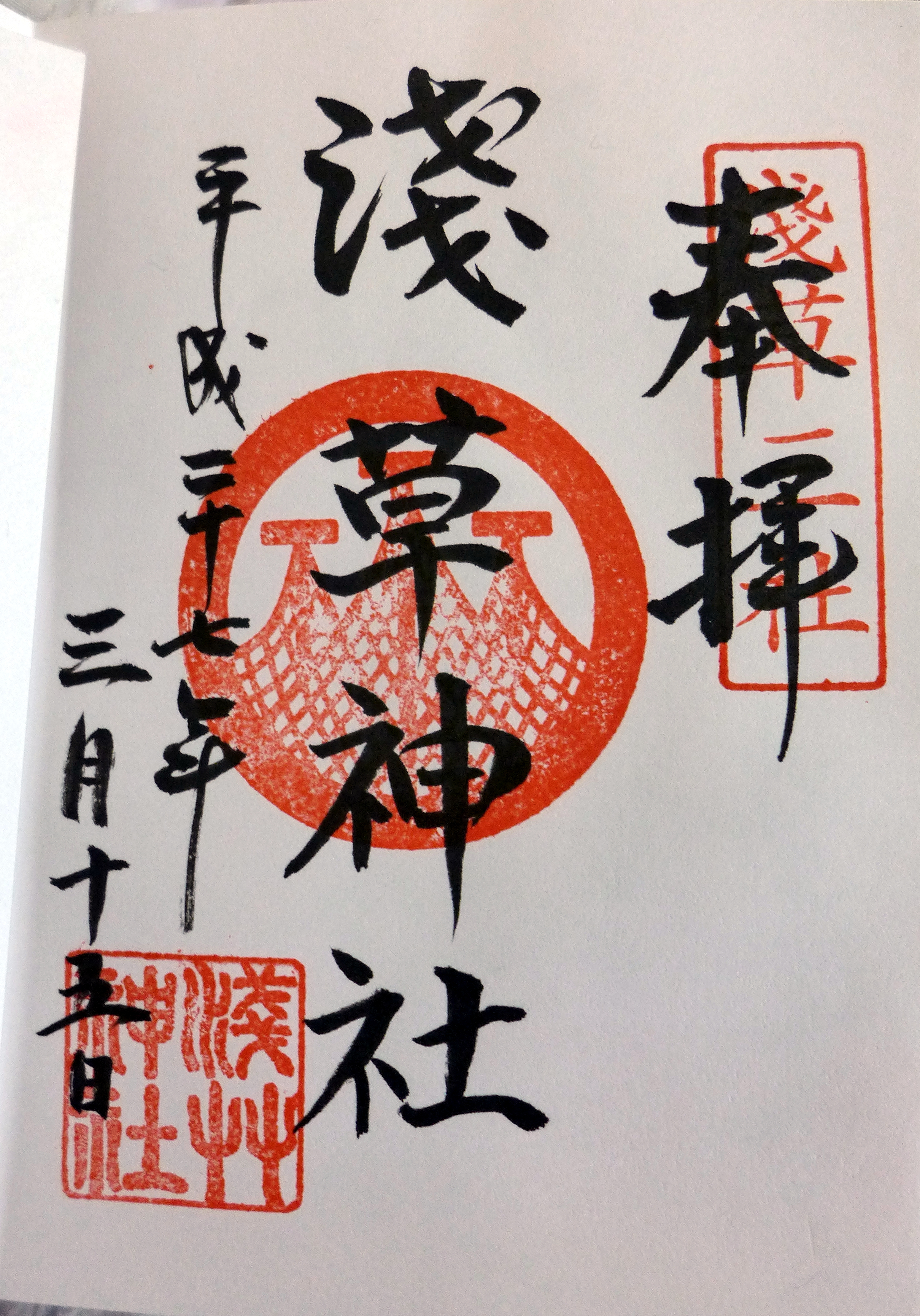
Senso-ji’s inner temple is fairly typical of Japanese buddhist temples; there are places to get your fortune, buy protective charms and a main hall of worship, however it is much larger in scale than most temples and it has a pagoda. I managed to get two stamps at this temple, one the standard temple stamp and the other a prayer to Kannon.
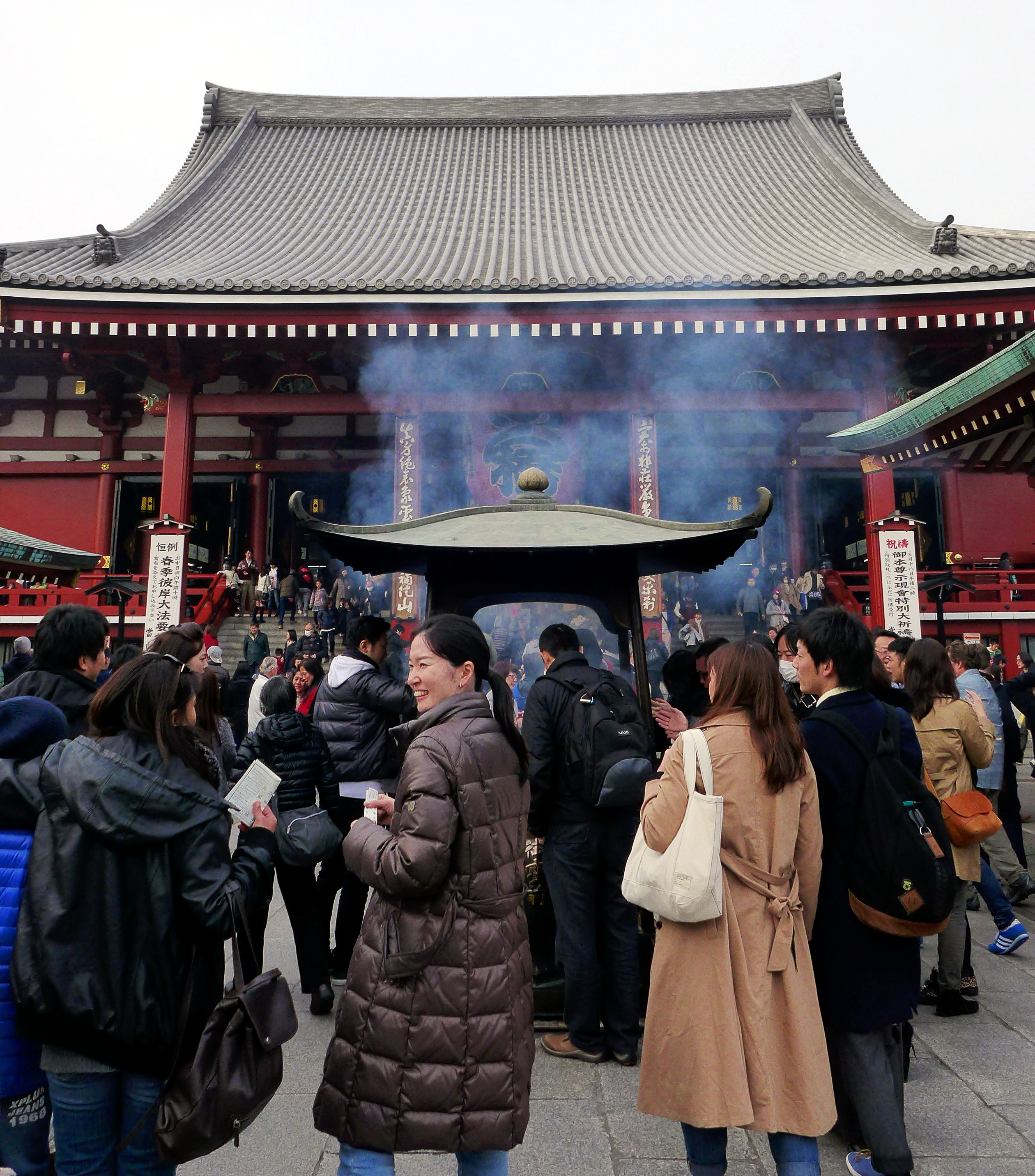
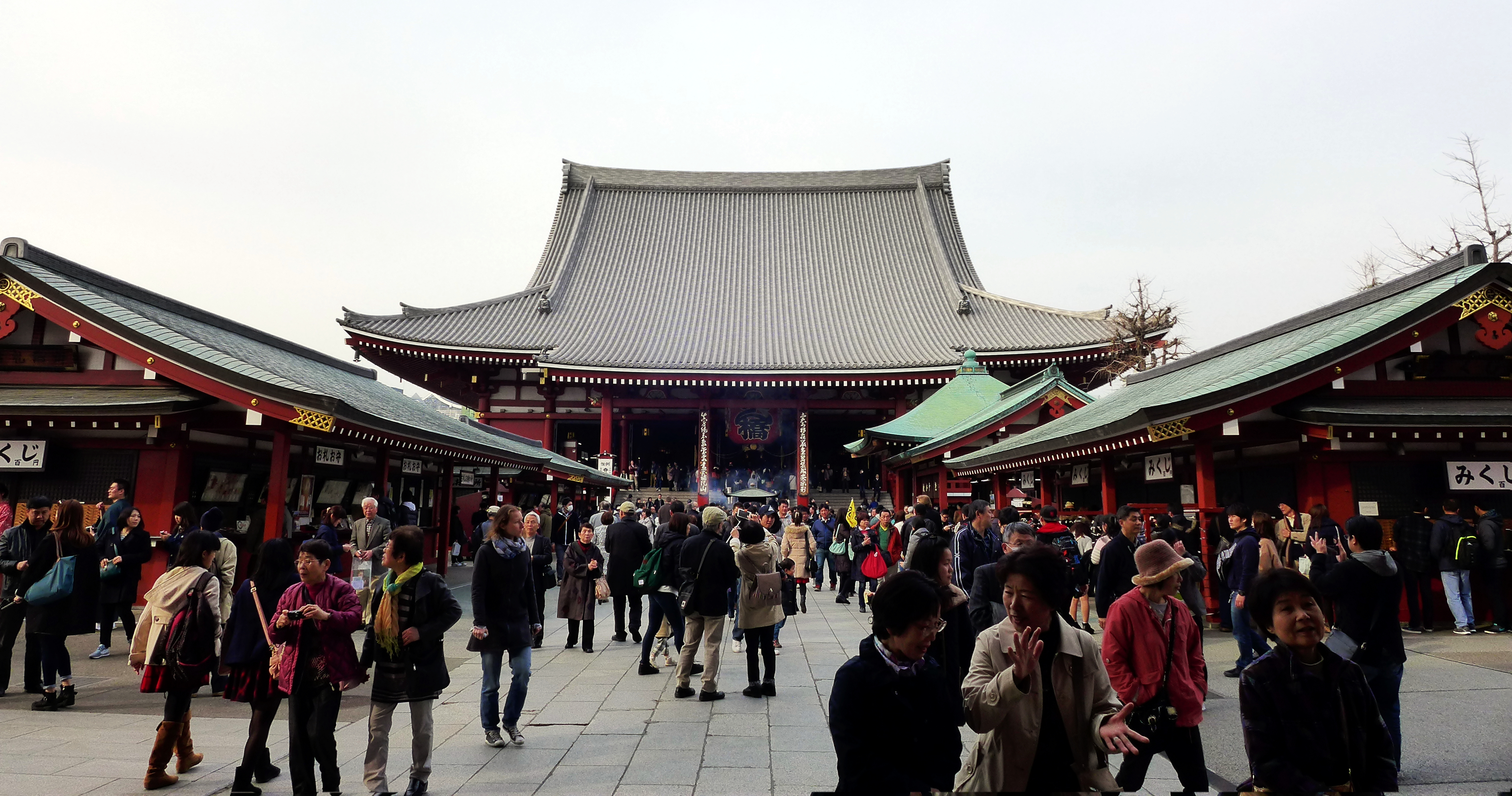
P1060551 P1060548 P1060549  P1060554P1060555 P1060568 P1060561 P1060560P1060556P1060838P1060839

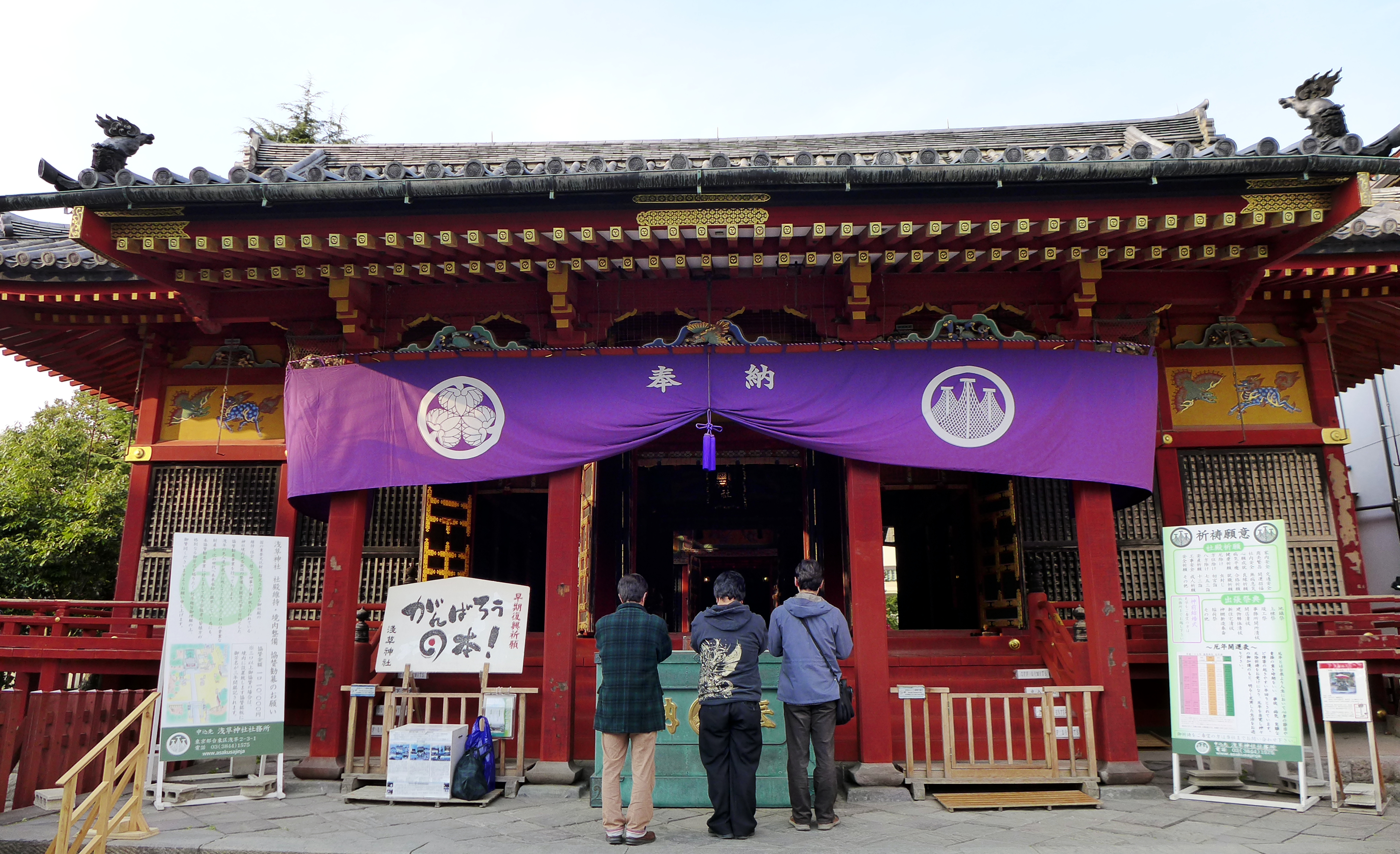
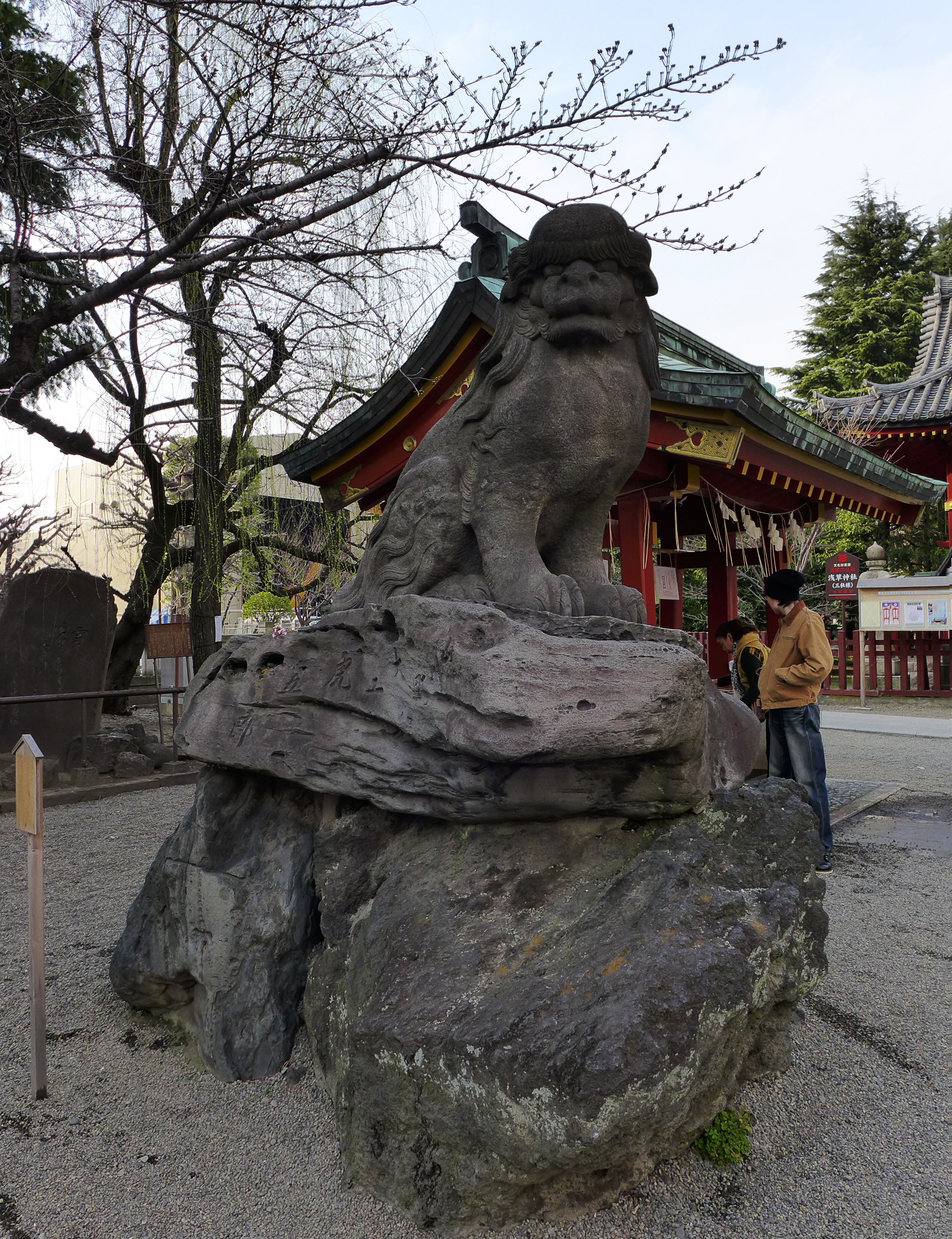
Next door to Senso-ji is a Shinto shrine dedicated to the men that founded Senso-ji; by venerating a deity they in turn were worshipped as deities. This is Asakusa Shrine, 浅草神社, which was commissioned by Tokugawa Iemitsu, the third shogun of the Tokugawa Shogunate, in 1649. Iemitsu is well known for bringing in the two policies that any student of Japanese history will cover when studying the Tokugawa period; Sankin Kotai and Sakkoku. Sankin Kotai 参勤交代 was the decree that all Daimyo (lords) must alternate living one year in their province and one year in Edo, the capital. This effectively drained the resources of the Daimyo, ensuring they could not finance a rebellion. In addition, they were required to leave their wives and children in Edo, basically making them hostages that could be harmed if the Daimyo stirred up trouble.
P1060575 P1060576 P1060579

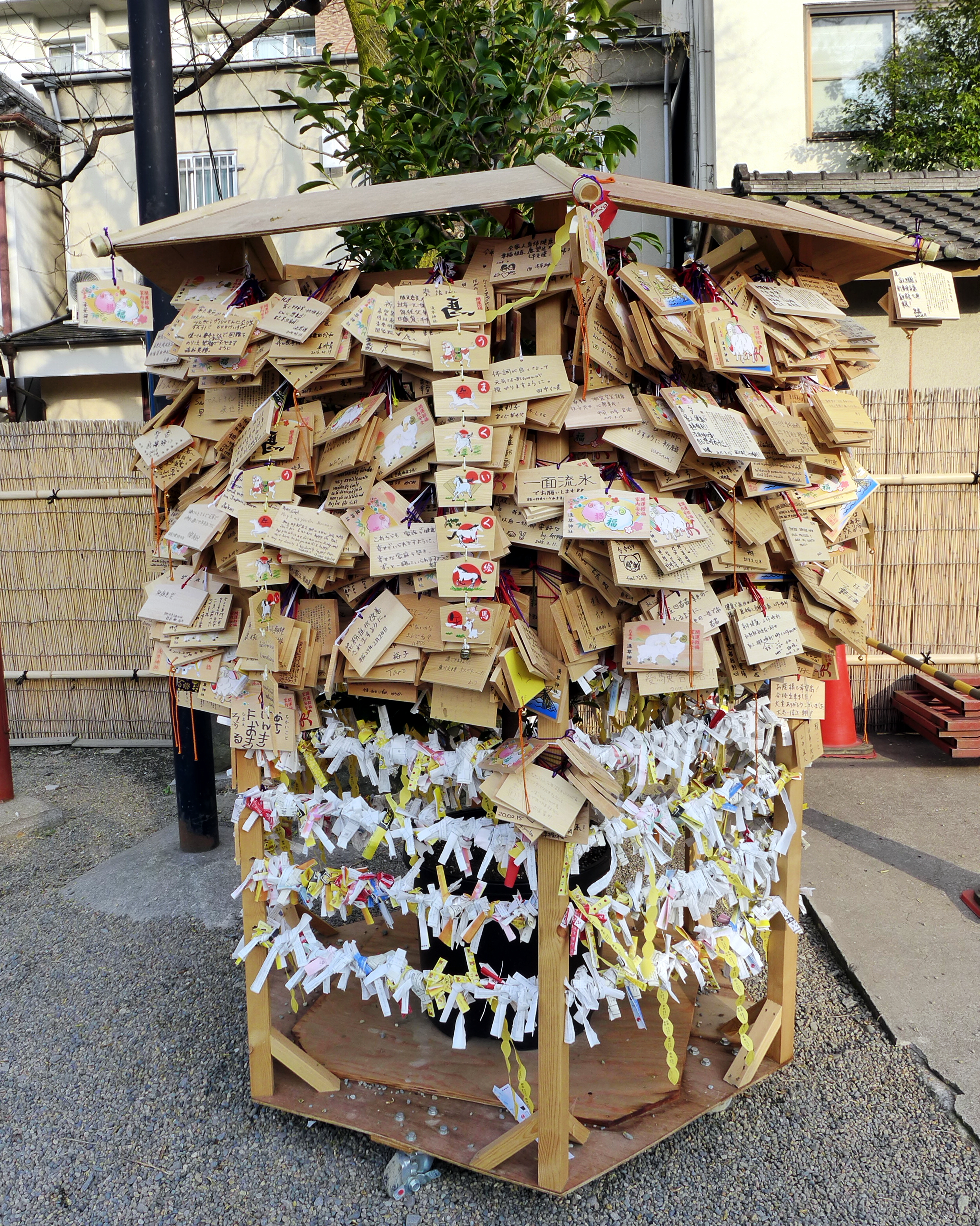
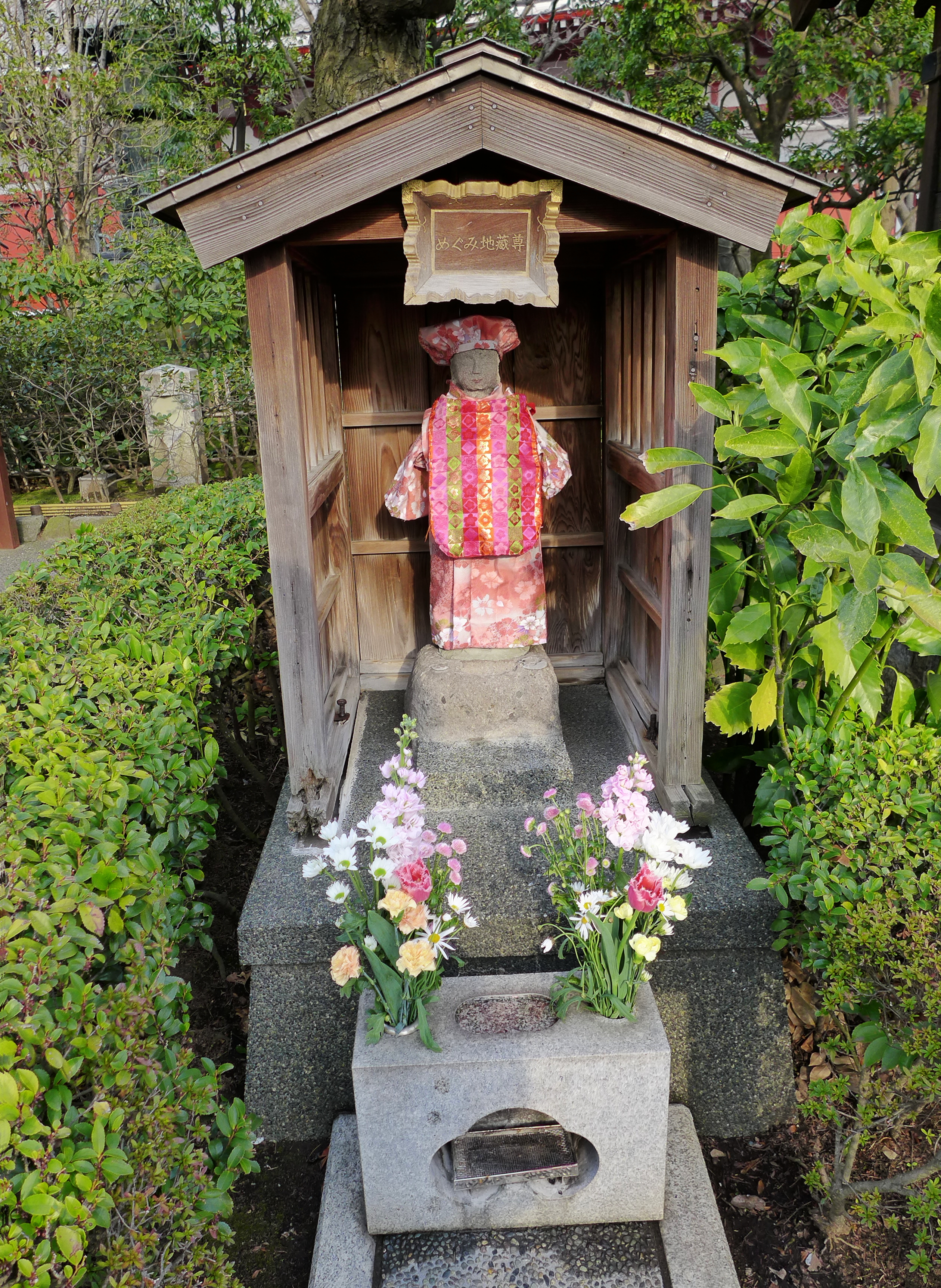
The second policy, Sakoku 鎖国, is the apparent ‘closing’ of Japan during the Tokugawa shogunate. This was brought into force by a decree banning all Japanese from travelling abroad on pain of death, and all foreigners, bar the Dutch, were expelled from Japan. This was due to the shogunate’s increasing fear of Christianity; Daimyo that had converted to Christianity were banding together and the shogunate feared they were more loyal to the church than to the Shogunate. Thus Christianity was banned in Japan and those that wished to continue would have to do so in secret; the Bodhisattva Kannon was often worshipped as a substitute of the virgin Mary – there were many statues of Kannon holding a baby with a cross hidden on the statue, which became known as ‘Maria Kannon’. When Christianity was made legal again in 1873 around 30,000 Japanese Christians came out of hiding.
P1060577 P1060566P1060840

In reality Japan was not really a ‘closed country’ – there were still links with China, the Ryuukyu kingdom of Okinawa, the Ainu, Korea and the Dutch (who were allowed to stay on an artificial island because they promised not to spread Christianity), it was more a blocking out of the West than a blocking out of the world, however in Western eyes, Japan was a ‘closed country’ until the ‘opening’ of Japan in 1851 by American war ships.

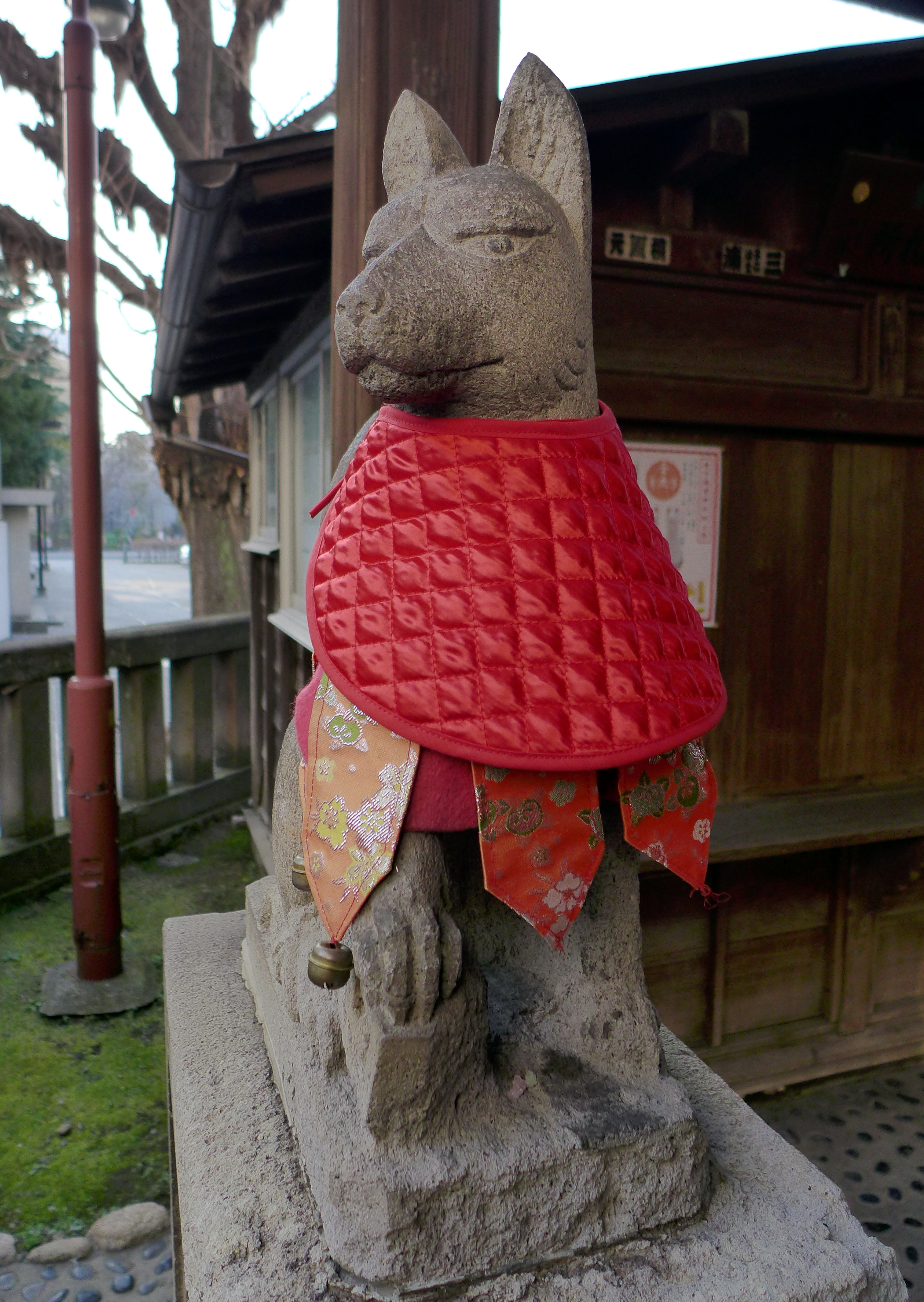
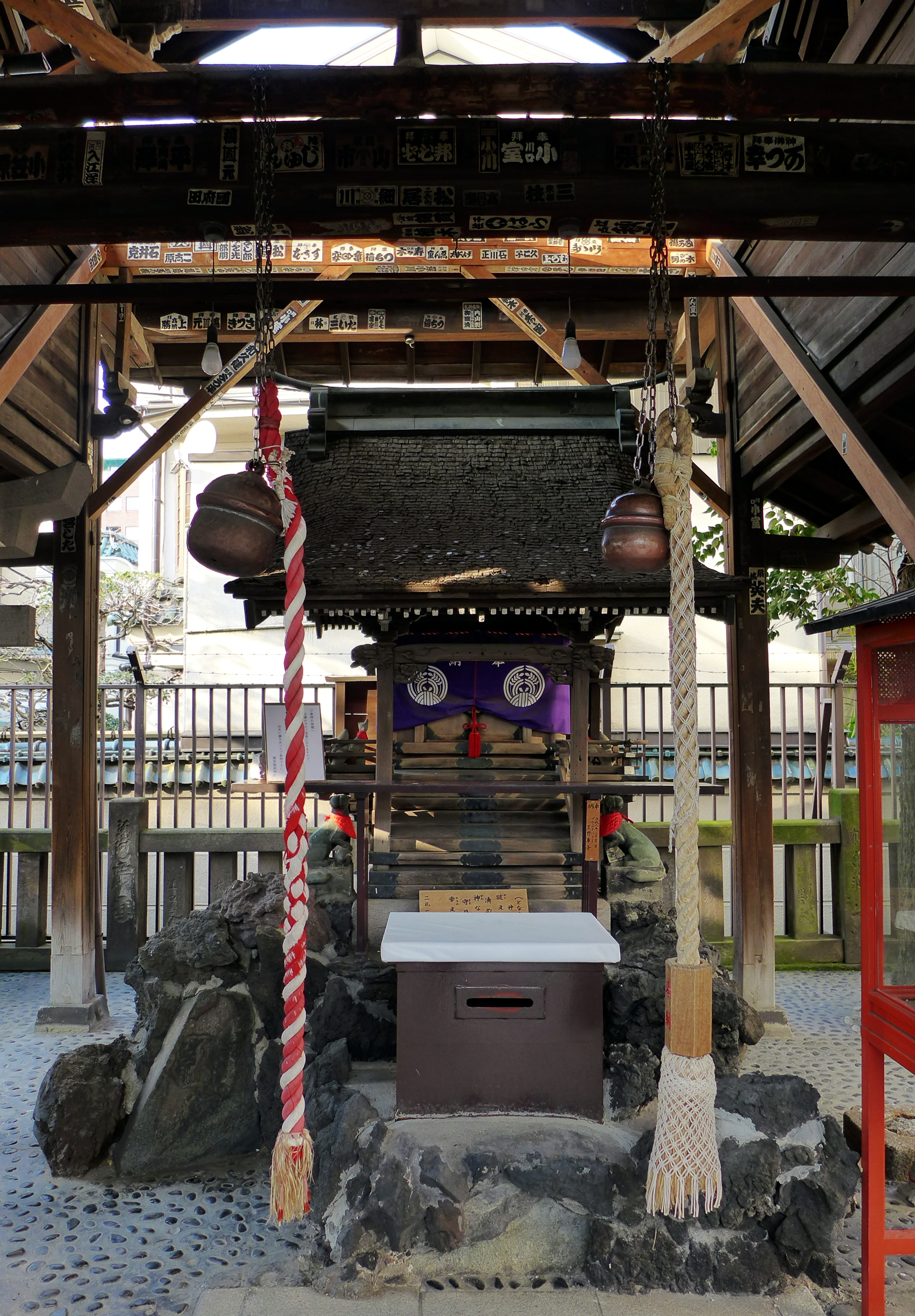
There was also a small shrine to inari next-door to Asakusa shrine which we checked out. It wasn’t particularly remarkable but it shows how pervasive inari shrines are around Japan.
P1060588 P1060583 P1060582

If you are visiting Tokyo I strongly recommend visiting Senso-ji for a great temple experience and a chance to buy some souvenirs at the market. It is a very busy temple with huge crowds of people, but that is to be expected with most major tourist sites in Japan. It is also completely free!
哲学の道 Trial by Fire, Snake and Pillow

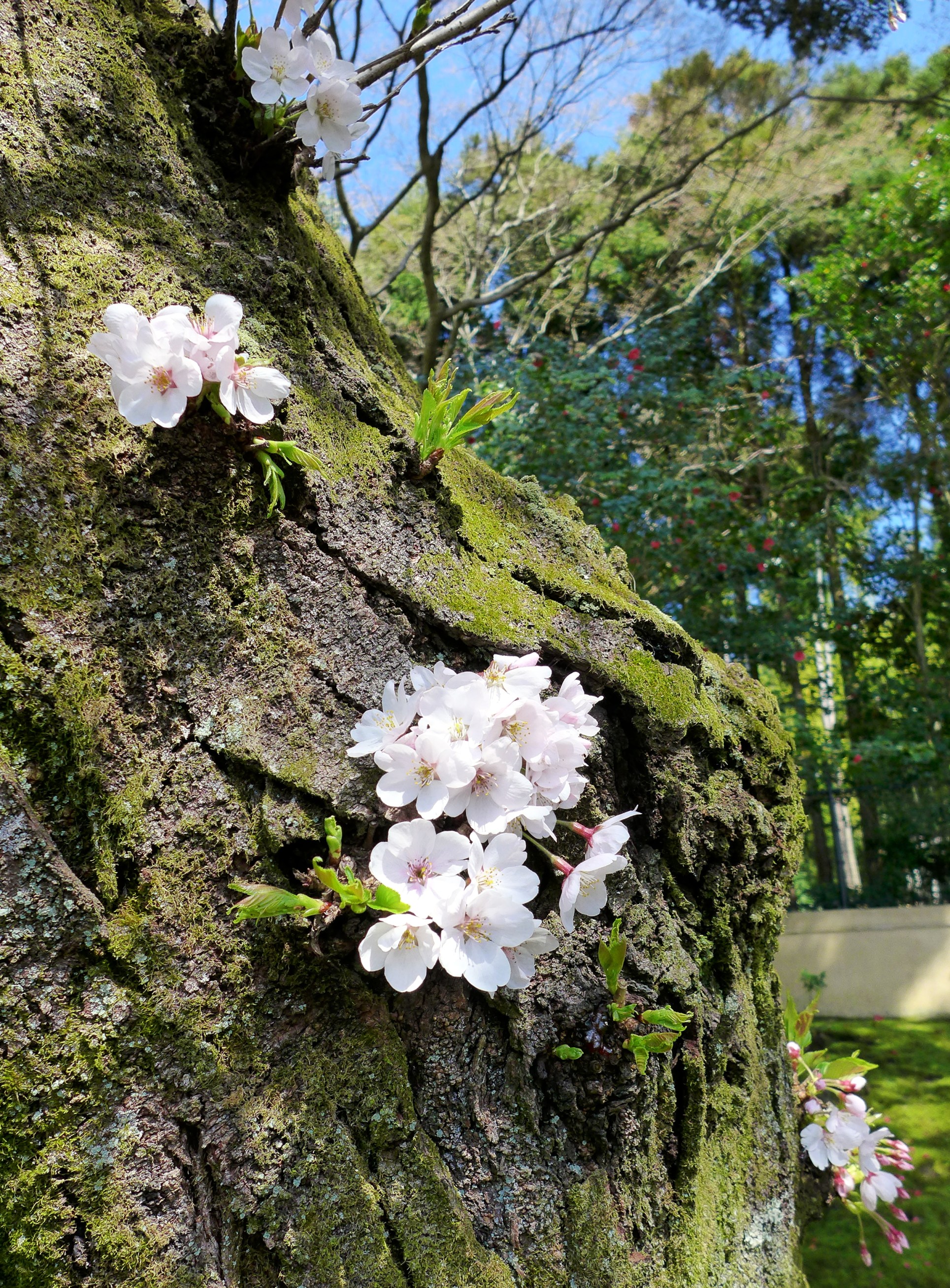
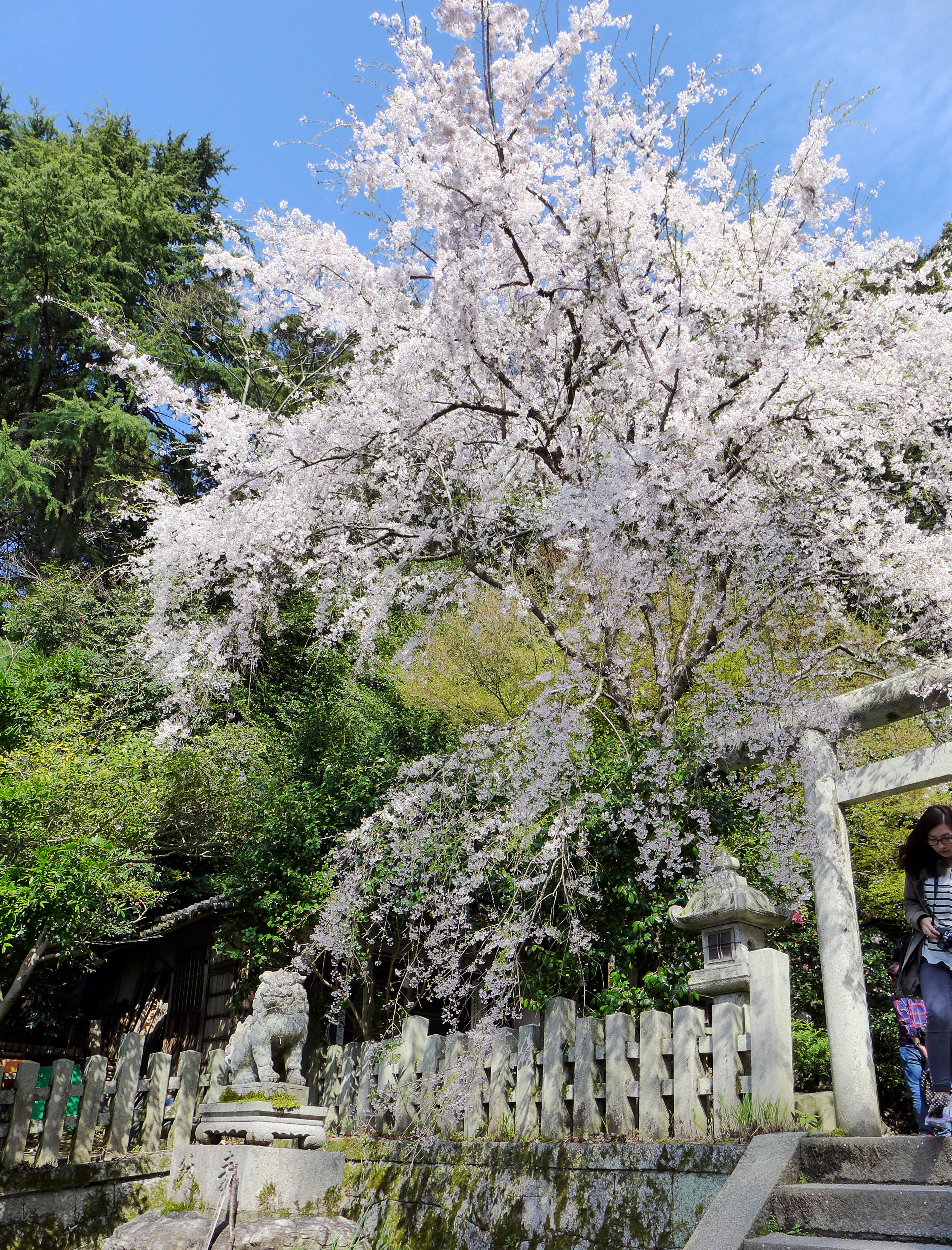
The last few weeks in Kyoto have been the weeks of 花見, hanami – the time when you can see the spectacular cherry blossom or sakura that coats the city in a pale pink cloud. My parents and I took the opportunity to visit Philosophers walk, 哲学の道 (Tetsugaku no michi), a path from North to South down the Eastern portion of Kyoto that is awash with sakura in the spring. That day we visited 6 different temples so I will cover all of them in a few different posts. Today I want to focus on one temple and one shrine, both with a rich history and links to interesting people from throughout Japanese history. This kind of temple is always fun to research because you find out about figures in Japanese history that are not considered pivotal enough to be covered in any lecture, but have their own amusing aspects and kept the historical thread running, even if they didn’t alter the pattern.

These happen to be the fourth and fifth temples we visited, so they are located pretty close together. I will start with Reikan-ji 霊鑑寺, a nunnery belonging to the Rinzai-Zen sect which was founded in 1654 by Retired Emperor Gomizunoo. This Retired Emperor, whose name when ruling was Emperor Go-Yozei, oversaw the end of the sengoku-jidai, the century of civil war faced by Japan in the 16th Century, and was still on the throne when the country came under the control of Tokugawa Ieyasu, the final unifier of Japan and the founder of the Tokugawa Shogunate that would rule Japan for 250 years.

P1070013 P1060999 P1070001P1070017

The main temple building was donated by Tokugawa Ienari, the 11th and longest serving shogun of the Tokugawa shogunate. He was not a great unifier like Tokugawa Ieyasu, and his reign was characterised by natural disasters, court excesses and a great famine. This excess should really have been anticipated when, upon succeeding to the title of shogun, Ienari locked himself in the inner sanctuary of the castle and refused to leave for 18 days. When bakufu councillors tried to force him to do his duty, he held them off with 600 women of the harem armed with pillows. These women held the entrance to the inner quarters for three days before he was captured.

P1070002 P1070008 P1070010 P1070014

While Ienari was certainly a fun-loving guy, the series of natural disasters under his rule and a series of revolts due to famine caused people to lose faith in the Shogunate. His rule was 1773 until 1841, and as the shogunate fell in 1868, it seems his rule laid the foundations of problems that led to the bakufu’s destruction. While he could not prevent American involvement in opening up Japan, the shogunate was already on shaky footing due to its inability to cope well with internal disasters, causing some to feel like the shogunate may have lost its mandate to rule.

P1070020 P1070022 P1070024P1070038

Ienari was also the shogun that expelled the first woman to visit Japan, Titia Bergsma, a Dutch woman that travelled with her husband to trade with Japan (the Dutch were allowed to visit Japan in limited capacity, and women were not allowed). While she was on Dejima, the man-made island that the Dutch were permitted to stay on while trading with Japan, over 500 images were made of her, making her an icon in Japan at the time. She was expelled within 5 days of landing in Japan. Unfortunately for the Tokugawa Shogunate, expelling foreigners became much harder after the ‘friendly visit’ paid by the American ‘black ships’ in 1851.

P1070027 P1070029 P1070034P1070041

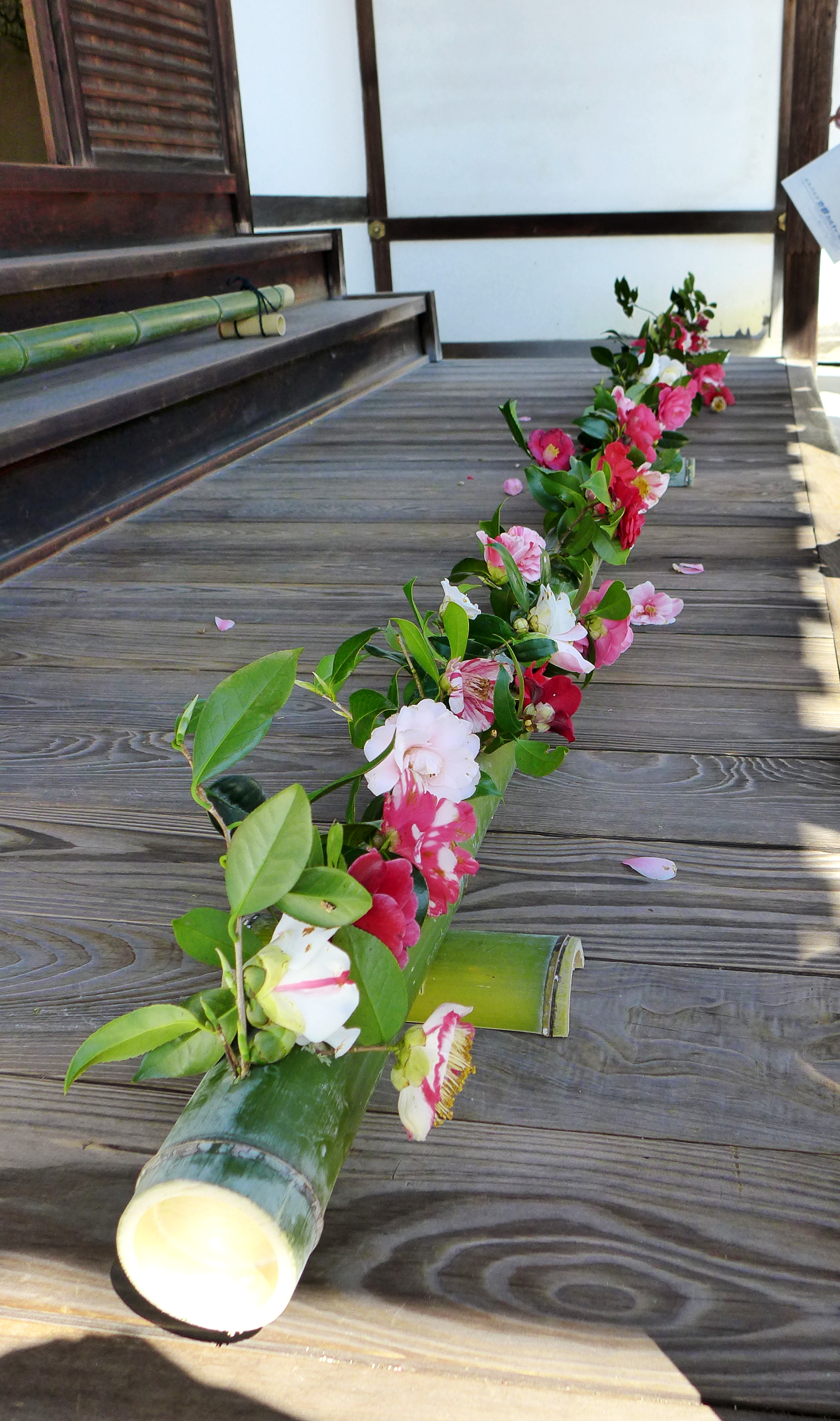
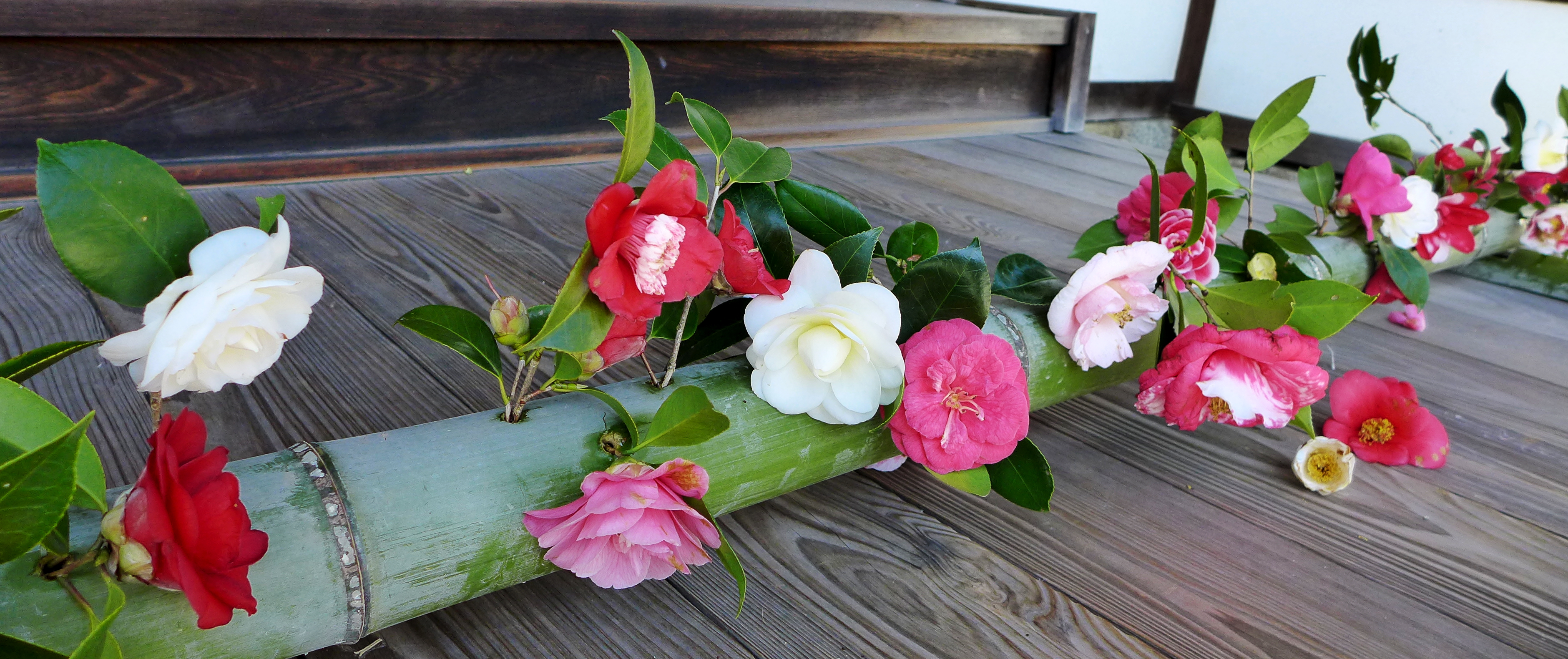
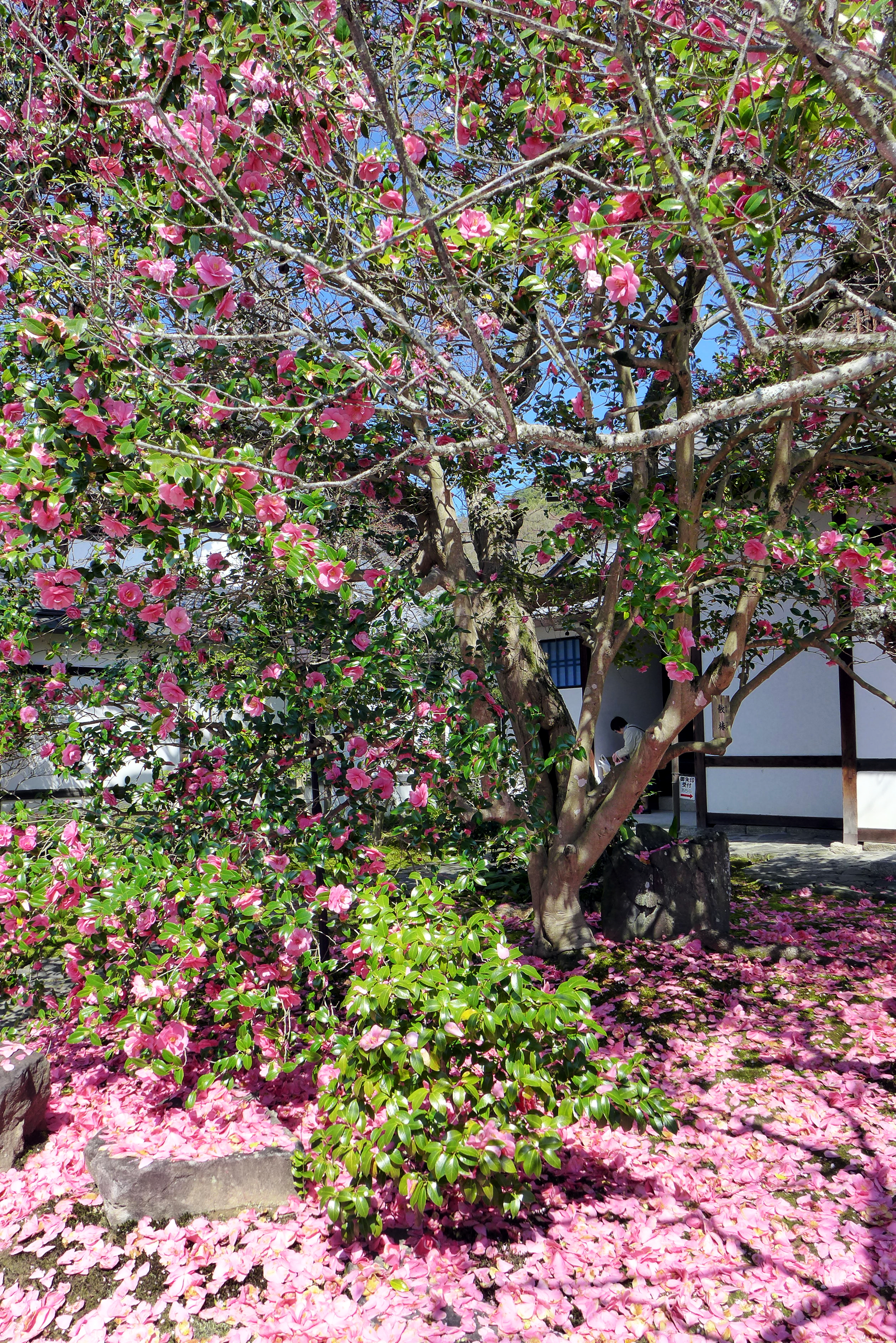
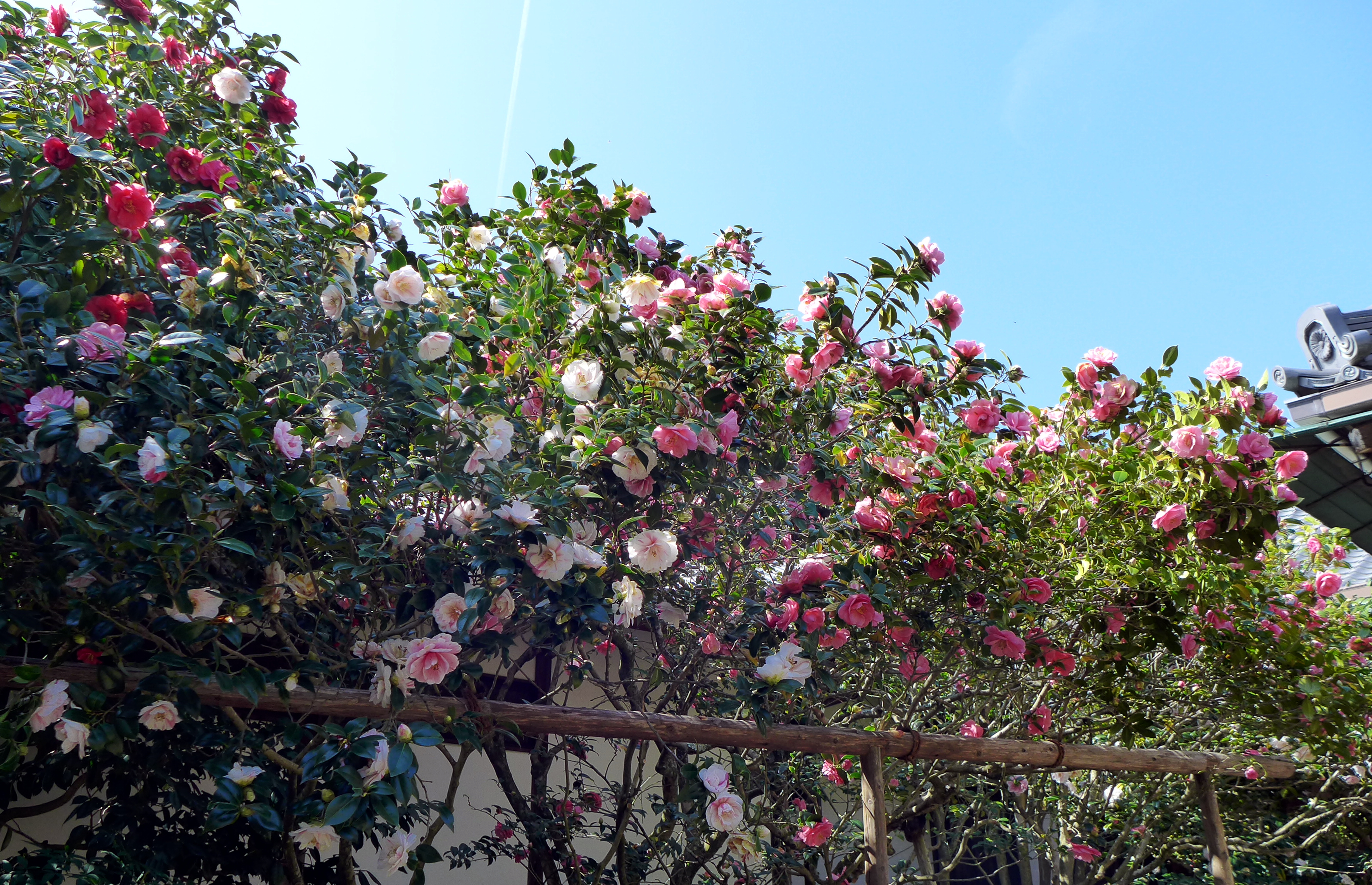
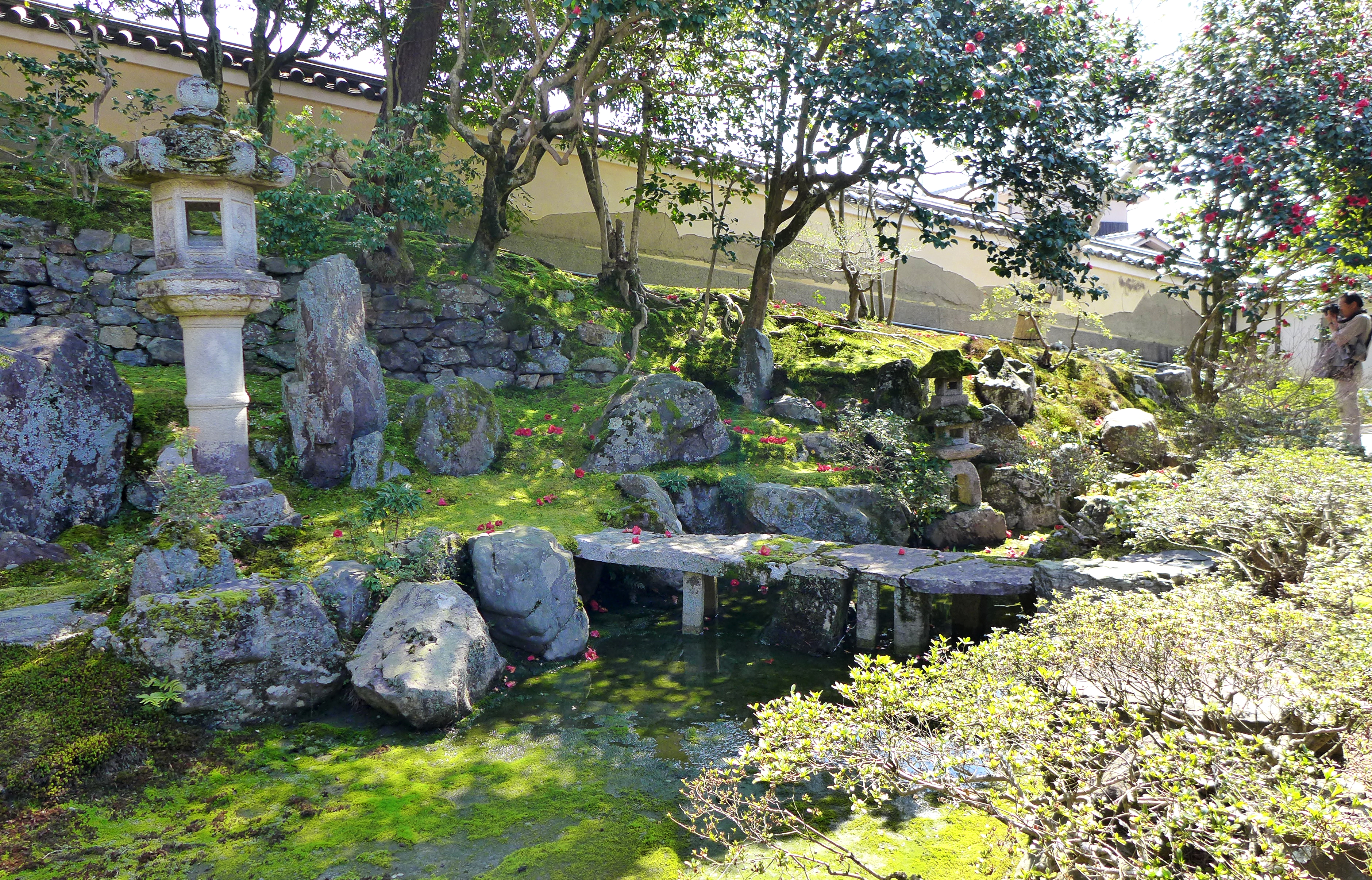
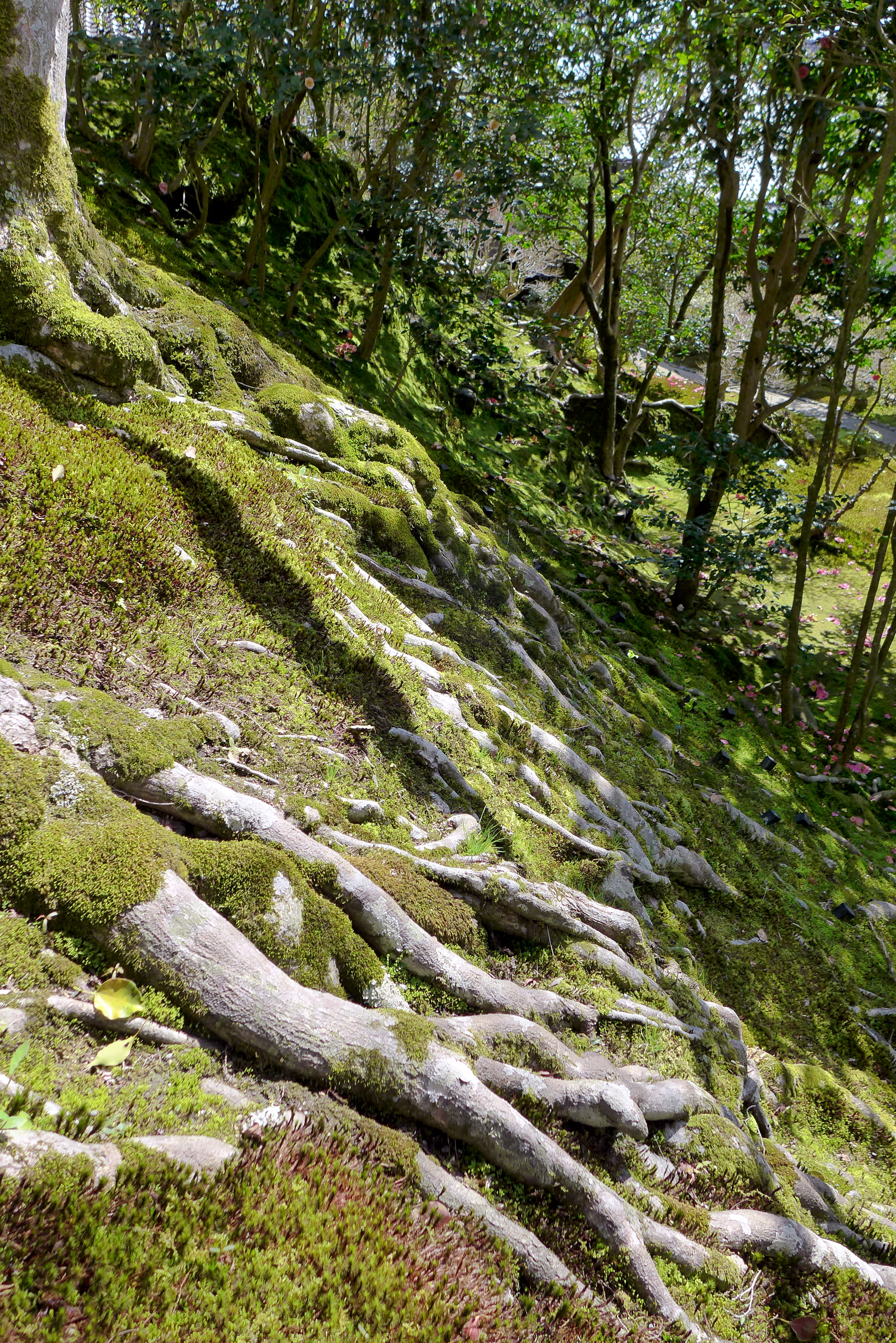
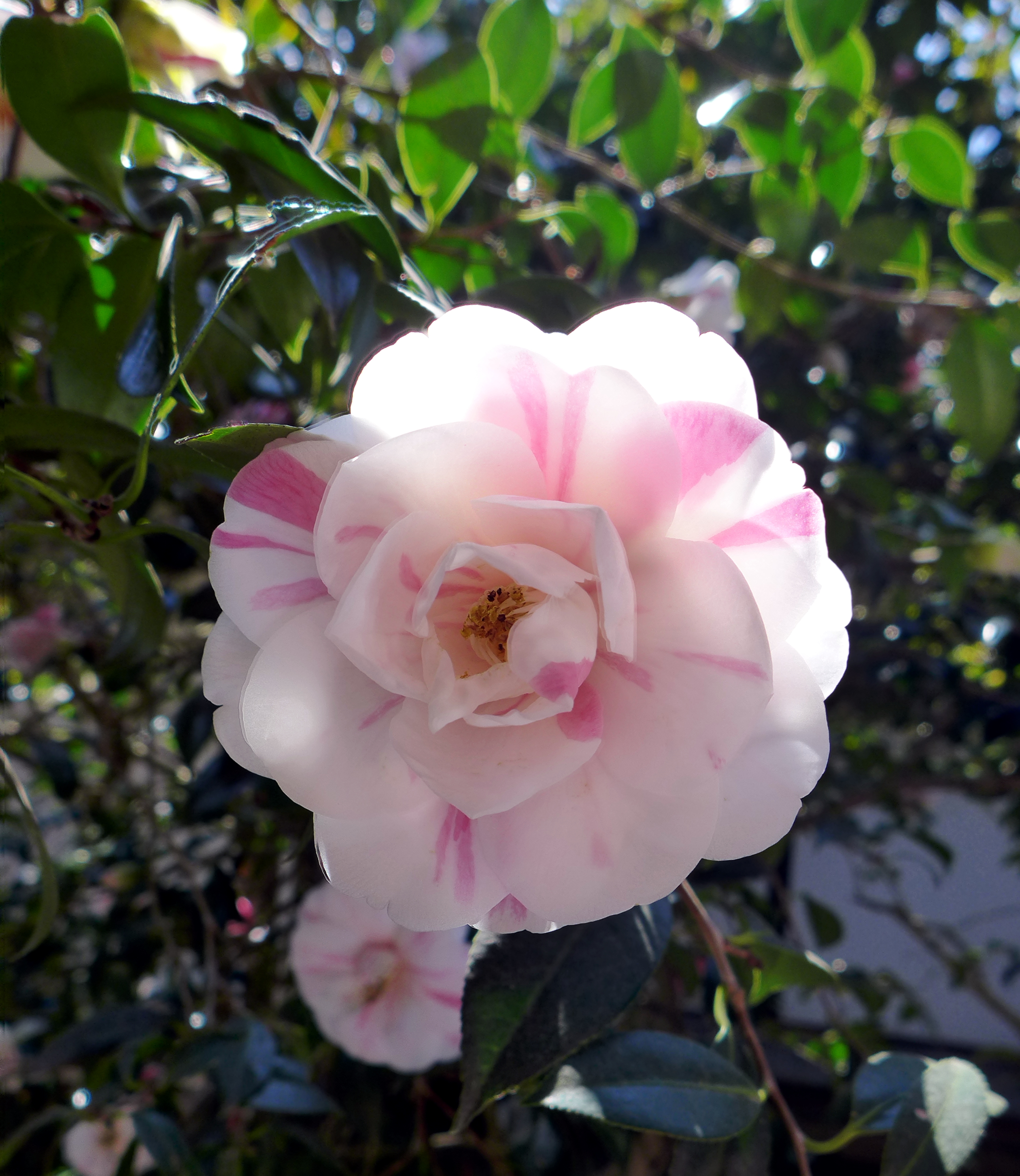
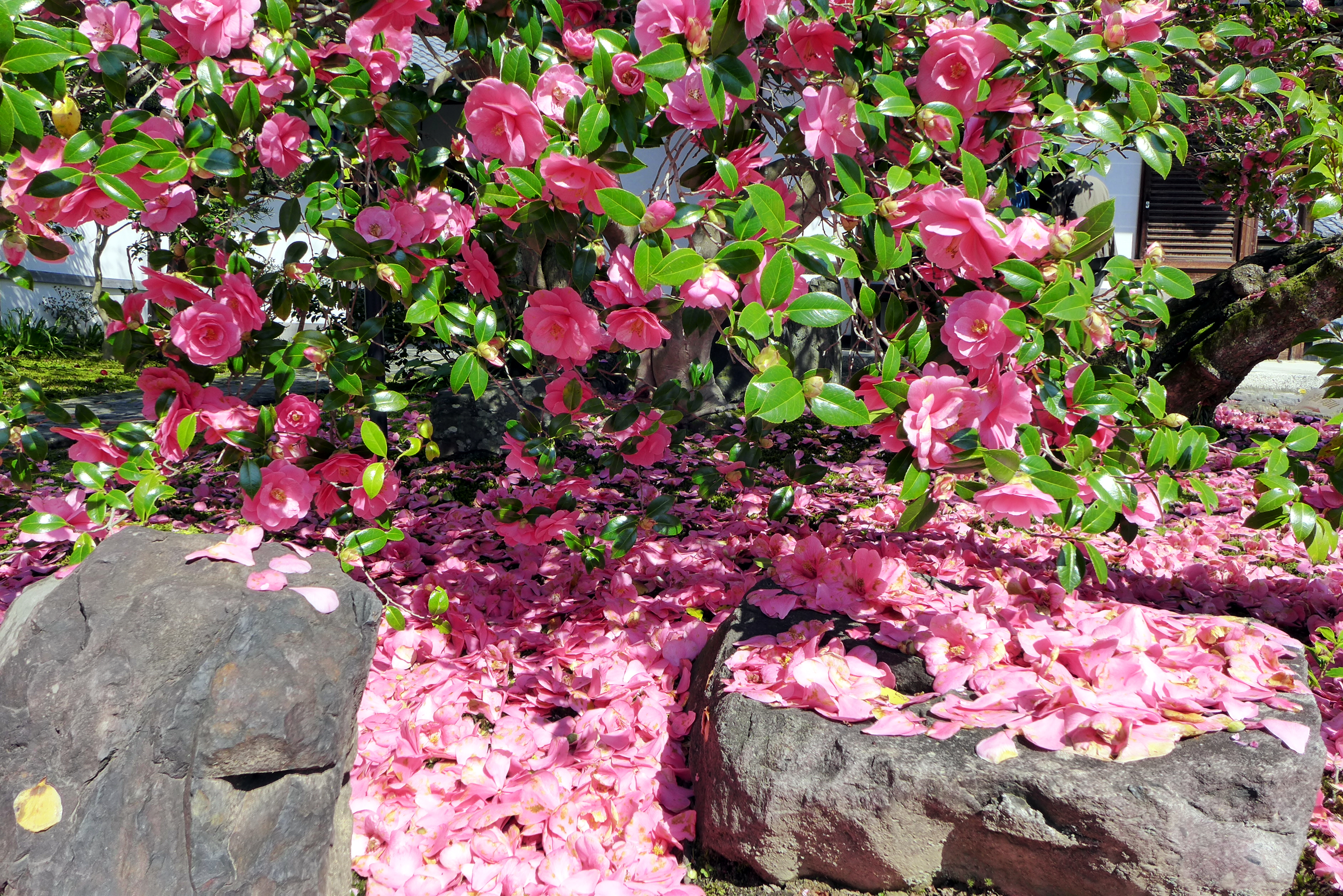
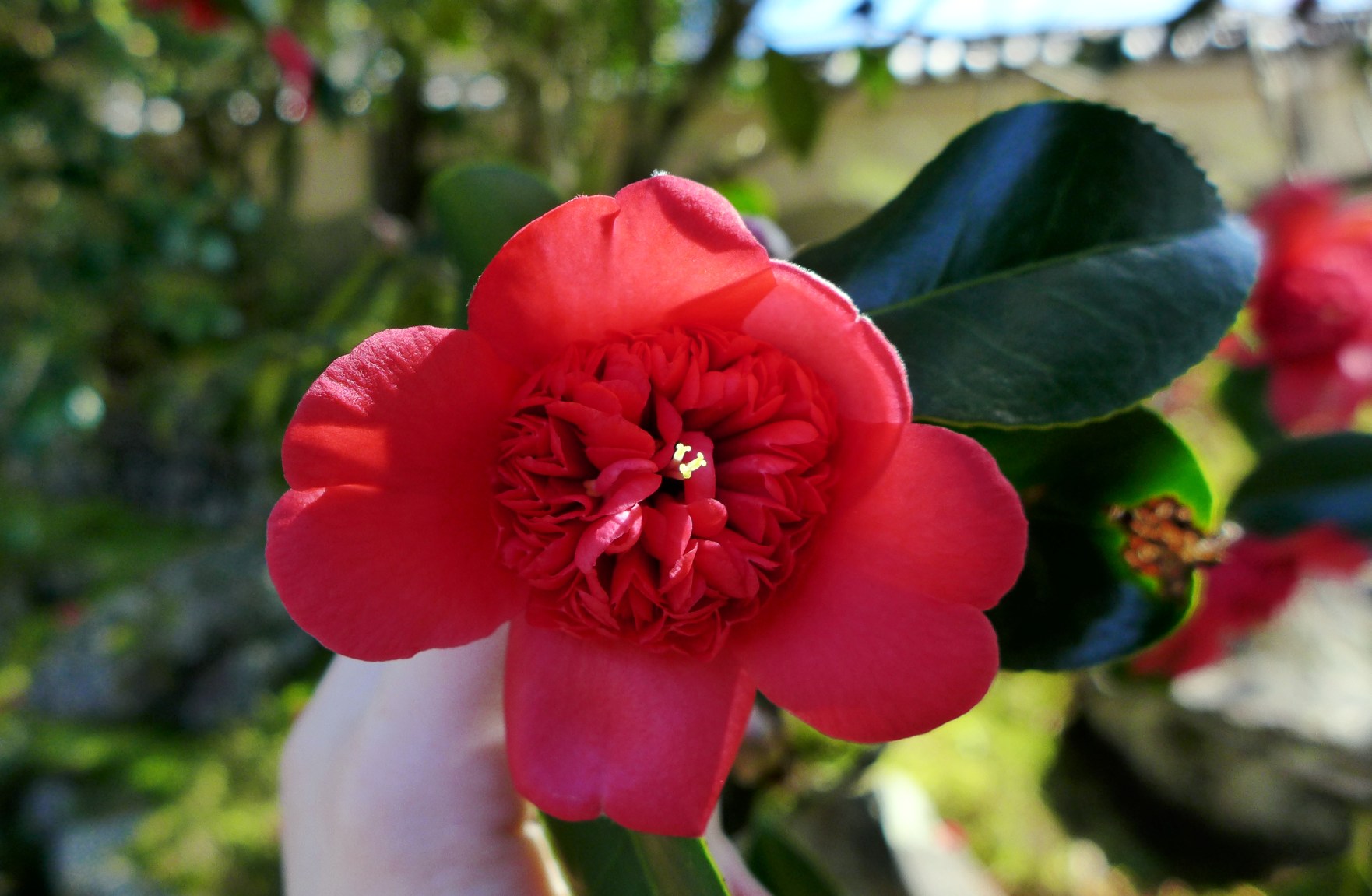
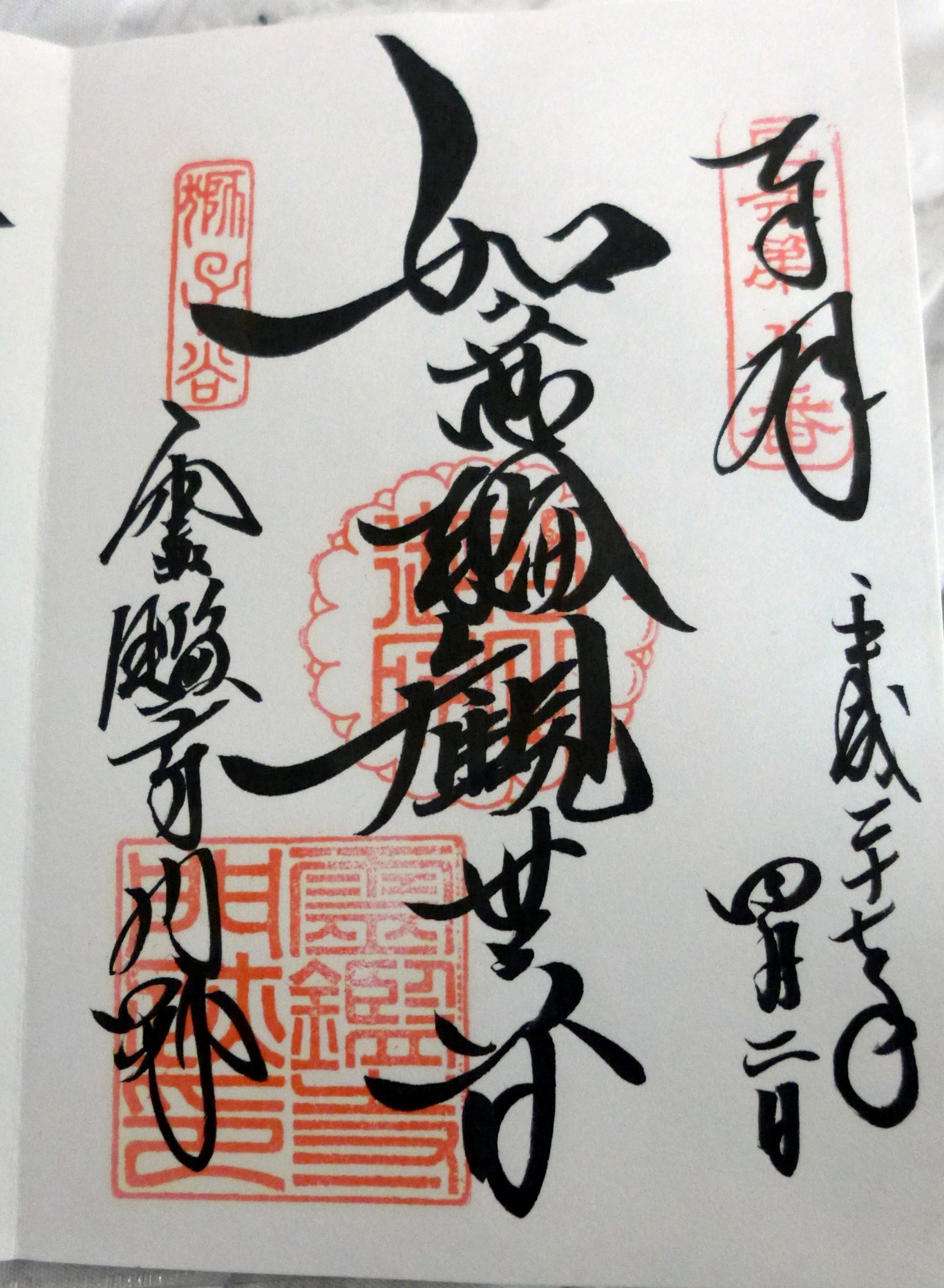
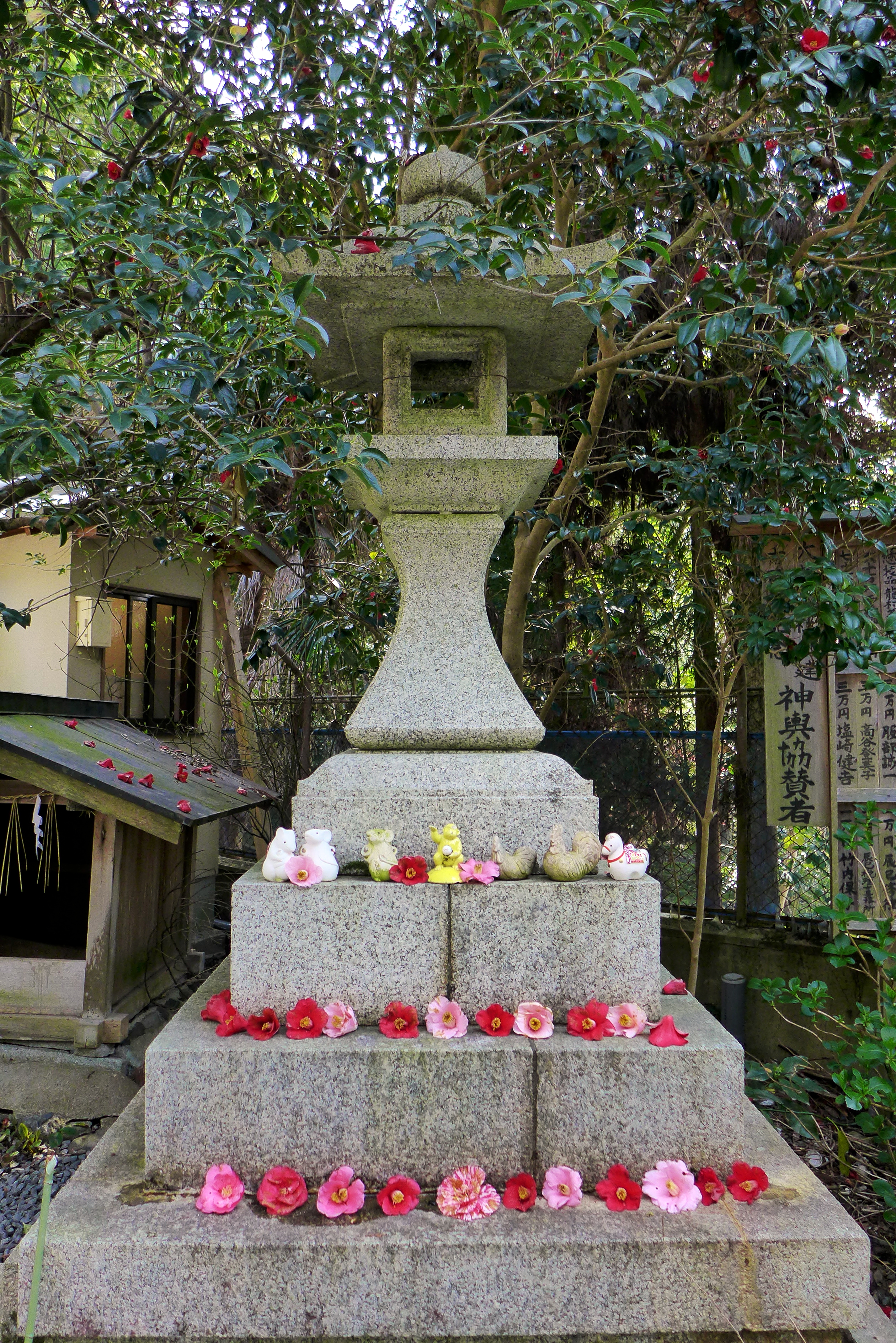
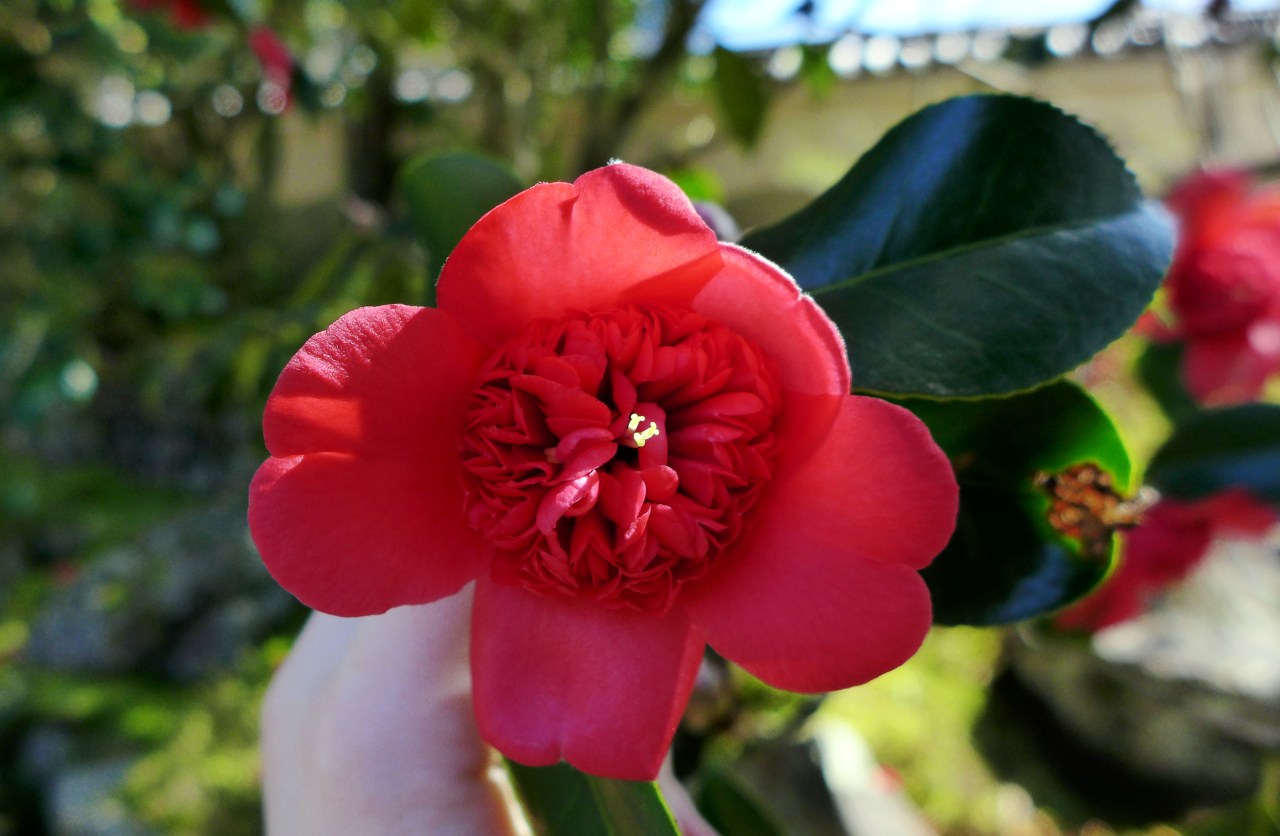
The temple itself was beautiful, with spectacular gardens full of camellias. It is said that the founding Retired Emperor Gomizunoo loved camellias so he had many planted there. His patronage also ensured that princesses and granddaughters of the imperial line were priestesses here for centuries. The stamp I got at Reikan-ji is one of my favourite stamps in my stamp book. I would strongly recommend this temple if you visit in late winter or spring, though check when it opens as apparently it is shut for most of the year.

P1070007P1070015P1080046

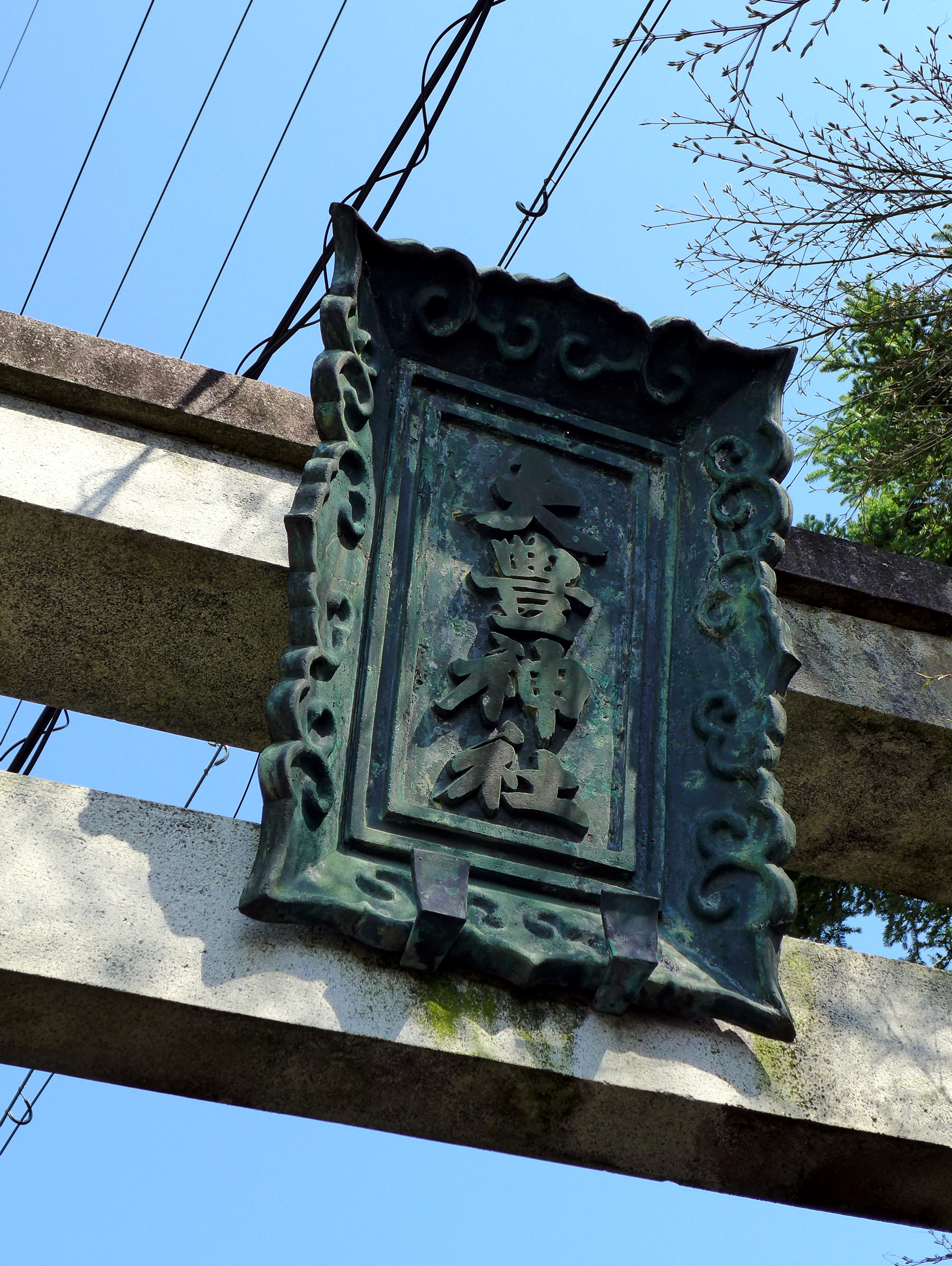
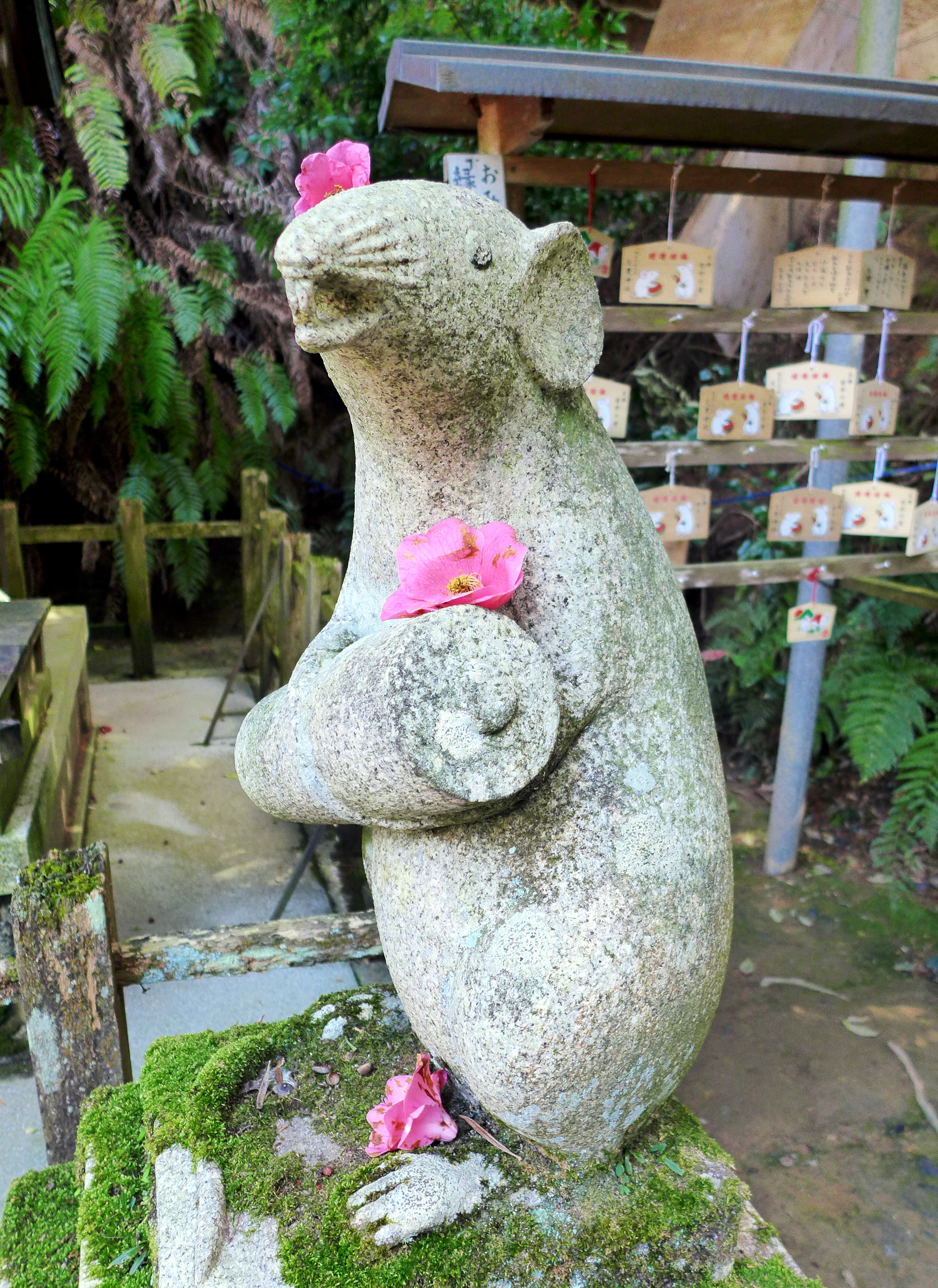
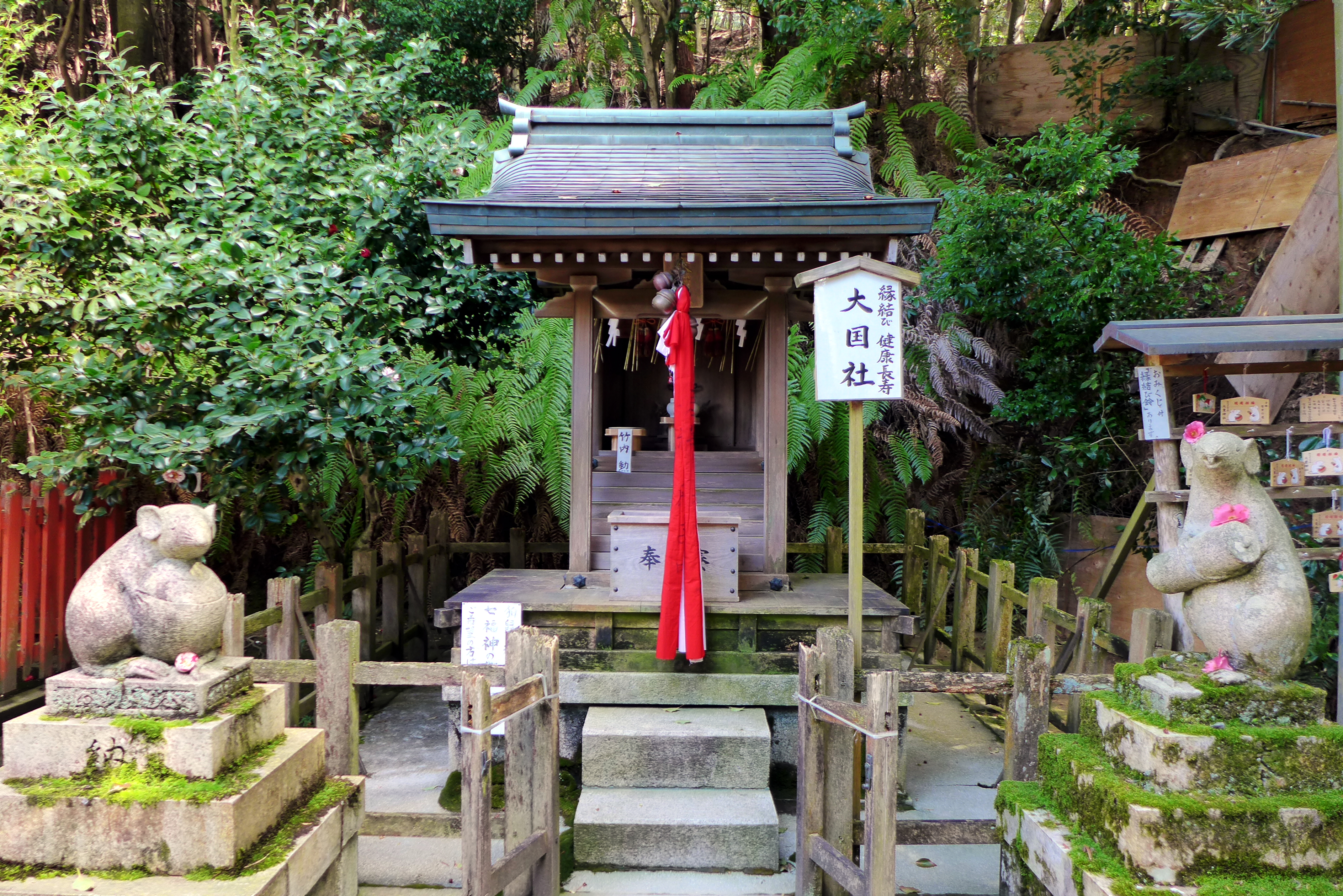
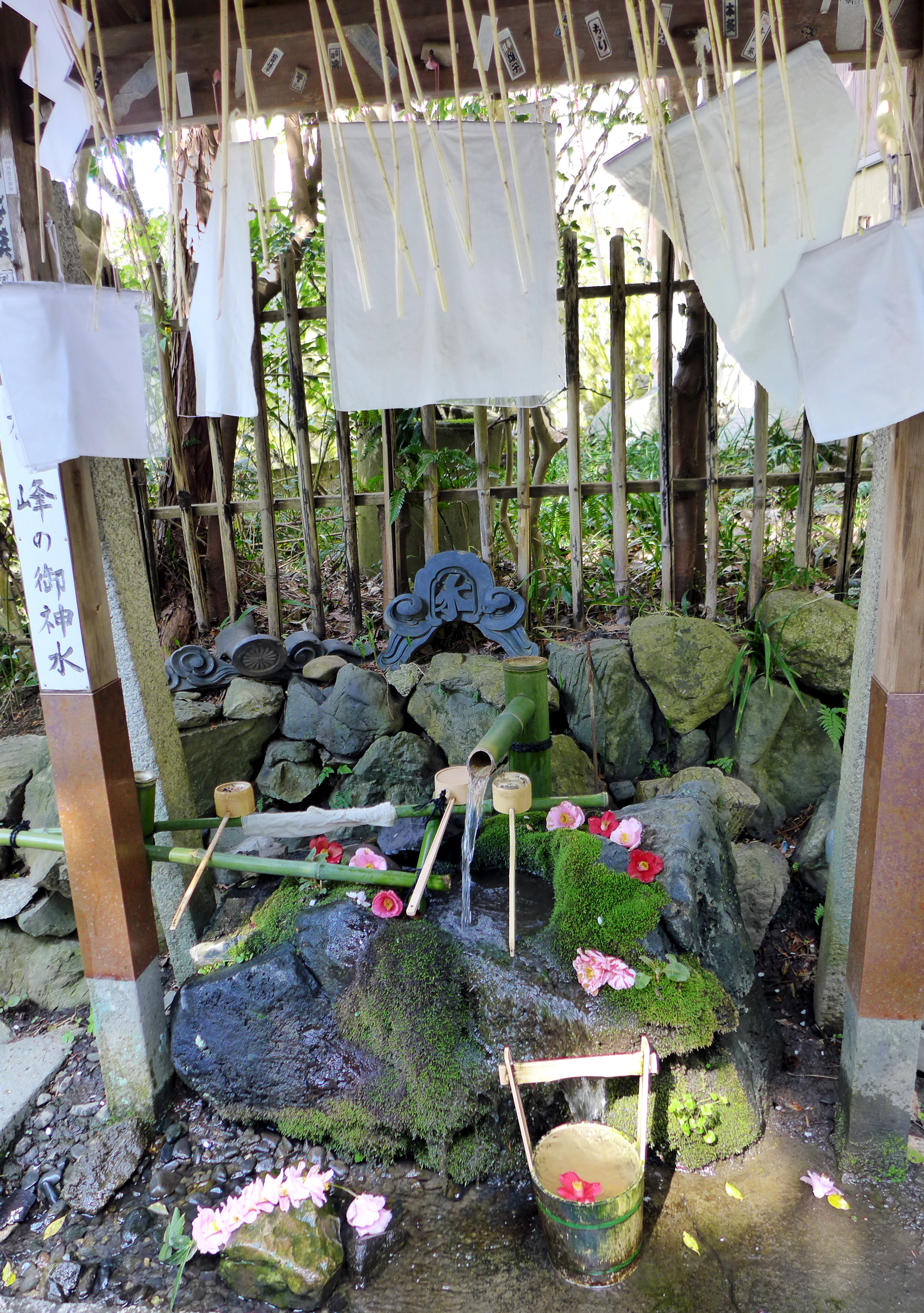
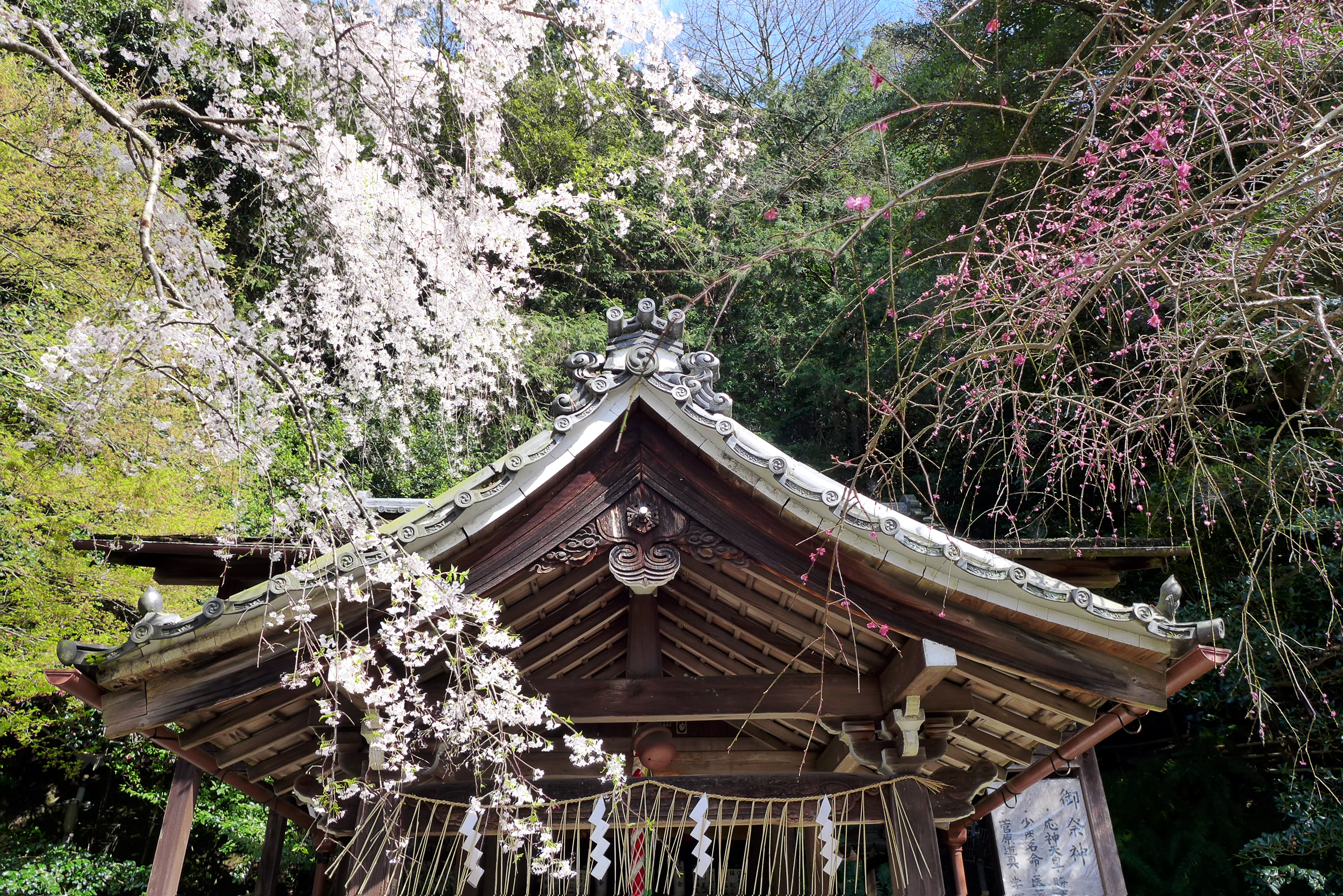
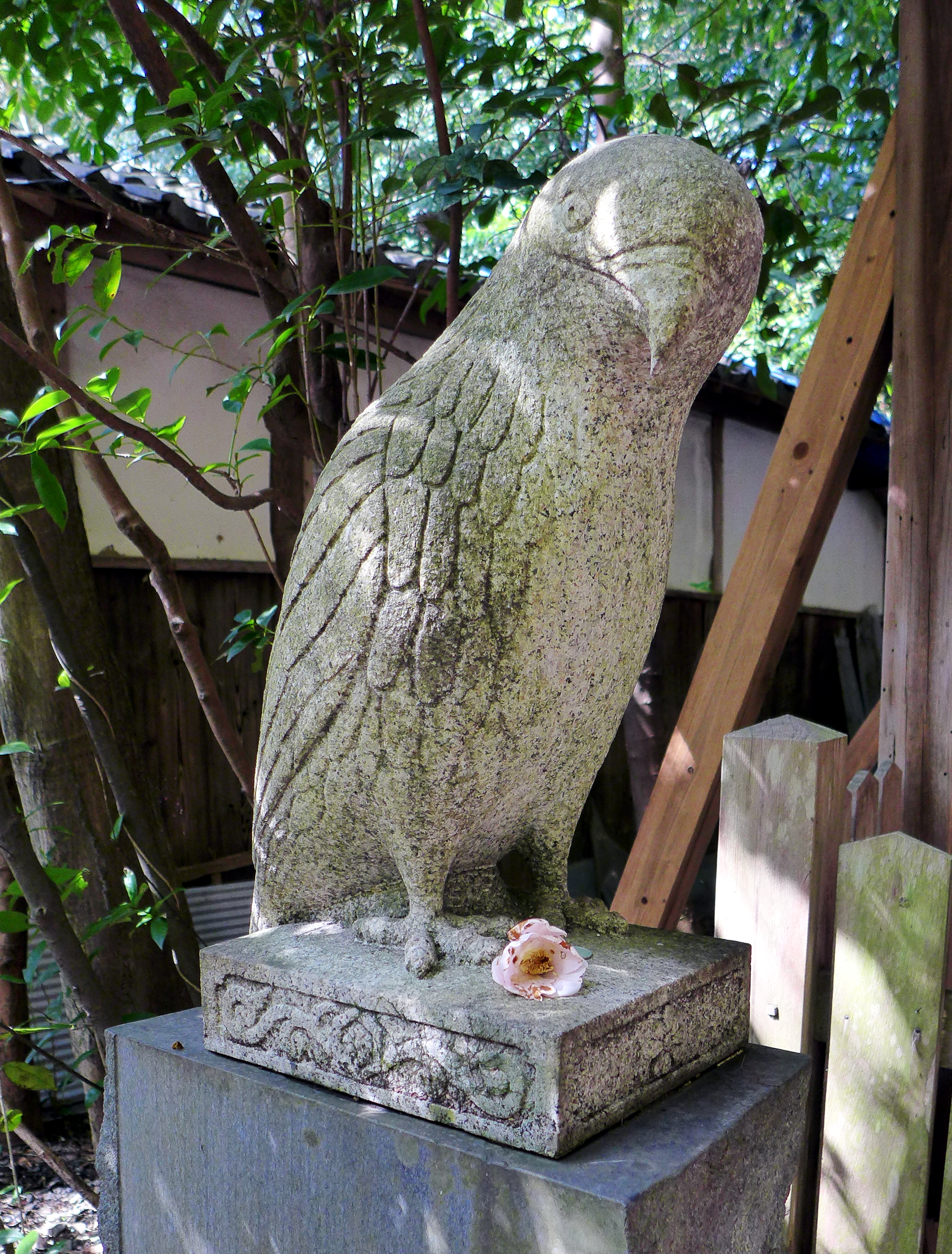
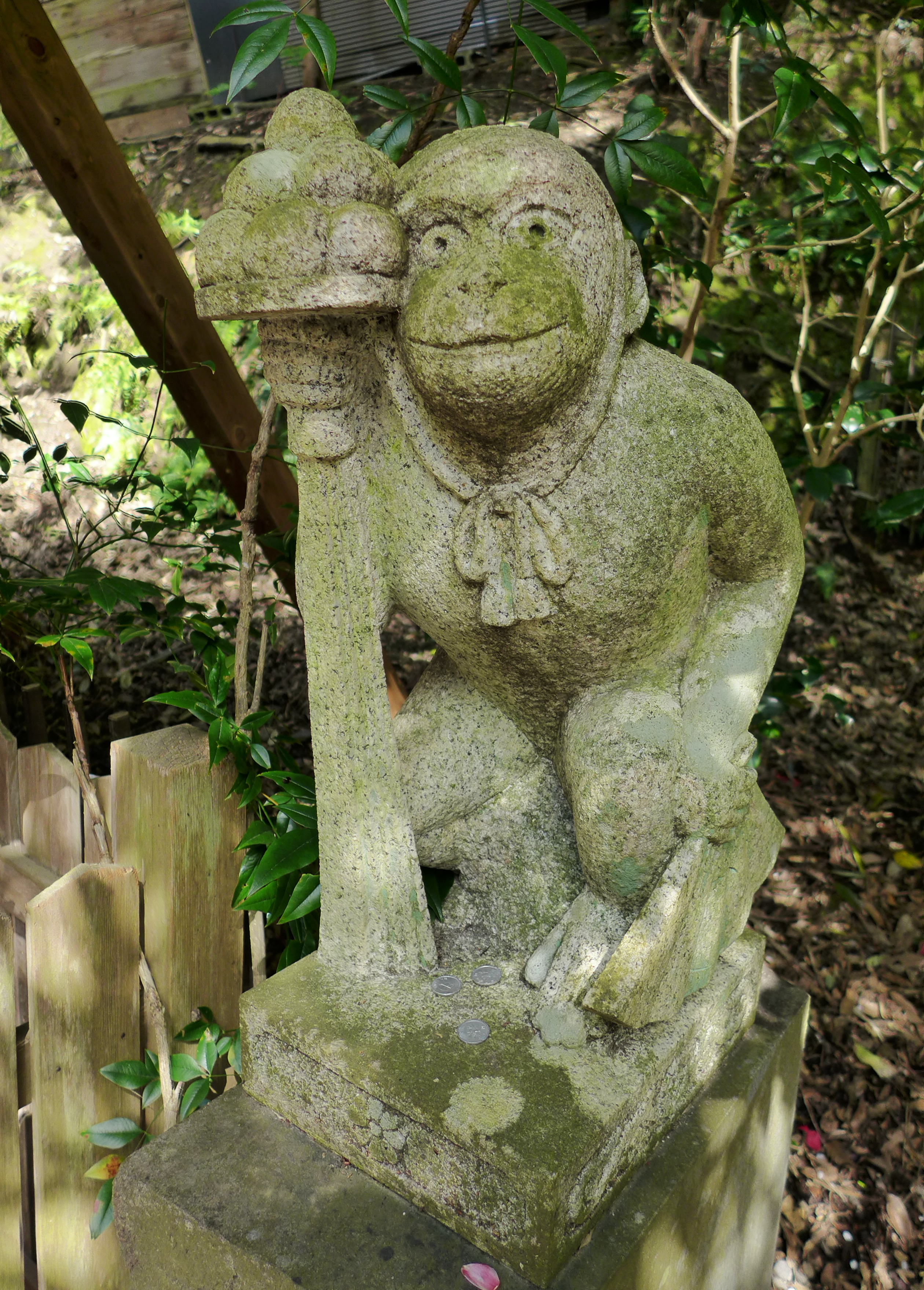
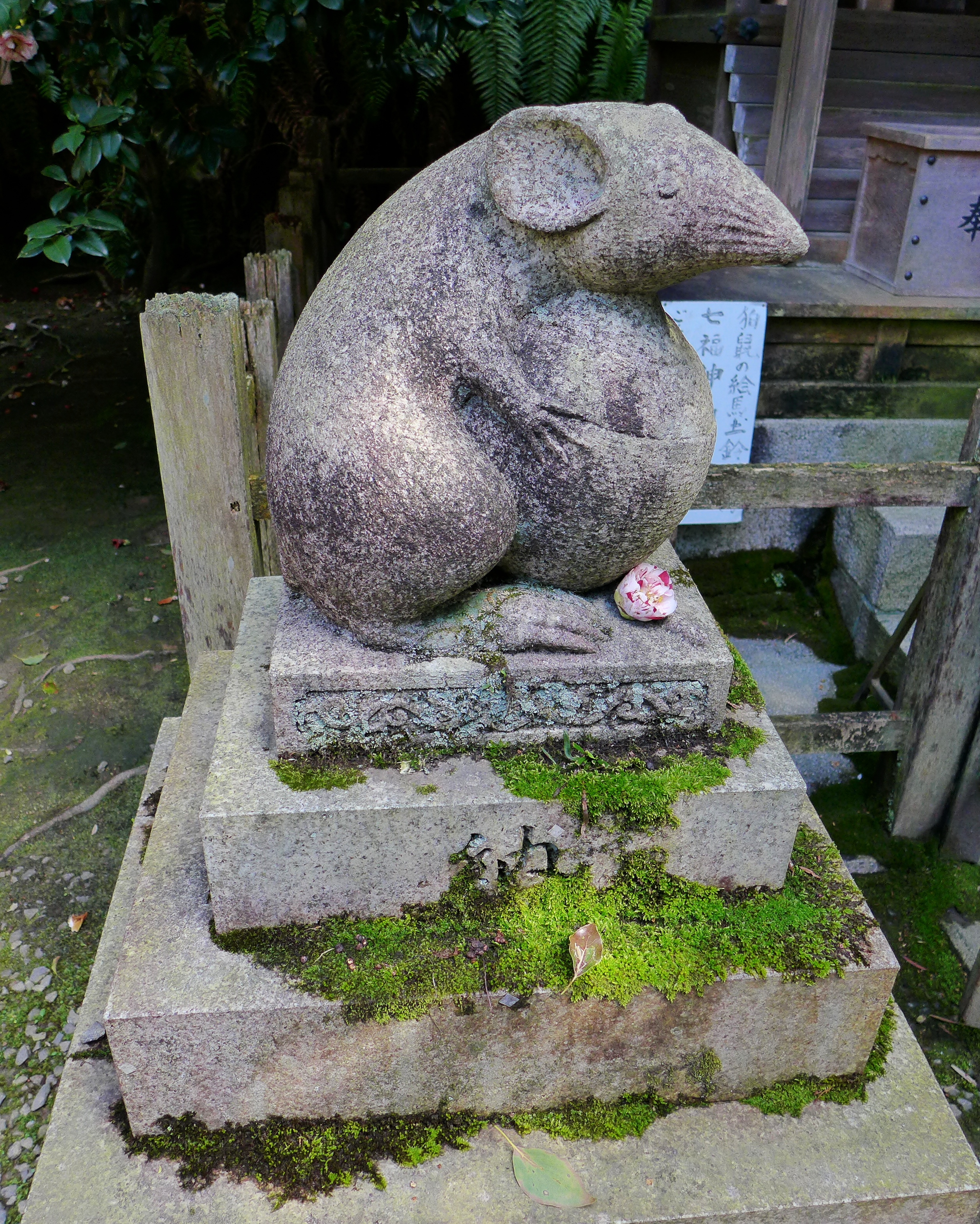
Just along the road from Reikan-ji is Otoyo-Jinja 大豊神社, or in my mind, ‘the mouse shrine’, founded in 887. This is because rather than the standard foxes, this shrine also has mouse guardians, kite guardians and guardian monkeys, making it a little more interesting than the Japan standard Inari shrine. There are foxes too, of course.

P1070049P1070048P1070075 P1070073 P1070074

This shrine’s mice come from a legend surrounding Okuninushi-no-mikoto also known as Taikoku, whom we have met before, remember the story of the white rabbit? Well our hero went on to fall in love with a beautiful princess, but, as many young men have found, he had issues with her dad. In order to win Princeess Suseri, Okuninushi had to pass a series of tests. First, Suasanoo, her father, challenged him to sleep in a room full of snakes. Luckily Princess Suseri gave him a scarf to wear and it protected him. You may say he would be fine as gods cant die anyway right? But actaully this particular god had already died twice before chasing a different girl, but that is a story for another time.

P1070055 P1070056 P1070057P1070054 P1070053 P1070052

Having survived the first trial, Okuninushi was then challenged to find an arrow that Susanoo had shot into a vast field. As he was hunting for the arrow Susanoo set fire to the field and it looked as though Okuinushi may die for a third time. He was saved by a small mouse, who showed him a hole in the ground in which he could hide. Once the fire had passed overhead the mouse brought him the arrow and he was able to marry his princess. Thus the mouse became his symbol and guardian.

P1070060 P1070061 P1070063 P1070064 P1070065

Also enshrined at Otoyo-jinja is Emperor Ojin, the 15th Emperor of Japan. Though he falls into the category of ‘legendary Emperors’ meaning he was potentially made up by the authors of the Nihonshoki and Kojiki (early historical chronicles) to make Japanese ancestry seem longer, he is towards the more believable side of the timeline, and historians believe he probably ruled around 200AD. He was allegedly the son of the 14th Emperor, however it is said that he was conceived and then the Emperor died. While pregnant his mother went on a quest to find the ‘Promised Land’ for three years, and upon her return gave birth to him. As such it is pretty unlikely that this was a miraculous birth and it is more likely that he was not a descendent of the imperial line. This is one of many probable breaks in the chain of the Japanese ‘continuous imperial line’.

P1070062 P1070069 P1070072

While not the most exciting shrine in comparison to the garden of Reikan-ji, it is pretty and has lovely statues so I would definitely stop by if you are taking a stroll down Philosopher’s walk. I’m not sure why there are monkey and kite guardians so if anyone knows please enlighten me.