八坂神社 Kindly Gods, Hybrid Dogs and Divorcing Religions

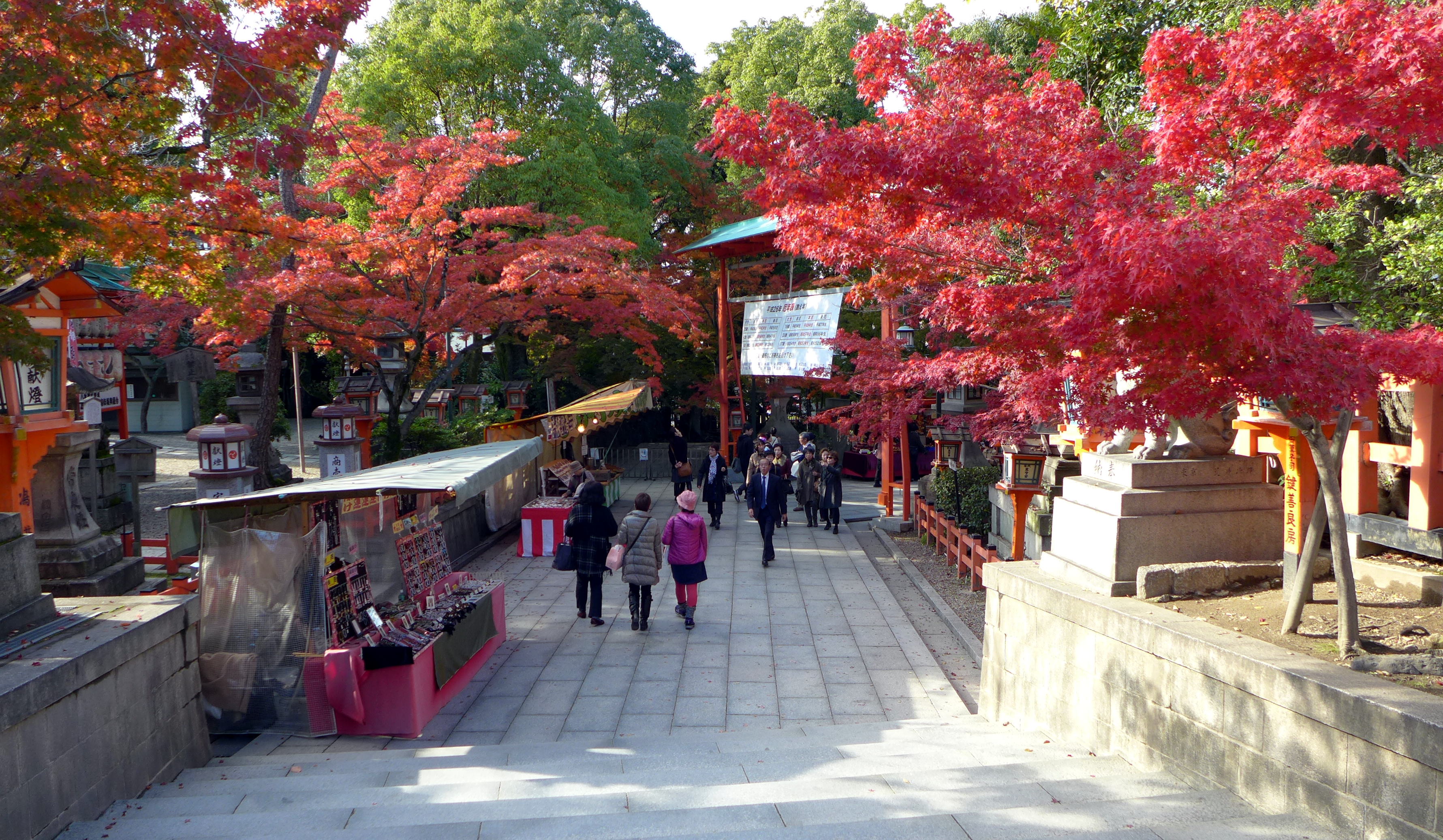
On my way to Kiyomizu-dera (see previous post), I ended up passing through Yasaka Shrine. I say ‘ended up’ because in truth I got the wrong bus to Kiyomizu and I had to get off earlier than I would have liked. This way actually turned out better but I’ve learned not to blindly trust Google maps’ route suggestions.
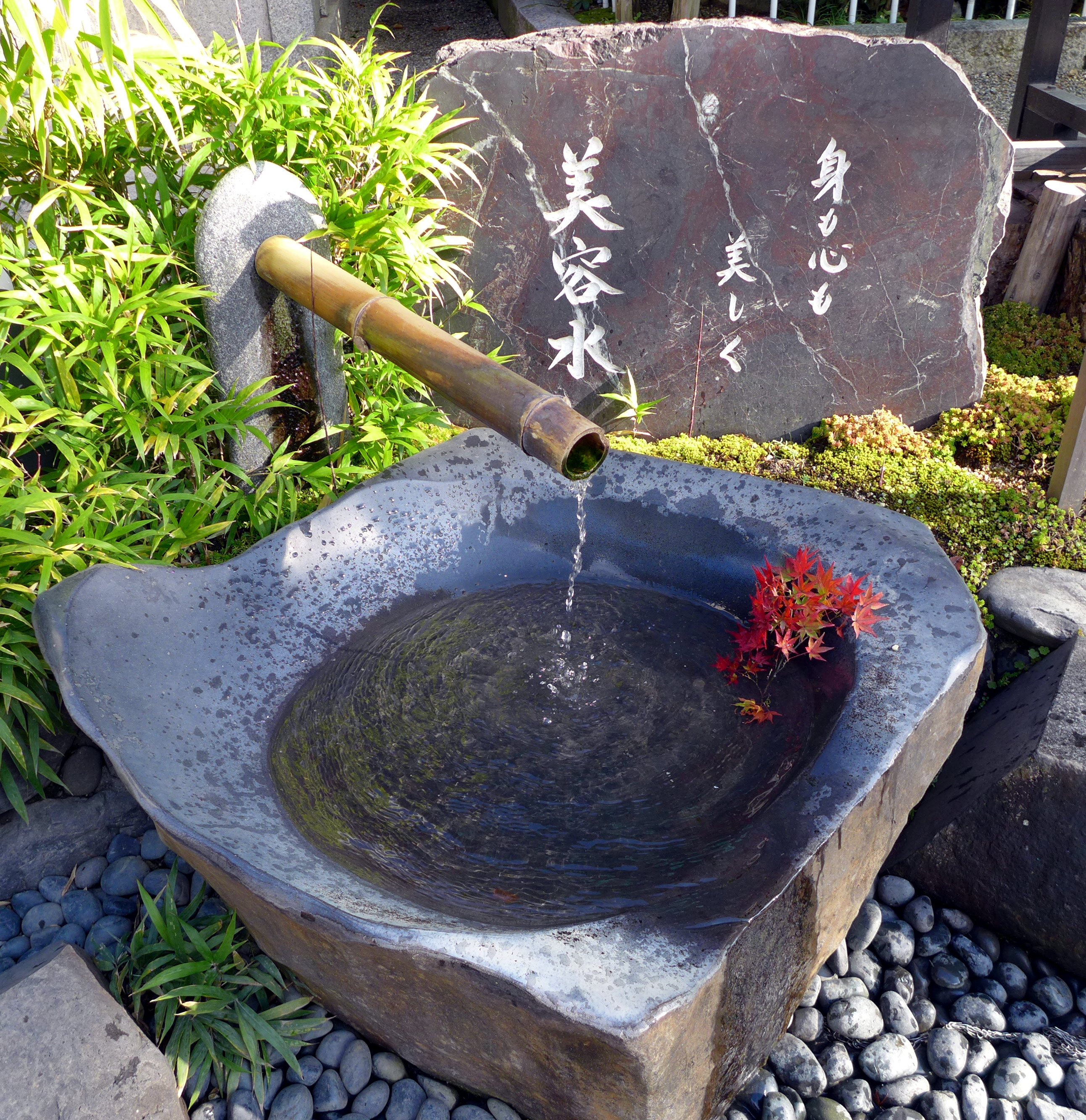
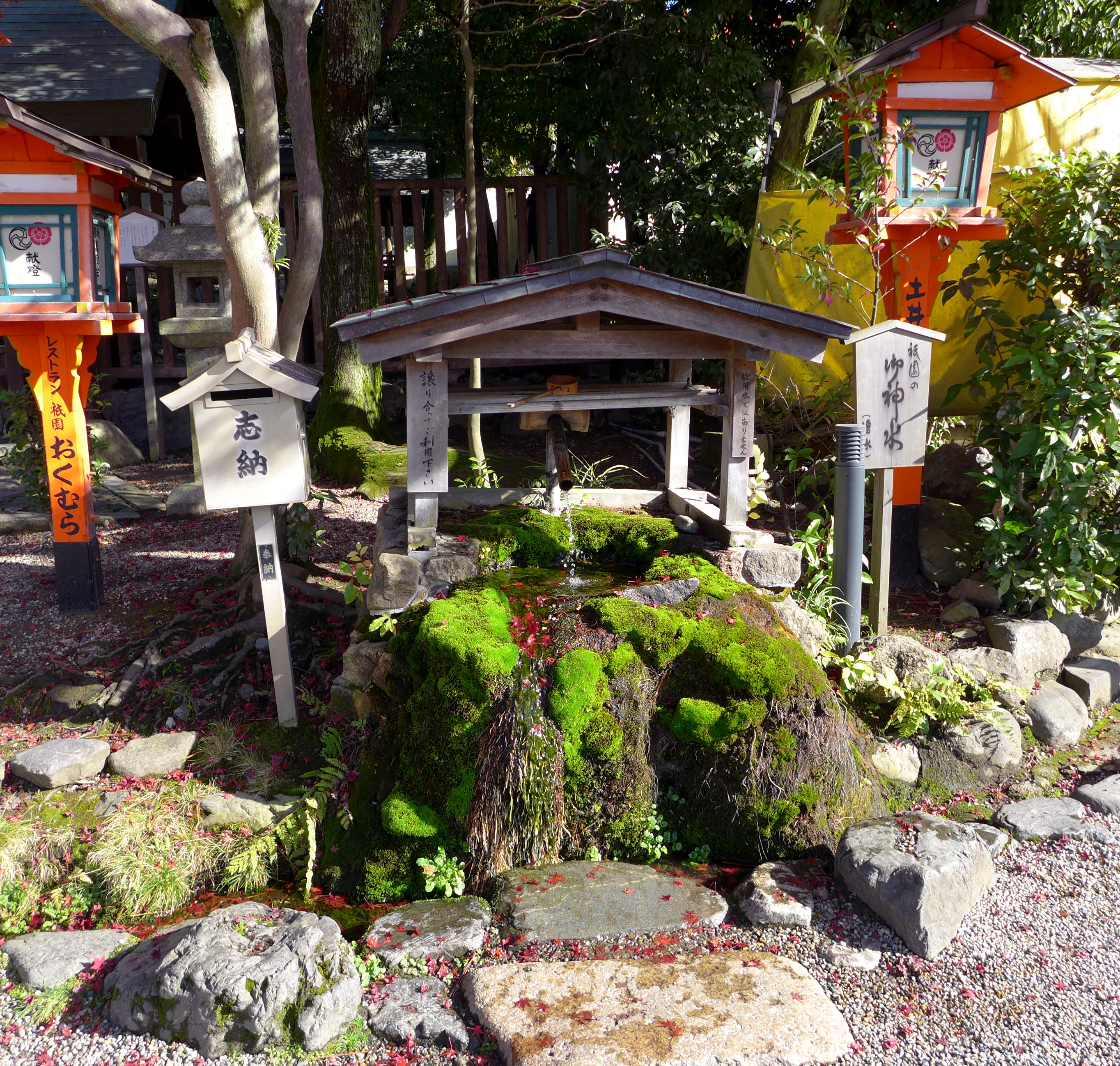
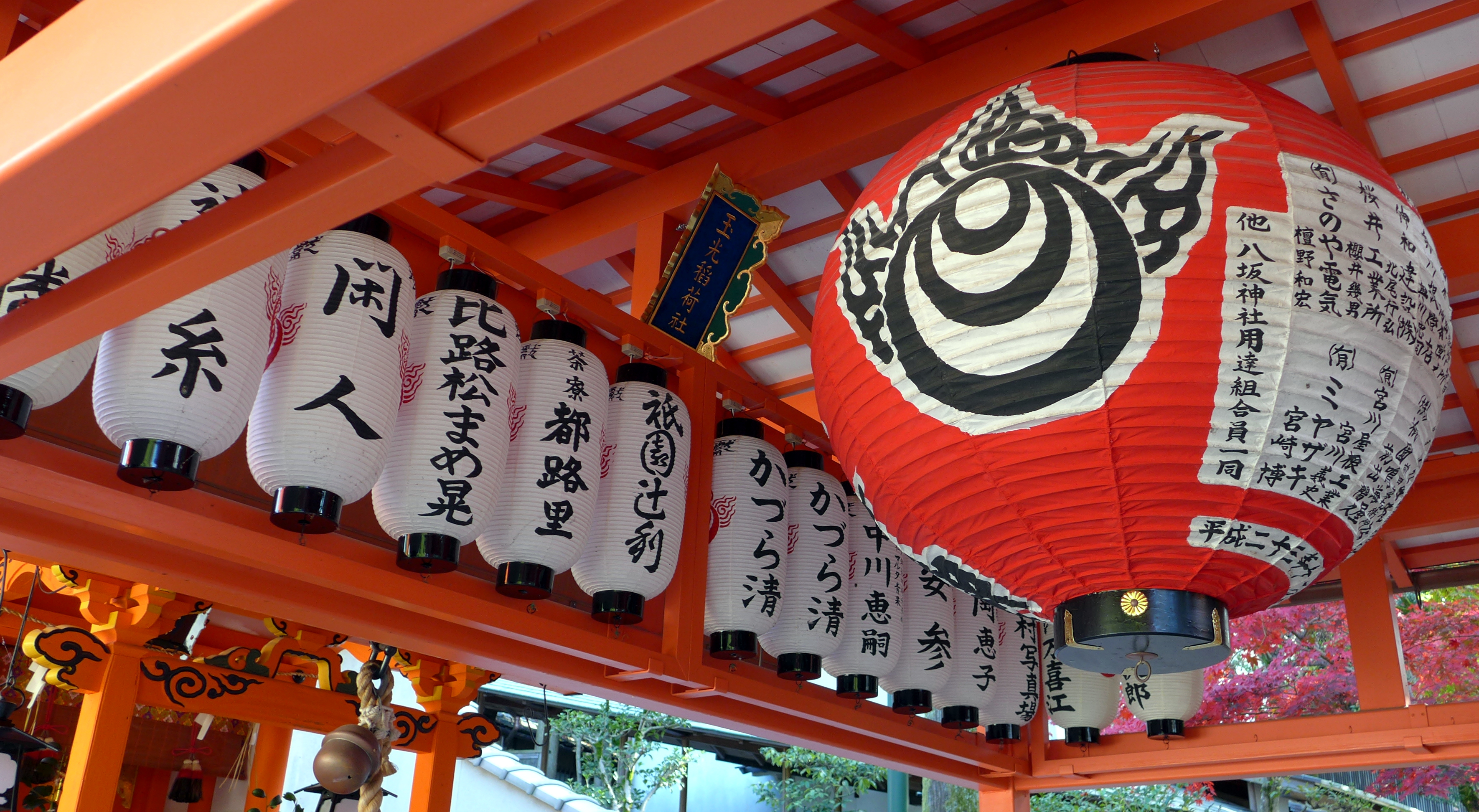
P1020608P1030002P1020620 P1020638

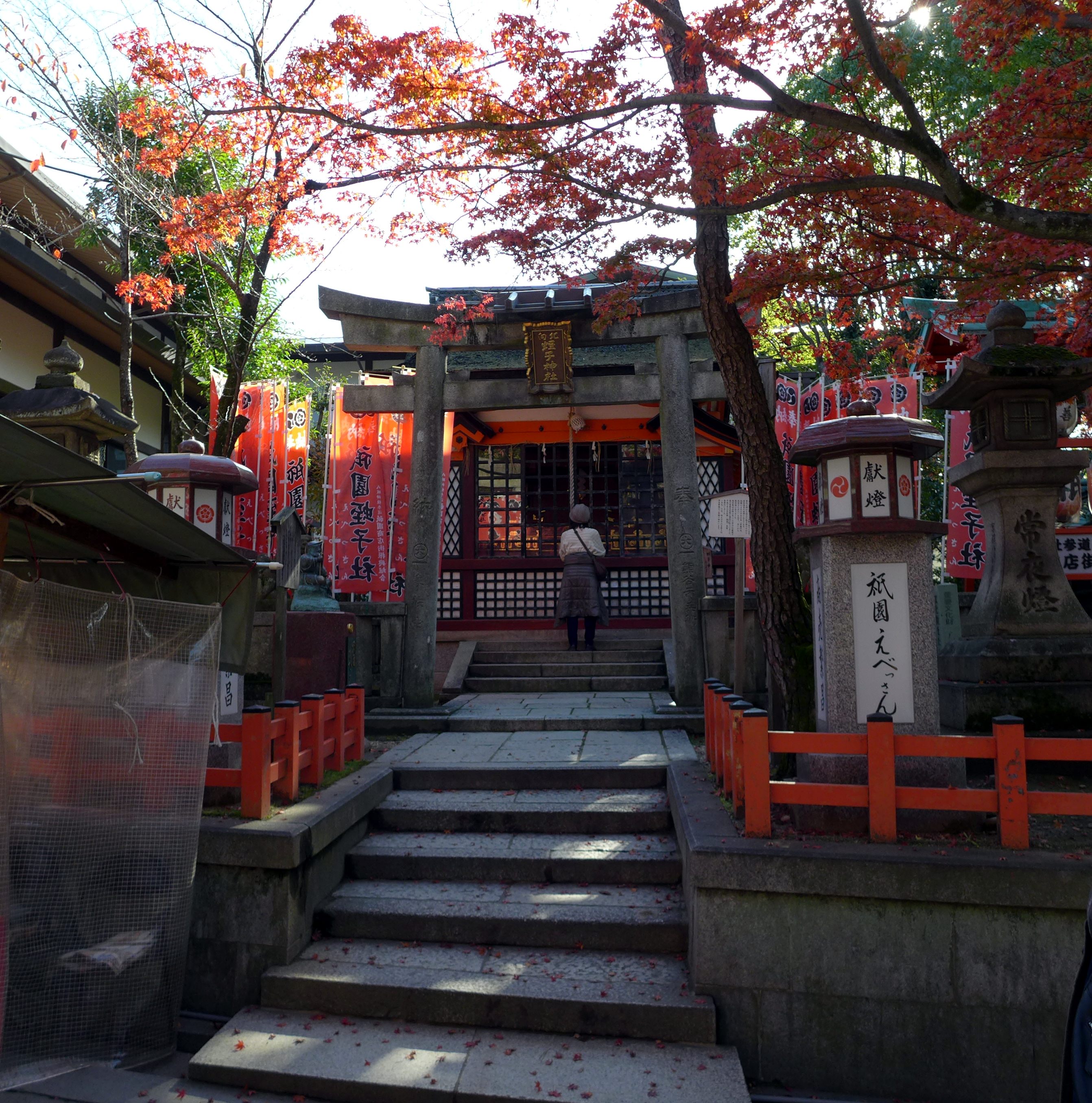
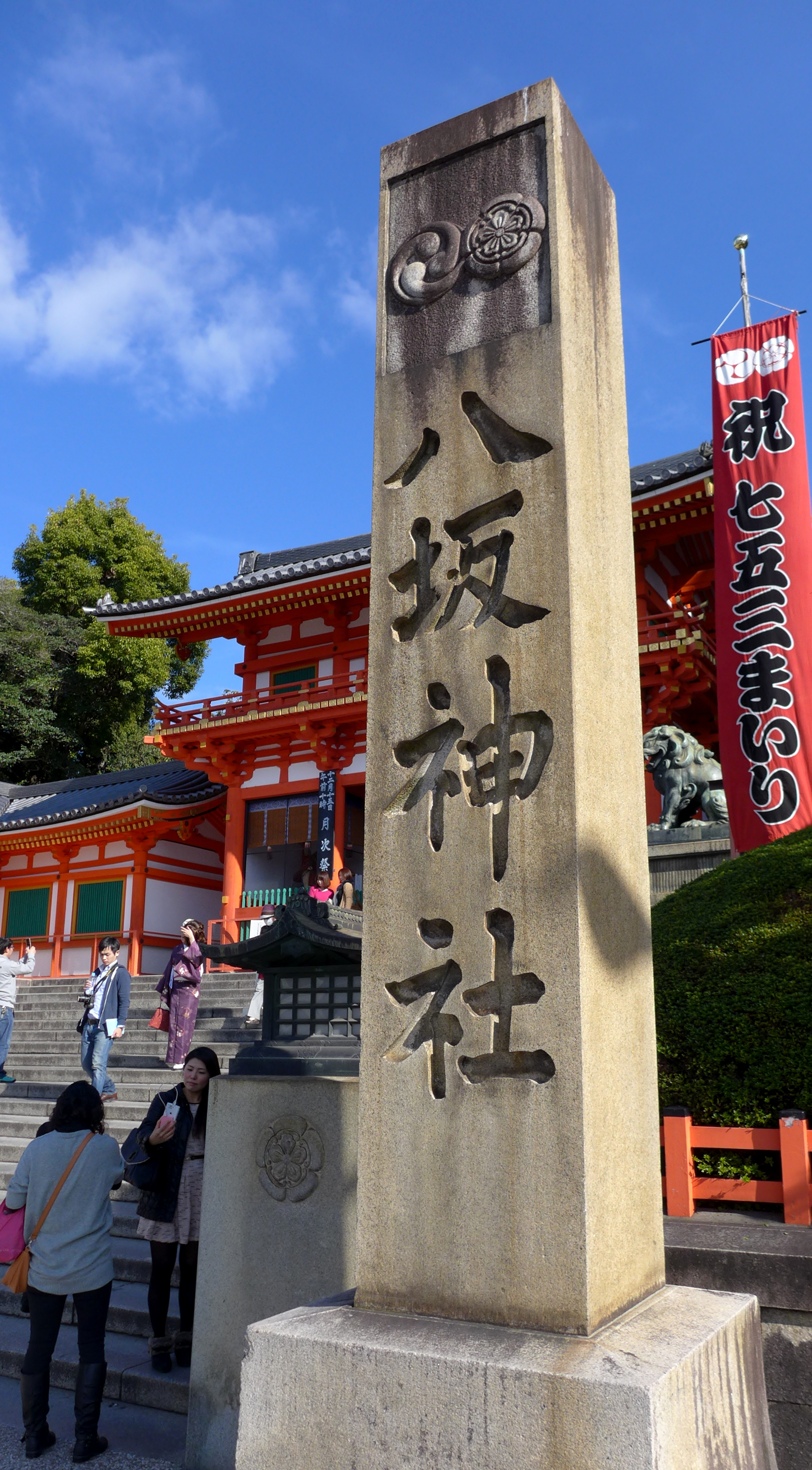
Yasaka Shrine (八坂神社), founded in 656, is a shrine near Gion, the geisha area of Kyoto, so it’s a great place to go if you want to see geisha or maiko (geisha in training). In fact, it used to be known as Gion Shrine until the separation of Buddhism and Shinto during the Meiji restoration. This is a little known part of the Meiji restoration; the government decided to uphold Shinto as the ‘native’ religion to Japan and shun the ‘alien’ (though very much Japanized) Buddhism, resulting in the policy of Shinbutsu Bunri (神仏分離) in which the two religions were forcibly separated, resulting in the destruction of many Buddhist buildings and treasures as they were not legally allowed in Shinto shrines. This policy was intended to increase the popularity of Shinto, which focused on the divine right of the Emperor, while simultaneously reducing the wealth and power of the Buddhist sects.
P1020627P1020632

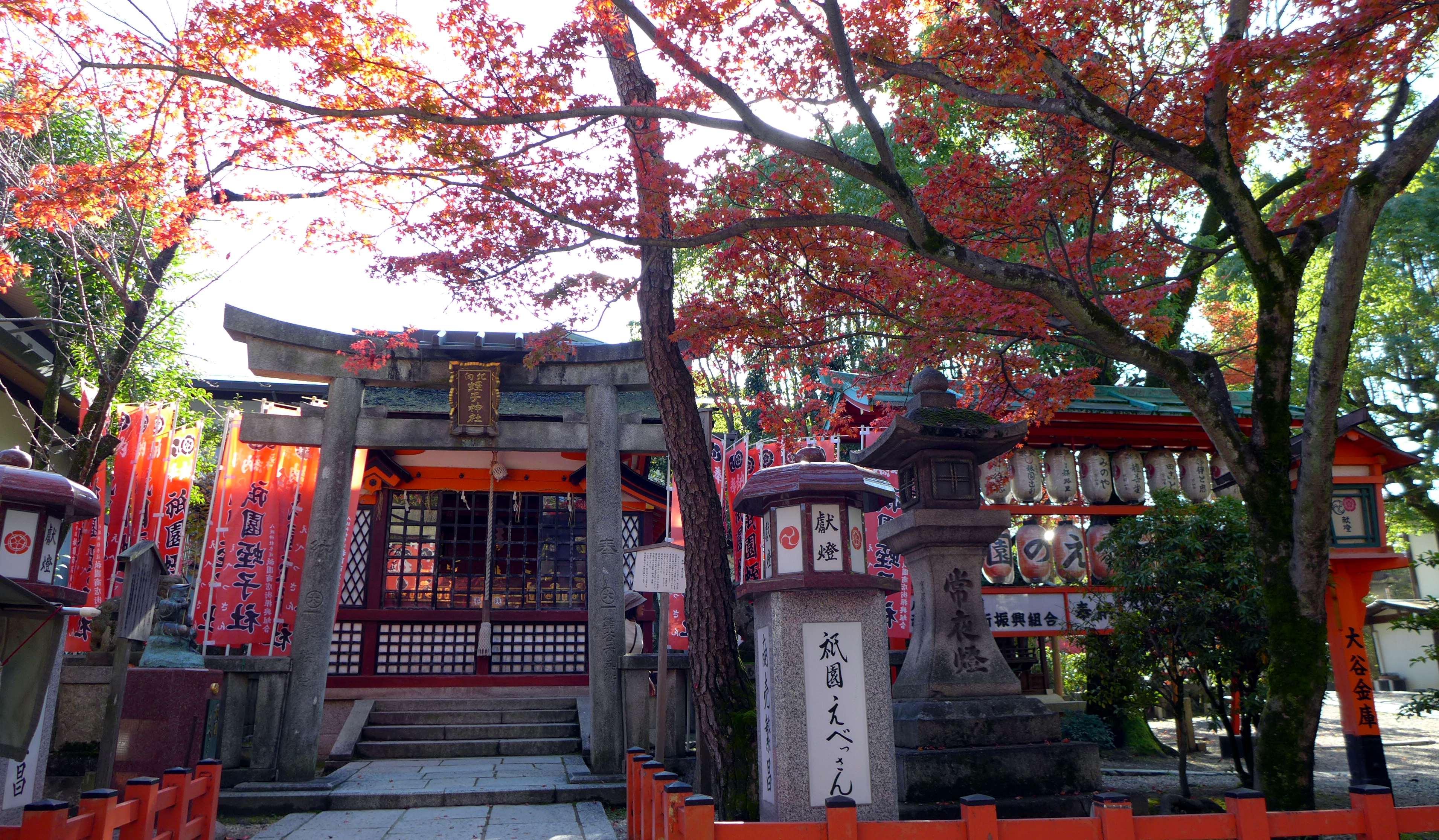
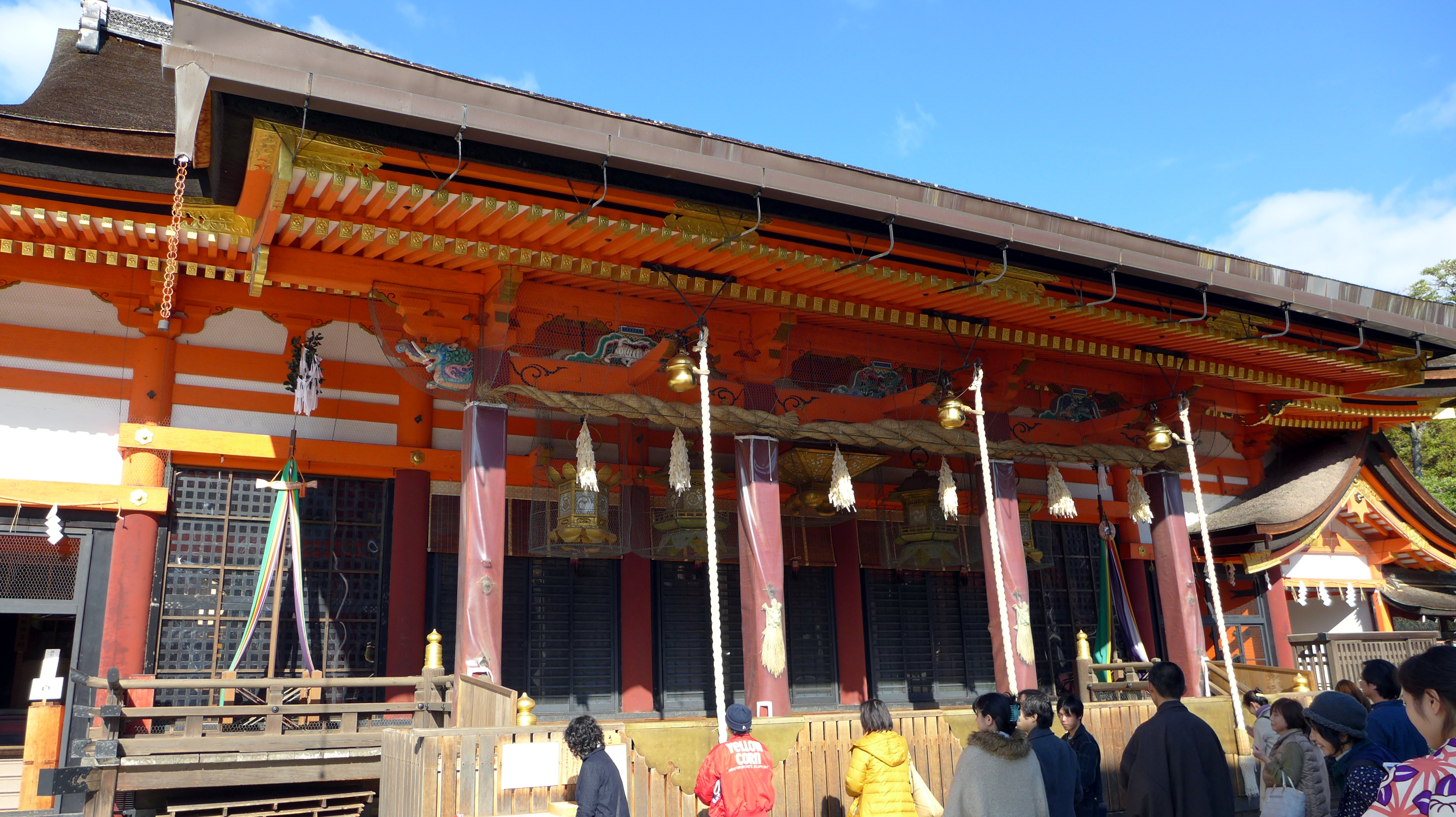
Though it succeeded in destroying Buddhist buildings and partially separating shrines from temples, Shinbutsu Bunri did not have the intended effect of wiping out Buddhism (Japanese traditionally have Buddhist funeral rites and this was not something Shinto could replace) nor did it totally separate Shinto from Buddhism – there are still Buddhist temples dedicated to Shinto gods such as Inari, and there are Shinto shrines dedicated to Buddhist gods such as Kannon. Some scholars argue that Japanese Buddhism and Shinto are basically the same religion and cannot be understood apart from each other, though the policy of Shinbutsu Bunri succeeded in making the public perceive Shinto as ‘native’ and Buddhism as ‘foreign’. Thus Gion Shrine (which was a combined Buddhist and Shinto shrine) became Yasaka Shrine, a Shinto-only shrine.
P1020640 P1020631 P1020634 P1020635 P1020651

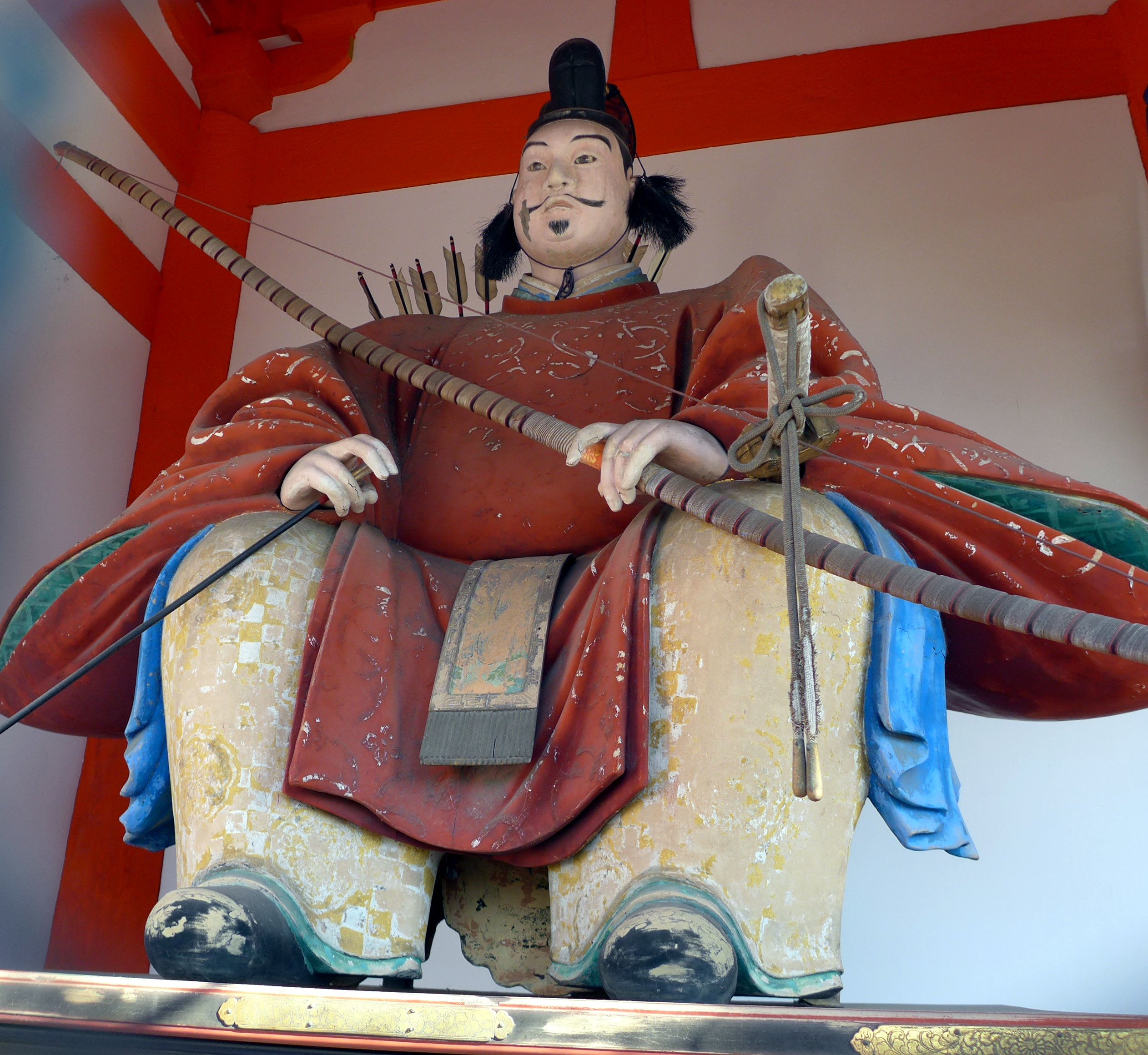
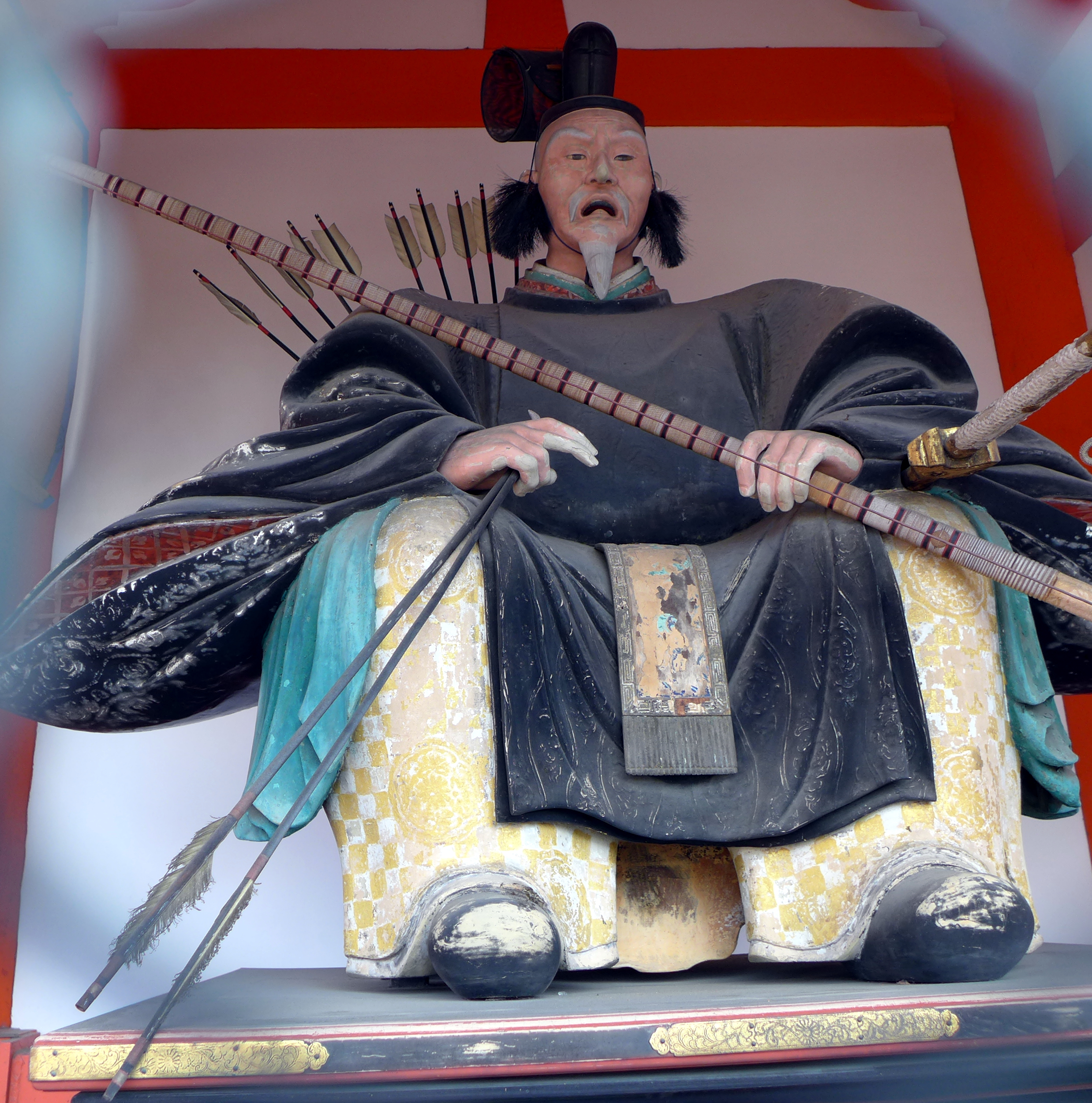
Inside the main gate of Yasaka shrine, two rather formiddable samurai figures sit facing outwards. Try as I might I can’t find any information about them, even searches in Japanese haven’t turned up anything useful. Though they remain a mystery, they are fairly intimidating and create a grand entrance to the shrine. I apologise for the edges of the pictures – I took them through the wire mesh in front of the statues.
P1020687 P1020611

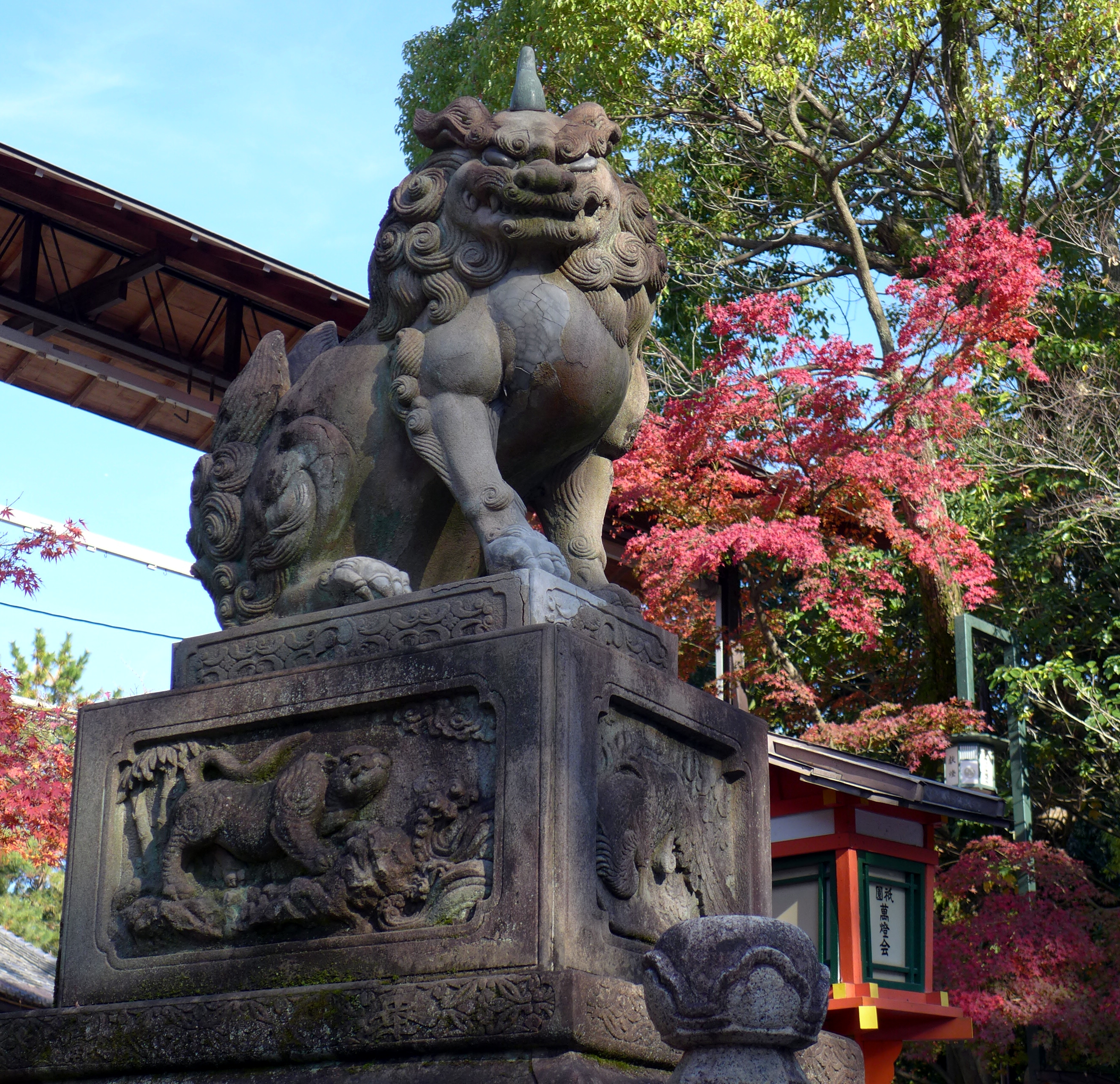
Yasaka Shrine is full of Koma-inu (狛犬) – Guardian Lion Dogs. These guardians are often found in Shinto shrines guarding the shrine from evil spirits. Conventionally one has its mouth open and one closed, this is actually a convention borrowed from Buddhism; one guardian is saying the Sanskrit letter ‘a’ and the other the letter ‘um’, these are the beginning and end of the Sanskrit alphabet and mean the beginning and end of all things. The guardian Koma-inu originated in Tang dynasty China and spread to the rest of East Asia. They were used in Japan from the Nara period (from 710 onwards) to guard shrines and houses. At shrines dedicated to the god Inari (such as Fushimi Inari) the lions are replaced with foxes, often holding grains of rice (Inari is the god of rice) or a sutra scroll.
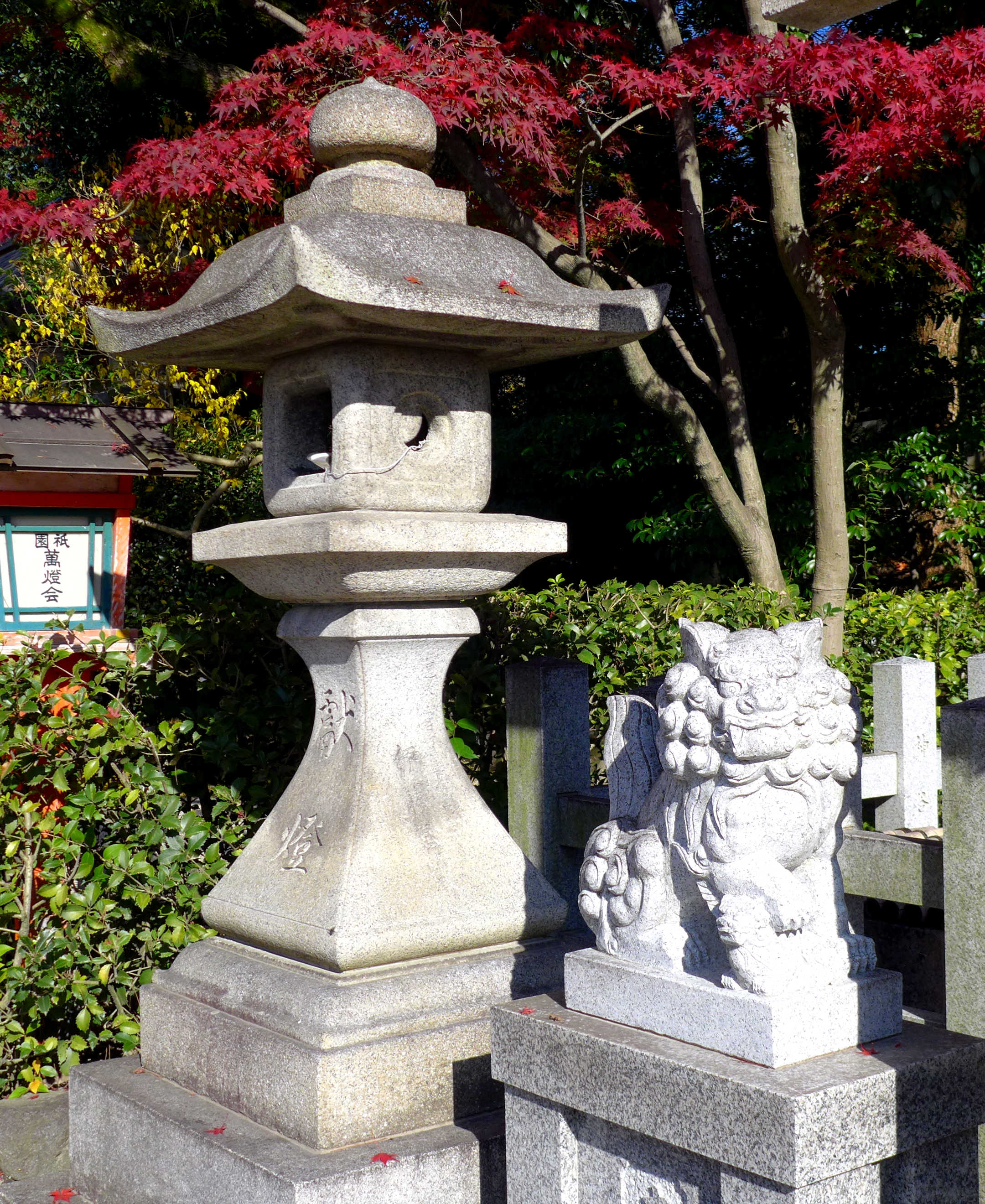
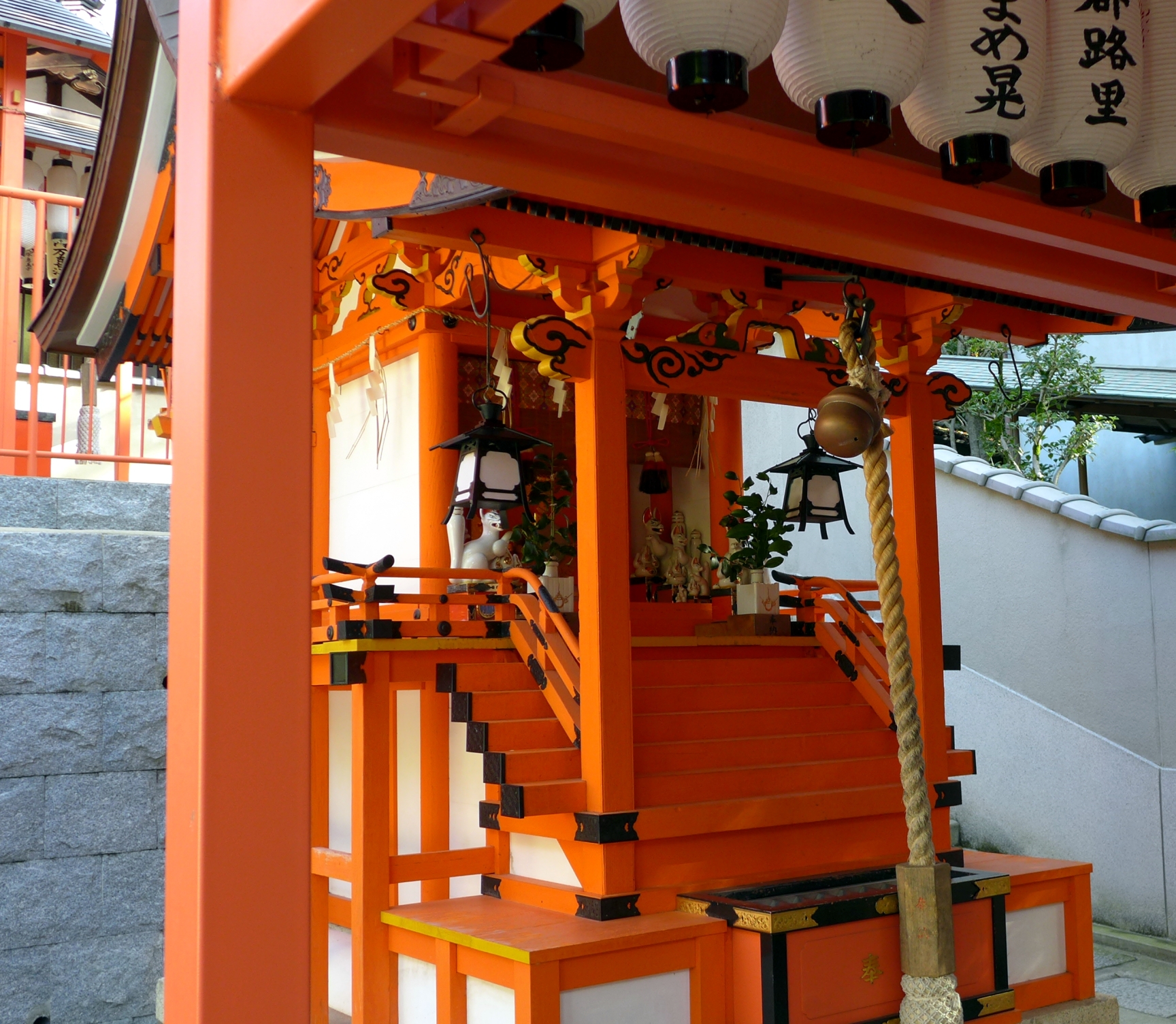
P1020642 P1020661P1020664 P1020673P1020666P1020646 P1020686

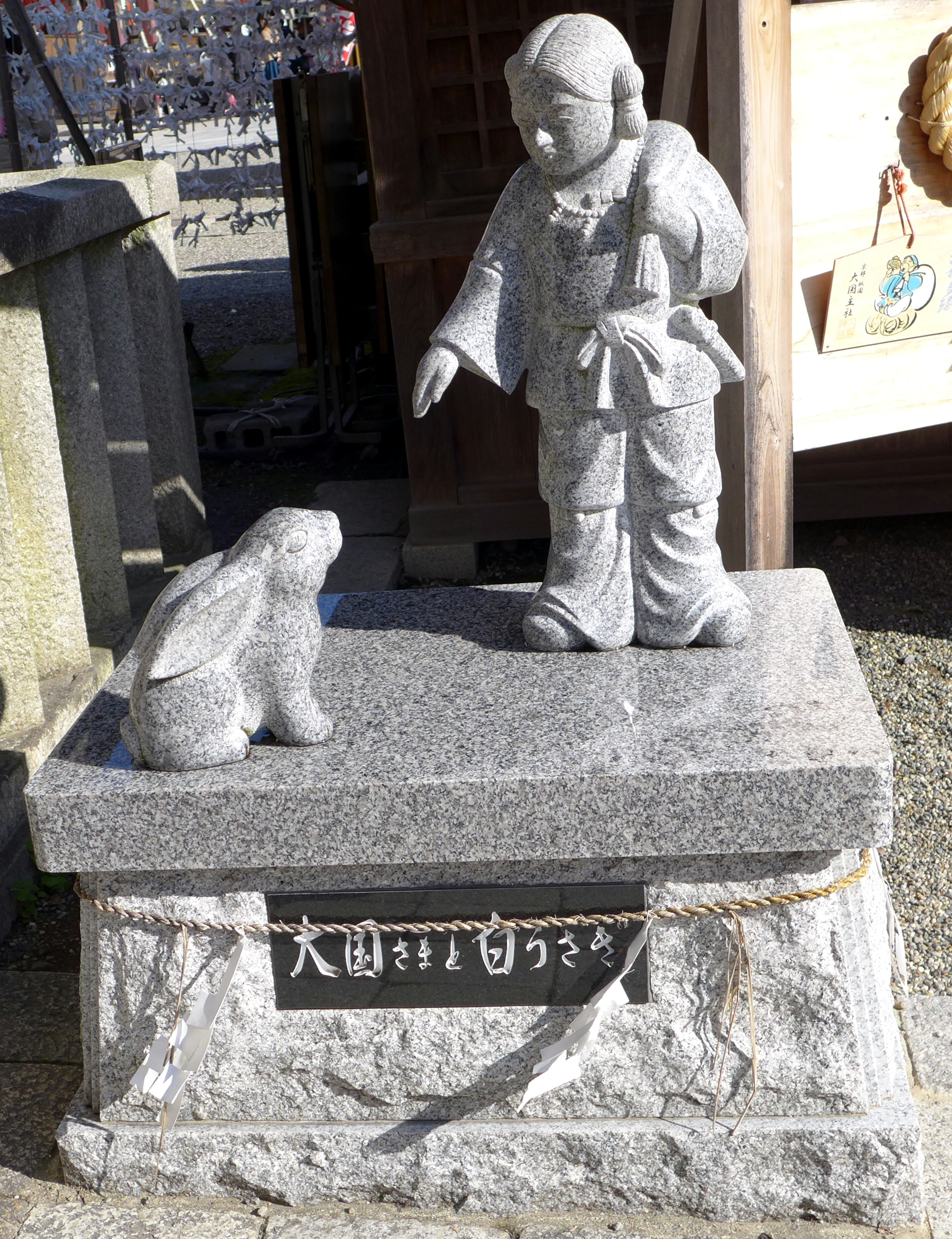
I saw a very new looking statue of「大国と白うさぎ」(Taikoku and the white rabbit) and was curious as to what it meant; it wasn’t a lion-dog like all of the other statues. It turns out this is actually a well known legend in Japan, which goes as follows:

A white rabbit was trapped on an island and needed to get to the shore so he decided to trick some sharks (its acutally a mythical sea creature usually translated to ‘shark’). He bet them that he had more family than they did and that they should all line up so that he could count them. When they had all lined up he used their backs to hop to shore. However, he gloated that he had tricked them just before he reached the other side and the sharks, angry that they had been tricked, tore off his fur, leaving him naked and injured. He came across some gods, who were feeling spiteful, and they advised him to swim in the sea water to ease the pain. Obviously this only made it sting and hurt in the wind. The kindly god Taikoku, brother of these mean gods, advised him to wash in fresh water and wrap himself in the down of bullrushes. Following this advice the rabbit recovered and the bullrushes became a white coat.

Unlike a parable, this story does not seem to have much of a moral, it feels more like a Just So Story – explaining the existence of white rabbits. Even so, I think its a nice story which shows that the hero is also imperfect (by tricking the sharks) and not all gods are nice.
P1020624 P1020654 P1020662P1020657P1020663

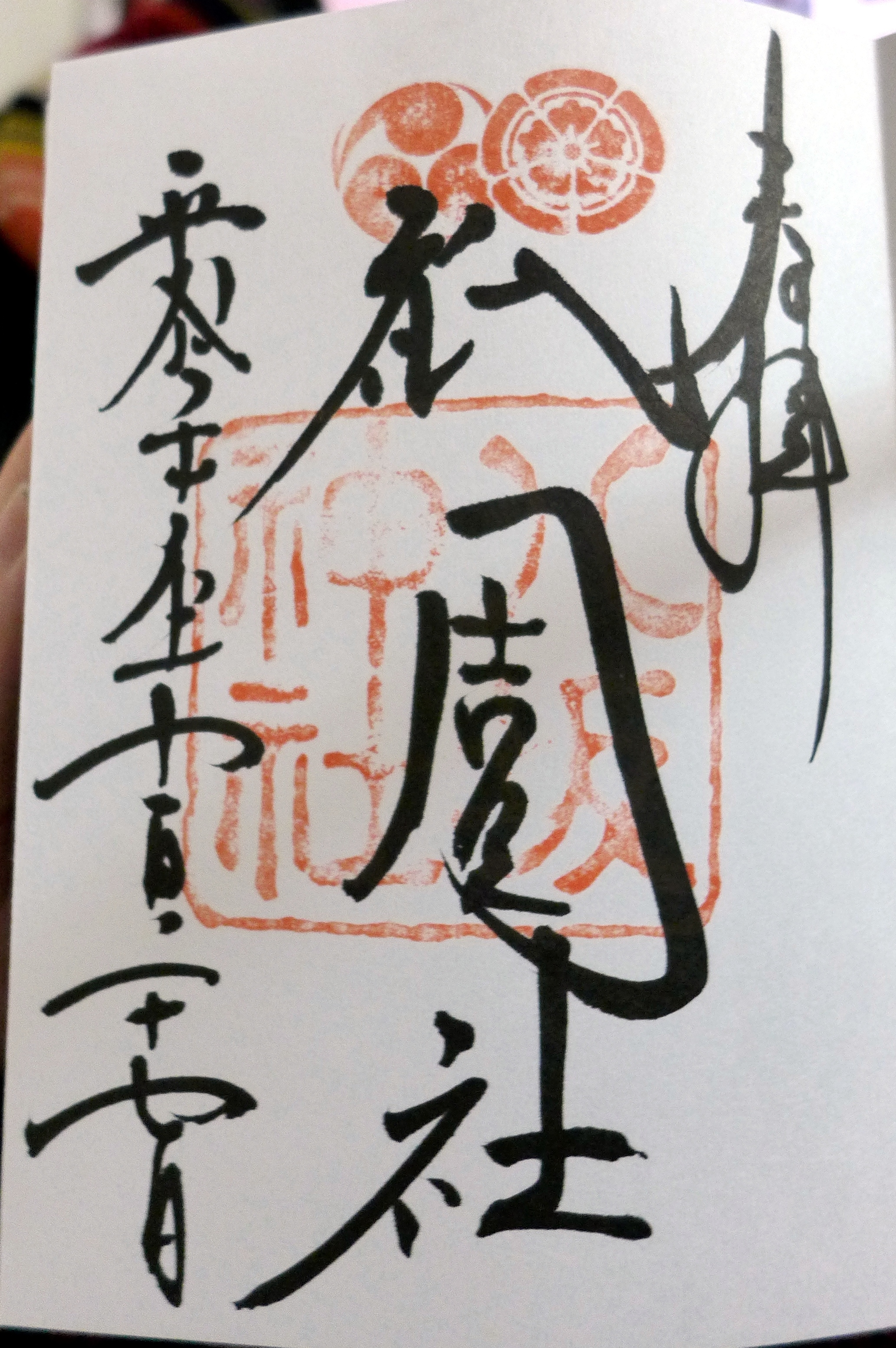
I had my book stamped at Yasaka Shrine, which cost the standard 300円. Though it was a popular shrine the stamping station was not too busy and they were very quick.
P1030471

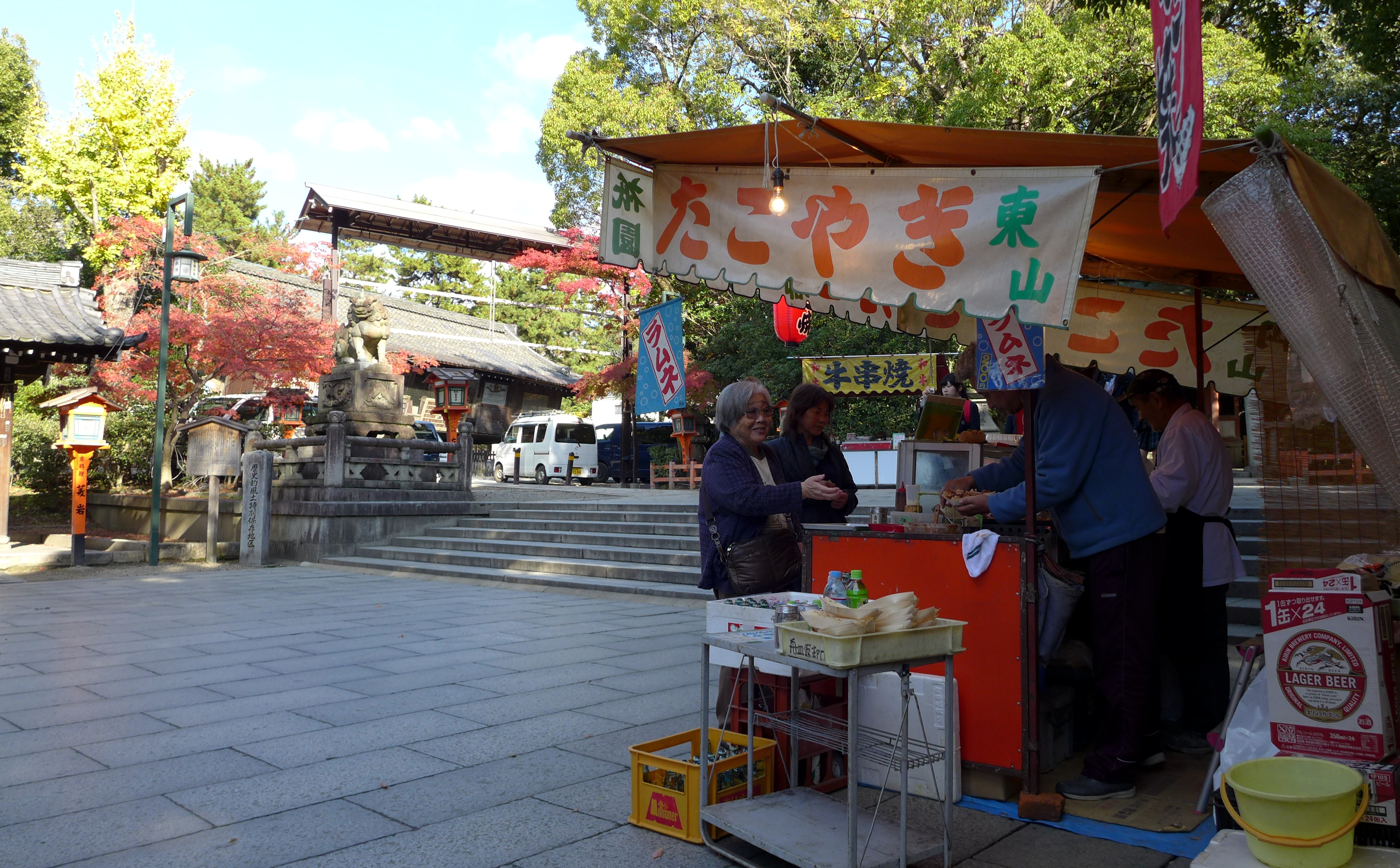
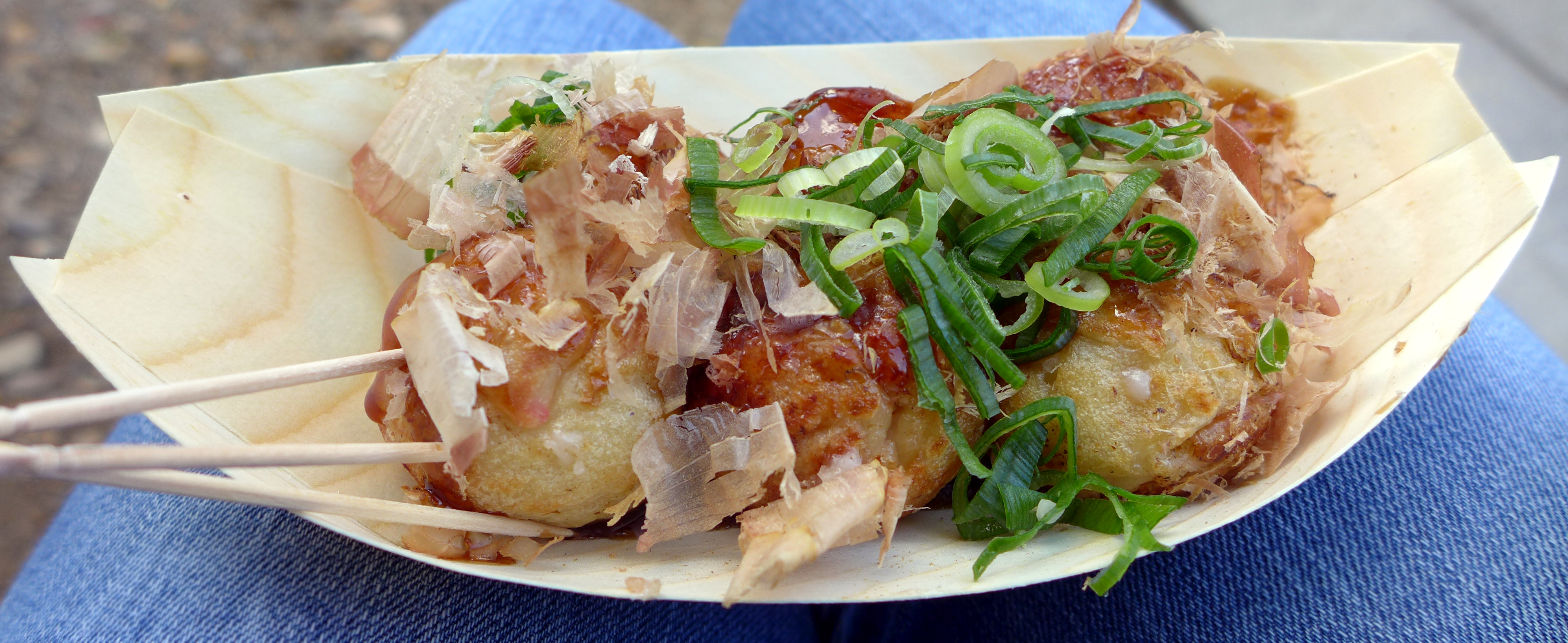
Yasaka shrine, as it is a popular shrine, has several food stalls just inside the main gate on the way up to the main courtyard. I decided to buy some takoyaki (たこ焼き) which are batter balls with octopus in them topped with a sweet barbecue-like sauce and bonito flakes (fish flakes). The insides of takoyaki always seem to be as hot as lava when fresh, and if you aren’t patient you will end up burning your entire mouth. It is really delicious though so its hard to wait. Takoyaki is one of the regional specialties of the Kansai area, which includes Kyoto and Osaka; Kansai is famous for okonomiyaki (cabbage pancakes) and takoyaki, as well as several other foods.
P1020670P1020618P1020679P1020682

While I was eating my takoyaki a pair of old ladies decided to talk to me. It started out normal enough; we agreed that takoyaki is indeed delicious and also boiling hot. Once they had established that I can speak Japanese, the following exchange took place:

Old lady: Are you here alone?
Me: Yes…
Old lady: So you’re not here with your boyfriend?

Me: No… I don’t have a boyfriend…
Old lady: ahh, you must be lonely.

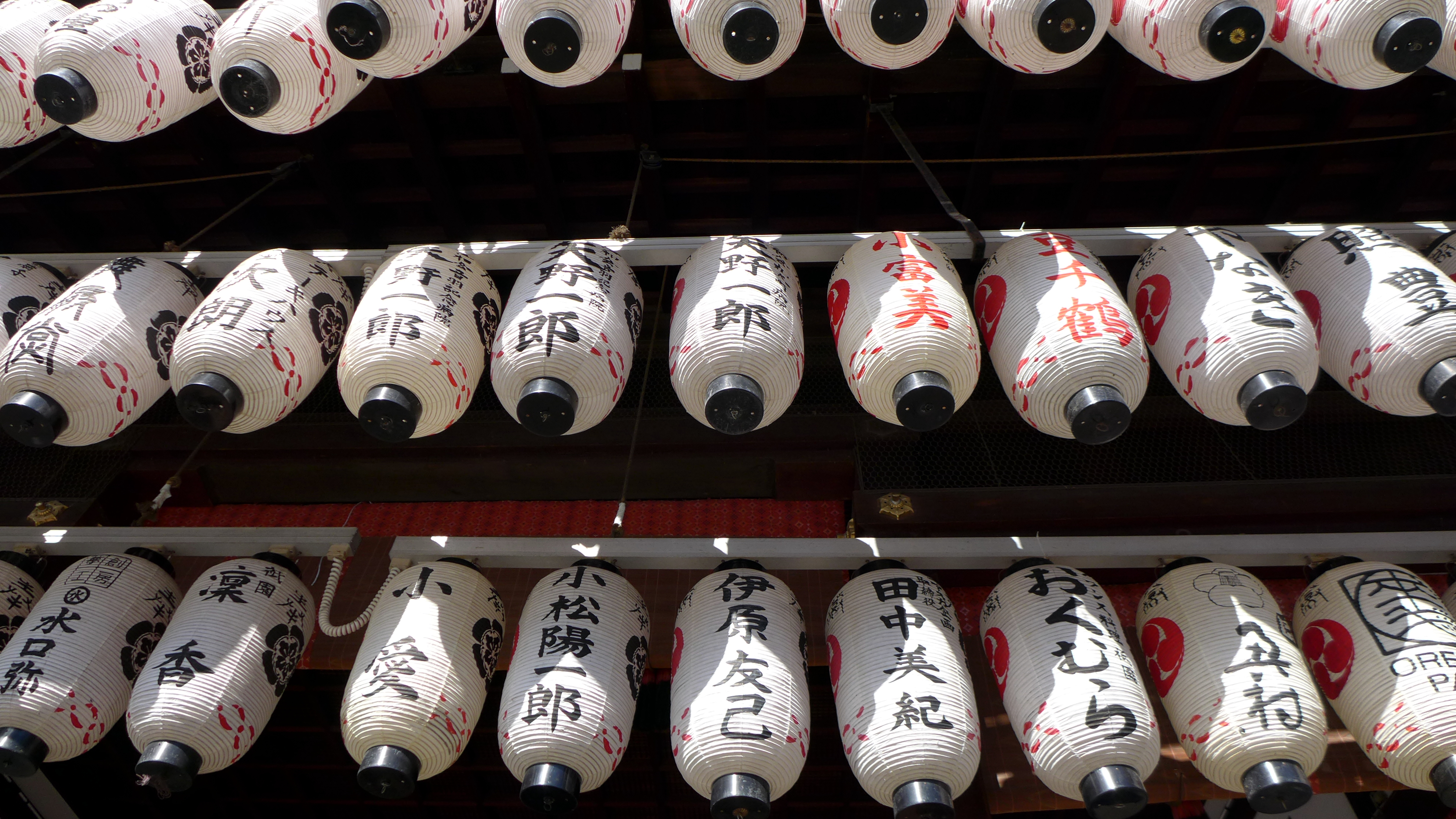
Not exactly what one needs to hear when doing some solo-sightseeing but I found it pretty amusing. Japanese old ladies can be surprisingly blunt, though given the volume of couples dressed in kimono and yukata enjoying the koyo (turning of the leaves) around the temple, I suppose its hardly surprising that she’d mention my solo status. I assured her I’m quite happy being a tourist by myself and finished up my takoyaki.
P1020669P1020622P1020999

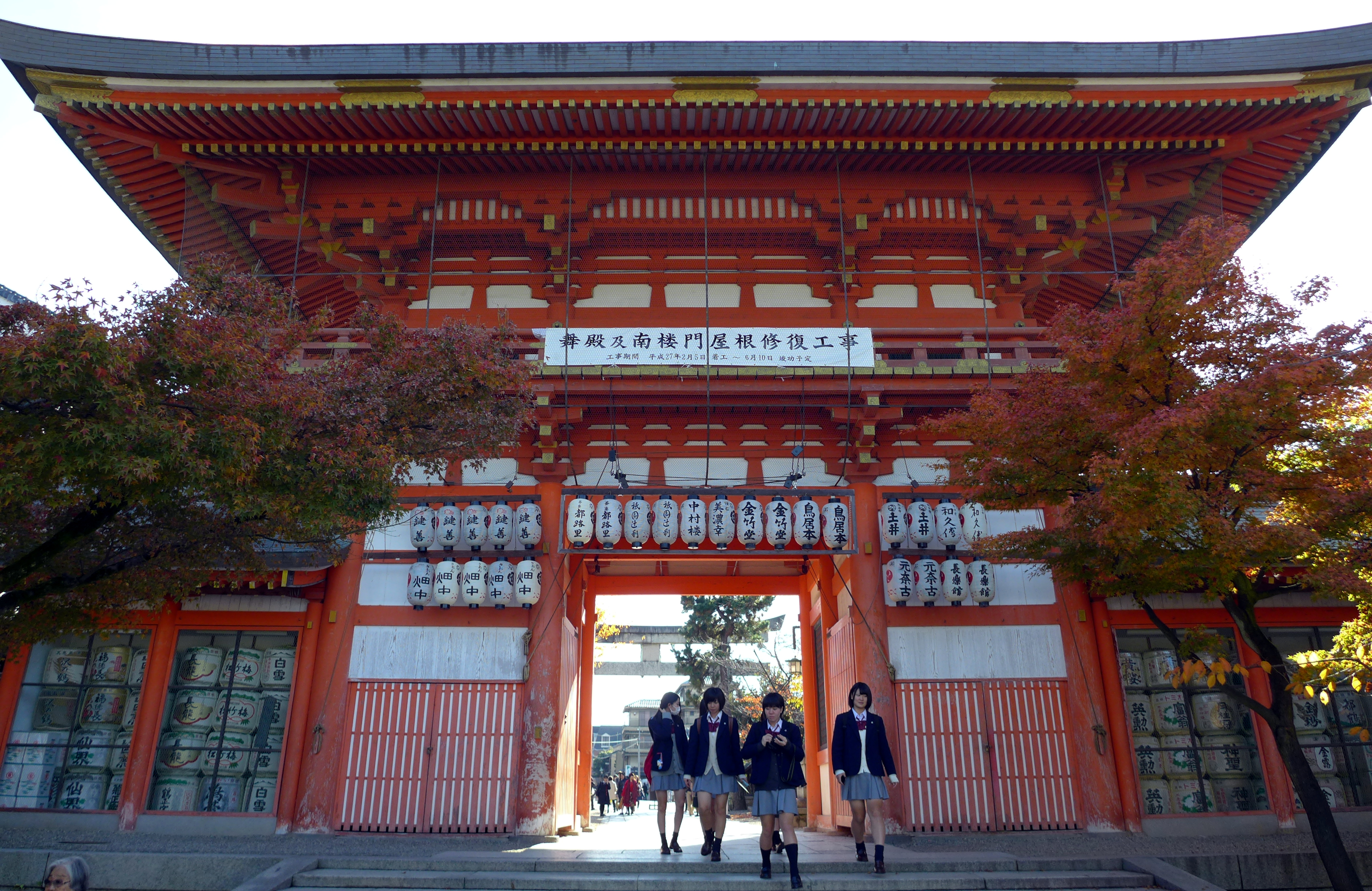
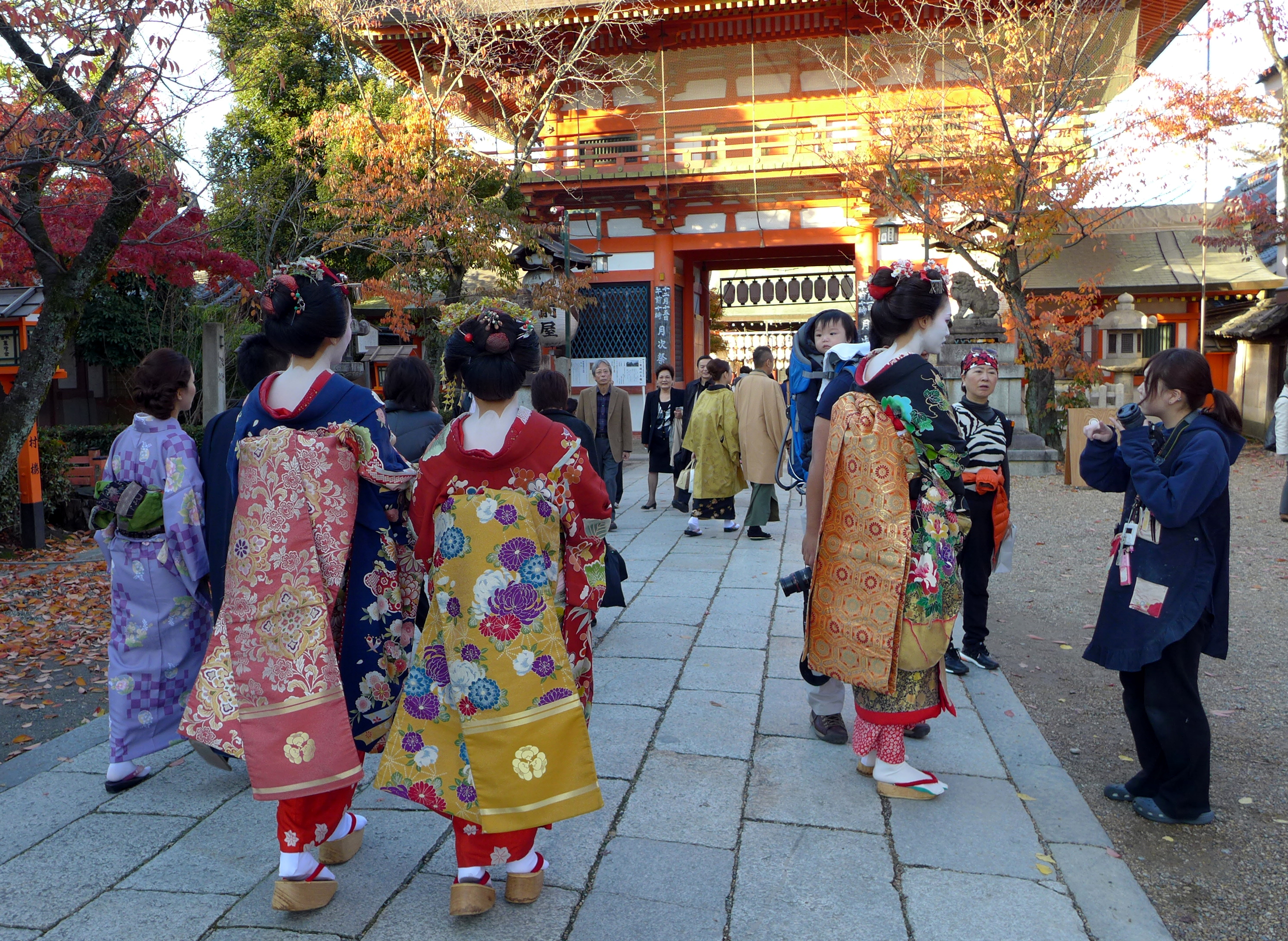
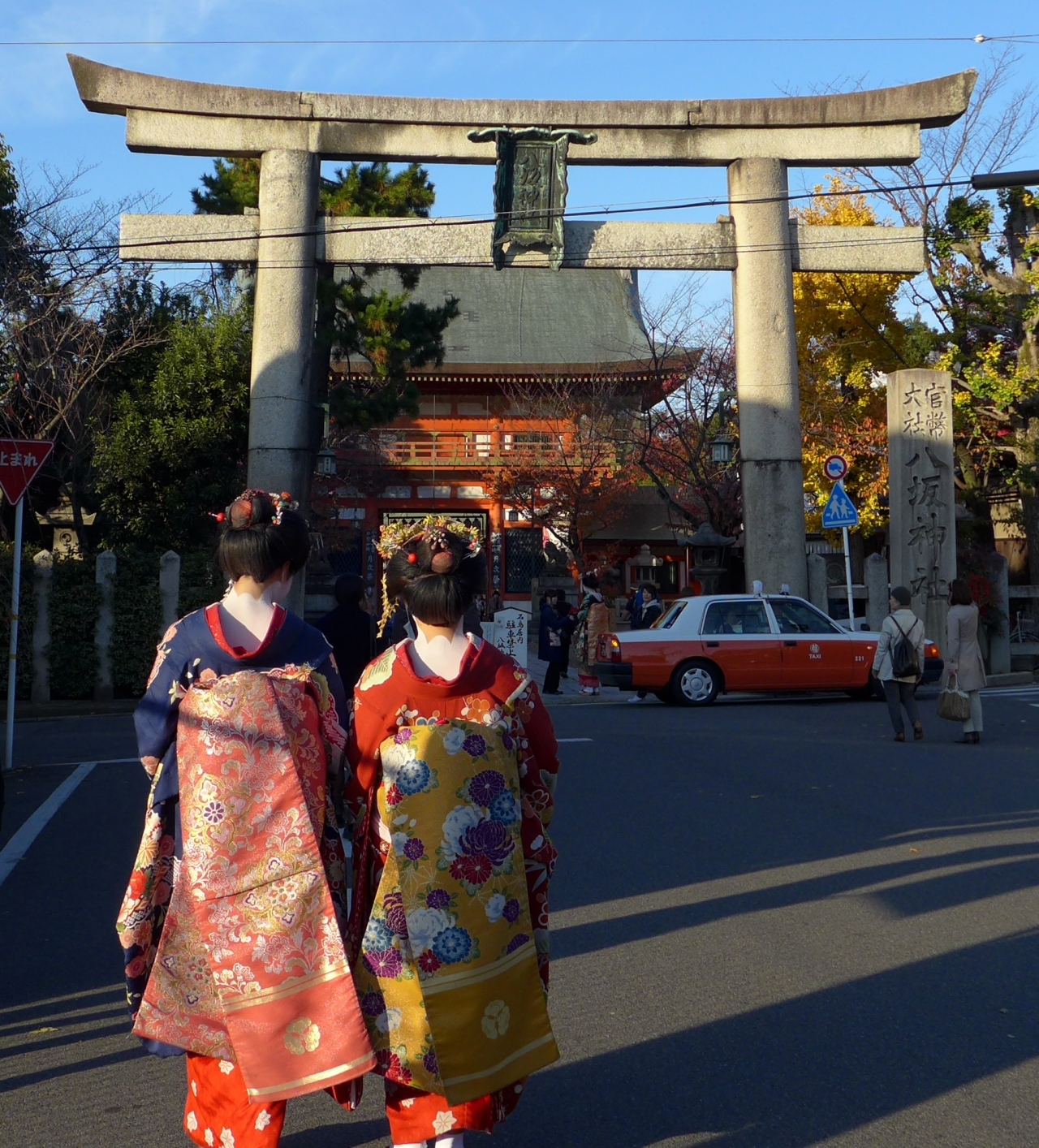
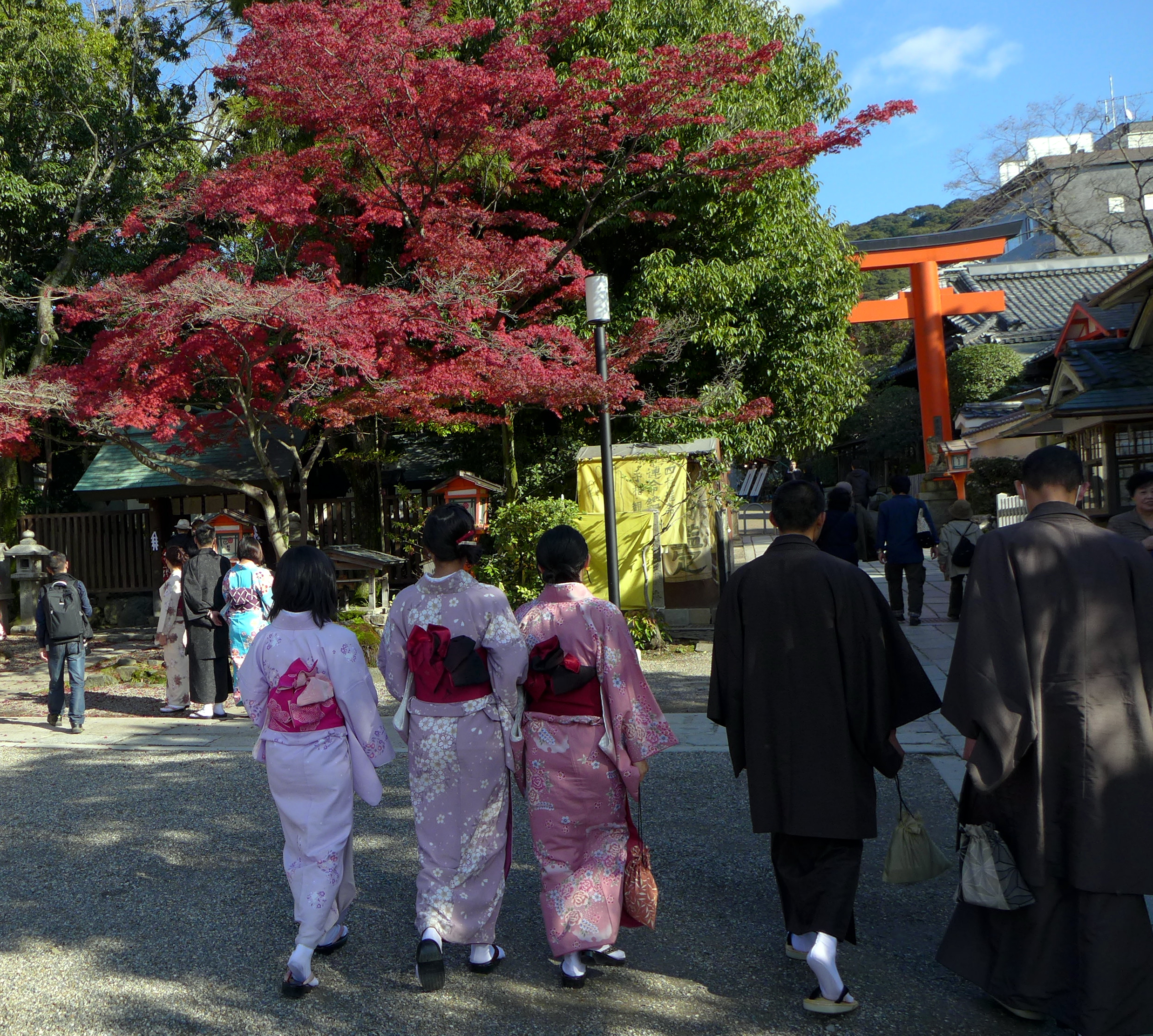
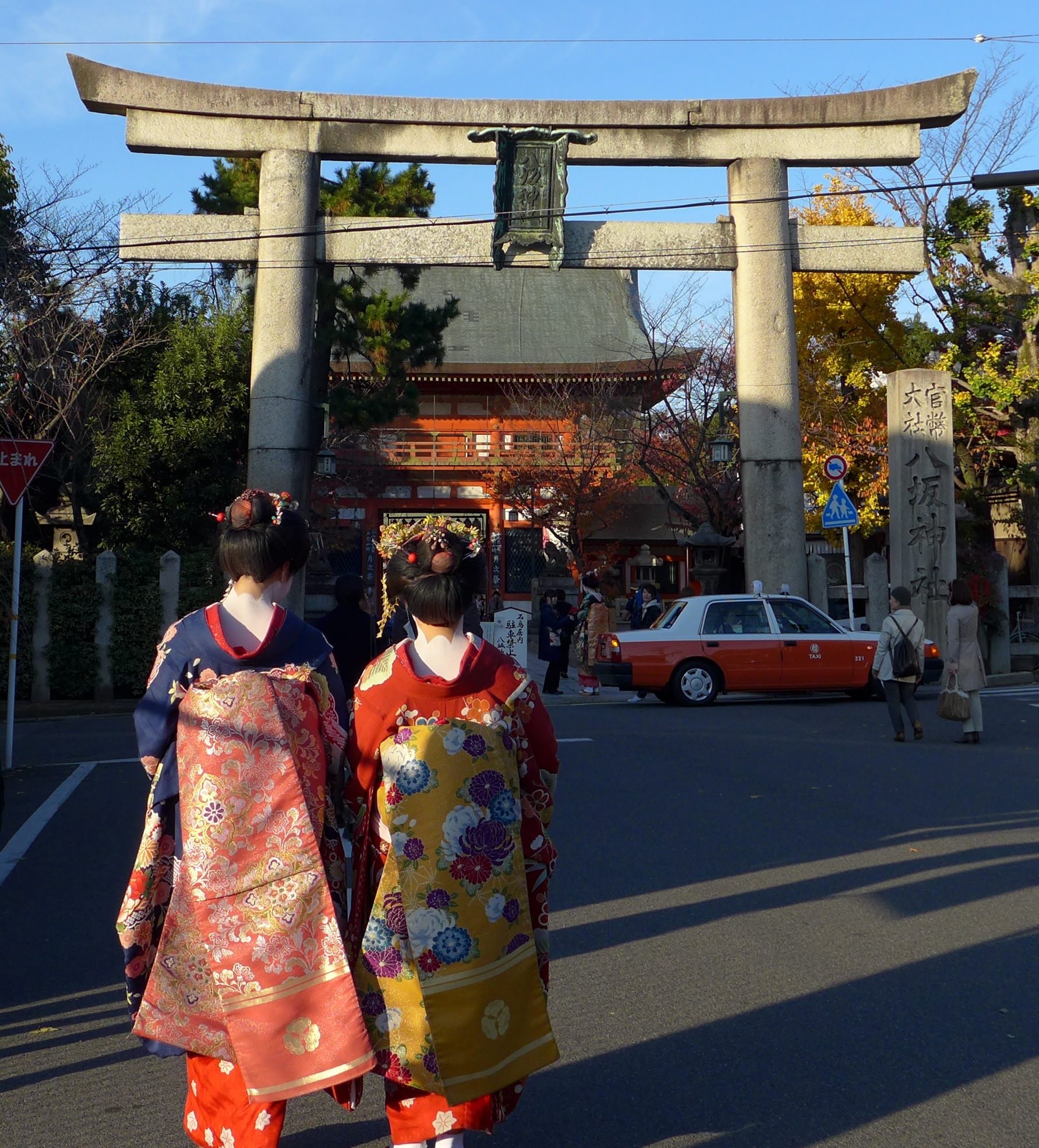
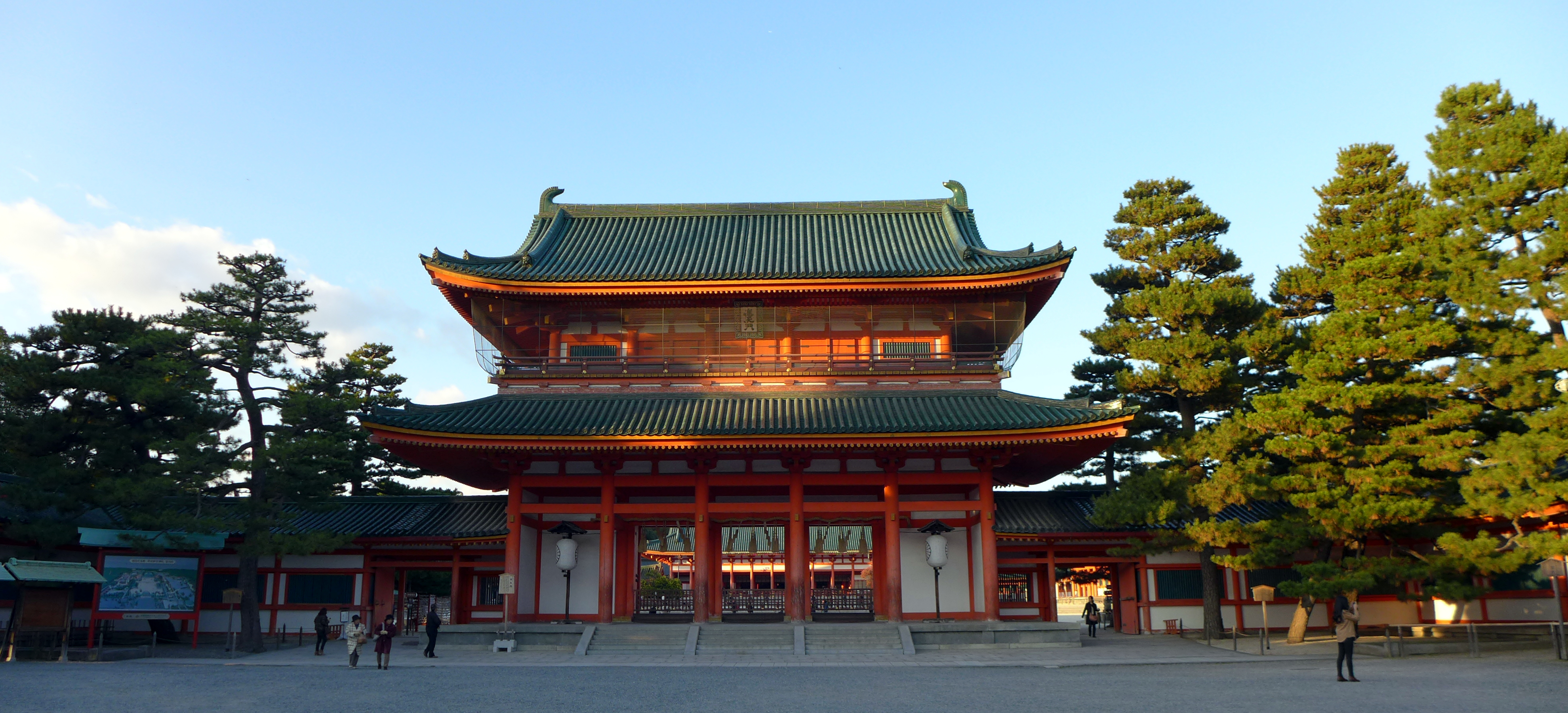
On my way back from Kiyomizudera, I passed through Yasaka shrine once again on my way to Gion Shijo station. It was even more beautiful with the sun just setting through the crimson leaves. As I was taking some pictures of the gate a pair of geisha walked in front of me. Though I find it awkward taking pictures of other people just because of their clothes, their kimono were absolutely spectacular, so I took a few pictures. I don’t think they noticed (or they’re used to it) so its probably okay.
P1020990 P1020992P1020997

I would definitely recommend a trip to Yasaka shrine; it’s free, you can see geisha, and the shrine itself is pretty big and fun to look around. My route of going from Yasaka shrine to Kiyomizu-dera doesn’t take very long (20minutes walk, including the hill up to Kiyomizu) and I would recommend it rather than getting the bus direct to Kiyomizu.

平安神宮 In Memory of Peace and Tranquillity

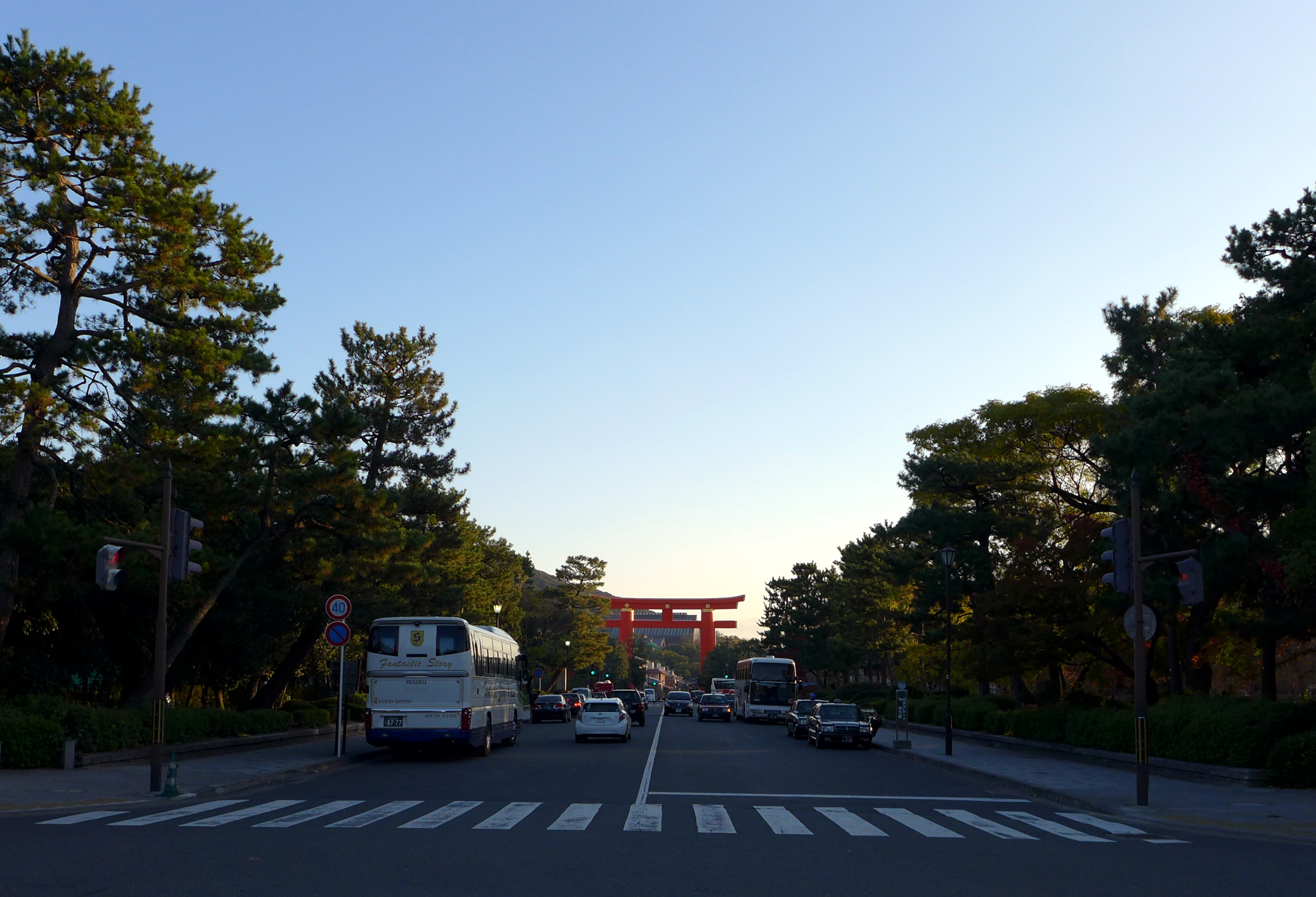
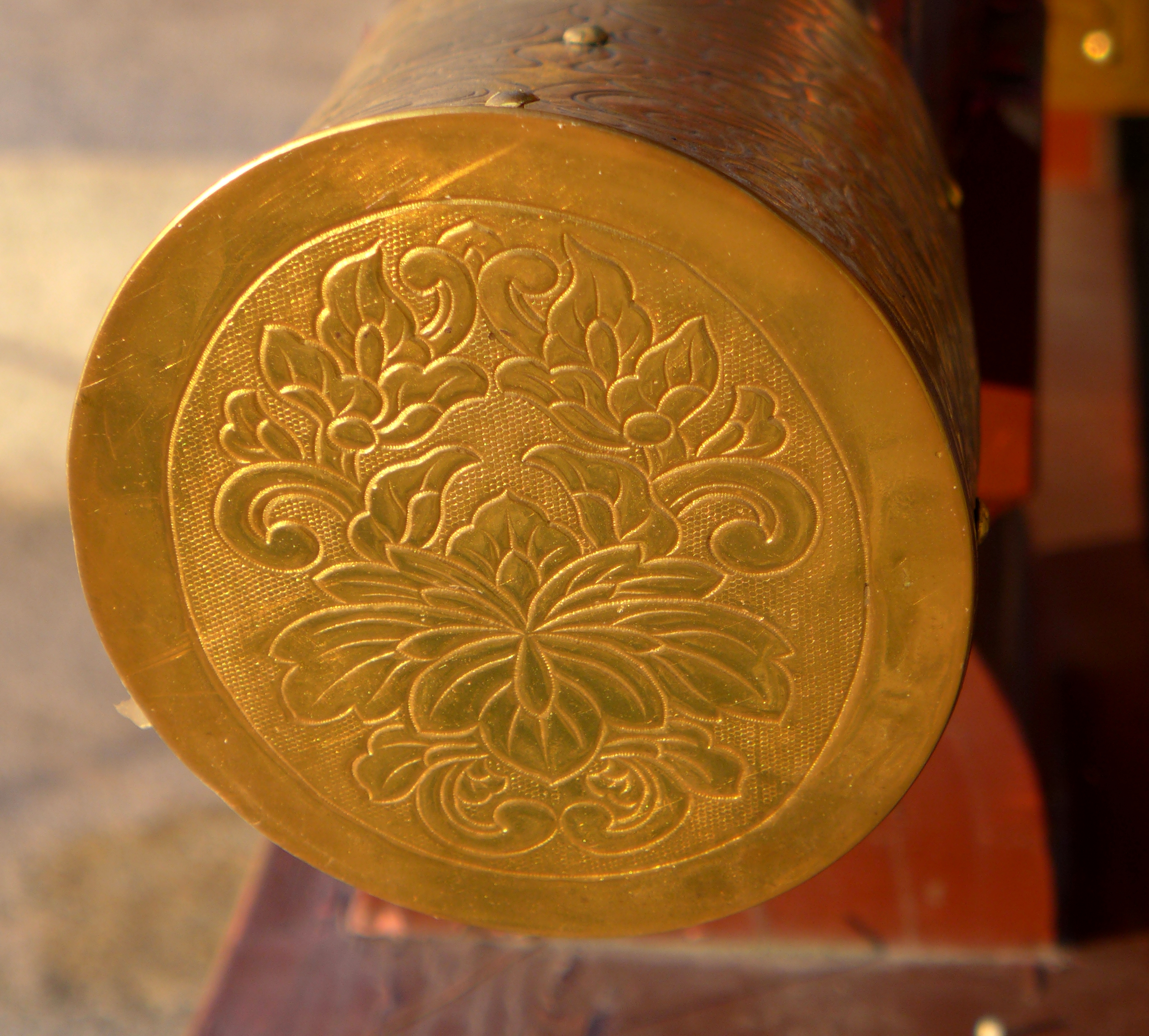
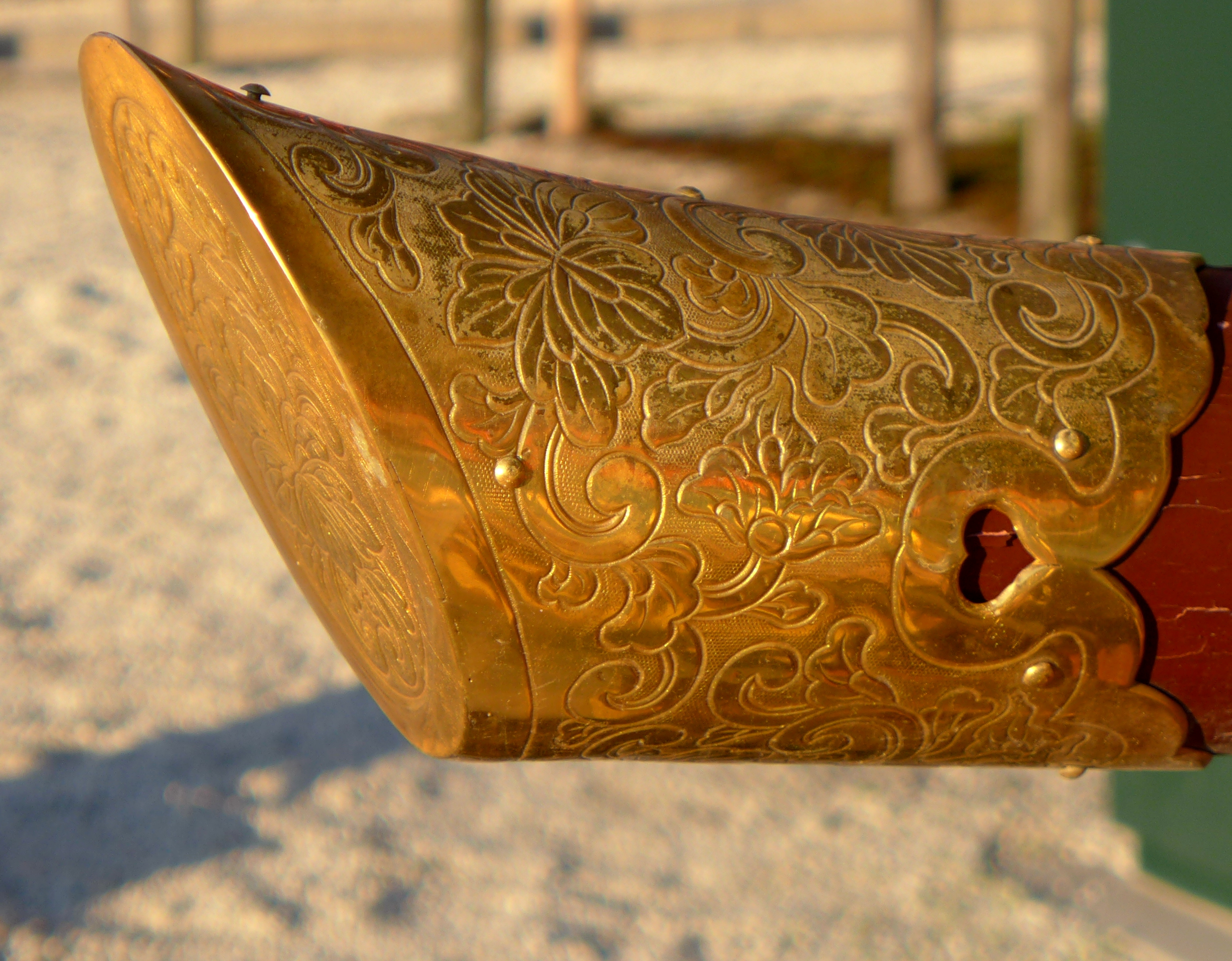
Tuesday was such a sunny day that I simply could not waste it by sitting inside. Sunshine is precious because it gets dark at quarter to 5, so I quickly left my dorm with no particular destination in mind. I walked East across the river and through some of North-East Kyoto before checking where I was on google maps. Finding that I was close to Heian Jingu (平安神宮), one of the major Shinto shrines in Kyoto, I decided to pay it a visit. I actually found another tiny temple nearby and got my book stamped, but I’ll save that for another post.

You may have noticed that its Heian Jingu (神宮) rather than Jinja (神社), this is because rather than being an ordinary shrine, a Jingu is connected to the imperial family. Heian Jingu commemorates two Emperors, Emperor Kanmu and Emperor Komei. While the deification of Emperors stopped after World War II, Emperors prior to this are still deified and are enshrined in Jingu.
P1020301P1020295 P1020303

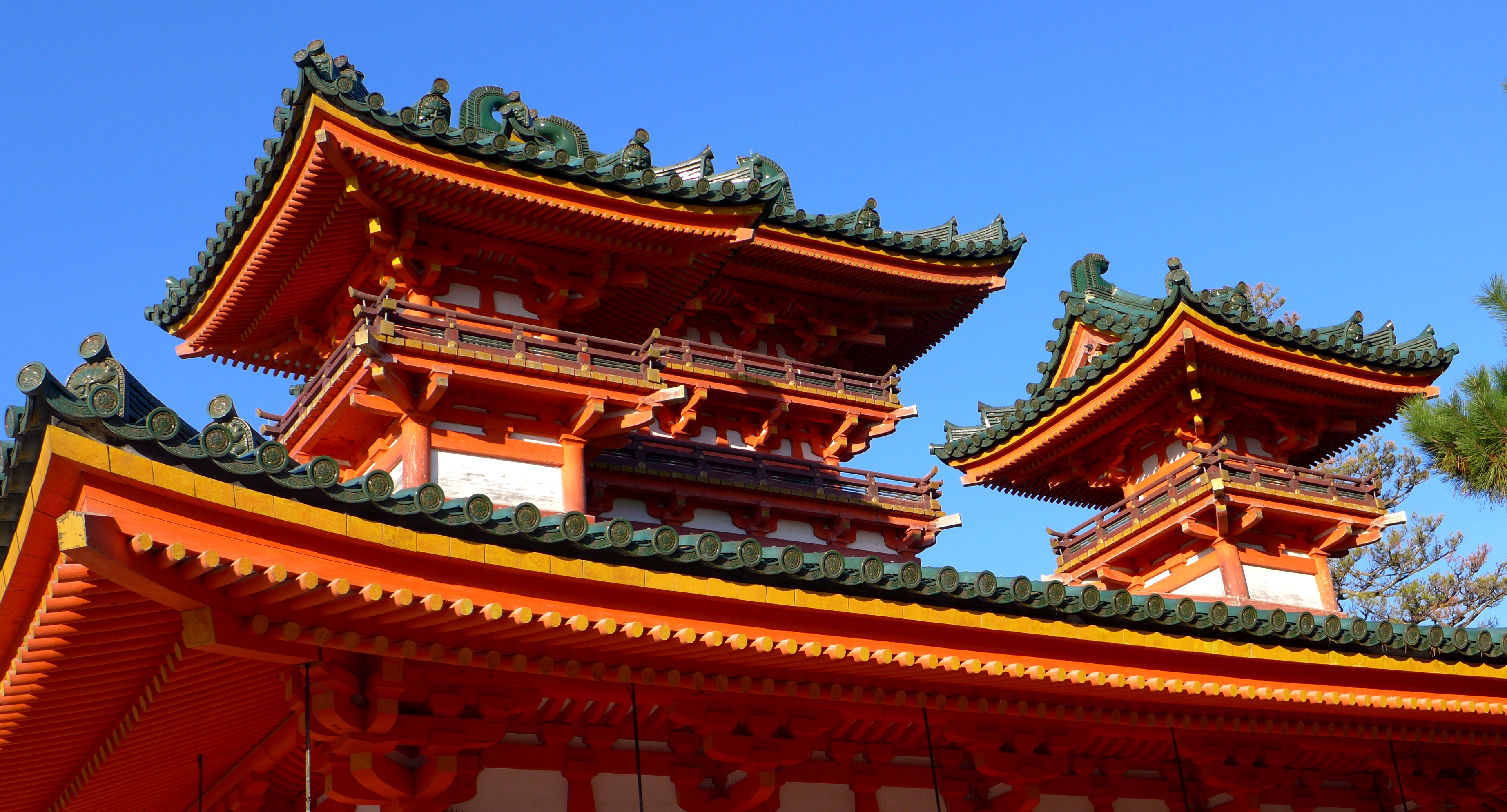
The Heian shrine itself is not ancient like most of Kyoto’s sights; it was built in 1895 for the 1,100th anniversary of Heian-kyo. Much like Tokyo used to be called Edo (江戸), Kyoto used to be called Heian-kyo (平安京), so the Heian shrine was really constructed to commemorate the founding of Kyoto itself. If you’re curious as to why and when the name change took place, it’s widely accepted that Heian-kyo became Kyoto at the end of the Heian period; ‘heian’ literally means ‘peace and tranquility’ and at the end of the Heian period (794  – 1185) there was a dispute over the succession that resulted in fighting within the city and the establishment of military rule. This made Heian-kyo a rather ill-fitting name and people began to use Kyoto instead, which just means ‘capital city’.

P1020107 P1020120 P1020117

The first Emperor to be enshrined at Heian Jingu was Empeor Kammu, the 50th Emperor of Japan, who first moved the seat of power to Heian Kyo in 794. Kanmu was a sponsor of Buddhism, funding several trips to China by Japanese monks, though his move of the capital to Heian-kyo was mostly to avoid the increasingly politically influential Buddhist temples in Nara. So it seems he had a love-hate relationship with Buddhisim. Buddhism doesn’t deify the Emperors however, Shinto does, so whether the Buddhists would celebrate him or not remains open for debate. His legacy is largely just the implementation of Kyoto as a capital – prior to this the capital tended to move around depending on the Emperor’s wishes but from 794 onwards the capital remained in Heian-kyo.

P1020282P1020124P1020289 P1020287

The second Emperor of Heian Jingu is Emperor Komei, the last Emperor of Kyoto before the imperial family moved to Tokyo in 1868. He was angered by the presence of ‘barbarians’ and issued orders demanding they be expelled. The foreigners were his downfall in the end as he died of smallpox in 1867. He was the first emperor of the Tokugawa shogunate (1603 – 1868) to be consulted on national affairs – this marked the end of Tokugawa power and an increasing role for the Emperor. The Tokugawa shogunate was overthrown in 1868. (For more information on the presence of ‘barbarians’ in Japan, please see my last post ‘Buddhas and Barbarians’) 

P1020276 P1020278P1020272P1020131

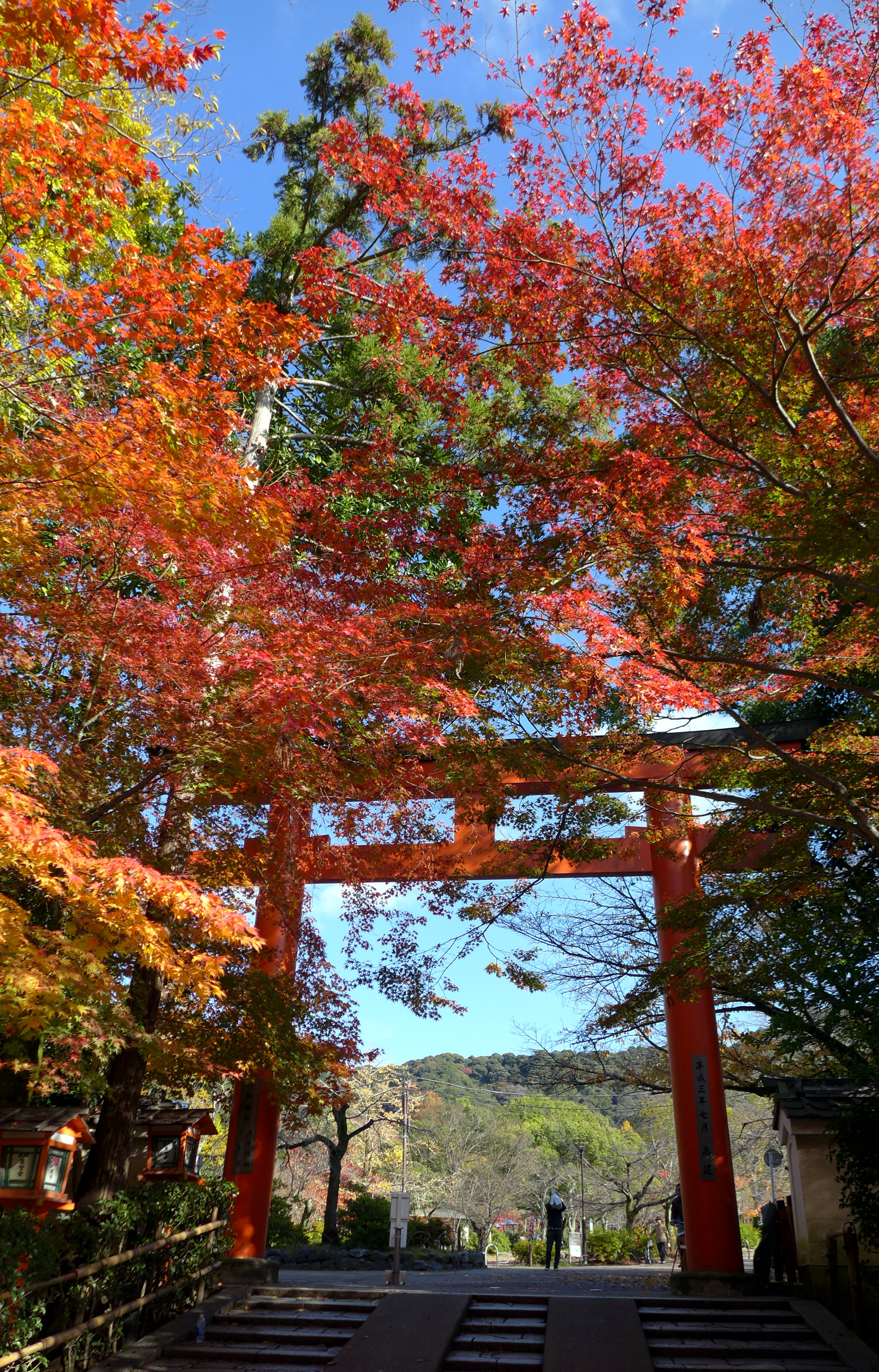
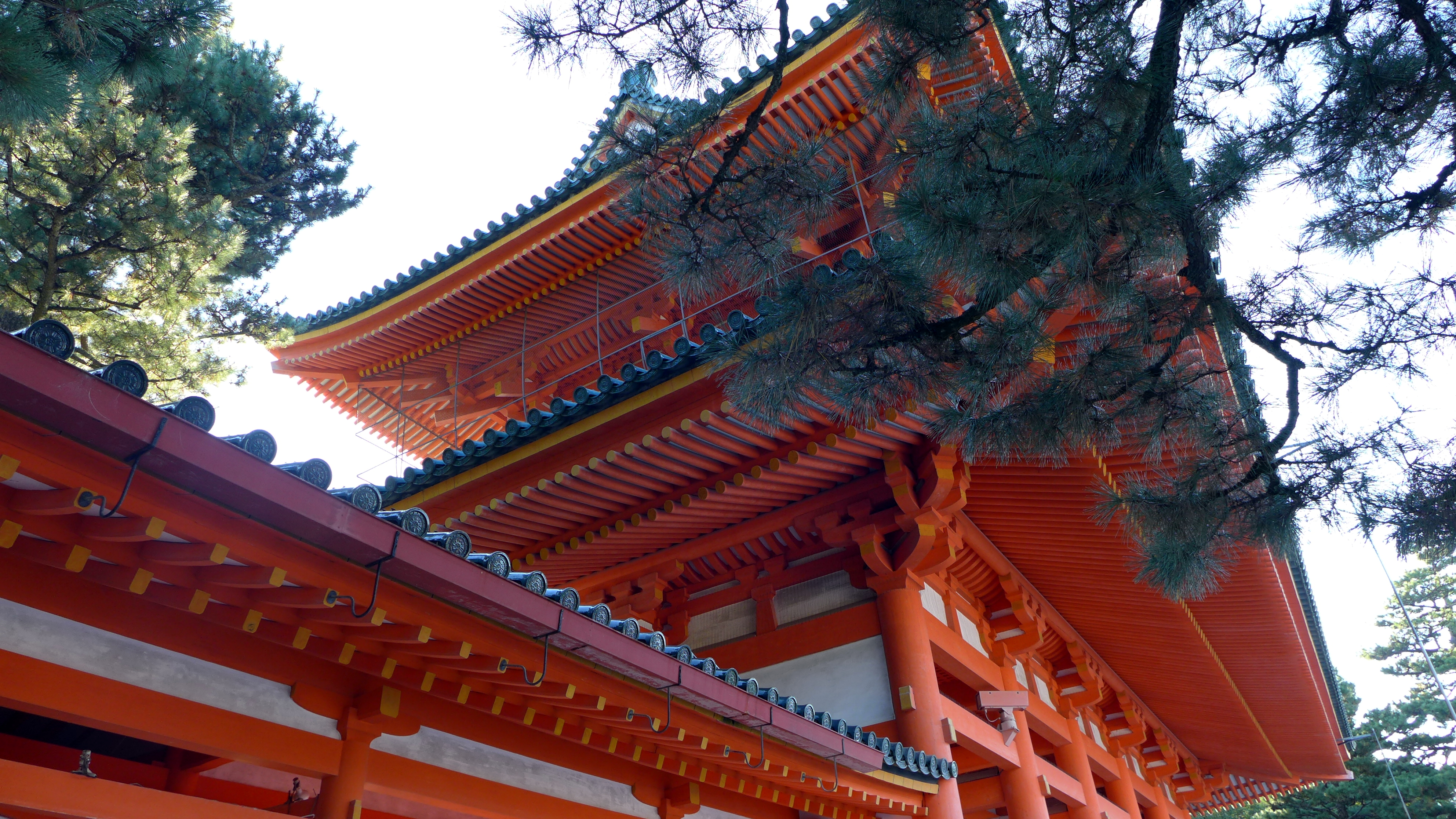
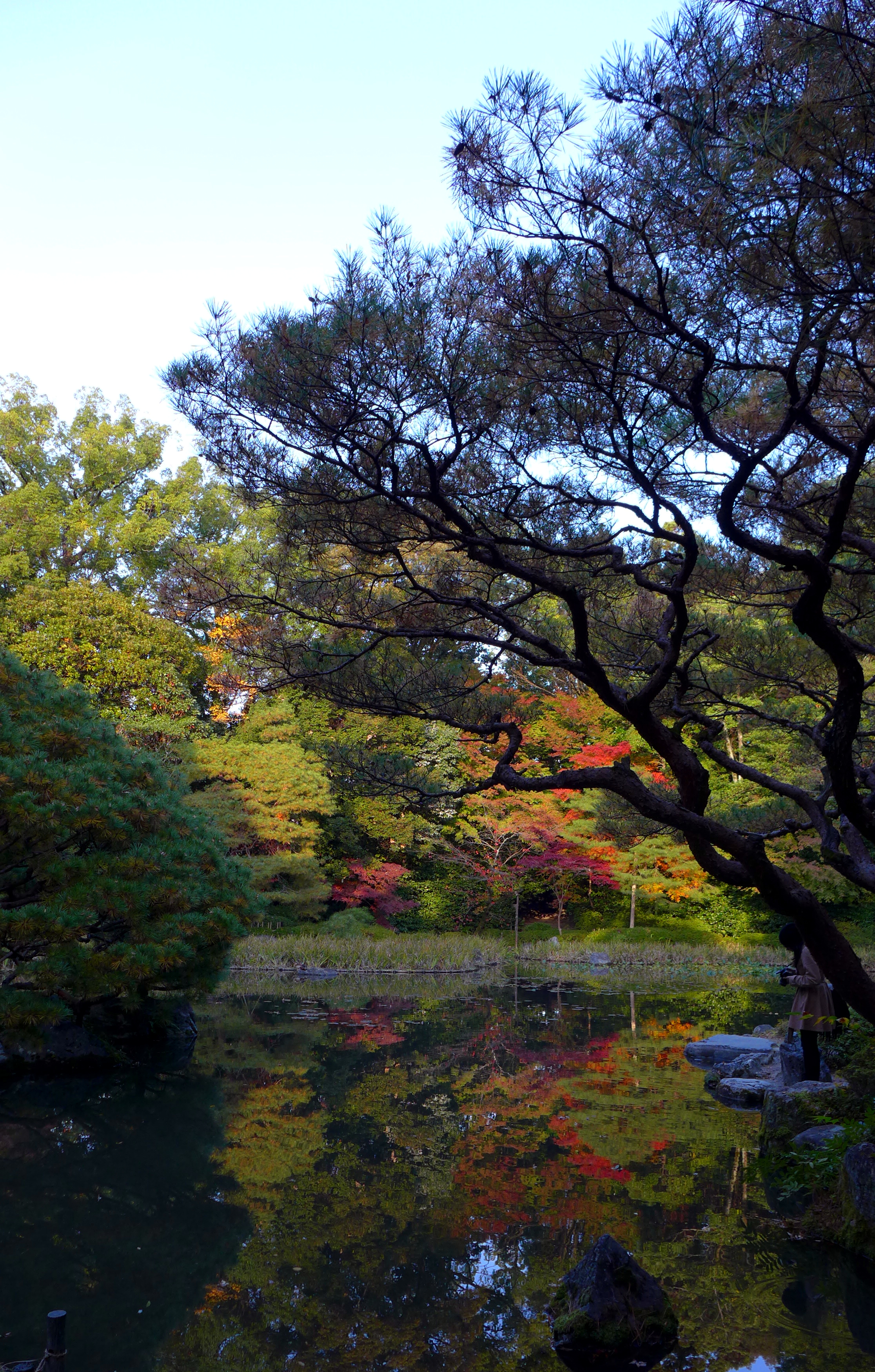
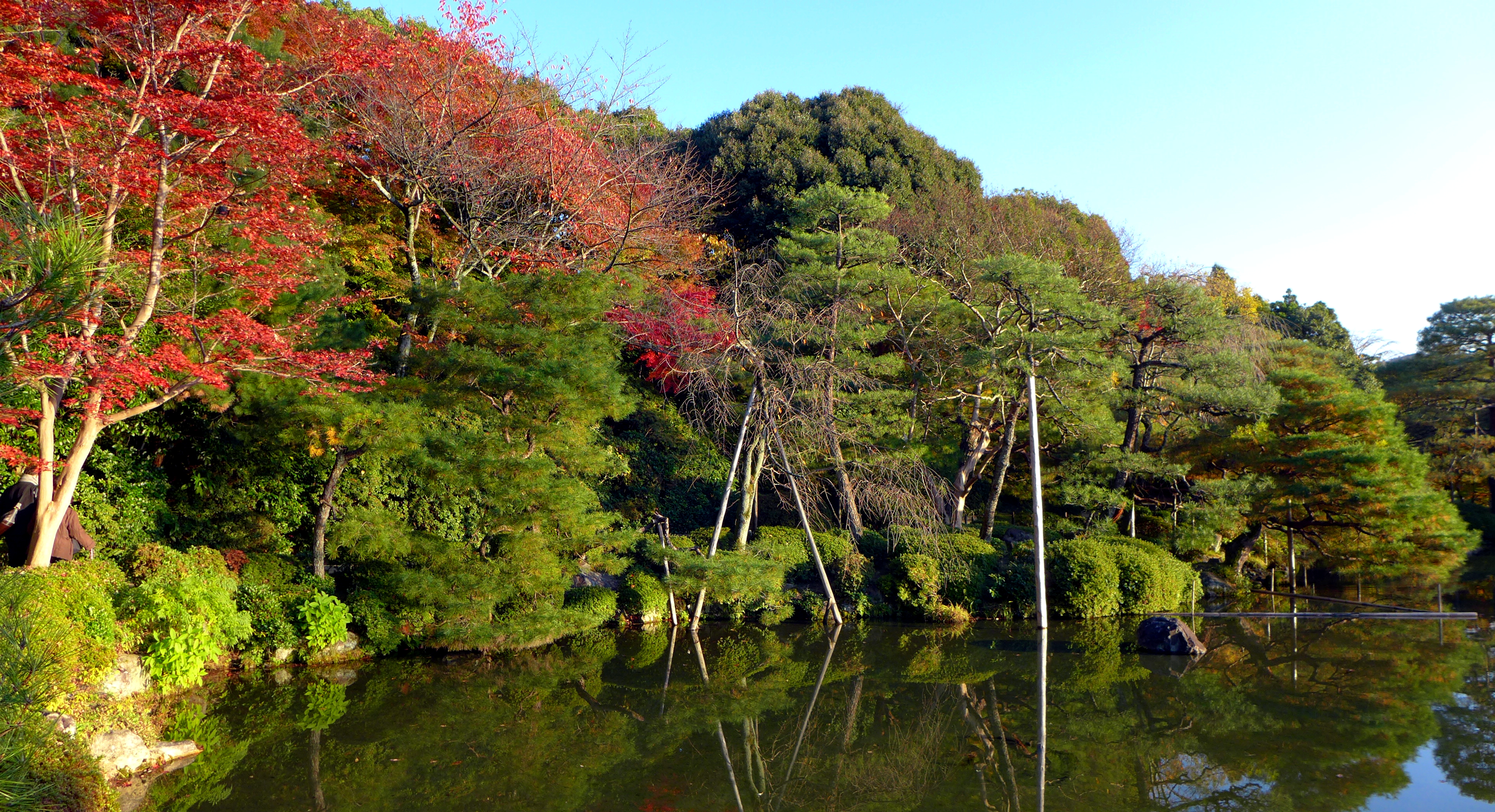
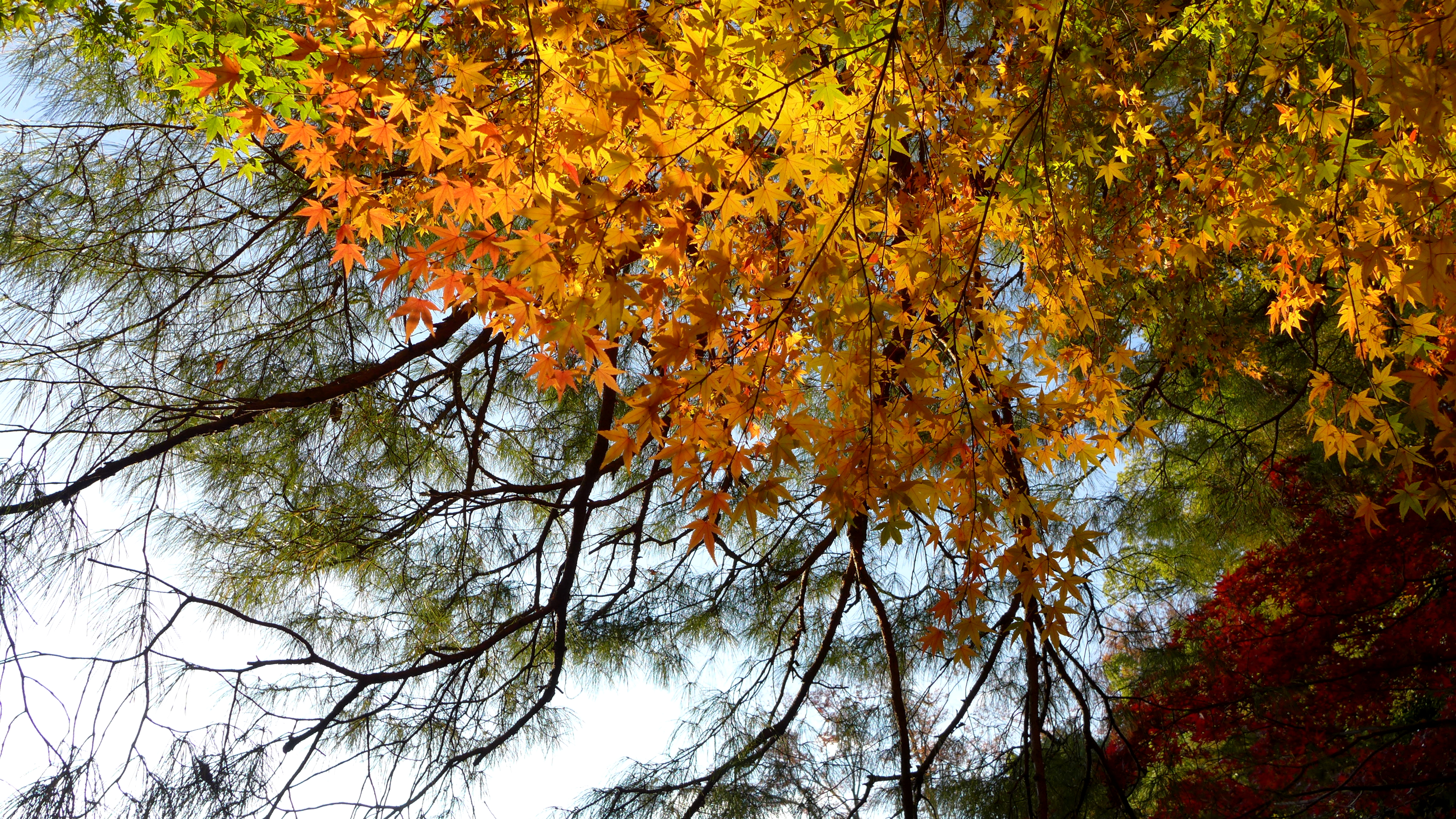
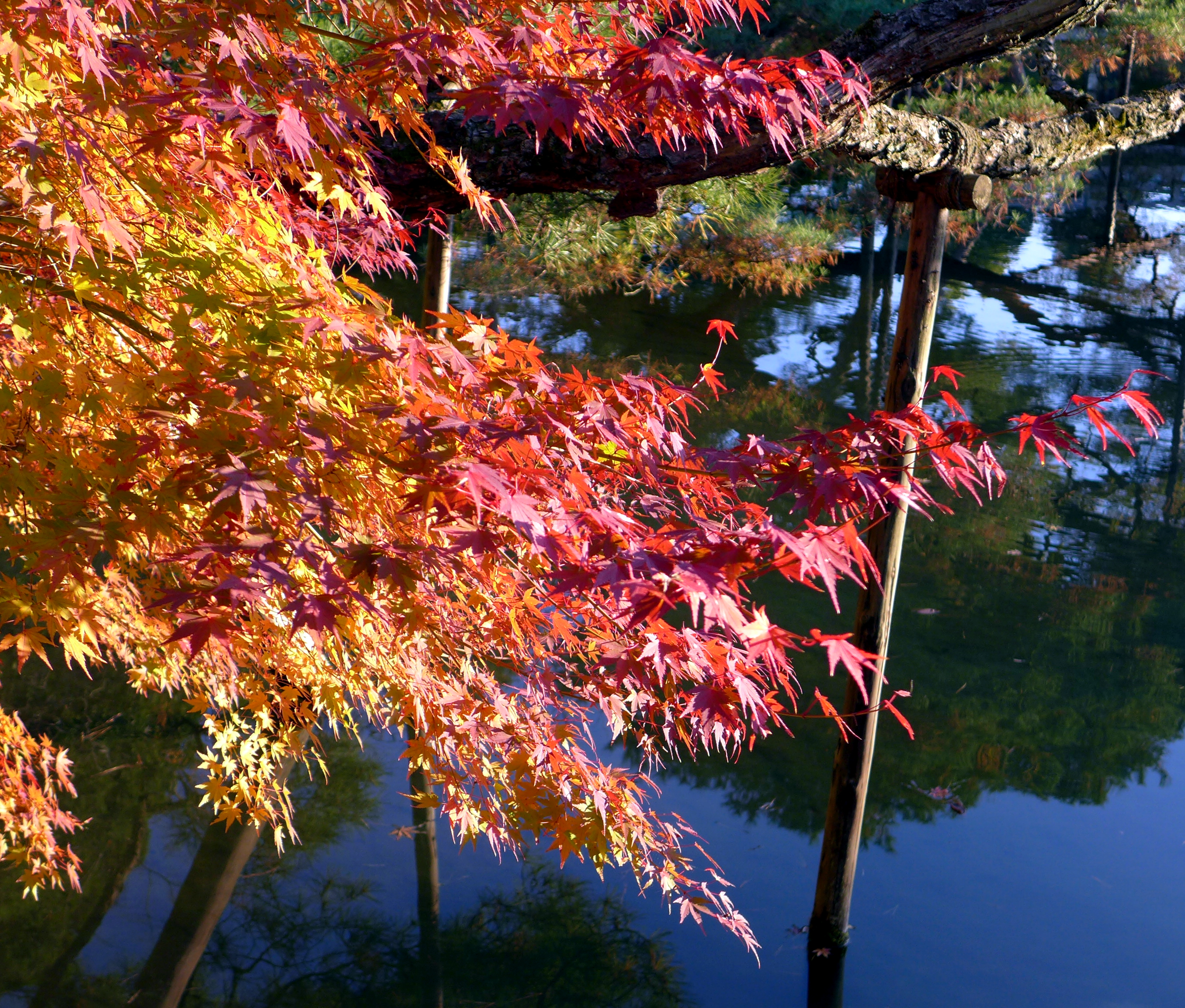
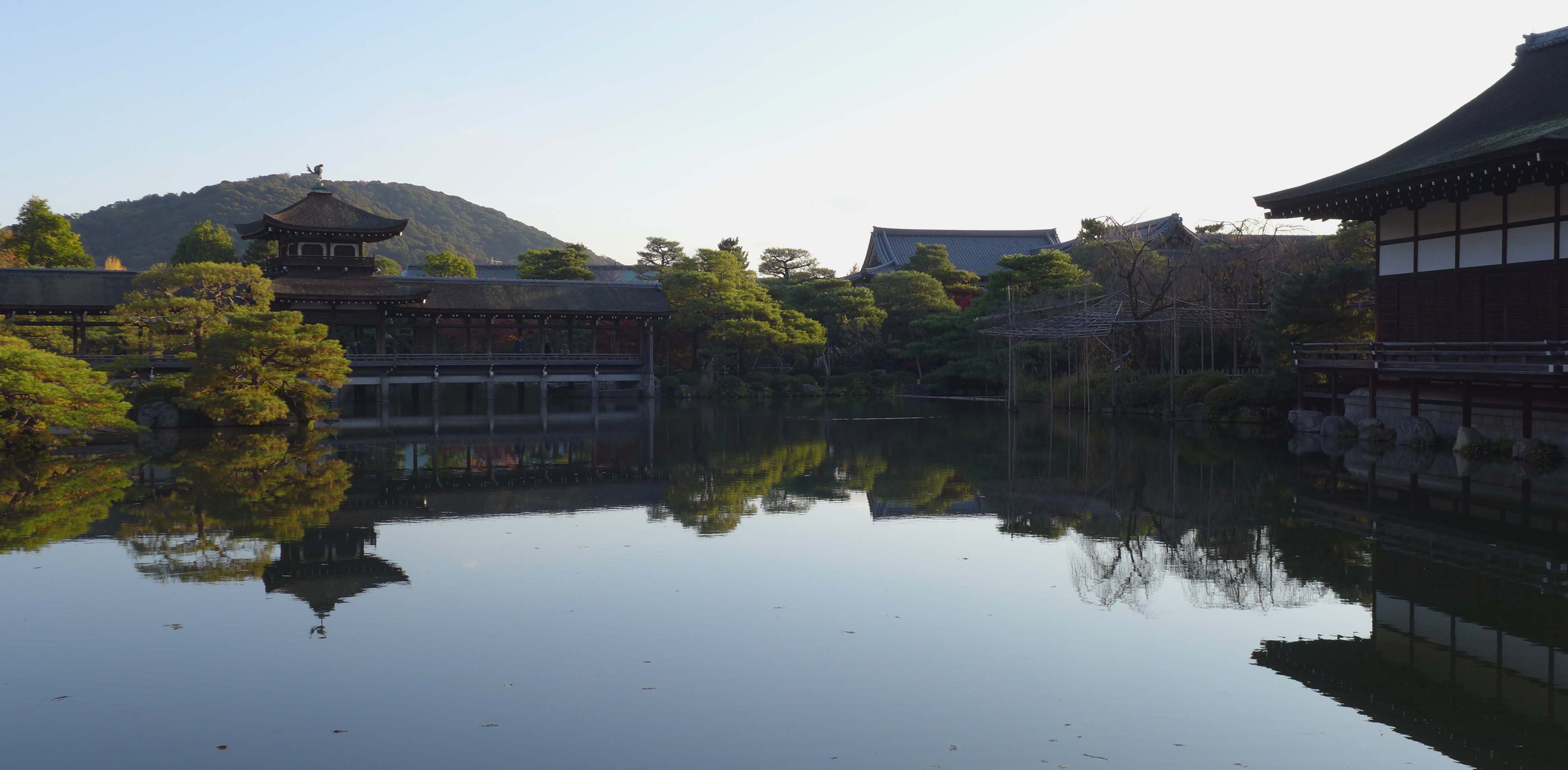
To commemorate the founding of the city, the Heian shrine was constructed as a replica of the old Heian-kyo palace (actually at 5/8ths the size due to budget issues) with Japanese style gardens. The shrine itself is magnificent but the gardens are truly spectacular. They were designed by Ogawa Jihei 7th, a very famous Japanese garden designer, and took 20 years to finish. I was lucky in that I went just before close on a week day so I had them largely to myself. They feature several lakes and beautiful trees. In the spring there will be sakura (cherry blossoms) so I’ll be sure to go again. Luckily it was sunny so the red maples were dazzling to look at.

P1020156 P1020164P1020203 P1020236P1020191P1020254P1020265 P1020193P1020252

Just past the entrance of the gardens, as you walk round, there is a display of one of the old train carriages used on the Kyoto underground. Quite a strange exhibition for a garden but I thought it was interesting nonetheless. Kyoto’s underground trains are now a bit more modern looking, though it did remind me of the train to Kurama, which, as a less used line, hasn’t had the same updates as the other trains.

P1020150

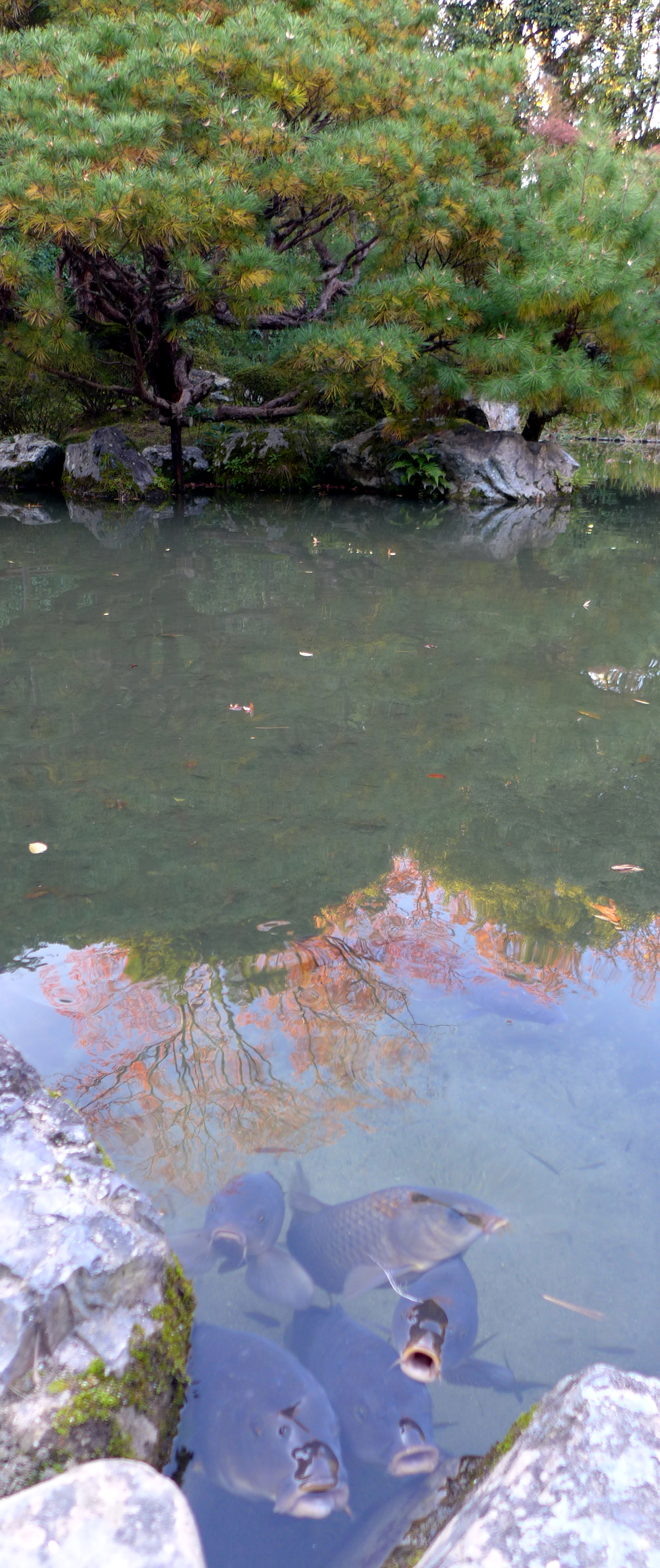
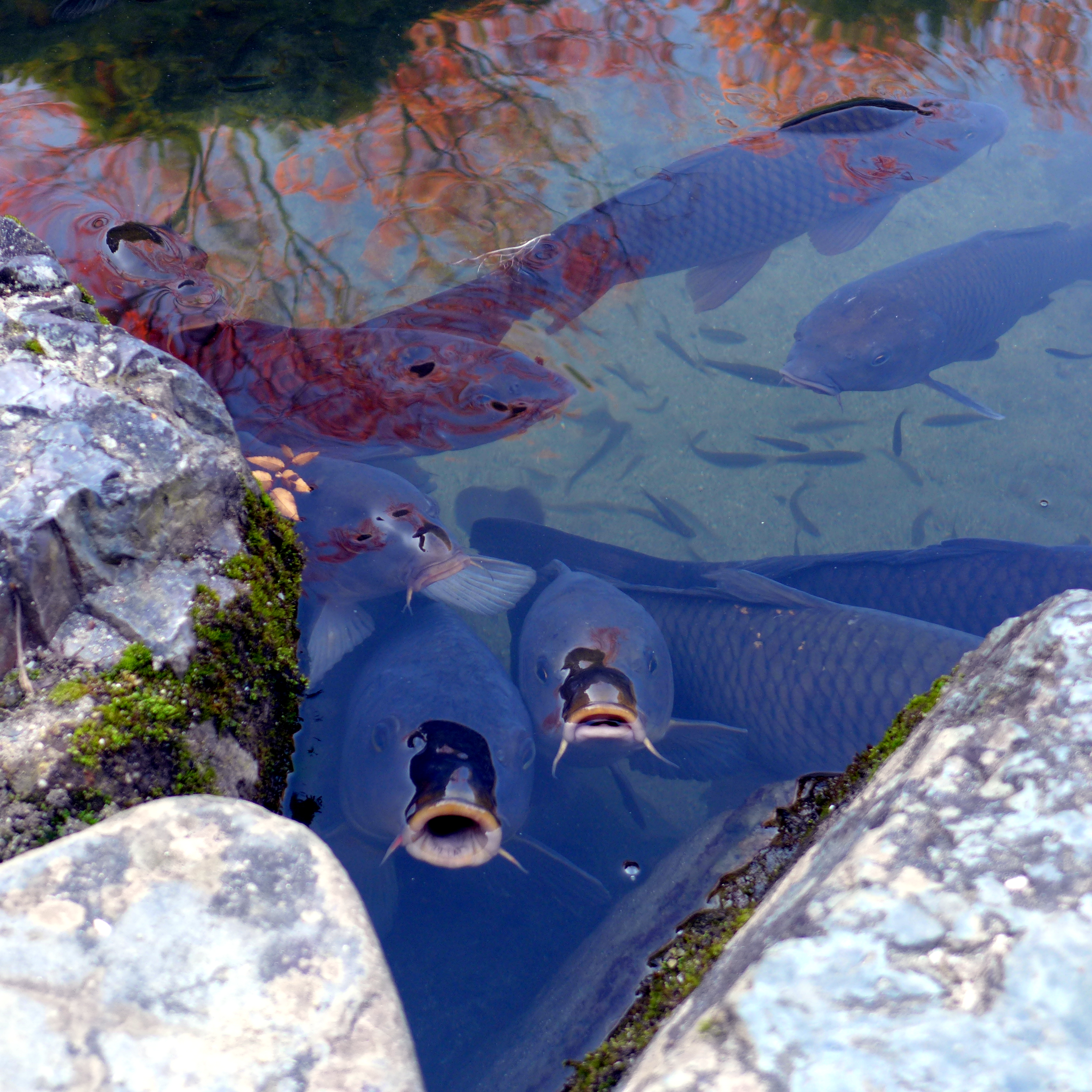
The gardens are huge, covering an area of around 33000 square meters. They follow the Japanese ‘natural’ style – the bushes and trees have been shaped to look perfect, and there are some man-made features that blend in with the landscape. There are stepping-stones across one section of the lake, which were fun to cross (though worrying because I was holding my camera). I also made friends with some fish – I stood by the edge of the lake and the koi came swimming up to me. There must have been around 10 staring at me expectantly. Sadly I didn’t have any food to give them – I think on busy days you can buy food to feed them but as they were nearly closing the seller must have gone home. I have been told there are also turtles but sadly I didn’t see any.

P1020206 P1020210P1020176 P1020182P1020248P1020216

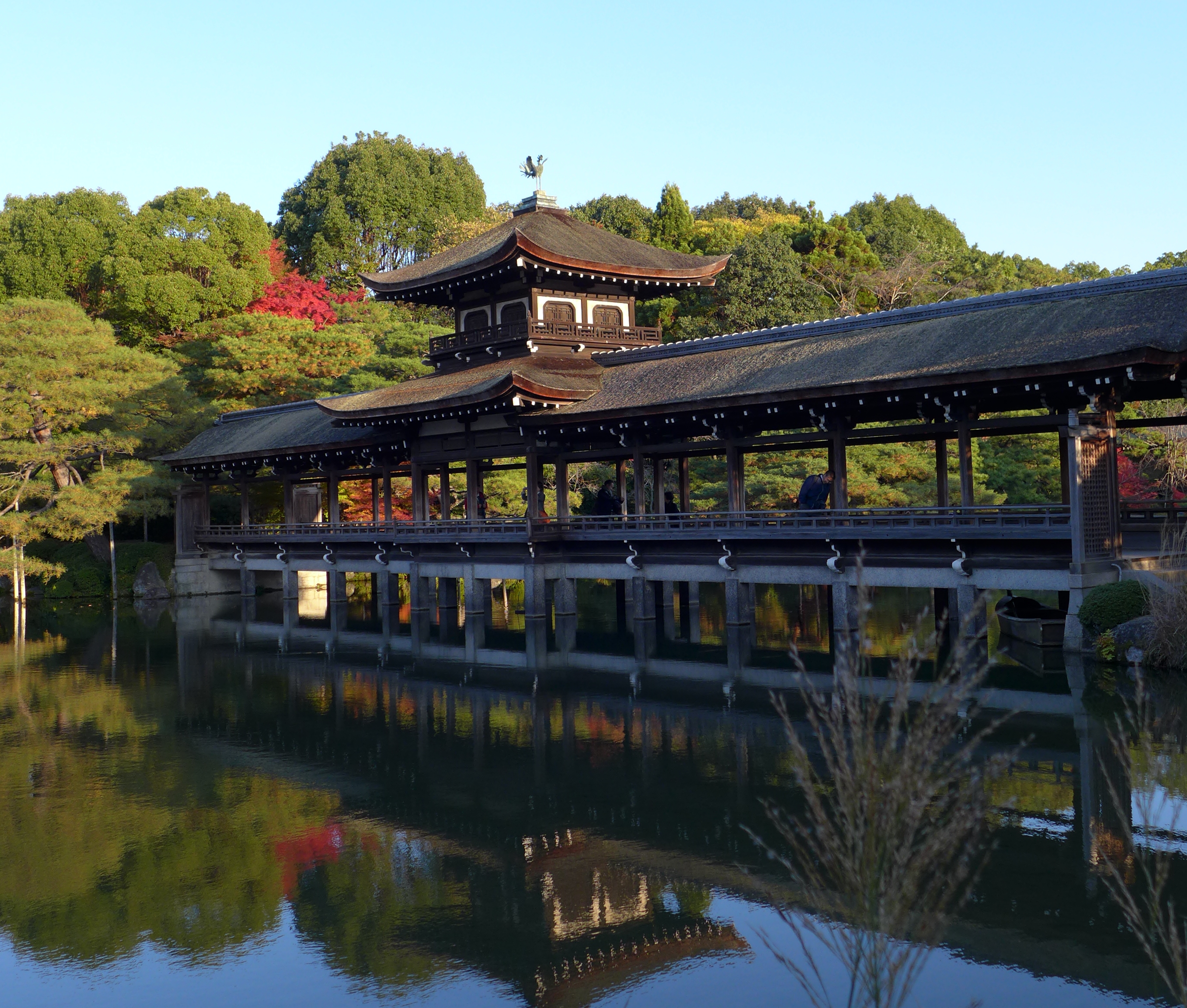
Towards the end of the walk around the gardens there is a beautiful bridge across the lake. It has benches on the inside so you can sit and look out across the water. Nearby there is a building for weddings, so I imagine after the wedding people take their pictures on the bridge with the lake in the background.

P1020228 P1020235 P1020232 P1020258 P1020270

Entrance to the gardens costs 600円 (£3.20) for adults and 300円 (£1.60) for children, and you can buy the ticket at the gardens’ entrance. I think it’s definitely worth the price – you could easily spend several hours enjoying the gardens, or even just feeding the fish!

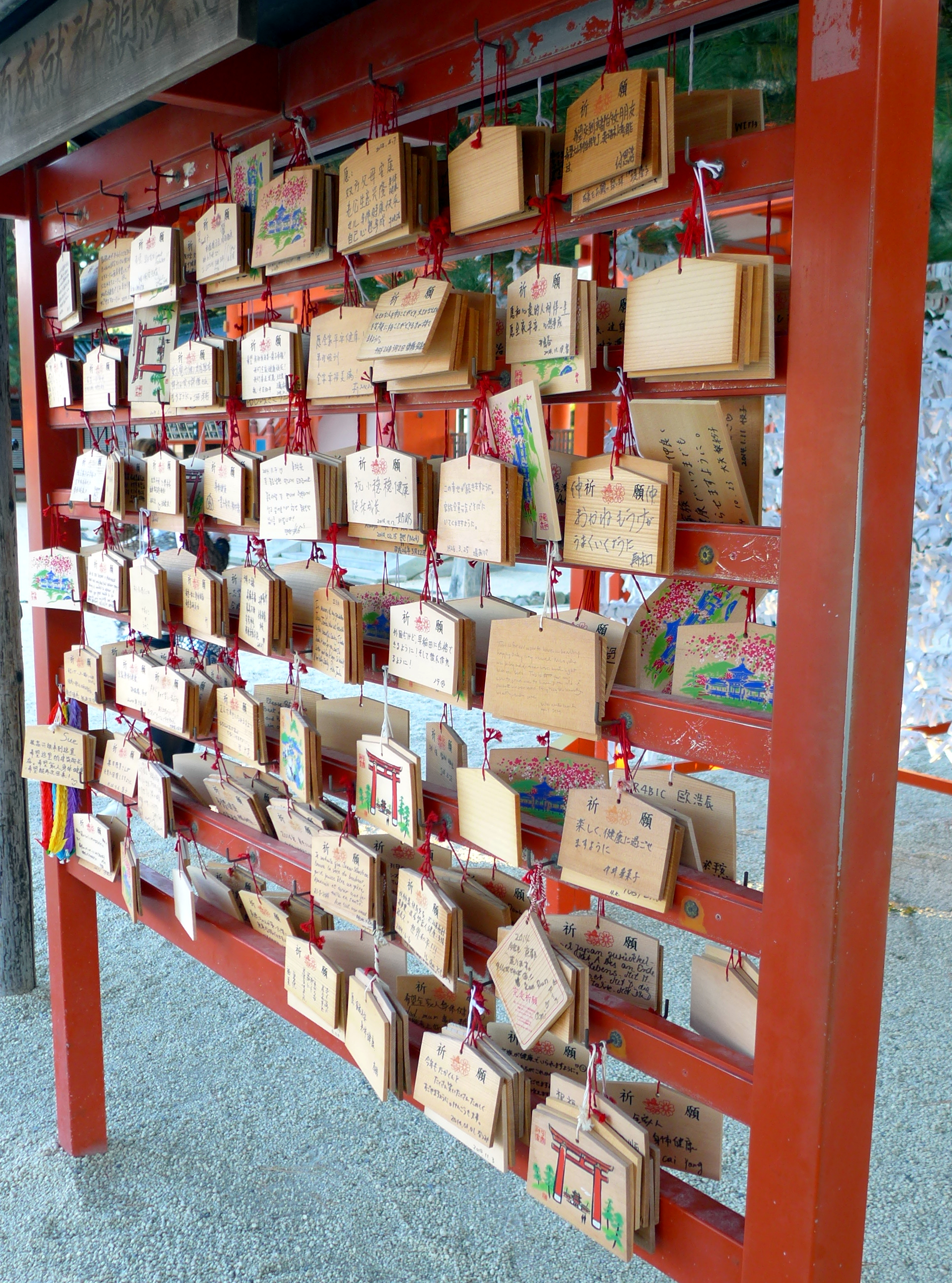
I noticed that the luck papers, or o-mikuji (おみくじ – you pick one out at random and it gives you a luck forecast) were tied to branches instead of to ropes as they normally are. From the other side of the temple I thought they were white flowers, but when I looked closer I realised they were folded up paper. You tie on your bad luck in order to stop it from following you out of the shrine gates, ensuring that you don’t have bad luck. If you get good luck you take the paper with you. Like most shrines Meiji Jingu also has prayer tablets which you can buy and write messages or wishes on – as it is a large shrine it has its own design on the back of the tablet (normally its just the animal of the current Chinese year).

P1020134 P1020136P1020290P1020292

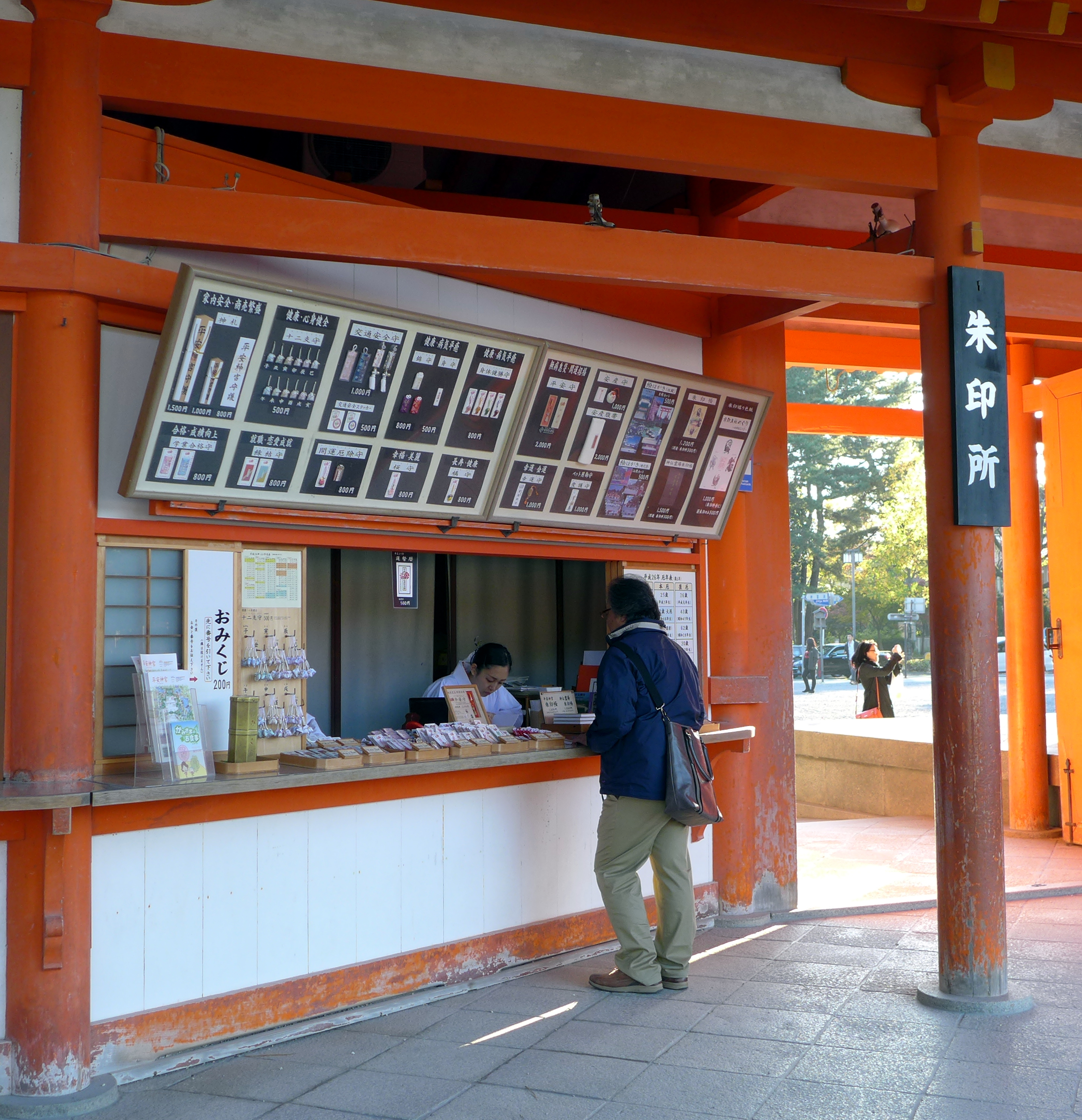
I managed to get my book stamped at the entrance of the temple. It cost 300円 and it was hand written. The larger shrine booths also sell all sorts of charms for good luck and safety too – you can see them displayed in front of the booth. Each shrine also sells its own stamp book – the Heian Jingu books were really pretty, perhaps if I fill up this one I’ll buy my next one there!

P1020323 P1020122I think Heian Jingu gardens are a must-see if you are visiting Kyoto and like gardens – they were even better than the ones at the imperial palace (see post ‘Following Imperial Footsteps‘) and the shrine is huge. You can get to the shrine by bus from Kyoto Station, though if you have time walking through Kyoto is something worth doing in itself.