

Yesterday I took a trip with my friend to Ohara (大原, a town that sounds like it should be in Ireland but is actually to the North-East of Kyoto, near Kurama). The original plan was to hike from Ohara to Kurama and get the train back but Ohara has tonnes to see (we didn’t even get to do all of it) and it gets dark really early here so we decided to stay in Ohara rather than getting lost in a dark forest.
The only way to get to Ohara via public transport is to get the Kyoto City bus (number 16 or 17) on the Ohara line. You can catch the bus from Demachiyanagi station and the fare is 430円 (£2.30) one way. The bus journey took around 50 minutes, but we did have to stop to change out the ticket machine’s money box as it was full, so maybe it normally takes around 40 minutes. Ohara is pretty popular and we had to stand on the way there.
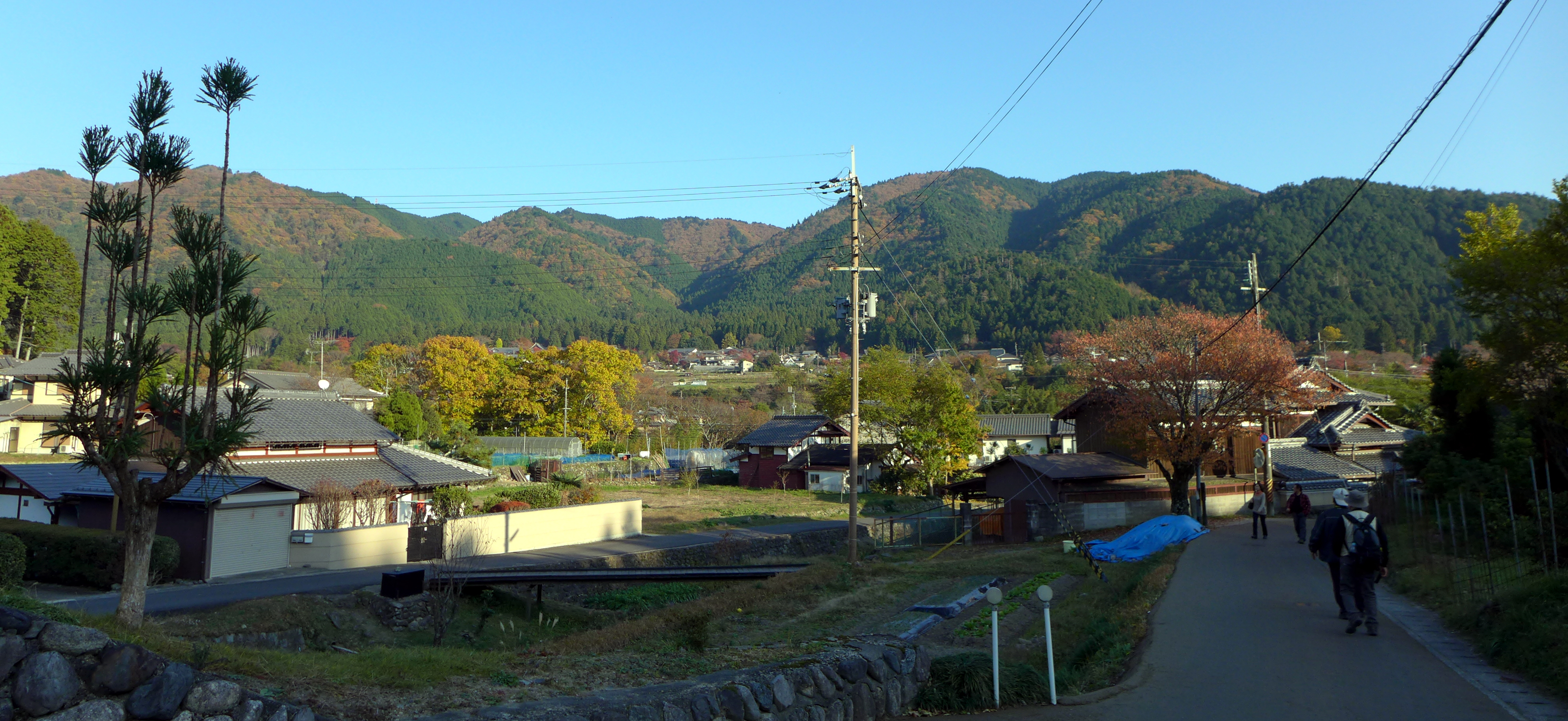
As you leave Kyoto the scenery outside is beautiful – the bus follows the course of the river through to the mountains. The village of Ohara has lots of beautiful architecture, with some traditionally thatched houses (tiles over the top of the thatch) and intricate details on the roofs.


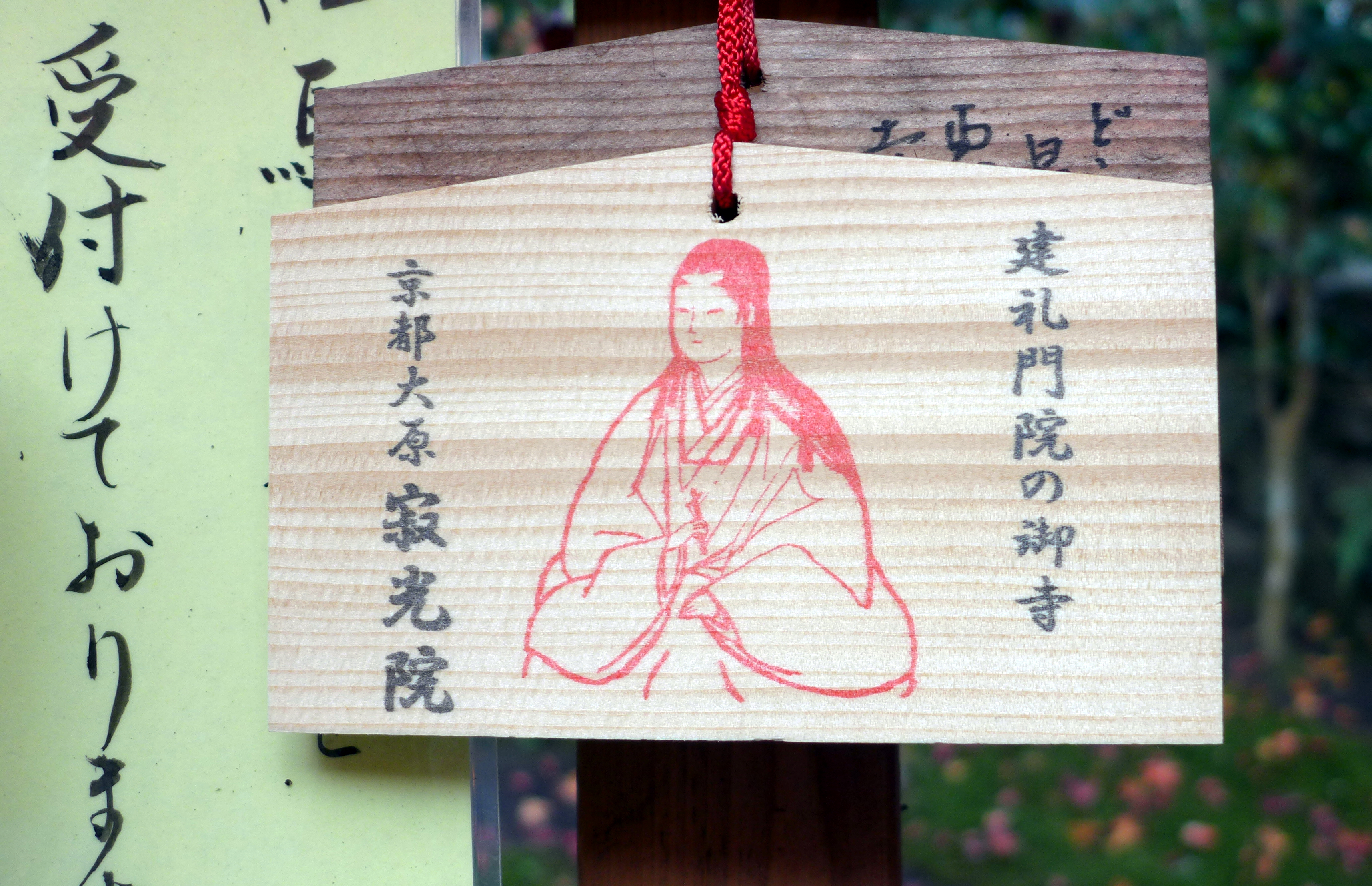
There are two main temples in Ohara: Sanzen-in (三千院) and Jakko-in (寂光院), both belonging to the Tendai sect of Buddhism. We chose to visit Jakko-in (because we were originally going to walk from there to Kurama).

Jakko-in was founded in 594 and is famous as the temple where Kenreimon-in spent her days in solitude. Kenreimon-in was an Empress Dowager and mother of the Emperor in the 12th Century. Her story demonstrates that the imperial succession was not a simple matter of father to son but one of competing clans vying for control over the Emperor. She was the mother of Emperor Antoku, a boy Emperor, who was supported by the Taira clan. The Minamoto clan, the other rival faction vying for power over the throne, put forward an alternative candidate for the imperial succession. This led to the Genpei war (源平合戦) of 1180 – 85, which was decided by the naval battle of Dan-no-Ura.


The Battle of Dan-no-Ura was a naval engagement between Minamoto and Taira forces. The Emperor and his family were on a vessel in the middle of the battle. The battle was won by the Minamoto due to the Taira general defecting and revealing the location of the imperial vessel. When the Minamoto turned their firepower on the imperial vessel many members of the imperial family threw themselves into the water rather than be captured. The grandmother of the eight-year-old Emperor Antoku, jumped into the sea with him in his arms. His mother, Kenreimmon-in, is said to have jumped into the water only to be dragged out by her hair. After witnessing the death of her son and most of her family she became a nun, living in solitude at Jakko-in. She wrote a poem while living at Jakko-in:
Did I ever dream
That I would behold the moon
Here on the mountain –
The moon that I used to view
In the sky over the palace?
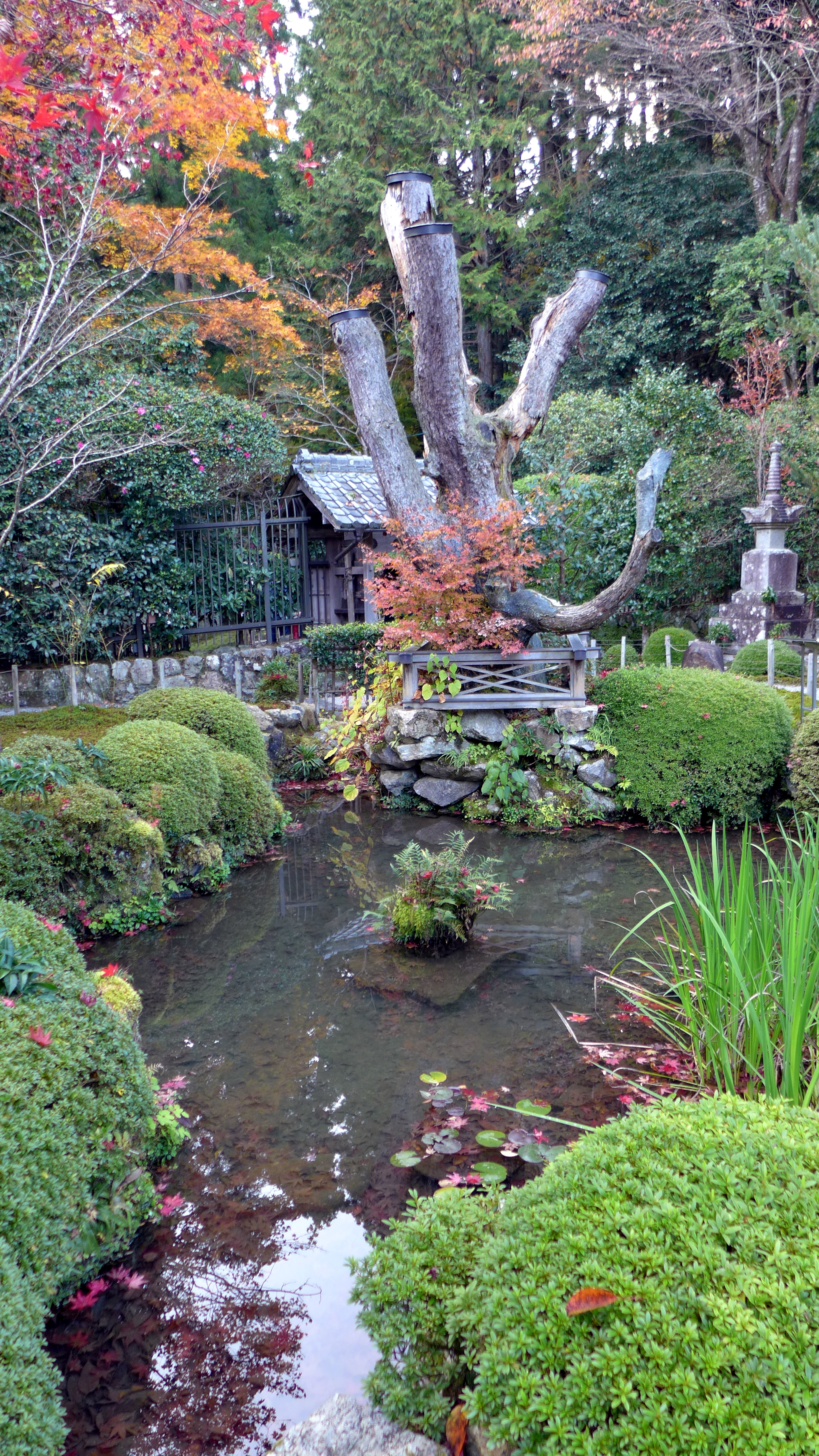
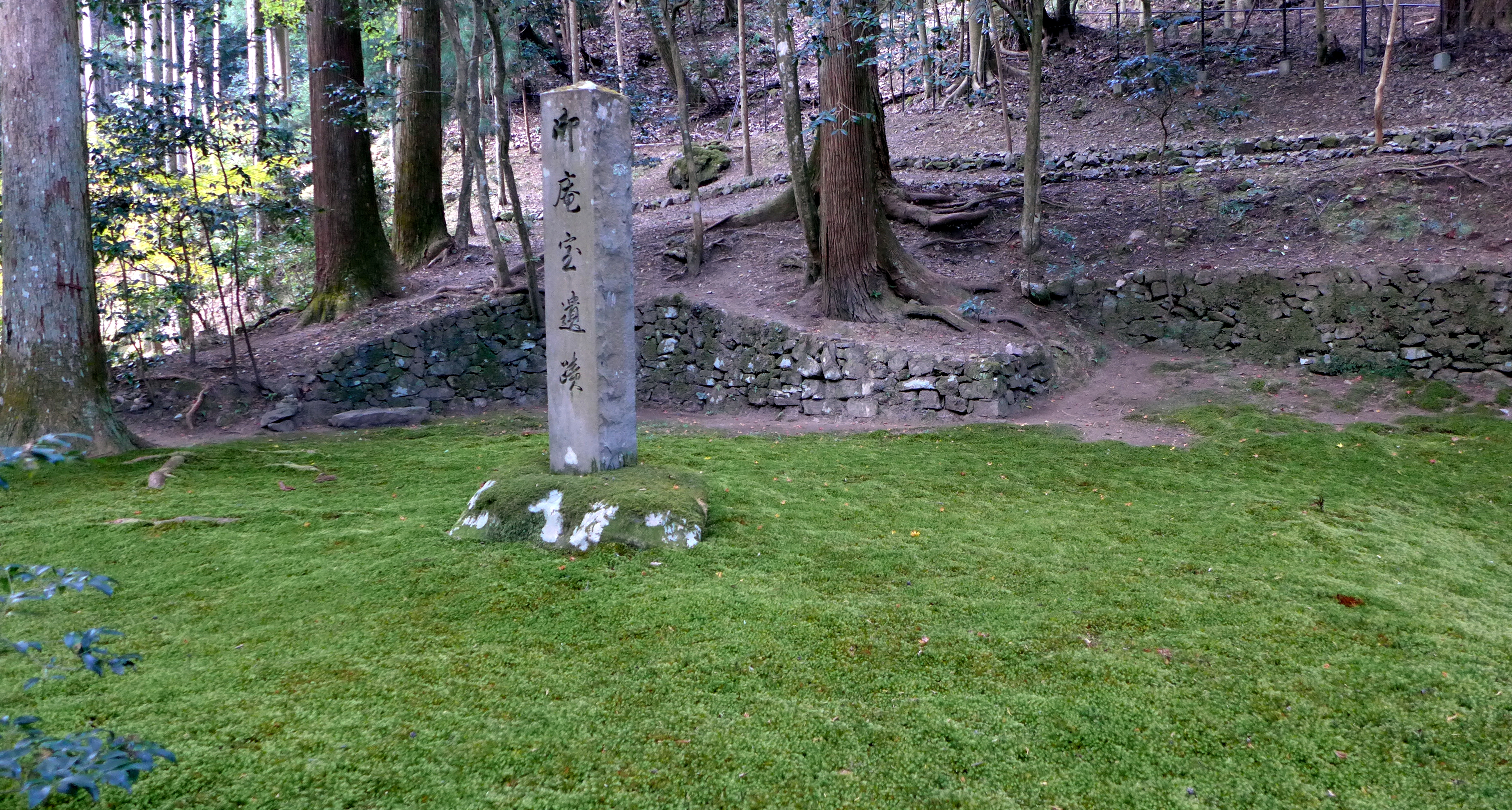
She lived at Jakko-in for 7 years, dying in 1192. She is also a character in the Japanese classic, the Tale of the Heike. In the compound of Jakko-in there is a very dead-looking tree in the corner of the courtyard. This is actually a monument to a Komatsu tree which stood at Jakko-in until it died in 2004. This is the tree at which Kenreimon-in met the retired Emperor Go Shirakawa a year after she became a nun. Sadly this tree died as a result of an arson in 2000 which burned down the main temple building and badly damaged the tree as well as an ancient Buddha statue. The dead tree that stands now represents a holy staff in memory of the thousand-year-old tree that used to stand there. The arsonist was never caught. It seems to me that the mountain has been the site of a lot of tragedy – first the solitude of Kenreimmon-in and much later the destruction of the temple by arson. The picture below is of the monument to the tree.

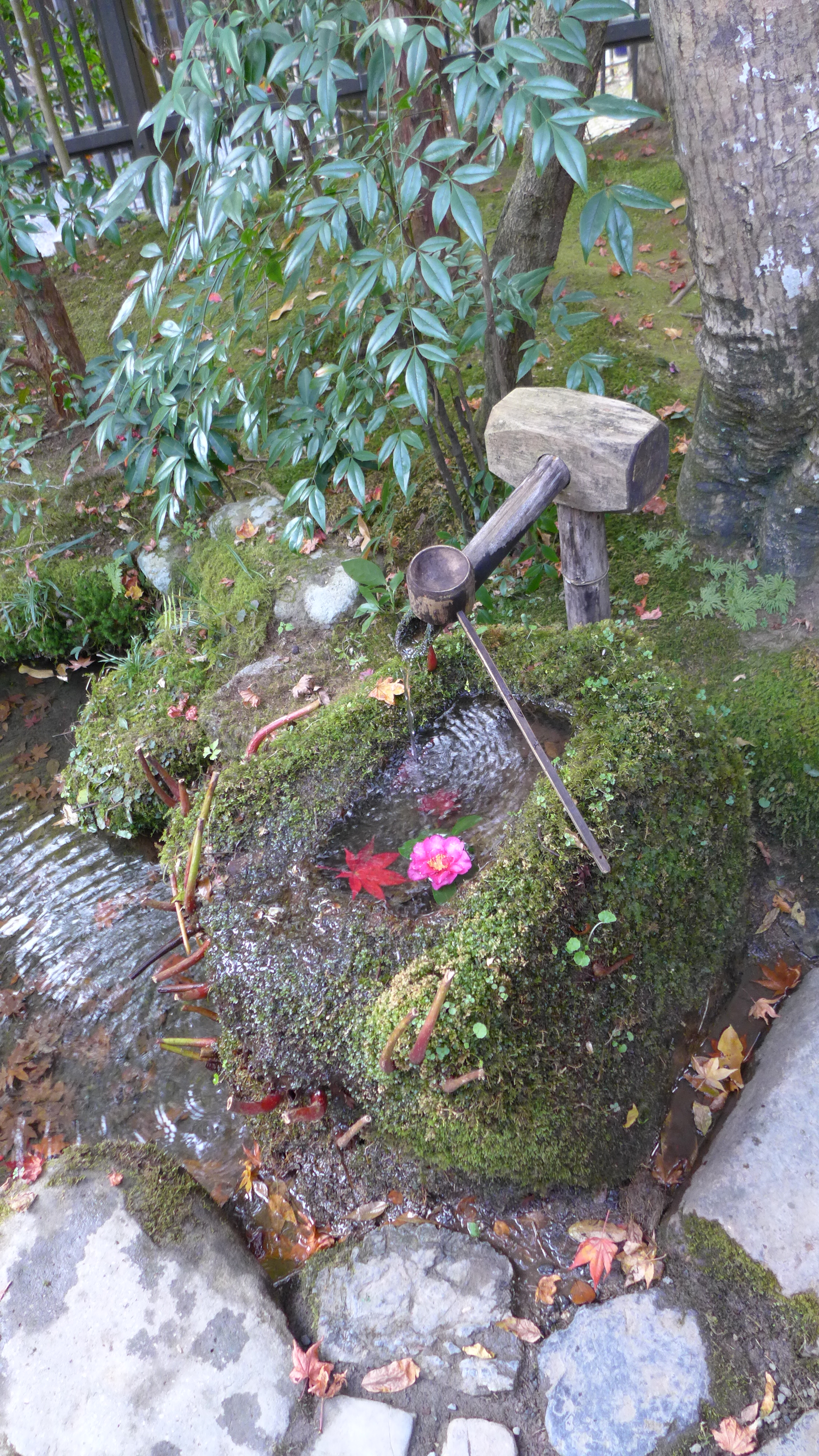

Another historical artifact that also seems fairly mundane without any information is the metal lantern in the gardens. This was gifted to Jakko-in by none other than Toyotomi Hideoyshi, one of Japans theree ‘great unifiers’ that ended the warring states period. Toyotomi Hideoshi is the least likeable of the three unifiers, he was brutal (he crucified 26 christians) and firmly set Japan’s class system. However, it was this brutality that helped to set the structure of Tokugawa Japan’s society and bring about a peace that lasted for 250 years. His line did not succeed in ruling, it was Tokugawa Ieyasu, the man that overthrew Toyotomi’s son, that secured Japan for his bloodline. There is a story about the three unifiers that sums up their roles and personalities:
The three unifiers are trying to get a bird to sing; Oda Nobunaga says “if it doesn’t sing, kill it.”, Toyotomi Hideyoshi says: “if it doesn’t sing, make it sing”, Tokugawa Ieyasu says: “if it won’t sing, wait for it to sing”.Though this implies that Tokugawa Ieyasu was the only one that was correct in his approach, which would be grossly undervaluing the foundation of the first two unifiers’ methods, it does demonstrate their different approaches to solving the problems of warring-states Japan. I know I have only talked about Toyotomi Hideoyoshi, but I will leave the other two for another time as this is a large and important chunk of history that I would do a disservice by summarising.


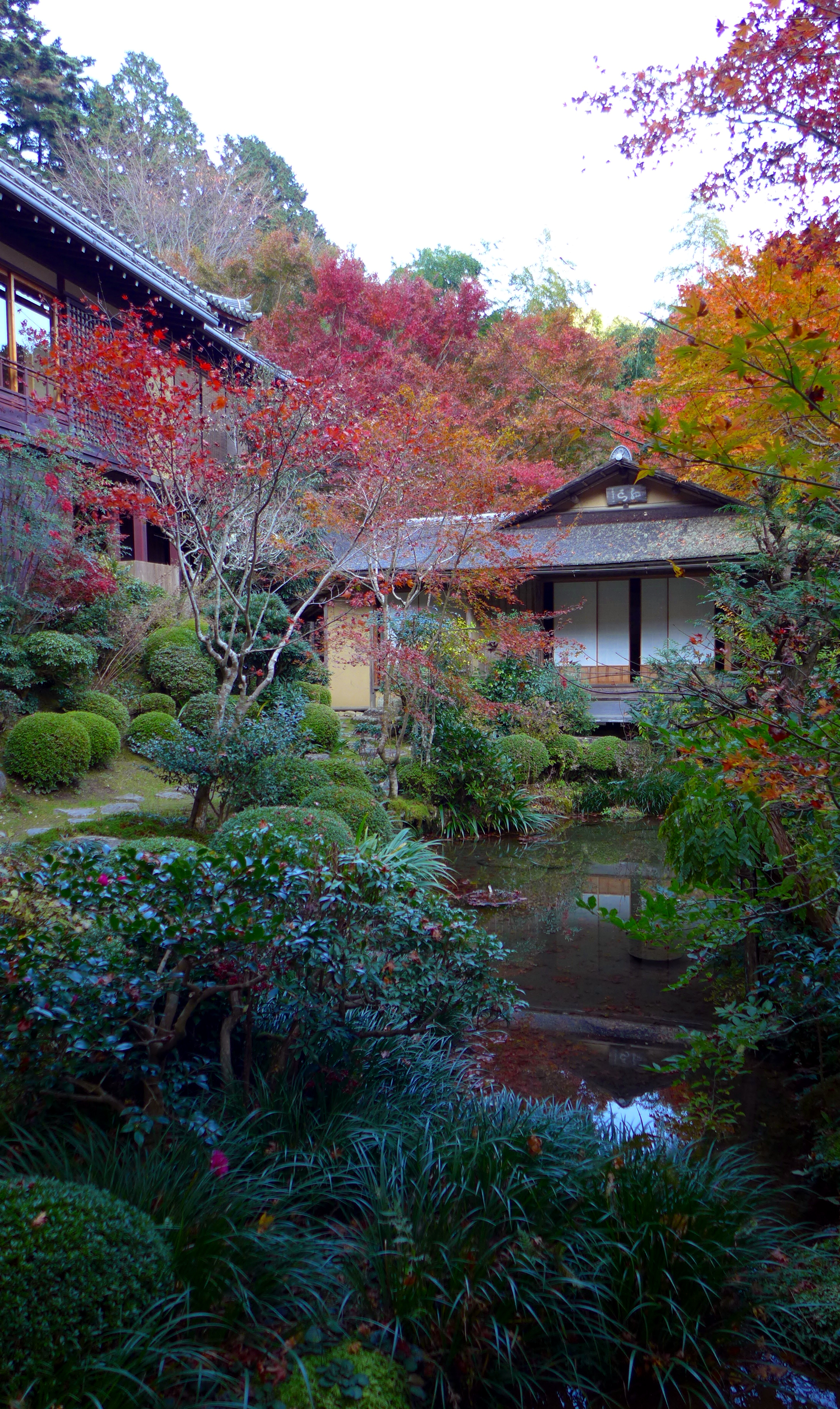
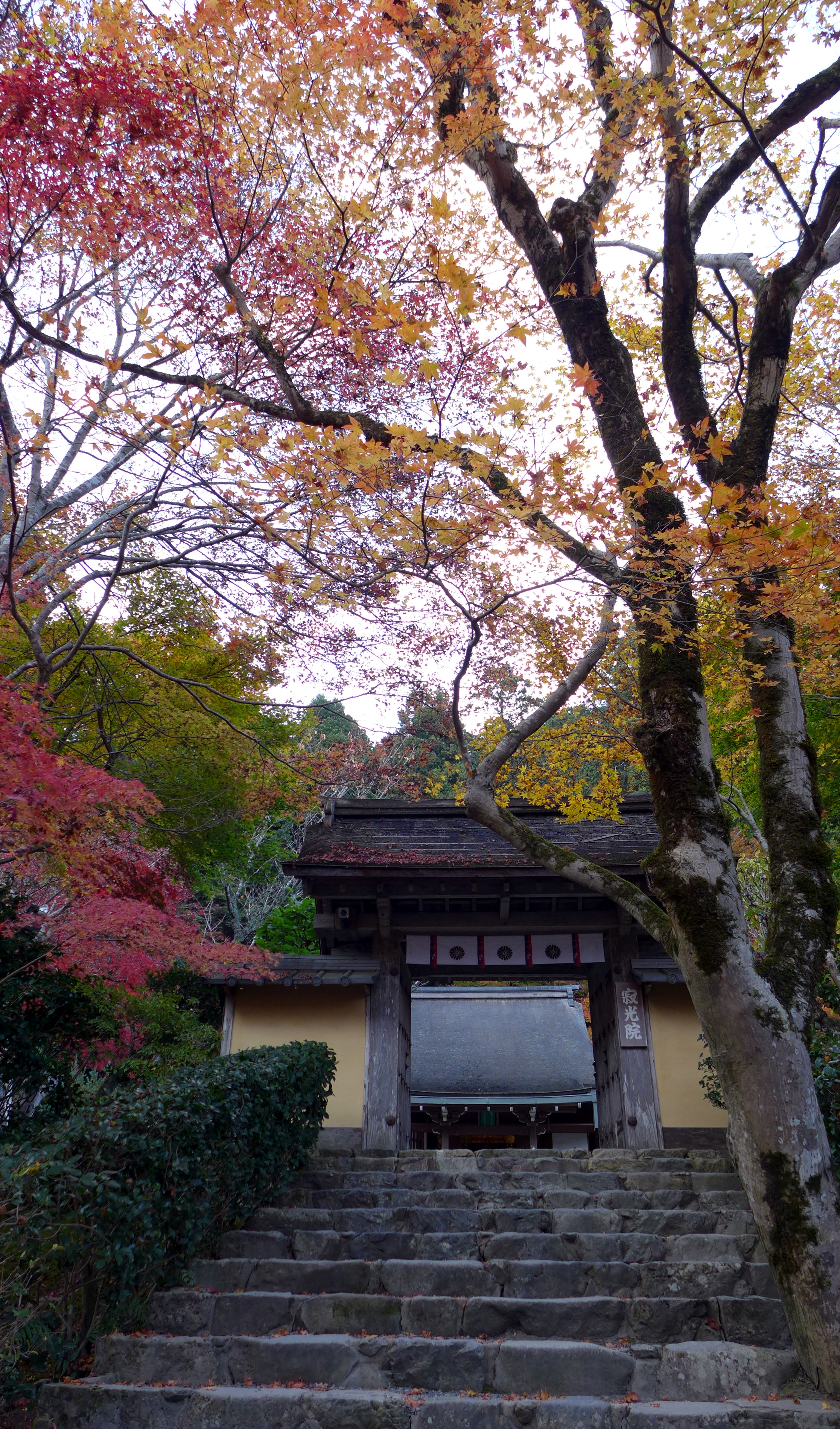
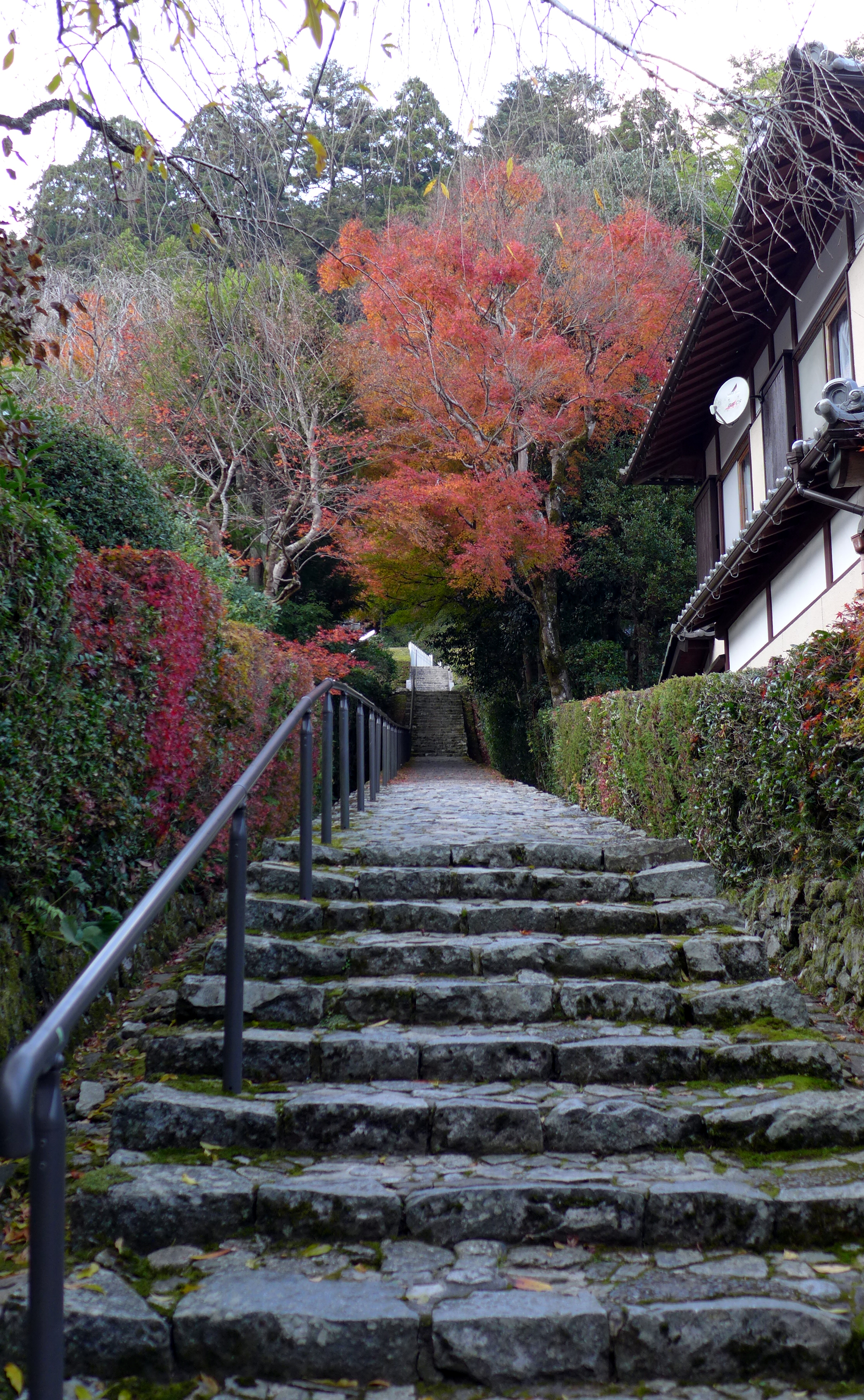
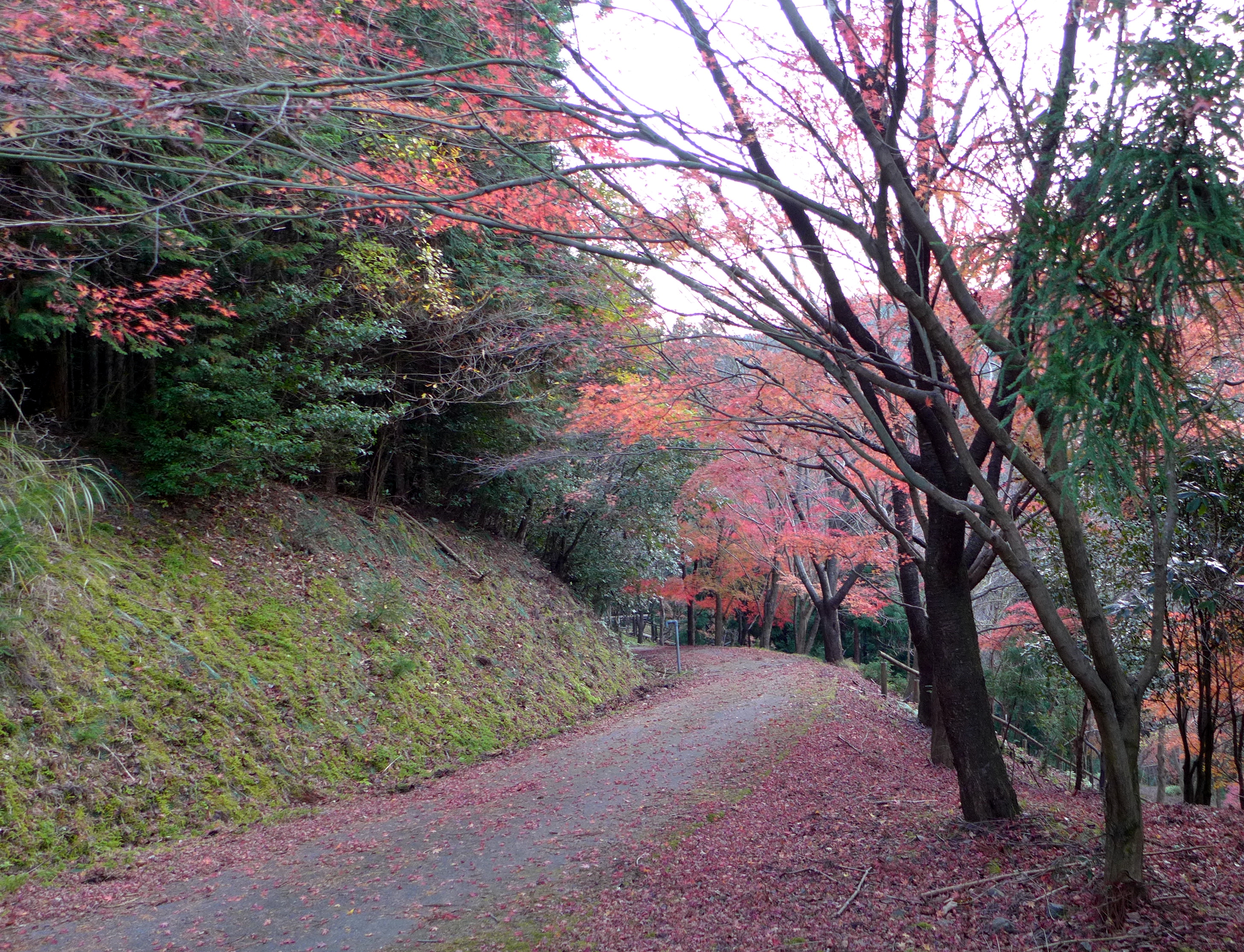
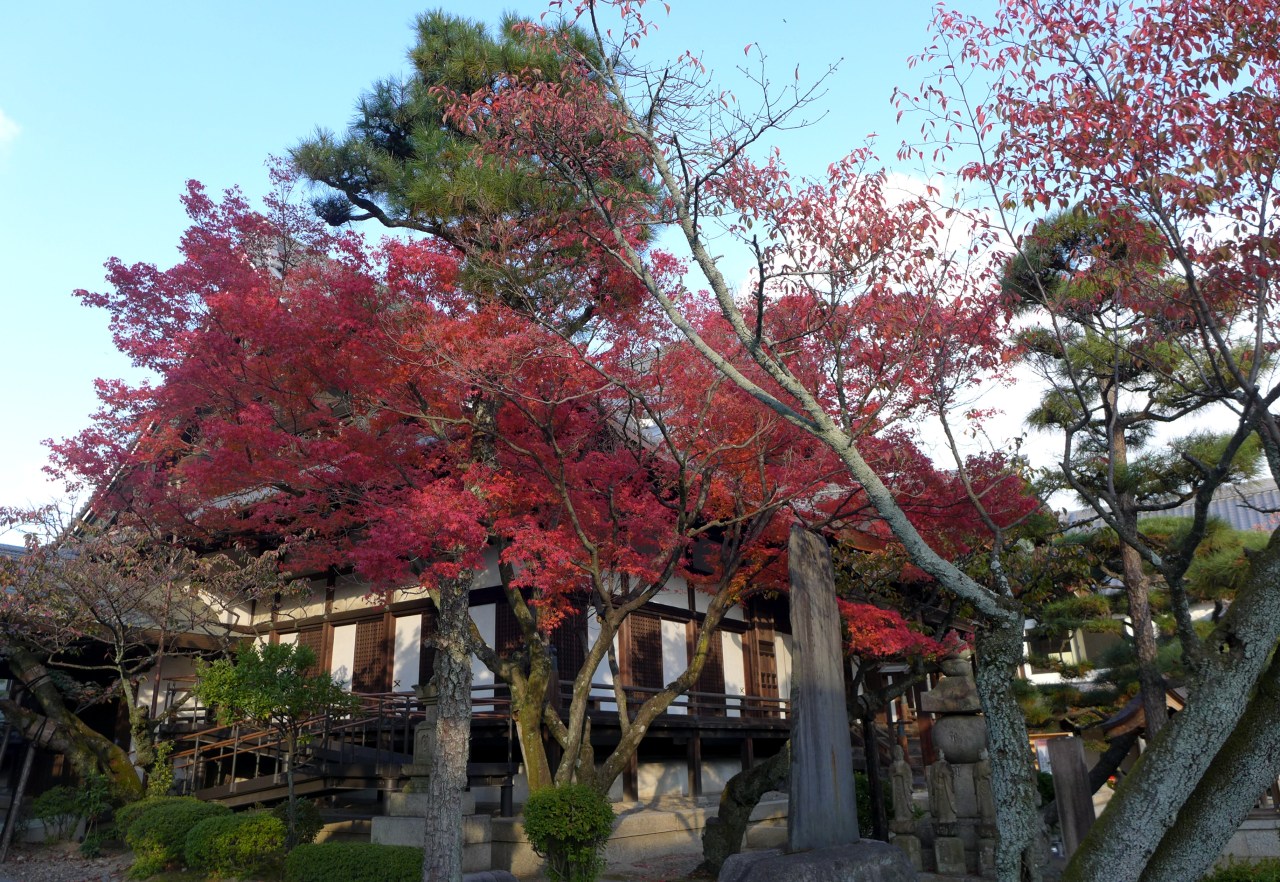
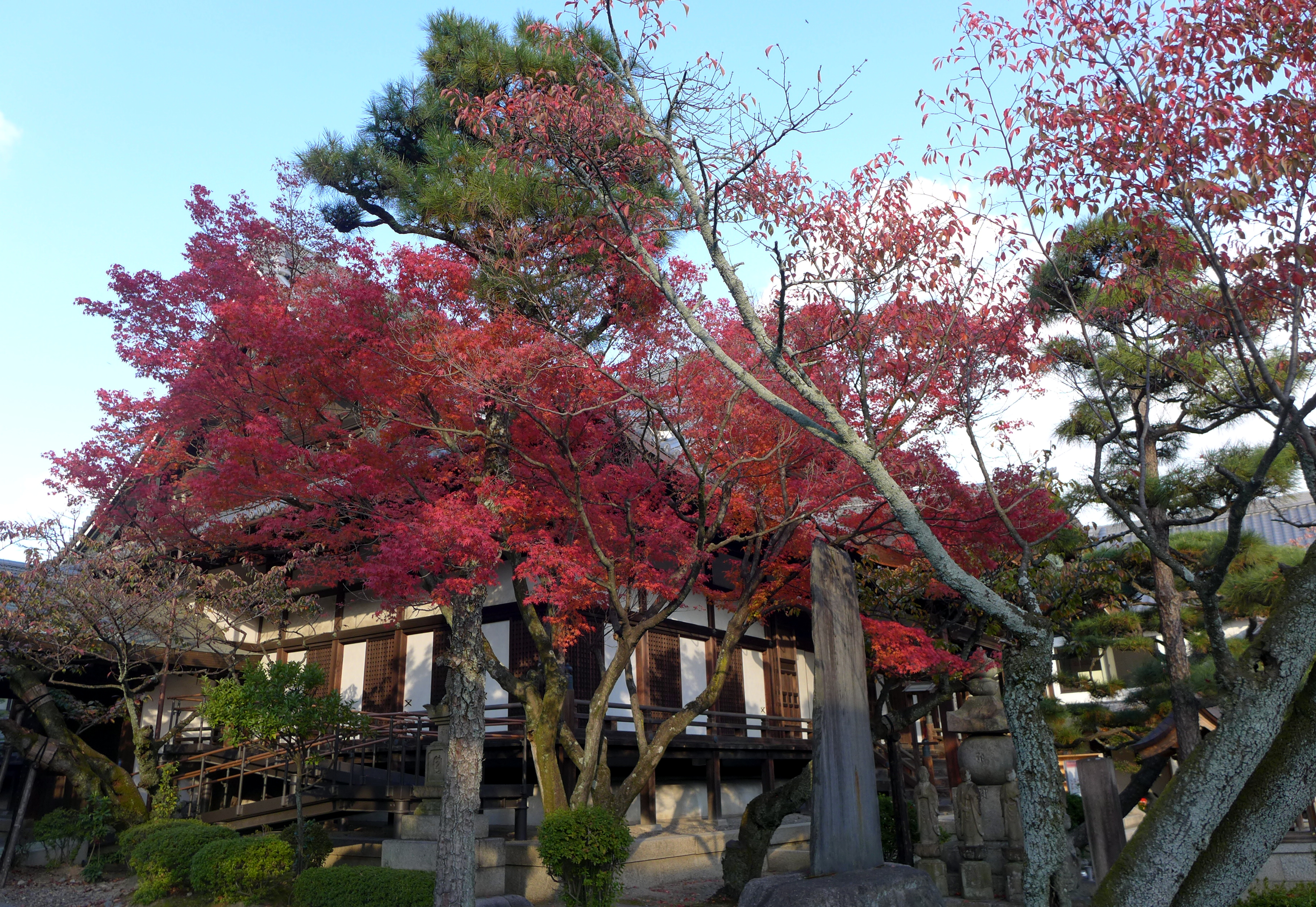
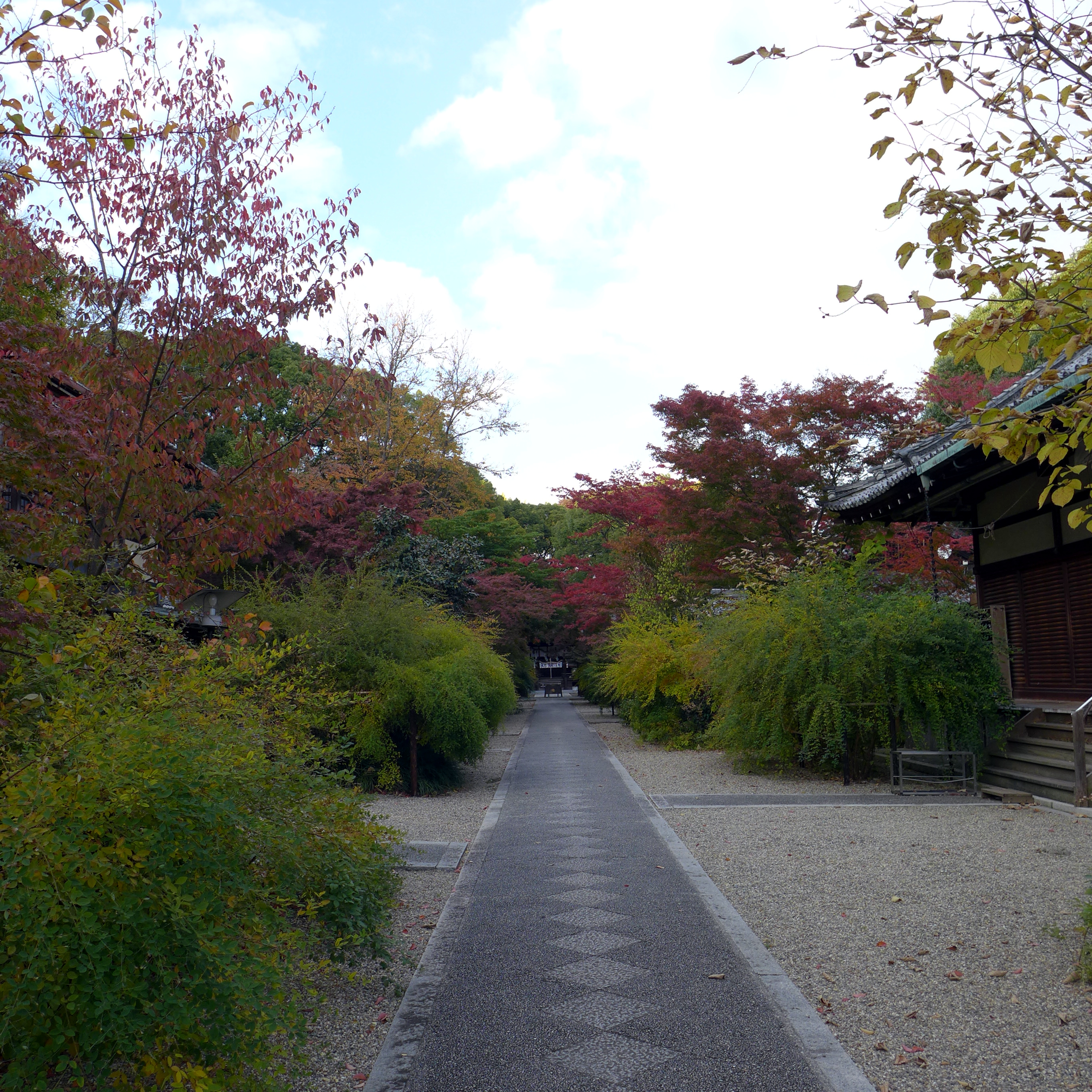
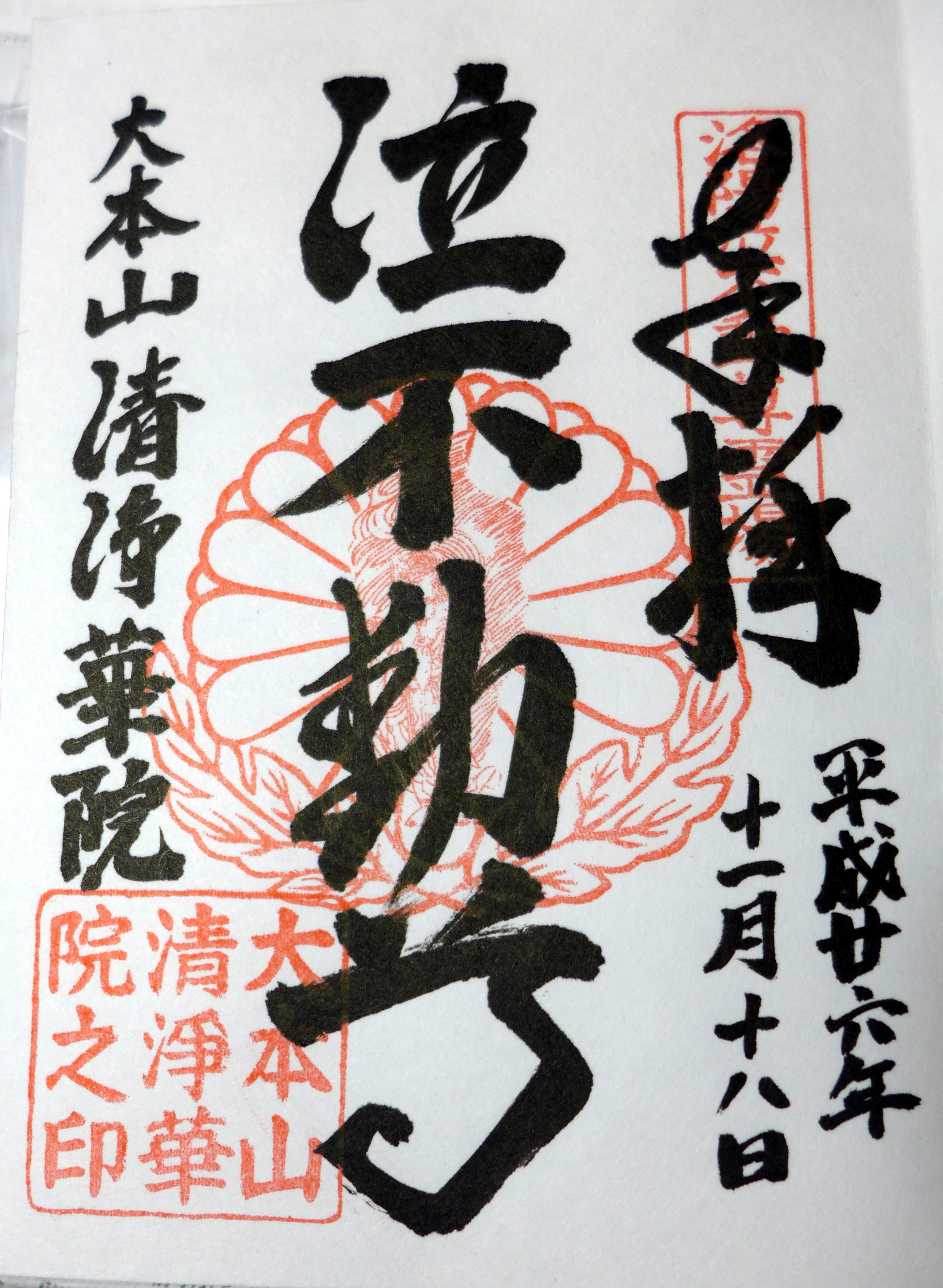
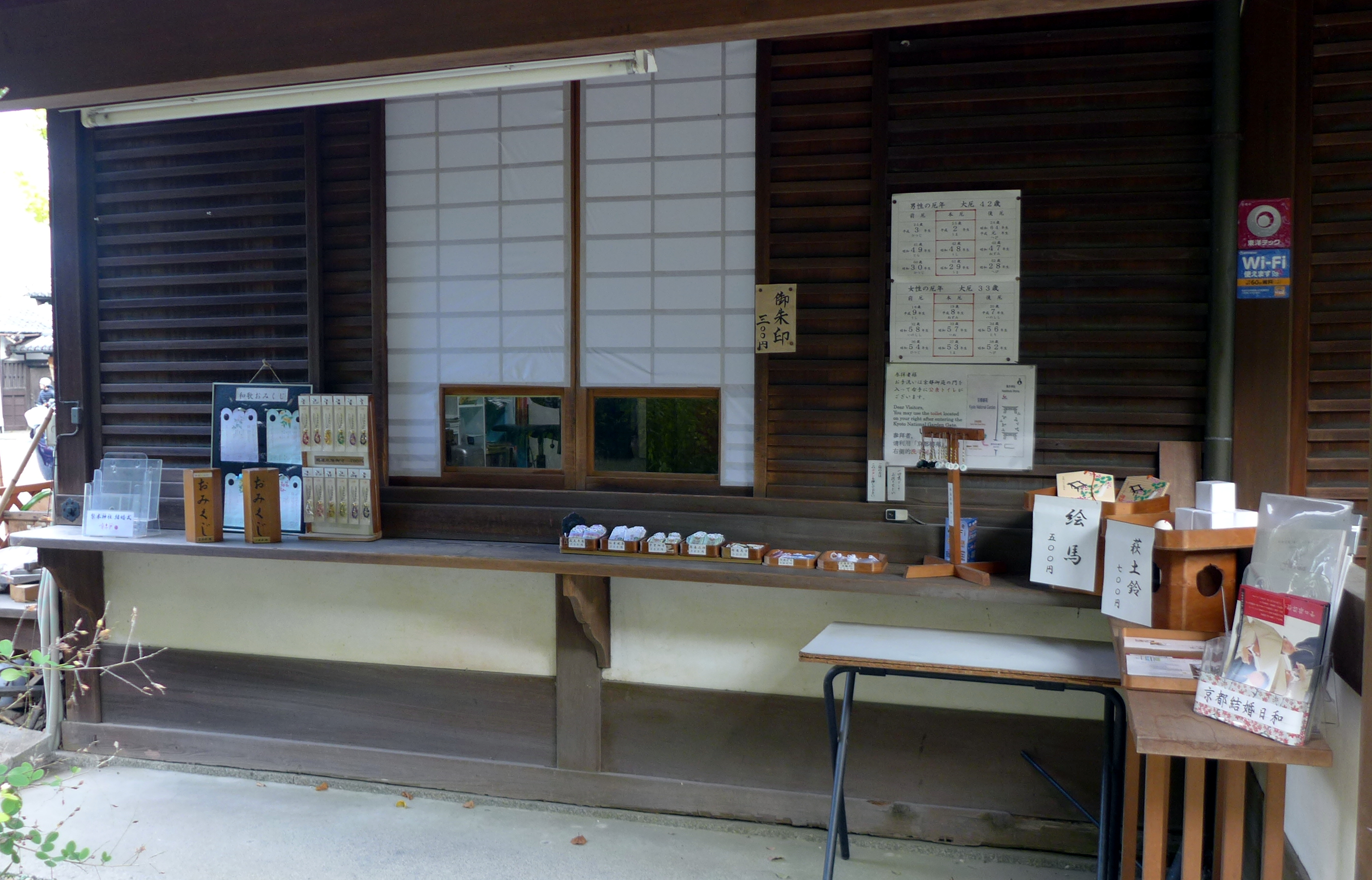
Jakko-in itself was a beautiful temple. There’s something dynamic about mountain temples – the different levels of compounds and steps made it picturesque, especially with the red maples arching over the mossy steps up to the temple. Behind the temple is a forest of beautifully straight evergreens, creating a cool, mossy path through the woods. I would definitely recommend visiting in Autumn if you get the chance. Entrance to the temple costs 600円 and book stamping costs 300円. For the stamp they actually have a ticketing system so you can drop off your book, look around the temple, and collect it (freshly stamped) on your way out.



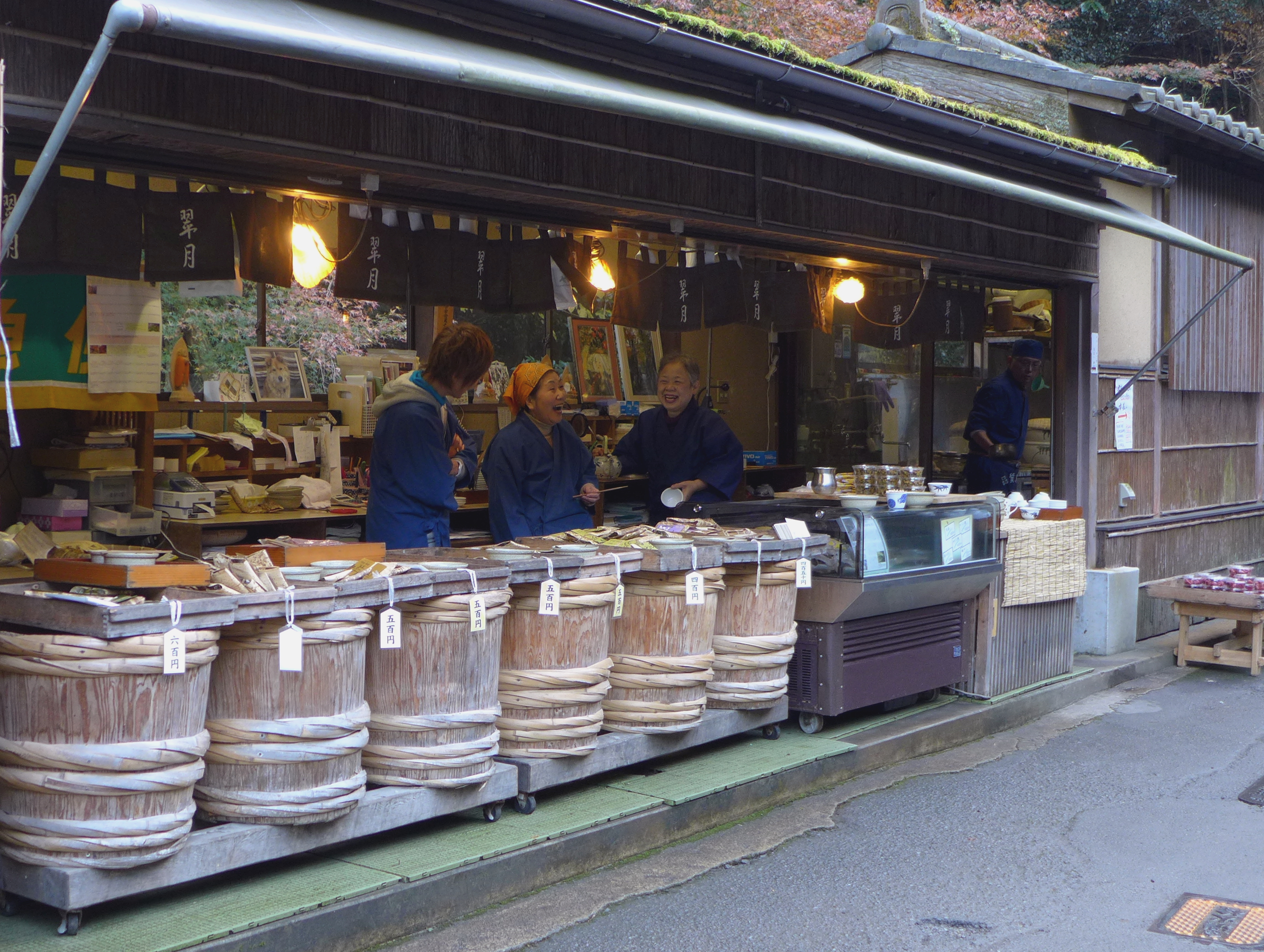
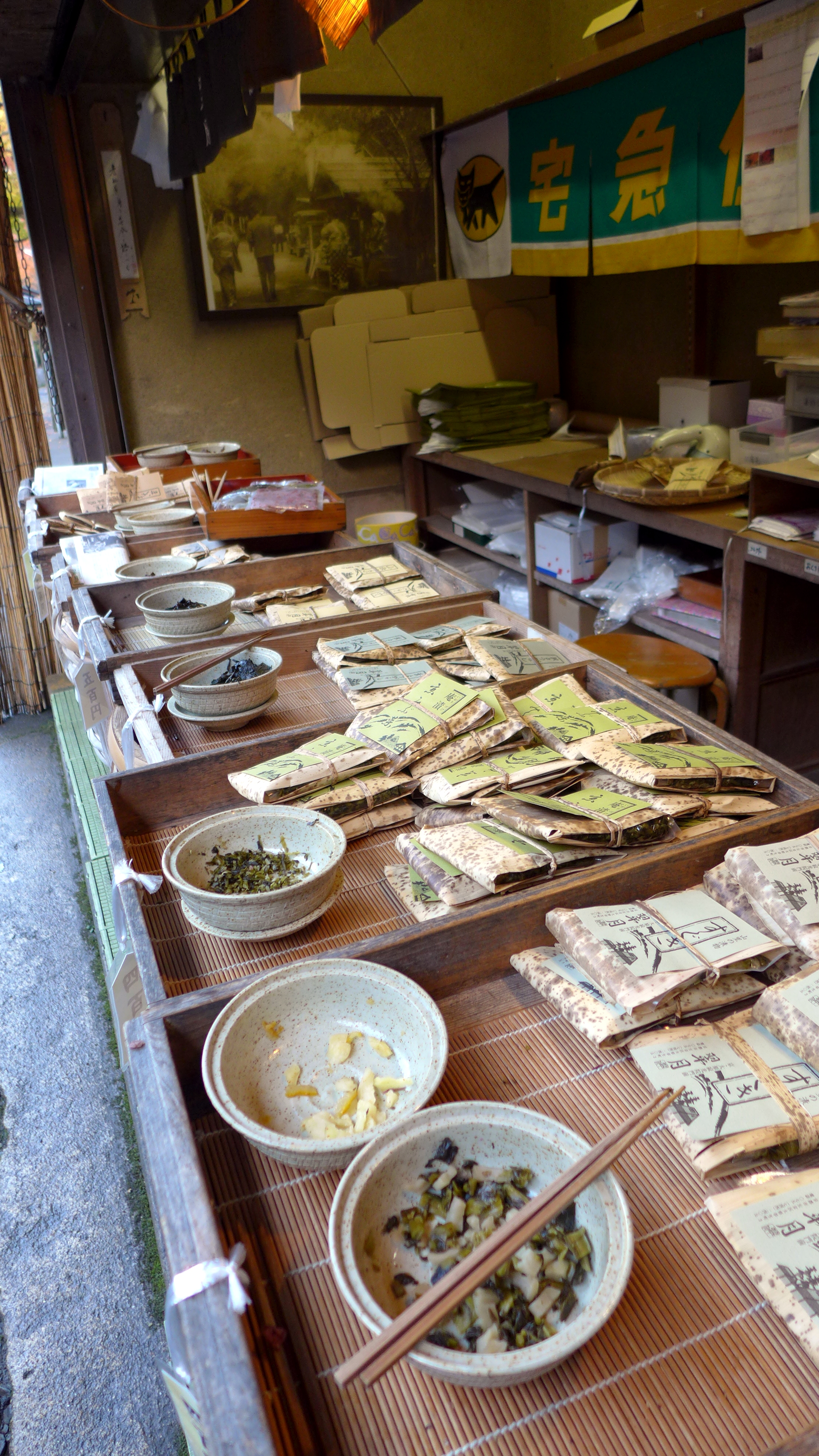
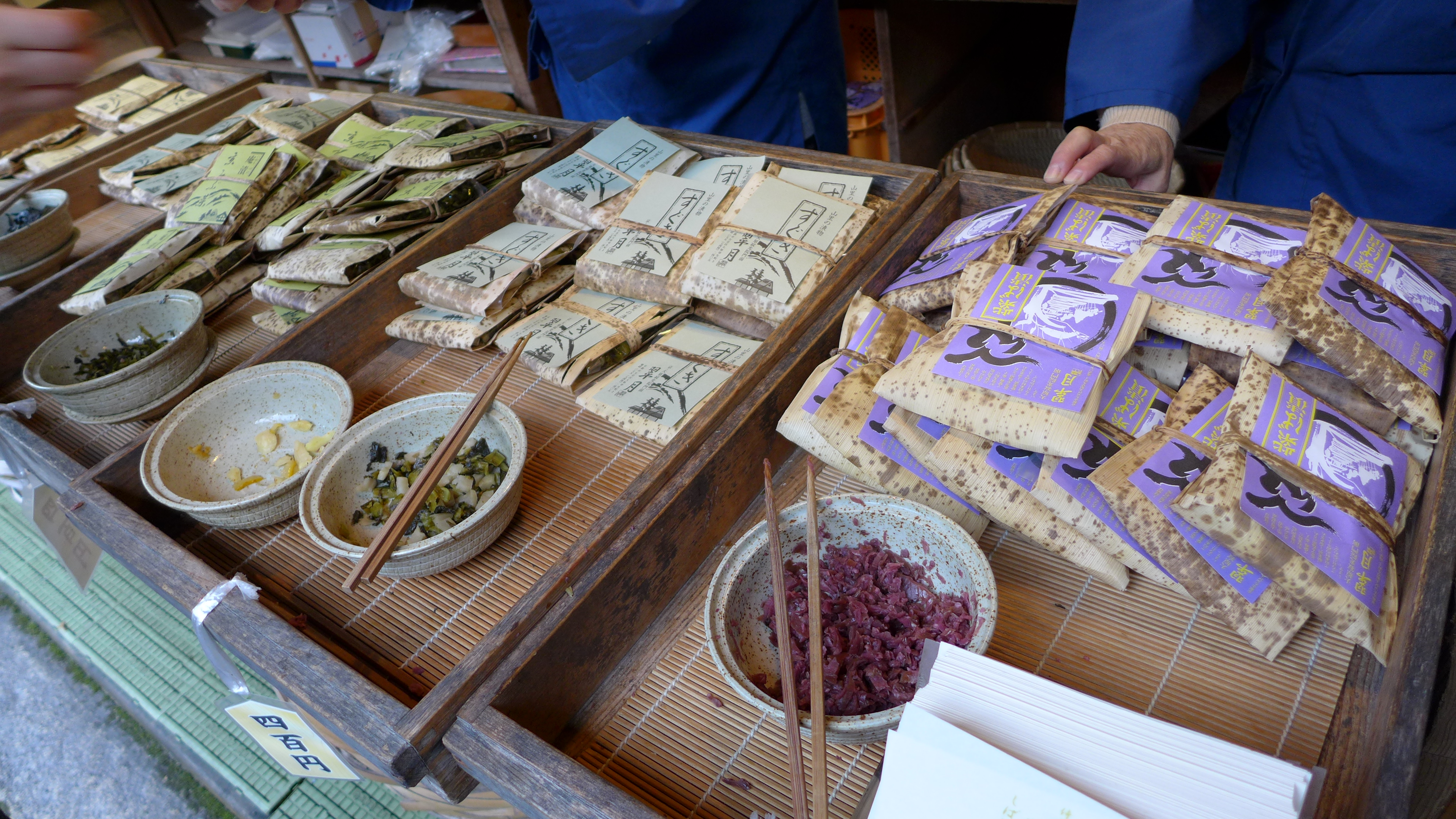
On the way up to the temple there were a number of stalls selling food and sweets; one that caught my attention was a wooden stall just outside the temple which was run by three old ladies. On the way out we went up to their stall and they chatted to us in Japanese, asking us where we were from (they told me I must speak the Queen’s English, being British). They let us try some of the food they were selling and I ended up buying some dried yuzu (a citrus fruit that tastes like a cross between a lemon and an orange) to put on my rice. They were really lovely, bringing to life the stereotype of the kind obaa-san (おばあさん – granny or old lady).
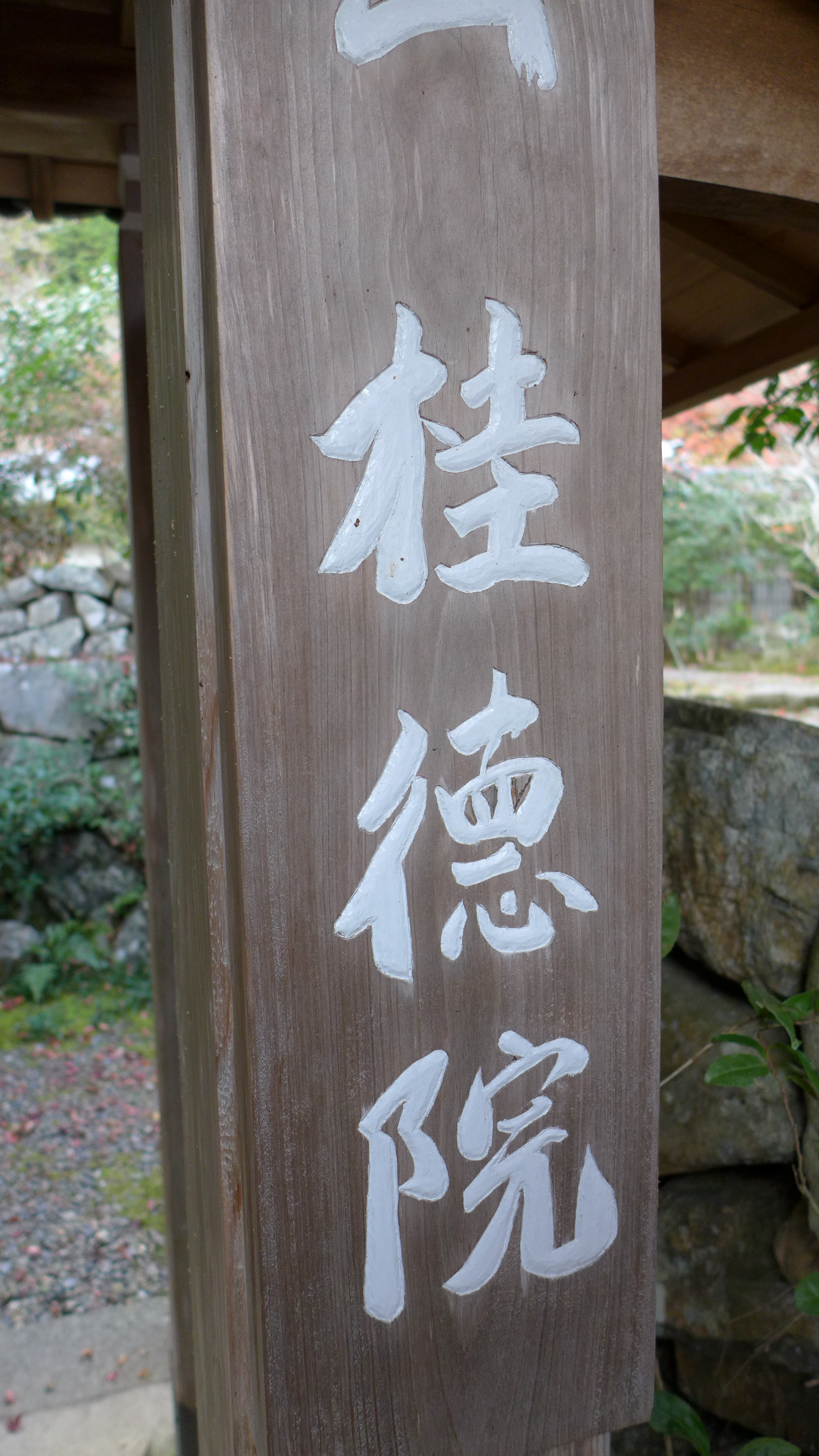
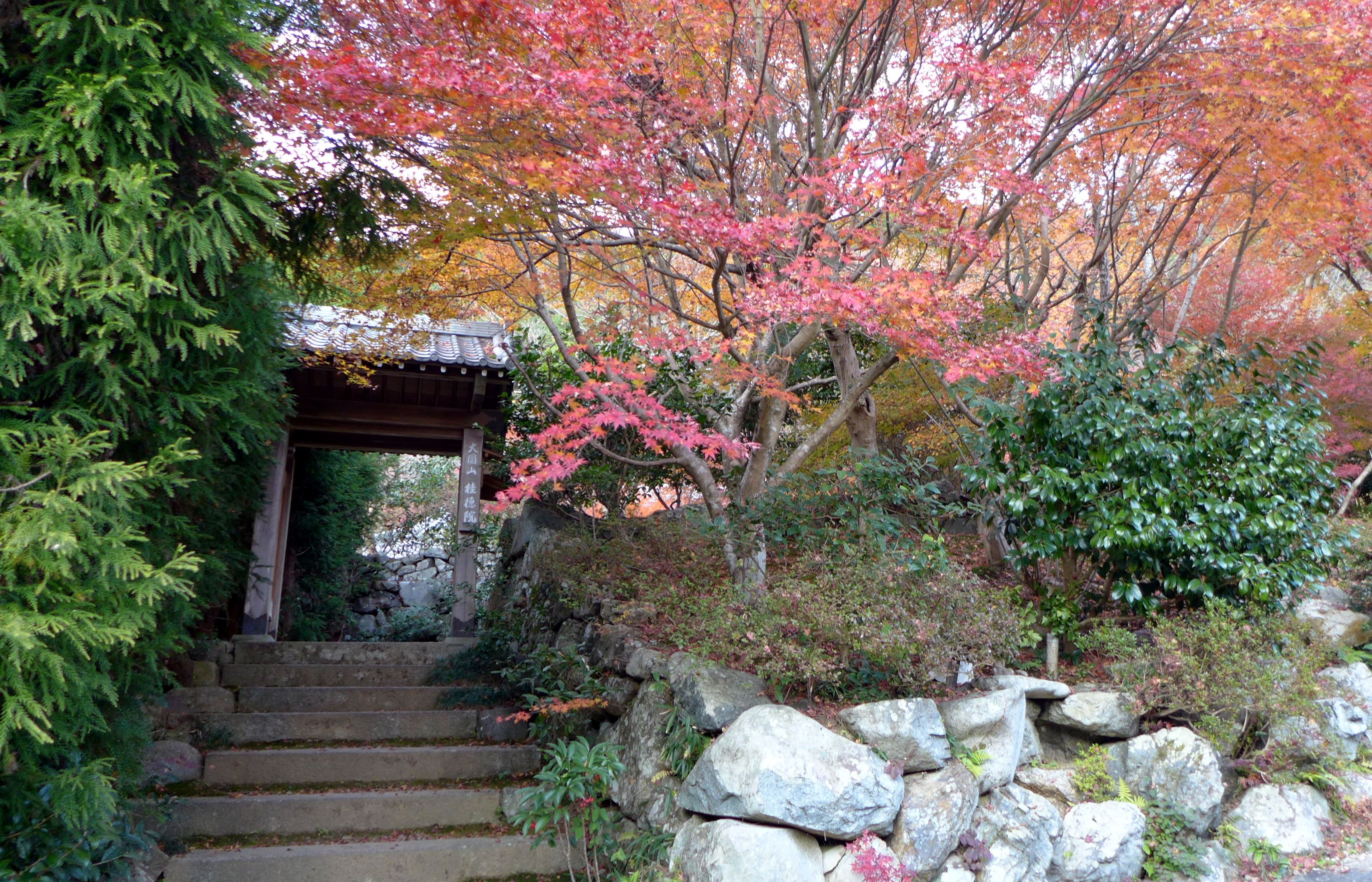
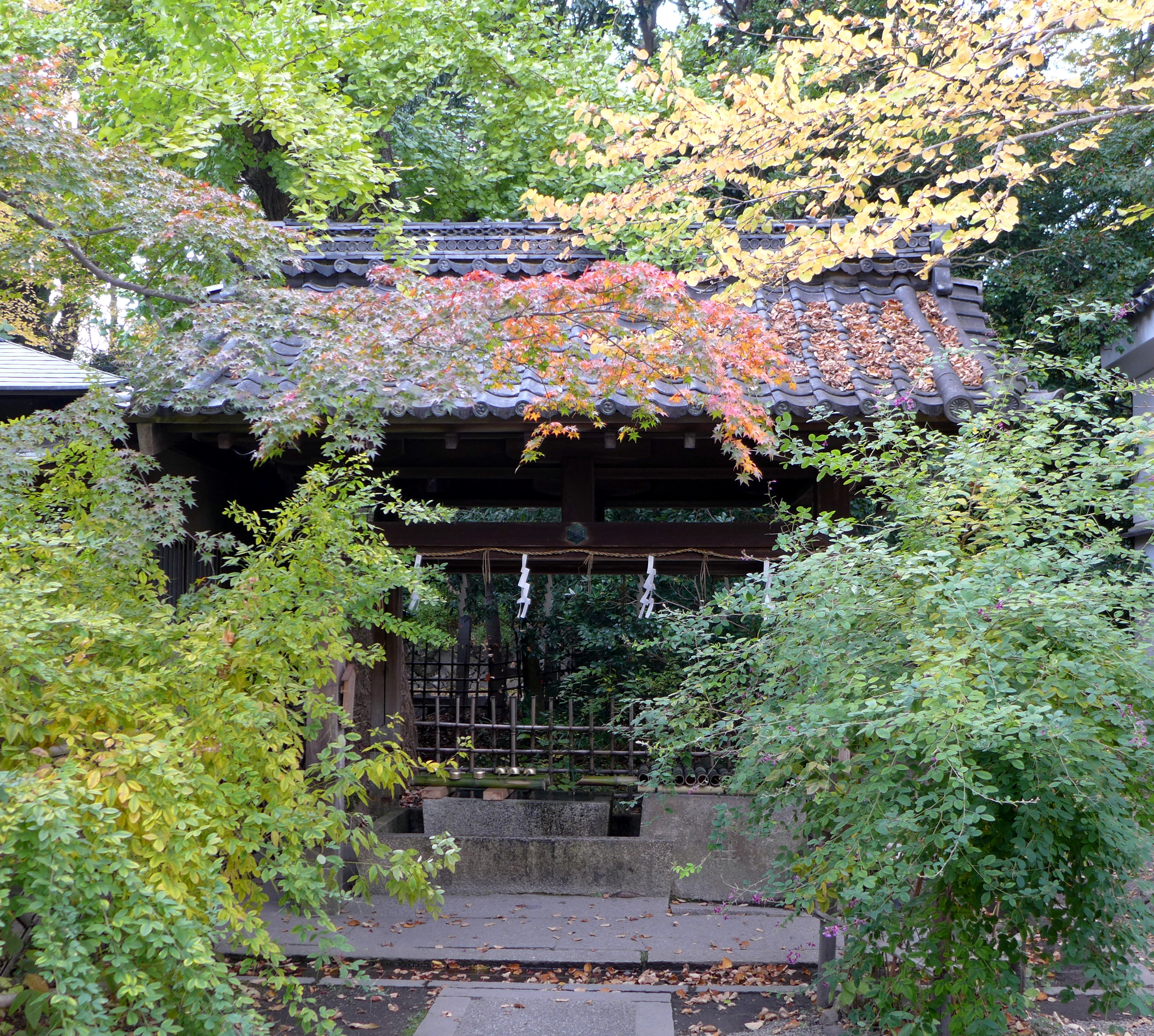
We then headed to another temple that we had seen on the map. It was actually really small and completely deserted. The autumn leaves in the small garden were beautiful and it was refreshing to go to a temple with no other visitors as Jakko-in was full of Japanese visiting to enjoy the koyo (turn of the leaves). It turns out this temple is called Keitoku-in (桂徳院) and it was founded in 1602, though it burned down and was rebuilt in 1995. Other than that there is very little information on it on the internet, and as there was no one there to tell us anything, thats all I can tell you about this temple. Its worth paying a quick visit if you go to Jakko-in though, its only five minutes walk away and its garden is pretty.


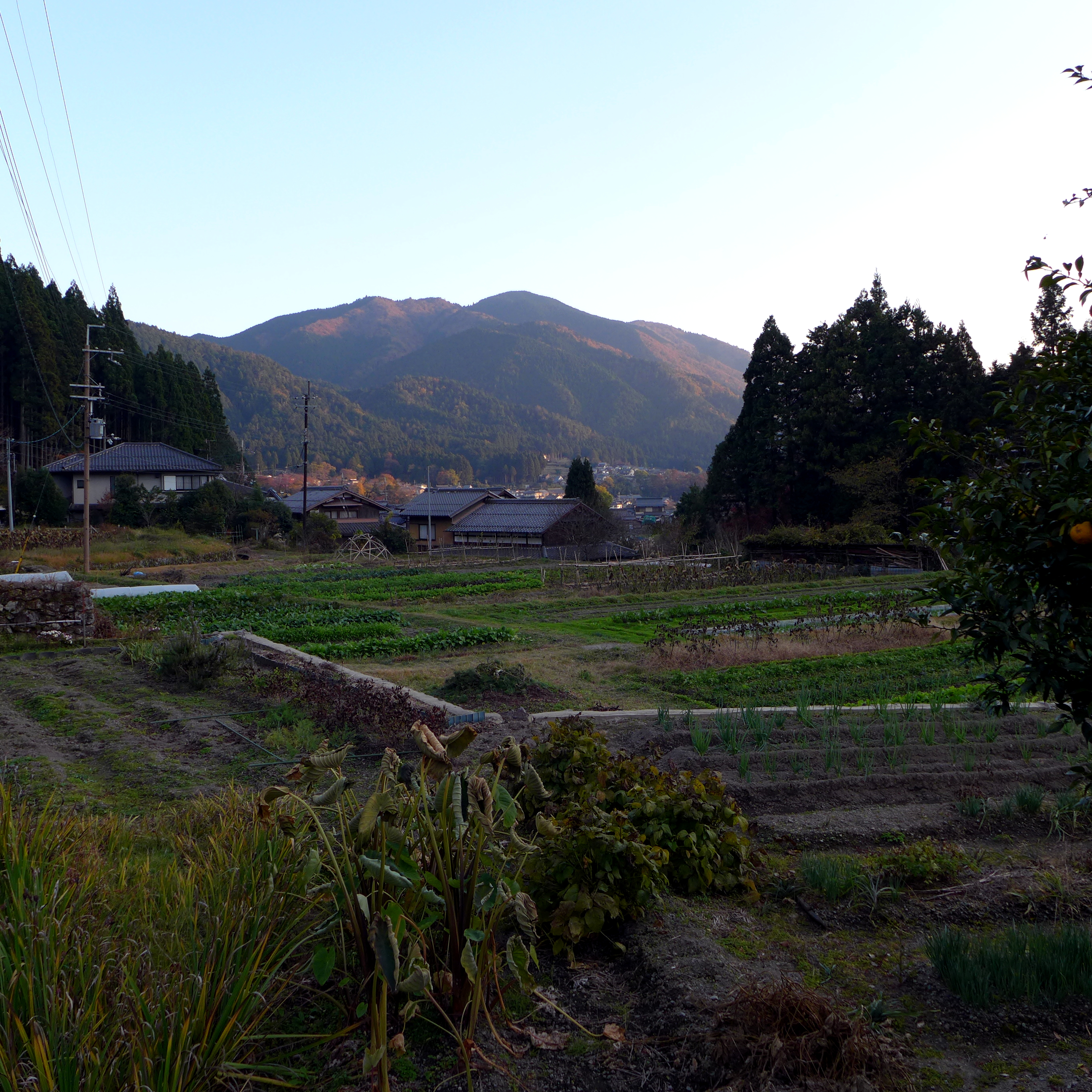
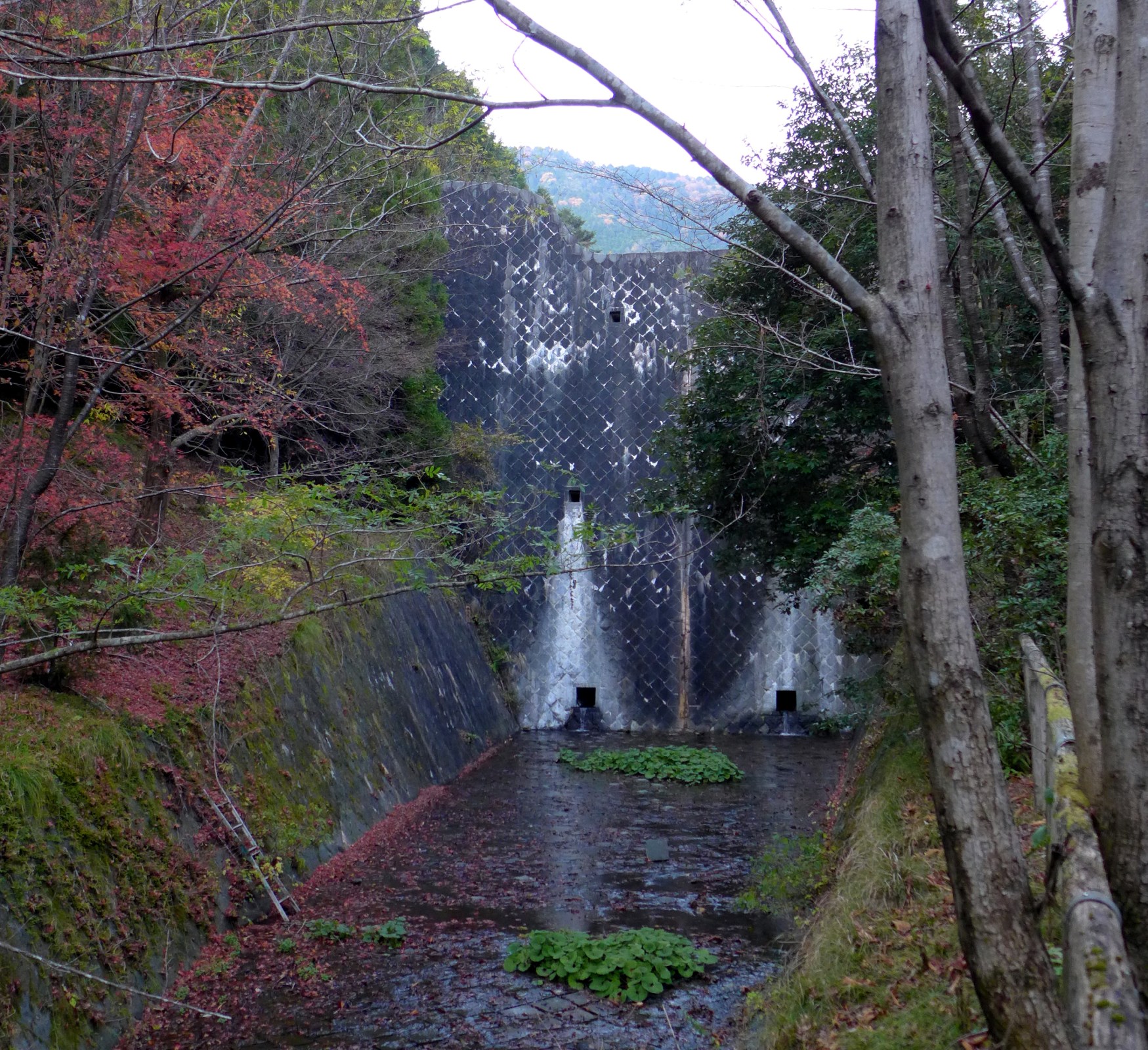
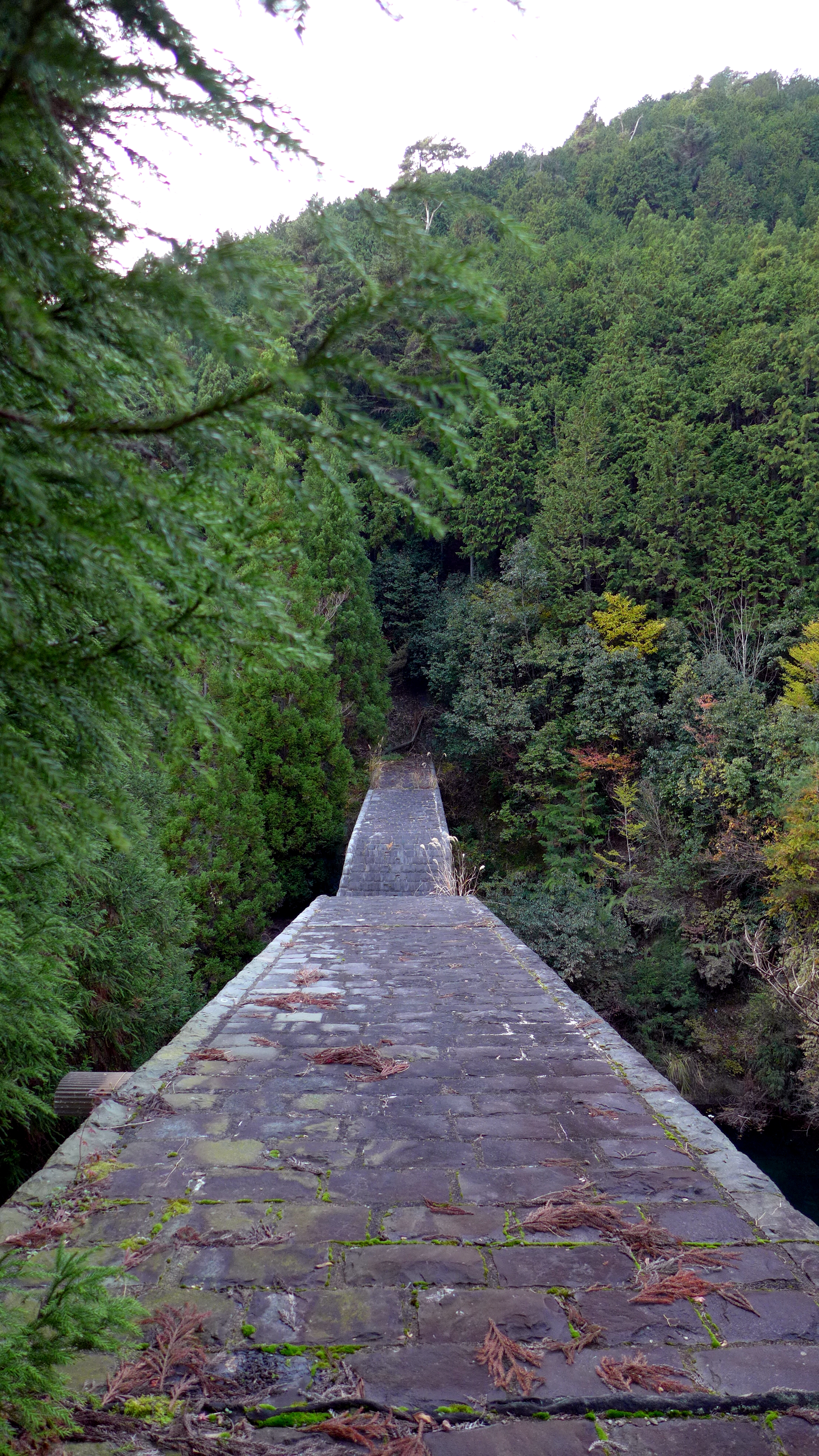
We walked from this temple up the river to check out a dam that we had seen on the town map. It turns out that we weren’t actually meant to go through the gate leading to the path to the dam; the sign in Japanese said we needed permission from Kyoto’s Forestry Agency, but I didn’t read the sign properly on the way in, only on the way back.
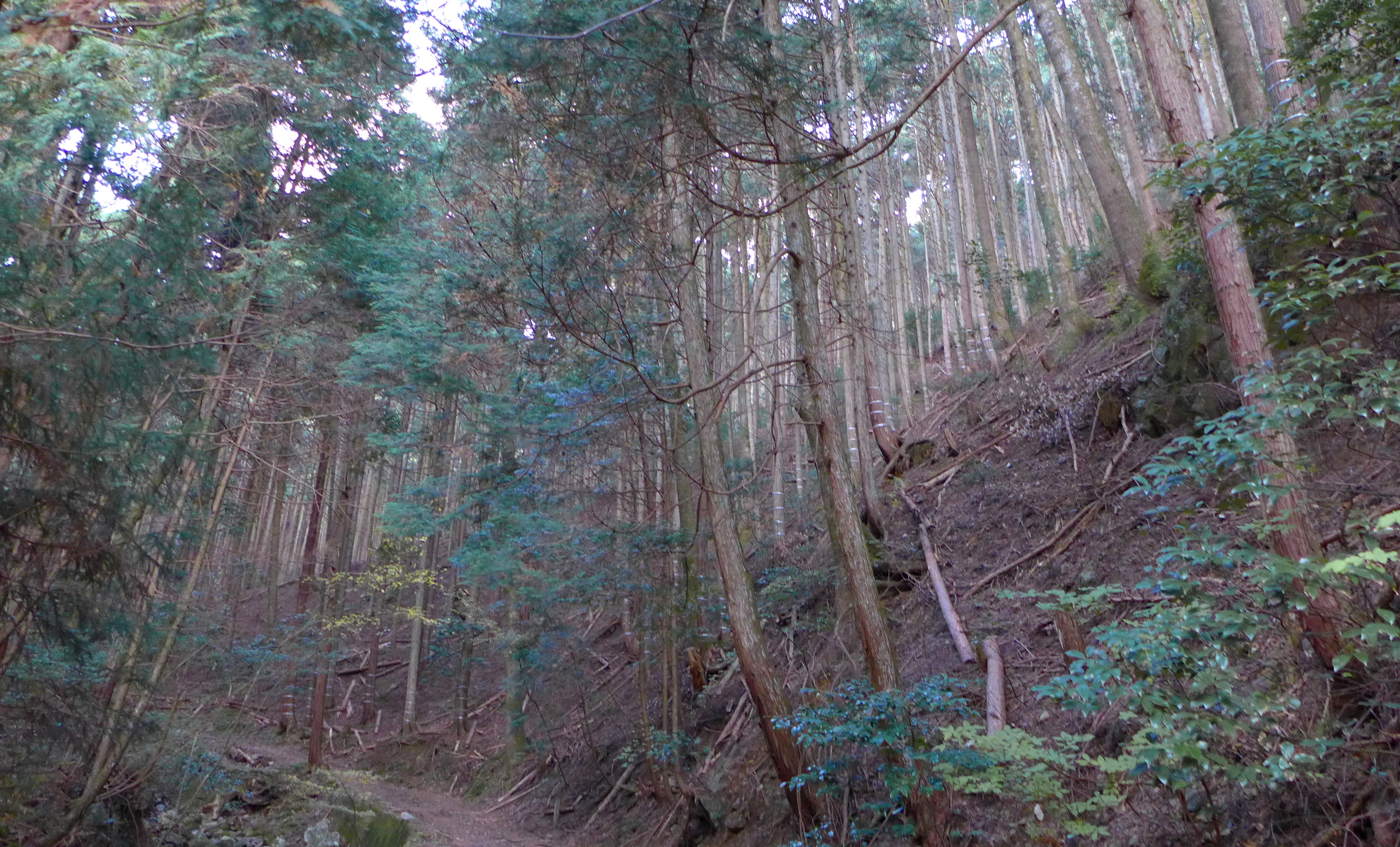
The maples near the dam were spectacular and the dam itself looked pretty old. It felt a little eerie to me, there’s something about seemingly abandoned man-made structures that don’t fit in with nature that gives me slight chills. We followed the path past the dam and had a look at the forest – it was pretty dark (much darker than the pictures make it look) and the path seemed to go on forever. As soon as we stepped into the forest the sound of water from the nearby dam was muffled -the forest was very silent with perfectly straight trunks up to the canopy of leaves. A part of me felt like this might be the start of a horror film. I was quite glad to get out of the forest, away from the dam and back towards Ohara.



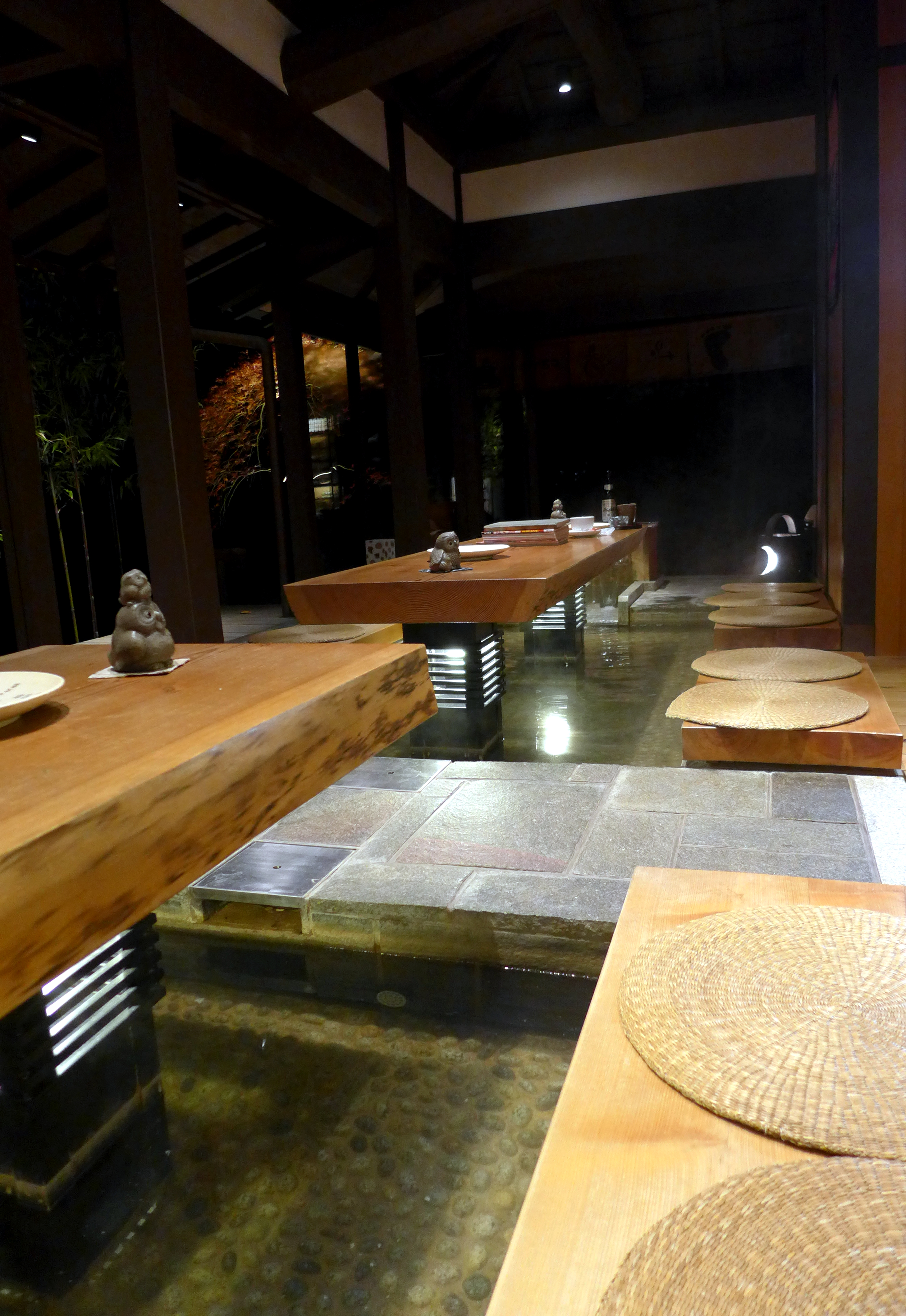
The last stop on our trip was a cafe we had spotted on the way up to the temple. This was no ordinary cafe – you sit with your feet submerged in water from the local hot spring. It was really refreshing and relaxing for our feet, especially as we had done a lot of walking.
Embarassingly, I managed to get my jeans stuck. It sounds stuipd, yes, but I had rolled up my skinny jeans over my calves to submerge my feet. Only, I had got the fabric wet, and when I tried to pull it down it wouldn’t really move. I succeeded in rolling one trouser leg down but the other one was not moving. The guy at the counter ended up coming over and helping me. So there was me sitting with this guy trying to pull down my jeans and we were all laughing. It was pretty traumatic. Eventually we succeeded and I left with at least a little of my dignity – I had had visions of getting the bus back with one trouser leg rolled up.
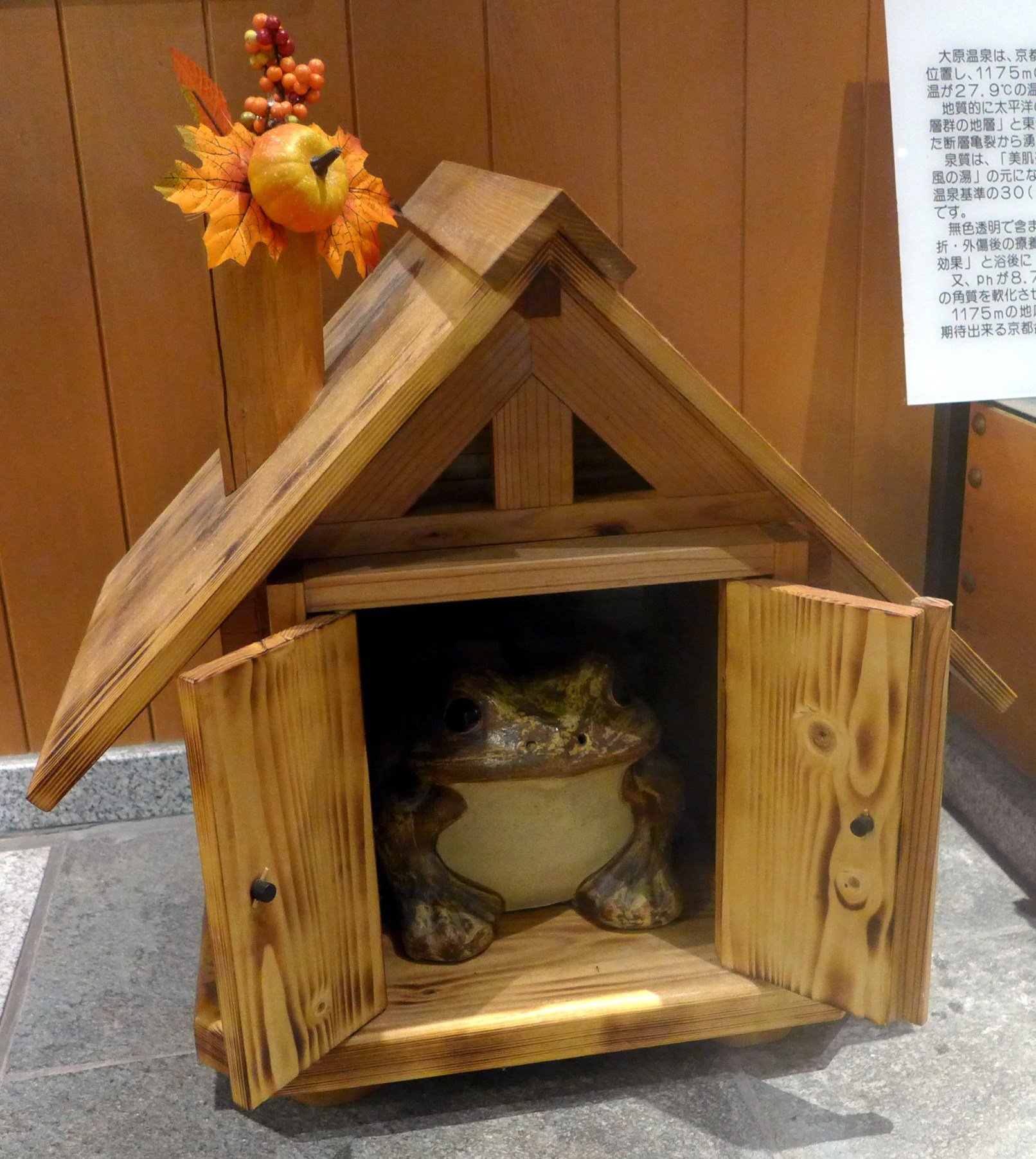


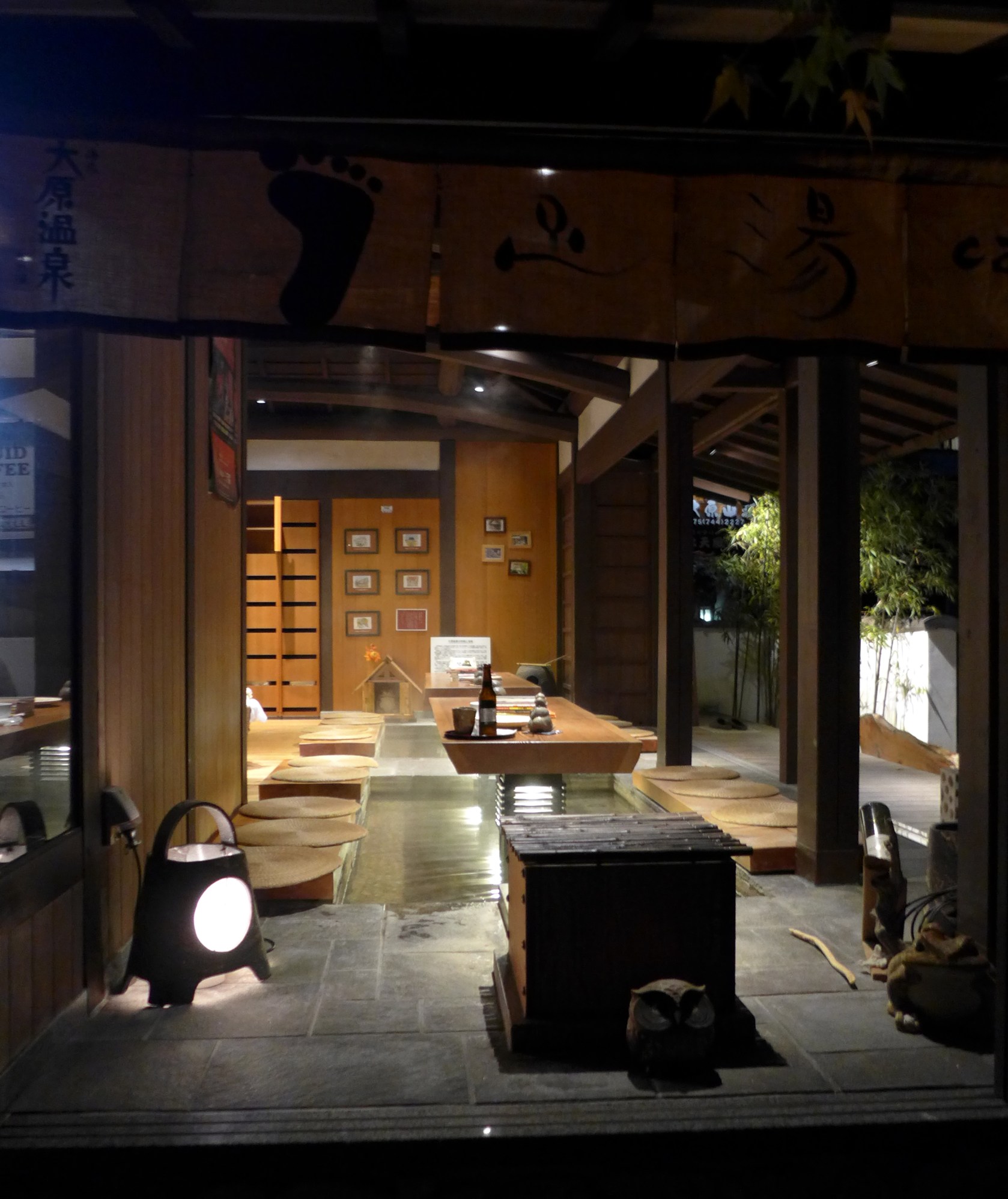
I would definitely recommend spending at least half a day in Ohara – we left at 2 in the afternoon and I feel like we could have made a day of it and visited the other temple. I definitely intend to go back – they also have an onsen (hot spring bath) that I’d love to go to. Total price for all the activities (including the drink at the cafe) was around 2,400円 (£13), so a pretty cheap day out with loads to do.
Sorry I haven’t been posting as frequently as I would like – I recently caught a cold and got a part time job. Hopefully when I shake off this cold I’ll be able to write more!








 japangie