Last Friday I travelled with some friends to Kobe (神戸), a port city near Osaka. All I knew about Kobe before I visited was that it is famous for its amazing beef and that it had suffered a huge earthquake. Of course, I now know much more about Kobe, and I would say its a city worth visiting if you find yourself in the Kansai area (see map). We only visited for the day but we saw and did loads!

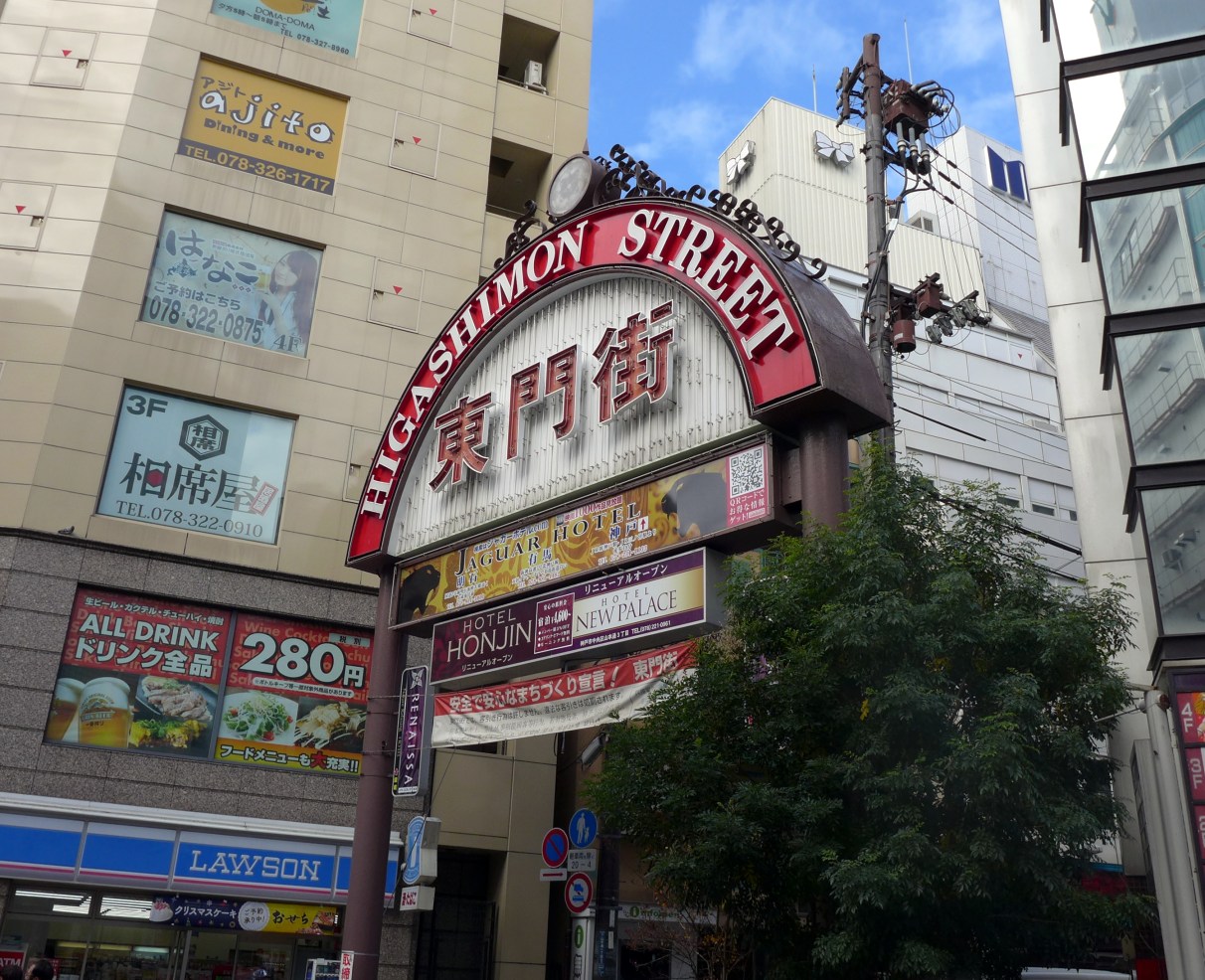
We got the train to Kobe at 9am on the Hankyu line from Karasuma station (烏丸駅), arriving in Kobe at about 10:30. The first thing that surprised us was that for such a big city, it was pretty empty – there weren’t many people around shopping or walking about, even though it was Friday. Undeterred, we took a walk down what looked like a shopping street (and probably nnight-life street – karaoke bars everywhere). We came across a shrine and decided to check it out.
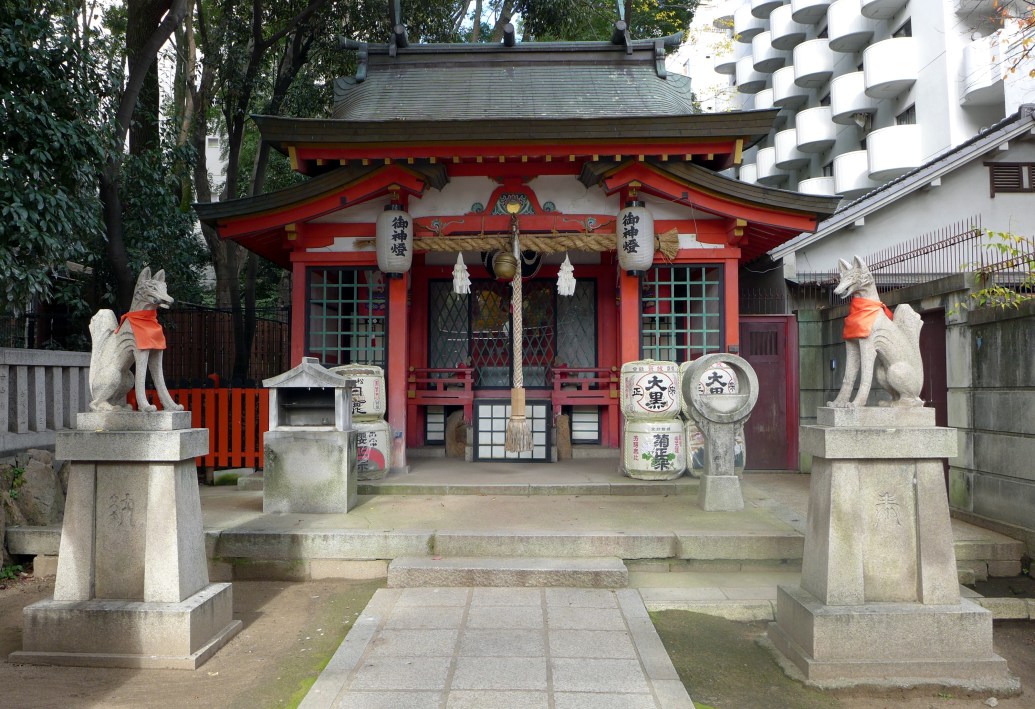
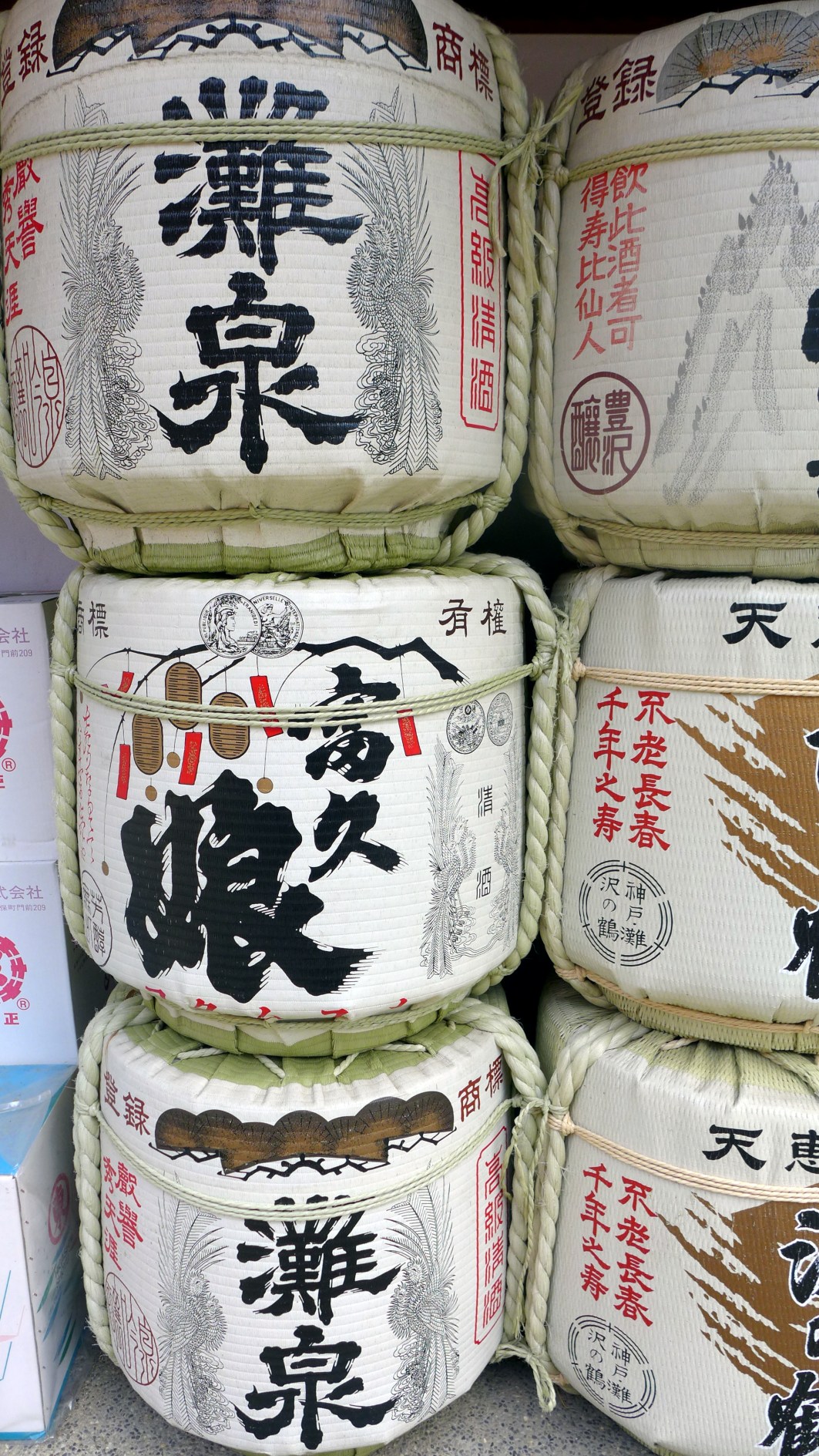
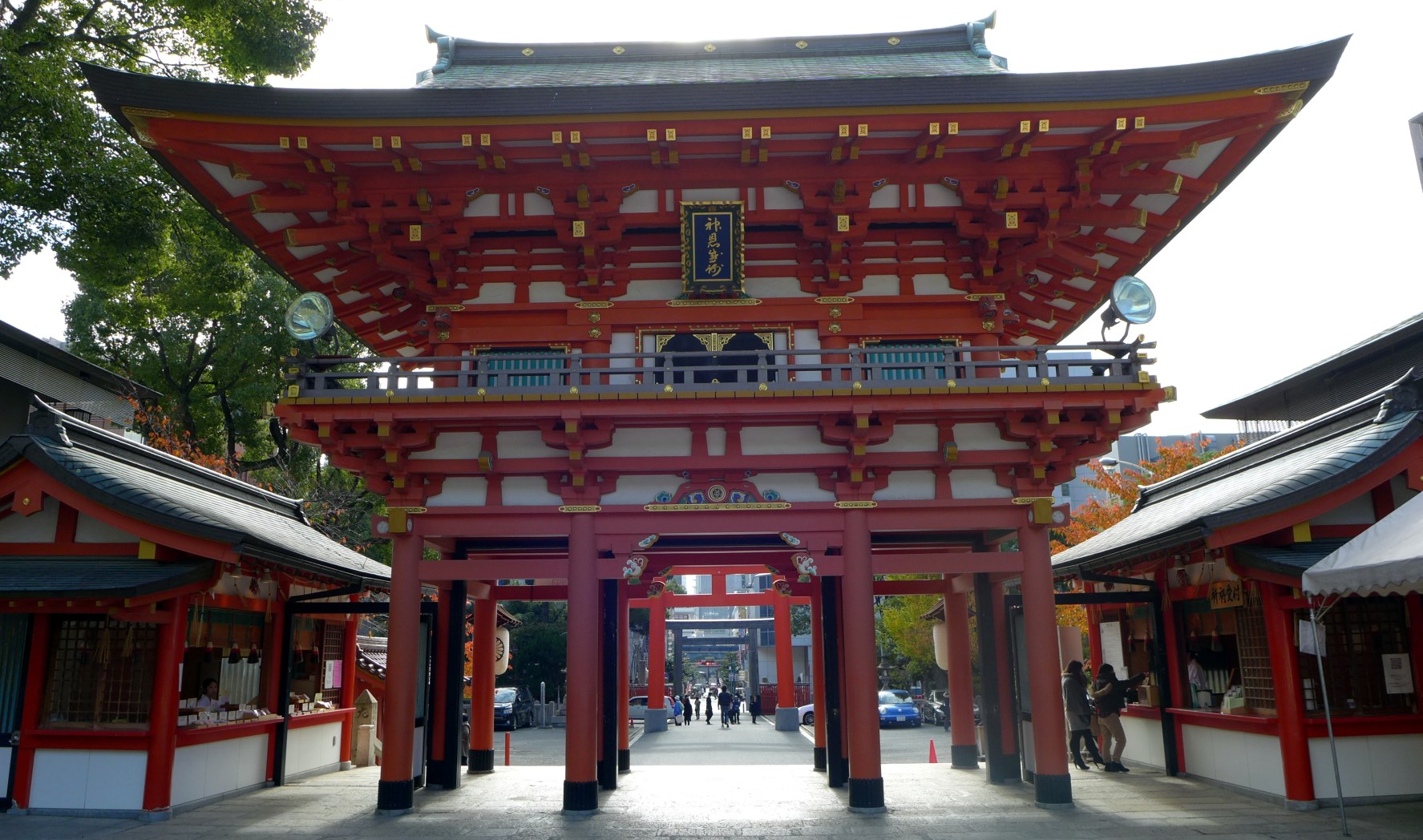
This shrine was Ikuta shrine (生田神社), which turns out to be amazing luck as this shrine actually gave Kobe its name as Kobe (神戸) comes from the word Kanbe (神戸 – same Kanji different reading) which means ‘supporter of the Ituta shrine’. This shrine is probably one of the oldest shrines in Japan, supposedly founded in 201AD (dates around this period are not certain), by one of Japan’s few Empresses. This was Empress Jingu – there is little known about her because all information about her reign comes from the Nihon Shoki, Japan’s second oldest classical text, completed in 720.
The Nihon Shoki is not considered historically accurate due to its exaggeration of reign lengths. This exaggeration is probably because the authors (working for the imperial family in the 8th century) wanted to legitimise the imperial line by making it seem to go back into the distant past. The Nihon Shoki claims Japan was founded in 660BC, but this probably because 6 is considered a good year for political change in Taoist belief and seems sufficiently ancient, rather than referring to any actual historical evidence. The Nihon Shoki was using records avaliable to the imperial family that have since been lost, and its considered that most figures were probably real, but they have been mythologised. The Nihon Shoki slowly becomes less historically questionable as it approaches the 8th century rulers, as this is when it was compiled.

The Empress Jingu supposedly invaded Korea in the 3rd Century, and used Ikuta shrine as a location to welcome the soldiers home with a festival. It is not clear if she acutally did invade Korea – it appears that she probably did, but the Nihon Shoki’s claims that she even conquered Korea are dubious. Empress Jingu was the first woman to be featured on the Japanese banknote in 1881, and Japan’s colonisation of Korea from around 1870 onwards may have something to do with that choice. Obviously they didn’t have a picture of her so instead they used an artists impression.

A depiction of Empress Jingu from 1880
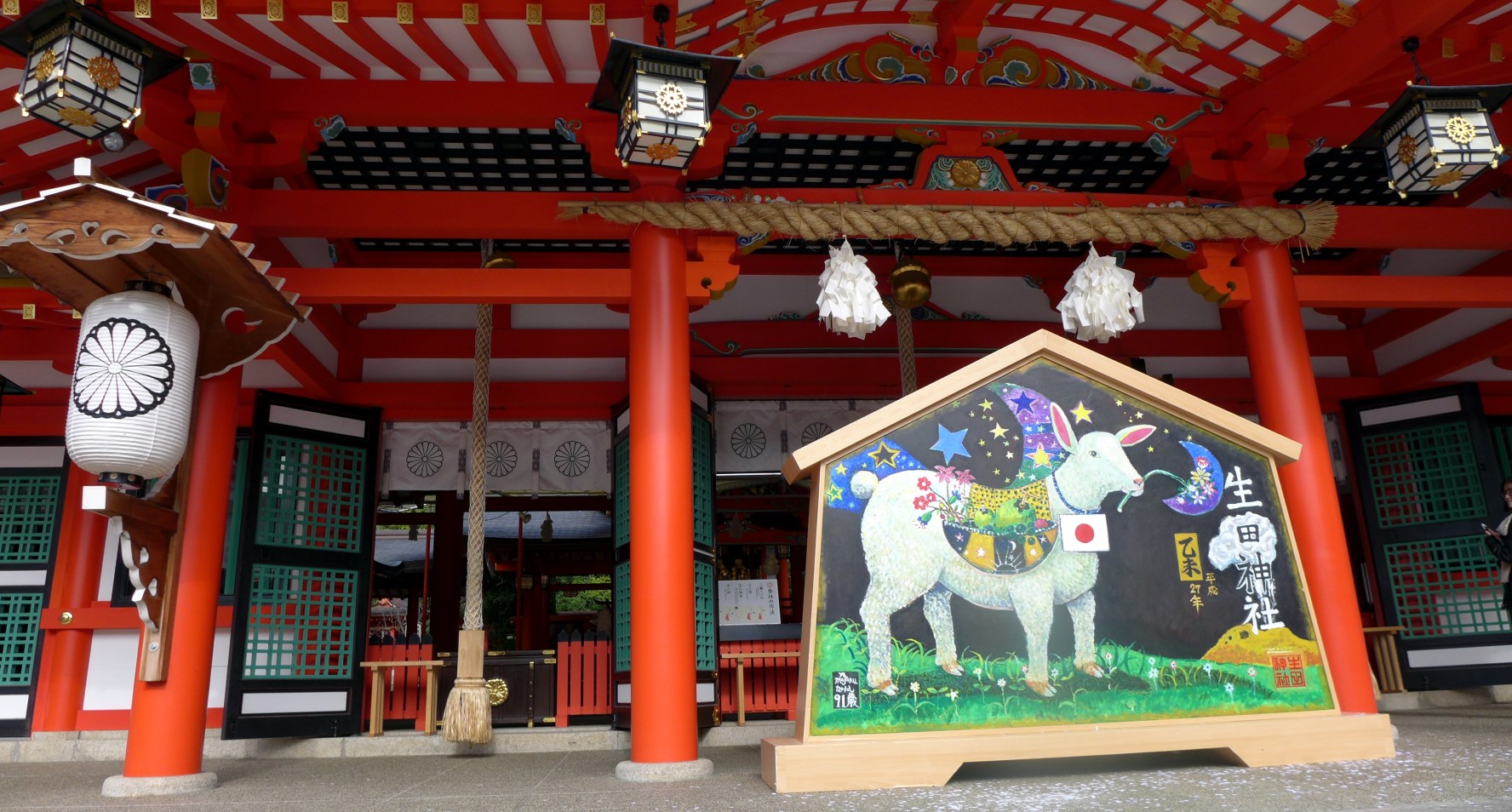
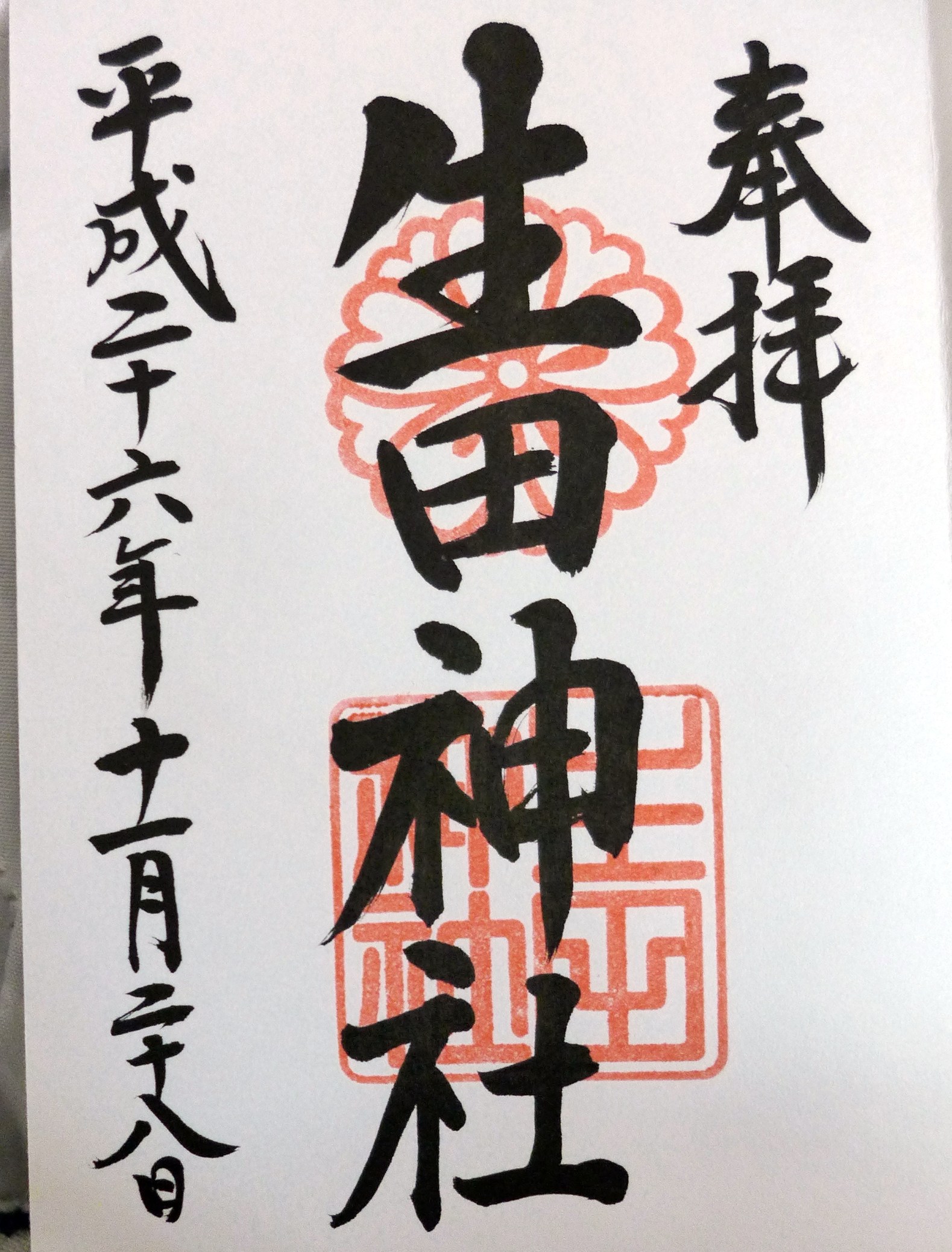
Ikuta Shrine is fairly large and has a forest behind it (which is really small and not particluarly amazing). The shrine itself had a rather interesting painting of a lamb on it, though I haven’t been able to find out what this means. The shrine buildings have been rebuilt over and over again; Kobe has suffered many disasters. I got my stamp done, though instead of being at the normal booth, I got it done in the monks’ headquarters, which seemed pretty stylish.
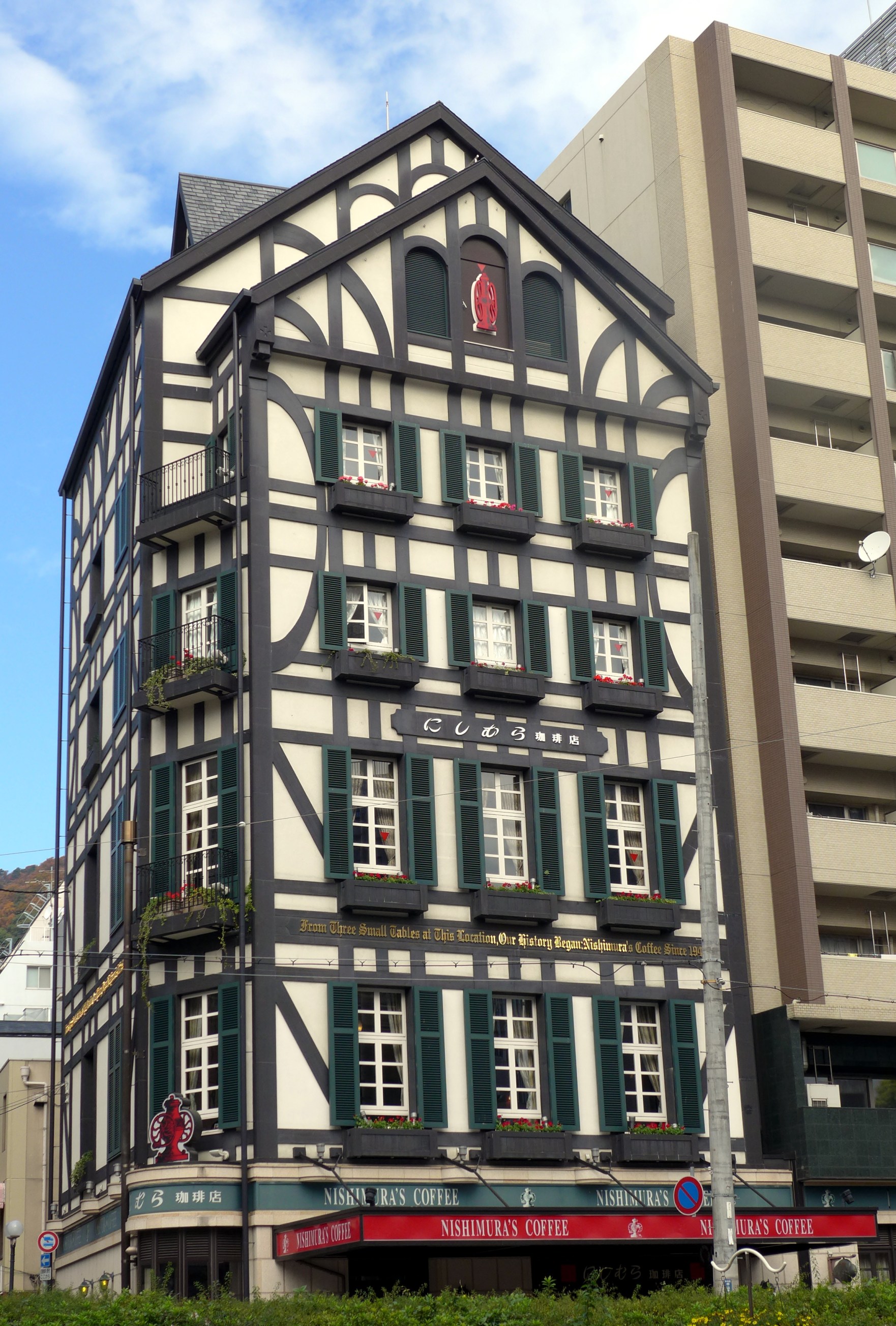
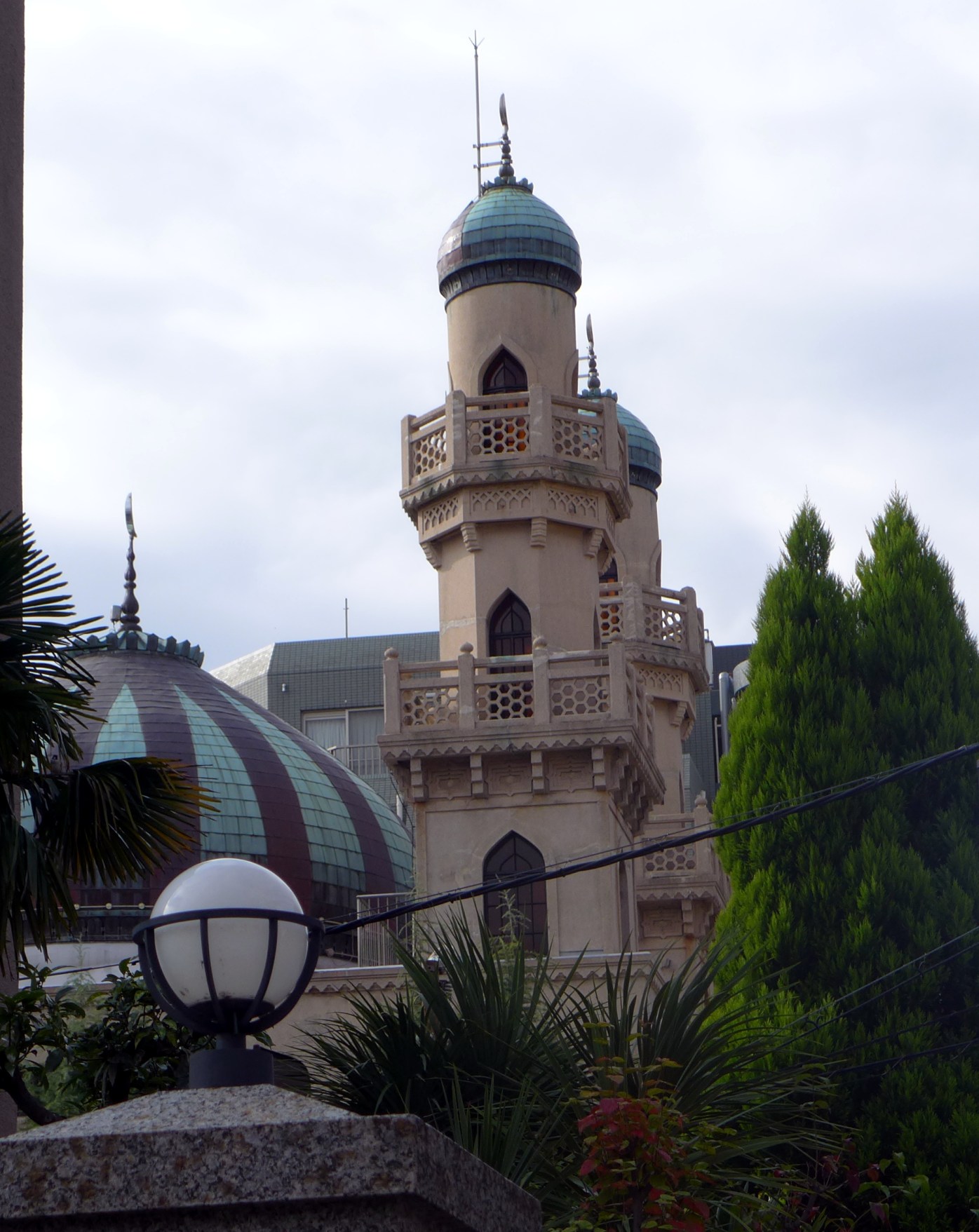
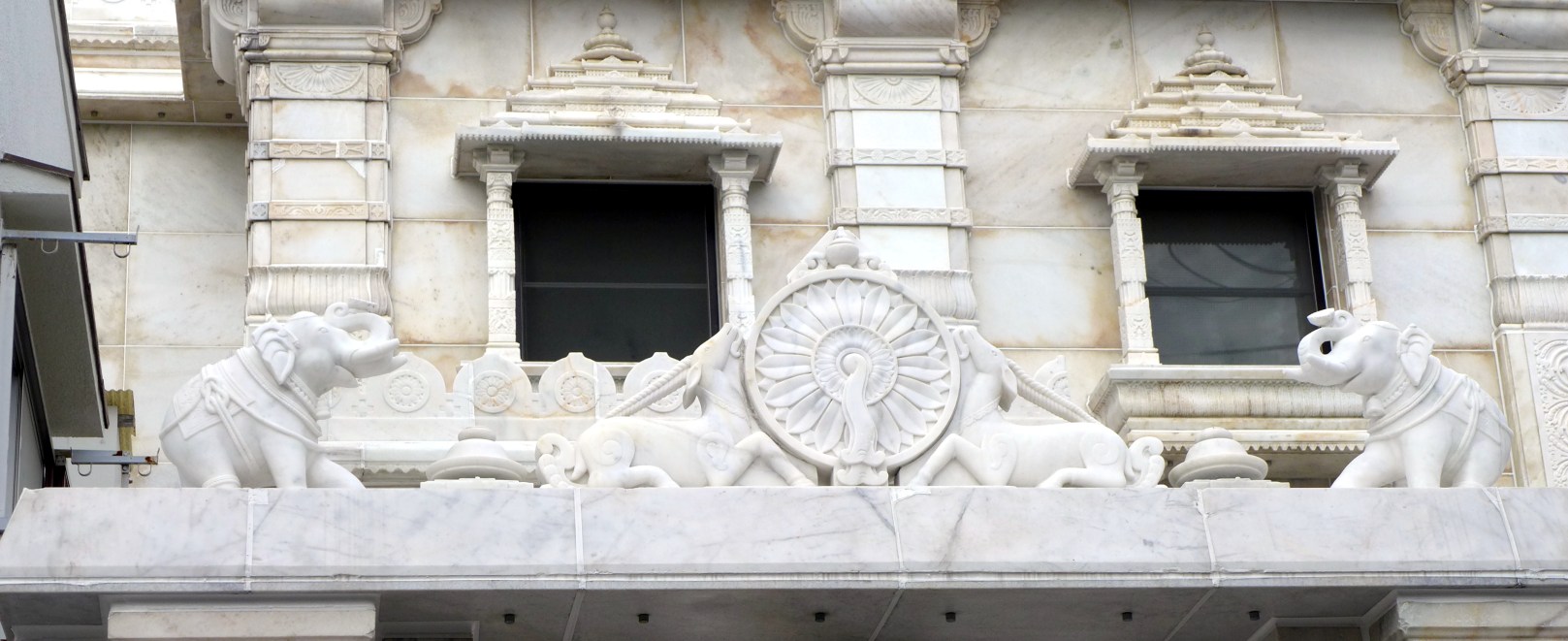
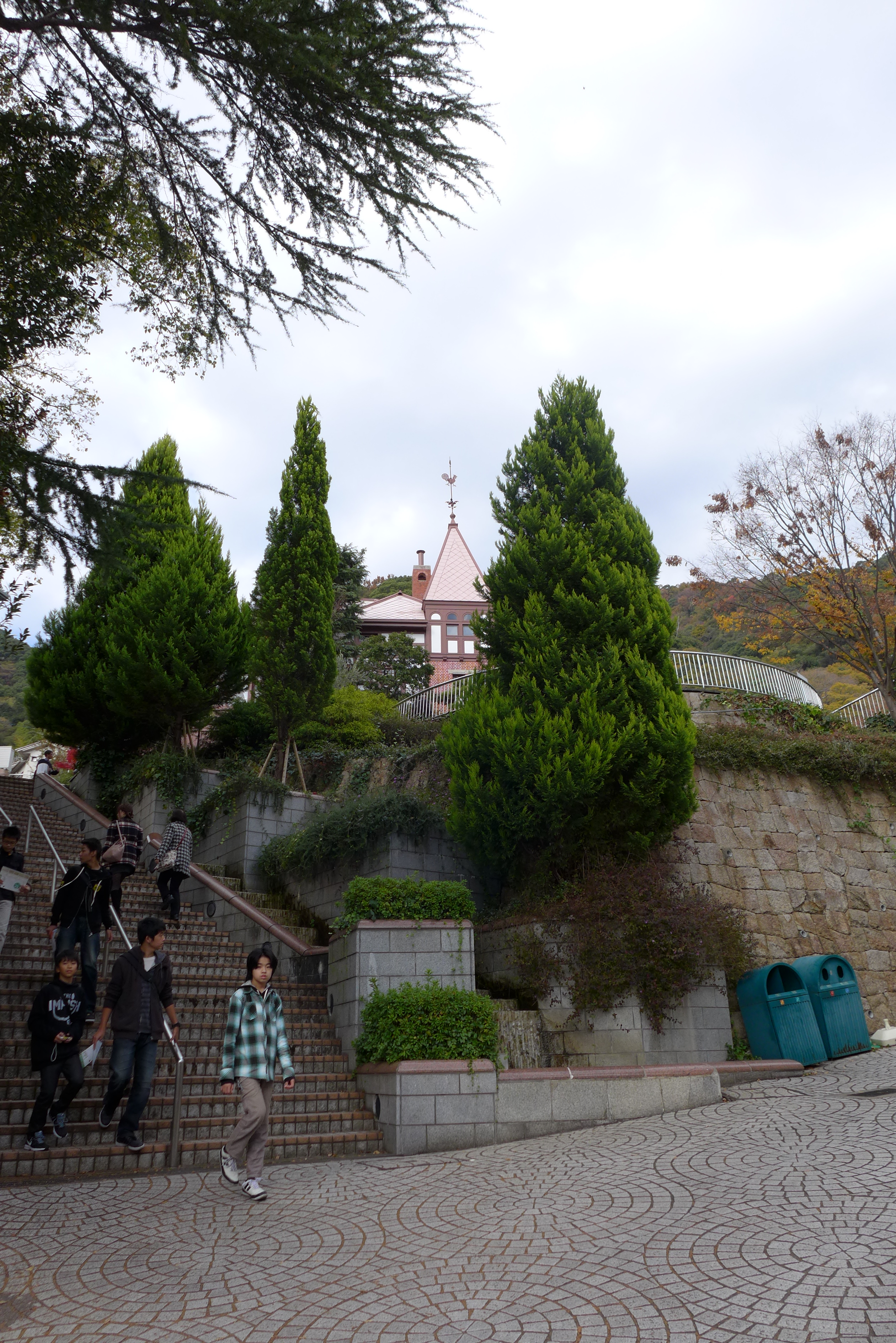
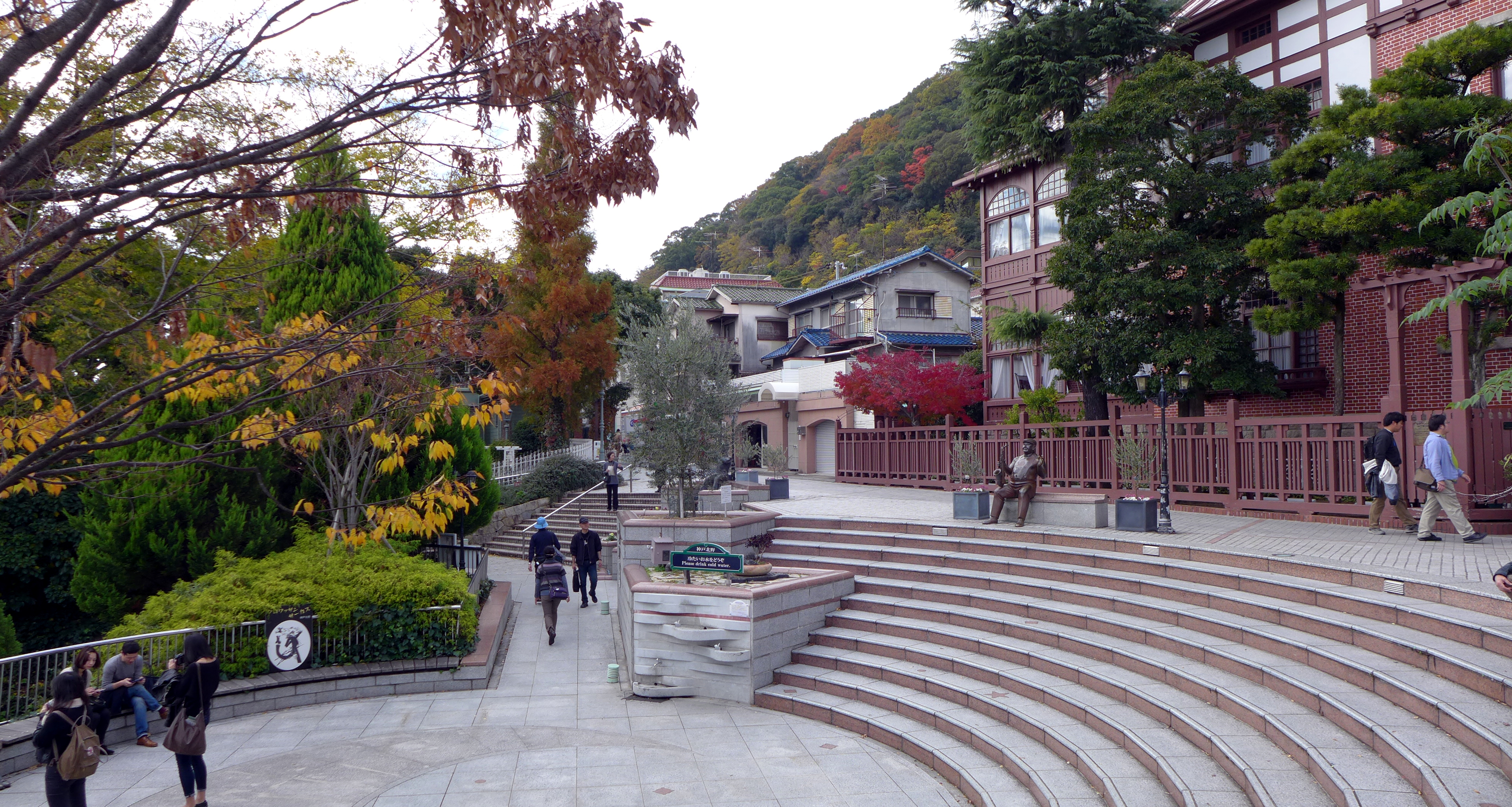
After Ikuta shrine we walked to the north, as we were going in search of a certain restuarant. As we walked we found that Kobe began to look more and more European, with European-style buildings all over the place. We also managed to find both a mosque and a sikh temple – two things I never thought I’d see in Japan!


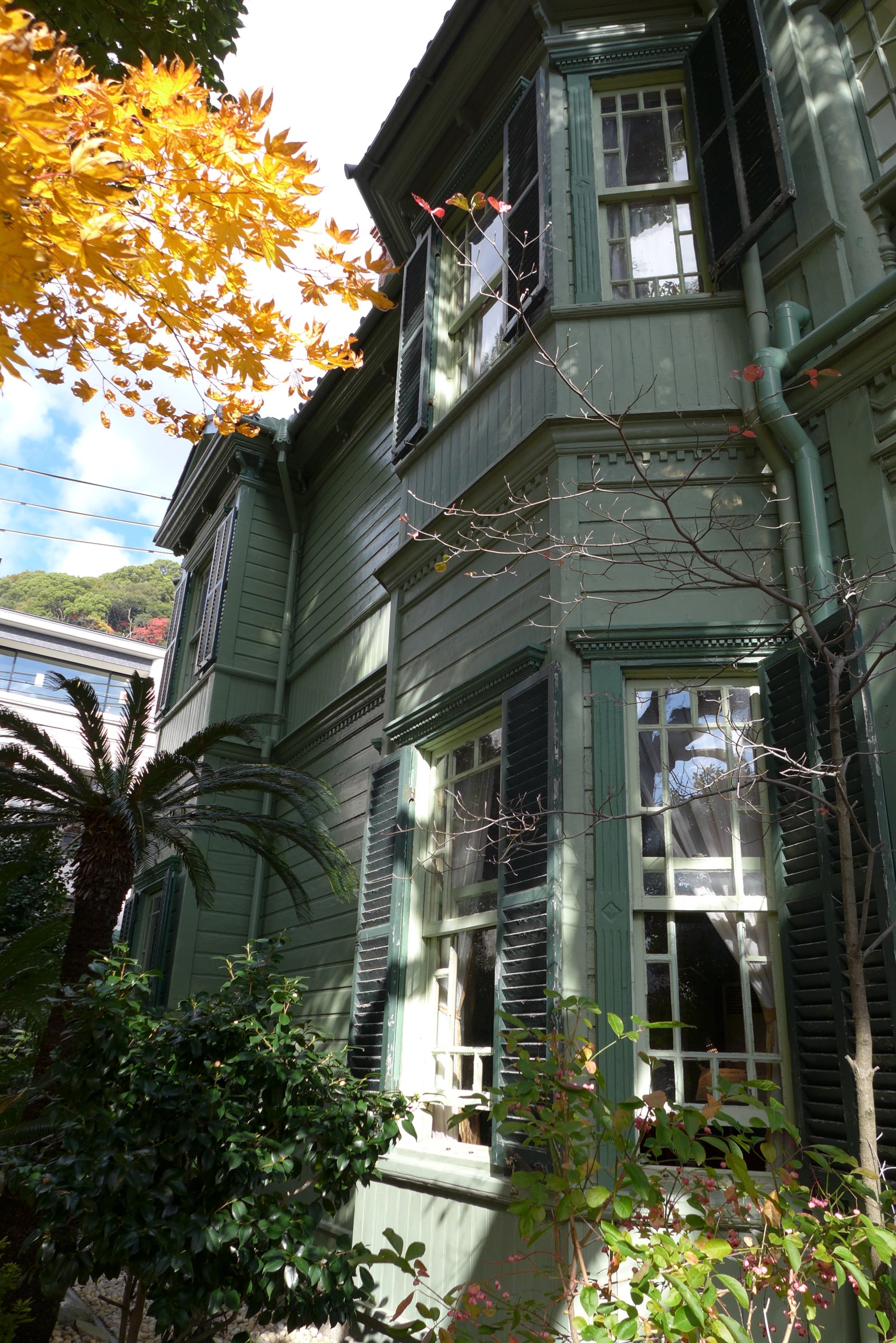
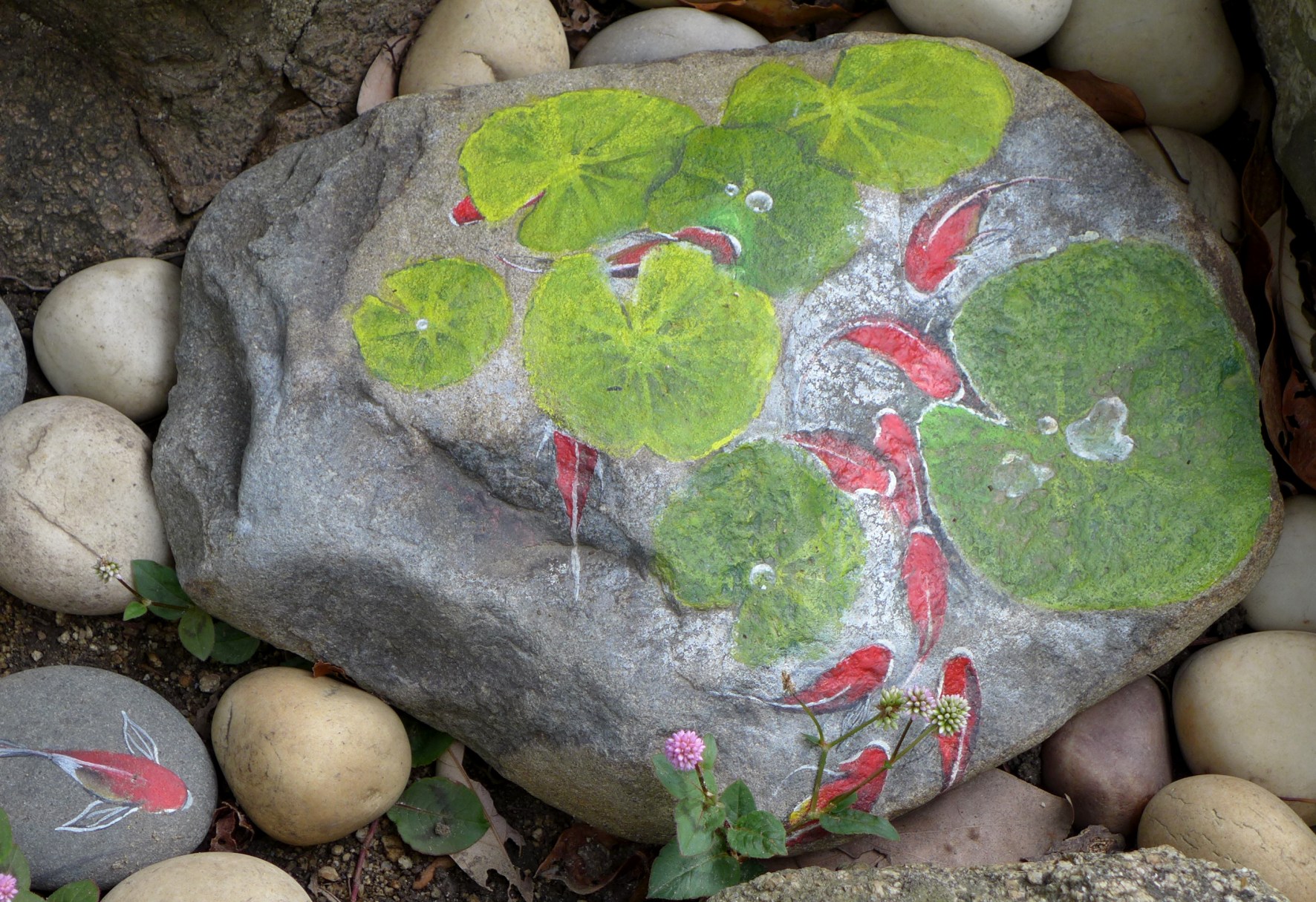
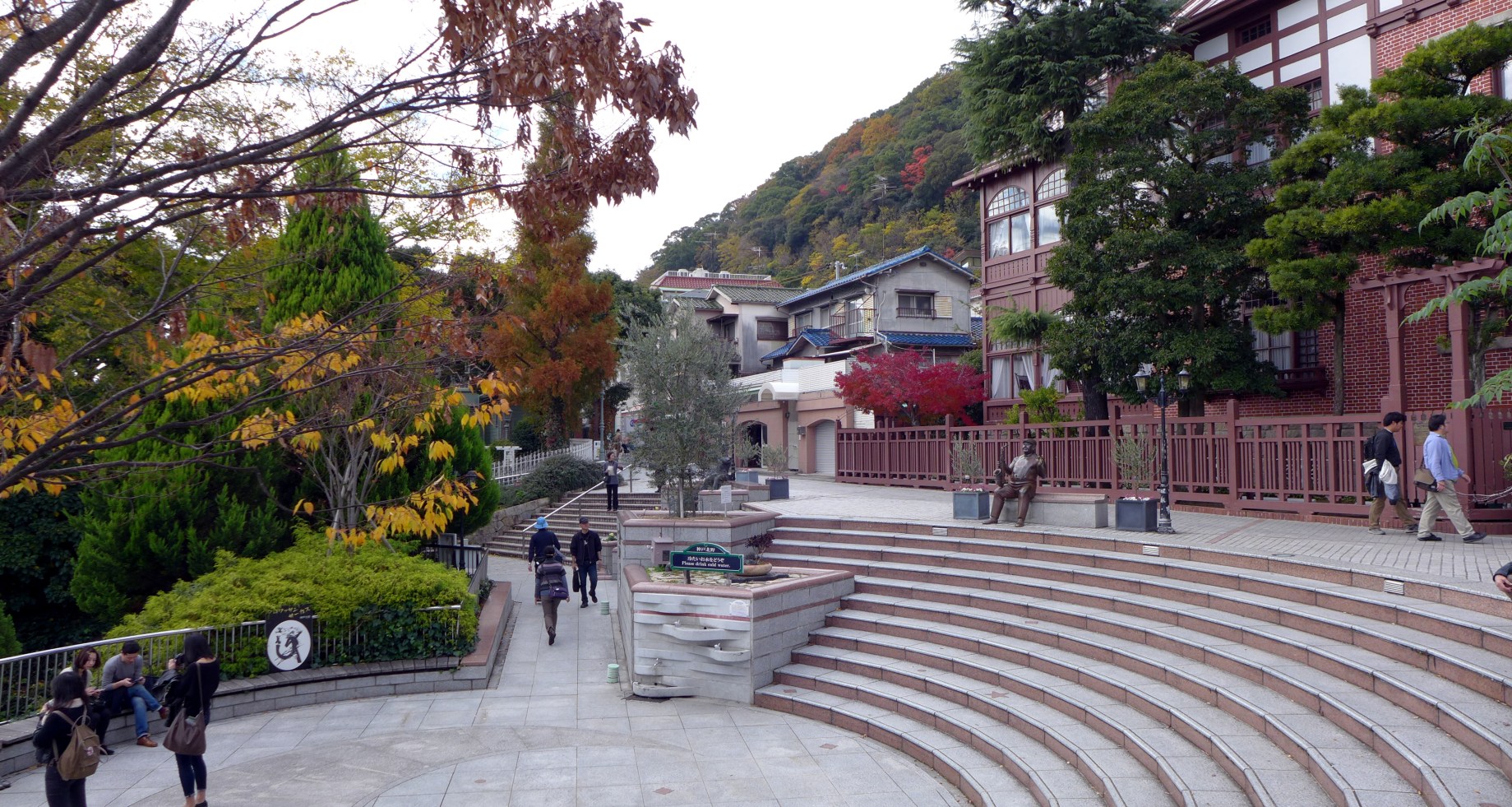
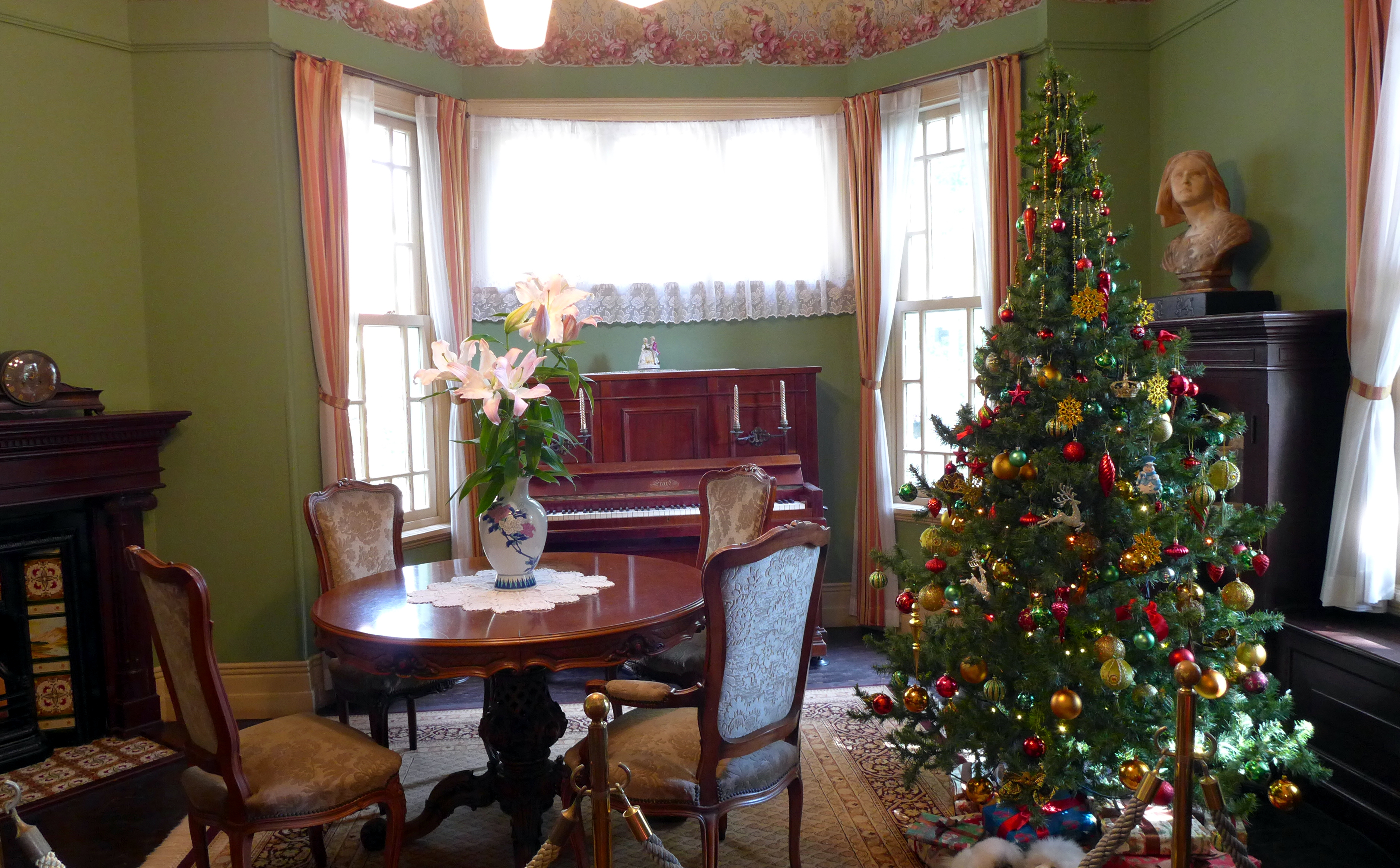
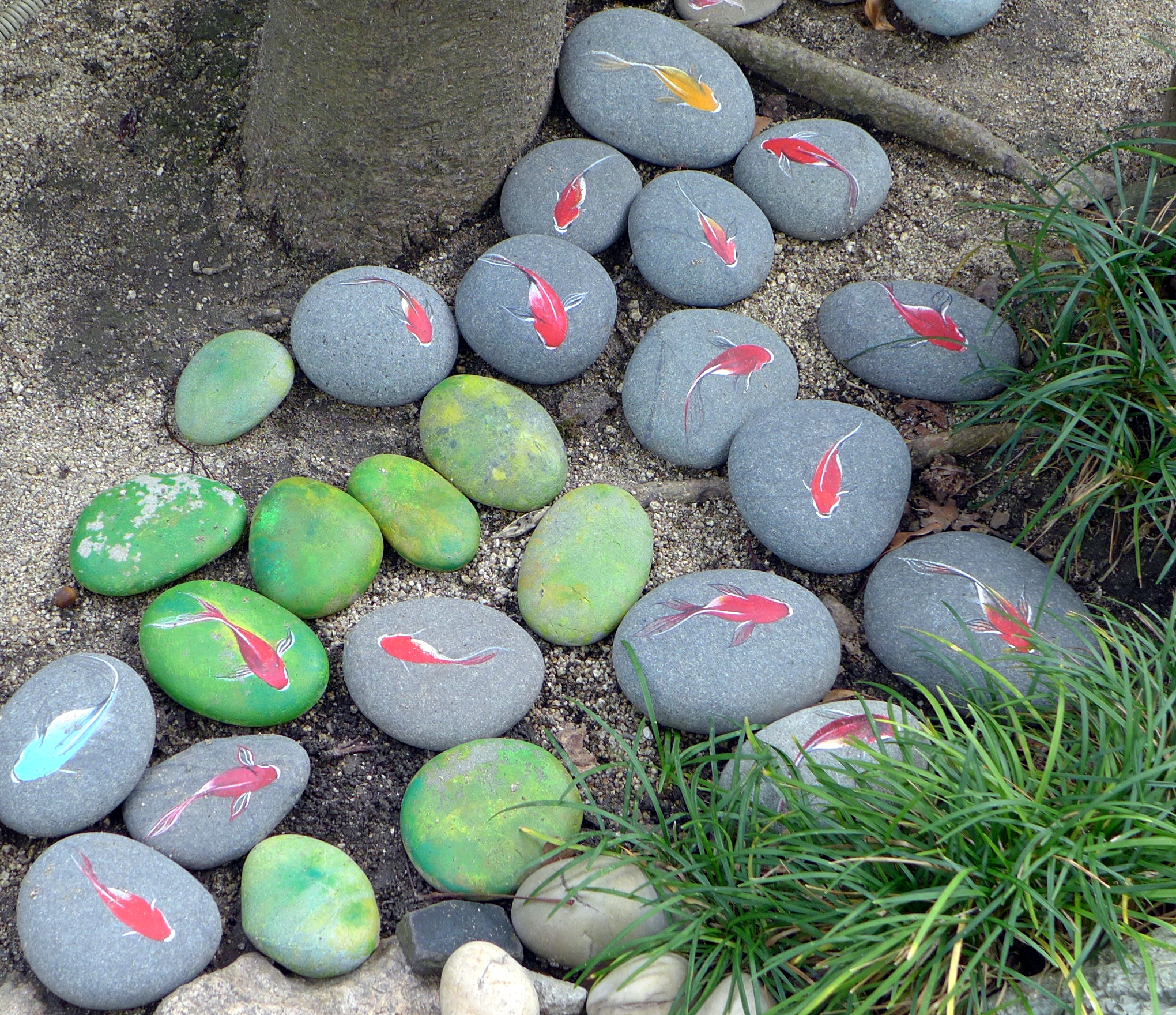
We came to a beautiful area with trees and flowers all around, and several very non-Japanese houses surrounding a central courtyard. You can visit two of the houses, and we decided to visit one before lunch. The one we visited was called the Moegi House (萌黄の館 – literally: Light Green House), built in 1903 for Mr. Hunter Sharp, a former US Consul General. The house was fairly typical European style, so not particularly exciting for Westerners, but I enjoyed looking around it anyway. The garden had some stones painted to look like a fish pond, which I think is a really lovely idea.



The reason that Kobe has so many European-style houses is because it is one of the ports that was ‘opened’ after the coming of Perry’s ‘Black Ships’; the US sent war ships to force Japan to trade after over 250 years of ‘sakoku’ (鎖国) which meant no trade with anyone from the Western world (except the Dutch). The trade had been banned as a way to stop the spread of guns and religion – both very dangerous things to a leader that doesn’t want rebellion. As a result of the forced reversal of this policy (and subsequent collapse of the Tokugawa shogunate) in 1853, Kobe became a cosmopolitan city. Kobe had already been a contact with the outside world from ancient times – imperial embassies to China were dispatched since the 8th century (not to mention the ’embassy’ to Korea under Empress Jingu), so this opening served to resume Kobe’s role as a point of foreign relations for Japan.



Kobe is also an important port in terms of Japanese foreign policy – in 1975 it was the first port to ban the export or import of nuclear weapons through ships going in or out. This policy became known as the ‘Kobe Formula’ and led to American warships not being allowed to dock in many Japanese ports due to non-disclosure of holding nuclear weapons. This heralded the start of Japan’s strict non-nuclear policy and rejection of pressure from the US to provide a platform for American nuclear weapons (apart from Okinawa, which remained an exception).

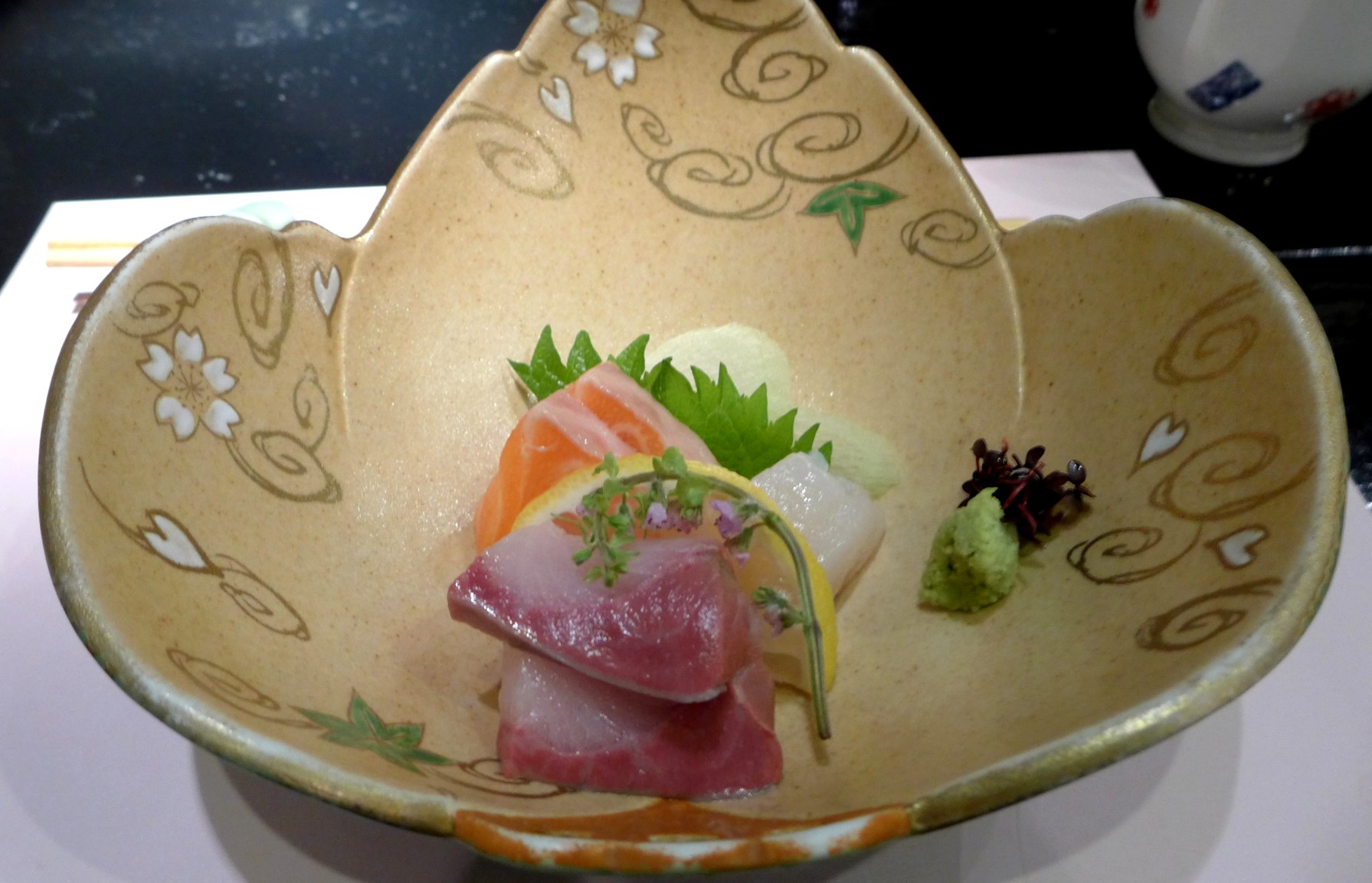
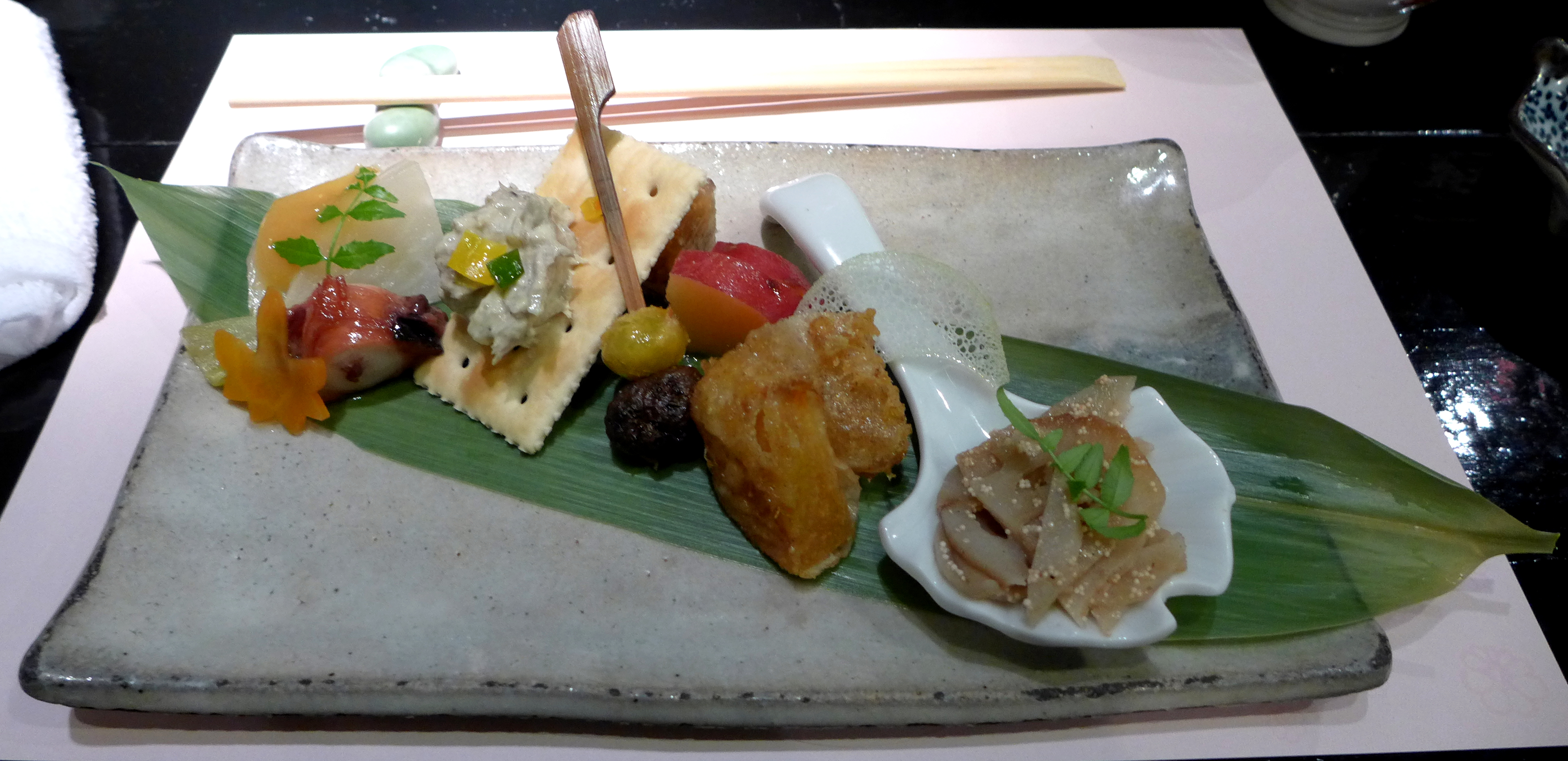
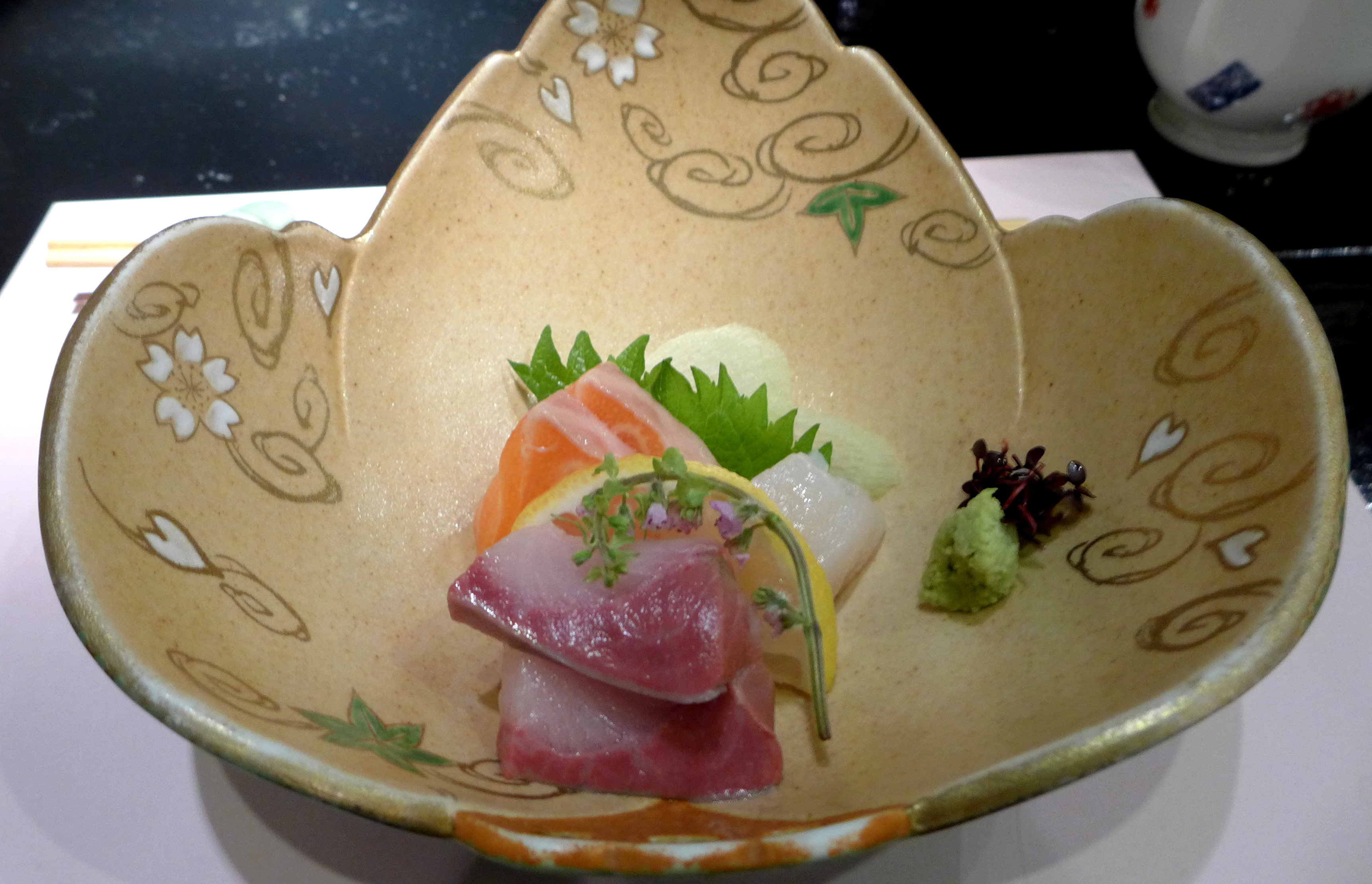
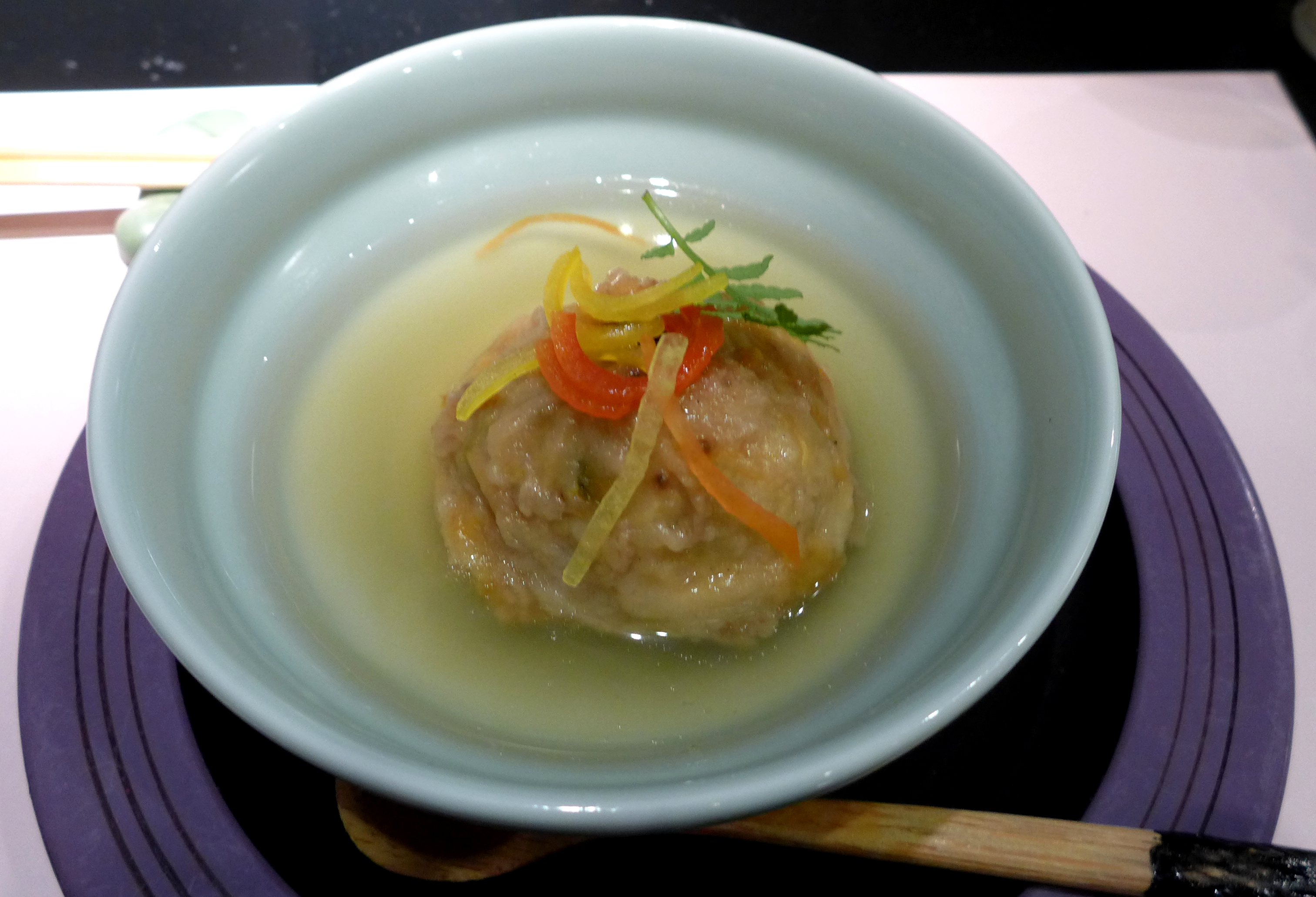
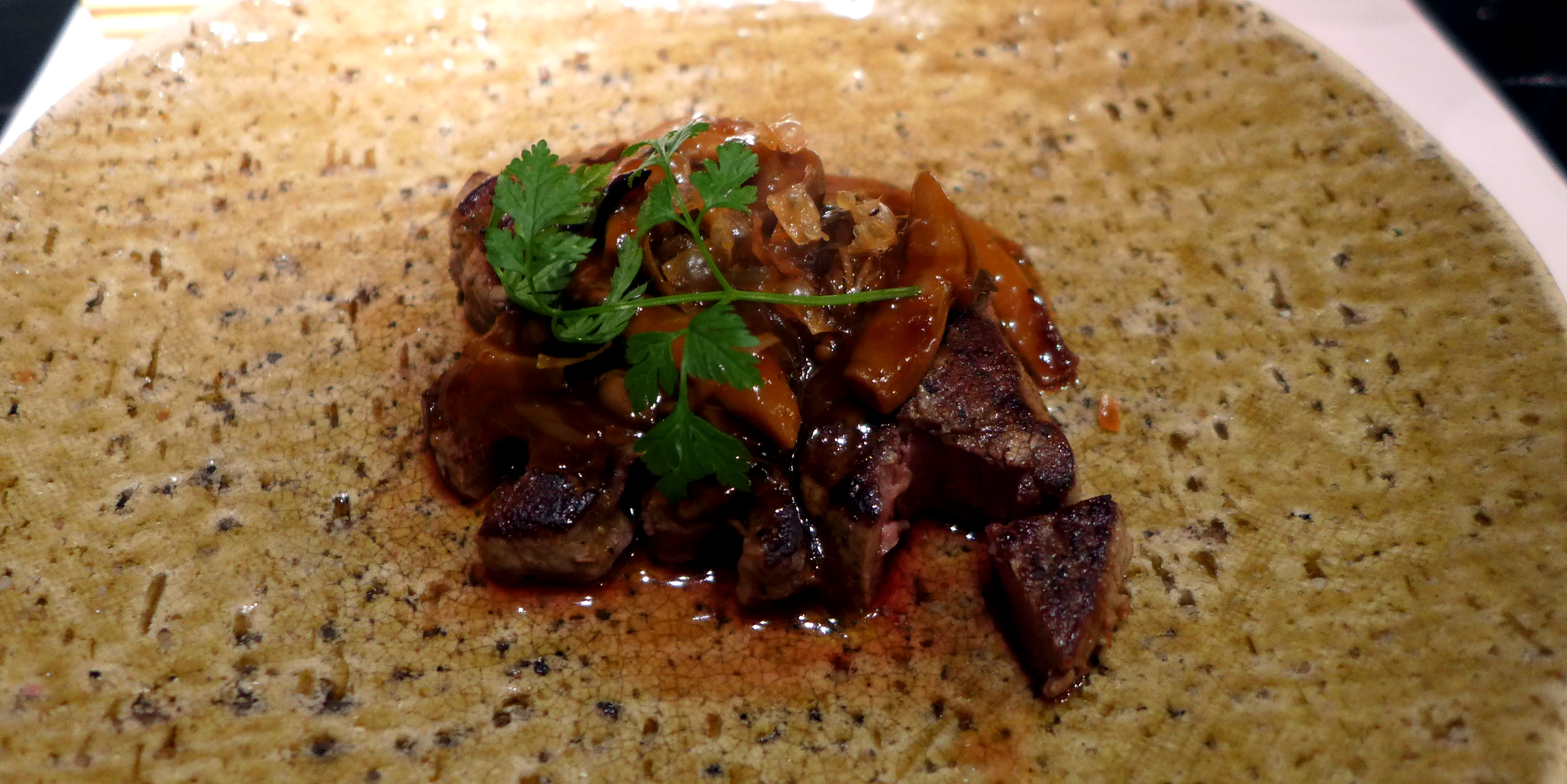
We had lunch at a restaurant called 花れんこん (Hanarenkon), which is located around 10 minutes walk from sannomiya station (三ノ宮駅). We decided to splash out and got the 3000円 (£15.90) menu, which included beef. It was a 5 course menu and it was all absolutely fantastic. I’m not entirely convinced that I’ve satisfied my desire to eat Kobe beef though – this beef had a lot of sauce and I’m not sure if it was ‘real’ Kobe beef, but for the price it was really good (Kobe beef is usually around 6000円).



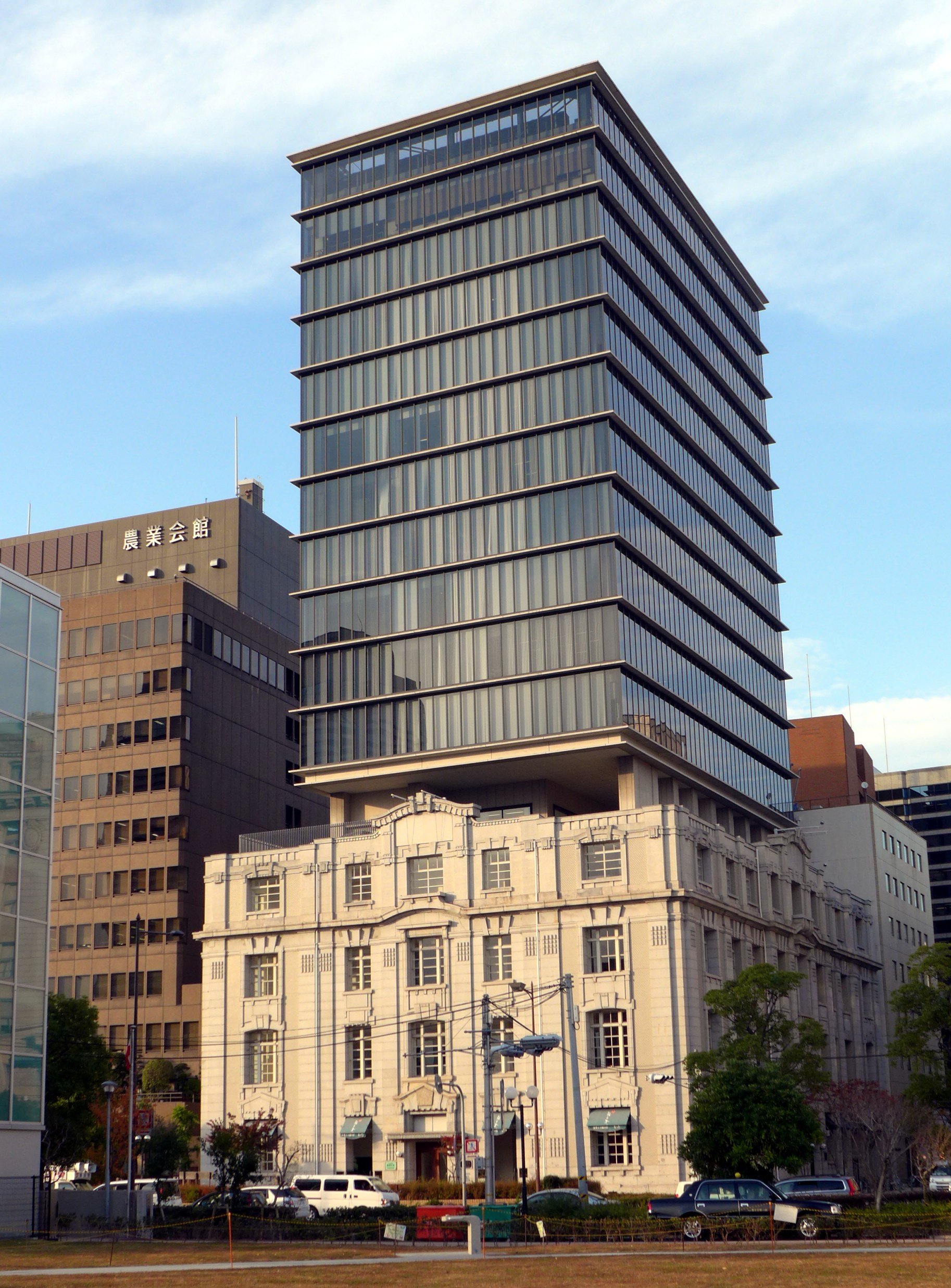
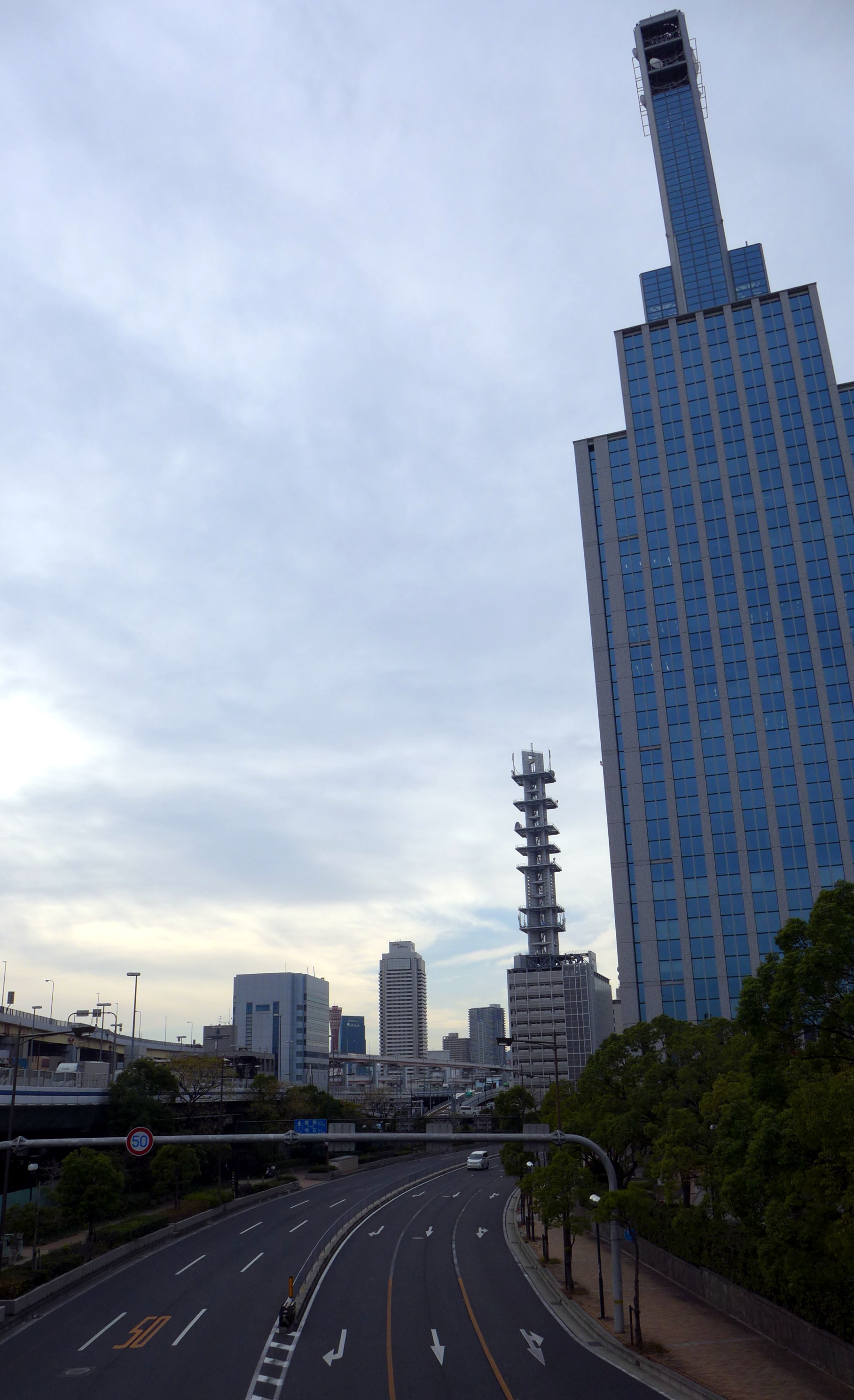
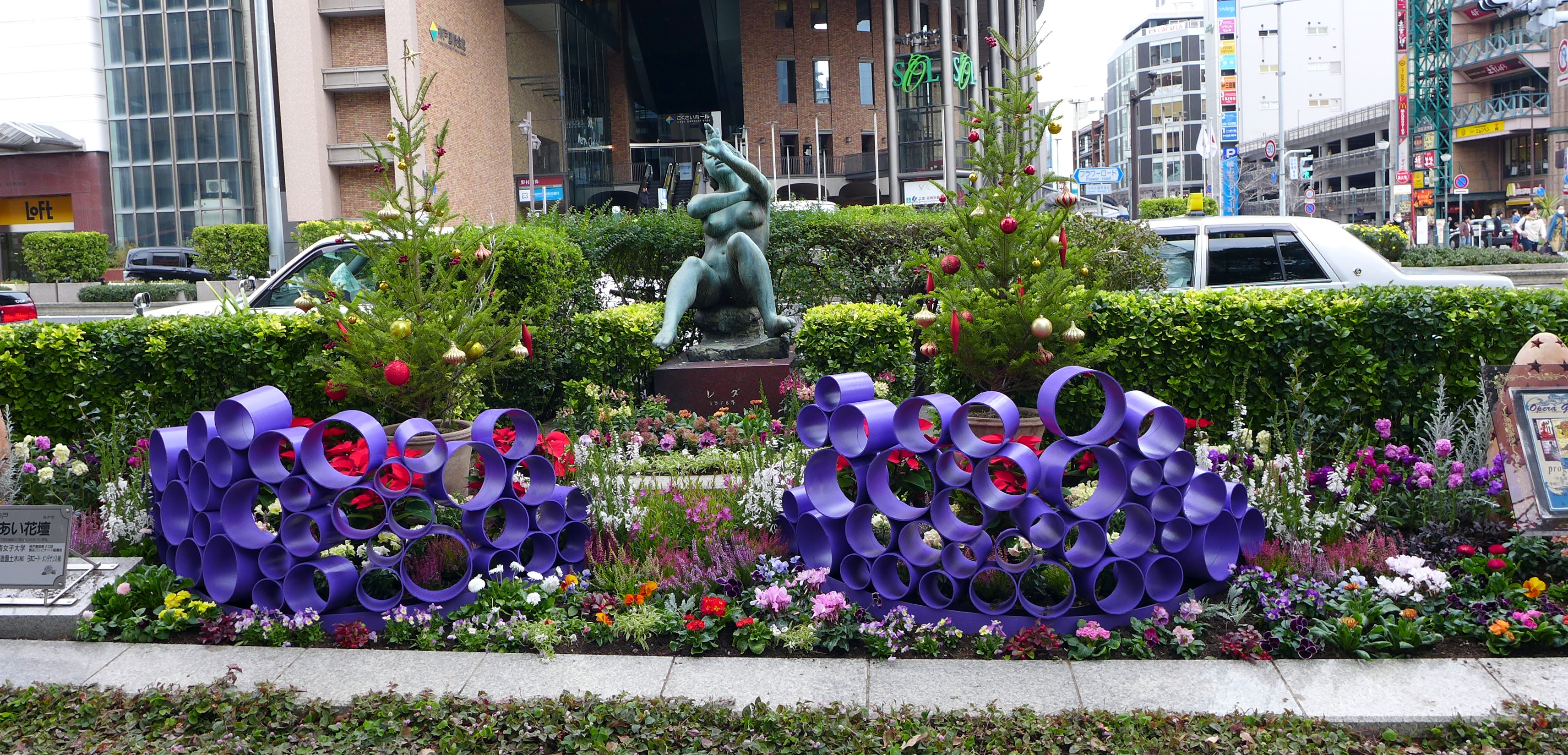
After that we decided to go and find the sea – living in Kyoto we don’t get to see it much. We walked south through Kobe, which is simultaneously France-like and metropolitan; huge overarching motorways overshadow conventional European-style buildings. The most amusing illustration of this dichotomy is the building below, which has a cold, modern block of glass plopped on top of a rather nice old European-style building.



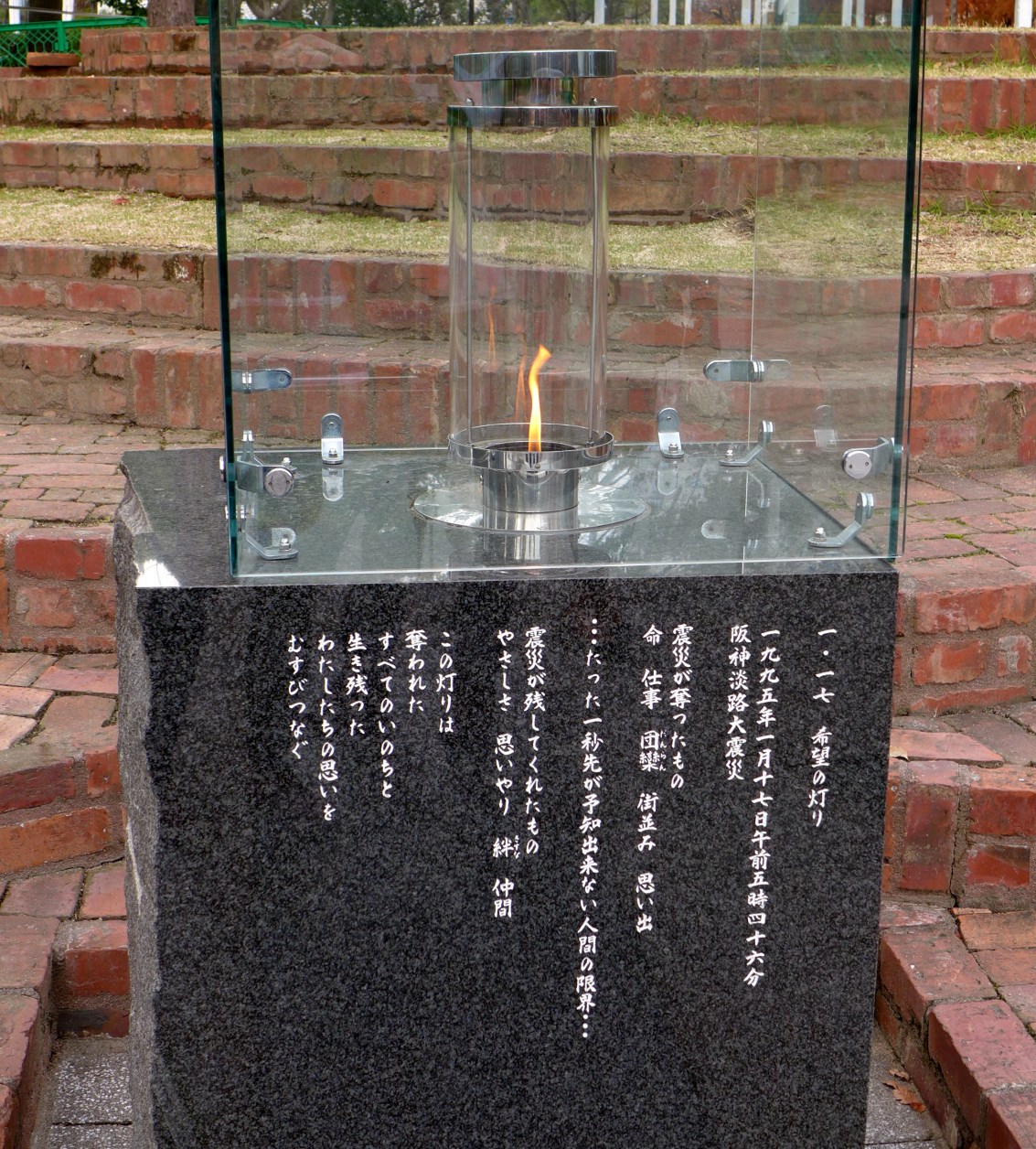
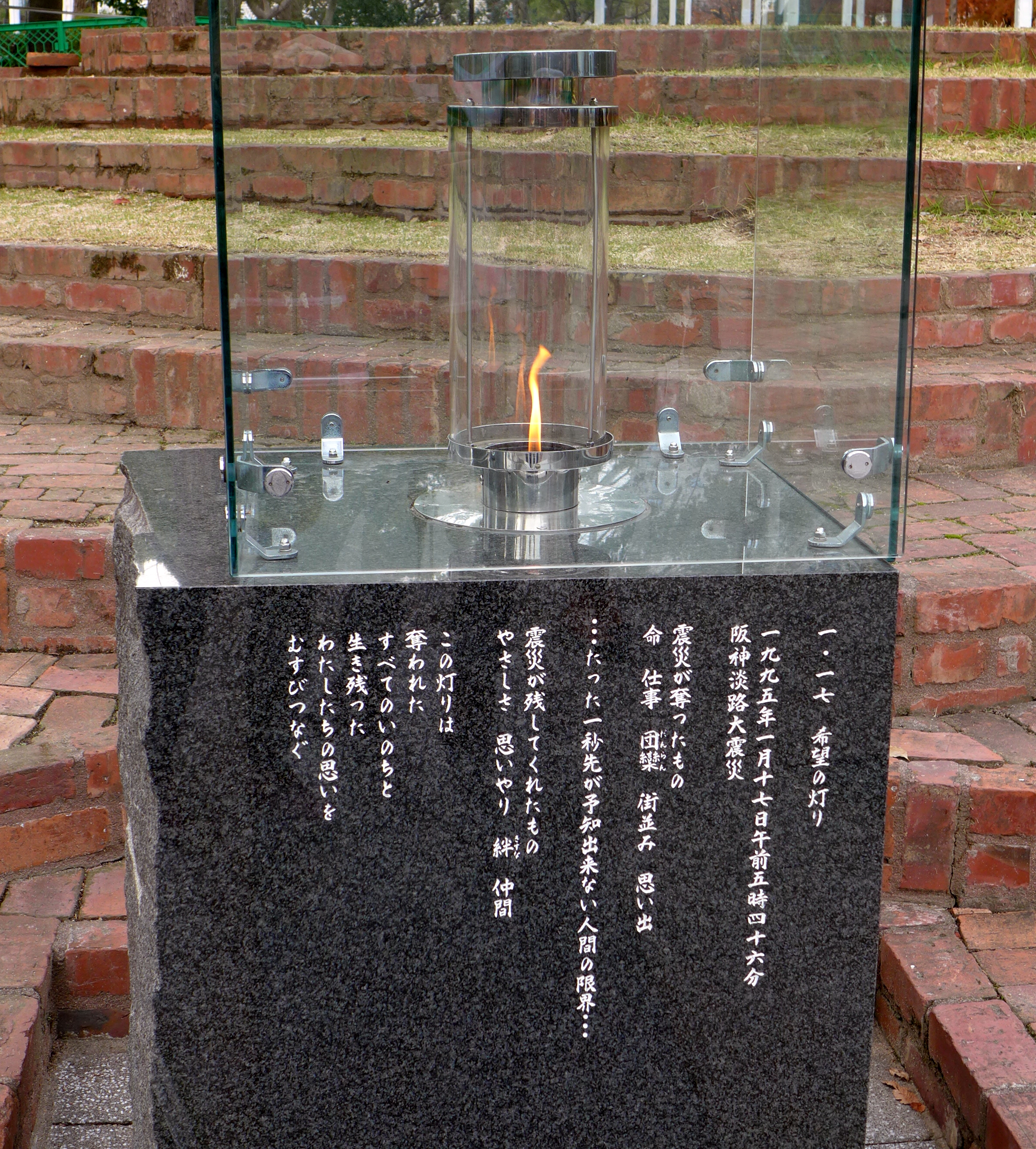
We passed by a memorial to the Great Hansin Earthquake of 1995, which was a 7.2 on the Richter scale. This earthquake killed 6,435 people and left over 200,000 people homeless. Bear in mind that this in Japan, a first world country. A country that is acutely aware of earthquakes, has bendy buildings and evacuation procedures – these figures show how astonishing and terrible power of nature really is. The poem attached to the memorial flame reads thus (in English):
5.46am, 17th January 1995,
The Great Hanshin Earthquake
This earthquake took many things,
Lives, Jobs, Communities, Our Citycsape, Our Memories,
These things appear safe, permanent,
Even moments before, we cannot know
This earthquake left many things behind
Kindness, Compassion, Human Bonds, Friendship
This flame links the lives of which were taken away,
With our thoughts, the survivors
– Masami Horiuchi
Kobe has recovered today into a bustling metropolitan city and remains a main port of Japan, though it slipped from Japan’s number one port to number 4. Haruki Murakami, the famous Japanese author, wrote a book titled in English ‘after the quake‘ (‘all god’s children can dance‘ in Japanese 神の子どもたちはみな踊る), which is a series of short stories set in the month after the Kobe earthquake and before the Sarin Gas Attacks in Tokyo in the same year. I have read this book and I would recommend it as a short read that shows the psychological effect such a huge disaster had on the Japanese people.
Sadly, this is not the only disaster that Kobe has suffered. Kobe is one of the cities that was worst hit by incendiary bombings in the 1940s during WWII. This killed thousands of people and destroyed over 20% of the city. The bombing’s effect on the ordinary lives of Japanese is explored in the studio Ghibli film ‘Grave of the Fireflies‘ (火垂るの墓) which is the saddest film I have ever watched. I would highly recommend it as it is a beautiful and moving film, but I can honestly say I probably won’t watch it again because its too sad. Though it is animated it is emotional and very well written – it is definitely not a children’s film.
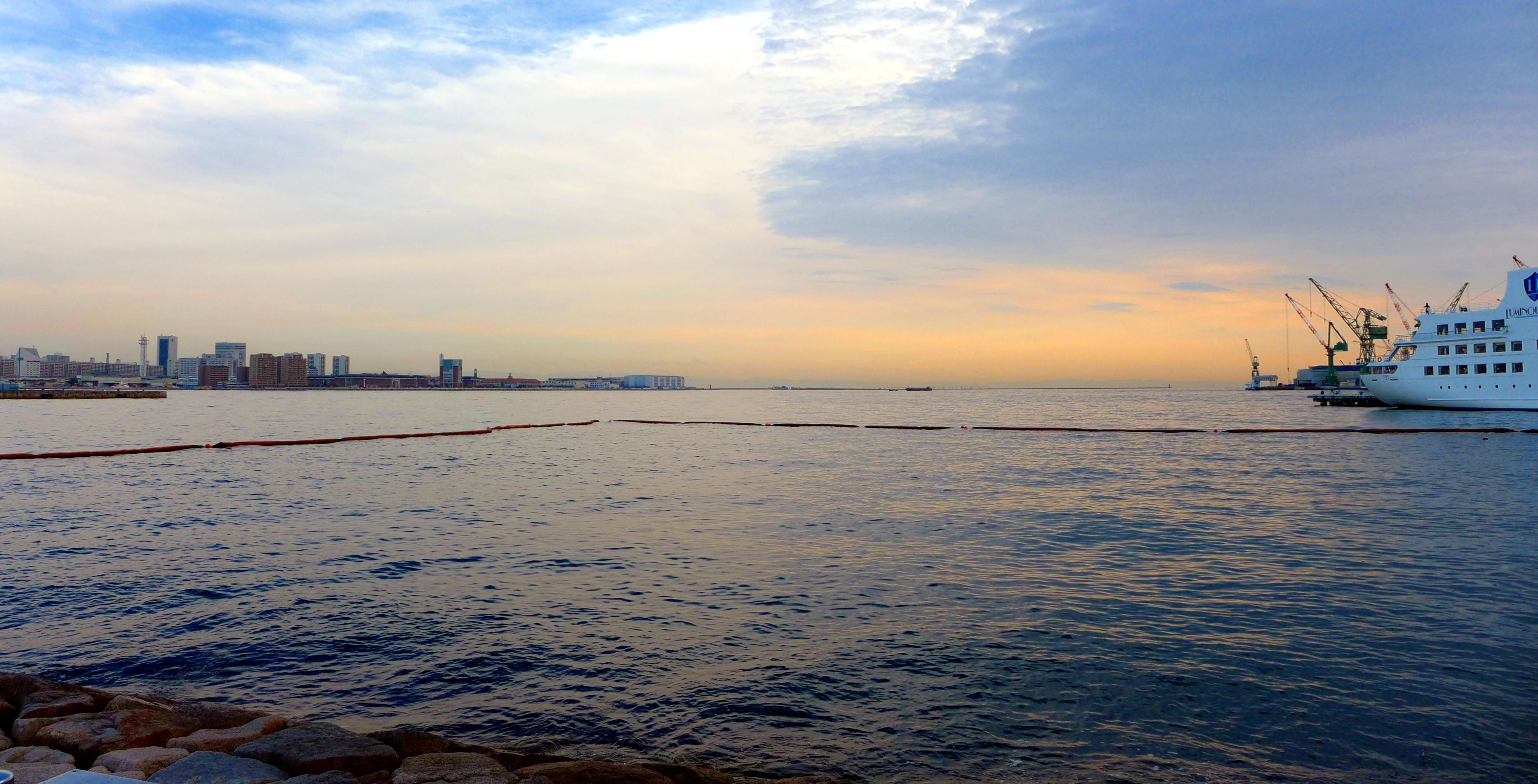
We eventually reached the ocean, and looked out across Osaka bay towards the other shore (which was presumably Osaka). It was lovely to see the sea; though the Kamo river is beautiful, there’s something magnetic about a wide stretch of ocean.

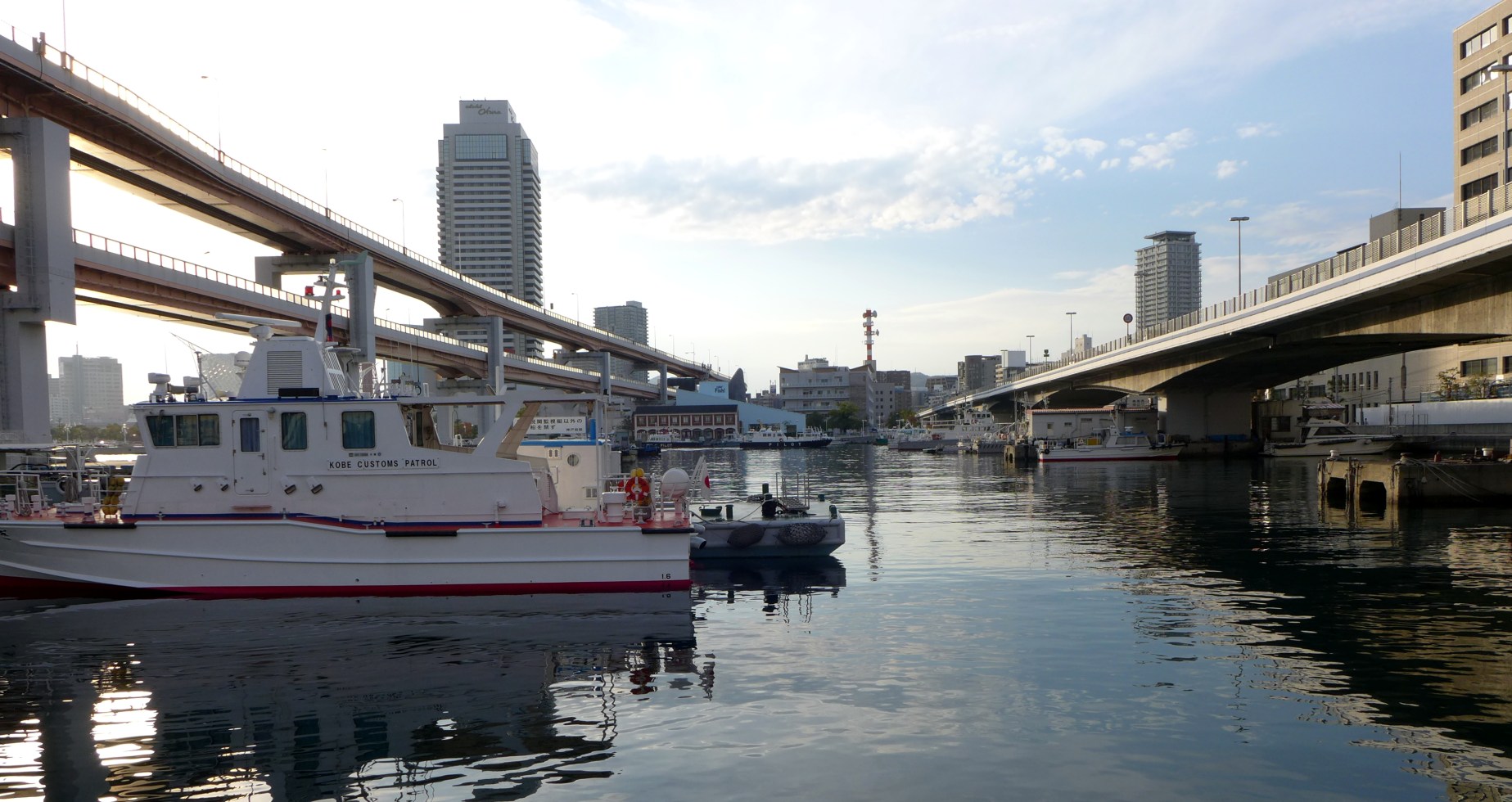


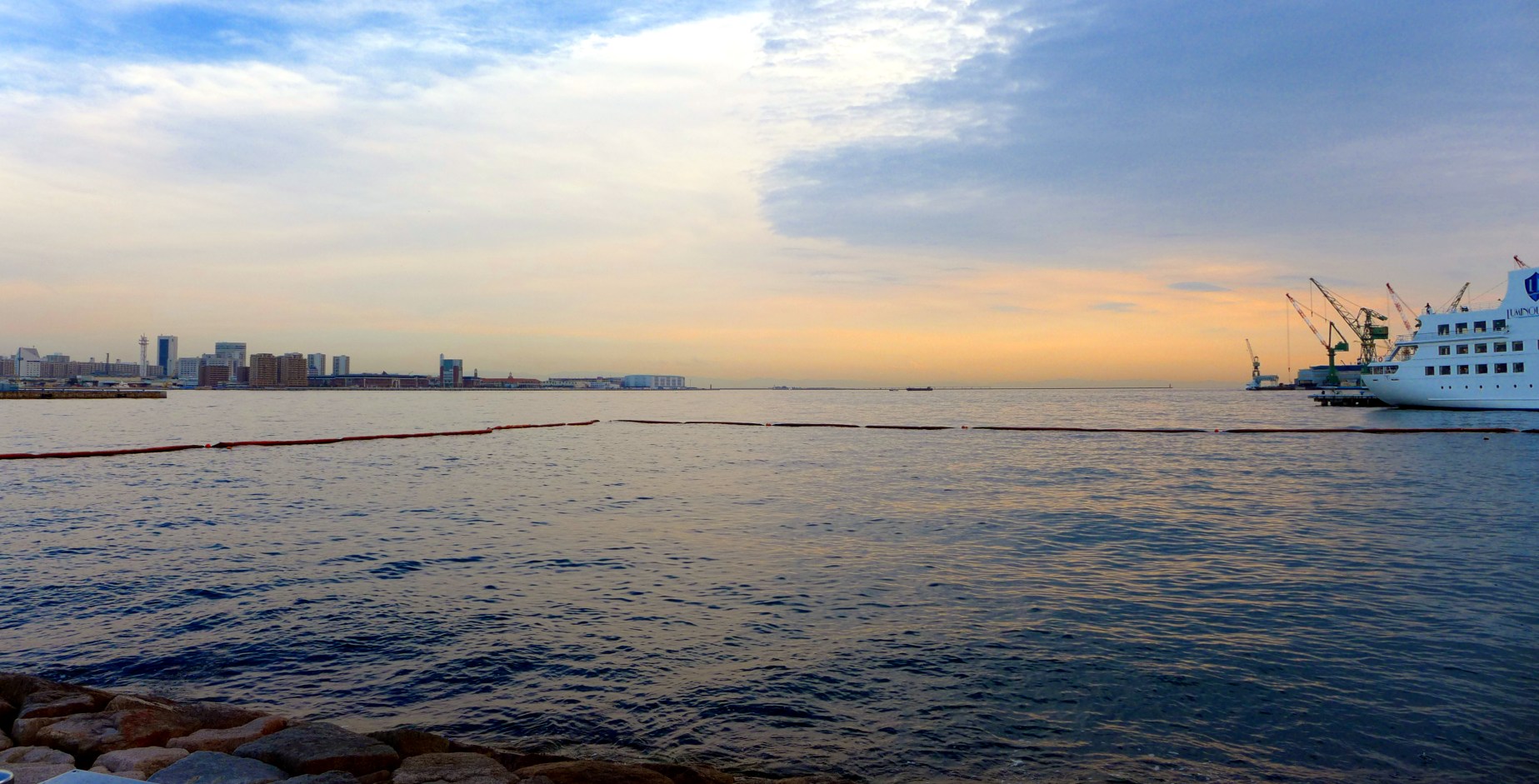
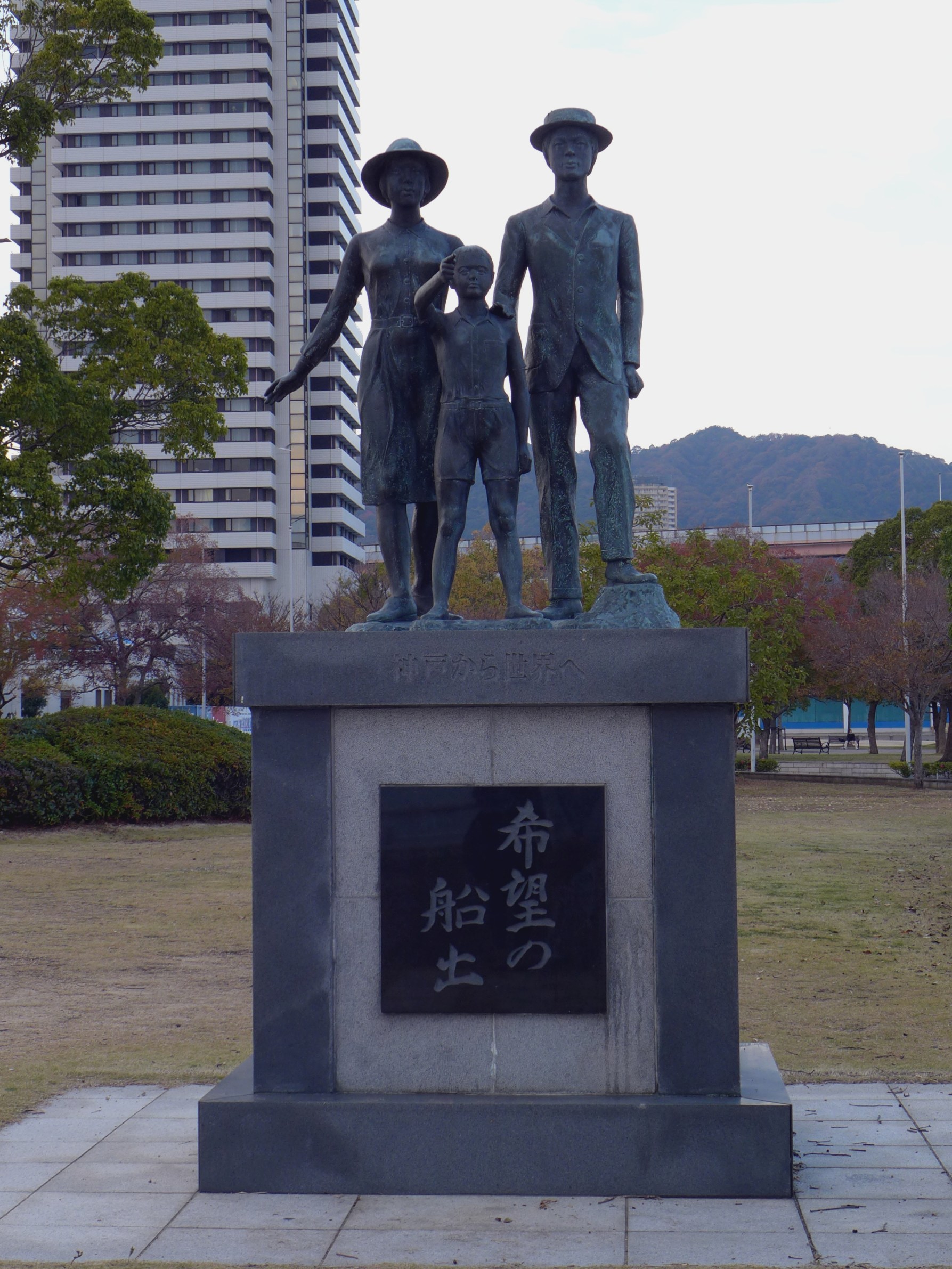
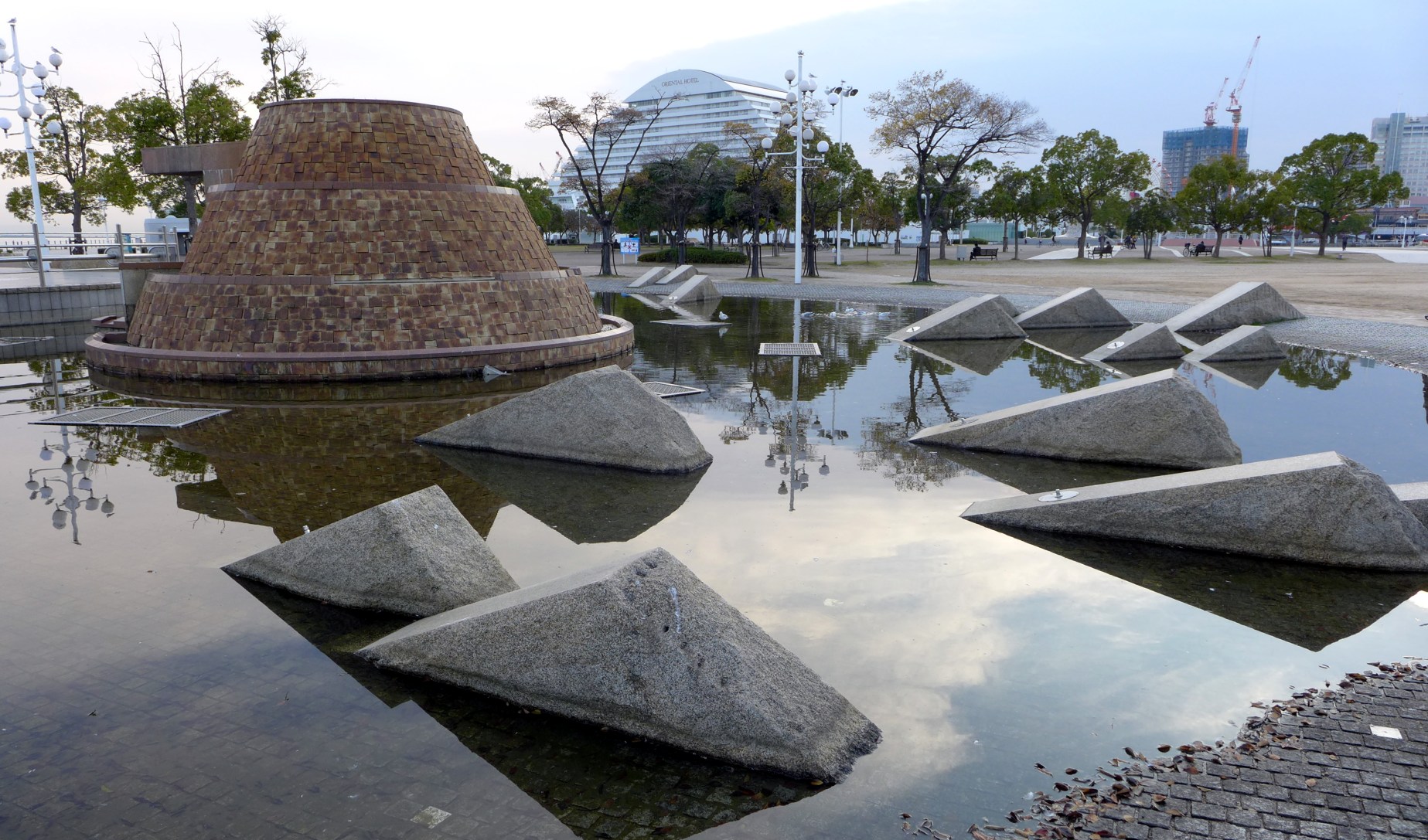
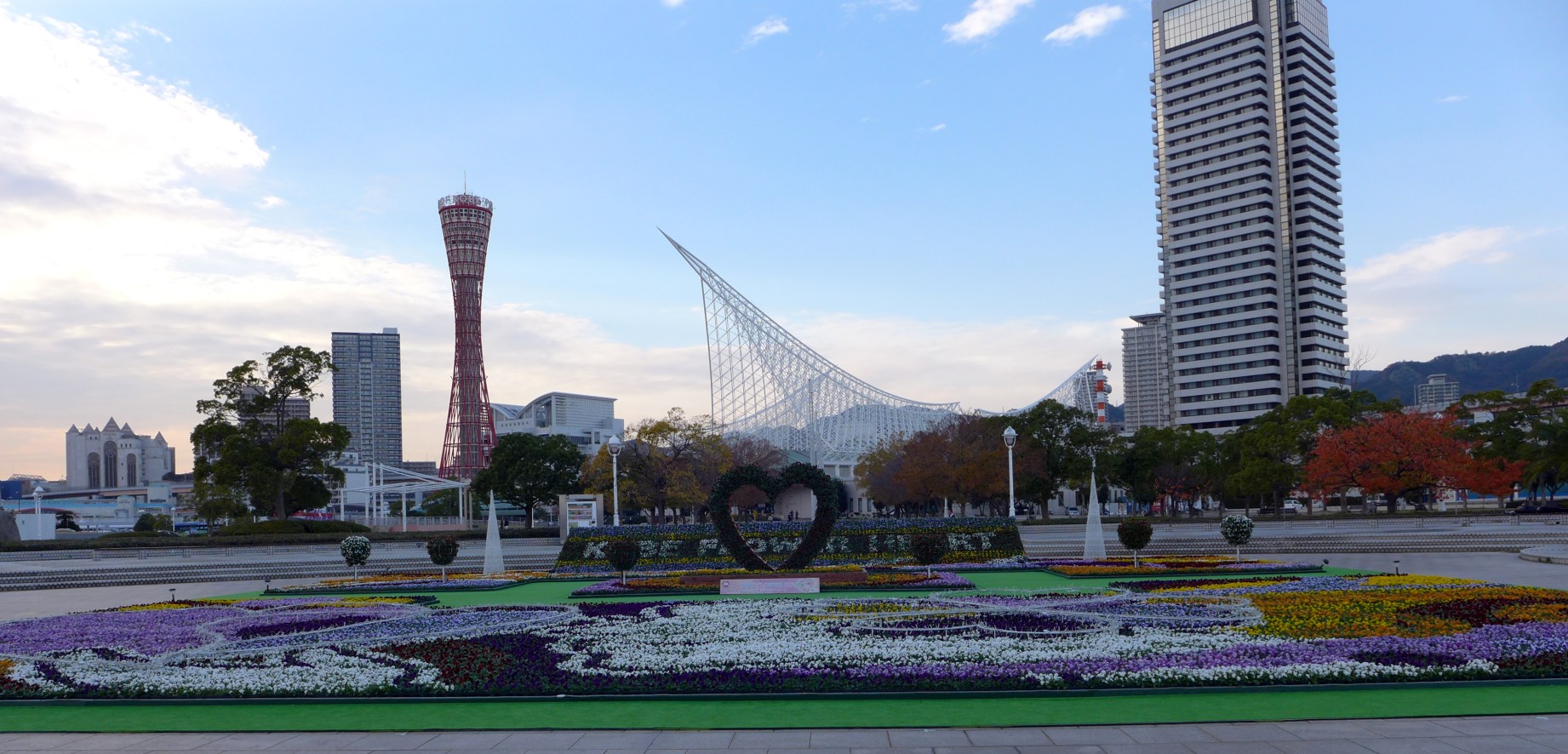
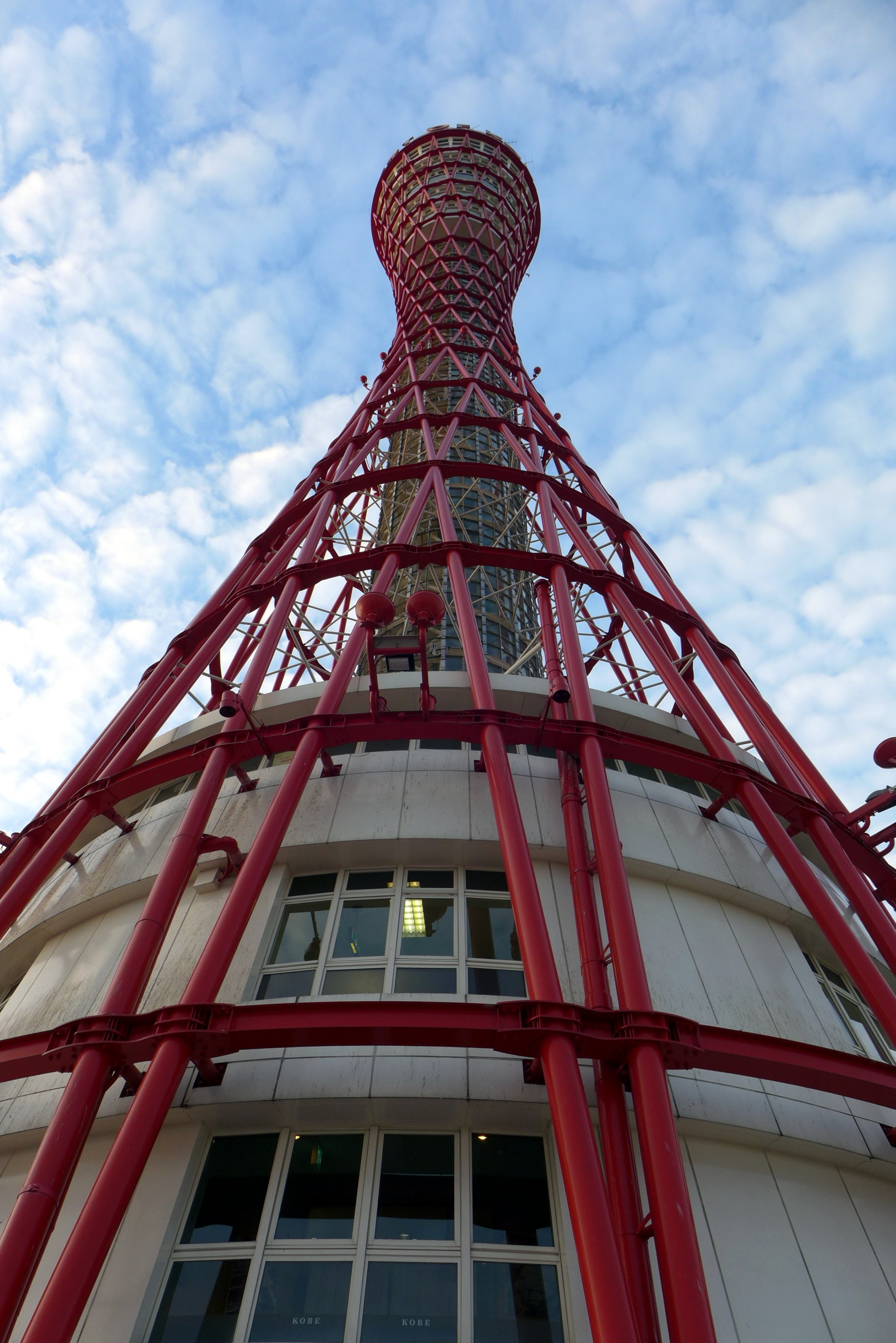
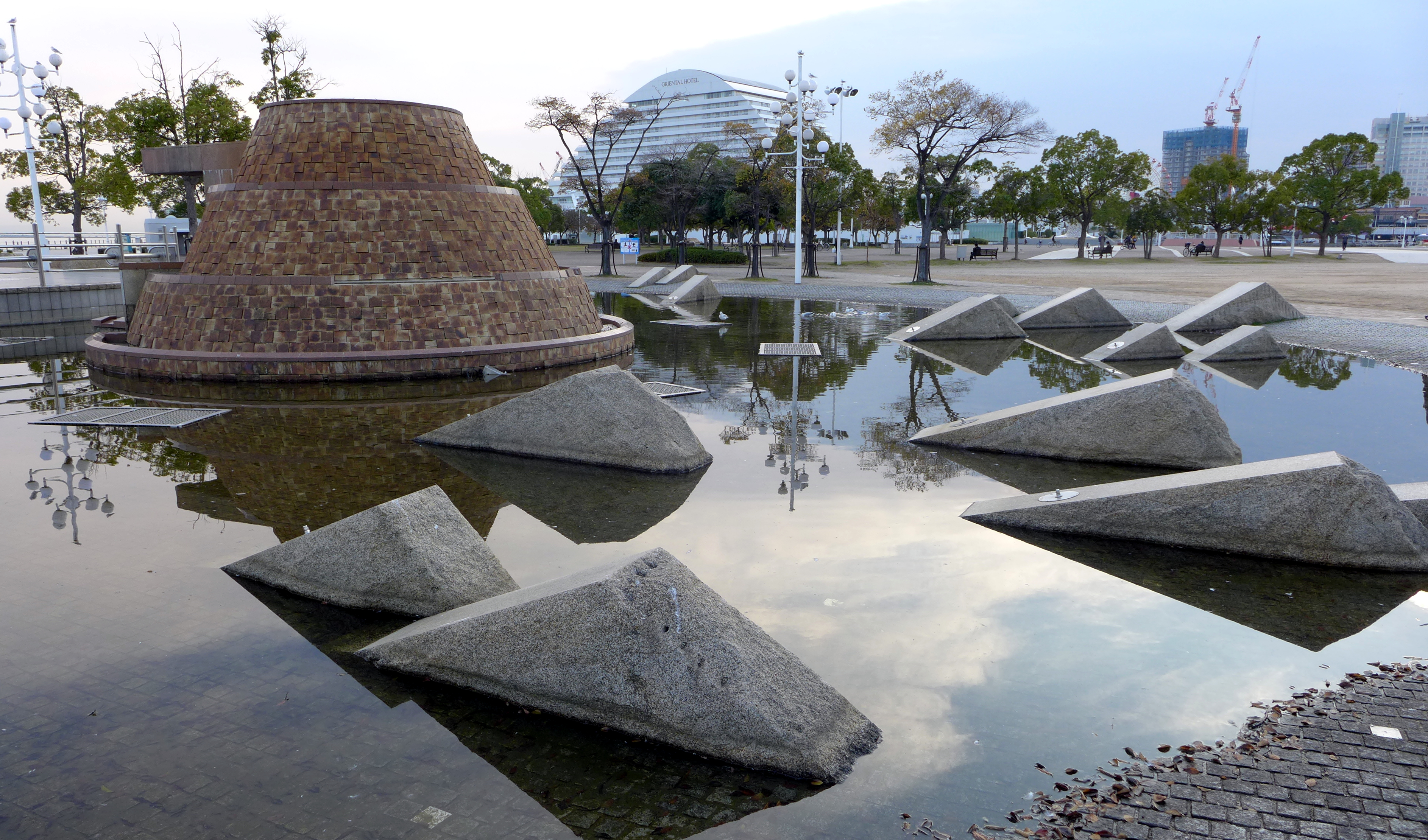
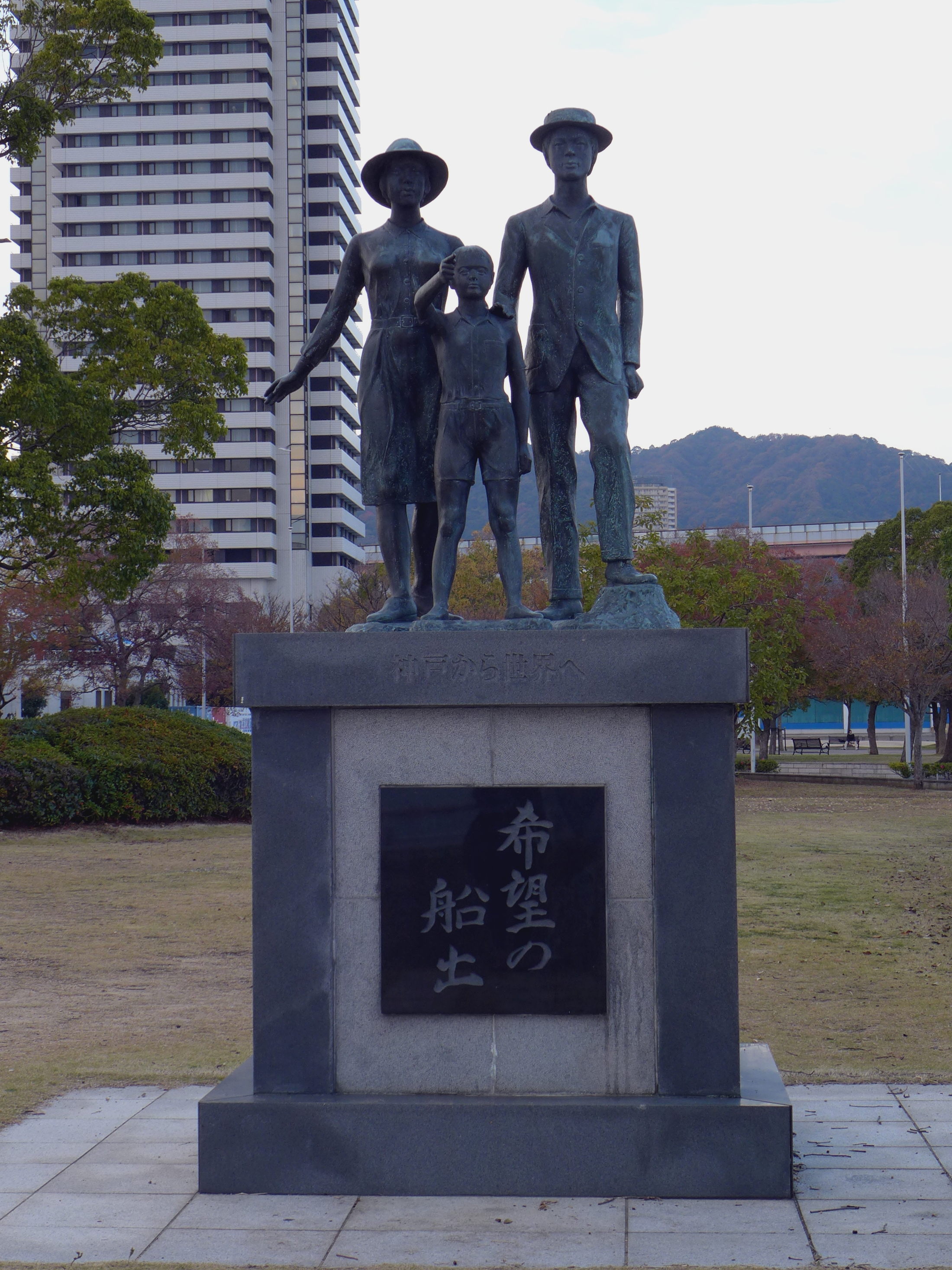
The park that overlooked the ocean was also good to explore. The park is called Meriken Park (メリケンパーク), the name stemming from an old Japanisation of ‘American’, and has a number of statues as well as Kobe Port Tower. It was nice to see that they have a statue dedicated to Japanese emigrants from Kobe to the rest of the world, remembering those that left during the growing cosmopolitanism of Kobe in the 20th century. Kobe tower also looked pretty impressive, but we didn’t go up as there was a school trip in there.

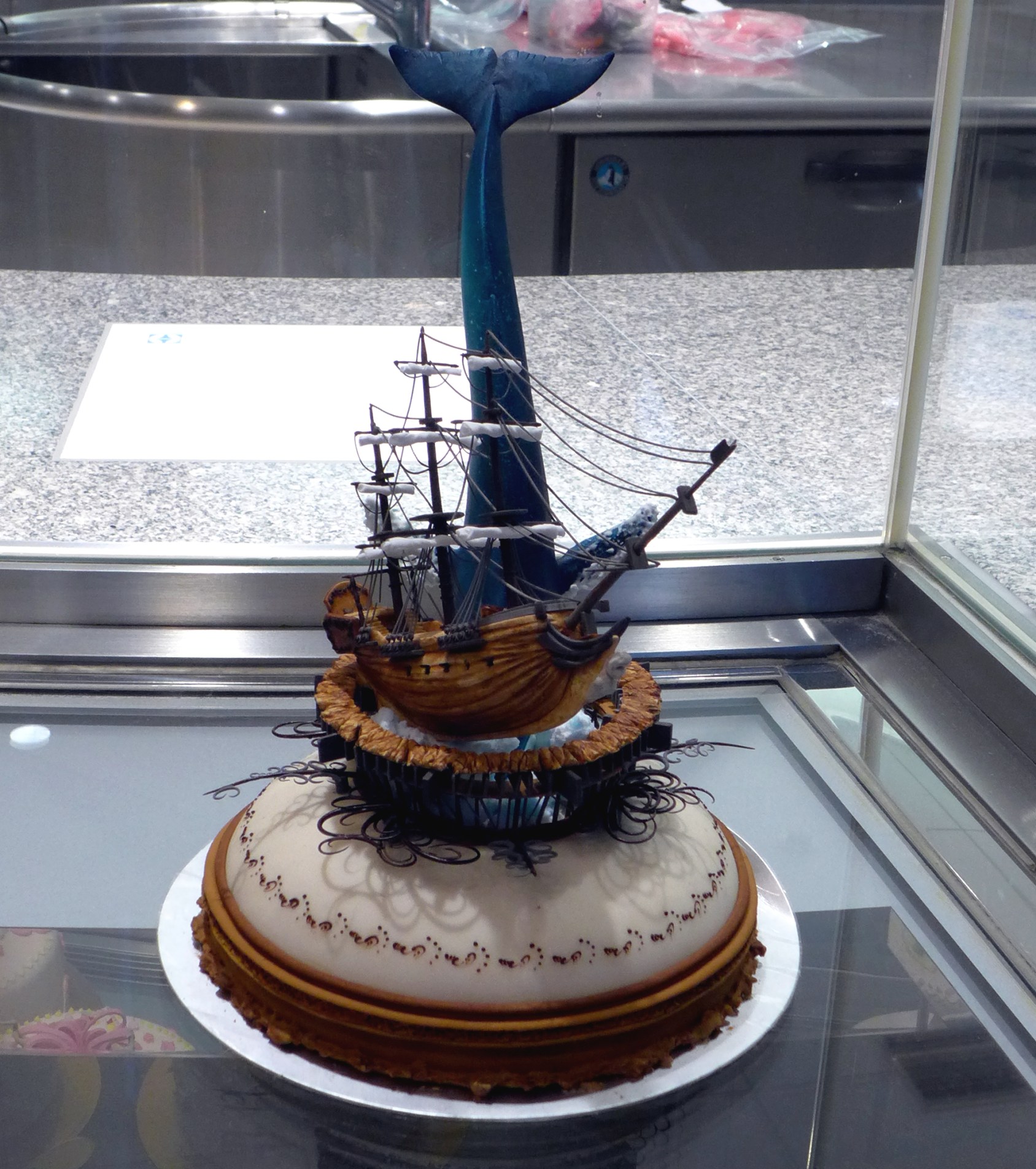
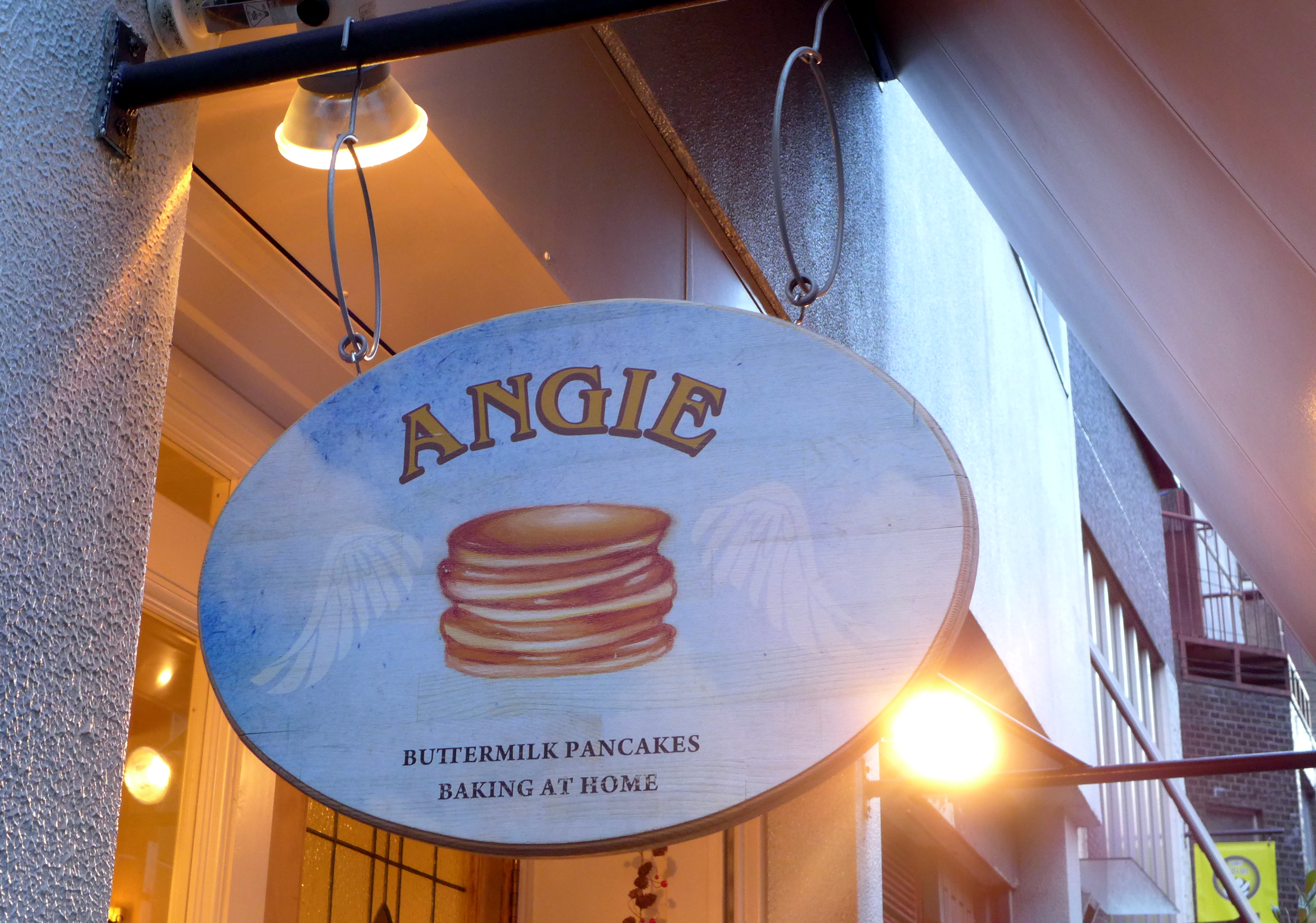
In the evening we headed back into town, towards China Town, as that was our destination for dinner. On the way we passed by a pastry chef school that had this amazing cake, I had to take a picture! I also found a pancake place with my name on it – I’ll have to go back to check it out.

We wandered around the shopping centre for a bit, which had a rather high volume of fortune telling shops – the kind where you pay an exorbitant sum for an old lady to give you vague advice. There were also these dinosaur models at a shop, no idea why because they were selling household appliances and not dinosaurs.


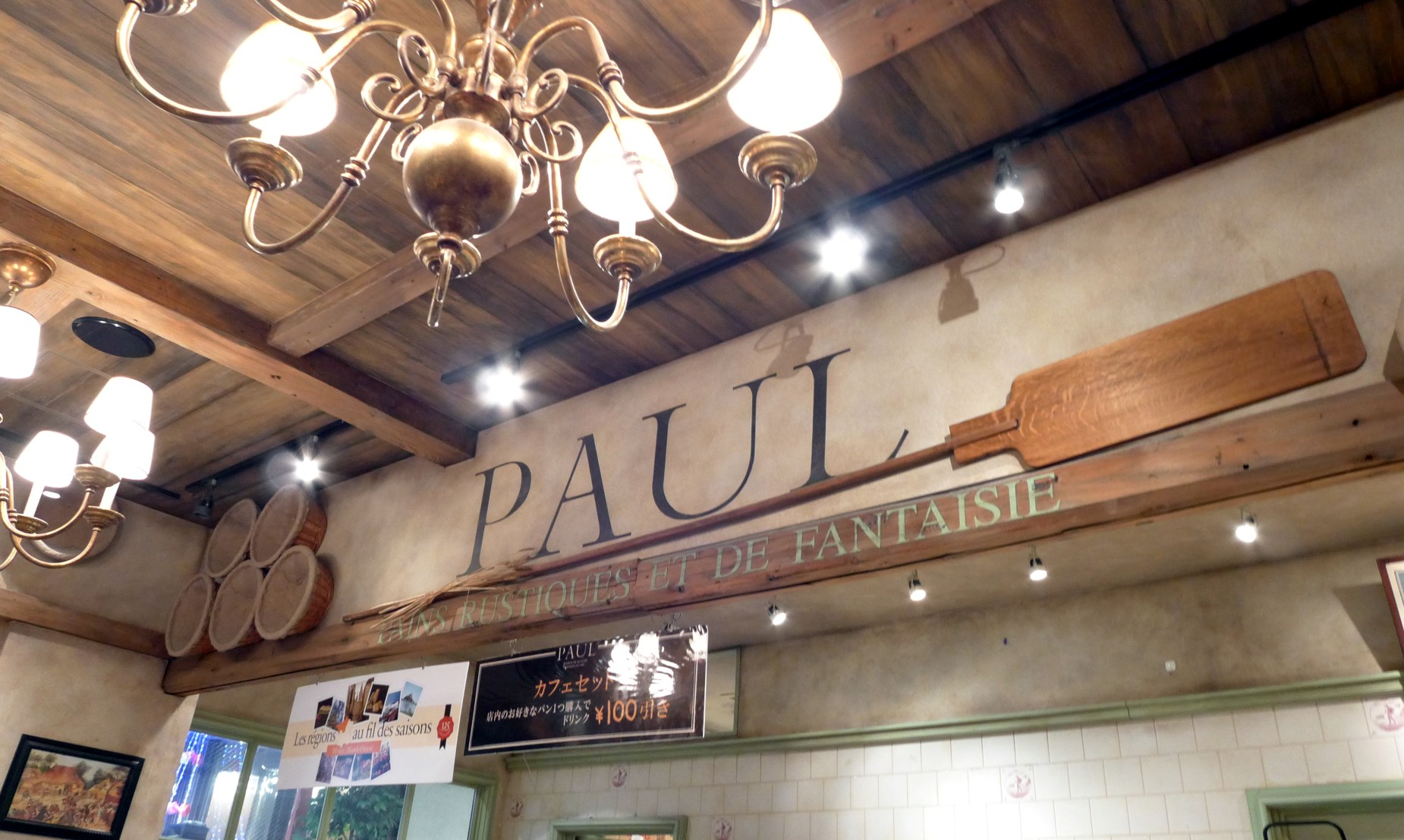
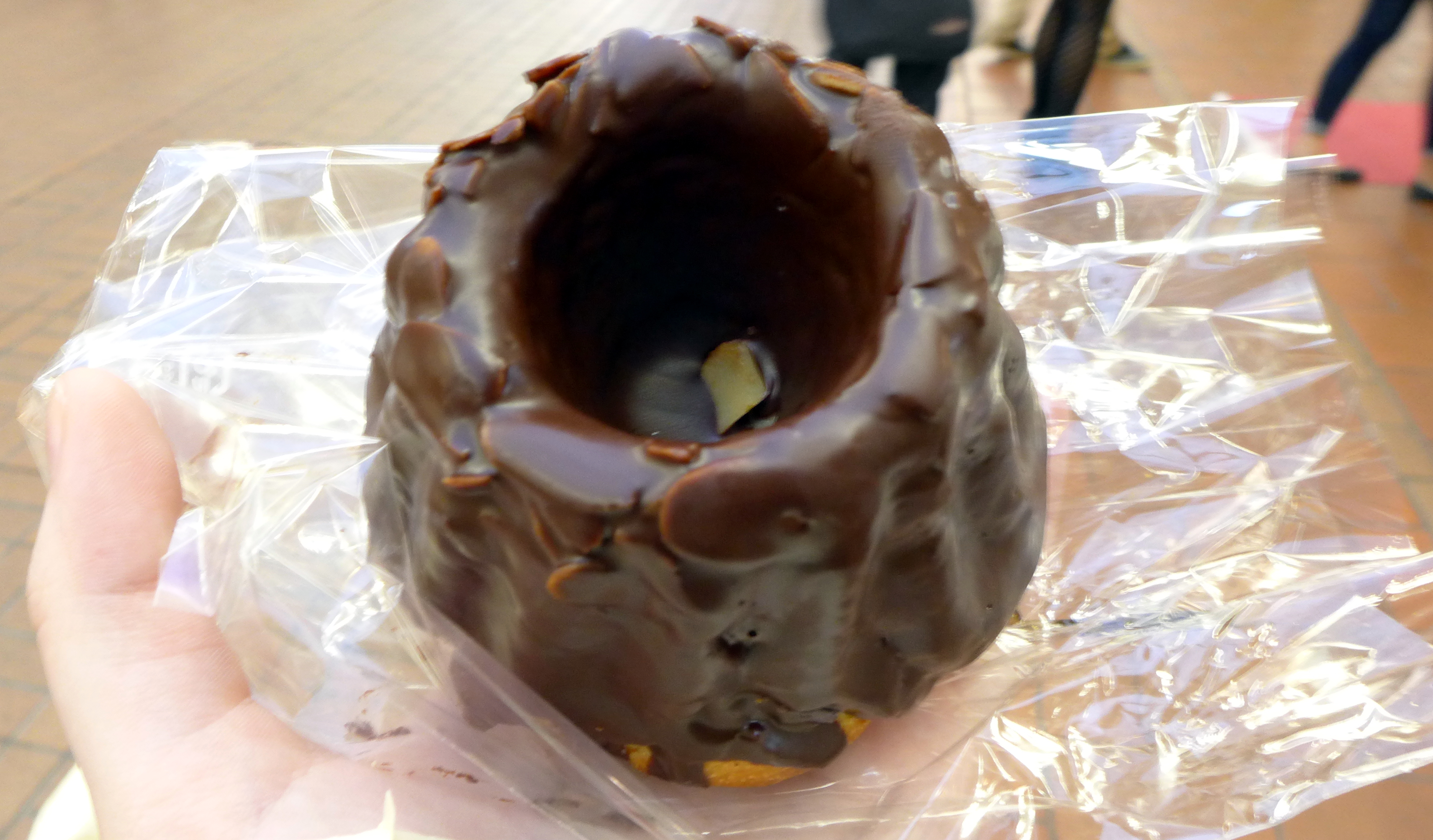
We stopped in a cafe before dinner and I got a ‘cream soda’, which is a melon soda topped with a ball of ice-cream (healthy, I know). It was delicious. I also bought a chocolate pastry thing at Paul, a pastry shop that can also be found in Europe, this too was tasty.


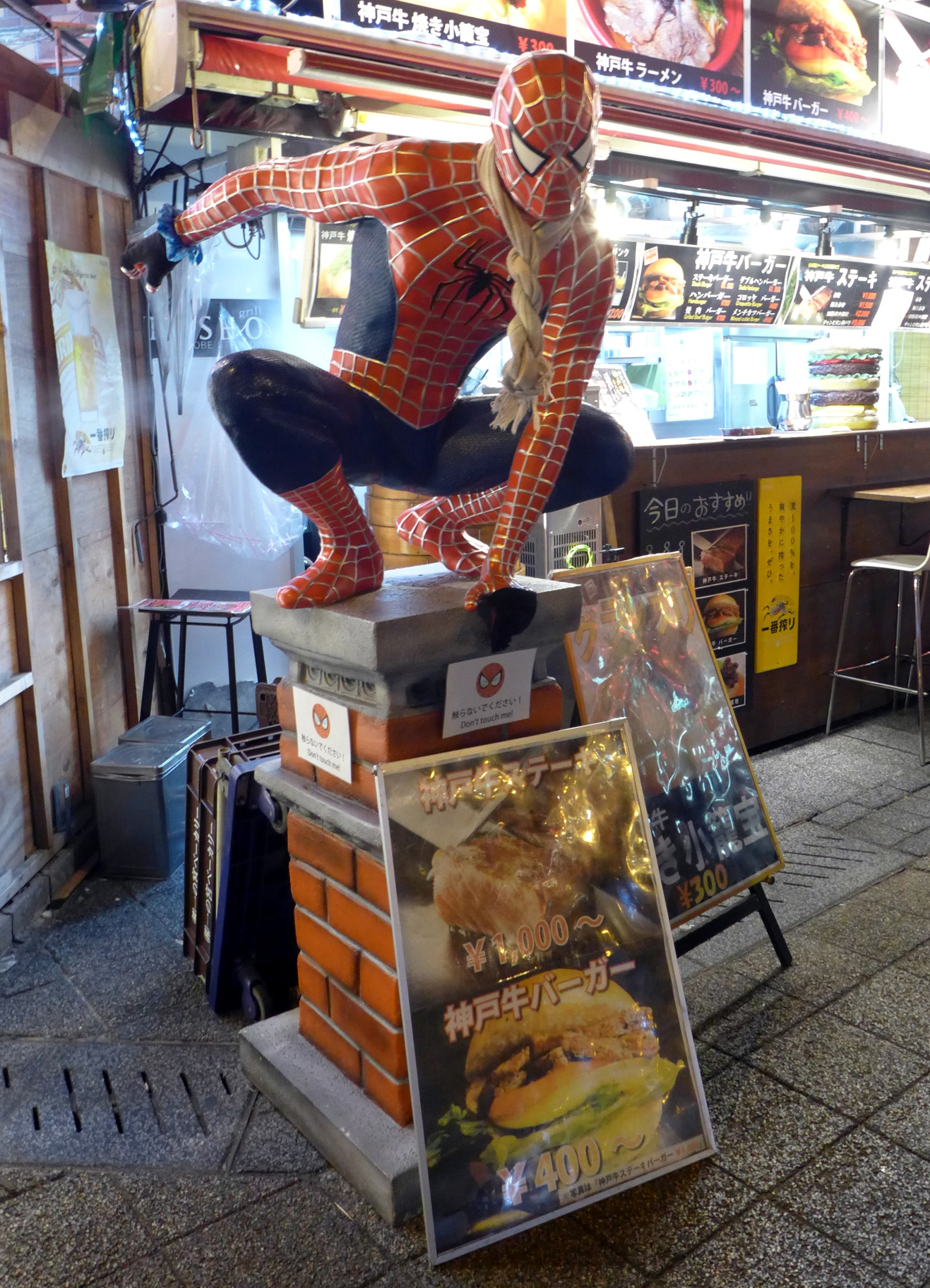
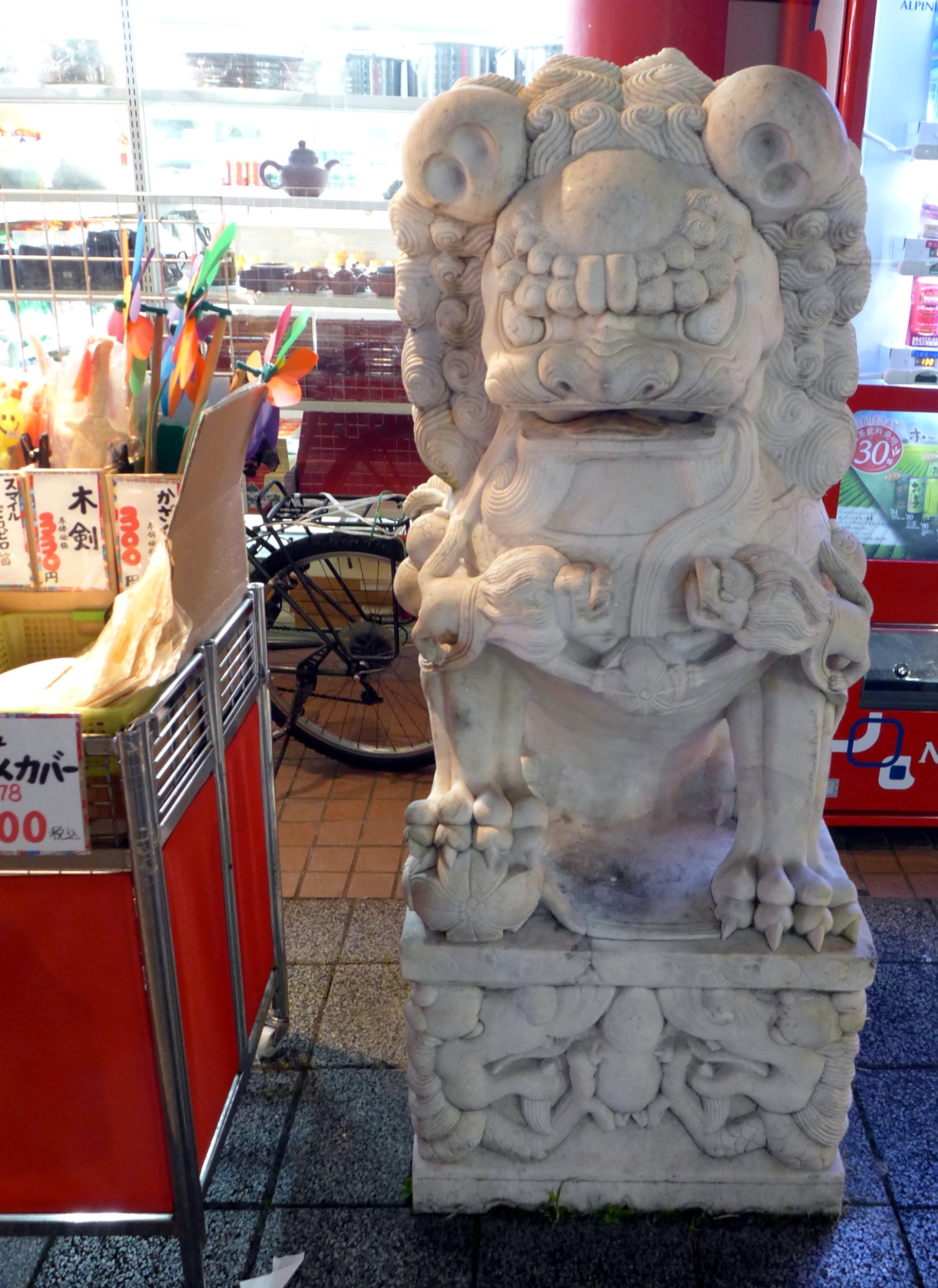
China town was like any China town in the world – red and yellow flashing signs everywhere, dim sum and a really impressive gate. There was also a statue of spider-man for no apparent reason.


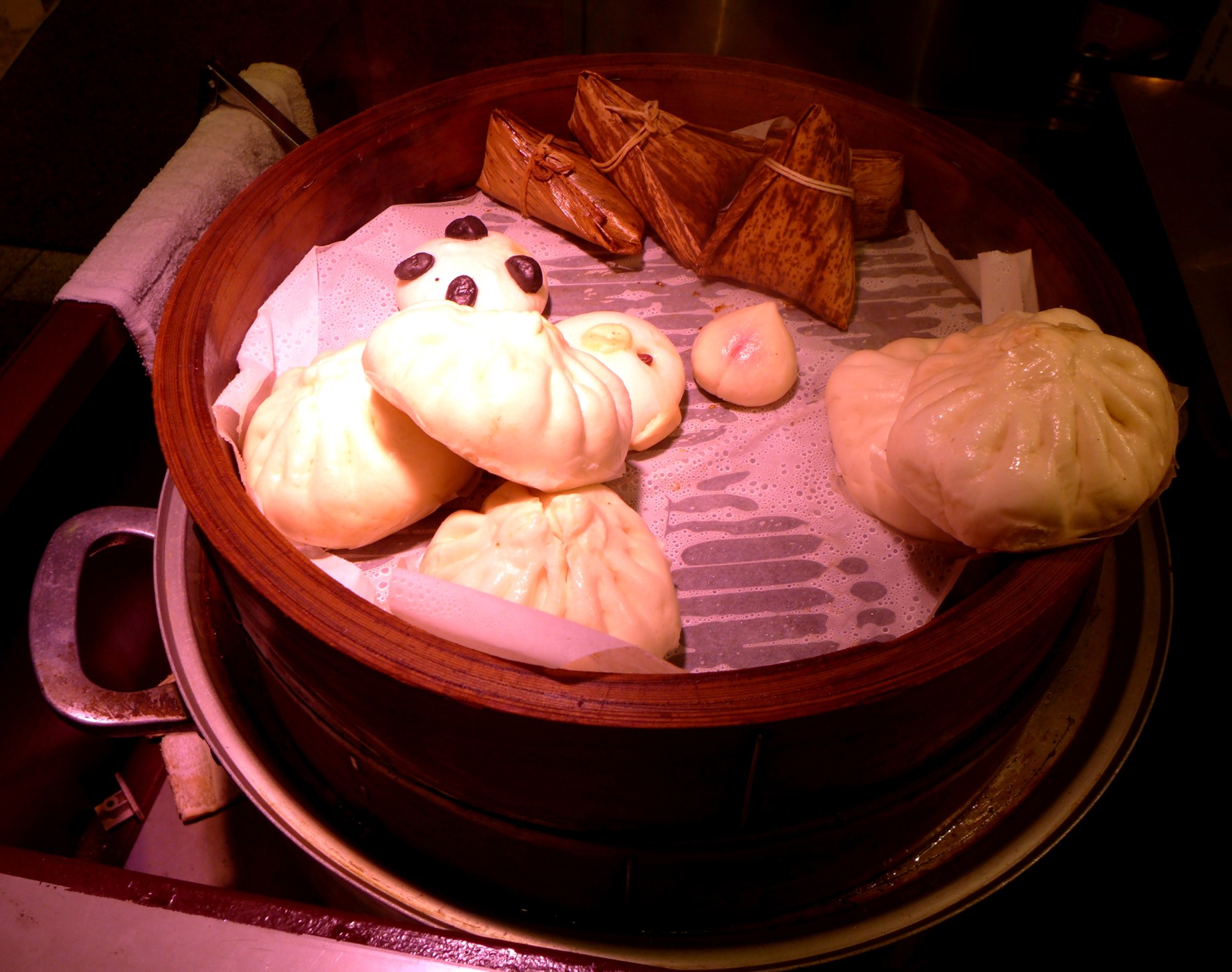
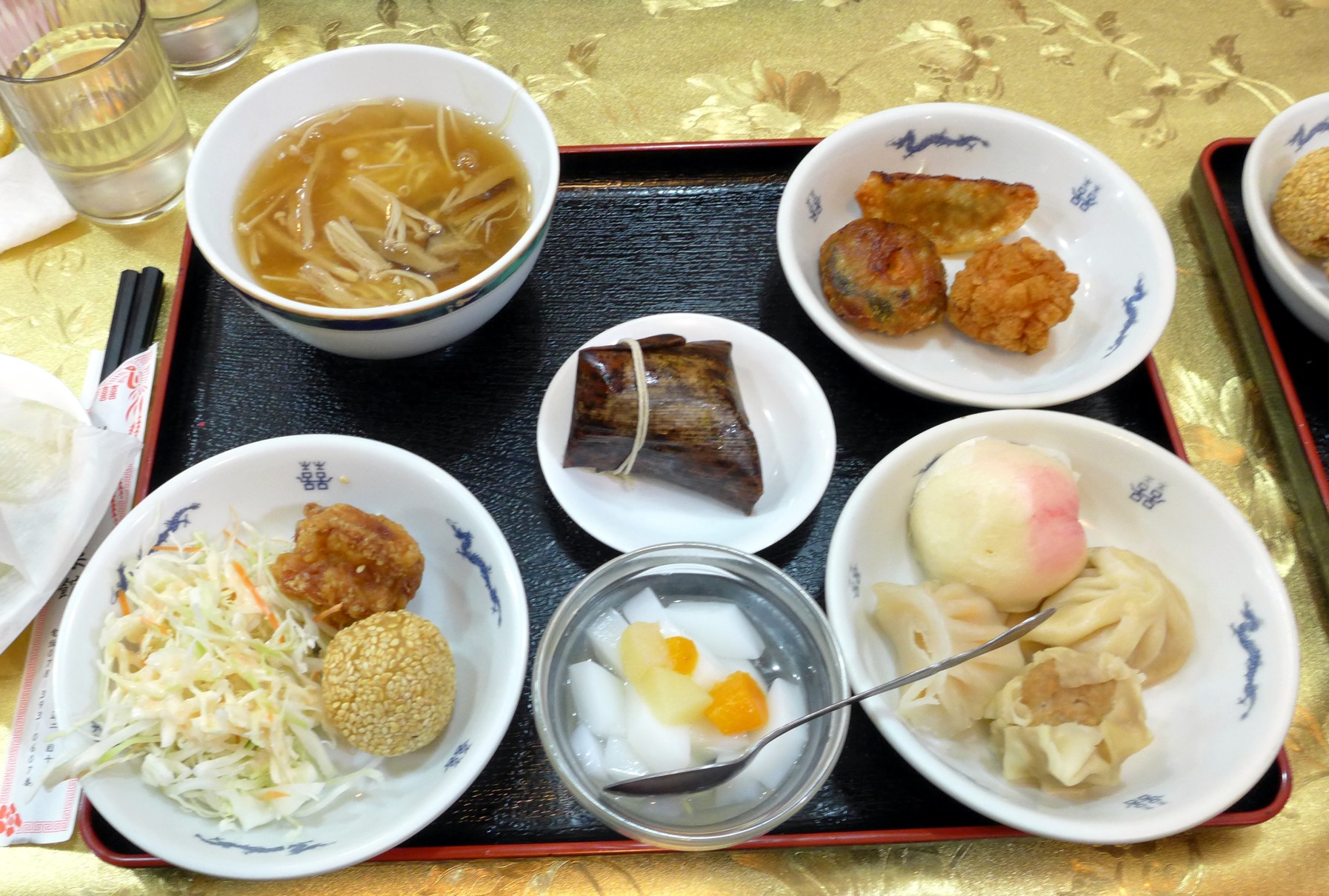
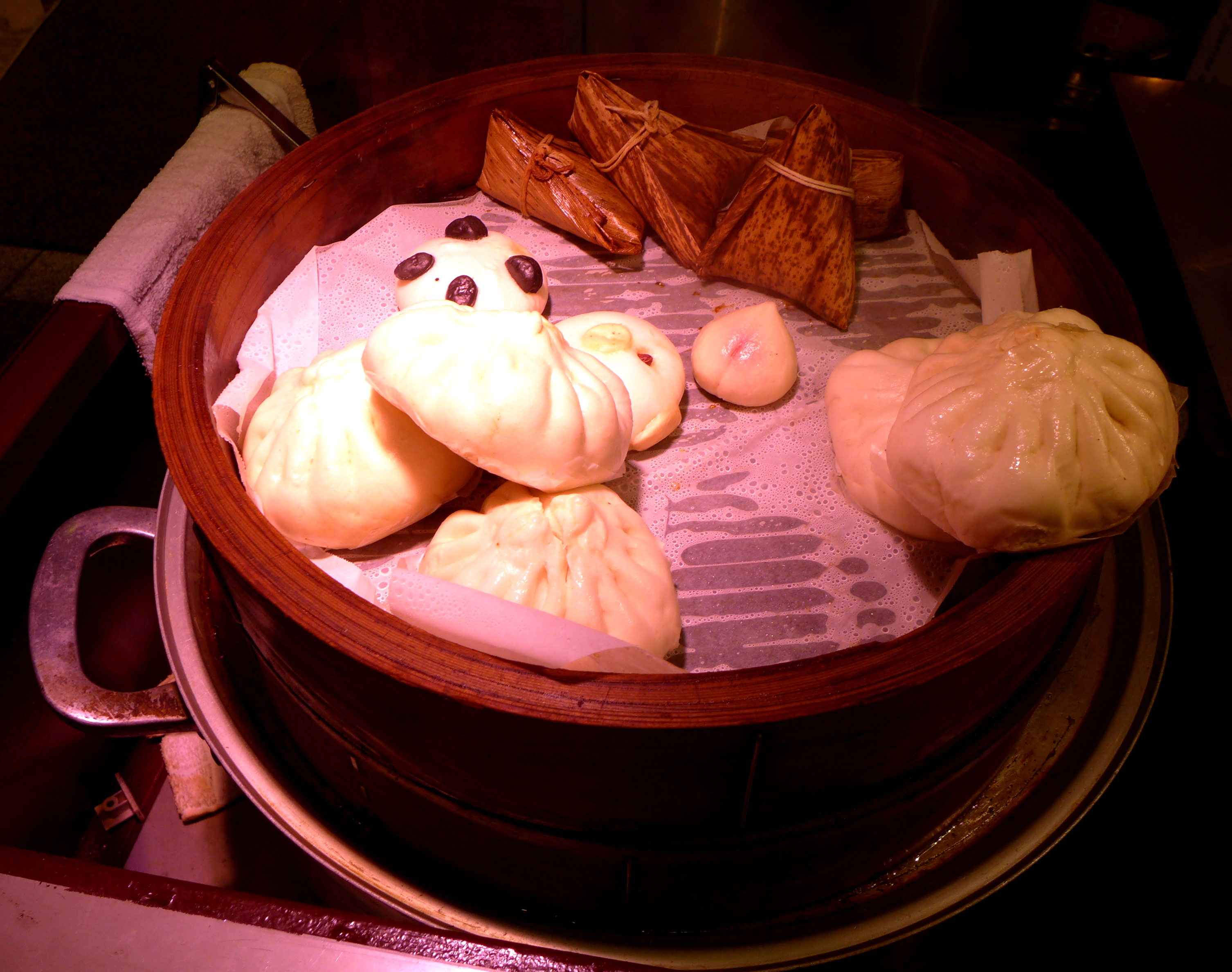
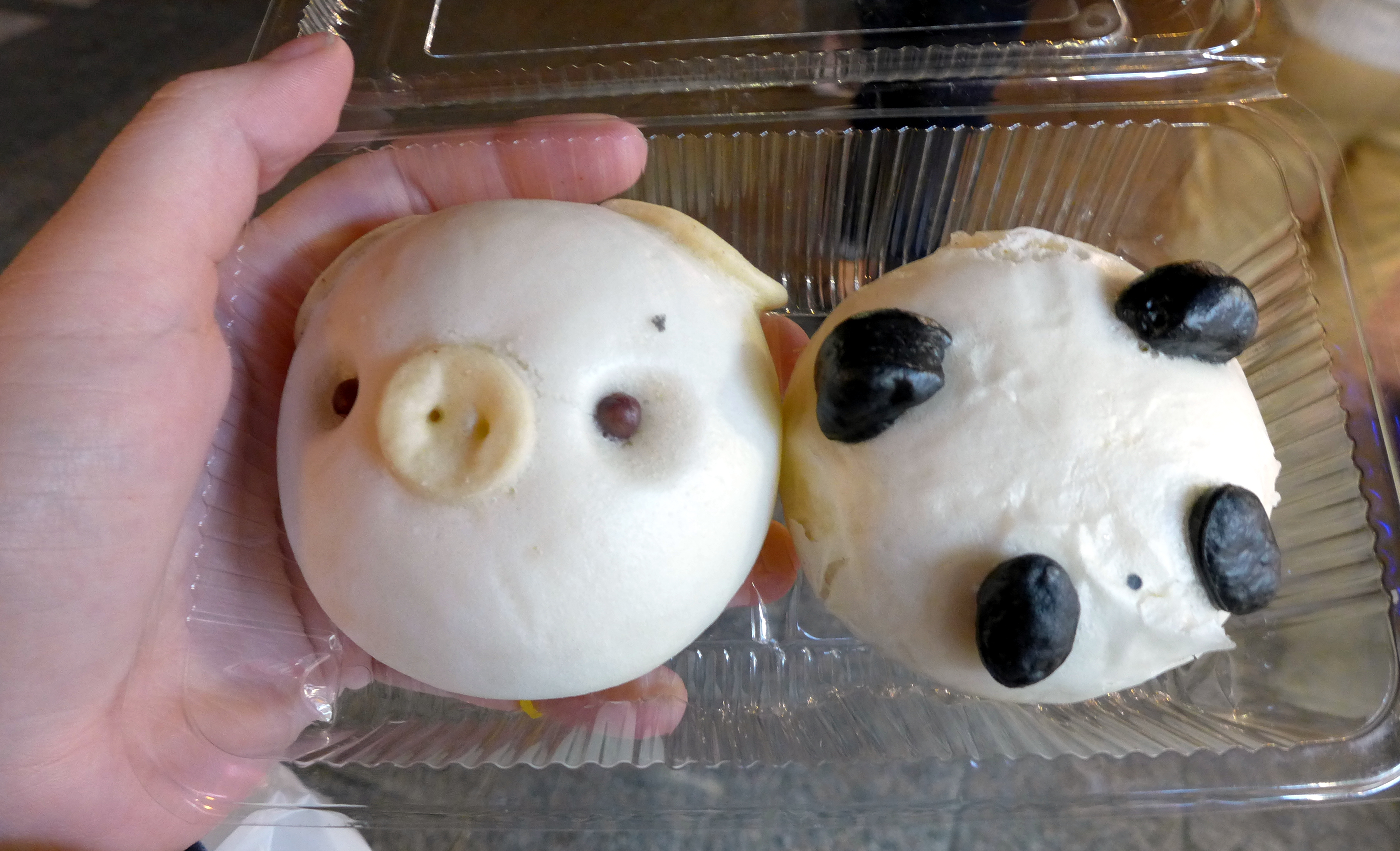
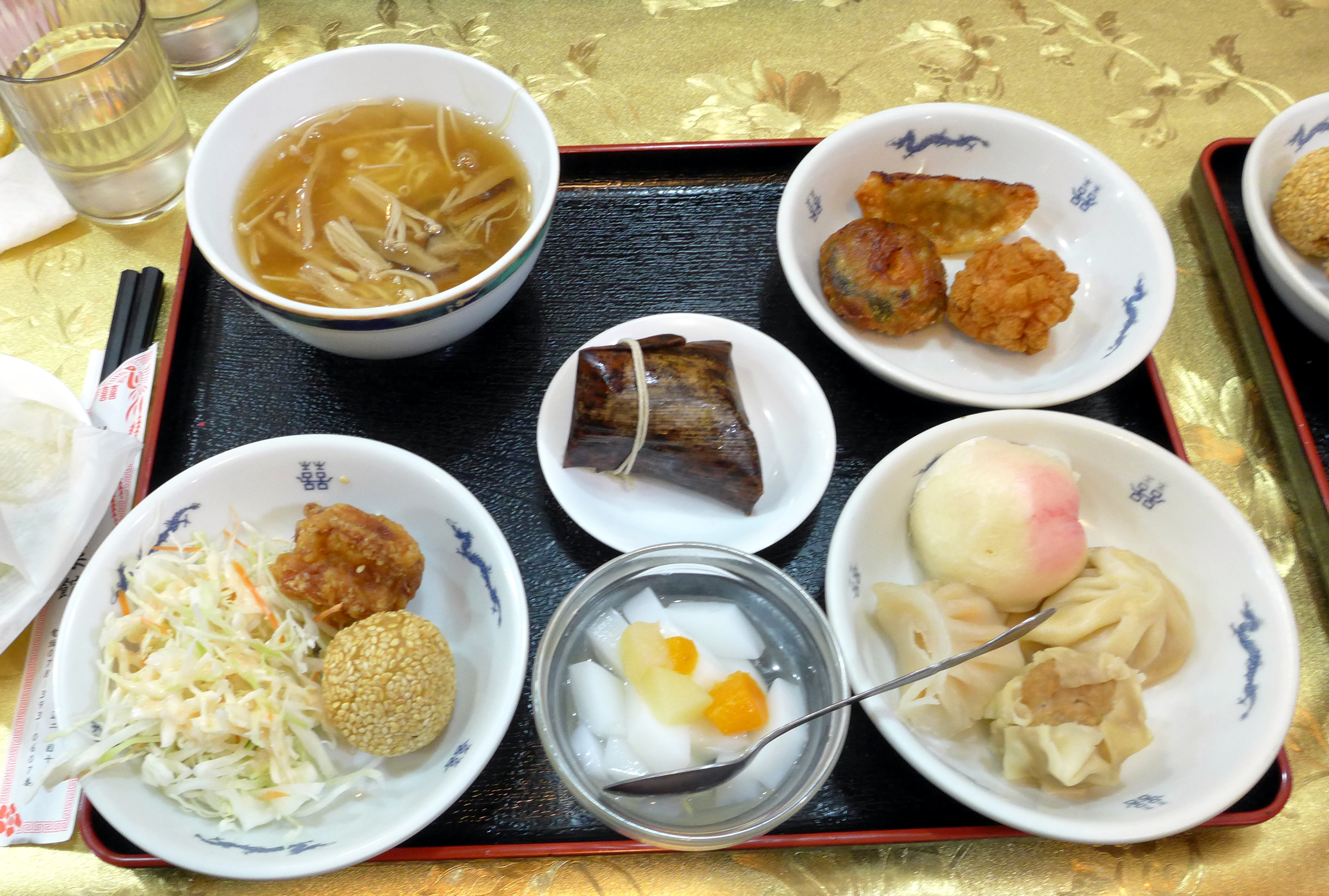
When I saw the panda and pig buns I simply had to buy them – the panda was sweet bean flavoured and the pig had a pork mince filling, delicious. I had the dim sum set menu for dinner, which was really good, though the Peking duck was disappointingly hard to eat – it came pre-wrapped in the pancake and seemed determined to fall apart.


We headed back to Kyoto at around 9pm, arriving in Kyoto station at around 10 – this time we got the slightly faster, and more expensive, JR line to Kyoto station. Kobe was a really fun day out and I would recommend it to visitors to Kyoto as a good day-trip. Its especially good to visit as a European living in Japan; its nice to see all the familiar styles of buildings.


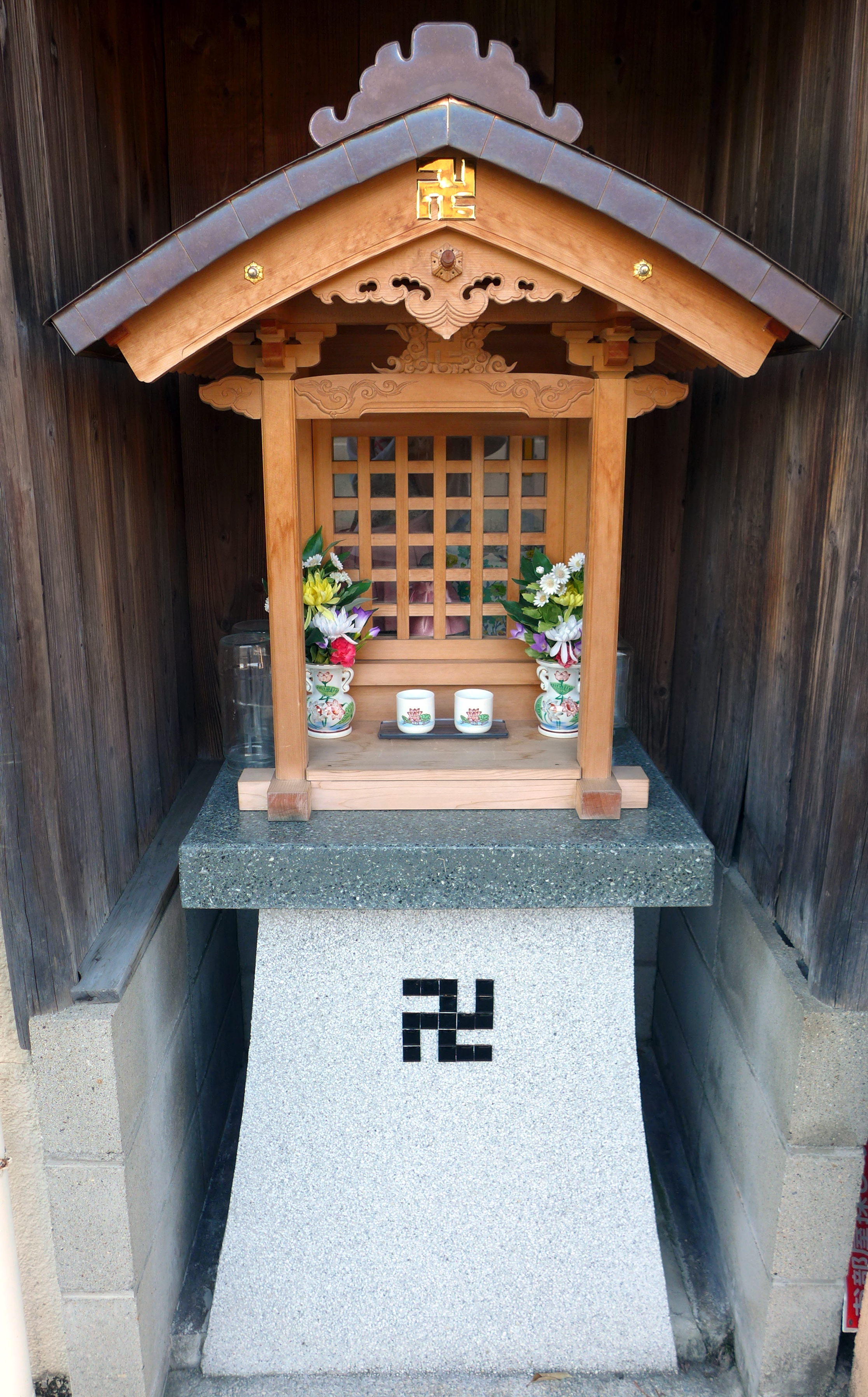
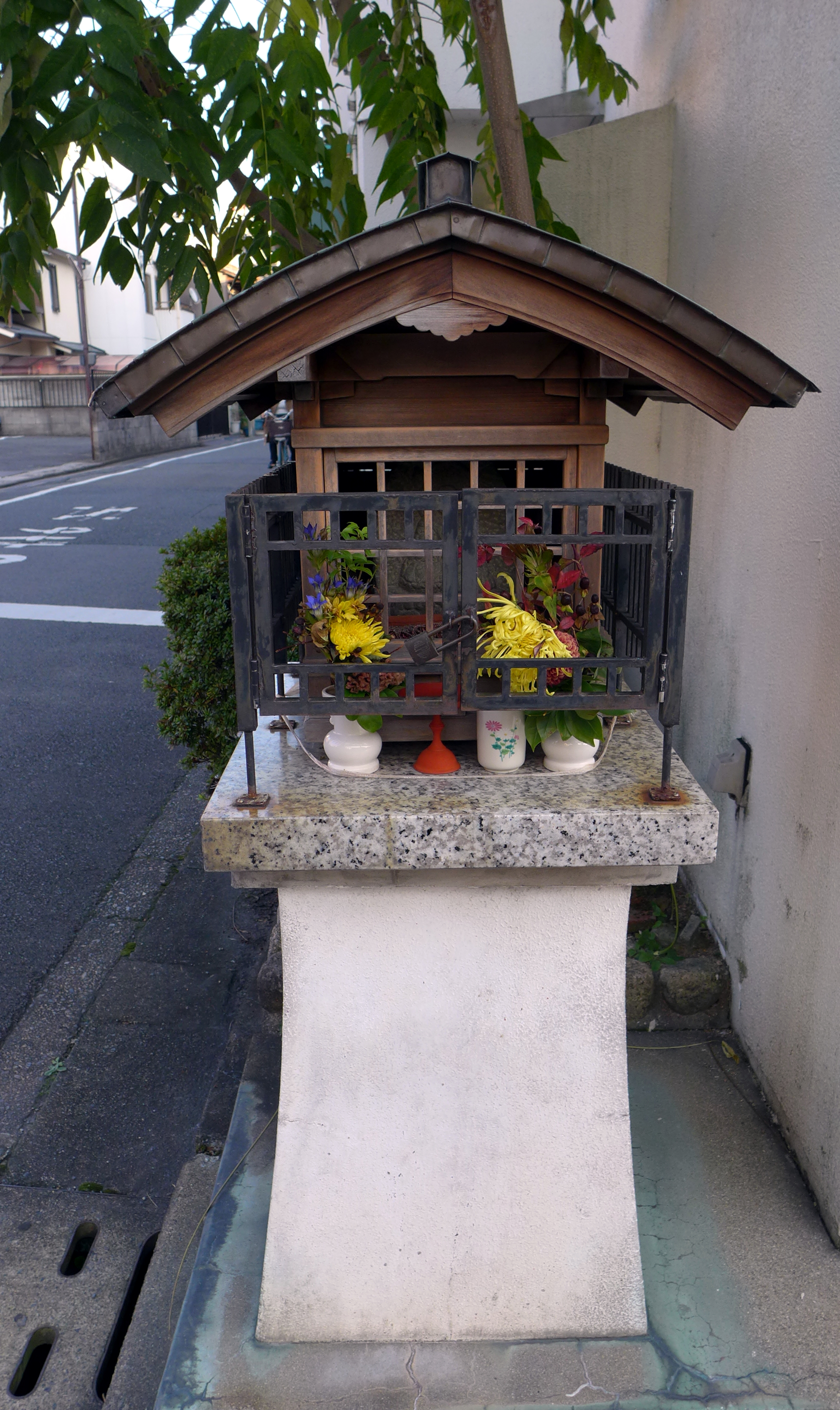


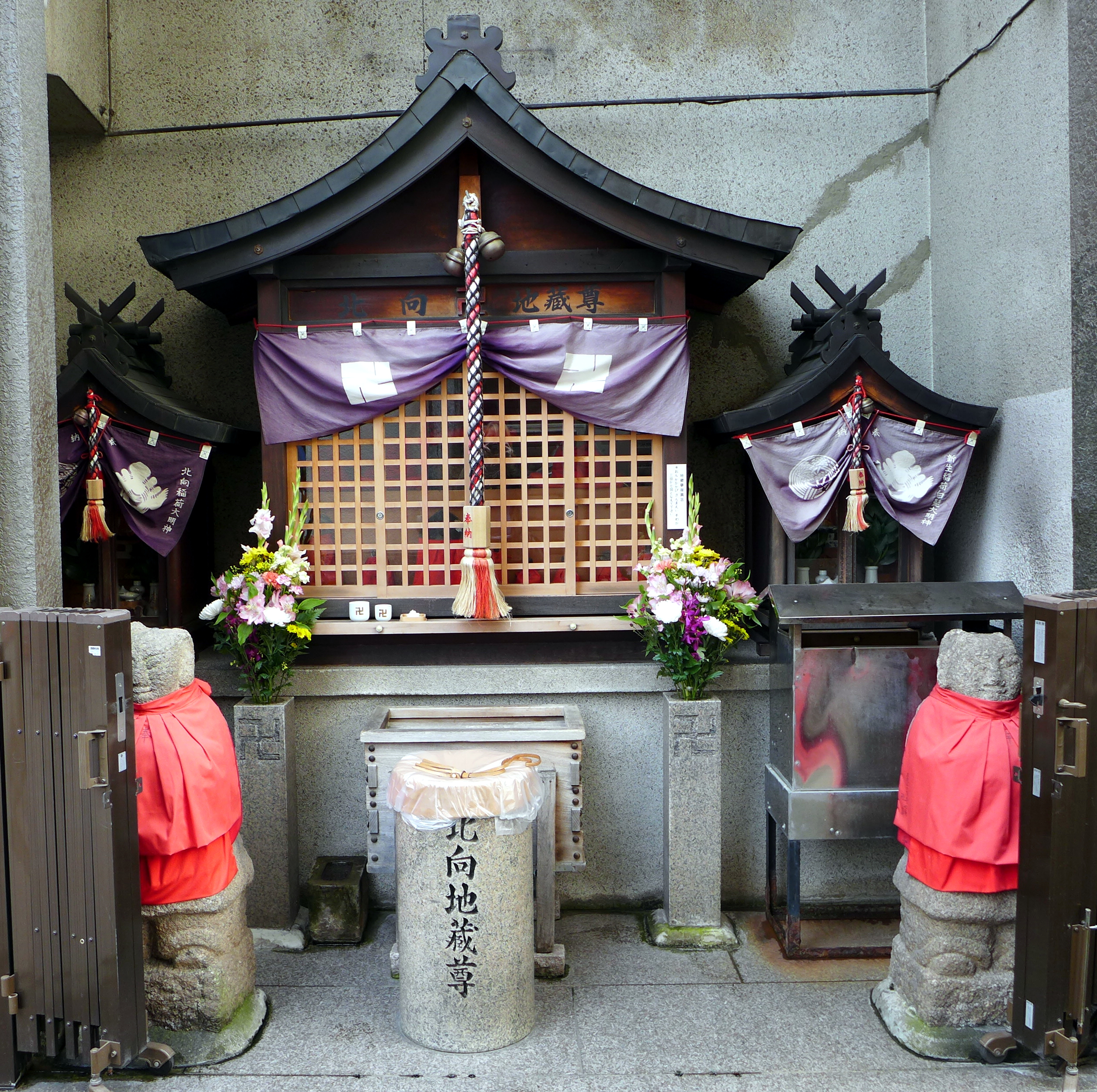
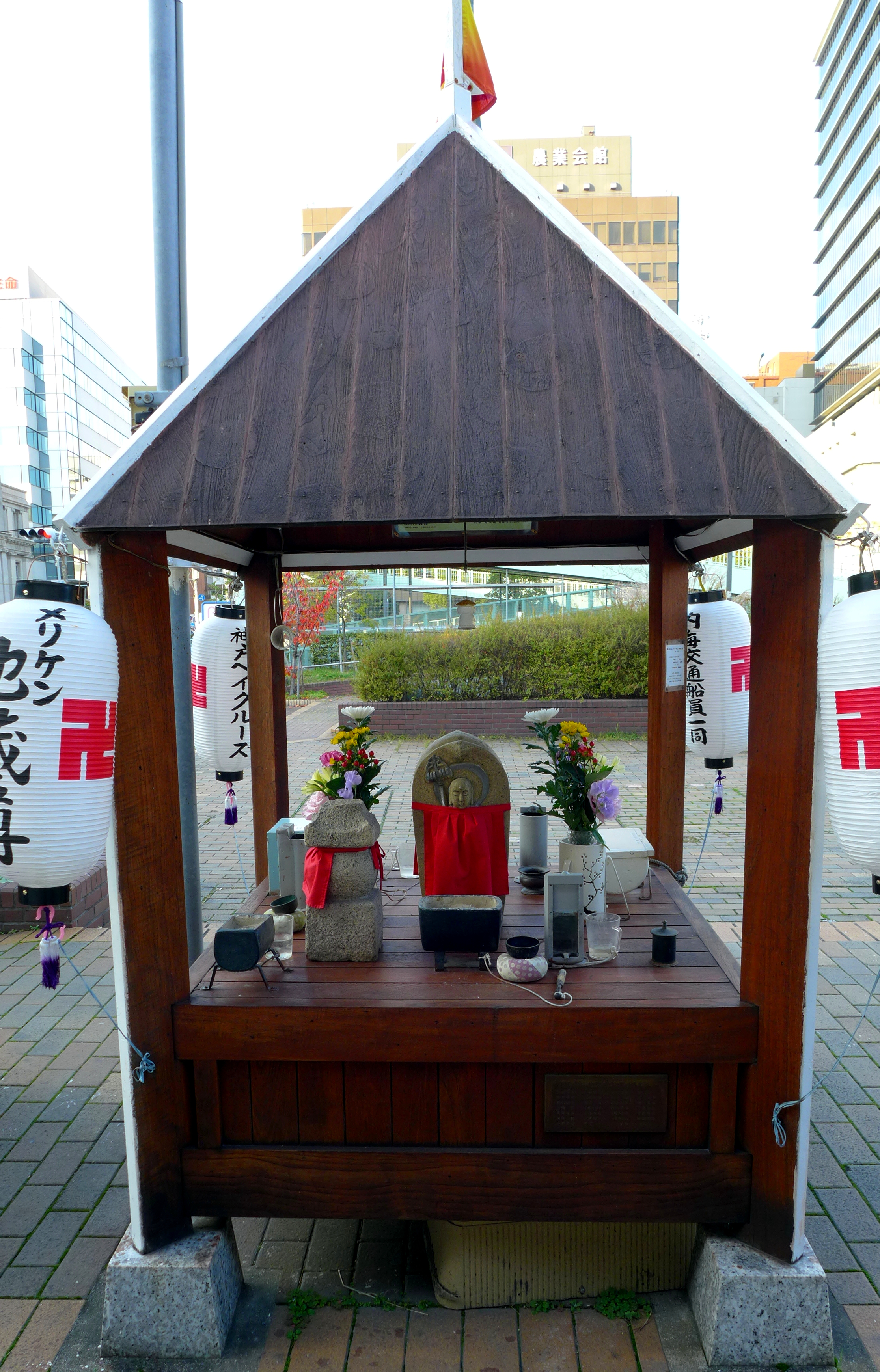 Though small, these hokora are fun to spot and are always different. They often have fresh flowers, so it must be someone’s job to refresh them regularly. These tiny shrines are one more thread adding to the rich tapestry that is Japanese religion.
























 japangie