高徳院 Bold as Bronze

On my second day in Tokyo we decided to go to Kamakura. I had heard of Kamakura before because it used to be the seat of a shogunate; it was a centre of power in Japan from 1180 until 1333, giving this period the name the Kamakura Period. In fact it is estimated that in 1240, Kamakura was the 4th largest city in the world!
P1030811P1030800

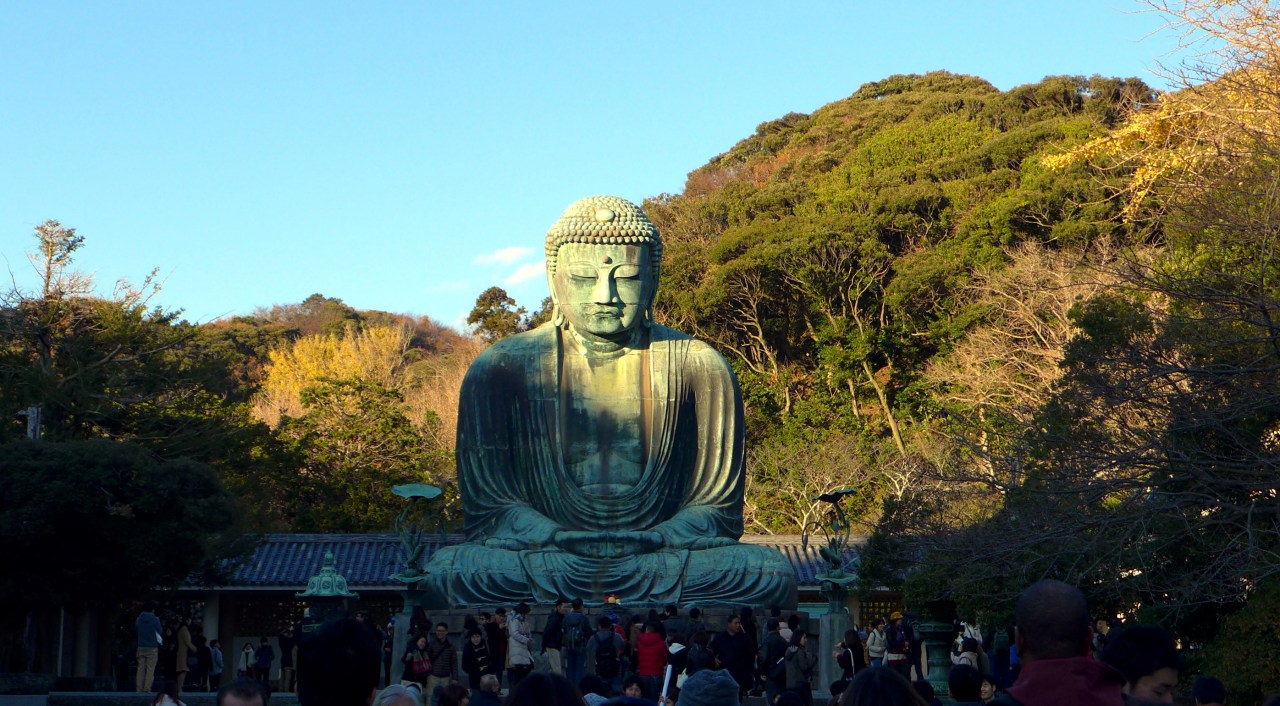
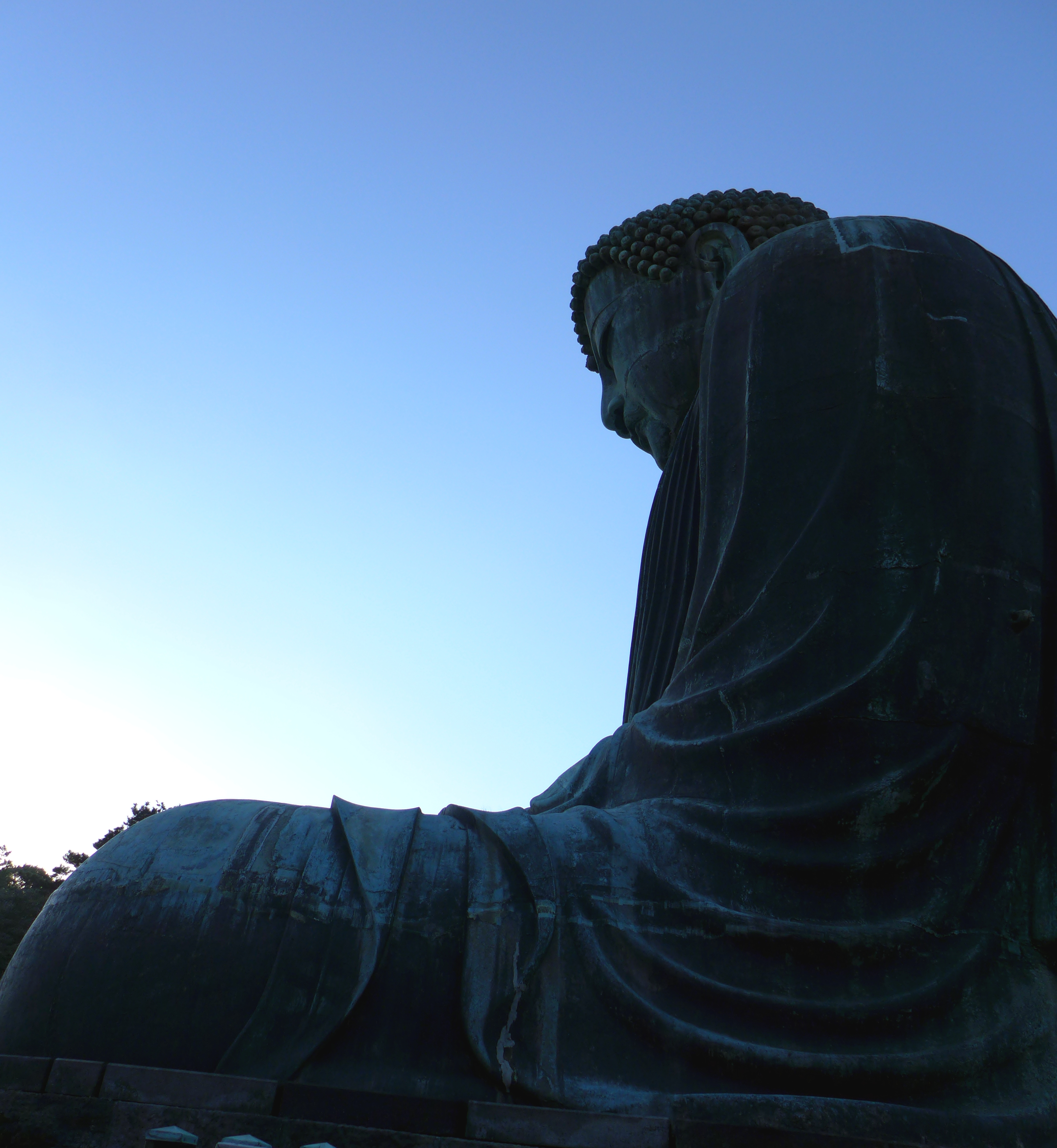
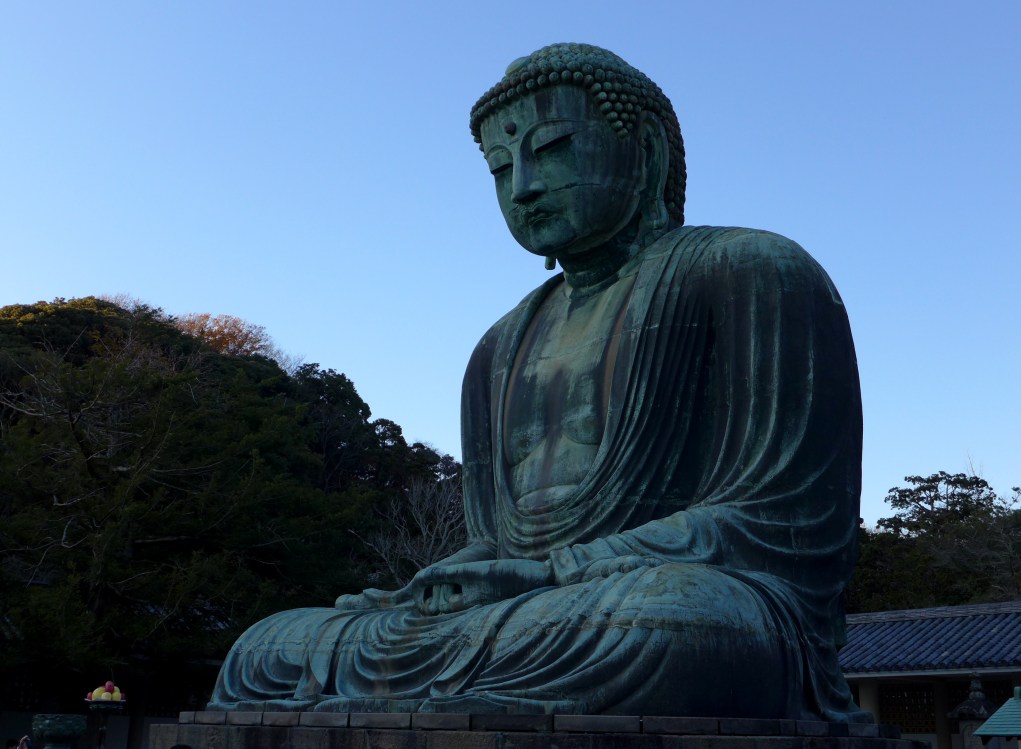
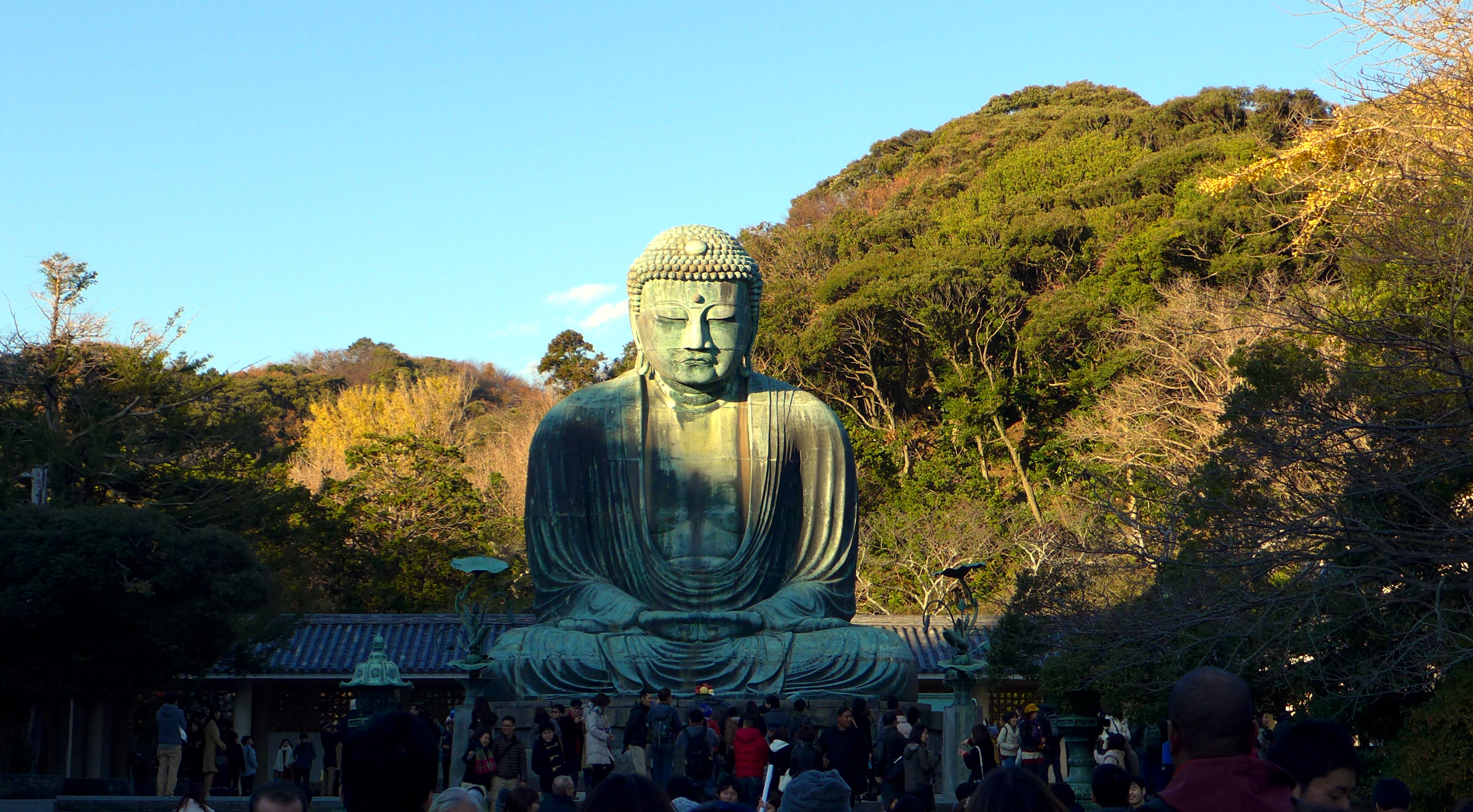
We saw a lot of temples in Kamakura (which I will cover, never fear), but the most impressive and iconic sight to see is the great buddha. This Buddha, representing Amida, the Buddha that Pure Land Buddhists pray to, was built in 1252 by Lady Inada, a court lady of Minamoto Yoritomo, the first shogun of the Kamakura period. The Buddha is located at Kotoku-Ji (広徳寺) but the temple is entirely based around the Buddha.

P1030803

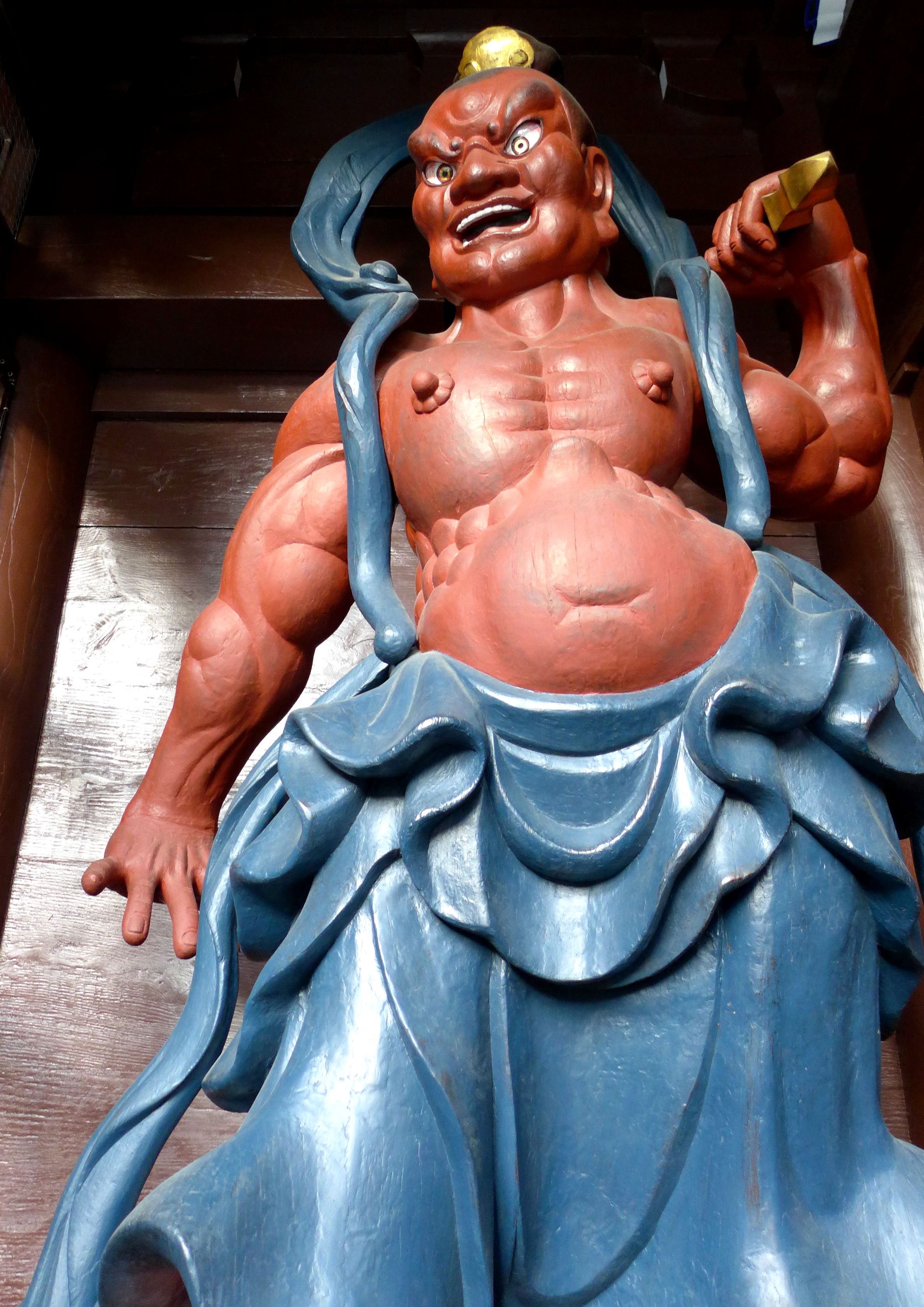
There were some giant shoes, perhaps if he feels like walking around?
P1030809

Minamoto Yoritomo won the war of the Heike, which saw the death of the boy emperor (see Mourning on the Mountain) and the victory of the Minamoto clan against the Taira, securing his family’s position as military rulers of Japan. Minamoto Yoritomo saw the great Buddha at Nara and wanted to build one of his own to demonstrate his power. However, he died when he fell off his horse before he had time to even start construction. The lady Inada decided that she would carry out the project in his honour, initially building a wooden Buddha, and when it was destroyed in a Tsunami she raised funds for a bronze statue.
P1030783 - Copy P1030791 - Copy

The Buddha is actually hollow and you can pay a mere 20円 (10p) to go up inside it (in addition to the temple fee of 200円, £1.10). The inside has a lot of graffiti from all through the ages. It also has a big metal bar that prevents the Buddha from being destroyed by earthquake which was added in 1960. It has lasted 700 years without the bar though, so I’d say it probably doesn’t need it. The metal of the Buddha was warm to the touch – it had retained the warmth of the day. If you do not like dark spaces and steep steps you may want to give going inside a miss. There are only about 10 steps but they are very narrow and steep.

P1030795 P1030799

The Buddha weighs 93 tonnes and measures 13.35 meters including the base. It was constructed in 30 separate stages, with different casts being stuck together to create the giant bronze statue. The Buddha is said to preside over the Pure Lands – a mythical land to the West where people can attain enlightenment. Pure Land Buddhists believe that if they pray to the Amida Buddha they will go to the Pure Land when they die.
P1030785 - CopyP1040027

On our way up to the Buddha, we tried these biscuit things called senbei (煎餅), which are a type of rice cracker. They looked good, but in reality they were pretty dry and I could only eat one. They were better with sauce than without and are an okay snack if you want a hard savoury biscuit. I personally would not recommend them, go for takoyaki instead.

P1030777P1030779P1030778

Biscuits aside, the Kamakura Buddha is one of Japan’s National Treasures and I would recommend going to check it out if you visit Tokyo – Kamakura is just south of Tokyo proper and is accessible by train. It’s a good temple viewing location if you can’t make it to Kyoto.

東京 Tokyo, Technology and Troubling Teachings

On Friday I packed my bags for the big (or bigger) city: Tokyo 東京! I have spent the last four days sight seeing in Tokyo, so expect much Tokyo-related content over the next few days – hopefully that will atone for my absence. I had a fantastic trip and already want to go back.

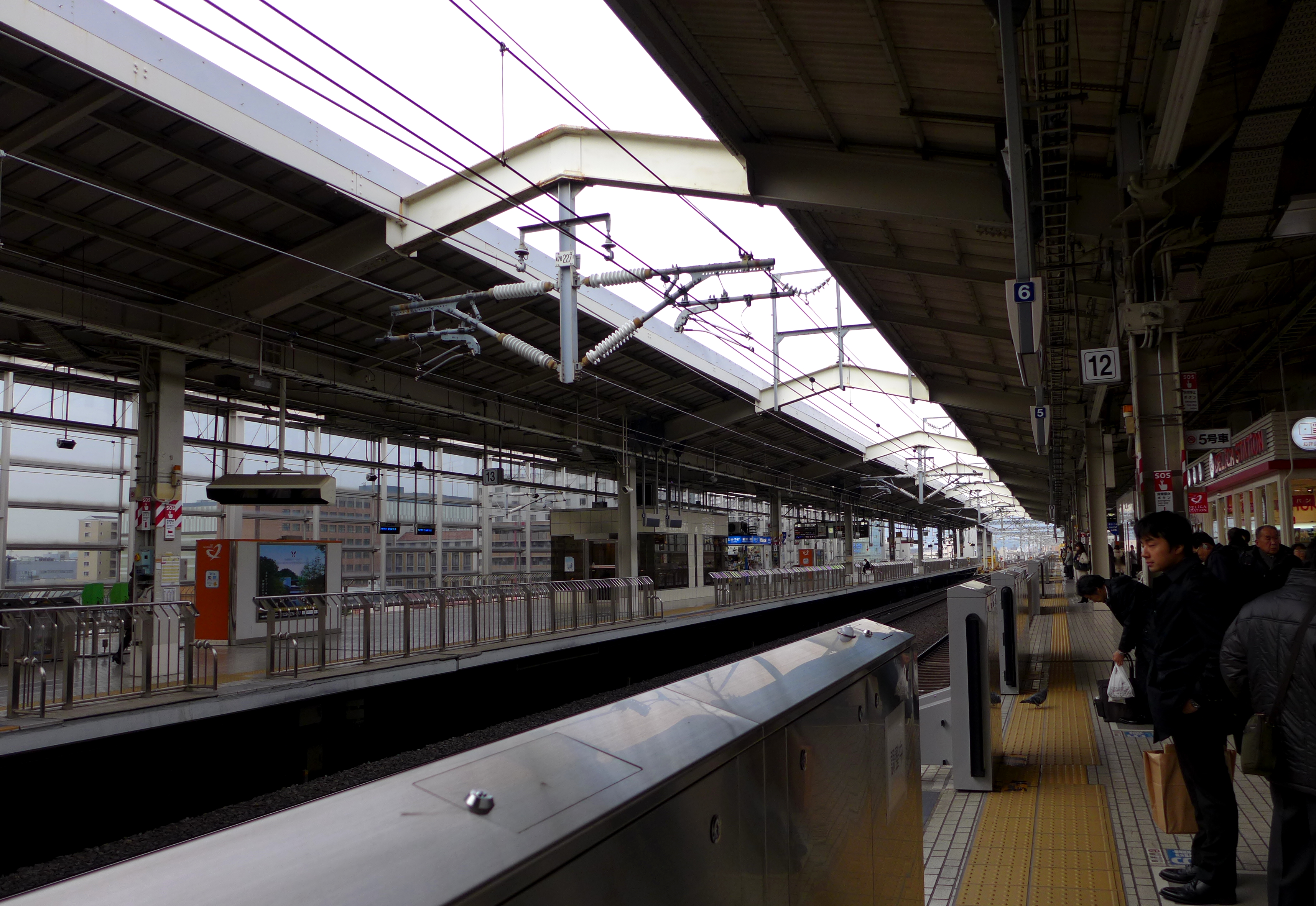
I took the Shinkansen (新幹線) to Tokyo, the fastest (and most expensive) way to get there. The Shinkansen is simply cool. With its tinted front cabin windows, streamlined figure and white space-age feel, it really shows the technological side of Japan. I took this feat of engineering from old, traditional Kyoto to the fast-paced, dazzling Tokyo. It cost me 16,000円 (£87) one way, but the over night bus takes 9 hours, and you have to do it once. Sadly I didn’t see Mt Fuji because I was on the wrong side of the train and it was a bit foggy.

P1030908P1030537 P1030540 P1030539

The Shinkansen was first planned in the 1940s but was put on hold by WWII and now it is the most heavily travelled high-speed rail in the world, with a cumulative ridership of 5.3bn, averaging 140m passengers a year. The first lines were completed in 1964, including the line I took – the Tokaido  route 東海道. In 1964 it took 4 hours to travel from Osaka to Tokyo, today it takes 2 hours 25 minutes. This will get even quicker next year, when they increase the fastest trains from 168mph to 175mph. By 2025 they are planning to use Maglev technology to levitate the trains above the track to make them reach 310mph. Its like something straight out of a sci-fi novel. Unequivocally cool.

They even look like they’re wearing sunglasses, so cool.

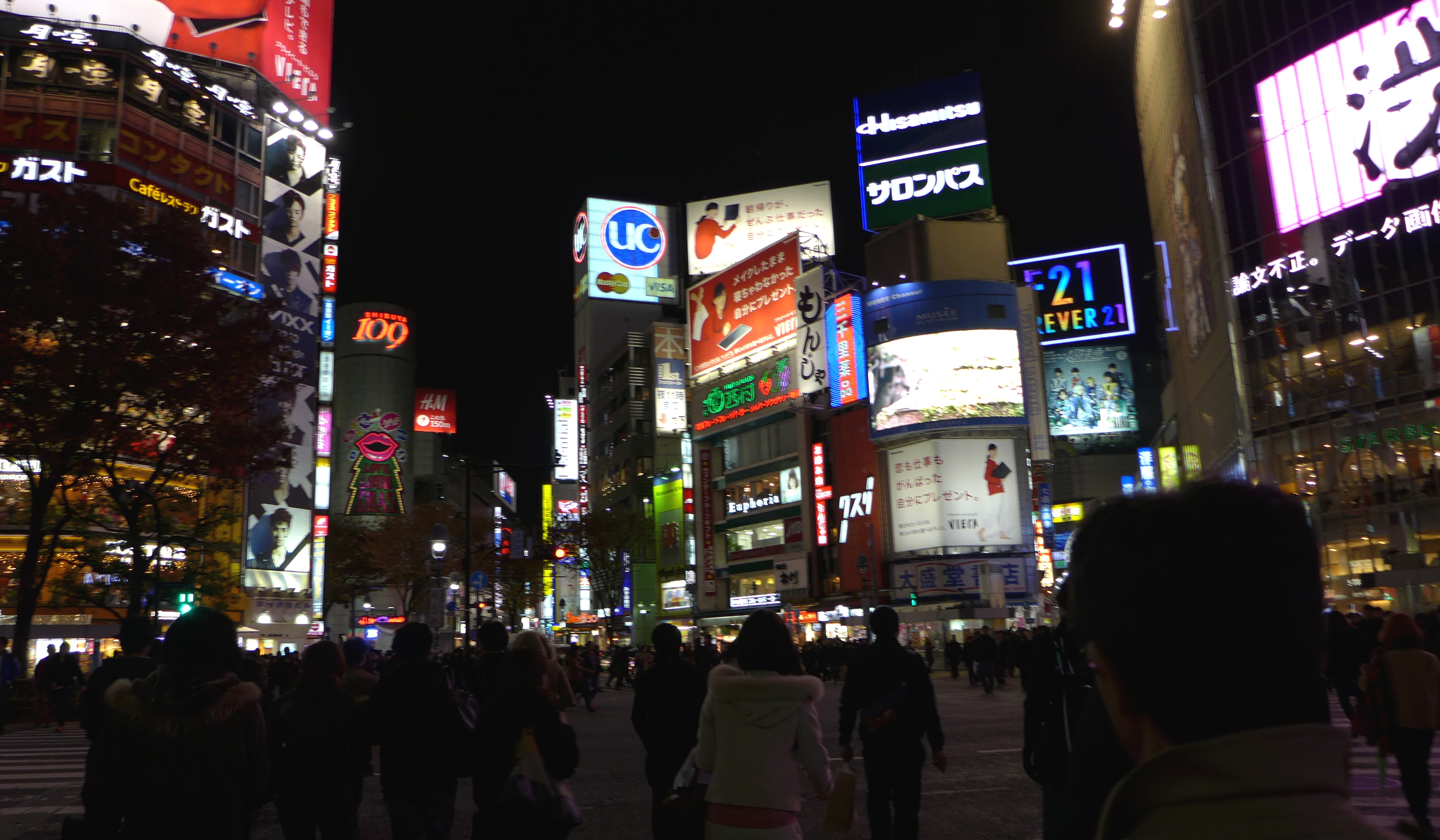
That day my friend and I visited Shibuya (渋谷), another icon of Japanese modernity. If you have seen almost any film featuring modern Japan (Tokyo Drift, Lost in Translation etc.) you’d recognise Shibuya junction where everyone walks at each other surrounded by skyscrapers covered in billboards. It is always packed with people and it was a great experience to actually walk on the crossing.

P1030548 P1030549

I was distracted from the crossing by the dulcet tones of politicians yelling at us through megaphones; the election was only 2 days away and in Shibuya you have a constant moving audience. The party in question was the 幸福実現党, the Happiness Realisation Party, which is part of the Happy Science religion. Yes, there is a Happy Science religion.

This religion appears to be an amalgamation of many other religions, such as Christianity and Buddhism, and is of Japanese creation. Interstingly they are quite politically oriented and their manifesto includes Japanese military expansion and denial of the Nanking massacre, among other things. Sounds very happy indeed.

P1030546

The leader, Okawa Ryuho (大川 隆法), also claims to be able to communicate with the spirits of politicians (even if they are alive) and he ‘interviews’ them and publishes the interviews in a book. Interviewees include candidate Mitt Romney and Margaret Thatcher. In fact, in 2013 it published a message from Margaret Thatcher’s spirit, calling her the “angel of light” and claiming she was urging Japan to attack China, Taiwan and North Korea. While one should probably respect religions, this one is plainly insane and possibly dangerous. Thankfully they got a negligible portion of the vote this time.

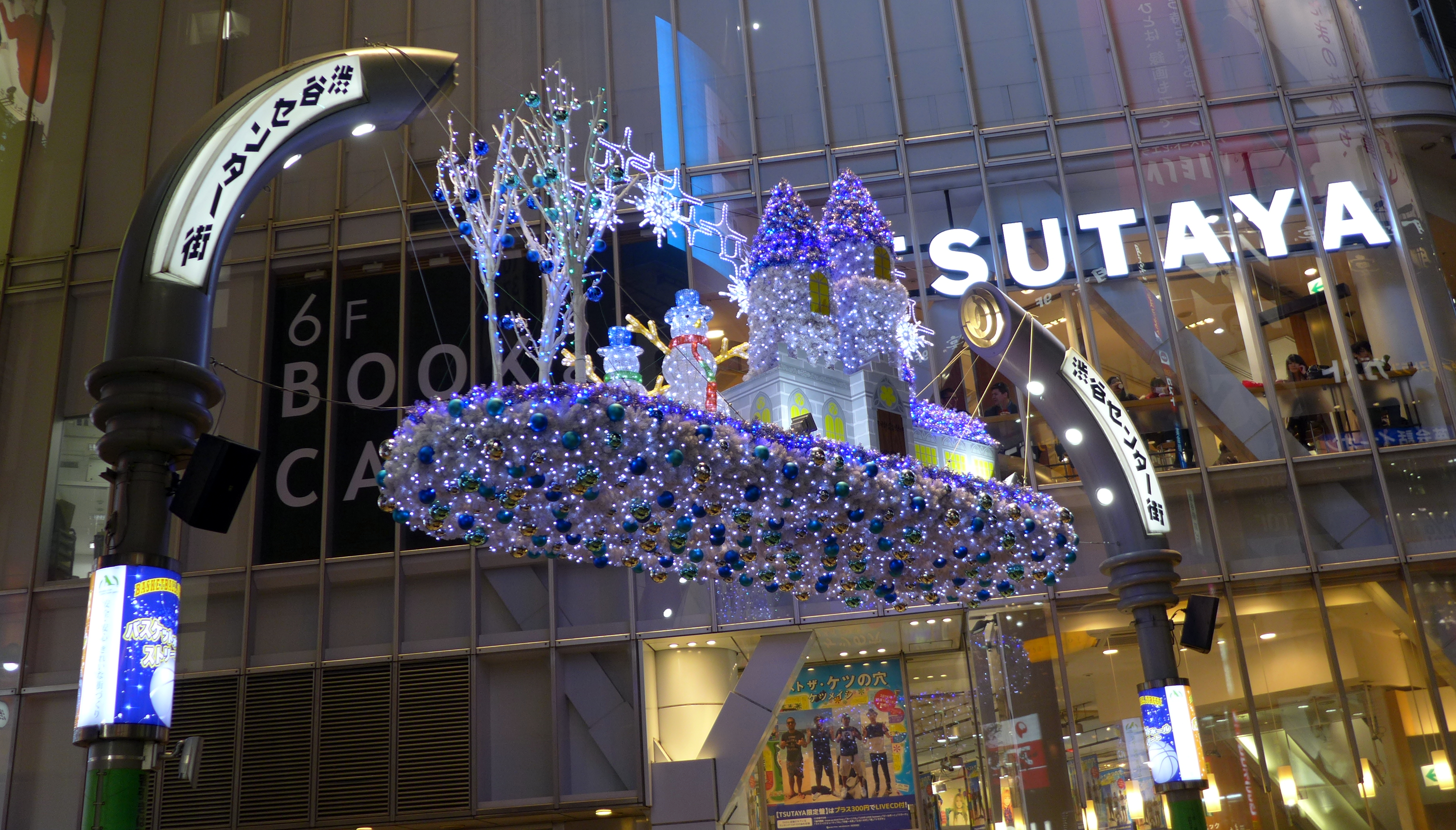
Shibuya is full of shops, and is perfect if you want to pick up some new clothes or just look at all the pretty neon lights. I enjoyed just wandering around and taking it all in – definitely worth a visit.

P1030551 P1030553P1030556

More Tokyo trip blog soon!