

Purikura is one of those phenomenon that is probably unique to Japan. Yes, malls in the UK and elsewhere have photo booths that offer ‘fun’ photos, but their main purpose is clinical, harshly lit passport photos. They don’t exude an air of fun, they feel like going to the dentist. Japan has successfully transformed the photo-machine into a consumer-driven, music-blasting, often-bright-pink monstrosity. They created purikura (in 1995), a combination of ‘Print’ and ‘Club’ which in Japanese sound like pu-rin-to (プリント) and ku-ra-bu (クラブ) creating pu-ri-ku-ra (プリクラ) as a shortened version. It also conveniently sounds like ‘picture’ – instantly catchy.
Prior to coming to Japan I was aware of purikura; I’d read about it in one of those ‘omg Japan is soo weird’ articles or perhaps heard about it through a friend. I thought that I wouldn’t enjoy purikura – isn’t it really vain to take pictures of yourself and decorate them? Well, yes, but it turns out its also super fun and great to do with friends.
You can find purikura machines in most shopping centres and arcades, they tend to be in clusters of at least 5. The area around them is always plastered with pictures of girls and slogans like ‘fashion’ or slogans that just don’t make any sense but are in English and therefore ‘cool’.


This is how purikura works:
- You pay an amount, usually between 200円 and 400円 (~£1 – £2.20) depending on the machine (the ones that do full body shots cost more), and press ‘start’.
- You then panic as you are shown a range of options for your picture with a big timer ticking down to when the machine picks for you. There is never enough time (they give you around 10 seconds), especially if you don’t actually speak Japanese. You end up with something, probably not what you wanted, but you can live with it. Hopefully you’ve managed to pick an option that includes multiple people and isn’t all selfies (thankfully we’ve avoided this so far).
- Get in that booth. Once you’ve clicked the screen you have about 5 seconds to arrange yourself in pose before it takes the picture. Try to fit in all of your friends and don’t blink – no retakes. The whole time there will be sugary, fast paced J-pop blasting at you in the background, adding to your frenzy. We went at Halloween once, so naturally we had crazed Halloween style J-pop declaring ‘This Is Halloween‘ on a loop the whole time. Terrifying.
- Once you’ve taken all your pictures (usually 5), move around to the side of the booth with the electronic pens – its time to sticker and draw all over your picture. Notice that your eyes are at least twice as big as they should be. If you look closely your nose has become longer to accommodate. It really is amazing technology – it’s all done instantly and automatically. The machine has also airbrushed your skin for you. The stickers are pretty fun, usually a collection of cats, cute things and the word ‘fashion’ or something similar in about 10 different fonts. Also some bonus English words that don’t really make sense. There are also eyelash, eye colour, lip colour and eye-liner options if you want to spend ages drawing extra make-up on your face. There is a timer for this bit but its a lie – it freezes at 60 seconds and lets you finish in your own time.
- You then get to choose the layout of the printed pictures so you can make sure that you have enough pictures for everyone in your group. The larger the group the more tiny your copy of the pictures will be. Some of the machines let you pick your ‘best’ ones to keep, but the issue with this is if you don’t realise what this means before the timer goes down you’re going to get only 2 or 3 pictures that you clicked on randomly when you panicked.
- Wait for your pictures to print. Take a deep breath, you probably didn’t breath enough while you were freaking out about the timers. Rejoice at how kawaii (かわいい – cute) your pictures are. Cut them up with tiny scissors and distribute them among the group.
That is the average purikura experience. Sounds stressful? It is a bit, but it’s also pretty fun – certainly gets the adrenaline going. I’m not going to publish any of my purikura due to friends’ privacy, but here’s a stereotypical one – yes they do actually look like that (sometimes less pink though).

But wait, there’s more! You don’t just have to do boring standard purikura, no! You can dress up! In Sanjo’s Game Panic arcade (located near Loft) there is a stall next to the Land of Purikura (think about 20 of those machines all together, its pretty deafening) which sells full fancy dress outfits that you can wear just to take pictures in (for a price, of course). There are also dressing tables with curling tongs and straighteners attached for you to make sure you look your best.
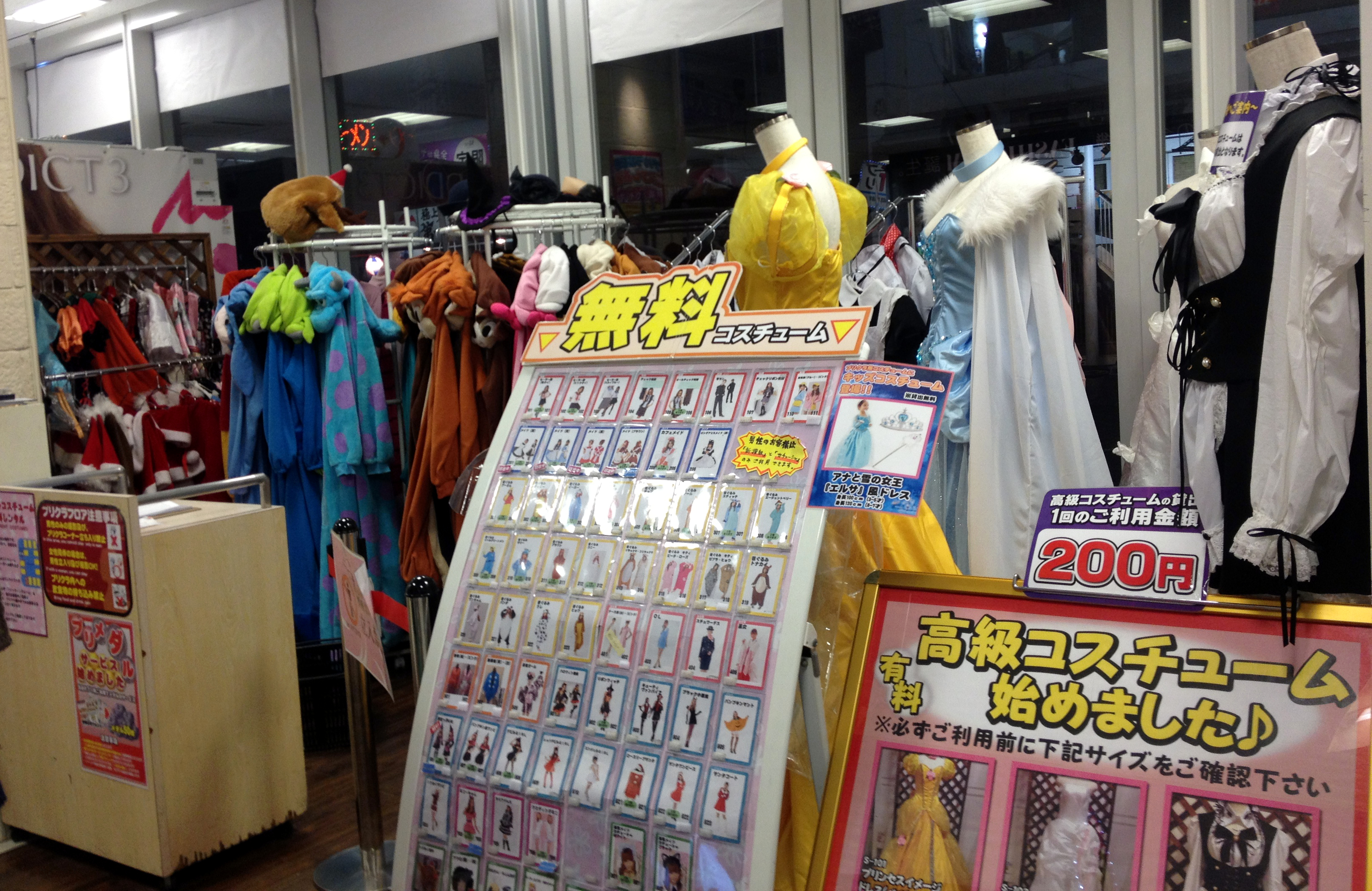
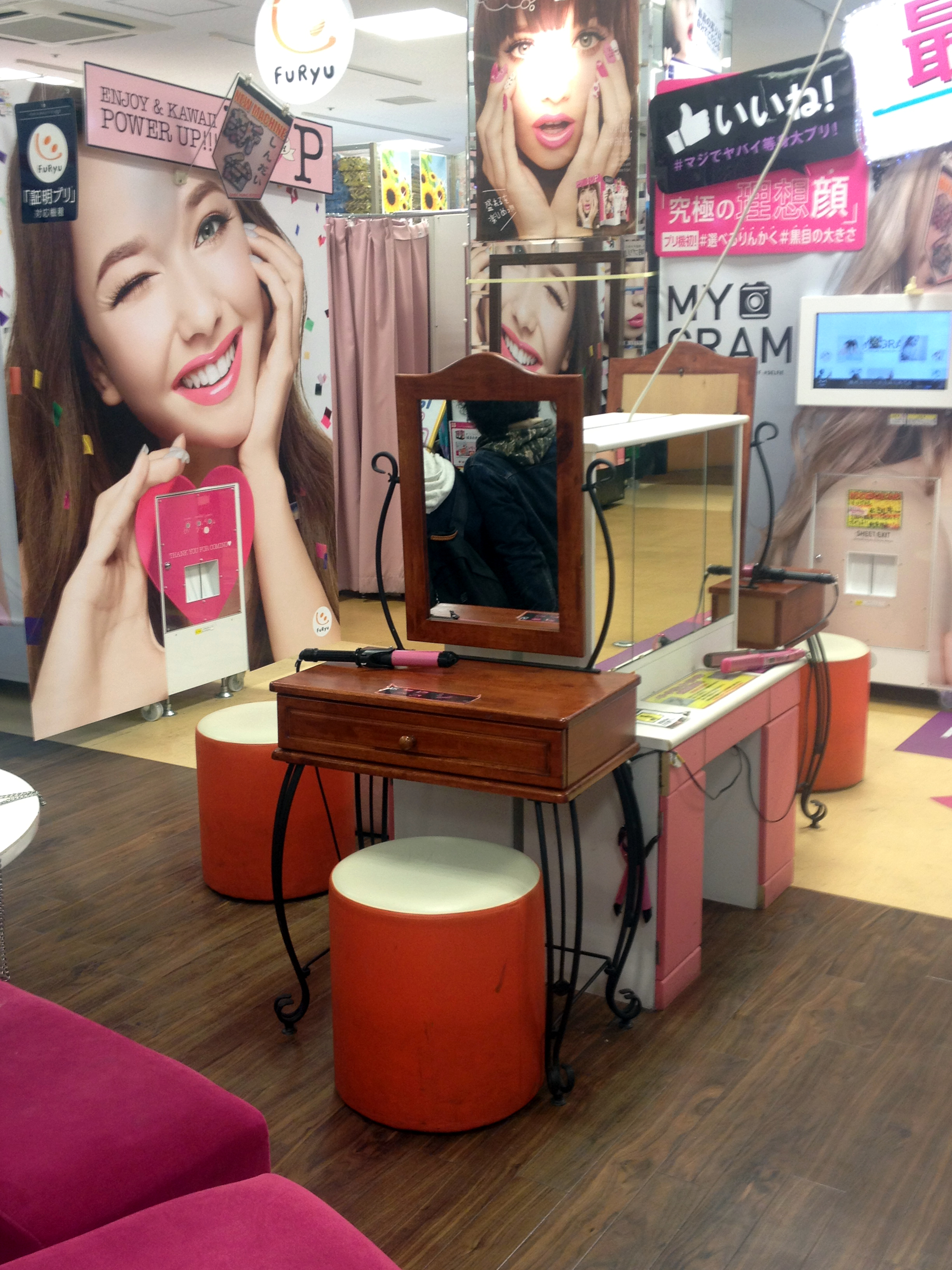
Sadly, guys aren’t allowed in without a girl in this particular purikura area so you’ll have to bring a female friend (most other places don’t care). Japan is so mean, why can’t guys take stupid over-the-top fancy dress pictures too? It’s like Japan is putting limits on what men can do and trying to prevent emasculation with rules – guys doing purikura isn’t going to hurt anyone. Even the arcade machines have a picture of a boy or a girl on the machine to indicate gender – surely people can decide for themselves? In fact I’m sure there’s a perfectly sound argument as to why purikura is harmful to girls too – it enlarges your eyes and erases any spots or blemishes – is it warping beauty standards into something impossible? I’m sure some girls are affected by this but I think for most it’s just good fun, though perhaps an indicator of Japanese beauty standards being unrealistic.
If you do visit Japan, I’d try purikura at least once, just for the experience. You won’t find it anywhere else in the world and its pretty funny to see how they come out.









 japangie