清水寺 Plunging into a Sea of Leaves

I’ve been lucky enough to get three extra days off university for ‘Dohshisha Eve’ (my university’s Christmas festival thing), giving me the chance to do some more wandering around Kyoto. It was also beautifully sunny, and it’s still koyo (turning of the leaves), so I simply had to take advantage of this luck and visit one of the most spectacular sights in Kyoto. On Thursday I took a trip around several temples (which will be posted about separately), but the temple that unsurprisingly outshone them all was Kiyomizudera, one of Kyoto’s 17 World Heritage Sites.

Kiyomizu-dera (清水寺) is located in East Kyoto and is accessible by bus from pretty much anywhere, or you can get the train to Gion and walk through (I would recommend this as the area is worth seeing in itself and there are shrines on the way). Either way you will end up walking up the hill to Kiyomizu-dera as no sane bus driver would challenge the hill road up to the temple which is packed with tourists, shop keepers and, up to a certain point, taxis and rickshaws.
P1020887

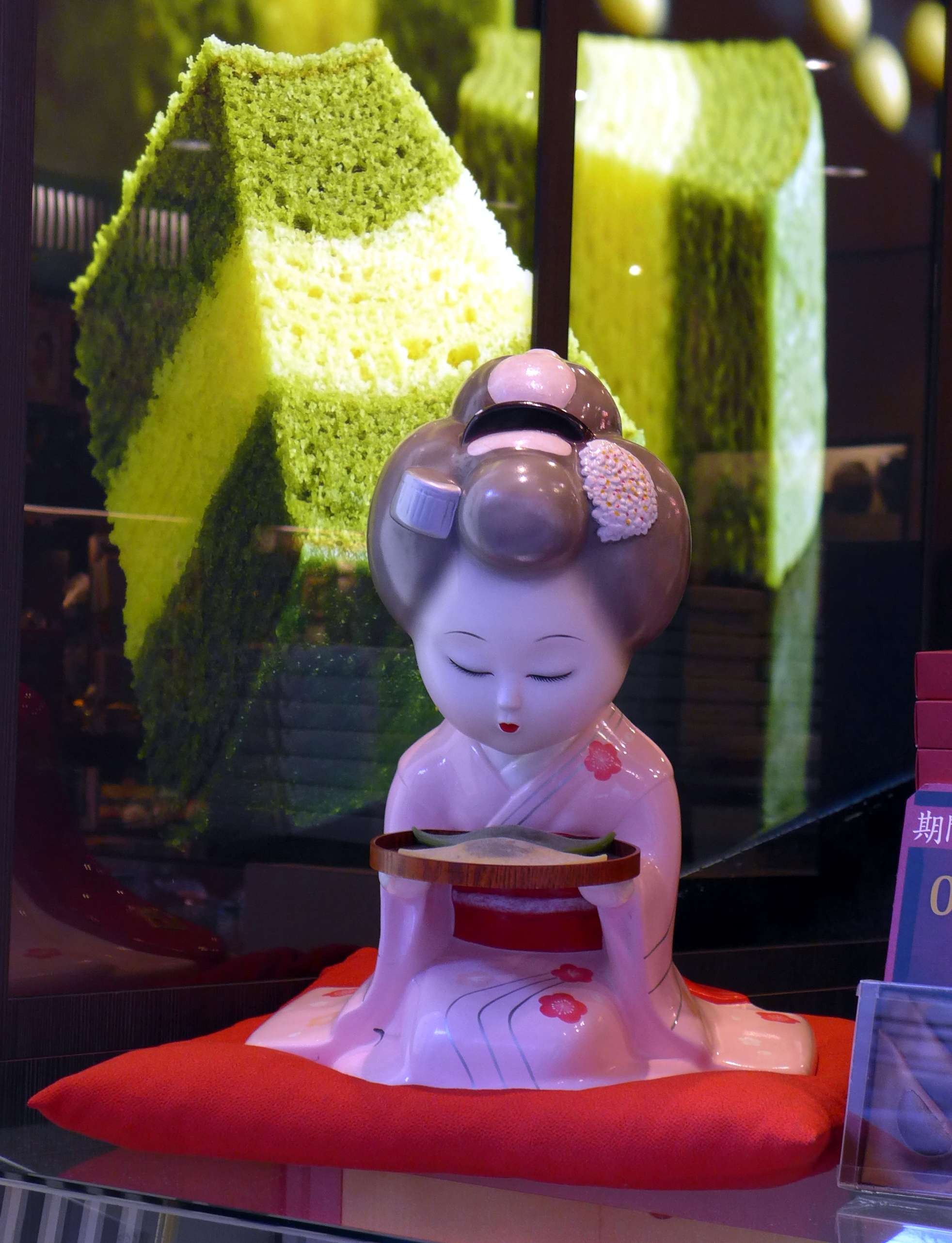
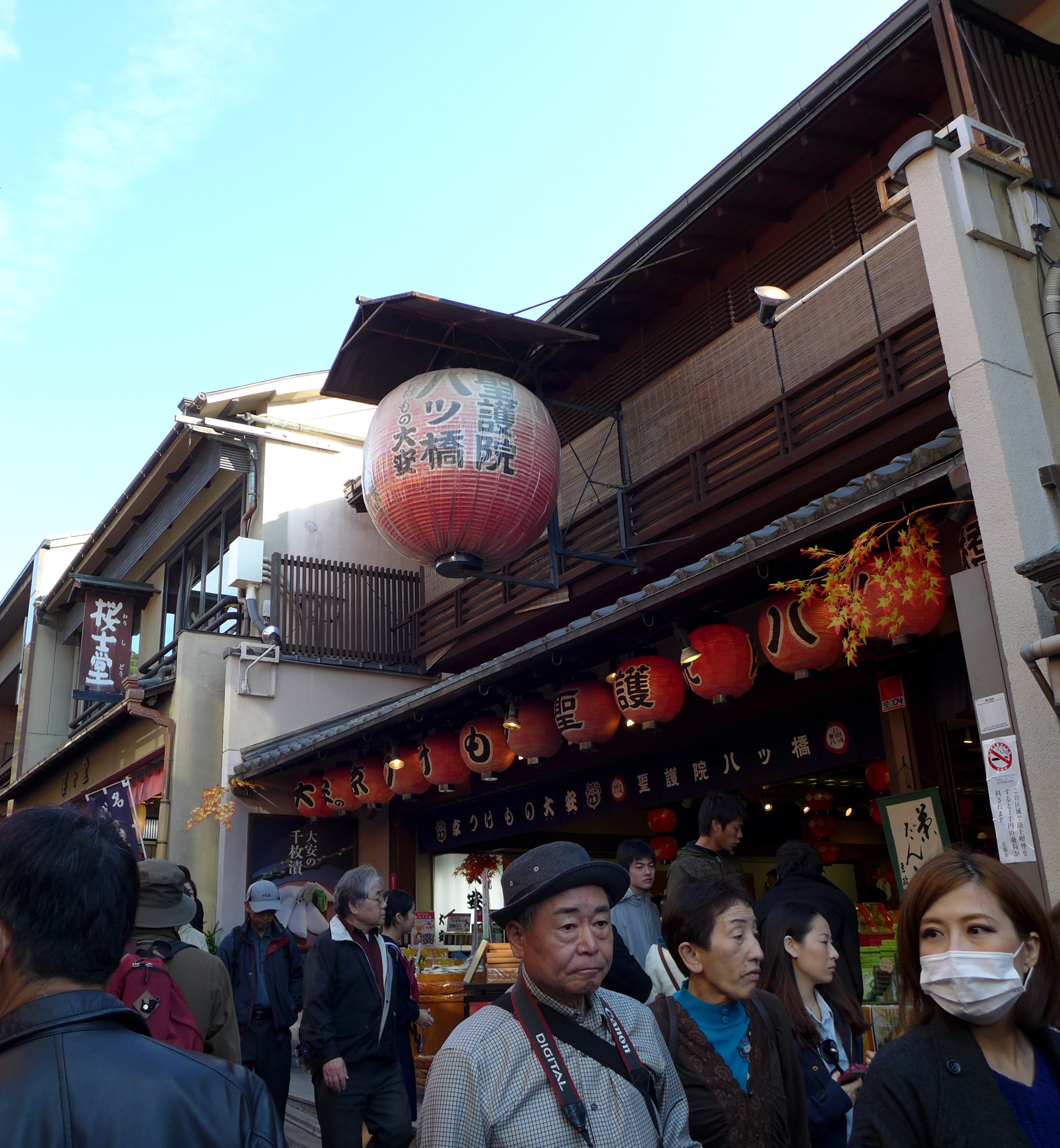
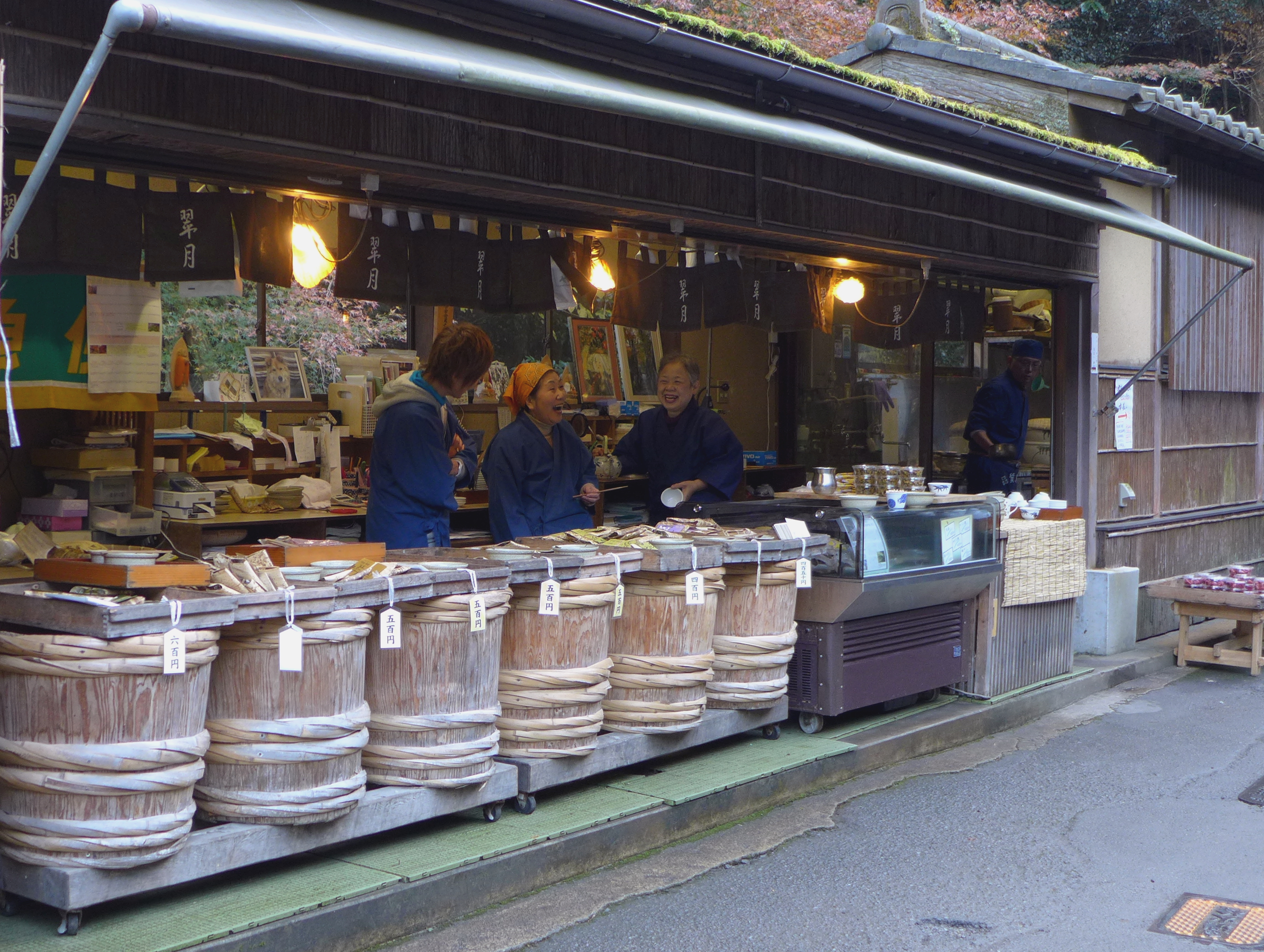
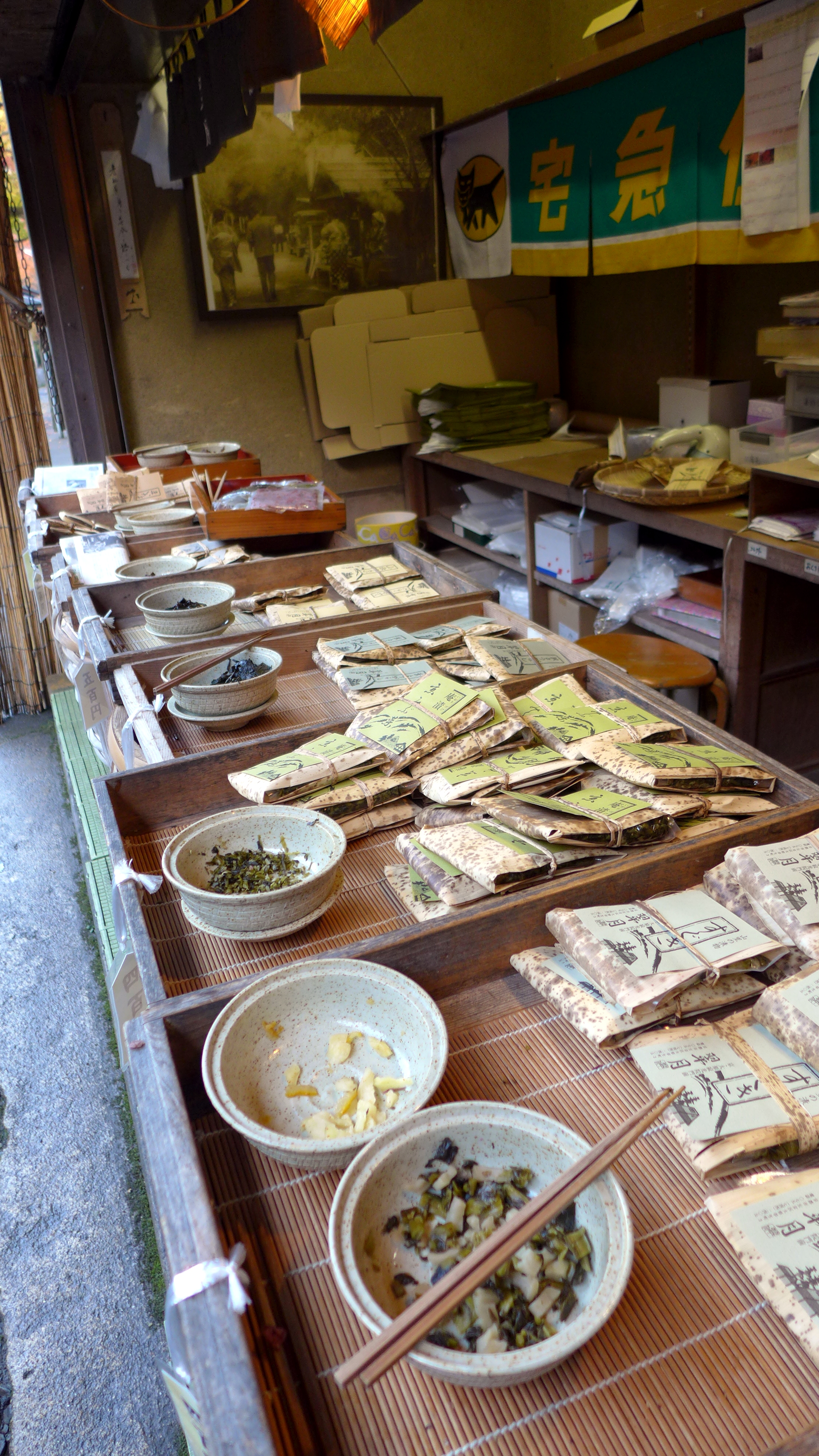
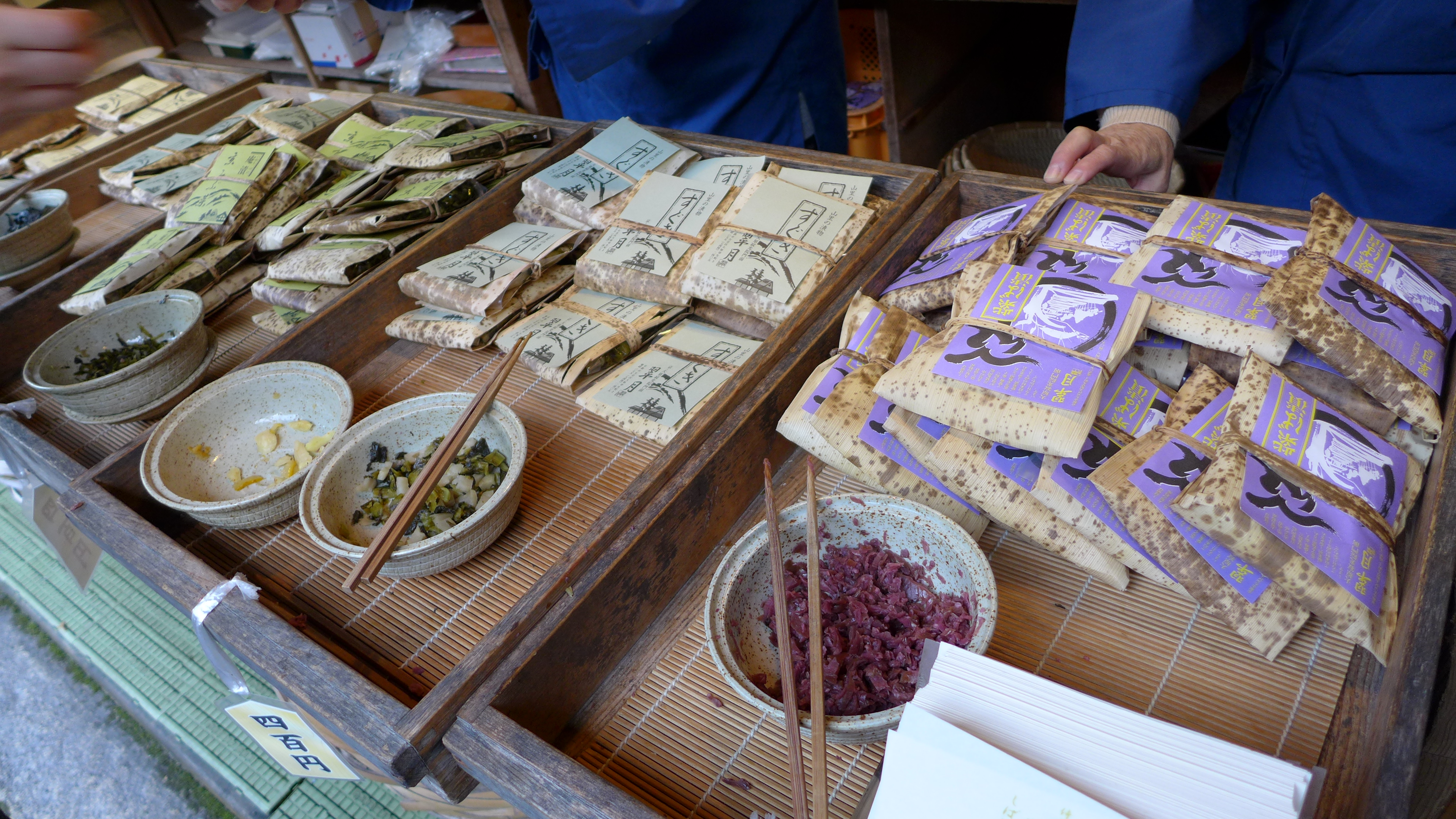
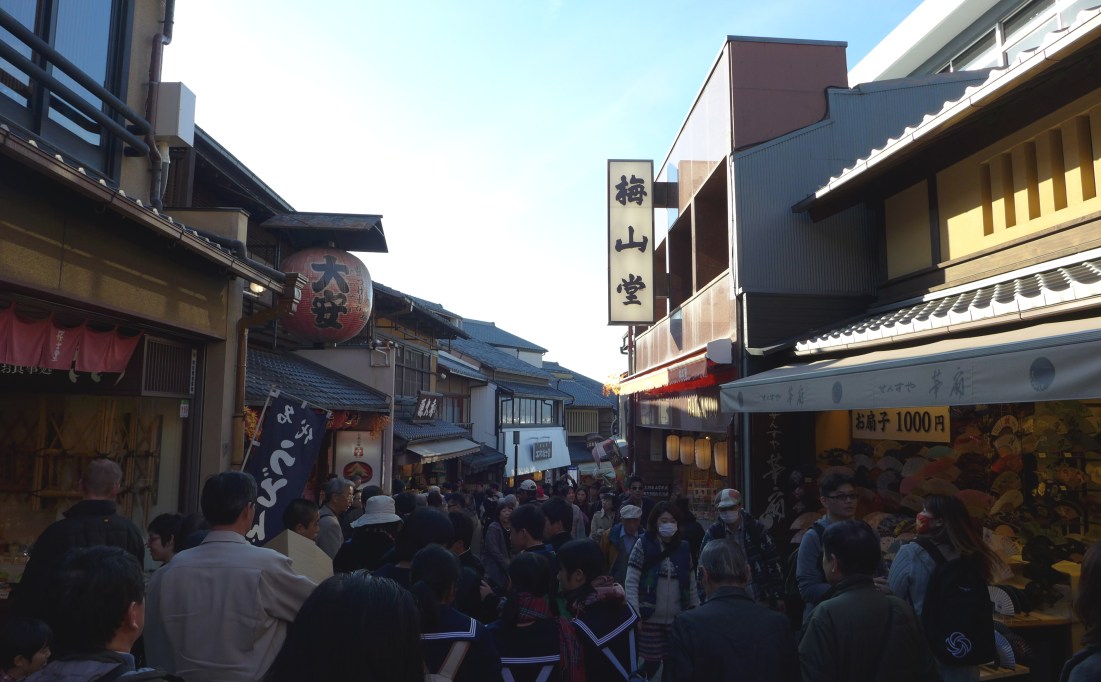
Most of the popular temples in Japan have an ‘approach’ of shops selling o-miyage (お土産) which are presents to take home to your family. In Kyoto this is inevitably yatsuhashi (八つ橋), rice dough pancakes usually stuffed with red bean paste (I had them at Fushimi Inari) or anything flavoured with Matcha (green tea 抹茶). Kiyomizudera is no exception, with a very long approach up the hill, packed with shops selling touristy ‘typically Japanese’ stuff aimed at Westerners as well as O-miyage and better quality traditional goods aimed at Japanese. Most of the shops have big ‘no photo’ signs, probably because they don’t want people hanging around taking pictures without buying anything, but I embraced my inner anarchist and took a couple of pictures of the displays anyway. Purely for your benefit, of course.

P1020892P1020895P1020891P1020829P1020699

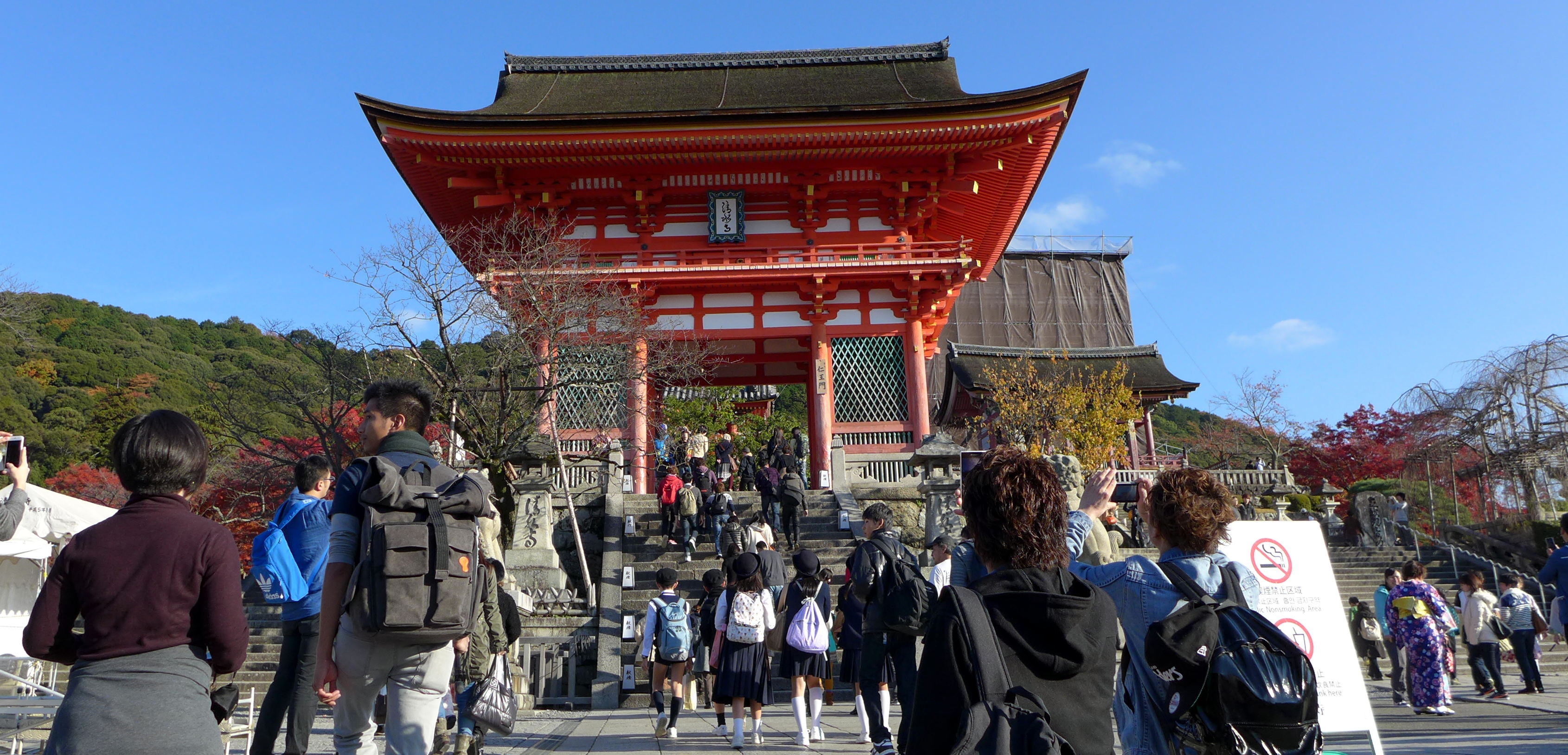
Once you have navigated the ever-growing throng of tourists,  many of whom stop randomly to take pictures or simply do not understand the concept of moving at a reasonable pace, you will eventually catch sight of the entrance gate of Kiyomizu-dera. It is unusual in that it is raised so far above the crowd on a series of steps. I liked the lions flanking the gate, I think they’re meant to be roaring but to me they were laughing at some hilarious joke. You do not actually have to go through the gate to get into the temple as there are paths either side, but the view from the top is worth joining the jam of people on the steps.

P1020704

In all honesty the crowd isn’t that bad, though I did go on a weekday; you won’t be able to take many pictures without someone walking across your photo, but movement is mostly unobstructed and it’s not busy to the point that its genuinely inconvenient and inhibiting. I imagine that on the weekend its absolutely packed though, so it would be best to visit on a weekday if you have the option.

P1020701P1020880 P1020706

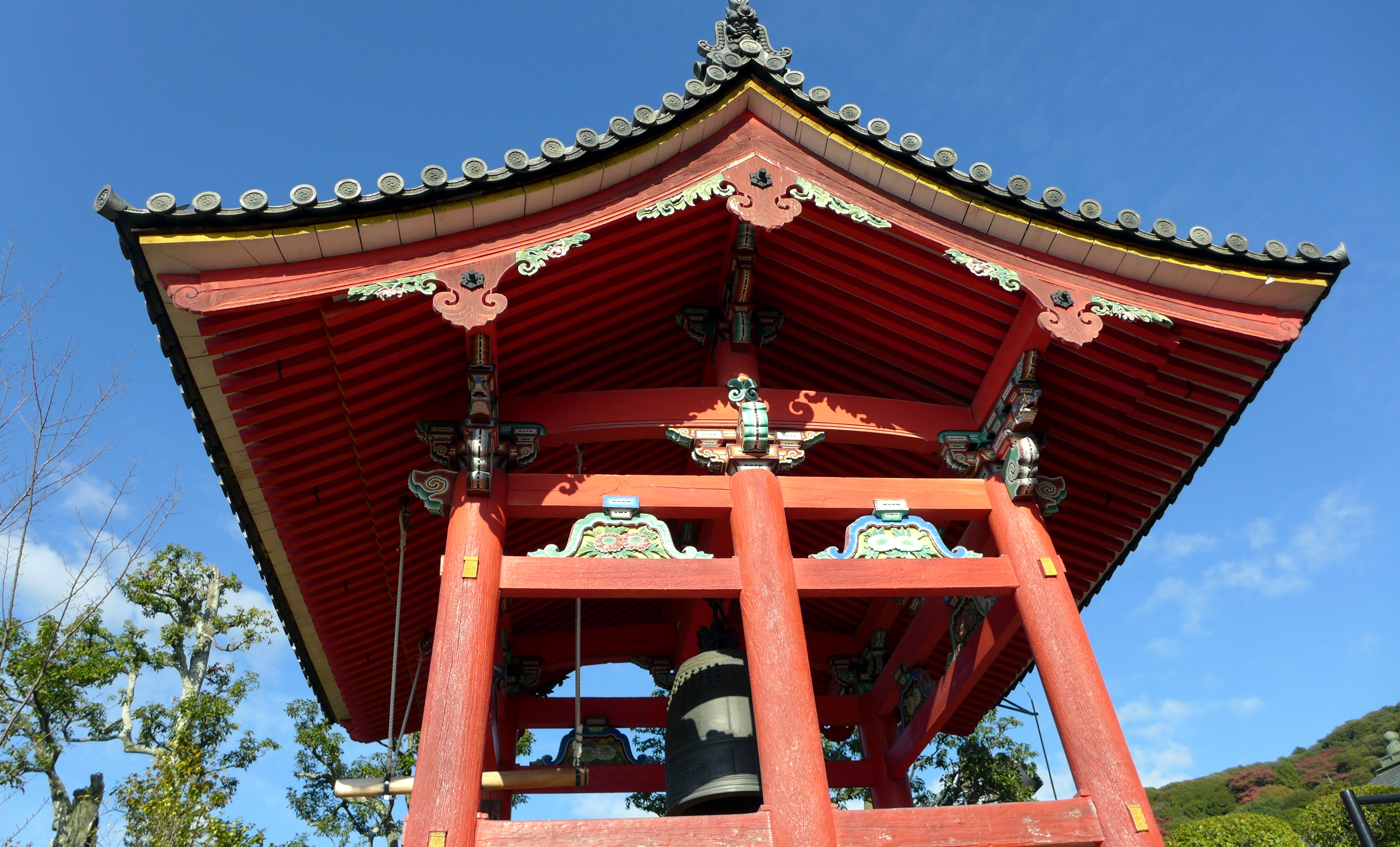
Kiyomizu-dera is an independent Buddhist temple that was founded in 778 by Enchin. It was rebuilt in the 17th century because it was burned down in a fire. It is dedicated to the Buddhist god Kannon, the god of mercy, a very popular god throughout Japanese history.

The legend of Kiyomizu-dera’s founding is that Enchin, a priest, received a vision that he would find the source of the Yodo river  (aka the Uji river, that flows through East Kyoto), and he went in search of its origin. During his search he came across a hermit who gave him a piece of wood possessed by the spirit of Kannon. Enchin enshrined the wood in a shelter, founding what would become Kiyomizu-dera. Later, an Emperor was hunting for a stag in the woods near the shrine, and Enchin gave him a sermon on why one should not harm animals (as he was Buddhist), the Emperor was moved and gave him money to create a proper temple.

P1020720 P1020727P1020730P1020722P1020746P1020716

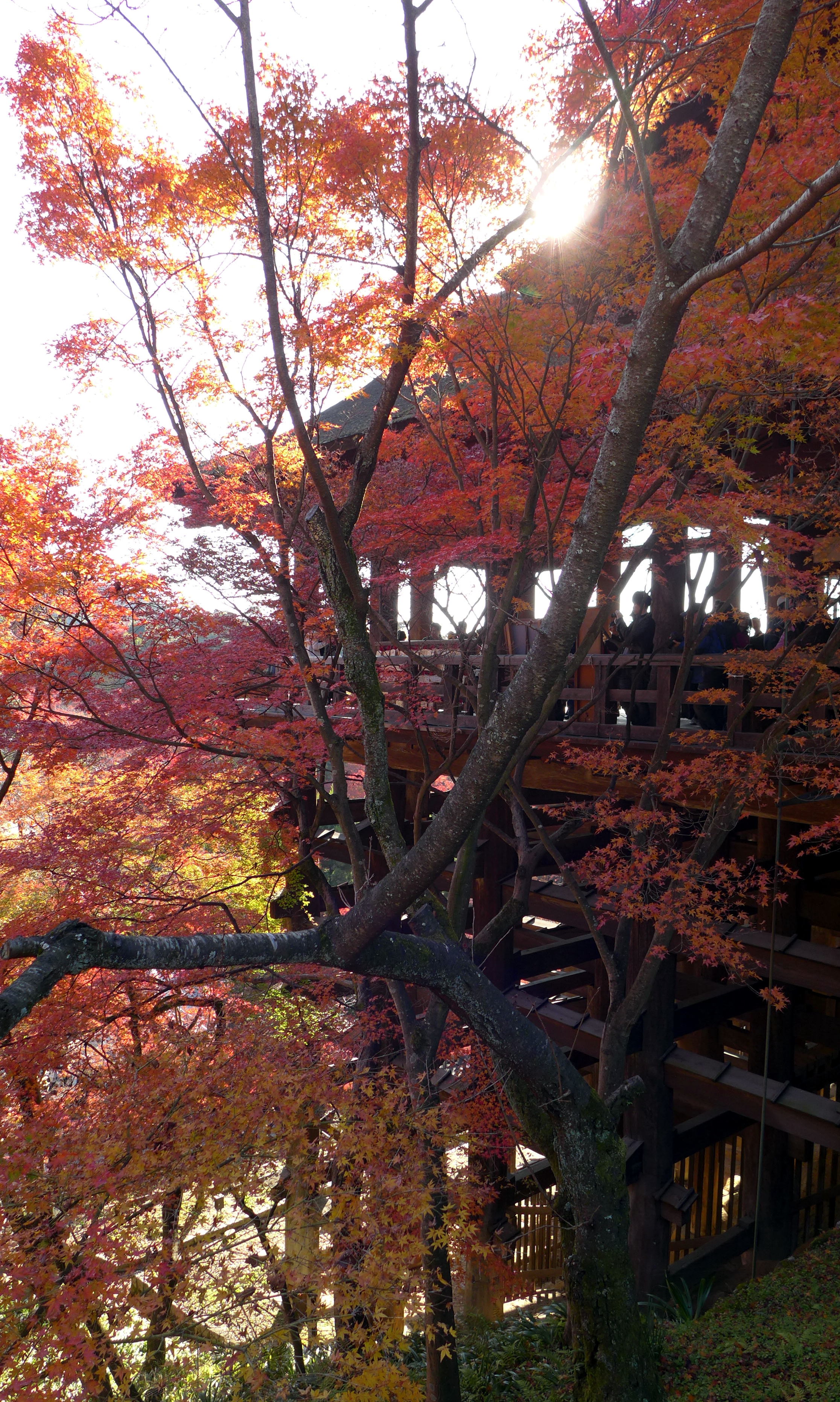
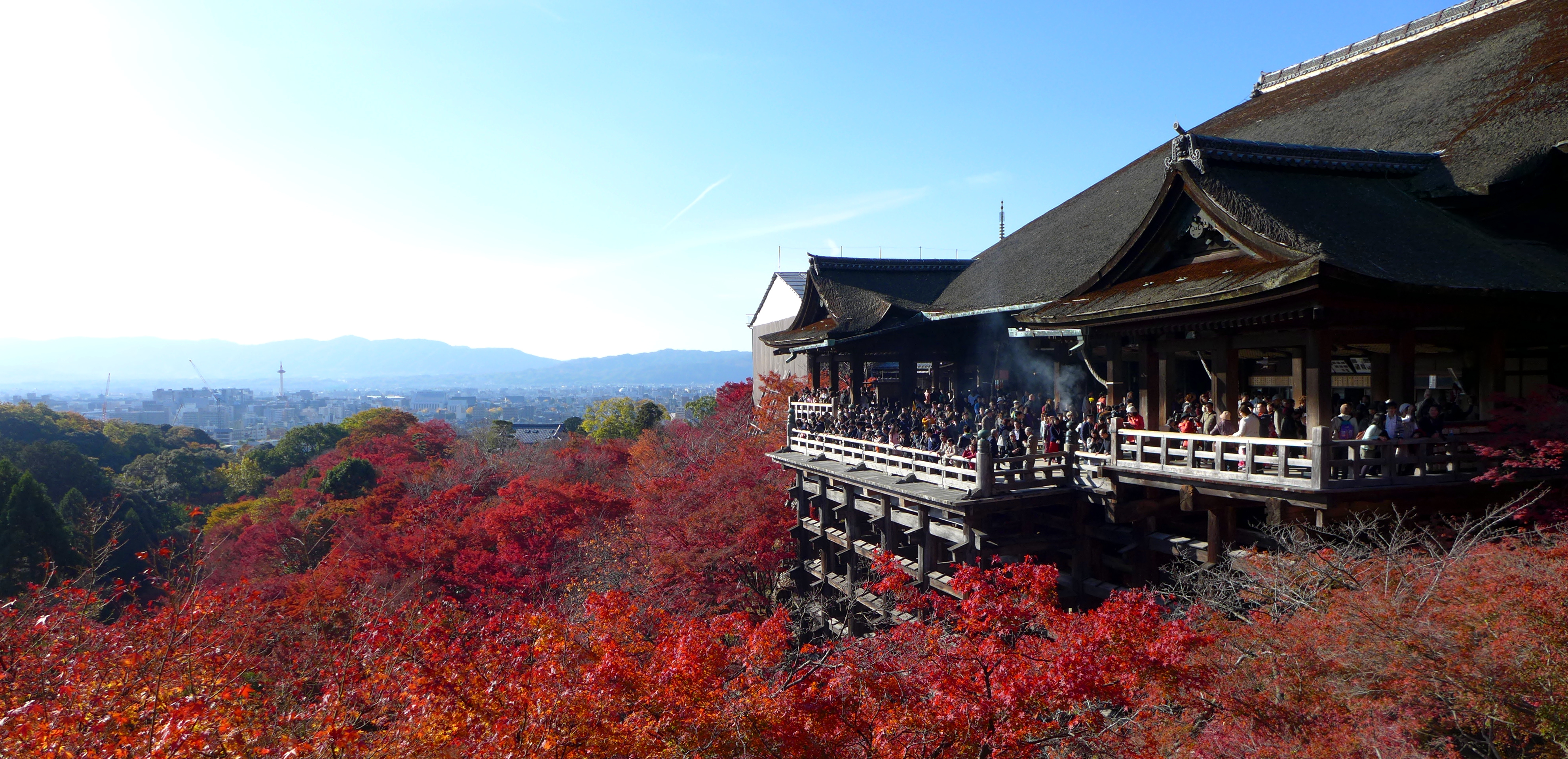
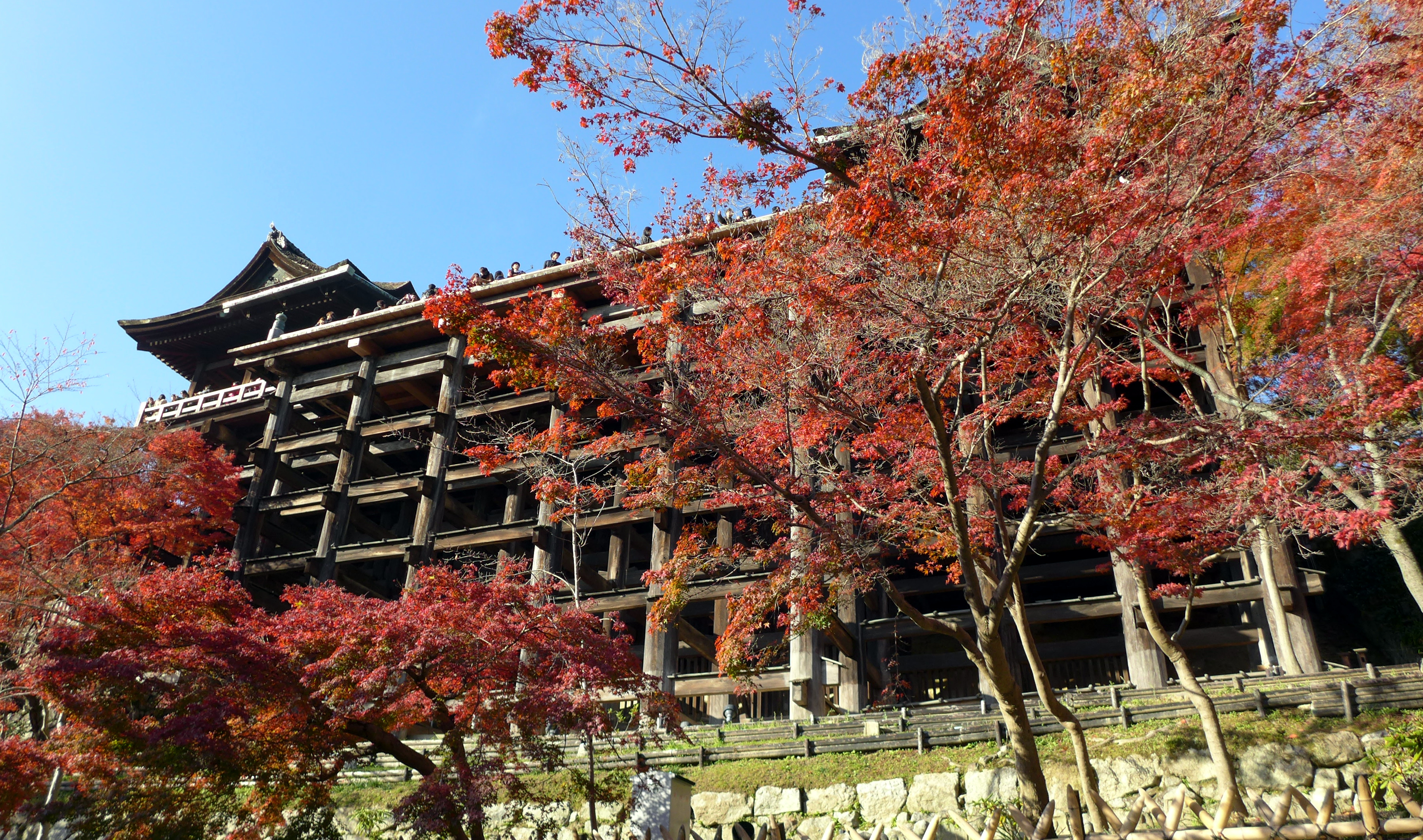
The most astonishing fact I’ve read about this temple is that it was constructed with no nails at all. This is amazing because it’s a very tall structure built on a mountain, and takes thousands of visitors tramping through it every day. I’m sure it’s withstood earthquakes too. I know that its possible to build a very sound structure with no nails, but for some reason this still amazes me. The main temple building is also thatched, which is pretty unusual (probably because most temples seem to burn down, and thatch is only tempting fate).
P1020771P1020742 P1020783

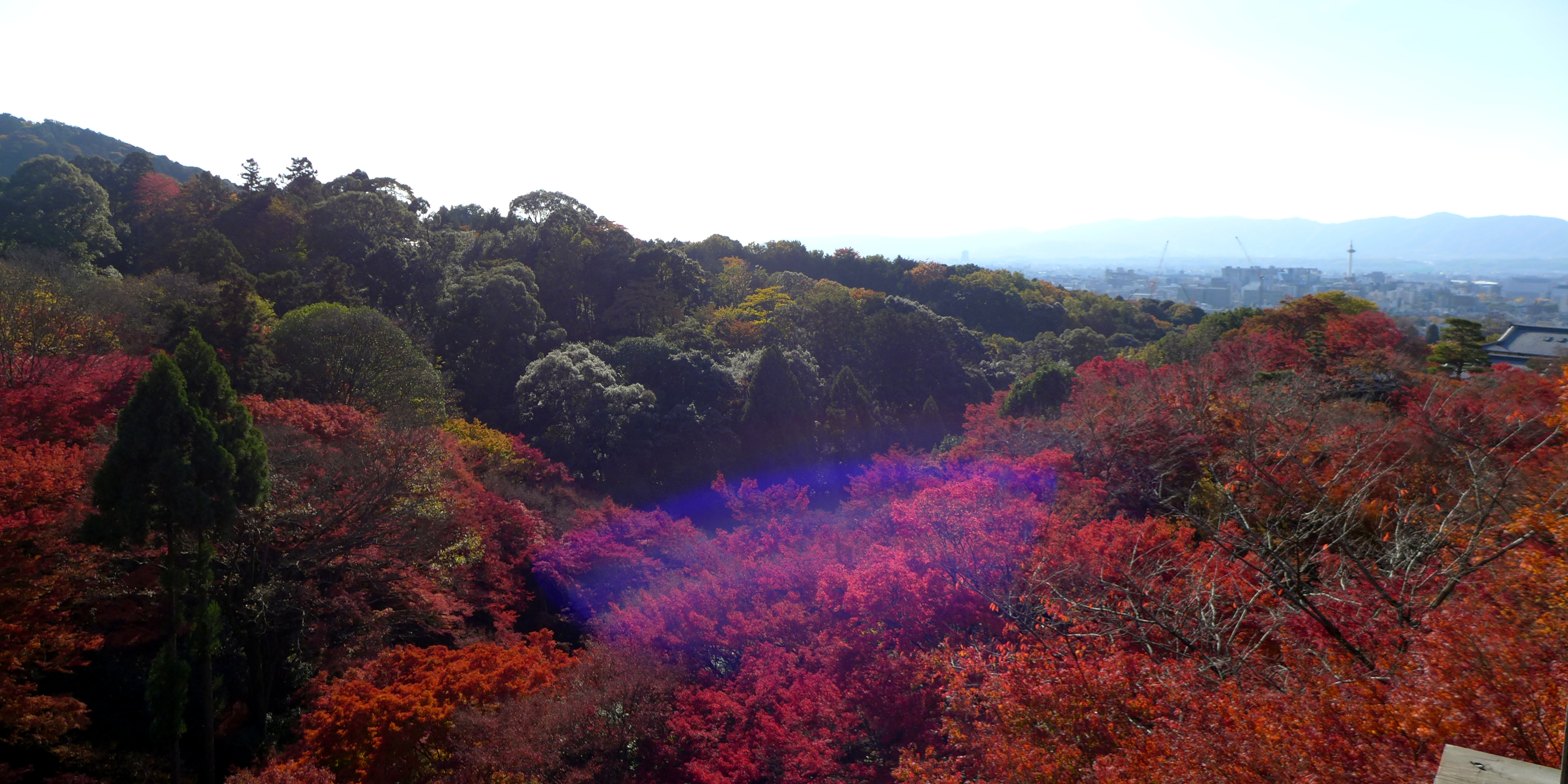
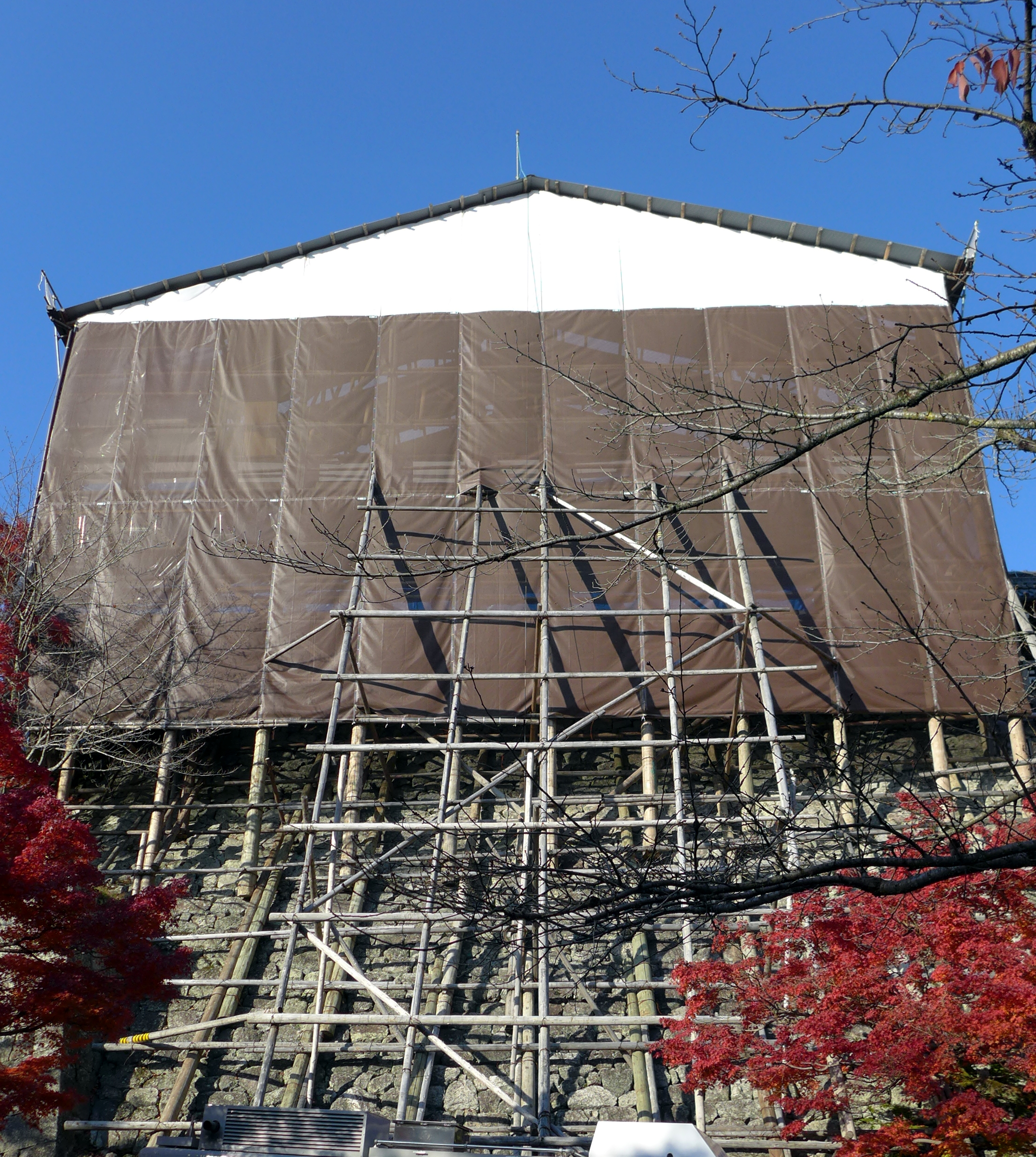
While it does not have any nails, half of Kiyomizu-dera is actually under maintenance. Though this doesn’t spoil the beautiful view over Kyoto, it does somewhat ruin the atmosphere, especially with the loud drilling. Hopefully if you get the chance to visit, they will have finished. It is definitely still worth a visit regardless of the construction work. I still managed to get the iconic ‘postcard shot’ of Kiyomizu-dera’s platform with the city and the crimson leaves – it’s quite amusing that there is scaffolding just out of sight and the view was far from tranquil as it was accompanied by melodious drilling.
P1020857 P1020761

The main attraction of Kiyomizu-dera is the platform that overlooks the trees towards a pagoda on the opposing mountain. In the Edo period people would jump off the 13 metre platform, the idea being that if they survived their wish would be granted. 234 jumps are recorded with a 85.4% survival rate, though I wonder if their wishes were granted, presumably they would be injured by the fall and I wouldn’t trust Edo period medicine (mostly herbalism and acupuncture, not great cures for a broken leg). As a result of this practice, the Japanese version of the English idiom “to take the plunge” is “to jump off the stage at Kiyomizu”.
P1020837P1020765P1020743P1020767

The booth for shuin (朱印, stamping) is just at the end of the first platform and was run by a very nice monk who explained the different sections of my stamp to me. He will explain in either Japanese or English, so if you get yours done the language barrier is no problem (he will also give you a slip of paper with the information). You can also buy stamp books there with the main stage of Kiyomizu printed in gold on the front.

As you are probably wondering what the stamp explanation was:

The right hand side has the date (going down to the bottom right), followed by the character 奉拝 (Hohai) meaning to worship in the top right next to the date, the large central characters are 大悲閣 (Dai-hikaku) meaning ‘great benevolent palaces’, the final characters on the left are the name of the temple, 清水寺 (Kiyomizu-dera).

Most stamps follow a similar pattern, with 奉拝, often followed by the name of the temple (or its official rather than common name) and then its other name (usually common name on the left). The date is usually on the left or the right, there doesn’t seem to be a convention.

P1030460 P1020751 P1020760

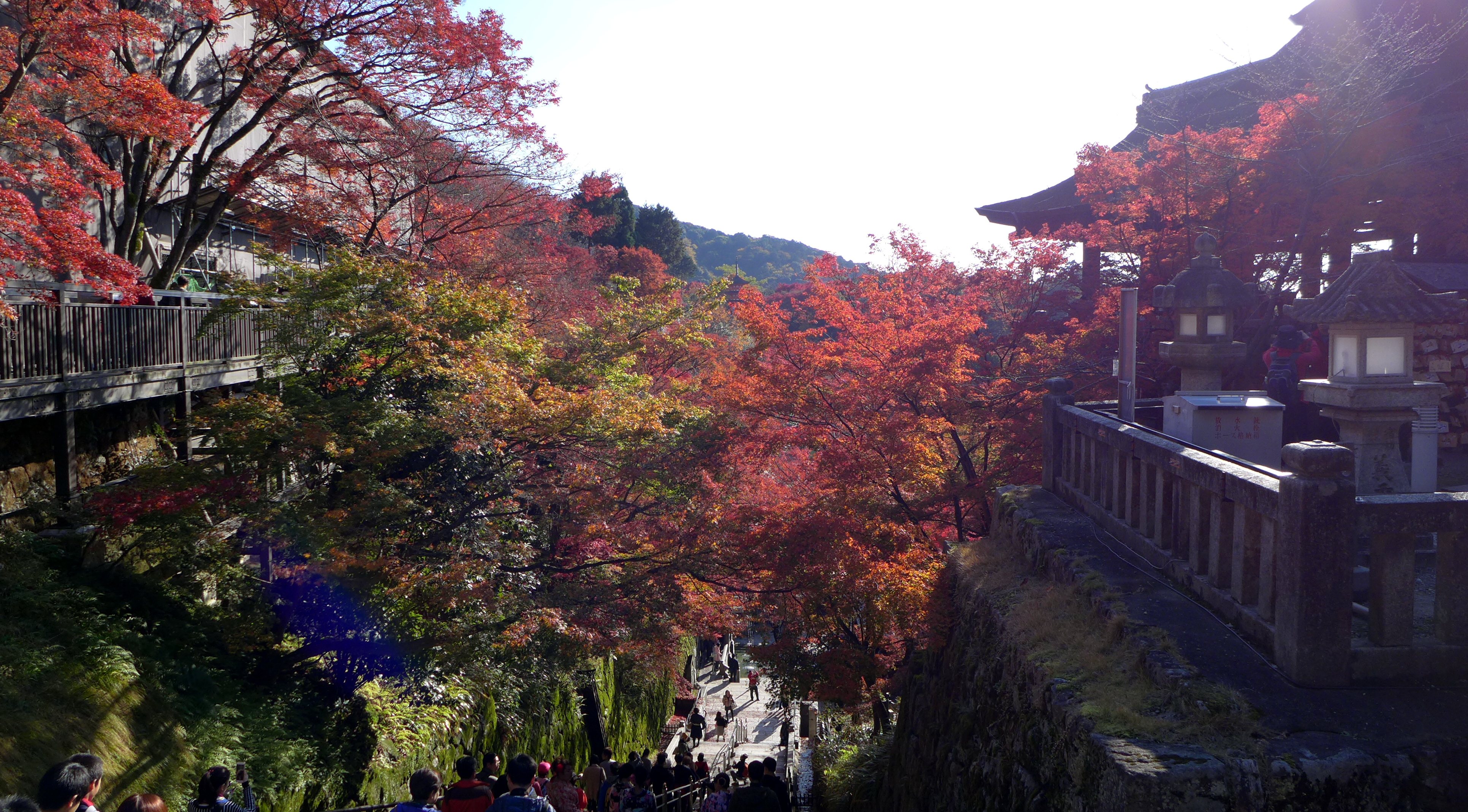
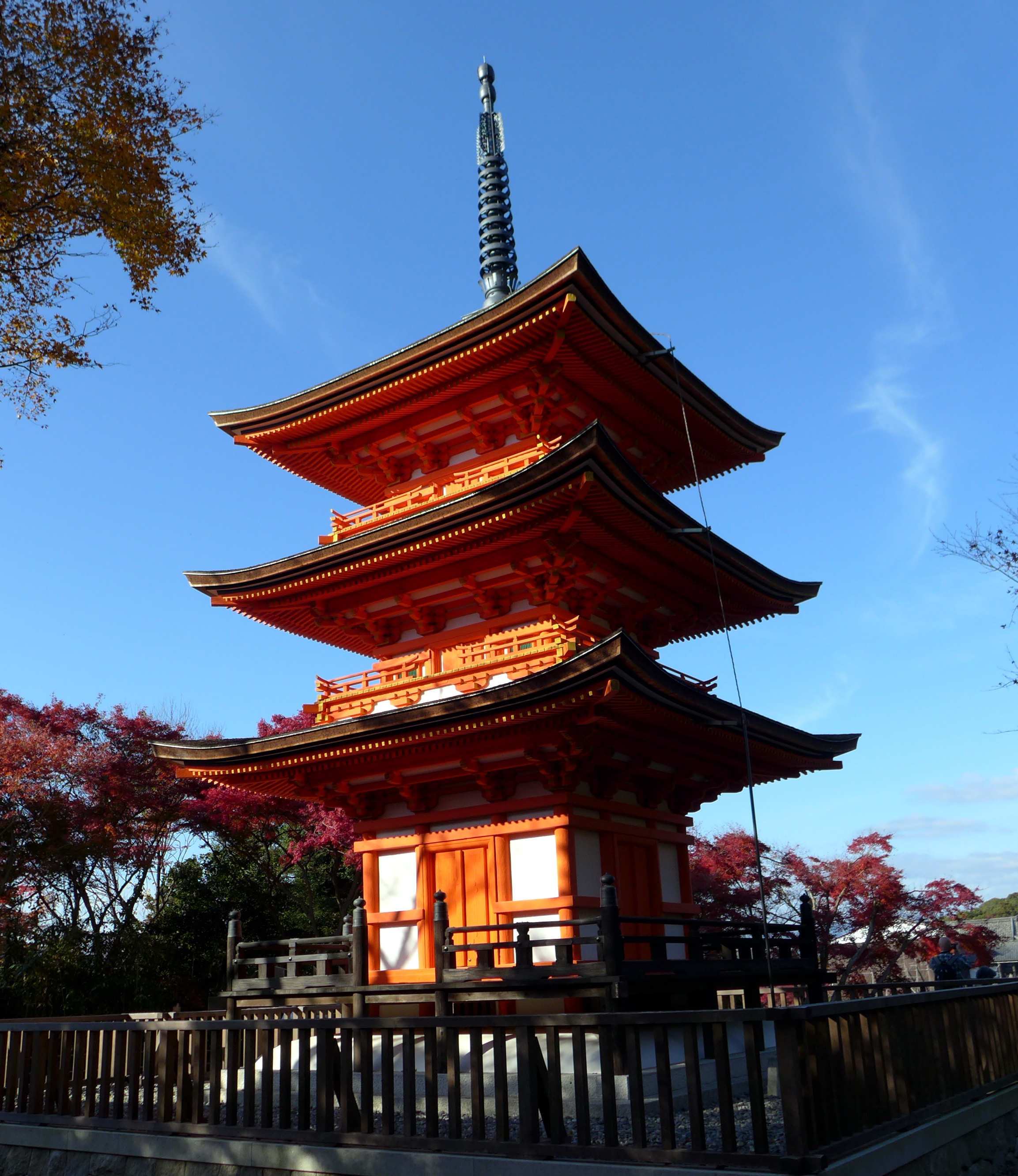
If you continue on round the stage instead of going down the steps towards the water, you will reach a path leading up to the pagoda. The pagoda is pretty small close up (it looks like it could be huge and just really far away from the temple itself) but its beautifully detailed and you can look back towards the temple at the gallery you were just standing on. The view of the leaves is better from the temple but the view is still spectacular.
P1020774P1020804P1020808

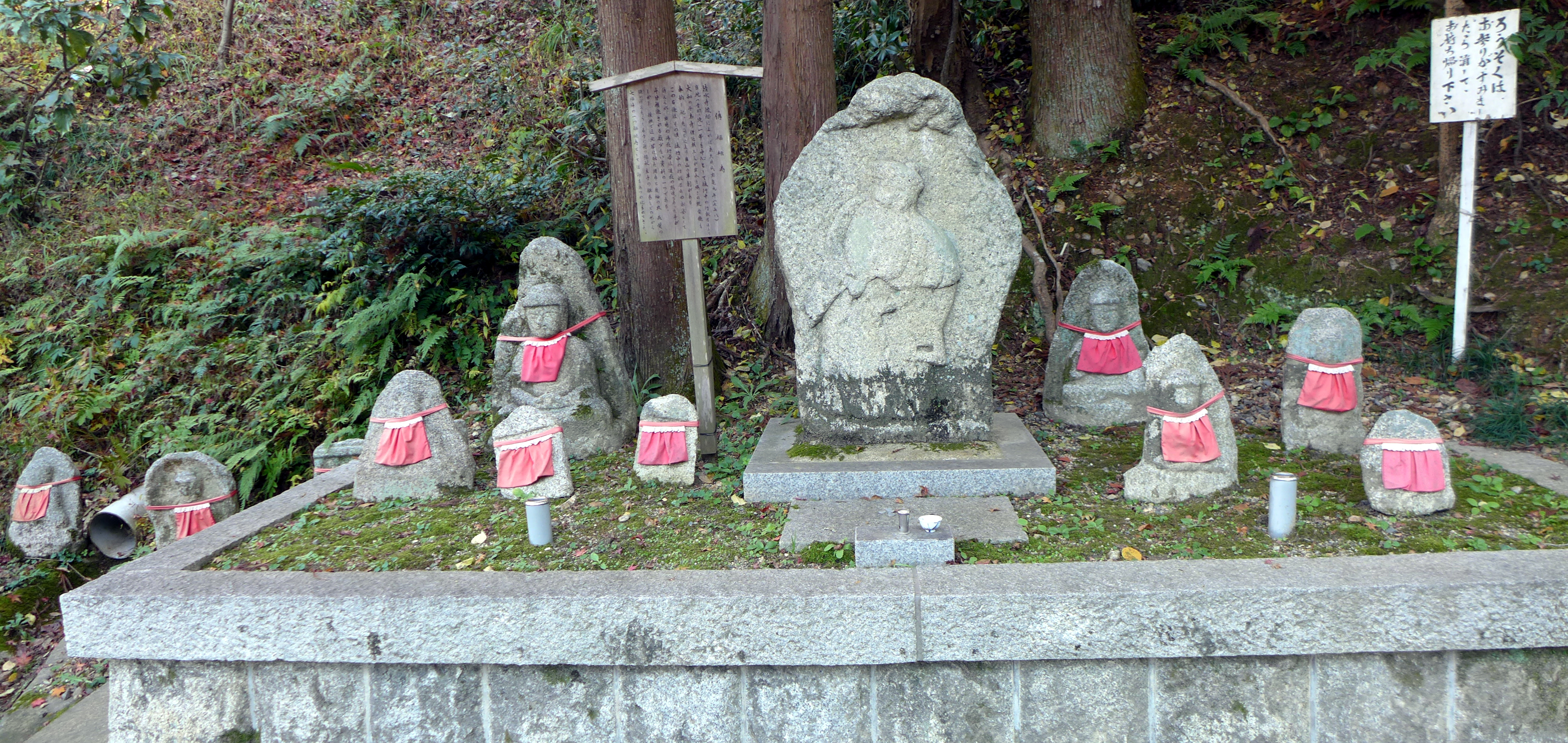
I then walked down the hill towards the section of the temple under the gallery. The elevation makes the temple dynamic and interesting to walk around – you discover new areas as you walk around. Here there was a queue of people waiting to scoop water from an elevated spring. It is said that if you wash yourself and drink the water your wishes will be granted. I didn’t queue because an entire school had just joined the line and I didn’t particularly want to wait half an hour. When I have a wish that needs granting I’ll be sure to go back.
P1020819 P1020833 P1020868 P1020864 P1020855

While Kiyomizu-dera is firmly on the beaten track, and therefore subject to traffic, I can see why its become so famous. There is also an evening illumination of the leaves during Koyo, but I have heard that people start queuing two hours before the illumination opens – though I’m sure its worth the wait, I doubt I’ll be joining the line. Entrance to Kiyomizu on a normal day does cost money, a ticket costs 300円 (£1.60), which is cheap for such an attraction – many temples charge more for much less.

大原 Mourning on the Mountain

Yesterday I took a trip with my friend to Ohara (大原, a town that sounds like it should be in Ireland but is actually to the North-East of Kyoto, near Kurama). The original plan was to hike from Ohara to Kurama and get the train back but Ohara has tonnes to see (we didn’t even get to do all of it) and it gets dark really early here so we decided to stay in Ohara rather than getting lost in a dark forest.

The only way to get to Ohara via public transport is to get the Kyoto City bus (number 16 or 17) on the Ohara line. You can catch the bus from Demachiyanagi station and the fare is 430円 (£2.30) one way. The bus journey took around 50 minutes, but we did have to stop to change out the ticket machine’s money box as it was full, so maybe it normally takes around 40 minutes. Ohara is pretty popular and we had to stand on the way there.
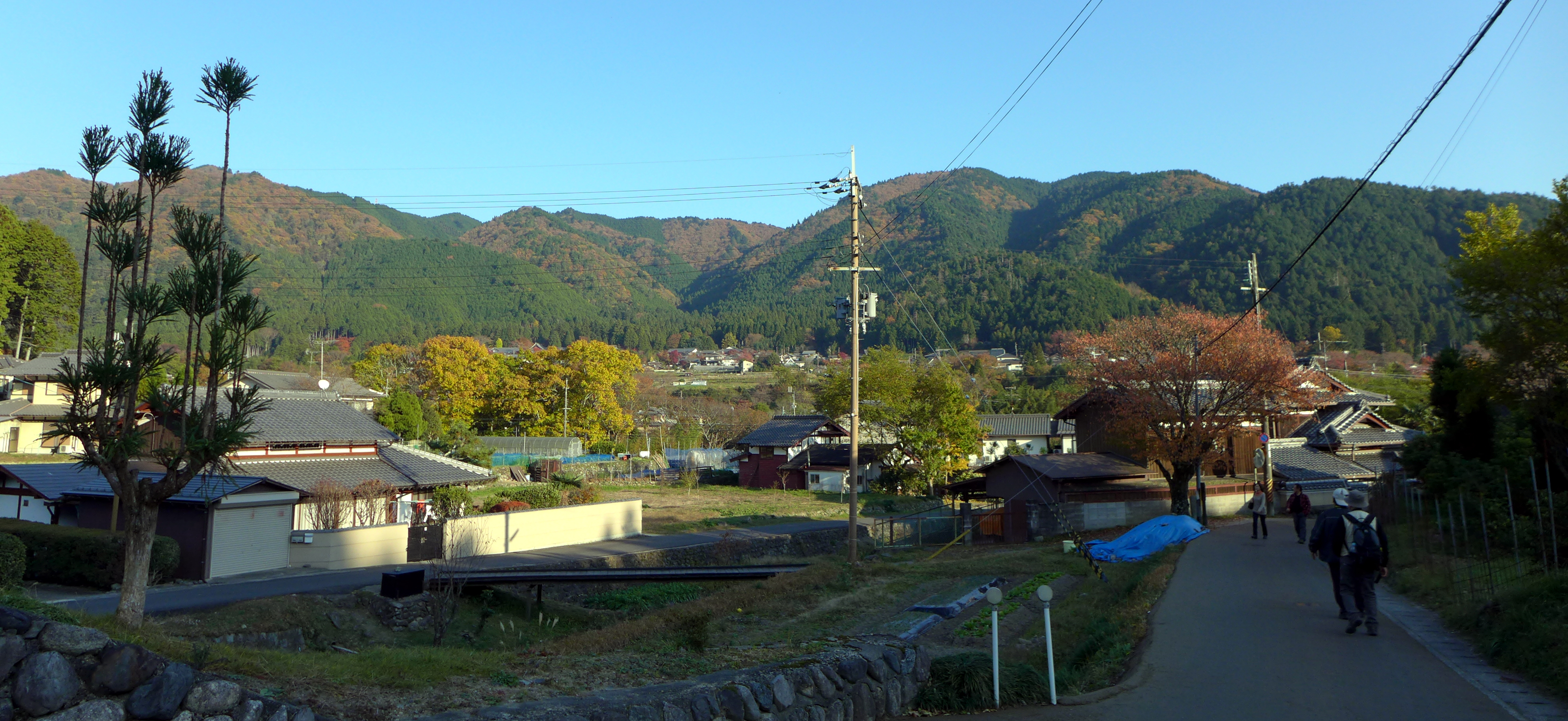
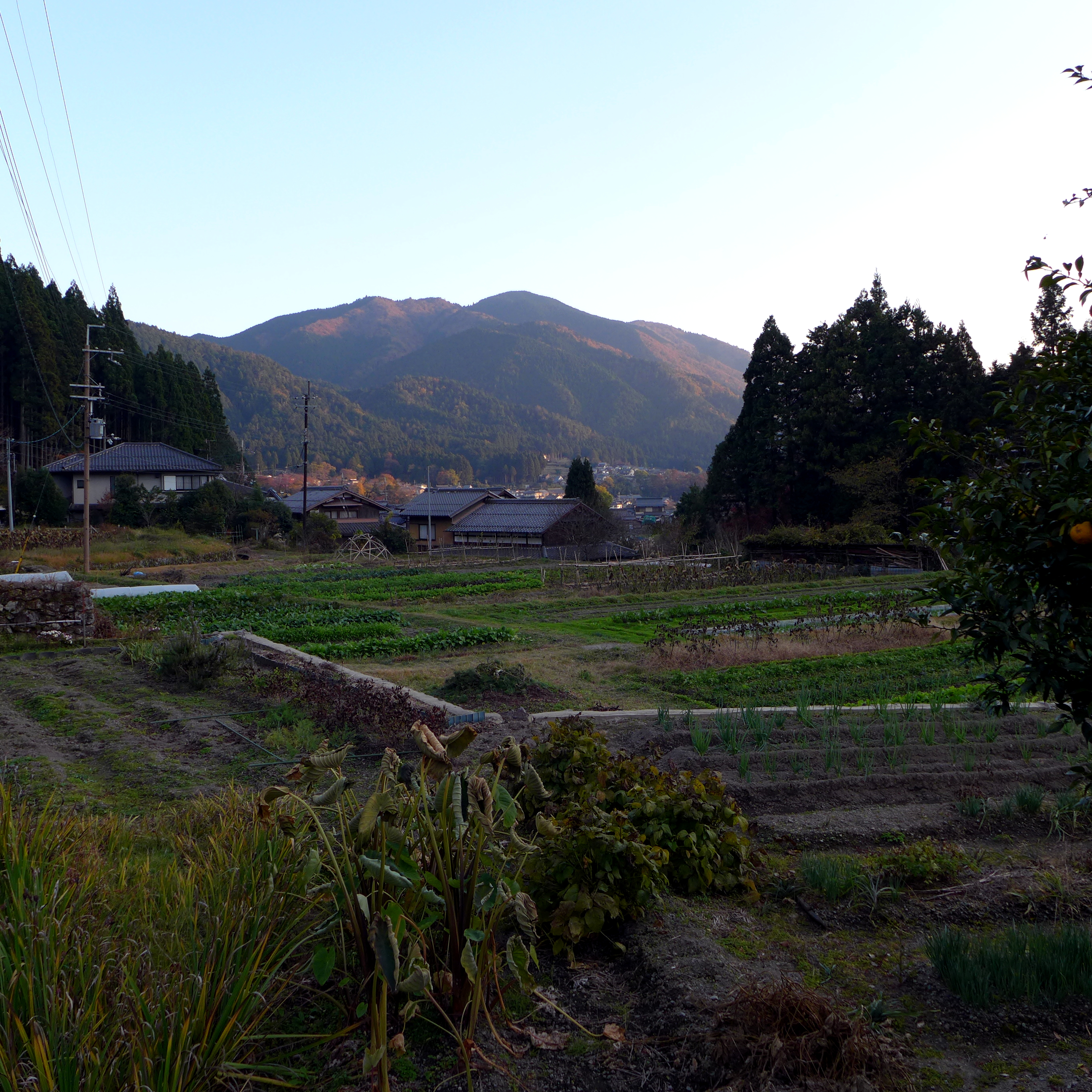
As you leave Kyoto the scenery outside is beautiful – the bus follows the course of the river through to the mountains. The village of Ohara has lots of beautiful architecture, with some traditionally thatched houses (tiles over the top of the thatch) and intricate details on the roofs.

P1020338P1020327P1020343eP1020356 P1020350

There are two main temples in Ohara: Sanzen-in (三千院) and Jakko-in (寂光院), both belonging to the Tendai sect of Buddhism. We chose to visit Jakko-in (because we were originally going to walk from there to Kurama).

P1020388P1020375

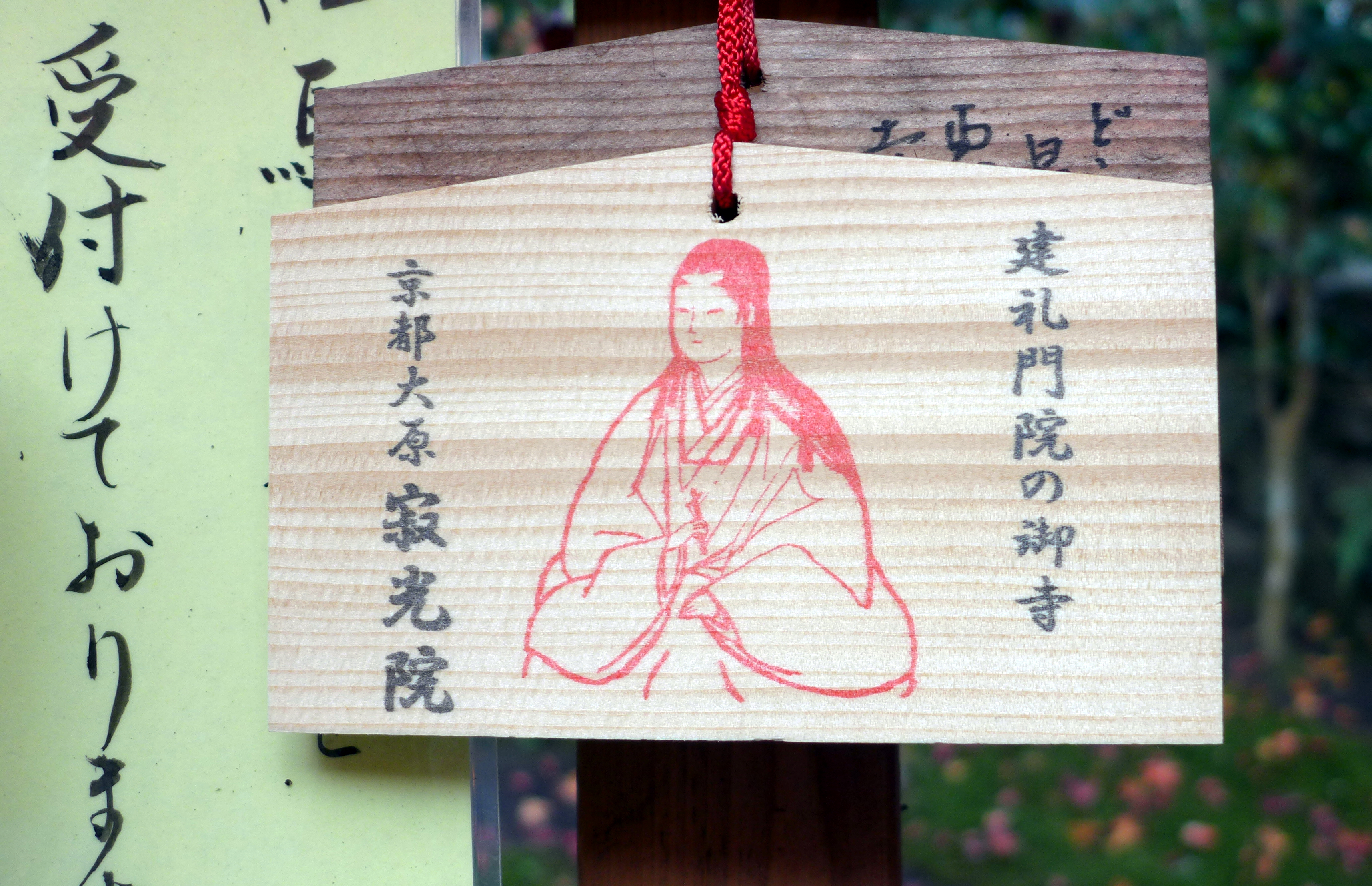
Jakko-in was founded in 594 and is famous as the temple where Kenreimon-in spent her days in solitude. Kenreimon-in was an Empress Dowager and mother of the Emperor in the 12th Century. Her story demonstrates that the imperial succession was not a simple matter of father to son but one of competing clans vying for control over the Emperor. She was the mother of Emperor Antoku, a boy Emperor, who was supported by the Taira clan. The Minamoto clan, the other rival faction vying for power over the throne, put forward an alternative candidate for the imperial succession. This led to the Genpei war (源平合戦) of 1180 – 85, which was decided by the naval battle of Dan-no-Ura.

P1020371 P1020396 P1020402

The Battle of Dan-no-Ura was a naval engagement between Minamoto and Taira forces. The Emperor and his family were on a vessel in the middle of the battle. The battle was won by the Minamoto due to the Taira general defecting and revealing the location of the imperial vessel. When the Minamoto turned their firepower on the imperial vessel many members of the imperial family threw themselves into the water rather than be captured. The grandmother of the eight-year-old Emperor Antoku, jumped into the sea with him in his arms. His mother, Kenreimmon-in, is said to have jumped into the water only to be dragged out by her hair. After witnessing the death of her son and most of her family she became a nun, living in solitude at Jakko-in. She wrote a poem while living at Jakko-in:

Did I ever dream
That I would behold the moon
Here on the mountain –
The moon that I used to view
In the sky over the palace?

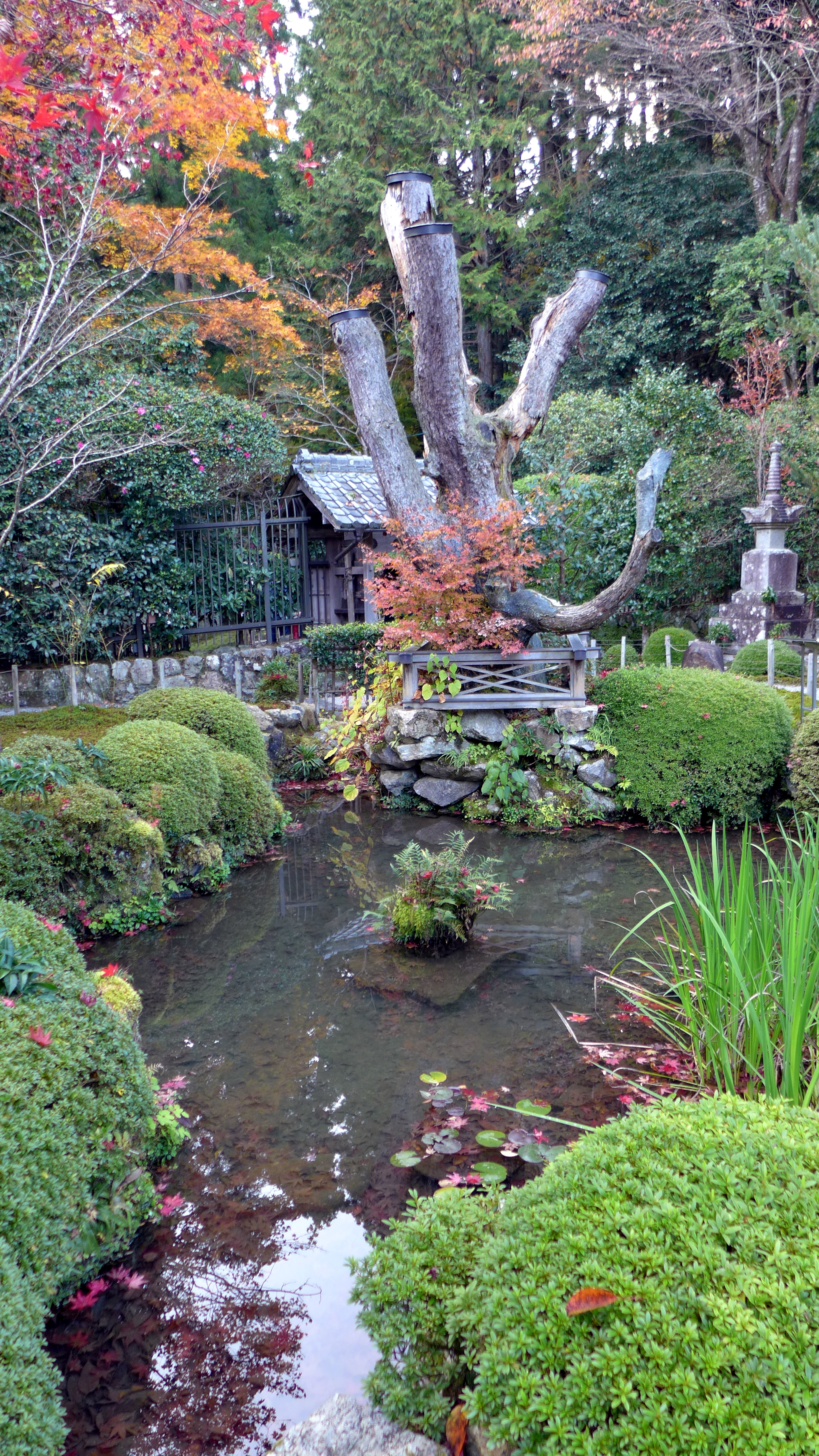
She lived at Jakko-in for 7 years, dying in 1192. She is also a character in the Japanese classic, the Tale of the Heike. In the compound of Jakko-in there is a very dead-looking tree in the corner of the courtyard. This is actually a monument to a Komatsu tree which stood at Jakko-in until it died in 2004. This is the tree at which Kenreimon-in met the retired Emperor Go Shirakawa a year after she became a nun. Sadly this tree died as a result of an arson in 2000 which burned down the main temple building and badly damaged the tree as well as an ancient Buddha statue. The dead tree that stands now represents a holy staff in memory of the thousand-year-old tree that used to stand there. The arsonist was never caught. It seems to me that the mountain has been the site of a lot of tragedy – first the solitude of Kenreimmon-in and much later the destruction of the temple by arson. The picture below is of the monument to the tree.

P1020394P1020409P1020413P1020416 P1020418 P1020419

Another historical artifact that also seems fairly mundane without any information is the metal lantern in the gardens. This was gifted to Jakko-in by none other than Toyotomi Hideoyshi, one of Japans theree ‘great unifiers’ that ended the warring states period. Toyotomi Hideoshi is the least likeable of the three unifiers, he was brutal (he crucified 26 christians) and firmly set Japan’s class system. However, it was this brutality that helped to set the structure of Tokugawa Japan’s society and bring about a peace that lasted for 250 years. His line did not succeed in ruling, it was Tokugawa Ieyasu, the man that overthrew Toyotomi’s son, that secured Japan for his bloodline. There is a story about the three unifiers that sums up their roles and personalities:

The three unifiers are trying to get a bird to sing;
Oda Nobunaga says “if it doesn’t sing, kill it.”,
Toyotomi Hideyoshi says: “if it doesn’t sing, make it sing”,
Tokugawa Ieyasu says: “if it won’t sing, wait for it to sing”.

Though this implies that Tokugawa Ieyasu was the only one that was correct in his approach, which would be grossly undervaluing the foundation of the first two unifiers’ methods, it does demonstrate their different approaches to solving the problems of warring-states Japan. I know I have only talked about Toyotomi Hideoyoshi, but I will leave the other two for another time as this is a large and important chunk of history that I would do a disservice by summarising.

P1020397 P1020421 P1020384e

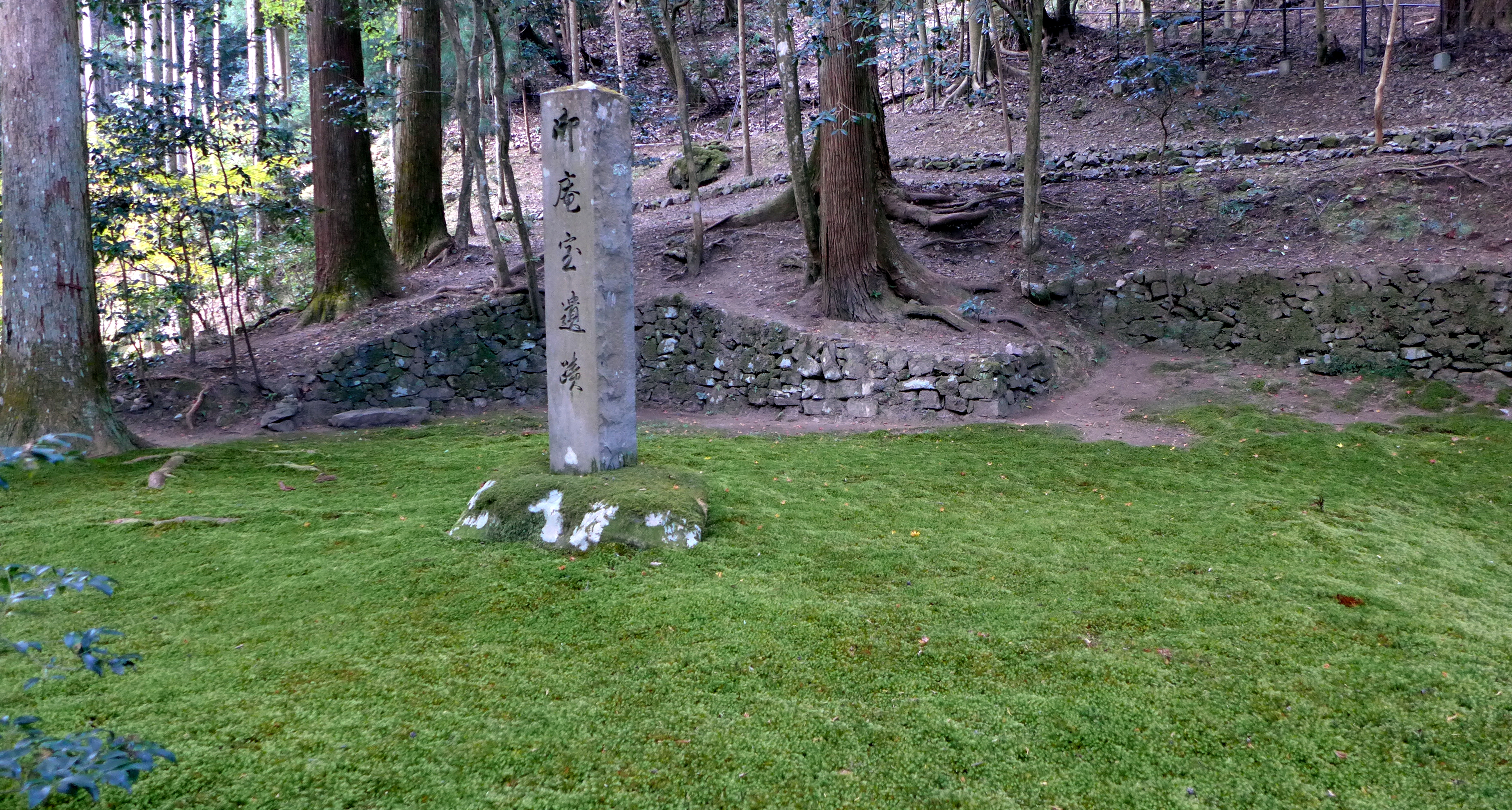
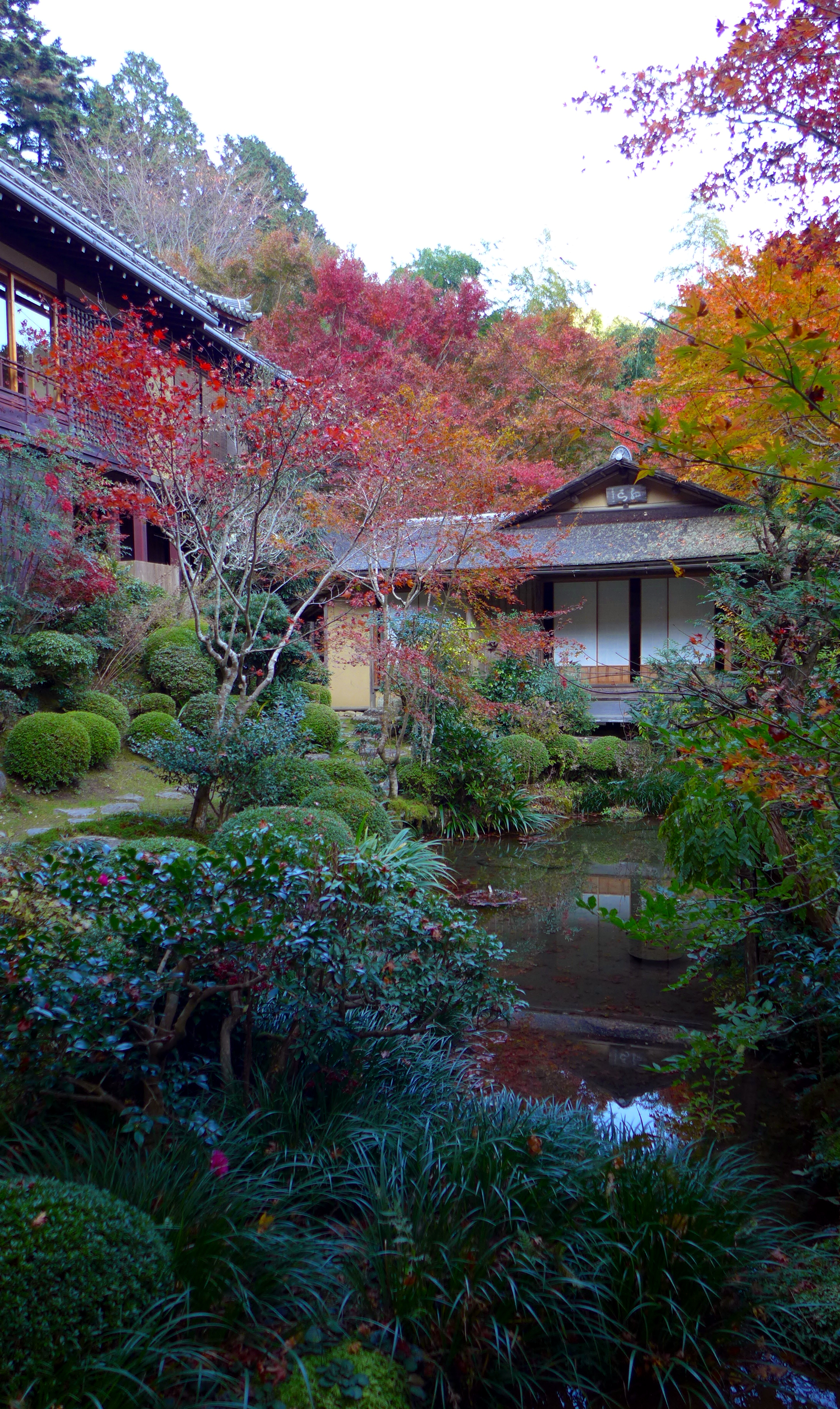
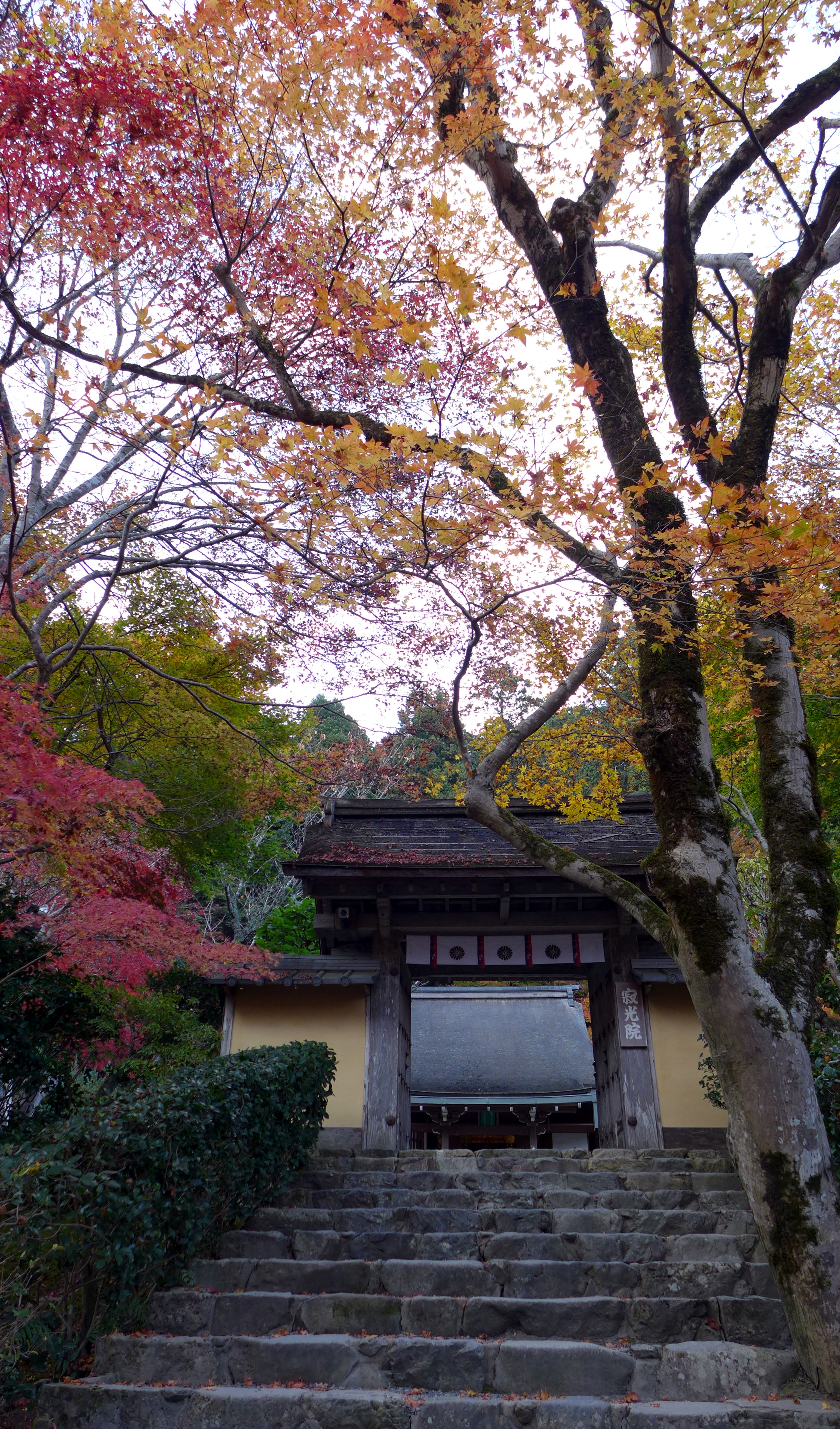
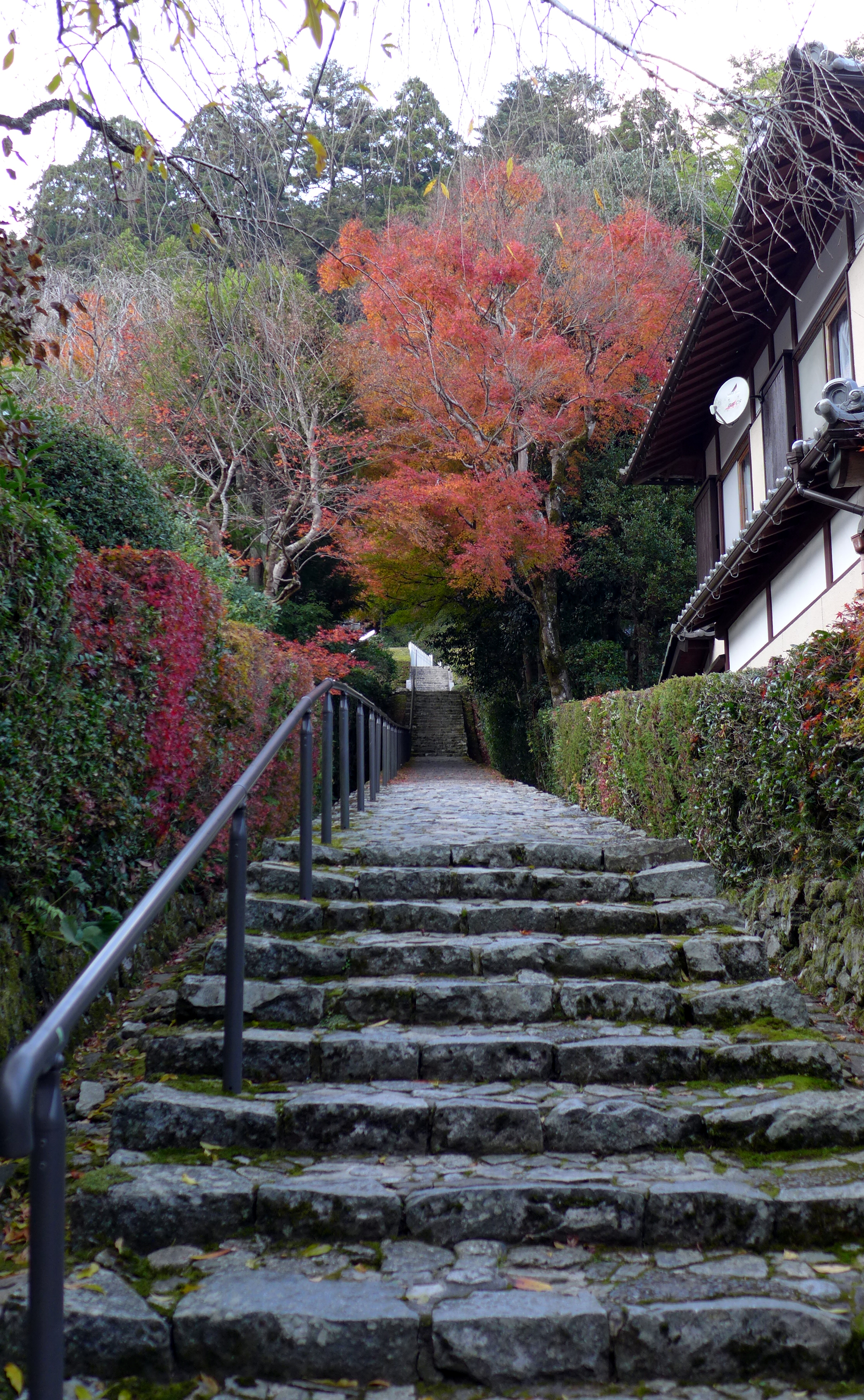
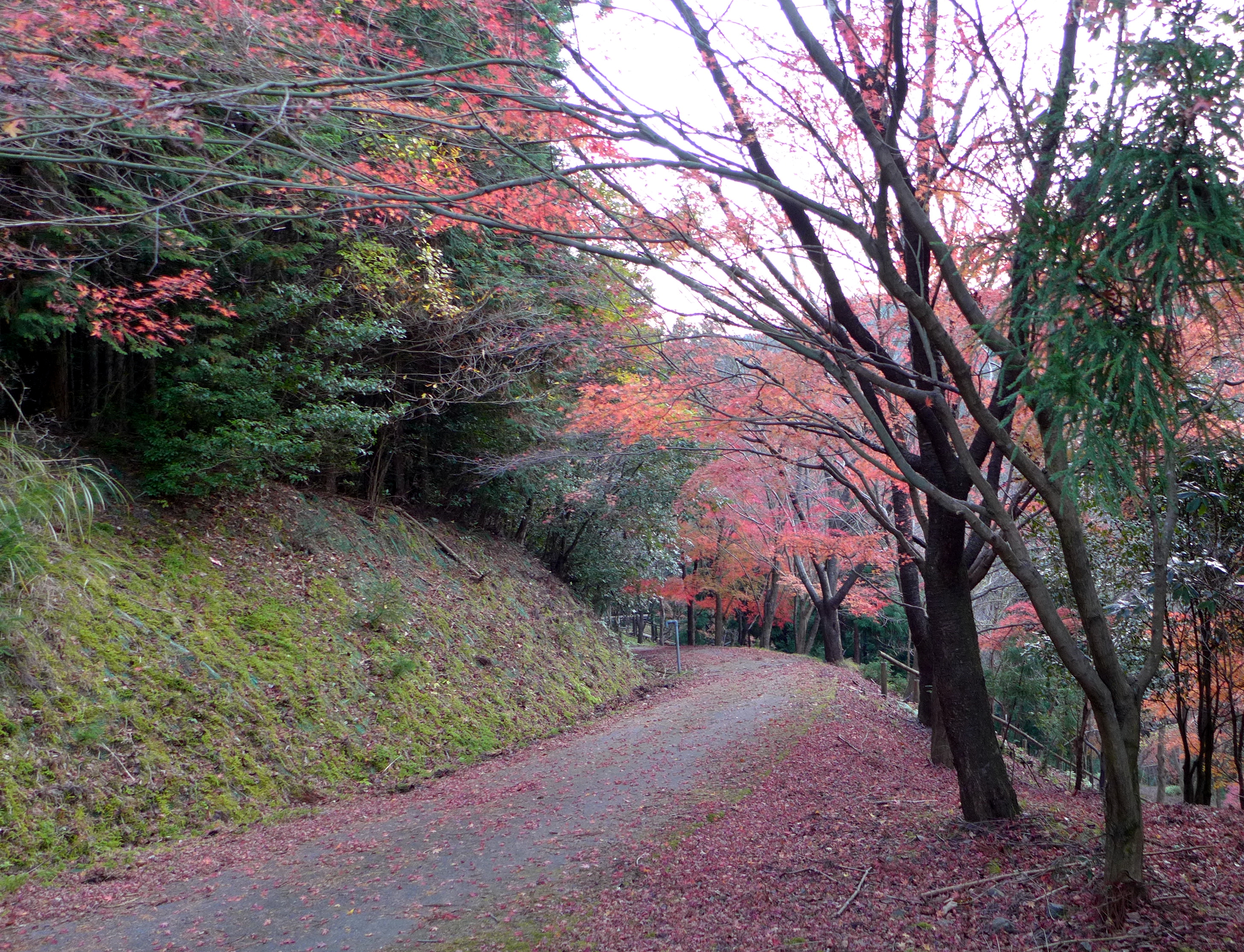
Jakko-in itself was a beautiful temple. There’s something dynamic about mountain temples – the different levels of compounds and steps made it picturesque, especially with the red maples arching over the mossy steps up to the temple. Behind the temple is a forest of beautifully straight evergreens, creating a cool, mossy path through the woods. I would definitely recommend visiting in Autumn if you get the chance. Entrance to the temple costs 600円 and book stamping costs 300円. For the stamp they actually have a ticketing system so you can drop off your book, look around the temple, and collect it (freshly stamped) on your way out.

P1020579P1020423P1020425P1020429P1020432

On the way up to the temple there were a number of stalls selling food and sweets; one that caught my attention was a wooden stall just outside the temple which was run by three old ladies. On the way out we went up to their stall and they chatted to us in Japanese, asking us where we were from (they told me I must speak the Queen’s English, being British). They let us try some of the food they were selling and I ended up buying some dried yuzu (a citrus fruit that tastes like a cross between a lemon and an orange) to put on my rice. They were really lovely, bringing to life the stereotype of the kind obaa-san (おばあさん – granny or old lady).

P1020369 P1020426 P1020427

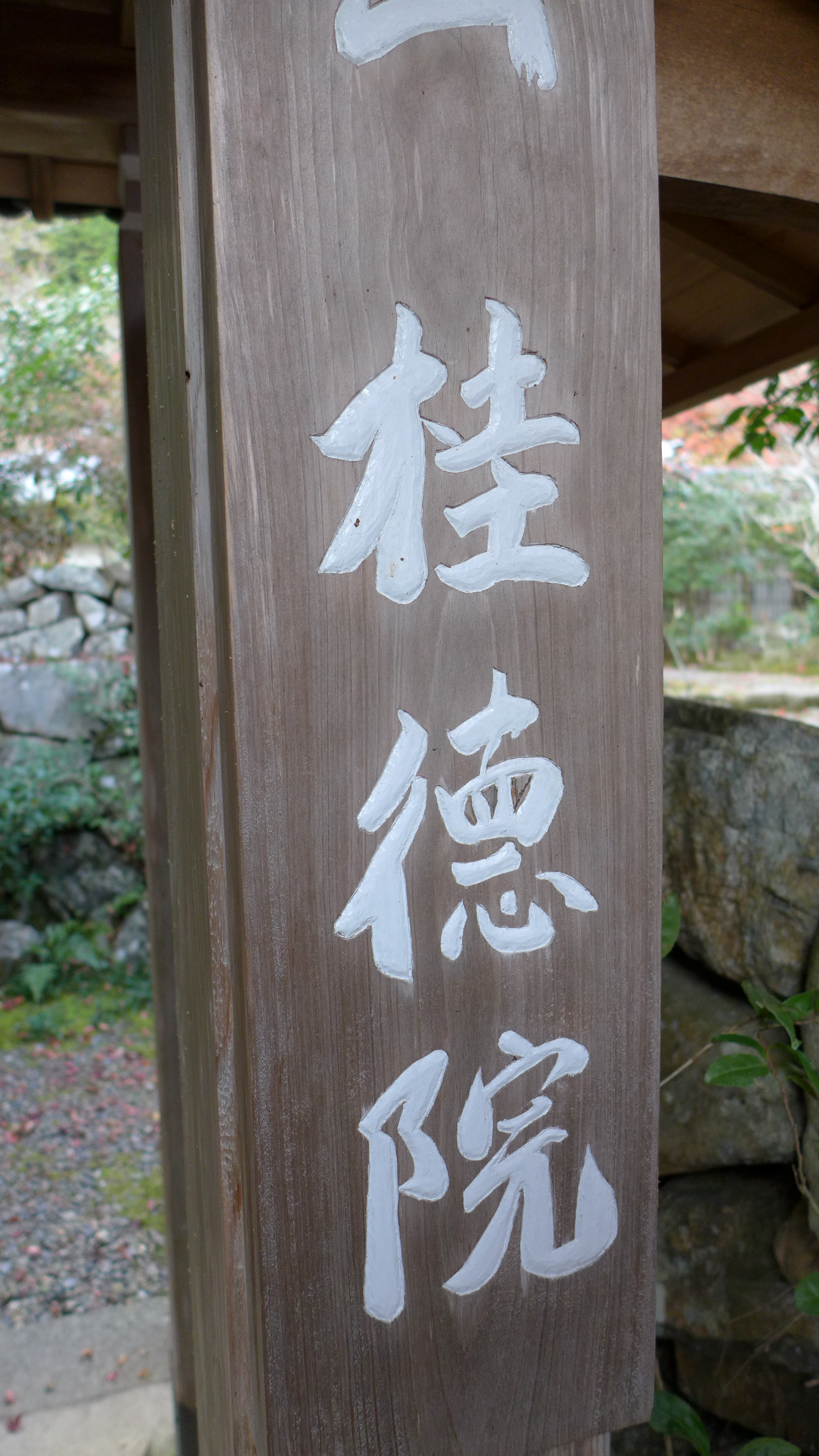
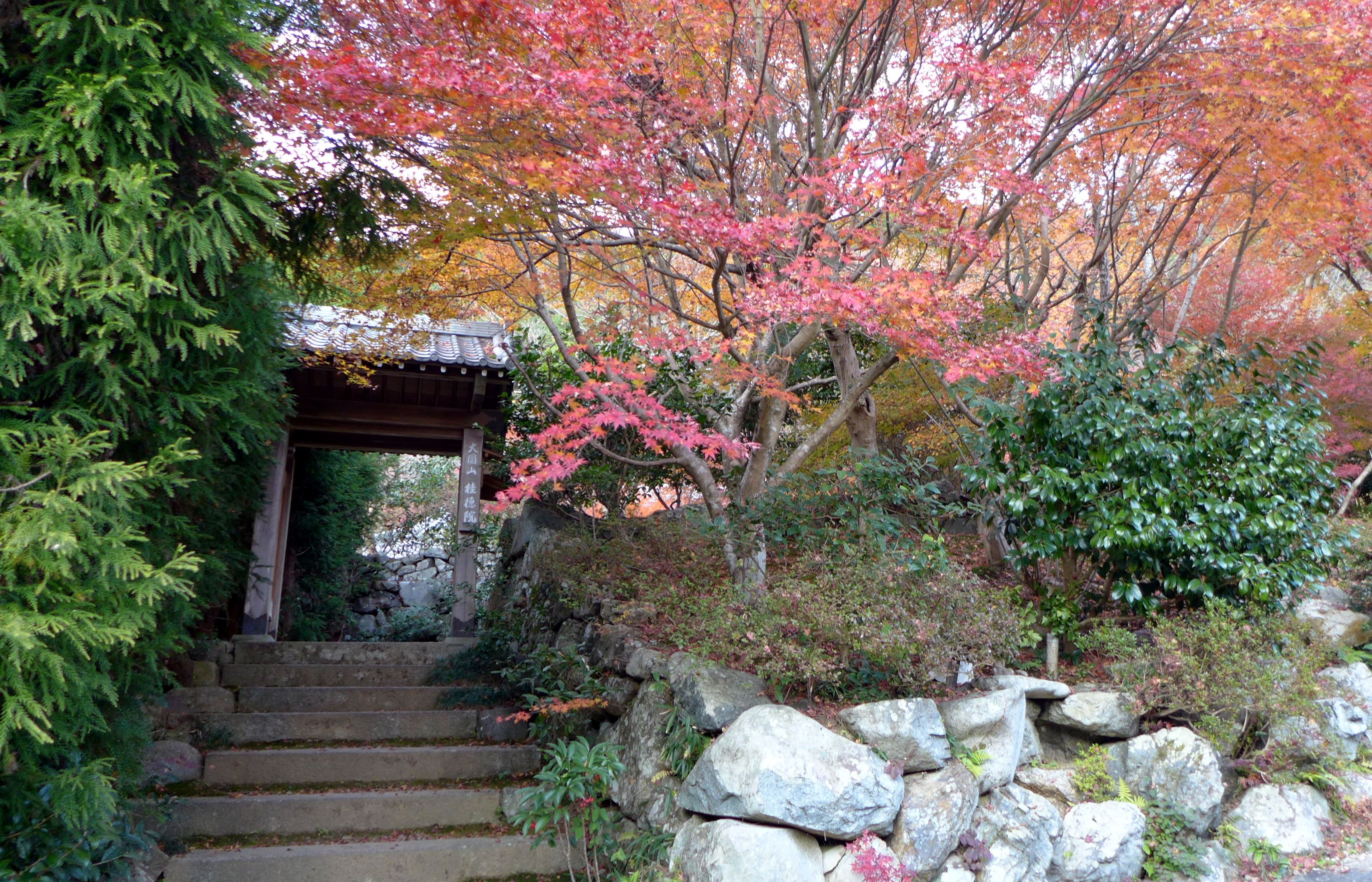
We then headed to another temple that we had seen on the map. It was actually really small and completely deserted. The autumn leaves in the small garden were beautiful and it was refreshing to go to a temple with no other visitors as Jakko-in was full of Japanese visiting to enjoy the koyo (turn of the leaves). It turns out this temple is called Keitoku-in (桂徳院) and it was founded in 1602, though it burned down and was rebuilt in 1995. Other than that there is very little information on it on the internet, and as there was no one there to tell us anything, thats all I can tell you about this temple. Its worth paying a quick visit if you go to Jakko-in though, its only five minutes walk away and its garden is pretty.

P1020455 P1020443 P1020444 P1020448

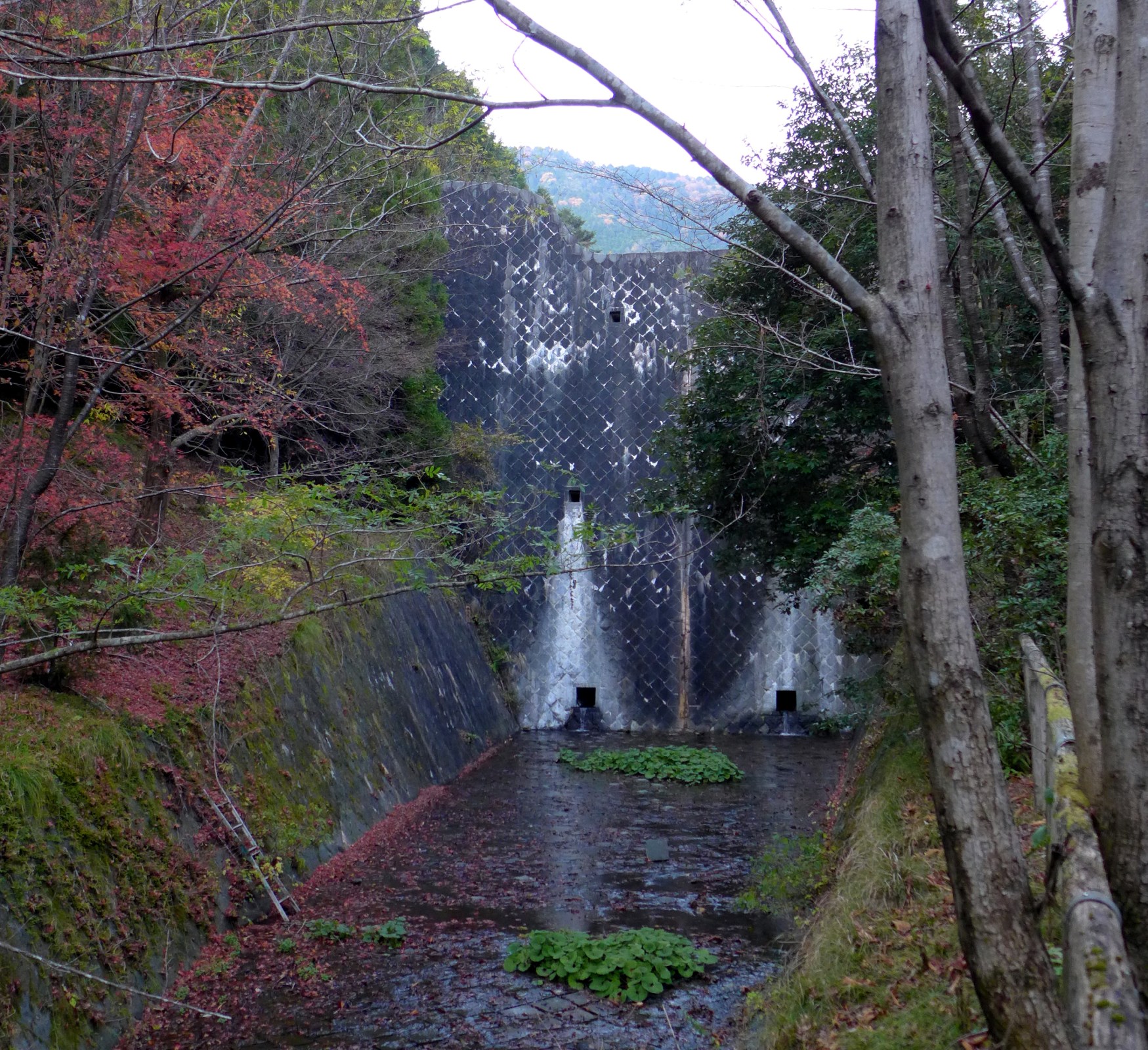
We walked from this temple up the river to check out a dam that we had seen on the town map. It turns out that we weren’t actually meant to go through the gate leading to the path to the dam; the sign in Japanese said we needed permission from Kyoto’s Forestry Agency, but I didn’t read the sign properly on the way in, only on the way back.

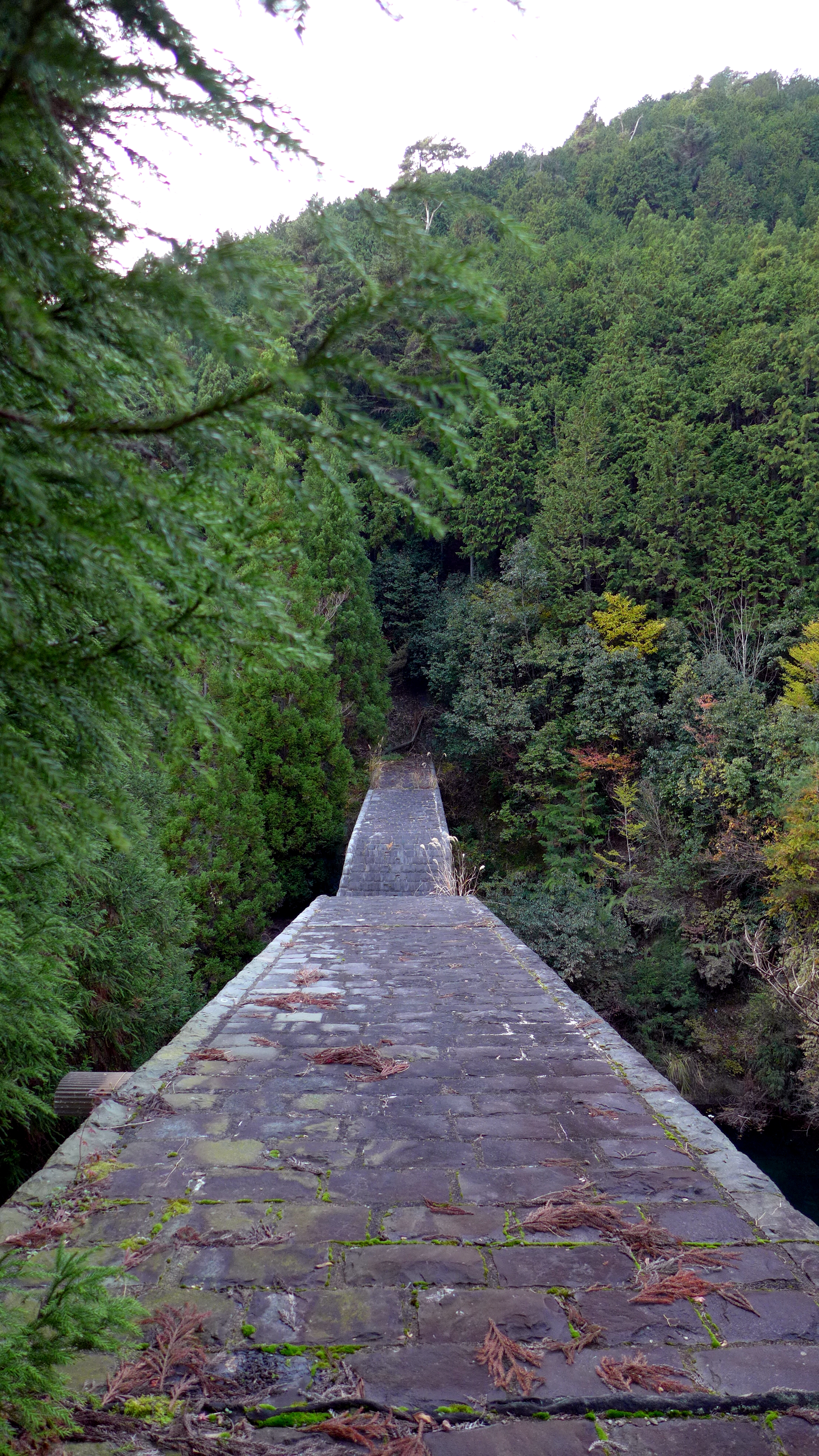
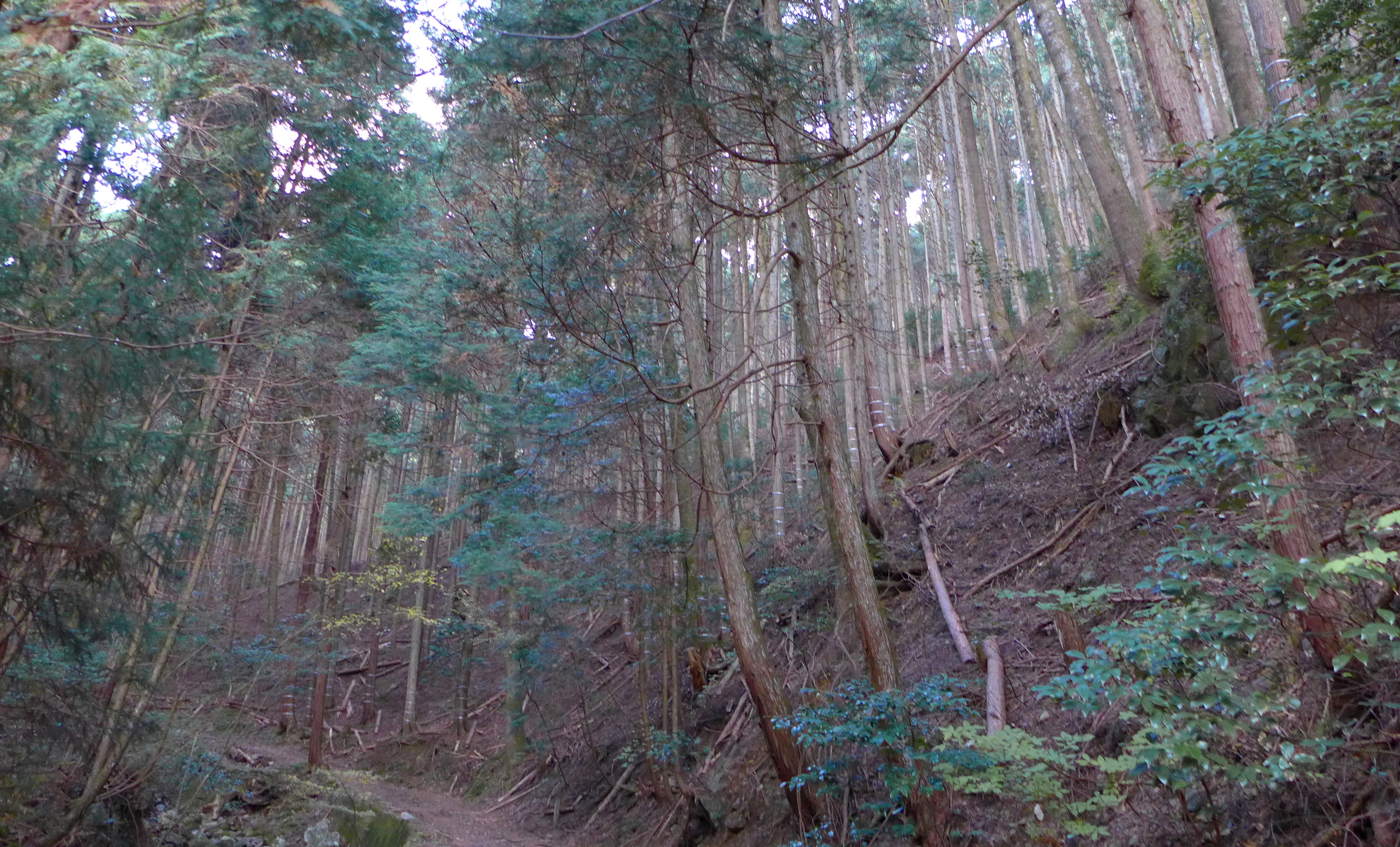
The maples near the dam were spectacular and the dam itself looked pretty old. It felt a little eerie to me, there’s something about seemingly abandoned man-made structures that don’t fit in with nature that gives me slight chills. We followed the path past the dam and had a look at the forest – it was pretty dark (much darker than the pictures make it look) and the path seemed to go on forever. As soon as we stepped into the forest the sound of water from the nearby dam was muffled -the forest was very silent with perfectly straight trunks up to the canopy of leaves. A part of me felt like this might be the start of a horror film. I was quite glad to get out of the forest, away from the dam and back towards Ohara.

P1020461P1020466P1020483P1020508P1020486 P1020490 P1020498 P1020500

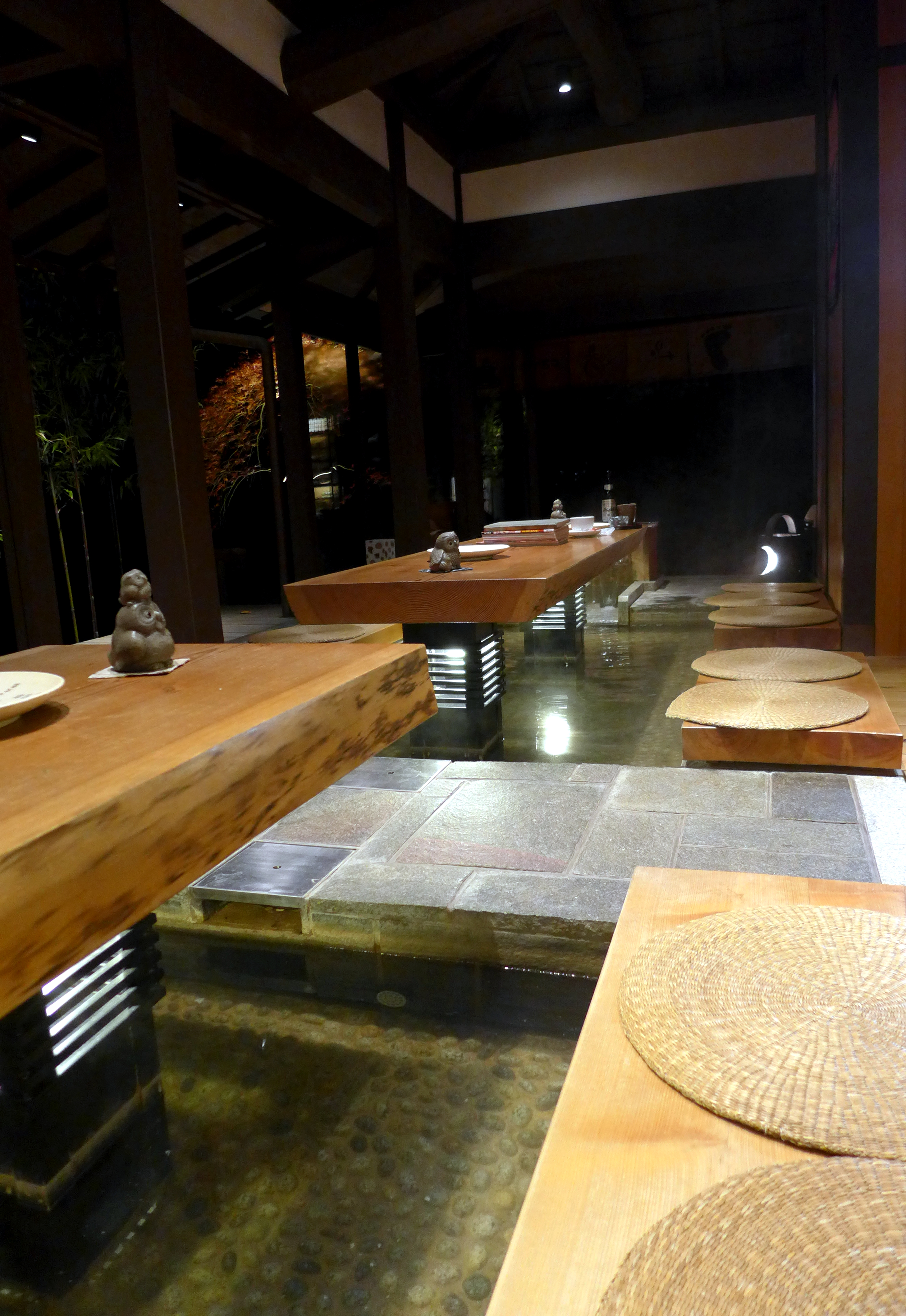
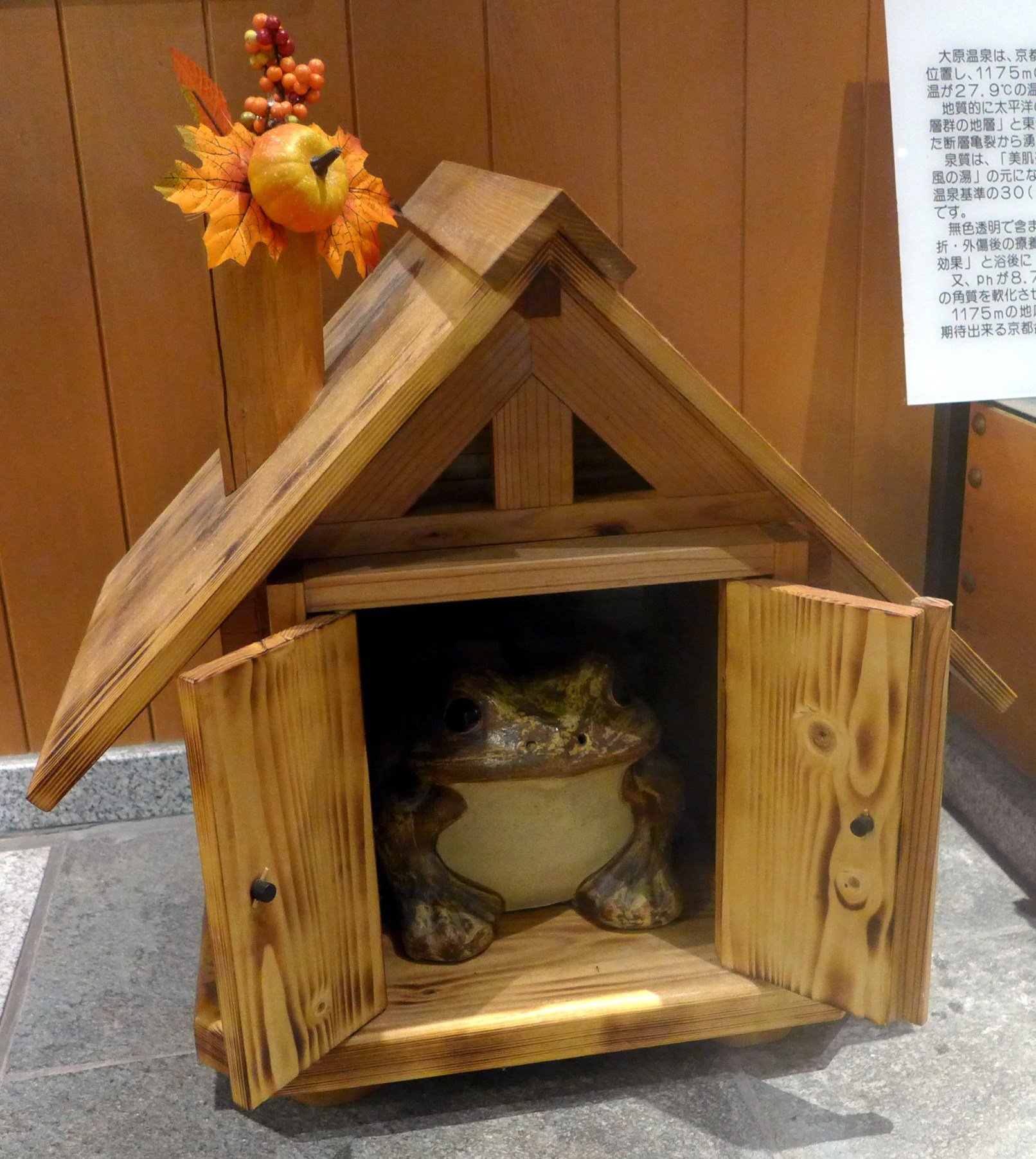
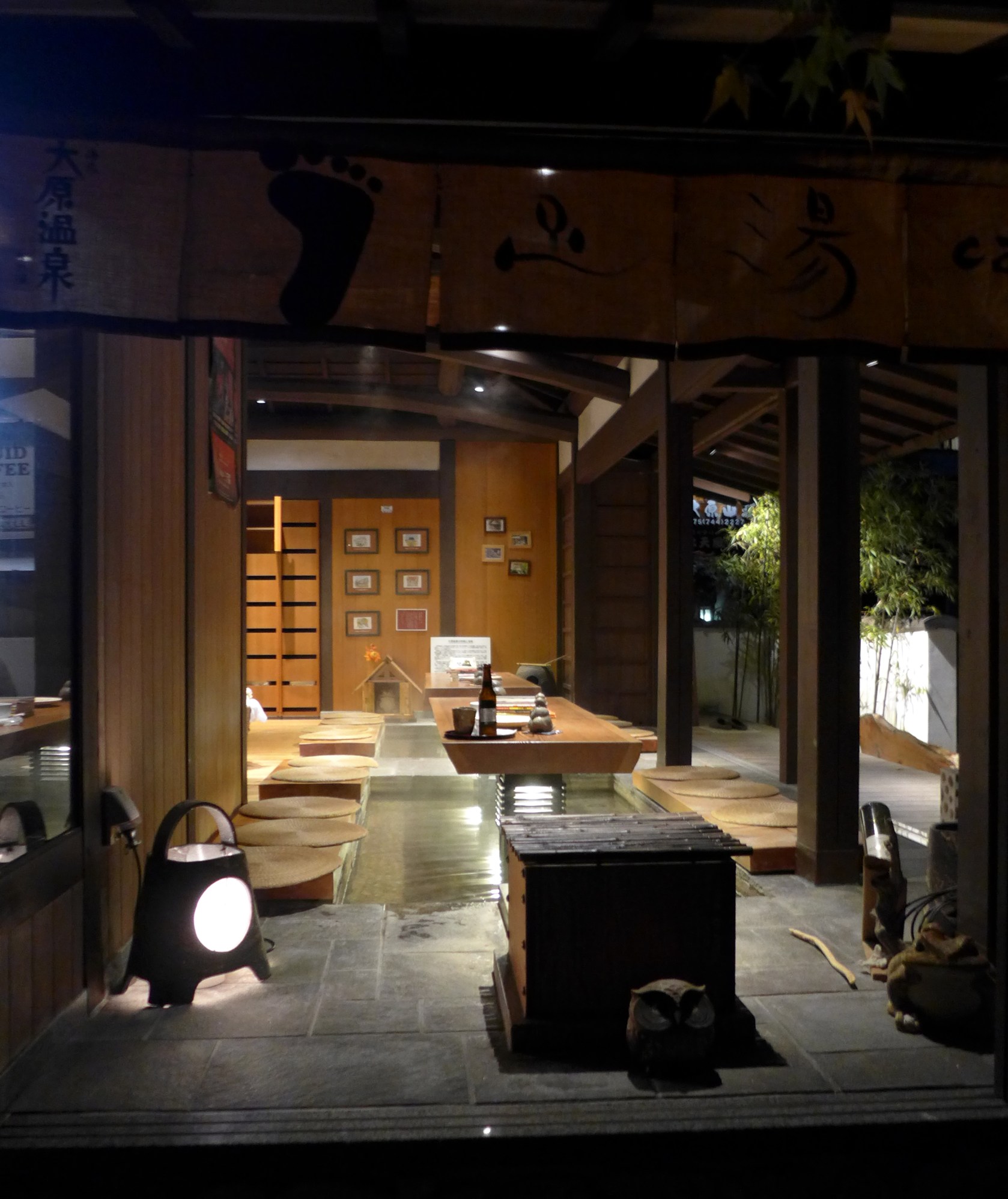
The last stop on our trip was a cafe we had spotted on the way up to the temple. This was no ordinary cafe – you sit with your feet submerged in water from the local hot spring. It was really refreshing and relaxing for our feet, especially as we had done a lot of walking.

Embarassingly, I managed to get my jeans stuck. It sounds stuipd, yes, but I had rolled up my skinny jeans over my calves to submerge my feet. Only, I had got the fabric wet, and when I tried to pull it down it wouldn’t really move. I succeeded in rolling one trouser leg down but the other one was not moving. The guy at the counter ended up coming over and helping me. So there was me sitting with this guy trying to pull down my jeans and we were all laughing. It was pretty traumatic. Eventually we succeeded and I left with at least a little of my dignity – I had had visions of getting the bus back with one trouser leg rolled up.

P1020547P1020546P1020519P1020526 P1020529 P1020548

I would definitely recommend spending at least half a day in Ohara – we left at 2 in the afternoon and I feel like we could have made a day of it and visited the other temple. I definitely intend to go back – they also have an onsen (hot spring bath) that I’d love to go to. Total price for all the activities (including the drink at the cafe) was around 2,400円 (£13), so a pretty cheap day out with loads to do.

Sorry I haven’t been posting  as frequently as I would like – I recently caught a cold and got a part time job. Hopefully when I shake off this cold I’ll be able to write more!