日本 Gods in Tiny Houses

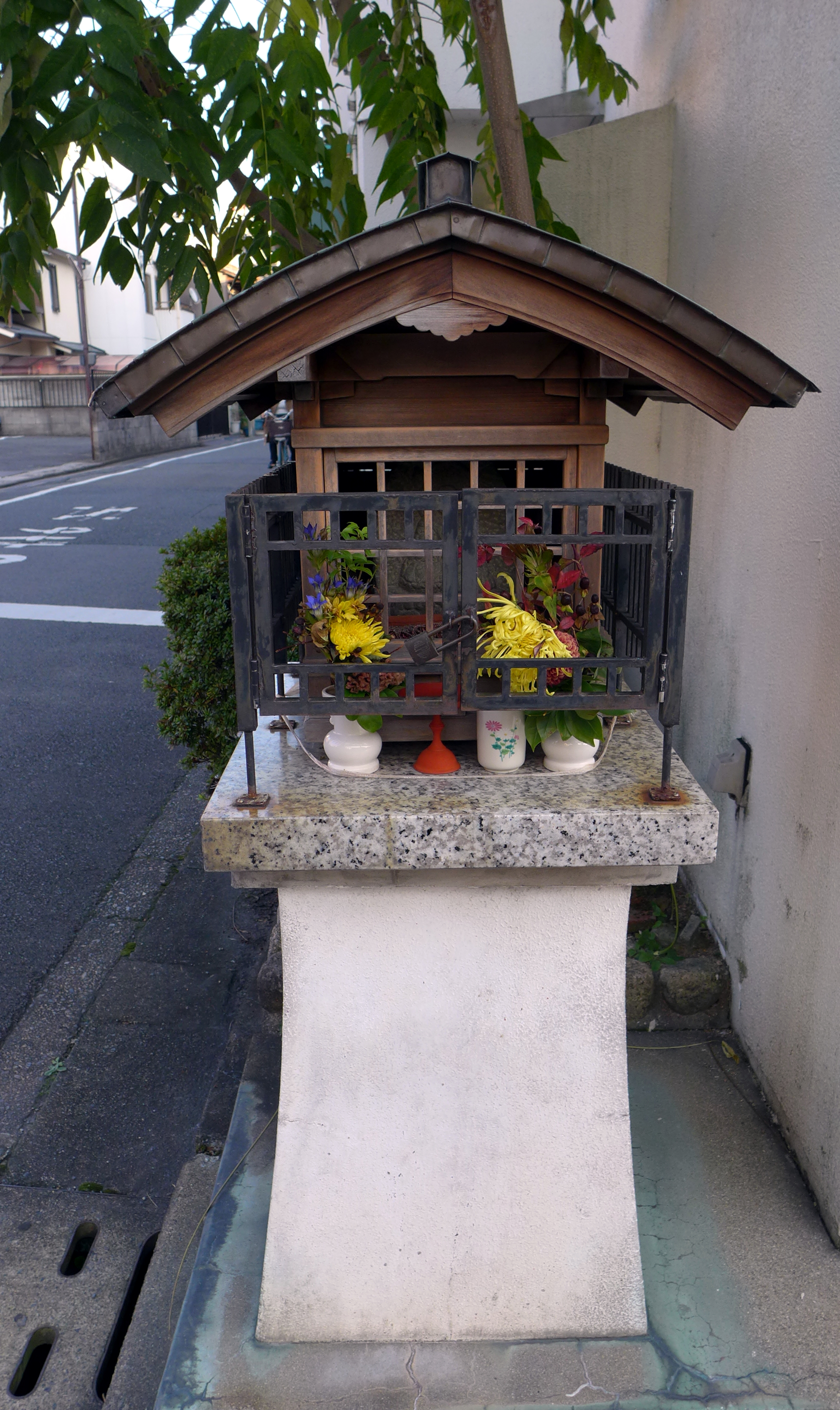
Walking around Kyoto, you come across a temple almost every 5 minutes. You would think that this would house all the kami (gods and spirits) and provide ample space for worshippers, but it seems the kami are facing some kind of housing crisis. Glance down an alleyway or turn a corner and you might just stumble upon a tiny shrine.

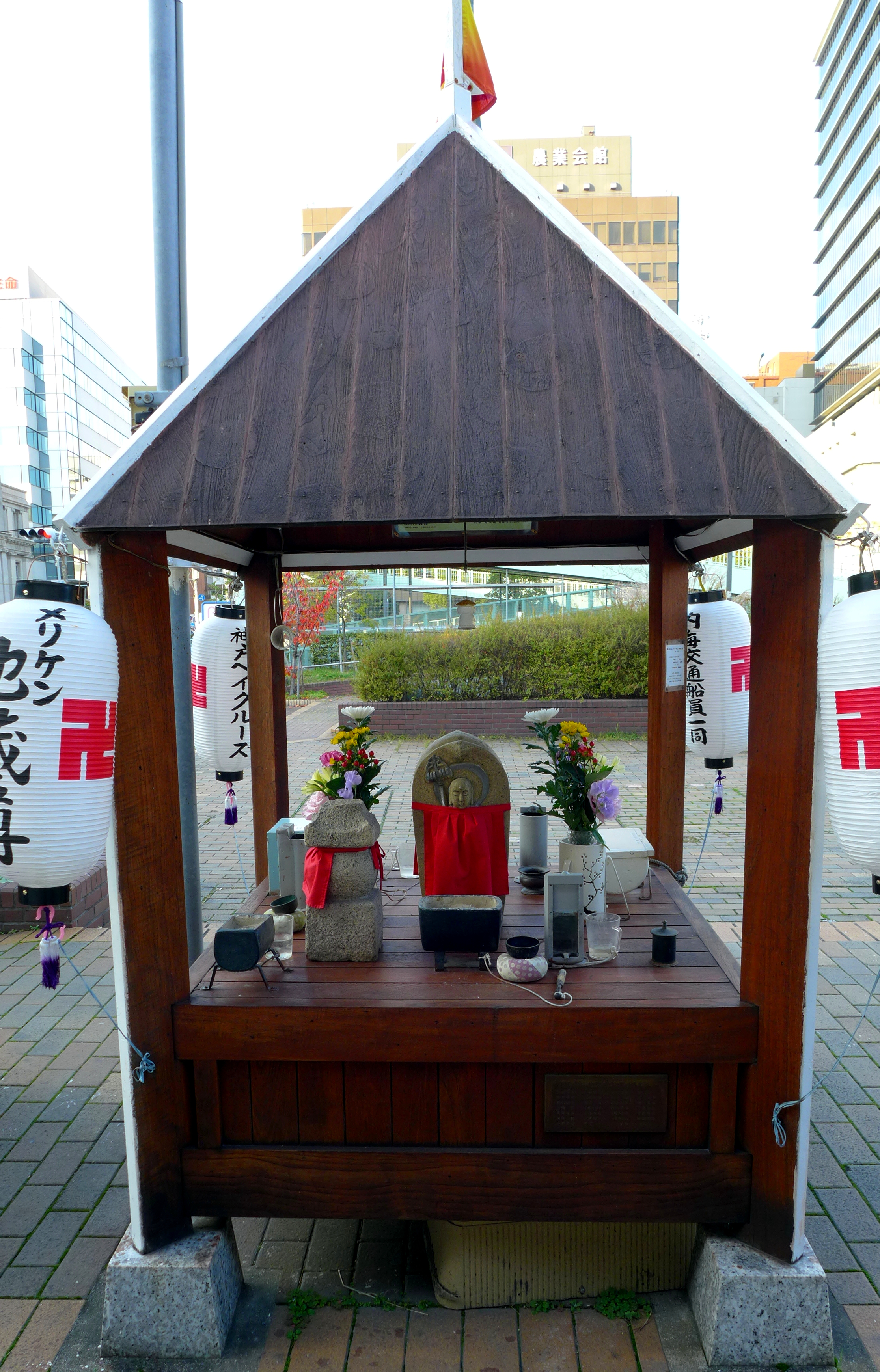
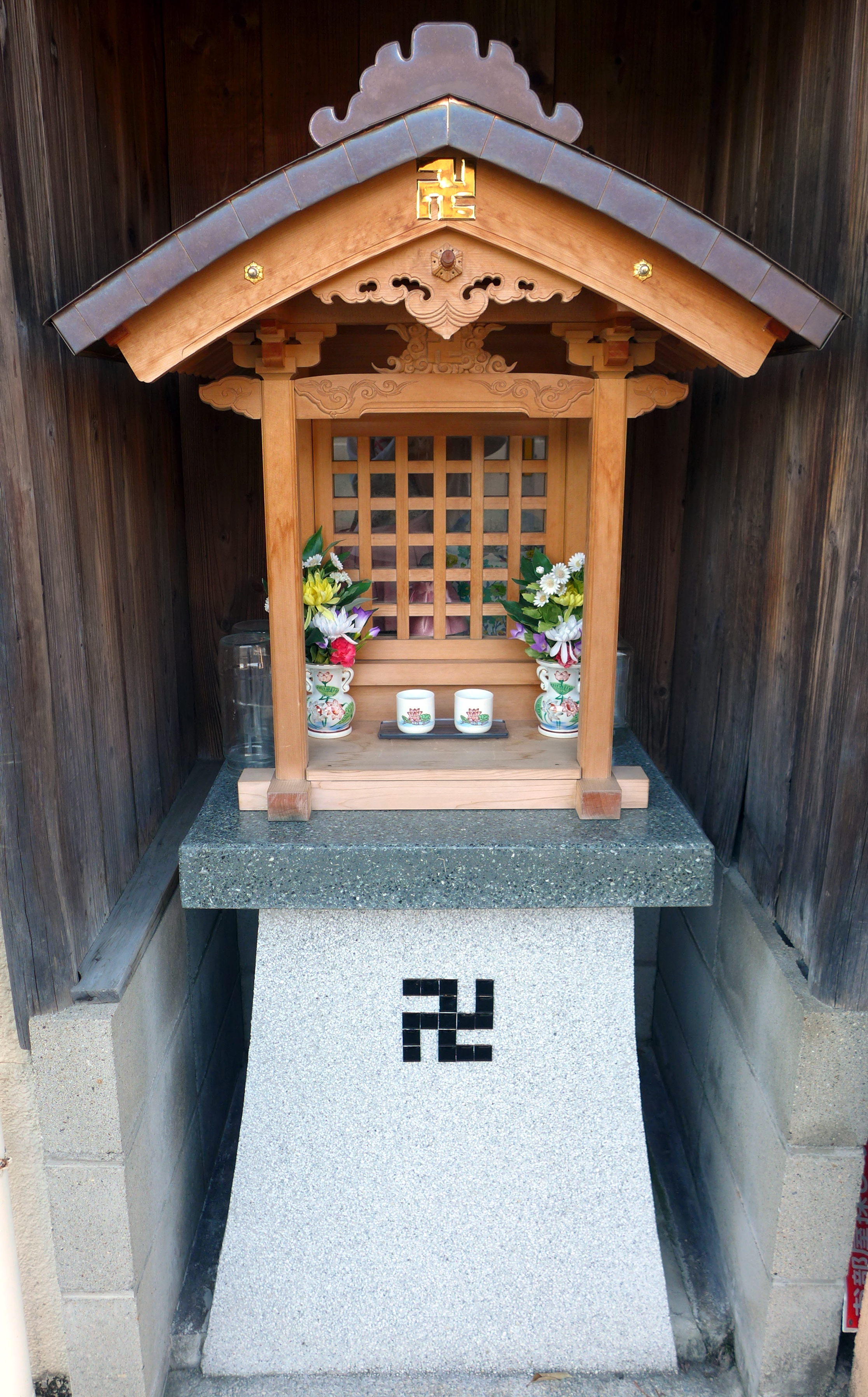
These shrines, usually known as hokora (祠) are dedicated to various lesser kami that aren’t attached to a nearby shrine. Though the hokora are Shinto in origin, they often bear the Buddhist swastika, marking them as a religious site. Also in Kyoto many of the hokora are dedicated to Kannon, a bodhisattva – Kannon is one of the links between Japanese buddhism and shinto that shows just how mixed the two religions are, the god is both a kami and a bodhisattva. Therefore its probably better to just call them ‘Japanese’ rather than attempting to assign them a specific religion; some even concern local gods or lore rather than gods part of the whole country’s religious discourse.
P1010645 P1010651

The hokora below has an inscription that reads “Commemorating 2600 years of the imperial era. Continued luck in the fortunes of war. Safety and wellbeing for one’s family“. Intrigued, especially by the reference to war, I looked up when 2600 years of the imperial era was – it was 1940, explaining the military inscription. February 11th 1940 was celebrated as 2600 years since Japan’s first Emperor, Emperor Jimmu, ascended the throne according to the Nihon Shoki.

P1010648

The very specific date of Feburary 11th for Japan’s founding is based on the old lunasolar calendar – according to the Nihon Shoki the Emperor ascended the throne at new year. This falls around the end of January, but the Meiji government, upon making it a national holiday, designated Feburary 11th to make sure people distinguished it from lunar new year.

The Meiji government made Foundation Day a national holiday in order to further legitimise the Emperor as the one sole ruler of Japan by celebrating the ‘unbroken’ bloodline. I say ‘unbroken’ because historians think that the first Emperor was actually usurped by the second or third Emperor rather than the Nihon Shoki’s assertion that the second Emperor was his son. Not to mention that the Nihon Shoki claims that the first Emperor lived to 126, making it even more historically dubious (it also says he was descended from a god…).

After World War II, Foundation Day was banned due to its connection to the cult of the Emperor and State Shinto. It was re-established in 1966, but without the same nationalistic ceremony or links to the Emperor it had before. It is now a day to reflect on what it means to be a Japanese citizen rather than an overt display of nationalistic pride.

P1020901P1020085

Hokora come in all shapes and sizes, some have lanterns, some have flowers, some have inscriptions explaining the temple they belong to, whereas others give no clue as to what god or temple they are linked with. The last two are hokora I saw in Kobe; the first in an alleyway to the side of a busy shopping street, and the second at the side of the harbour.
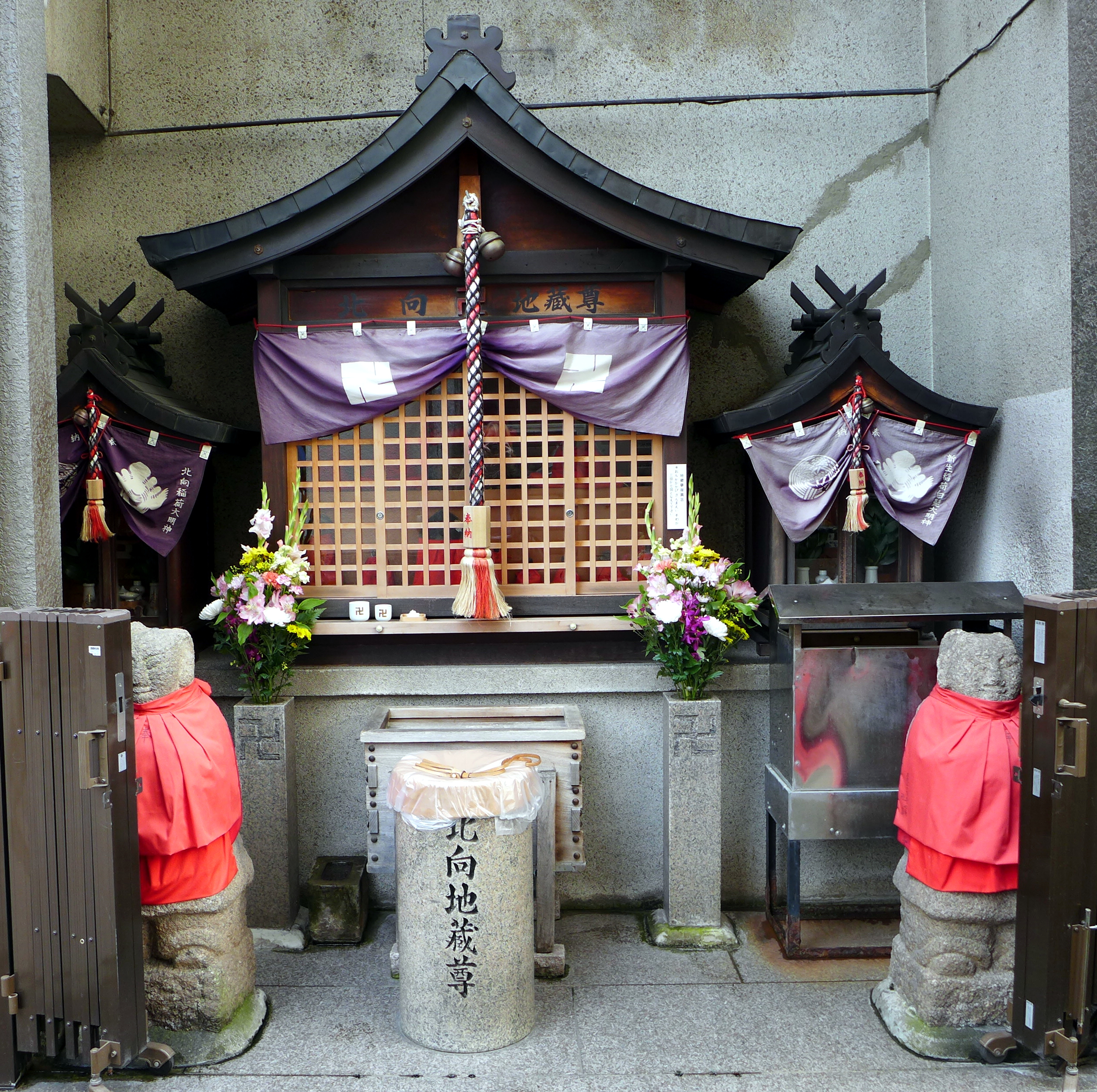
P1030221 - Copy P1030289Though small, these hokora are fun to spot and are always different. They often have fresh flowers, so it must be someone’s job to refresh them regularly. These tiny shrines are one more thread adding to the rich tapestry that is Japanese religion.
錦市場 The Kitchen of Kyoto

After class today I took a trip south on the train to Gion-Shijo with no real destination in mind – it was sunny so I figured I should make use of the daylight while it lasted. Upon arrival in Gion-Shijo I realised I’d forgotten my Shuin book, and I was reluctant to go to a temple without getting a stamp – it seems I have become a collector. Instead I turned West, towards Shijo, a busy shopping district, and hunted down Nishiki Market.

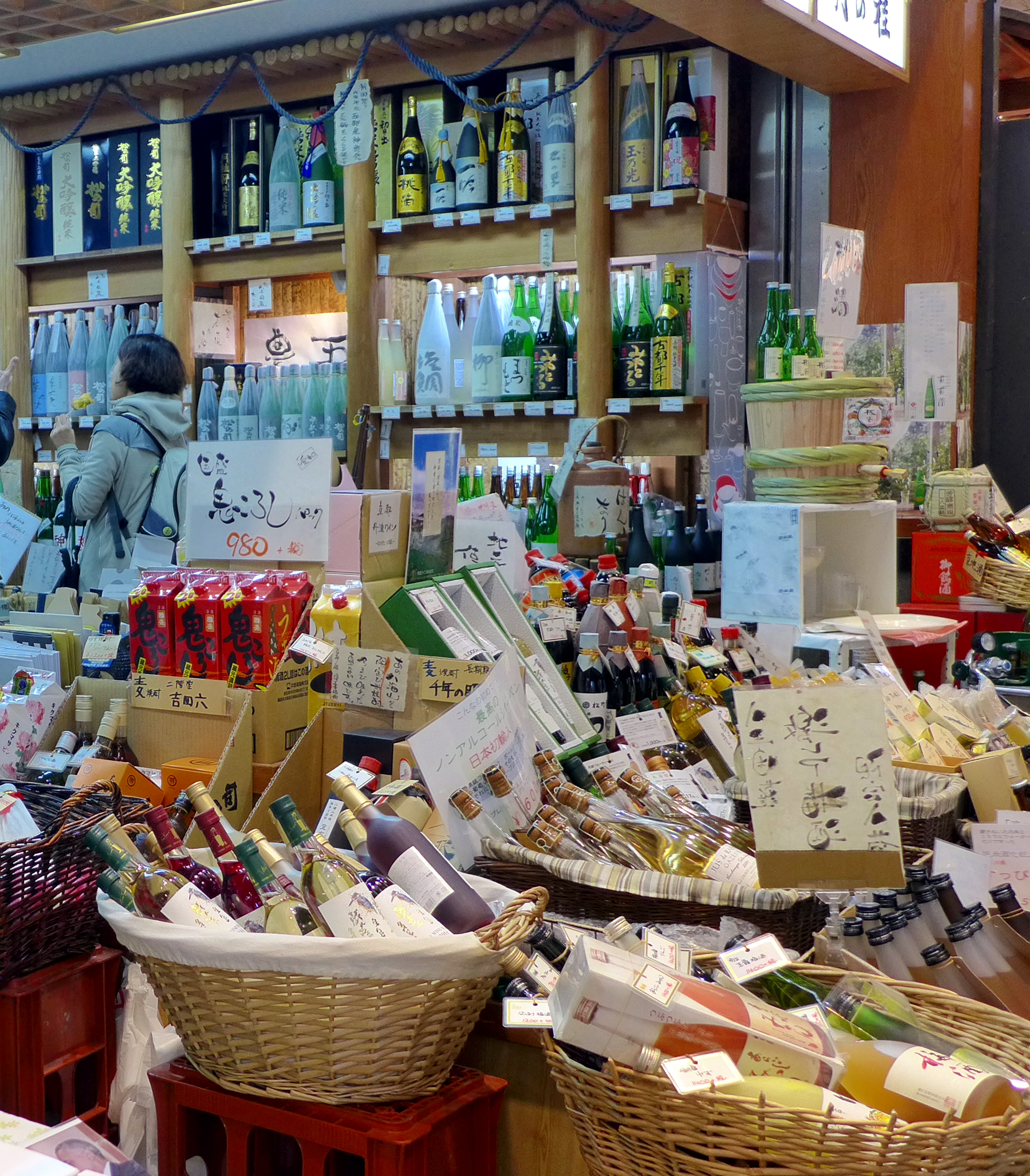
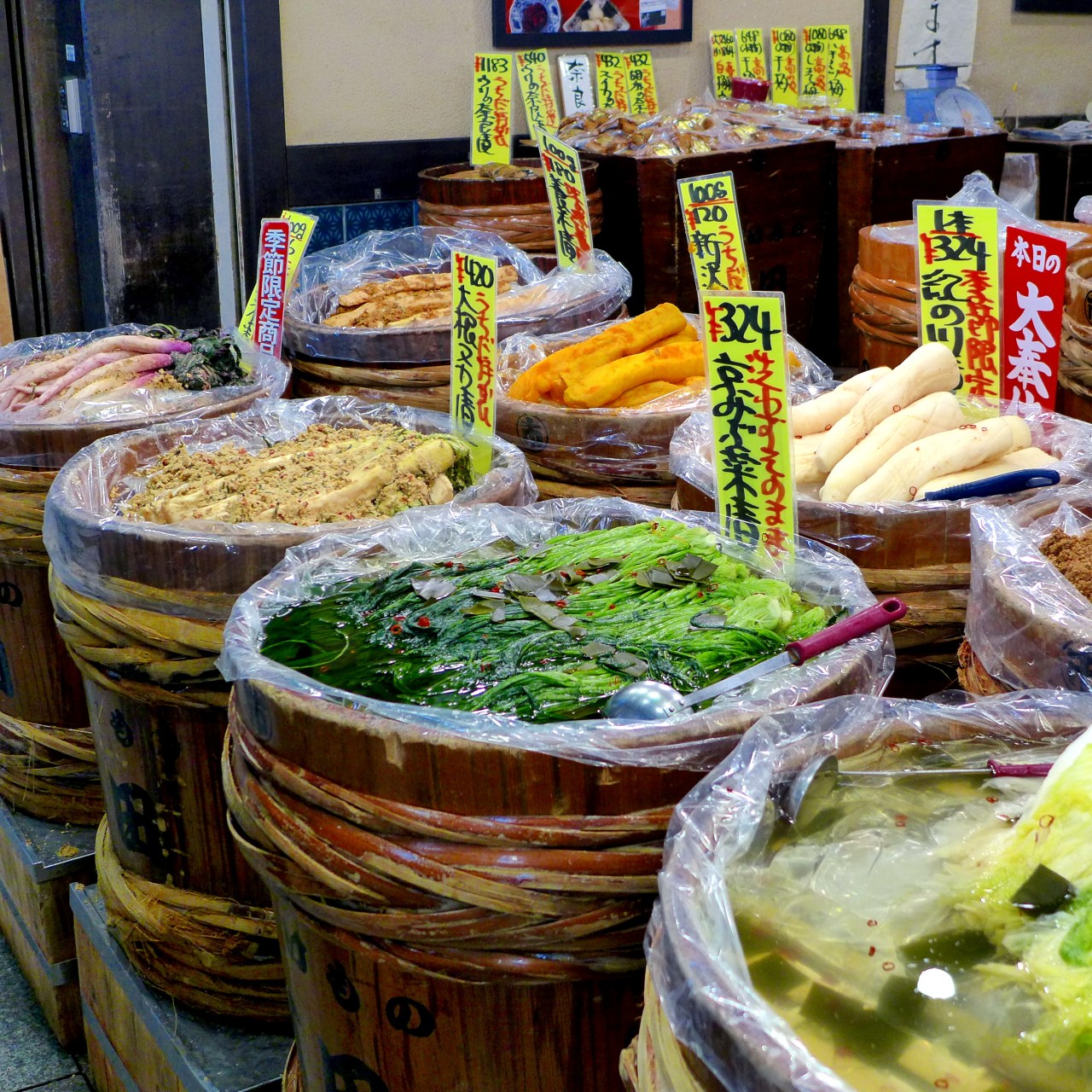
If you read any guidebook on Kyoto, there will be some mention of Nishiki Market (錦市場). This market is just north of Shijo street and sells any Japanese food you can think of. As soon as I stepped into the very narrow street I was cocooned in smells of cooking and spices – there are plenty of stalls selling food to eat straight away, not just groceries to cook at home, so there is an intense cooking smell.

I took a stroll up and down the market, taking in the wide variety of shops and small restaurants and snapping pictures when I thought the owners weren’t looking (it feels rude taking pictures of stalls when you don’t intend to buy anything off them). It turns out its currently the ‘End of Year Market’ (according to the 歳の市 sign hanging at the start of the market), I’m not sure if this means there is something special going on as this was my first time but I’ll be sure to note the difference when I go next year.

 P1030532P1030500

The market has a long history; the area Nishiki, where the market is located, is special in that the groundwater under the market remains under 15 degrees (centigrade) all year round. As a result merchants have been using it to keep fish fresh since the 8th century, creating a market above the water. The market’s scope broadened gradually, becoming the supplier of fish to the Imperial Palace in the 16th century, and eventually branching out into fruit and vegetable produce alongside meat and fish.

P1030499 P1030525P1030506

Throughout the 20th century, the survival of Nishiki Market was uncertain; Kyoto Wholesale Market opened in 1927, providing cheaper fish in bulk, and Nishiki’s groundwater was slowly depleting. Several shops were driven out of business or had to move in order to survive, but the result was a market dedicated to quality and freshness in order to compete with the cheap fish of Kyoto Wholesale Market. This means that while the prices at Nishiki may be higher than elsewhere, the quality is excellent and the shops often go back many generations, passing down traditions and knowledge.

P1030504P1030511 P1030515 P1030526

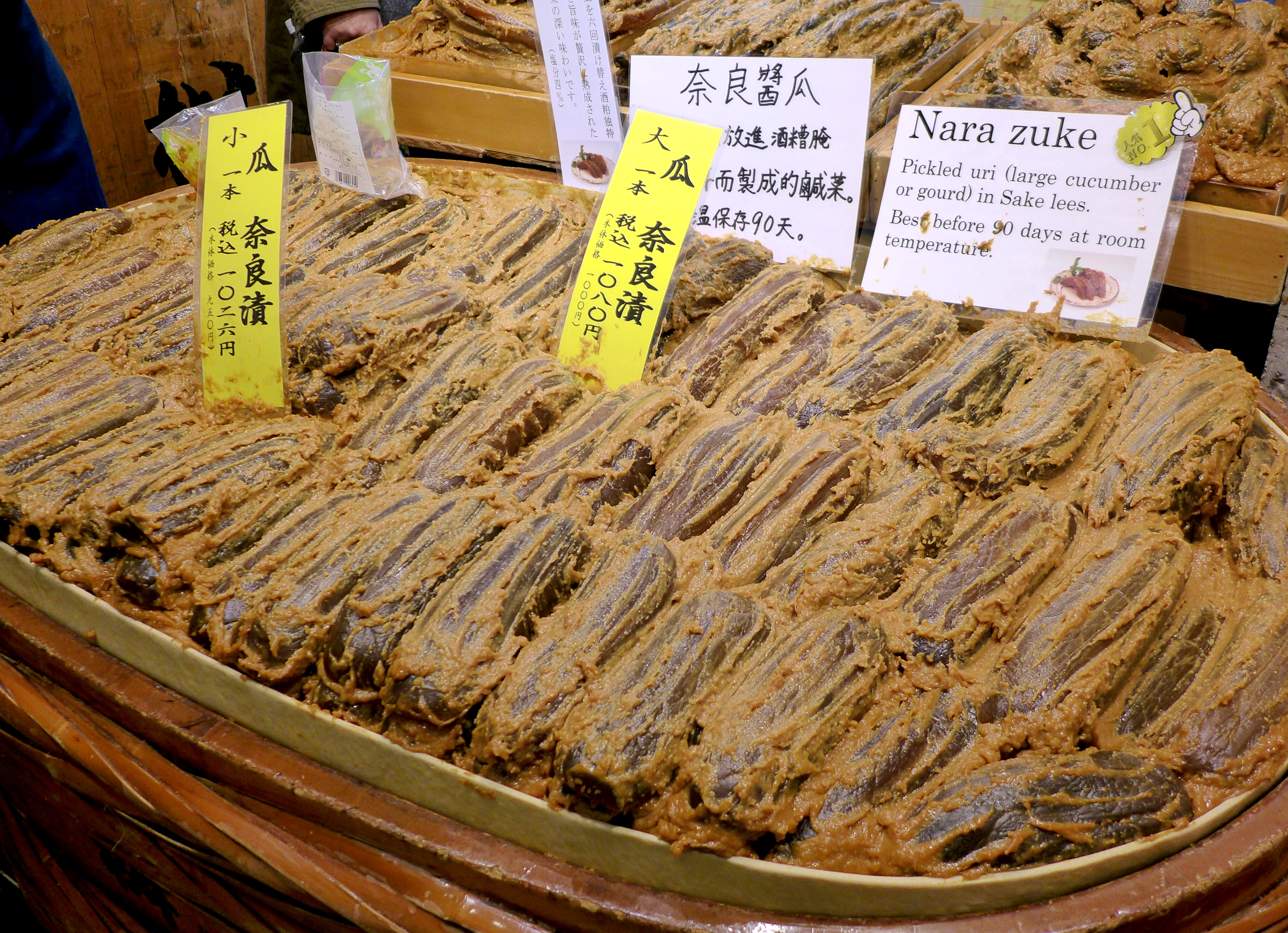
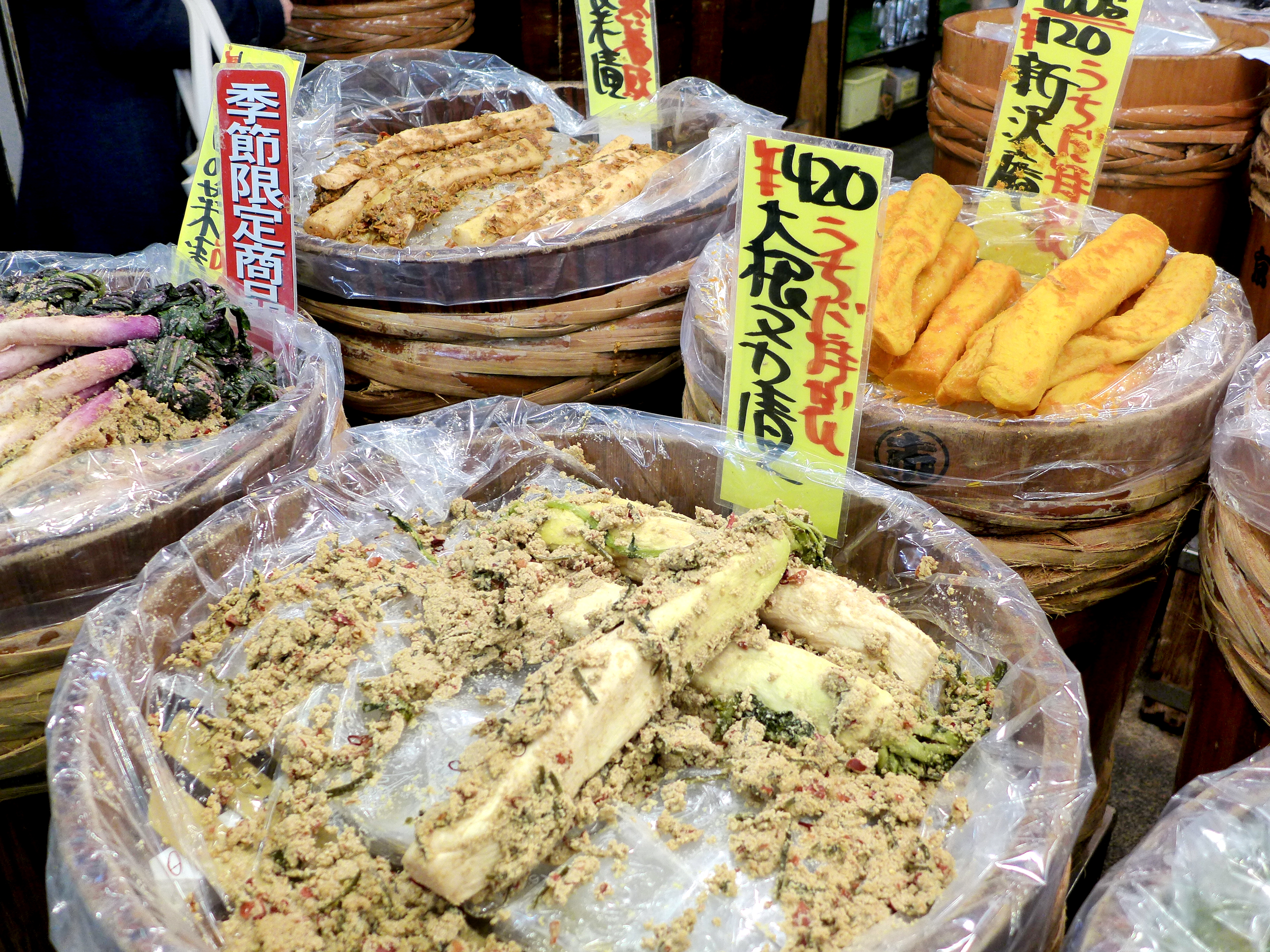
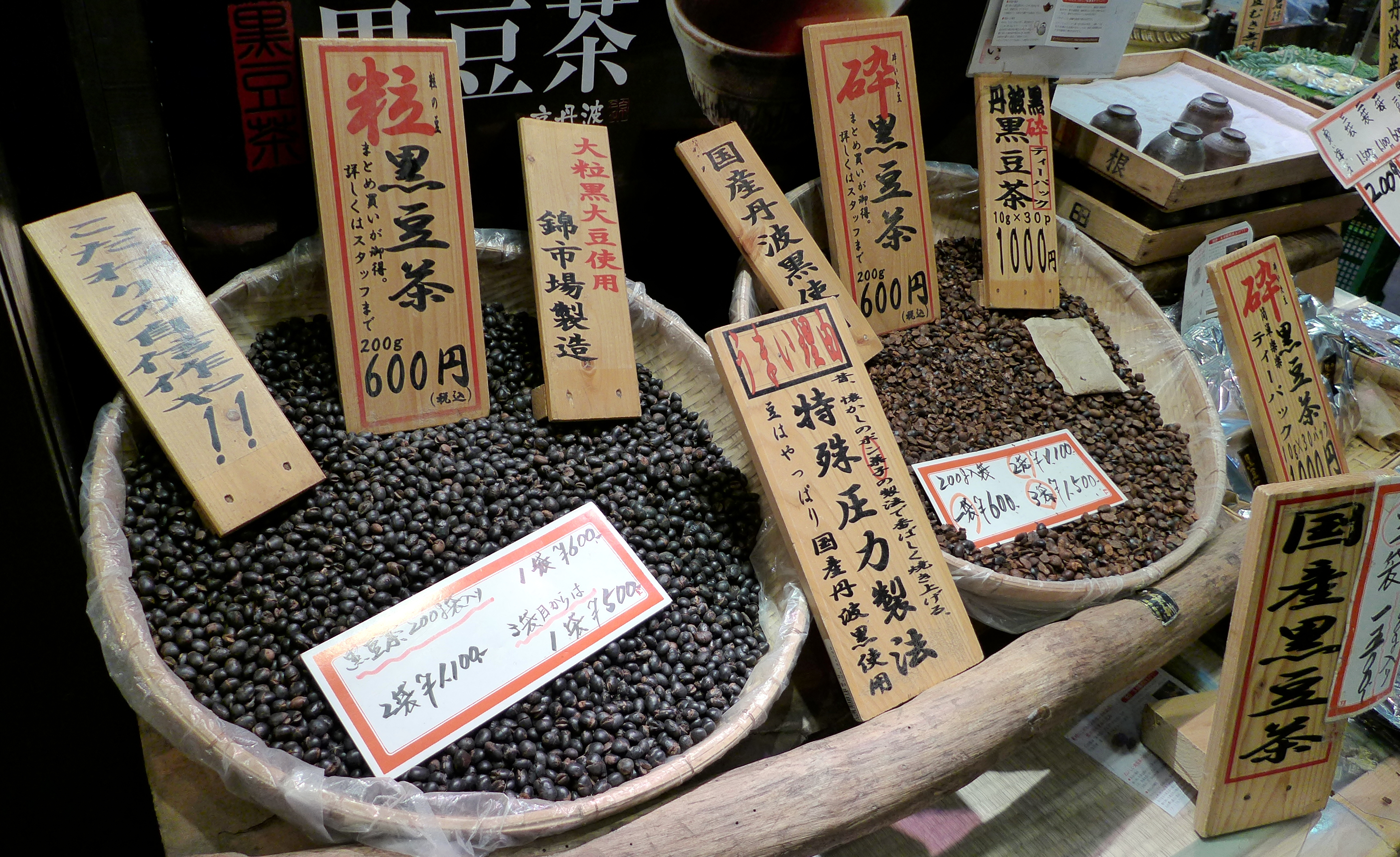
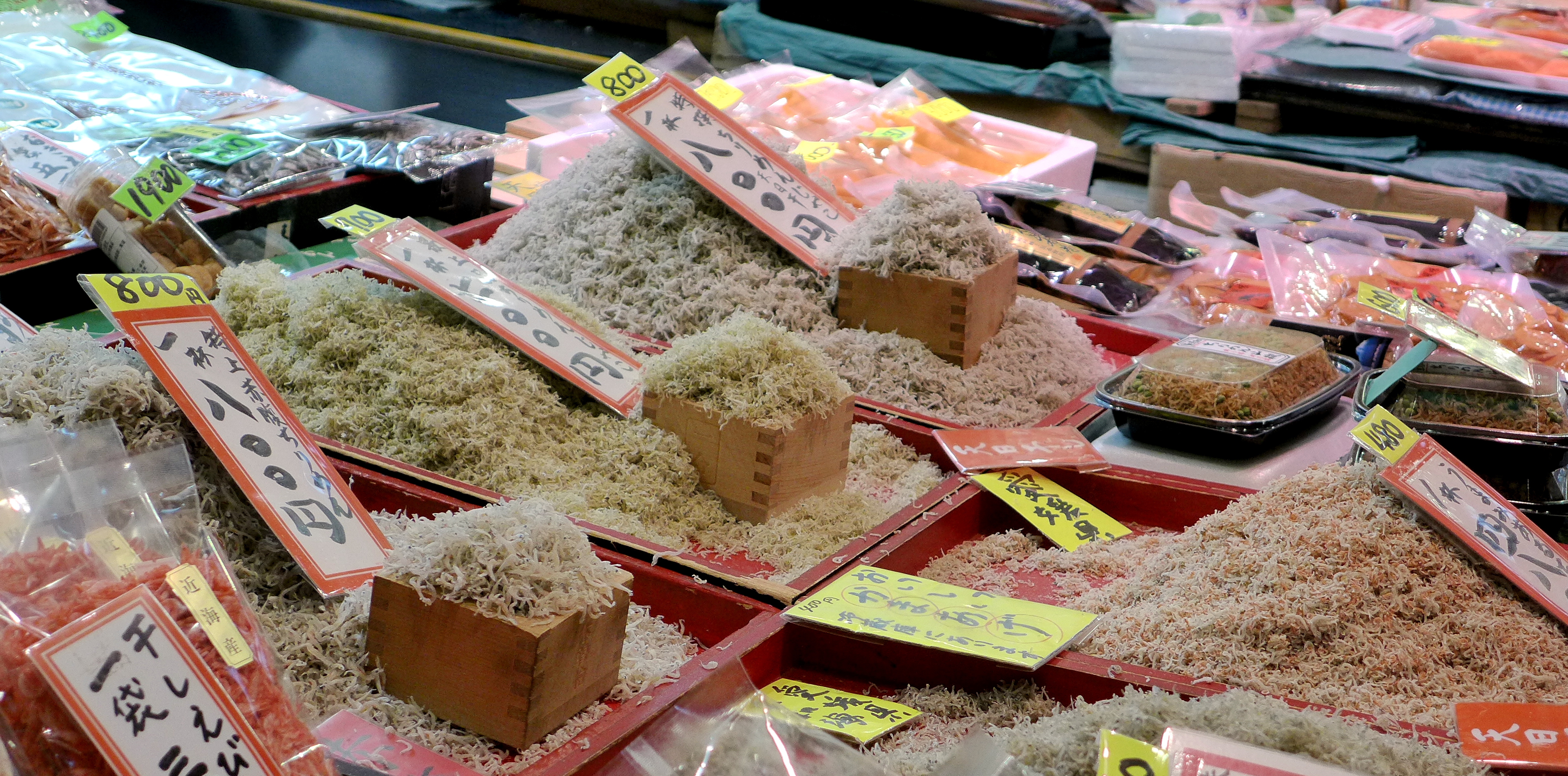
Most product at Nishiki Market is grown or caught locally – the freshwater fish are caught at the nearby lake Biwa (琵琶湖) and the vegetables are grown in the Kansai region. There is a focus on ‘Kyoto Yasai’ (京都野菜) or ‘Kyoto Vegetables’ – vegetables that are prominent in Kyoto cooking and are specialities of farmers near Kyoto. These Kyoto Yasai include aubergine, spring onions and bamboo shoots. They also seem to like everything pickled or dried – you can get almost anything in pickled or dried form. For more information on Kyoto Yasai this is a pretty good article.

P1030505 P1030520

Kyoto’s sister city is Florence, Italy (since 1965), and so Kyoto’s Nishiki Market is twinned with Florence’s Mercato Centrale. As a result you can find some pasta and Italian foods if you look carefully and apparently the Mercato Centrale has some stalls with signs in Japanese. Though both markets mostly stick to their own style of cooking and produce, it’s a nice gesture of goodwill and cross-cultural cuisine.

P1030501 P1030508 P1030528

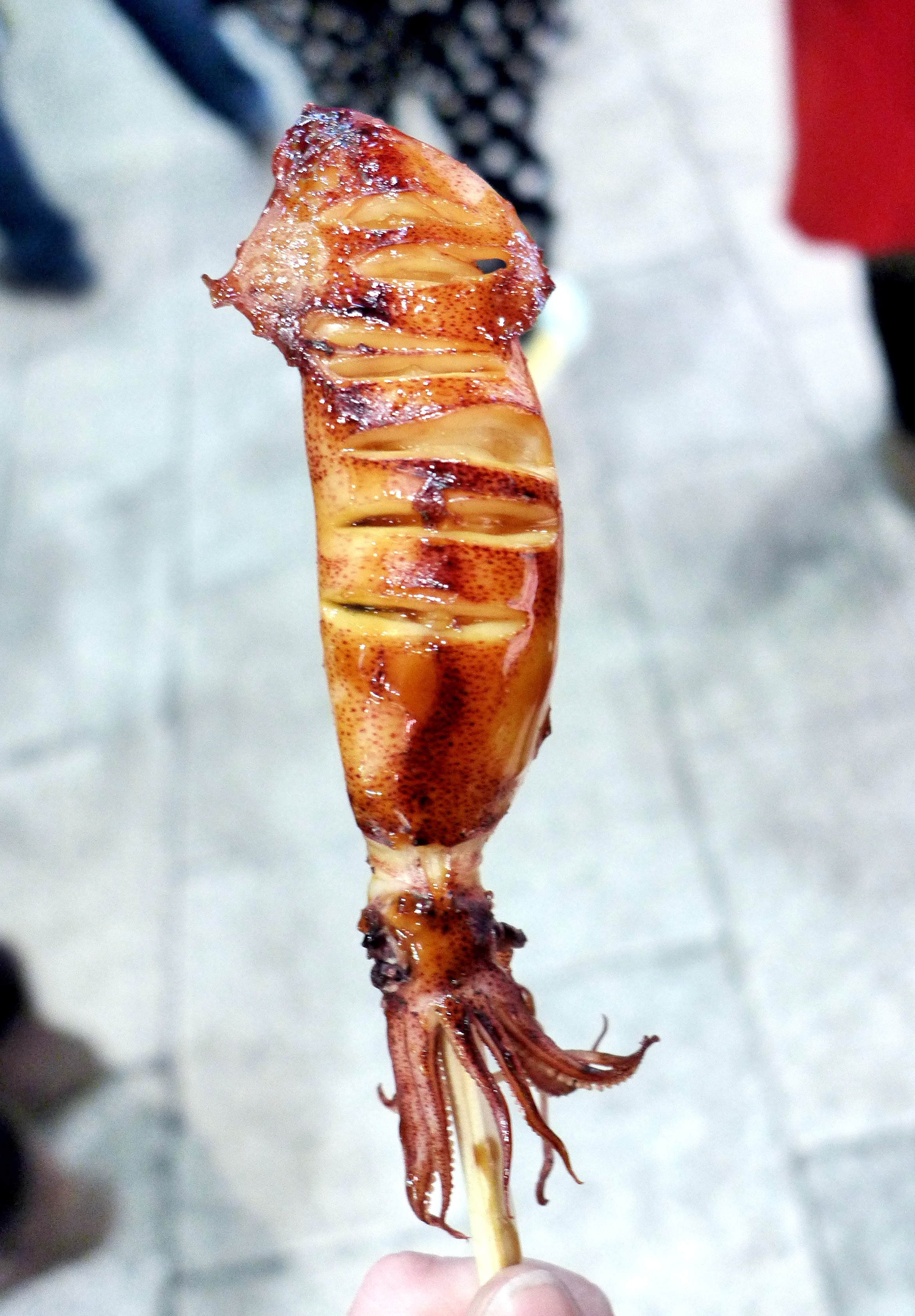
I simply couldn’t go to a market full of amazing food and smells without eating something. To be honest most of the food I saw I didn’t recognise or couldn’t name, so I decided against buying something odd, and settled for a grilled squid on a stick for 180円 (95p). To some that might still be pretty alien, but I found it absolutely delicious. It was really tender and the sauce was slightly sweet. I probably could have eaten ten of them but I restrained myself.

P1030512P1030533 P1030531

If you visit Kyoto I would strongly recommend Nishiki Market – you can always just go for the half hour it takes to walk the length of it. It’s also a great place to go if it’s raining because the whole market is covered. The market is open from 9 – 5, but on Wednesdays and Sundays a lot of the shops are shut, so bear that in mind. You could also combine it with the Teramachi shopping arcade to the Eastern side of the market for a day of rainy-day shopping – you could even throw in some purikura!