日本 Limited Democratic Process

On November 14th, Prime Minister of Japan, Mr Shinzo Abe, called a snap election due to take place on December 14th. This has been declared a ‘gamble’ by the media (eg Reuters) and perhaps calling a verdict on ‘Abenomics’ – Mr Abe’s attempts to drag Japan out of recession. But is this really such a gamble? Who is he even up against?

You, as a non-Japanese reader (I assume), may not know much about Japanese politics, and probably don’t feel its particularly relevant to you or your country. However, I find Japanese politics interesting for several reasons (and you probably should too):

Firstly, Japan is an example of an ‘engineered democracy’ – Japan’s democracy was crafted by the American occupation in the 1950s. This is interesting for two reasons; democracy never came ‘naturally’ to Japan, it was ‘imposed’ from the outside onto a people that had lived under military rule for a thousand years. Also the American occupation created their ‘ideal’ democracy, one they felt was conducive to the American interests of demilitarisation and democratisation. However, these ideals did change during the occupation due to fear of cold war with Russia, and plans such as the break up of corporate ties to government were scrapped in favour of building an economically strong Japan. These origins are still evident in Japanese politics today. This creation of democracy is unique – the US has attempted to create democracy in countries such as Afghanistan with limited success; Japan is the only country that the US could perhaps claim a true democracy has blossomed.

If you are a UK citizen, you might not have thought that carefully about similarities between Japan and the UK. Both are are island nations just off a major continent, both have constitutional monarchies, both used to have an empire (which included oppressing the natives of those colonies) and both face economic stagnation in the 21st century. Japan’s democratic system is partially based on the Westminster model; Japan has a bicameral (two chamber) system (though both are elected) and has a cabinet and prime minister. However, while UK politics swings between two major parties (a system that many feel is ‘broken’ or unfair), a ‘one and a half party system’ has emerged in Japan. By looking at Japan’s political environment we can anticipate what might happen if we were to alter the First Past the Post system in the UK and draw some similarities between UK parties and Japan’s LDP.

Japanese politics is also interesting as changes in Japanese politics can affect the rest of Asia – I’m sure most of you are aware of Mr Abe’s alteration of Article 9, the article that prevents Japan from having an army. You may also have read several articles about Mr Abe’s apparent nationalism and his controversial visit to Yasukuni shrine. The increasing nationalism of Mr Abe’s policies affects Japan’s relations with China, and as Japan is still tightly bound to US foreign policy, it also affects USA policy towards China (as well as potential for war in East Asia).

So hopefully I’ve convinced you that Japanese politics is at least worthy of some light reading. While I could talk about the origins and history of post 1945 Japanese politics for hours, I’d like to focus on the main party of Japan and the opposition as these are the main players in the next election.

For those familiar with Japanese politics, its all about the LDP. The Liberal Democratic Party of Japan (LDP) or the jiminto (自民党), has been the ruling party of Japan since 1955, and has been in power (or coalition) for 55 years and has only lost power twice. In this sense it is one of the most successful political parties on Earth. As such isn’t it odd to call Abe’s snap election a ‘gamble’? The odds are surely in the favour of the LDP and if you’re the opposition, it doesn’t look good.

Man of the Hour

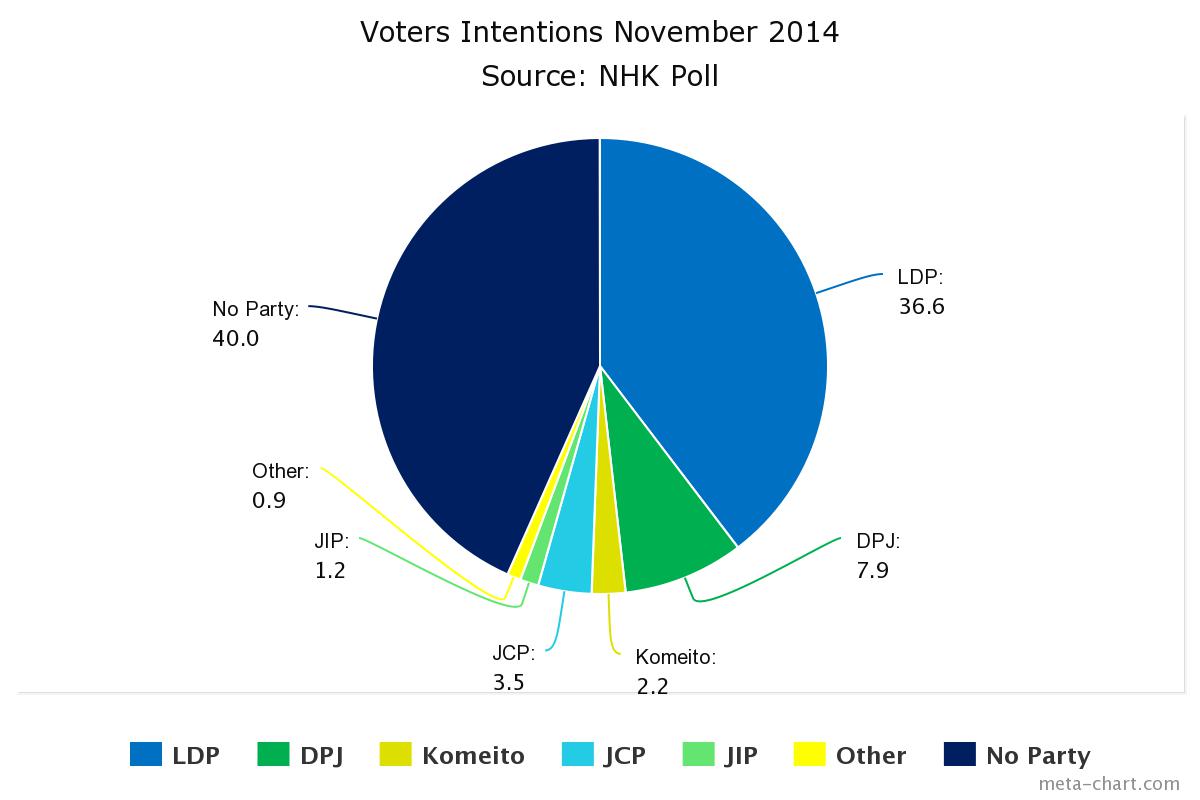
The opposition of Japan has pretty much always been weak in the post-war period, hence the name ‘one and a half party system’. The current main opposition of the LDP is the Democratic Party of Japan (DPJ) or minshuto (民主党), the party that defeated the LDP in 2009 and ruled until 2012. The fact that this victory over the LDP was so recent suggests that there is hope for a DPJ success once more. However, as of the beginning of November, polls suggest 36.6% are planning to vote for the LDP, with only 7.9% for the DPJ and 40% are undecided (source). These undecided voters are unlikely to swing the election for the DPJ and many may vote for independents or simply not vote at all. 
pieChart_jpg (1)

I made you a pie chart and everything

The issue facing the DPJ is that they do not have radically different policies to the LDP. When we talk about British politics we think of conservative and labour, and in US politics the differences between Republicans and Democrats are painfully clear, but the vast majority of people in Japan regard themselves as middle class and there just aren’t that many divisive social policies to set up a party around. There is a Communist Party of Japan (CPJ, or nihon kyosan-to 本共産党) and the Buddhist Komeito party (公明党), but both appeal to very specific minority groups and will never gain enough traction to become a majority party – Komeito often becomes a coalition party whereas the CPJ refuses to jump into bed with any other party (it is the only party that still retains ‘integrity’ in this respect). There is also the very new Japanese Innovation Party (JIP, or ishin no to 維新の党) about which there is little information other than that they are a nationalist group and probably won’t do very well. The DPJ claims to be a ‘pioneering’ party, but the reality is that most of its members are ex-LDP that became disillusioned with faction politics within the LDP itself. This taints the credibility of the DPJ as ‘different’ to the LDP in the eyes of voters – though the LDP is seen as corrupt, the DPJ is often seen as no different.

The LDP’s hegemony must have some systematic support surely? How can one party remain in power with no real challenge for 50 years? If you are asking these questions, you’re right; though the democracy was built as an ‘ideal’ by the US, they failed to grow a true democratic system. From the beginning the US sponsored the LDP and disapproved of any left leaning parties due to fear of communism spreading to Japan. This LDP headstart has been propped up by these systematic exploits:

  • ‘Pork Barrel Politics’: the countryside of Japan has more power than the cities; there are more candidates per 1000 citizens in the countryside than there are in the cities. As a result the LDP just had to maintain generous agricultural subsidies to secure the countryside vote. Each candidate would also build a personal network of voters that they would visit and dine, securing votes that those with no links to central government would struggle to get – LDP candidates already in government or linked to those that were could promise policy changes that those locked out from government are unable to do. Though there were reforms on gerrymandering, these activities are still part of the LDP election machine.
  • Election restrictions: candidates are only allowed a short spot on TV, cannot hand out leaflets outside of a standard format and cannot buy space on radio or in newspapers. Though this is all in the name of making things ‘fair’ it means that candidates that are not in government are virtually unknown to voters. It also results in some creative campaigning – at the moment if you walk around any Japanese city you will hear politicians shouting at the general public over megaphones strapped to the roof of a car. It gets very annoying after a while. They literally just drive round and round the block yelling their policies at passers-by.

  • Centralisation: most funding for local government is handed out by the central government. This means that areas that don’t vote LDP may see a cut in funding or a lack of public works projects in the area. This means that a lot of local government ends up being LDP, giving LDP candidates more exposure to the public and preventing small parties from getting a foot on the first rung of the ladder to the national assemblies.

There are other factors in LDP hegemony but these are the obvious reasons. However, I would argue that despite what looks like a guaranteed LDP victory, this may still be a ‘gamble’ for Mr Abe. This is because we can look at the LDP itself as a coalition of parties, or factions, all vying for power. The LDP is often referred to as a ‘catch all party’, perhaps this is because the LDP is a political system within itself. LDP factions often decide the Prime Minister – despite no electoral turnover, from 2006 to 2009, Japan went through a rapid succession of 3 different Prime Ministers. This can be put down to different factions within the LDP gaining the upper-hand within internal politics. Perhaps if Mr Abe’s election is not as successful as he hopes, and his reforms continue to fail to drag the Japanese economy out of recession, he could see himself ‘unelected’ by the LDP factions.

Hopefully this post makes you a little more interested in the upcoming Japanese election. The questions I am asking are: Is the LDP back in power for good or can the DPJ make a comeback? Is Mr Abe going to cling to power for the long-term or is he just another ‘stepping-stone’ PM for the LDP? And how many Japanese will vote? – that 40% undecided suggests apathy within the electorate. I eagerly await the election, partially because I’m sick of the megaphone cars.

If you stuck it out to the end of this post, congrats. This was partially born out of me attempting to decide on a dissertation – I want to focus on Japanese politics but I really can’t decide on an area and hashing out the current political background is helpful. Normal temple sight seeing programming will resume soon!

Sources / Recommended Reading:

  • Hunter, The Emergence of Modern Japan, Longman (1989)
  • Moore and Robinson, Partners for Democracy: Crafting the New Japanese State under MacArthur, Oxford (2002)
  • Neary, The State and Politics in Japan, Polity (2002)
  • Scheiner, Democracy without Competition in Japan: Opposition Failure in a One-Party Dominant State, Cambridge University Press (2006)
  • Stockwin , Governing Japan (fourth edition), Blackwell (2008)

大原 Mourning on the Mountain

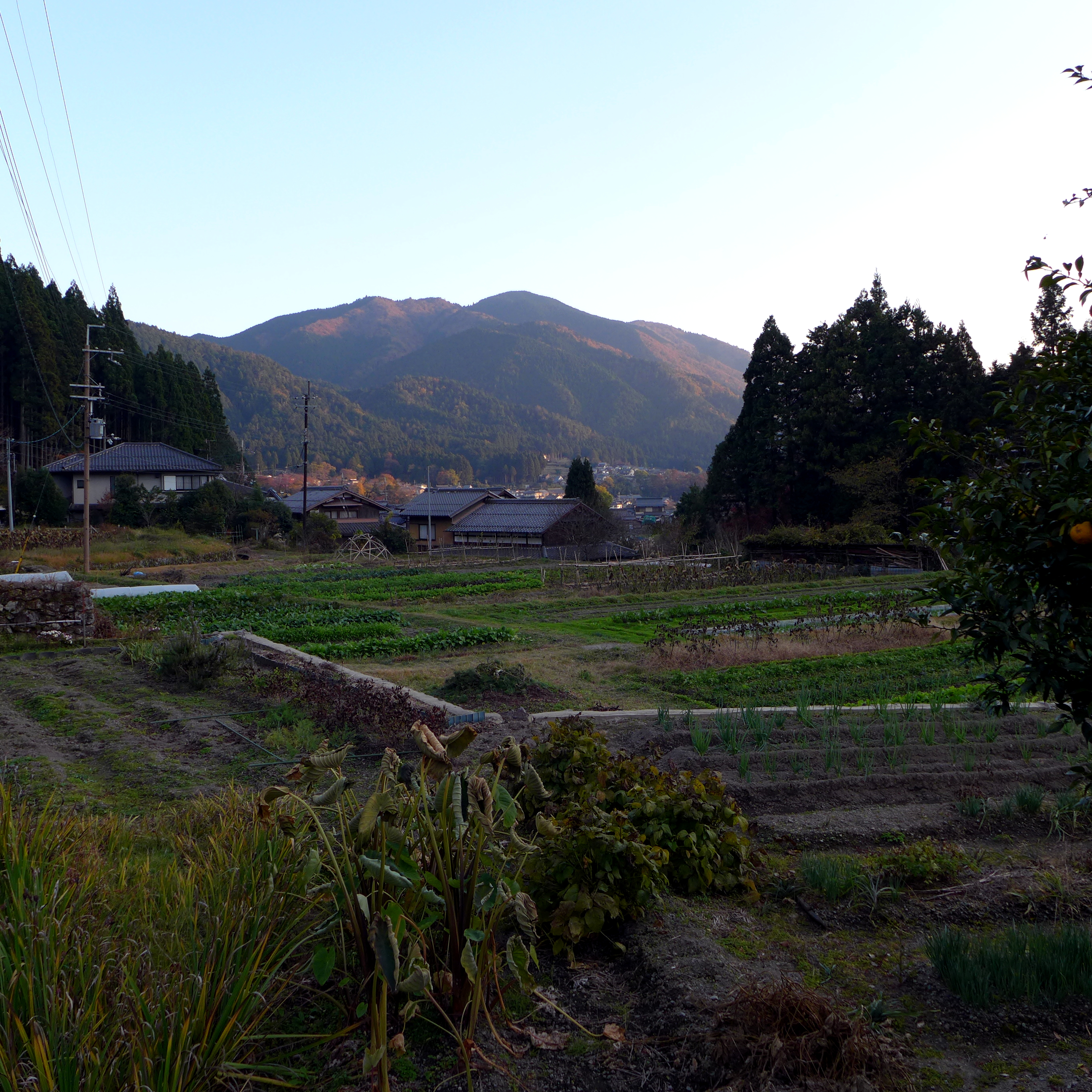
Yesterday I took a trip with my friend to Ohara (大原, a town that sounds like it should be in Ireland but is actually to the North-East of Kyoto, near Kurama). The original plan was to hike from Ohara to Kurama and get the train back but Ohara has tonnes to see (we didn’t even get to do all of it) and it gets dark really early here so we decided to stay in Ohara rather than getting lost in a dark forest.

The only way to get to Ohara via public transport is to get the Kyoto City bus (number 16 or 17) on the Ohara line. You can catch the bus from Demachiyanagi station and the fare is 430円 (£2.30) one way. The bus journey took around 50 minutes, but we did have to stop to change out the ticket machine’s money box as it was full, so maybe it normally takes around 40 minutes. Ohara is pretty popular and we had to stand on the way there.

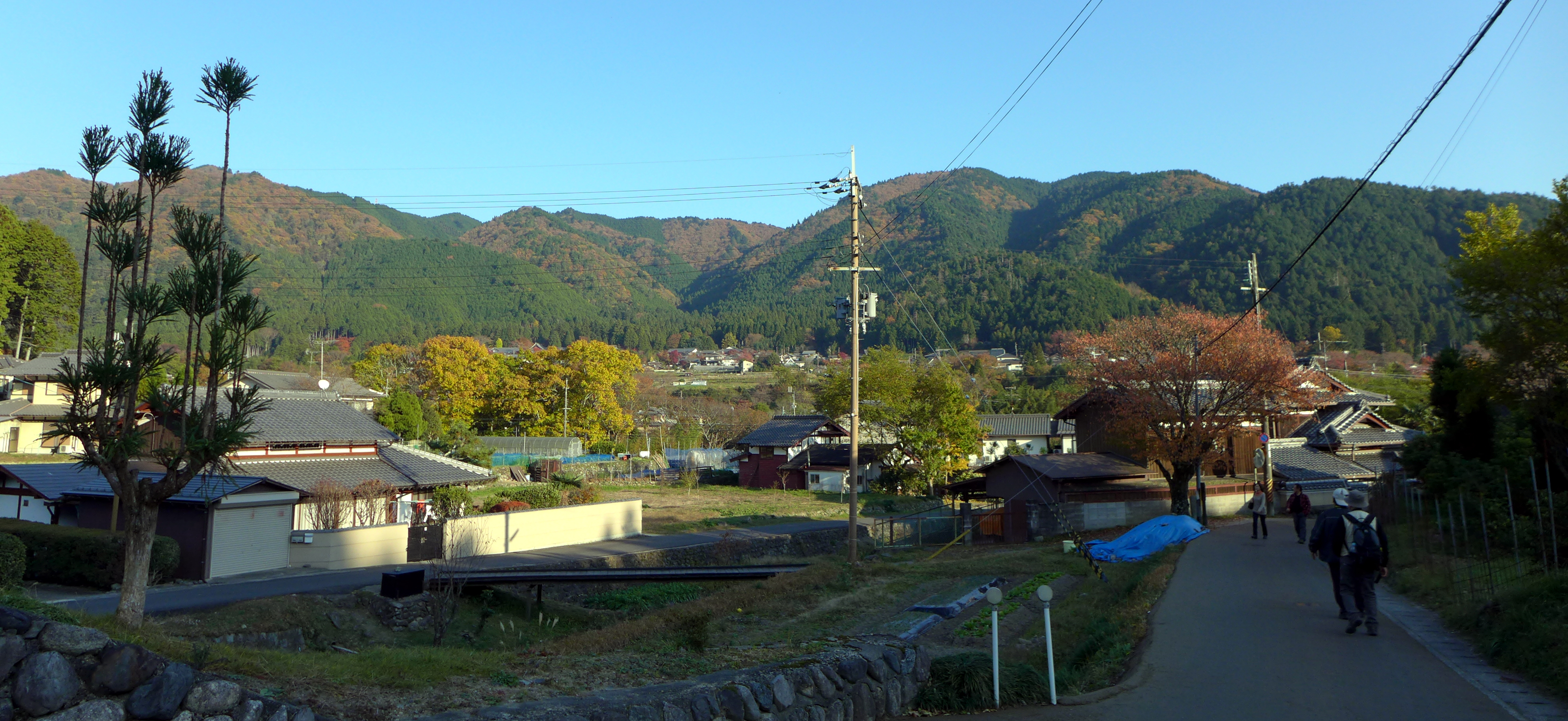
As you leave Kyoto the scenery outside is beautiful – the bus follows the course of the river through to the mountains. The village of Ohara has lots of beautiful architecture, with some traditionally thatched houses (tiles over the top of the thatch) and intricate details on the roofs.

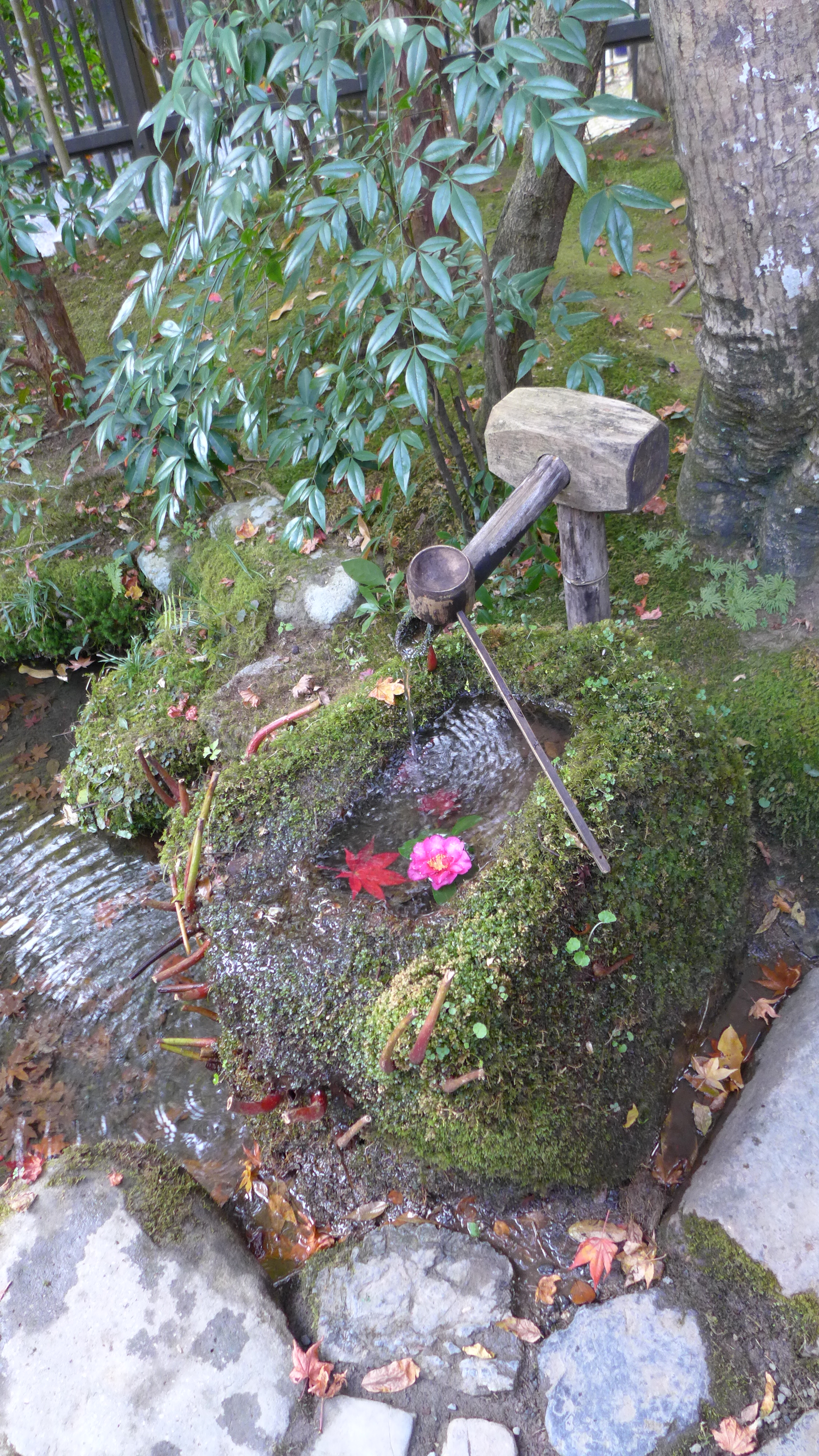
P1020338P1020327P1020343eP1020356 P1020350

There are two main temples in Ohara: Sanzen-in (三千院) and Jakko-in (寂光院), both belonging to the Tendai sect of Buddhism. We chose to visit Jakko-in (because we were originally going to walk from there to Kurama).

P1020388P1020375

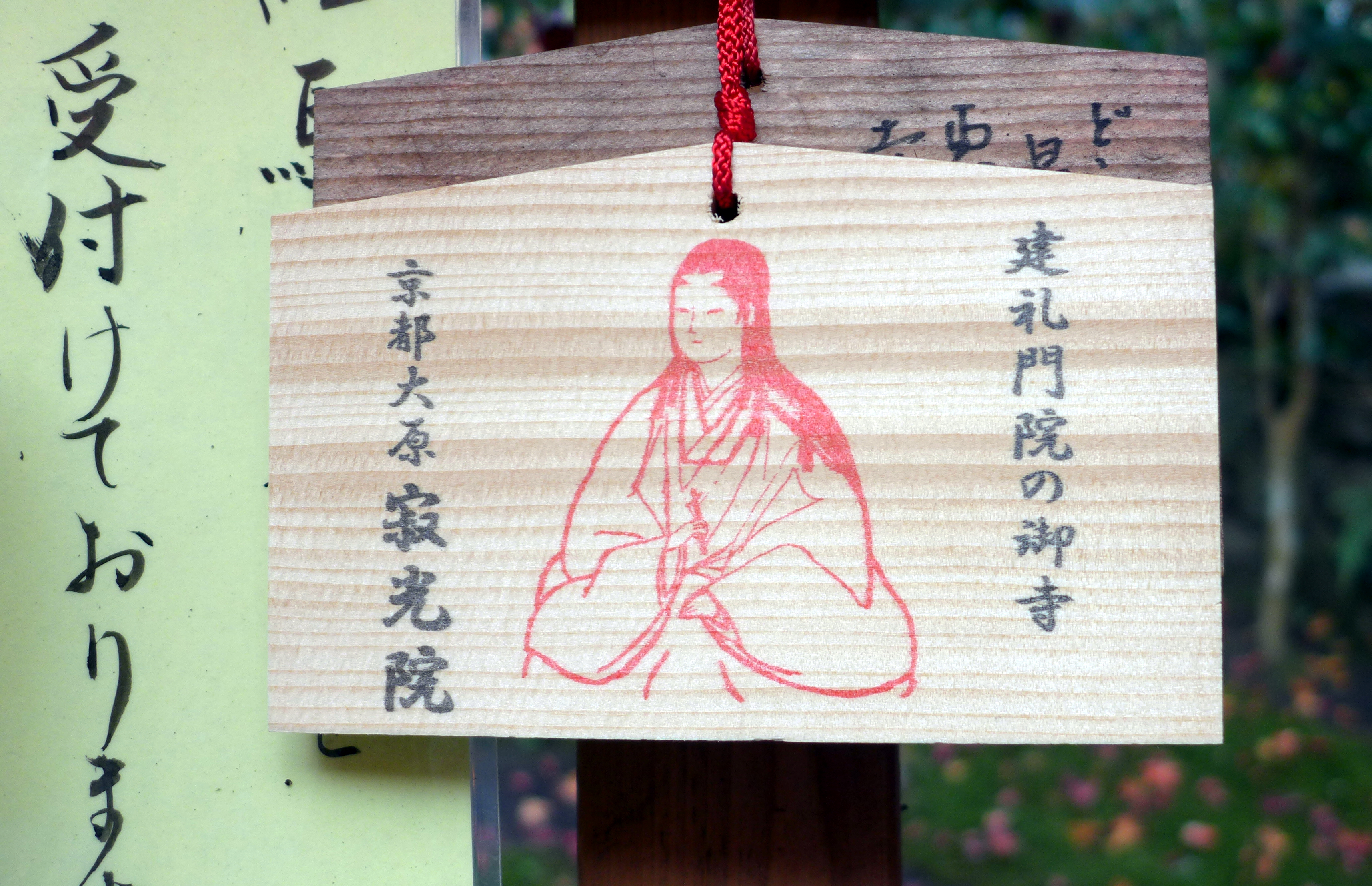
Jakko-in was founded in 594 and is famous as the temple where Kenreimon-in spent her days in solitude. Kenreimon-in was an Empress Dowager and mother of the Emperor in the 12th Century. Her story demonstrates that the imperial succession was not a simple matter of father to son but one of competing clans vying for control over the Emperor. She was the mother of Emperor Antoku, a boy Emperor, who was supported by the Taira clan. The Minamoto clan, the other rival faction vying for power over the throne, put forward an alternative candidate for the imperial succession. This led to the Genpei war (源平合戦) of 1180 – 85, which was decided by the naval battle of Dan-no-Ura.

P1020371 P1020396 P1020402

The Battle of Dan-no-Ura was a naval engagement between Minamoto and Taira forces. The Emperor and his family were on a vessel in the middle of the battle. The battle was won by the Minamoto due to the Taira general defecting and revealing the location of the imperial vessel. When the Minamoto turned their firepower on the imperial vessel many members of the imperial family threw themselves into the water rather than be captured. The grandmother of the eight-year-old Emperor Antoku, jumped into the sea with him in his arms. His mother, Kenreimmon-in, is said to have jumped into the water only to be dragged out by her hair. After witnessing the death of her son and most of her family she became a nun, living in solitude at Jakko-in. She wrote a poem while living at Jakko-in:

Did I ever dream
That I would behold the moon
Here on the mountain –
The moon that I used to view
In the sky over the palace?

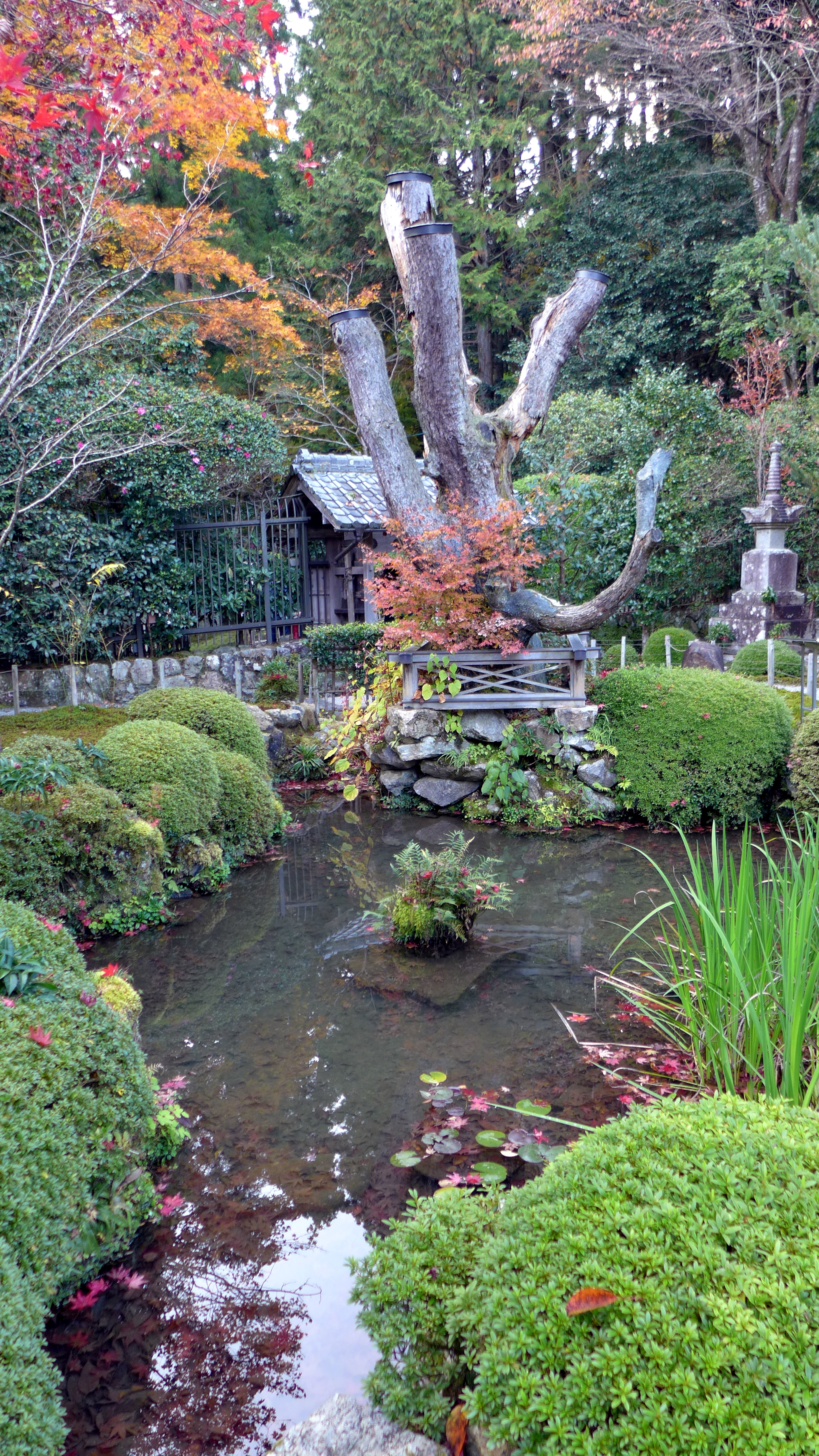
She lived at Jakko-in for 7 years, dying in 1192. She is also a character in the Japanese classic, the Tale of the Heike. In the compound of Jakko-in there is a very dead-looking tree in the corner of the courtyard. This is actually a monument to a Komatsu tree which stood at Jakko-in until it died in 2004. This is the tree at which Kenreimon-in met the retired Emperor Go Shirakawa a year after she became a nun. Sadly this tree died as a result of an arson in 2000 which burned down the main temple building and badly damaged the tree as well as an ancient Buddha statue. The dead tree that stands now represents a holy staff in memory of the thousand-year-old tree that used to stand there. The arsonist was never caught. It seems to me that the mountain has been the site of a lot of tragedy – first the solitude of Kenreimmon-in and much later the destruction of the temple by arson. The picture below is of the monument to the tree.

P1020394P1020409P1020413P1020416 P1020418 P1020419

Another historical artifact that also seems fairly mundane without any information is the metal lantern in the gardens. This was gifted to Jakko-in by none other than Toyotomi Hideoyshi, one of Japans theree ‘great unifiers’ that ended the warring states period. Toyotomi Hideoshi is the least likeable of the three unifiers, he was brutal (he crucified 26 christians) and firmly set Japan’s class system. However, it was this brutality that helped to set the structure of Tokugawa Japan’s society and bring about a peace that lasted for 250 years. His line did not succeed in ruling, it was Tokugawa Ieyasu, the man that overthrew Toyotomi’s son, that secured Japan for his bloodline. There is a story about the three unifiers that sums up their roles and personalities:

The three unifiers are trying to get a bird to sing;
Oda Nobunaga says “if it doesn’t sing, kill it.”,
Toyotomi Hideyoshi says: “if it doesn’t sing, make it sing”,
Tokugawa Ieyasu says: “if it won’t sing, wait for it to sing”.

Though this implies that Tokugawa Ieyasu was the only one that was correct in his approach, which would be grossly undervaluing the foundation of the first two unifiers’ methods, it does demonstrate their different approaches to solving the problems of warring-states Japan. I know I have only talked about Toyotomi Hideoyoshi, but I will leave the other two for another time as this is a large and important chunk of history that I would do a disservice by summarising.

P1020397 P1020421 P1020384e

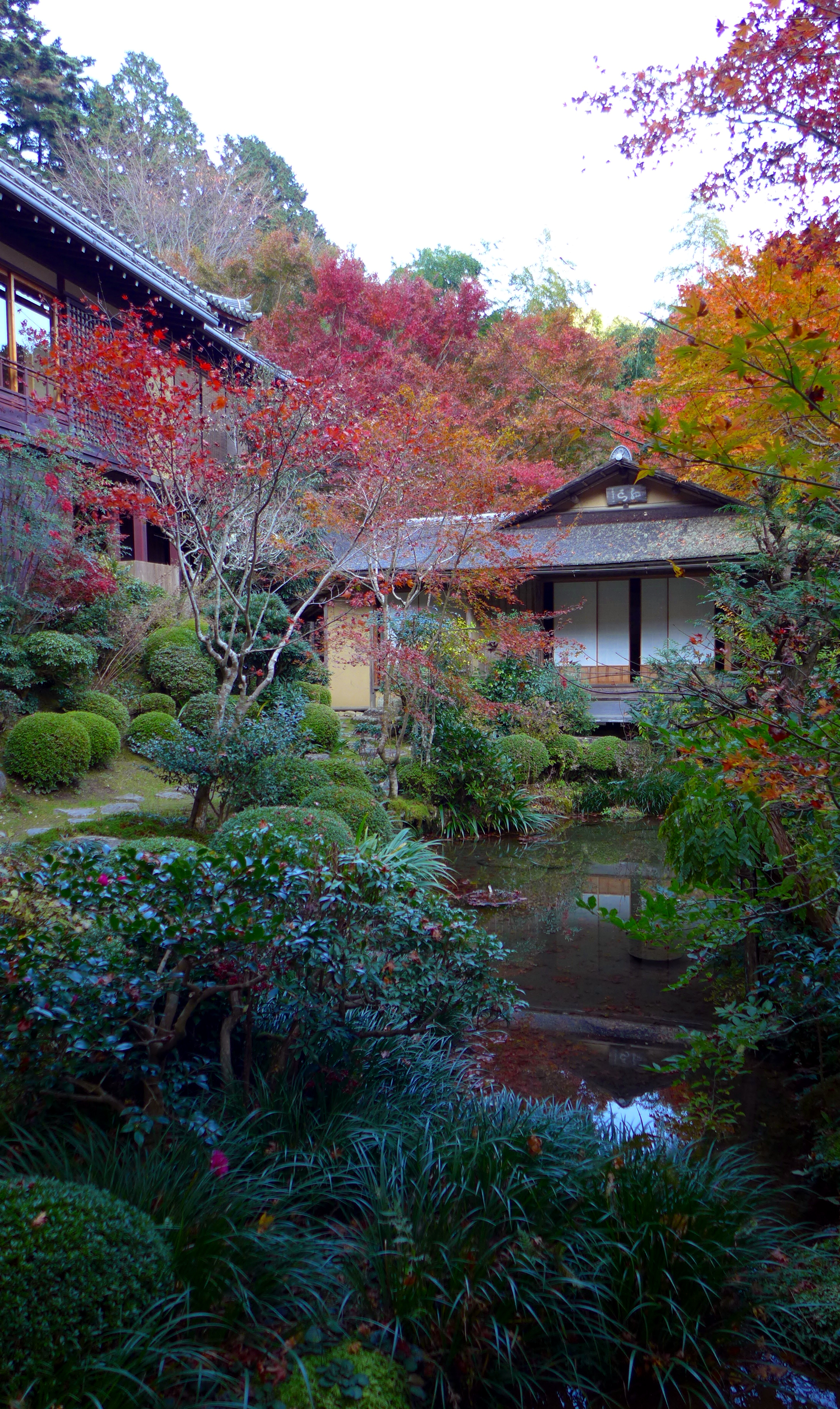
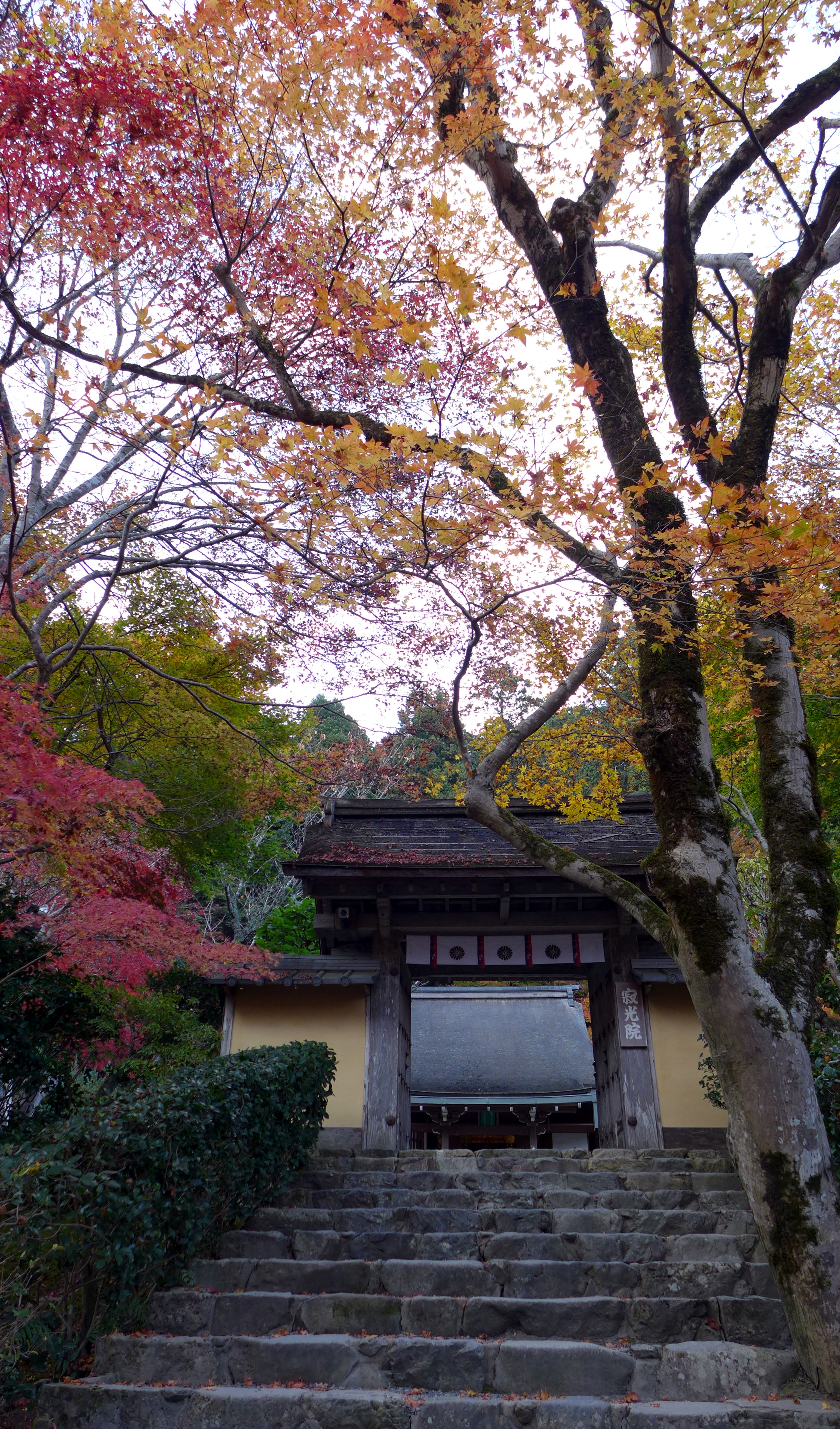
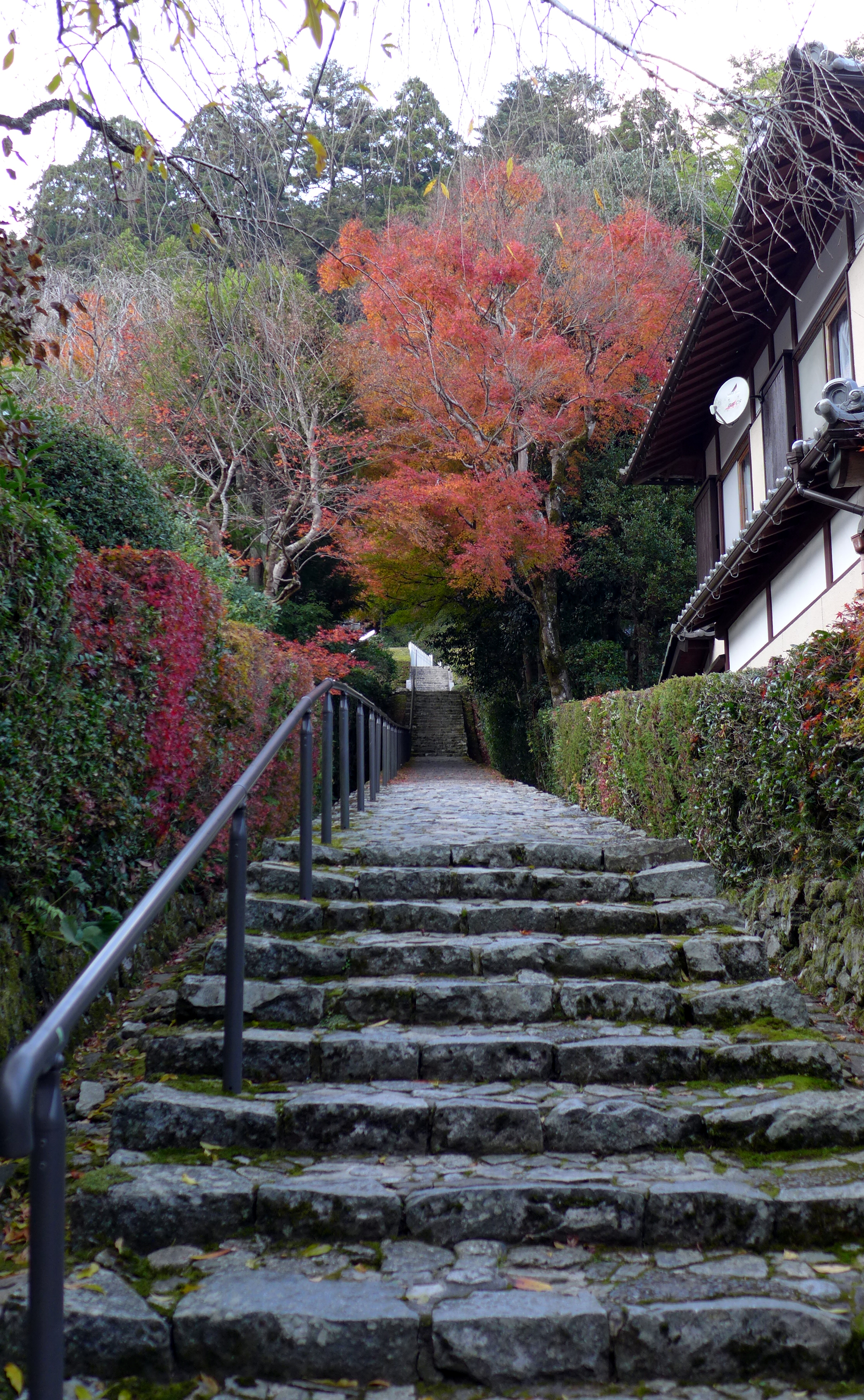
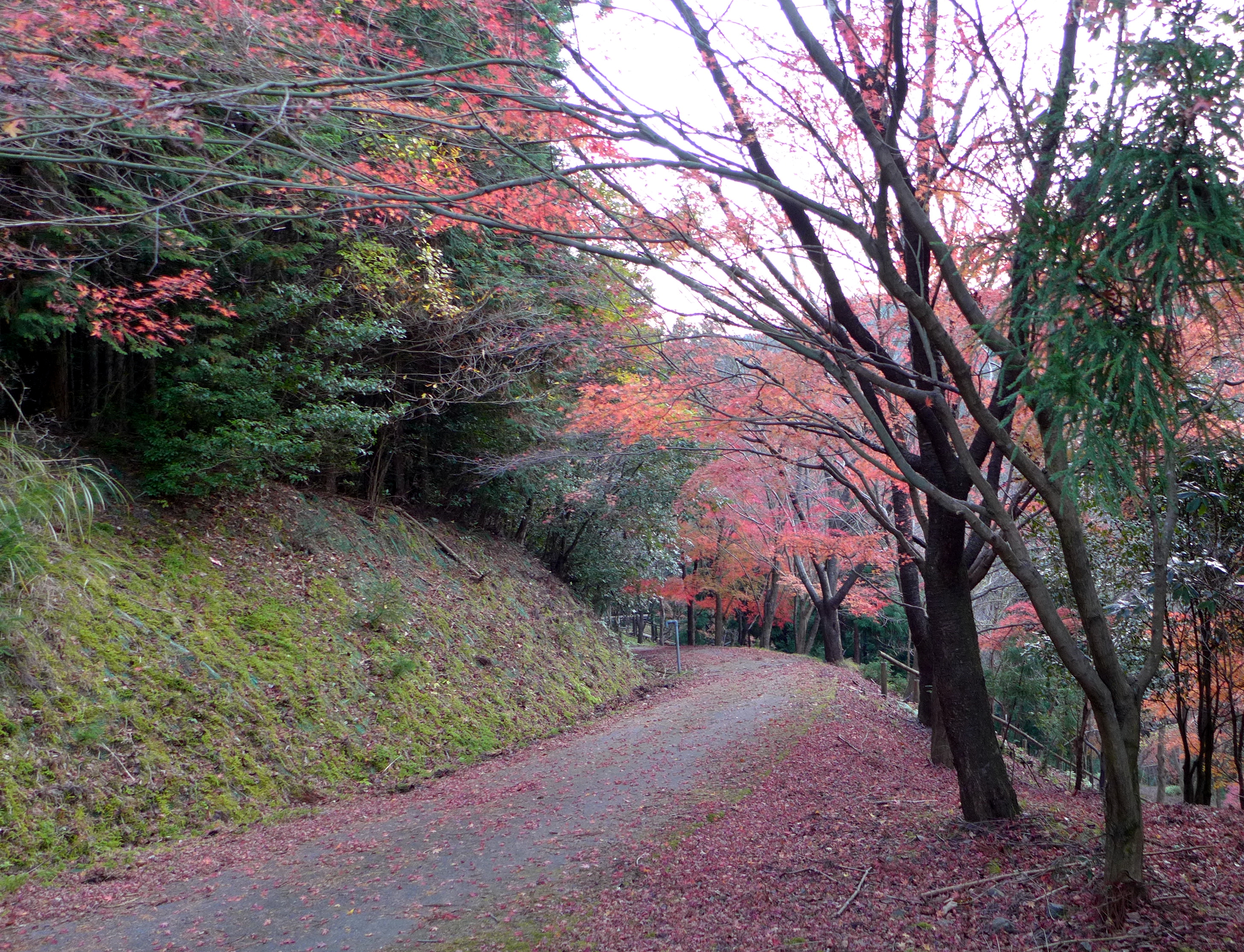
Jakko-in itself was a beautiful temple. There’s something dynamic about mountain temples – the different levels of compounds and steps made it picturesque, especially with the red maples arching over the mossy steps up to the temple. Behind the temple is a forest of beautifully straight evergreens, creating a cool, mossy path through the woods. I would definitely recommend visiting in Autumn if you get the chance. Entrance to the temple costs 600円 and book stamping costs 300円. For the stamp they actually have a ticketing system so you can drop off your book, look around the temple, and collect it (freshly stamped) on your way out.

P1020579P1020423P1020425P1020429P1020432

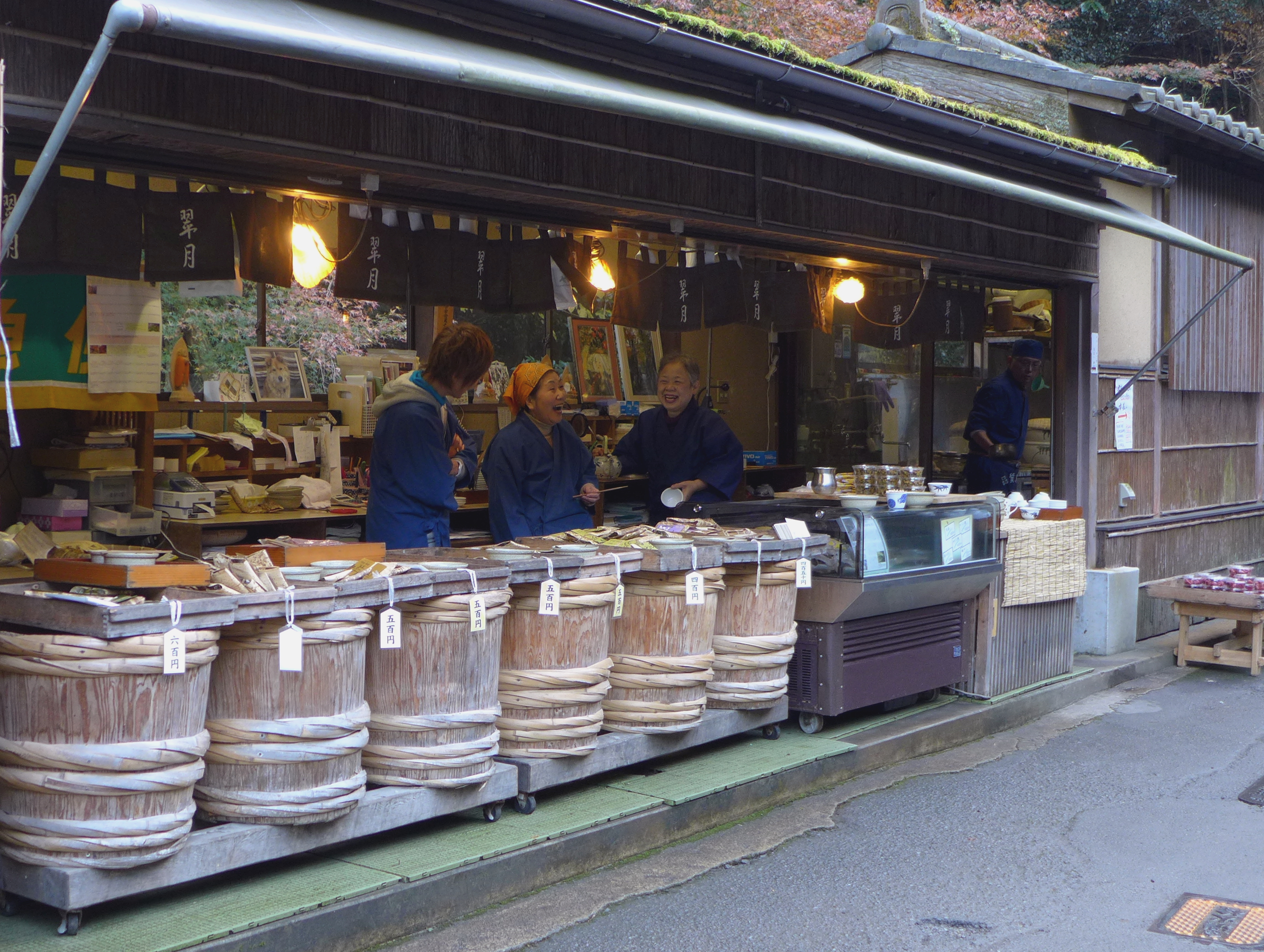
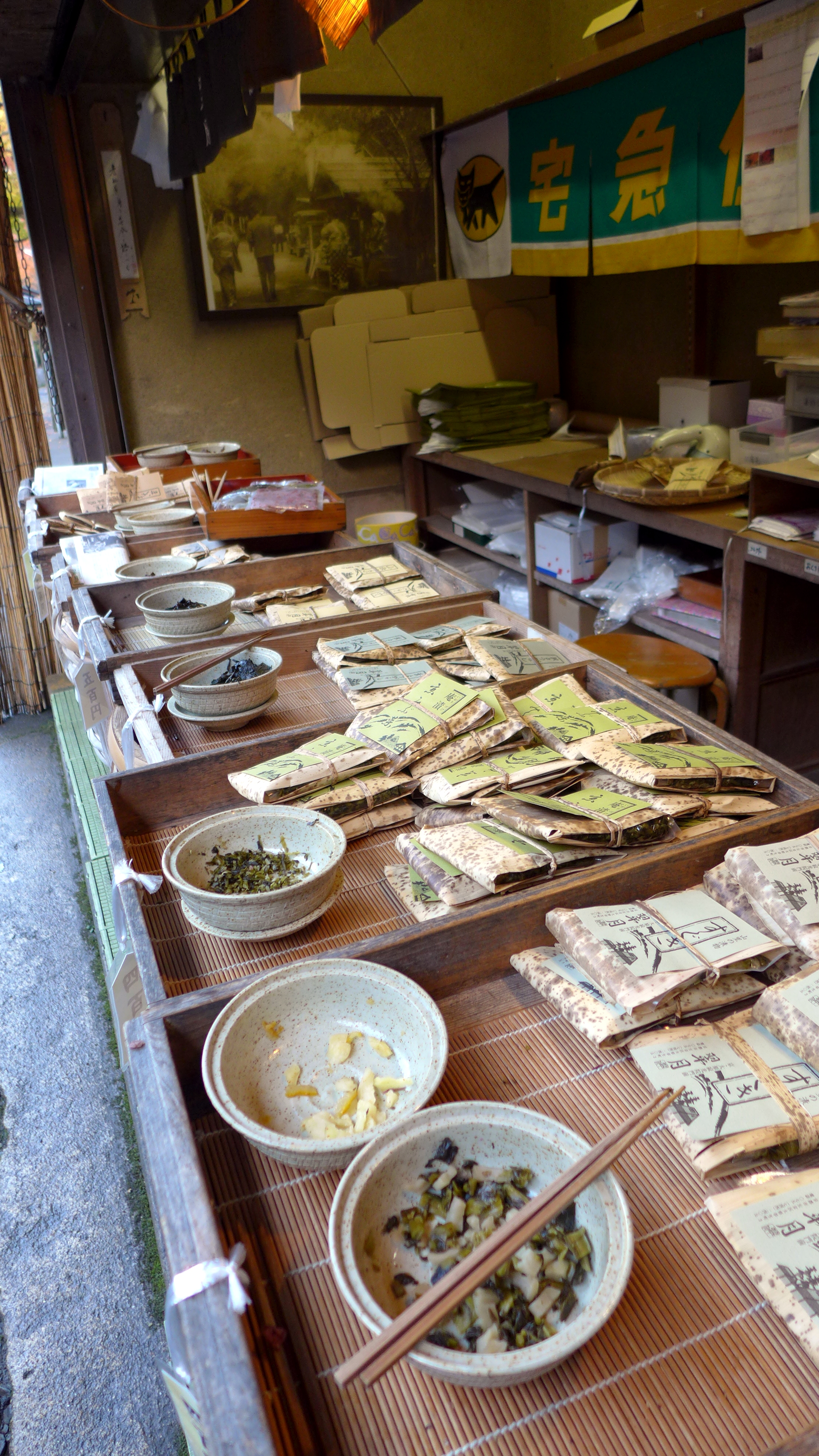
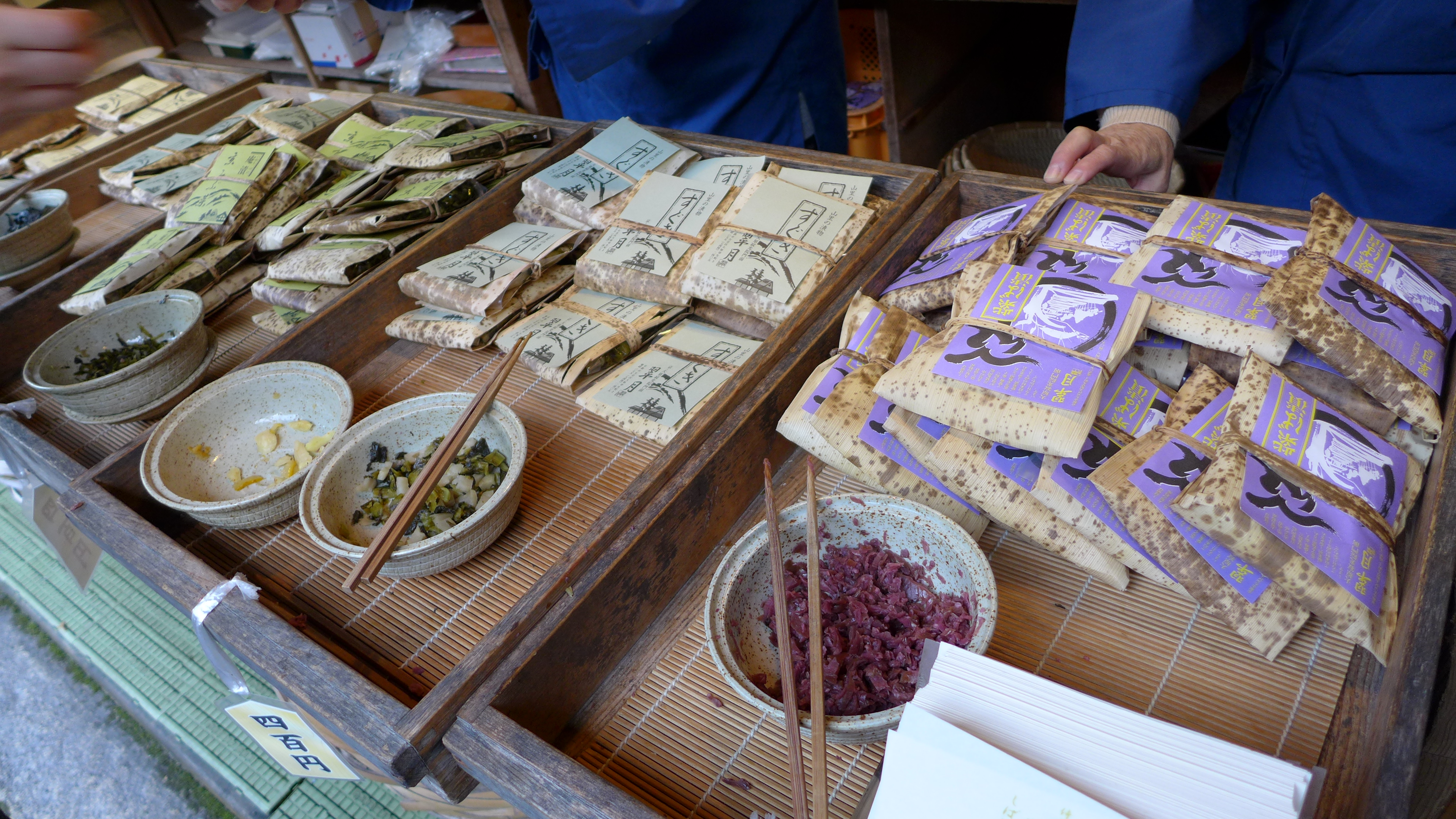
On the way up to the temple there were a number of stalls selling food and sweets; one that caught my attention was a wooden stall just outside the temple which was run by three old ladies. On the way out we went up to their stall and they chatted to us in Japanese, asking us where we were from (they told me I must speak the Queen’s English, being British). They let us try some of the food they were selling and I ended up buying some dried yuzu (a citrus fruit that tastes like a cross between a lemon and an orange) to put on my rice. They were really lovely, bringing to life the stereotype of the kind obaa-san (おばあさん – granny or old lady).

P1020369 P1020426 P1020427

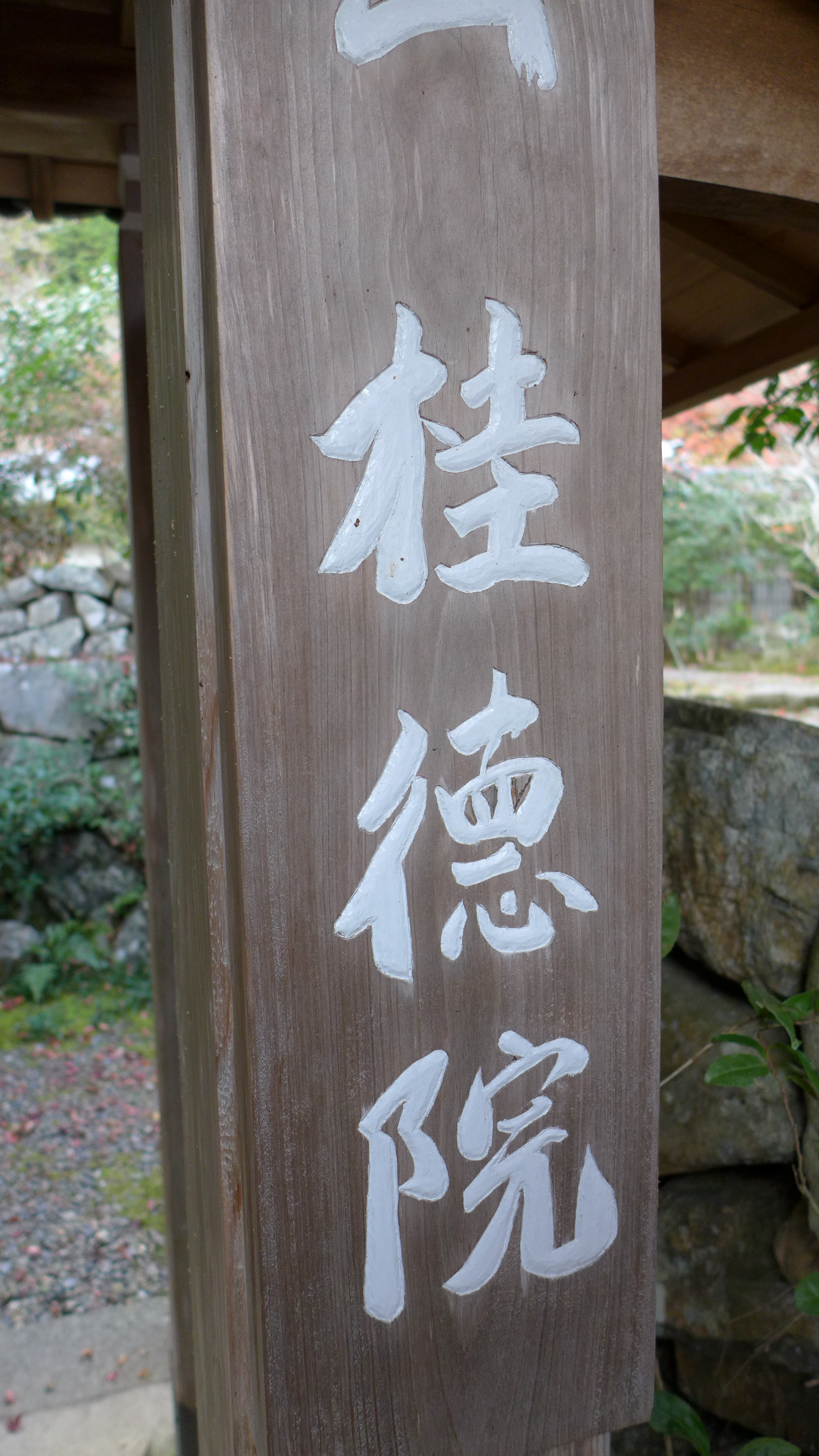
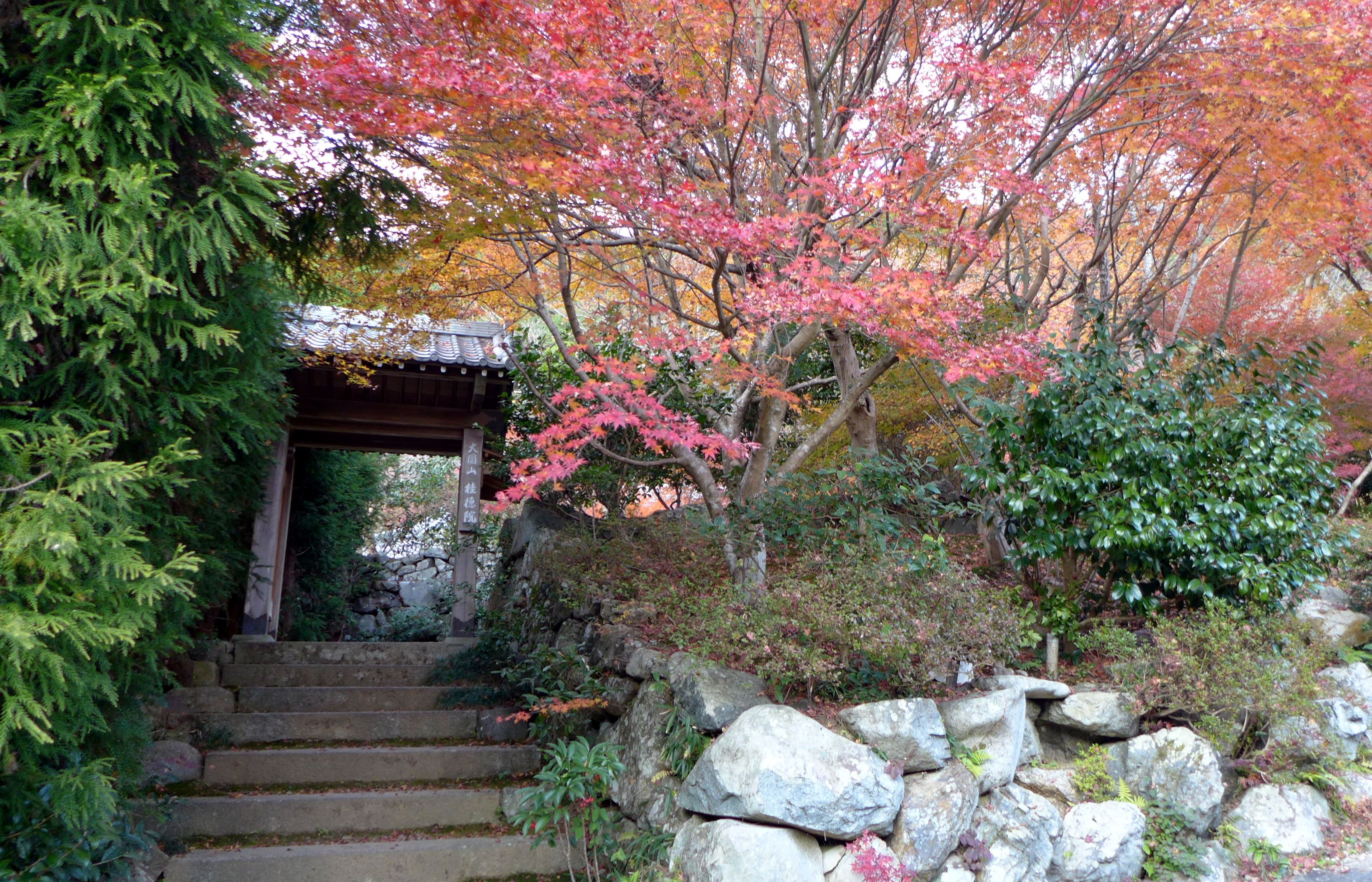
We then headed to another temple that we had seen on the map. It was actually really small and completely deserted. The autumn leaves in the small garden were beautiful and it was refreshing to go to a temple with no other visitors as Jakko-in was full of Japanese visiting to enjoy the koyo (turn of the leaves). It turns out this temple is called Keitoku-in (桂徳院) and it was founded in 1602, though it burned down and was rebuilt in 1995. Other than that there is very little information on it on the internet, and as there was no one there to tell us anything, thats all I can tell you about this temple. Its worth paying a quick visit if you go to Jakko-in though, its only five minutes walk away and its garden is pretty.

P1020455 P1020443 P1020444 P1020448

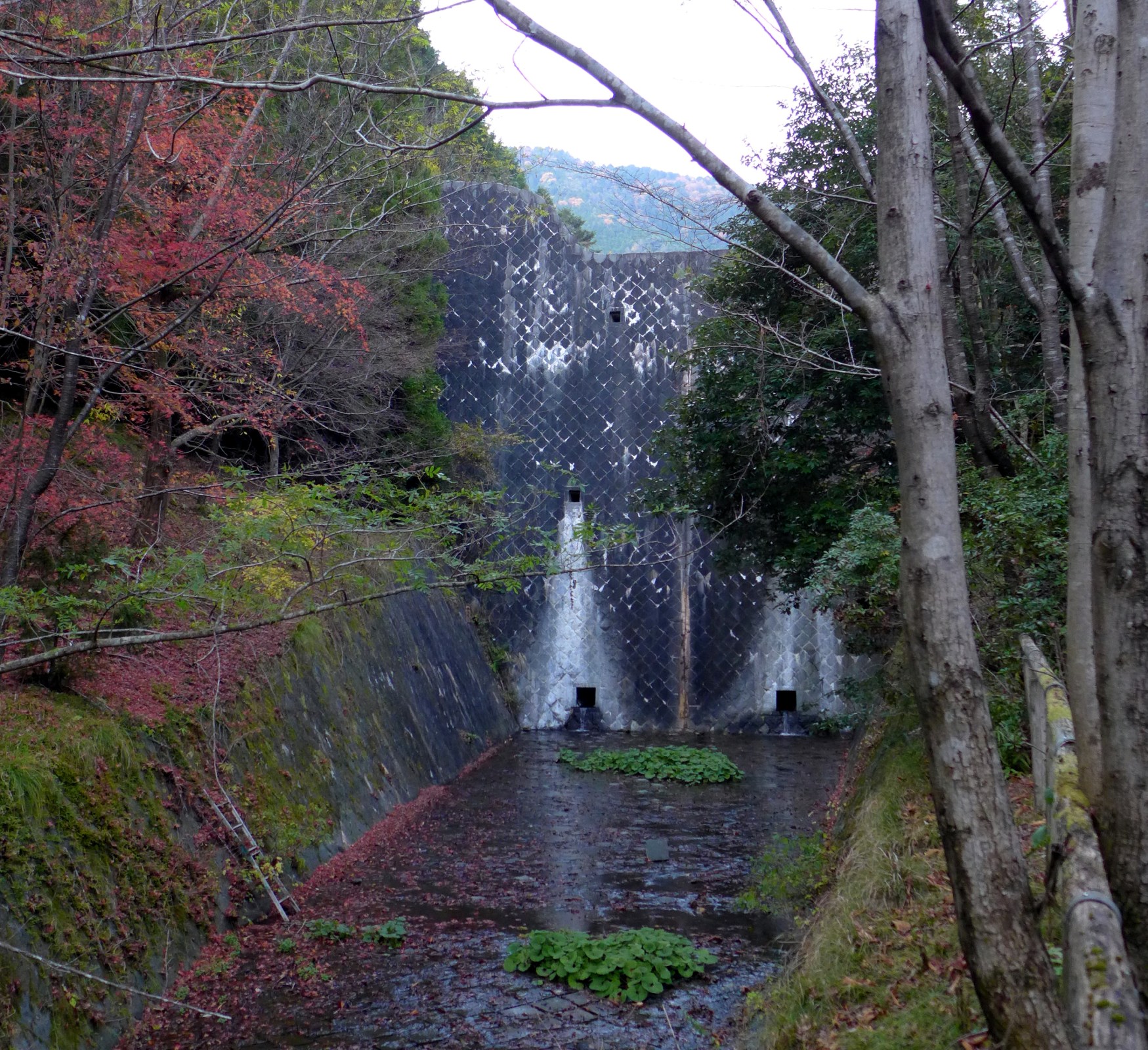
We walked from this temple up the river to check out a dam that we had seen on the town map. It turns out that we weren’t actually meant to go through the gate leading to the path to the dam; the sign in Japanese said we needed permission from Kyoto’s Forestry Agency, but I didn’t read the sign properly on the way in, only on the way back.

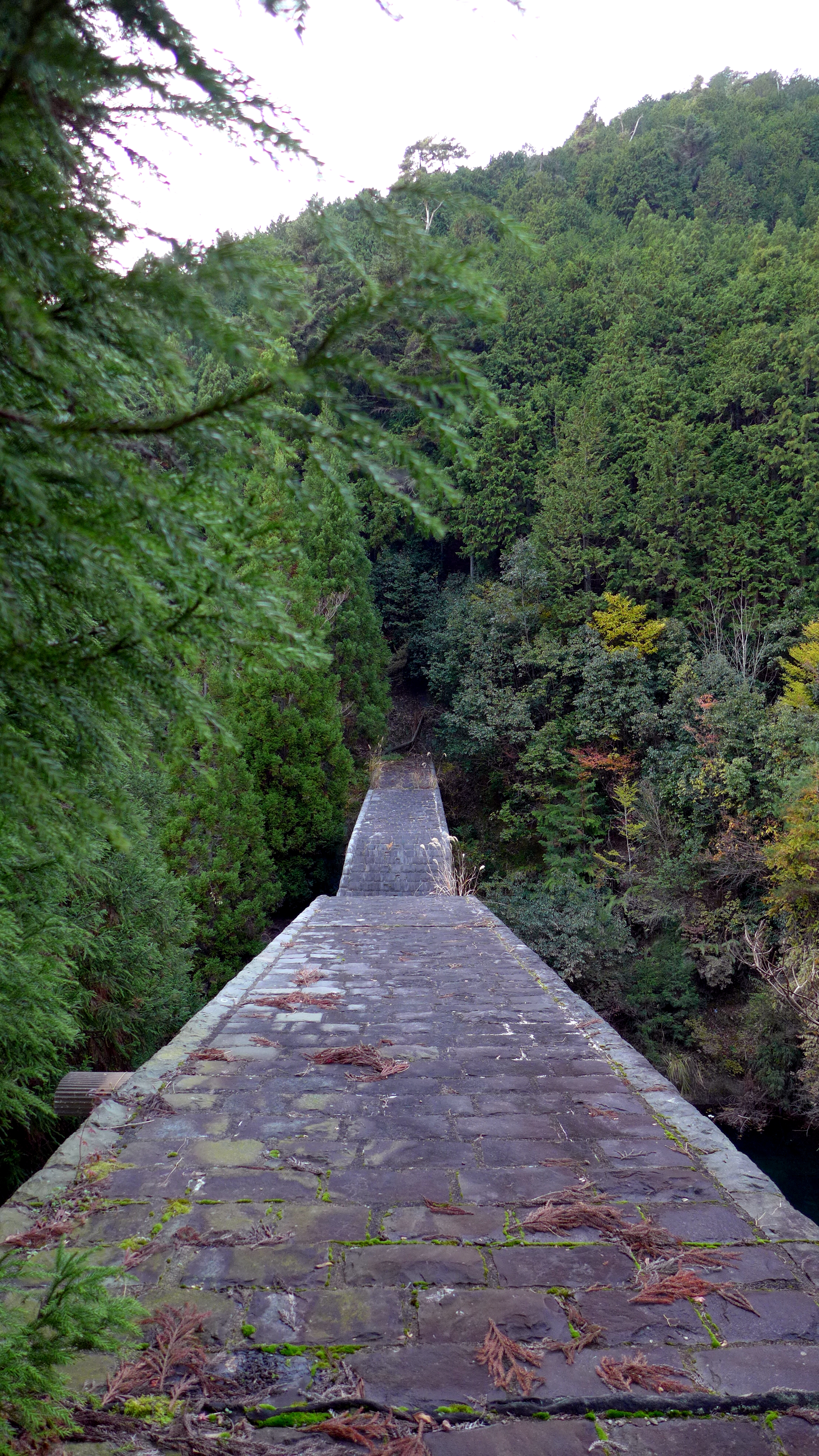
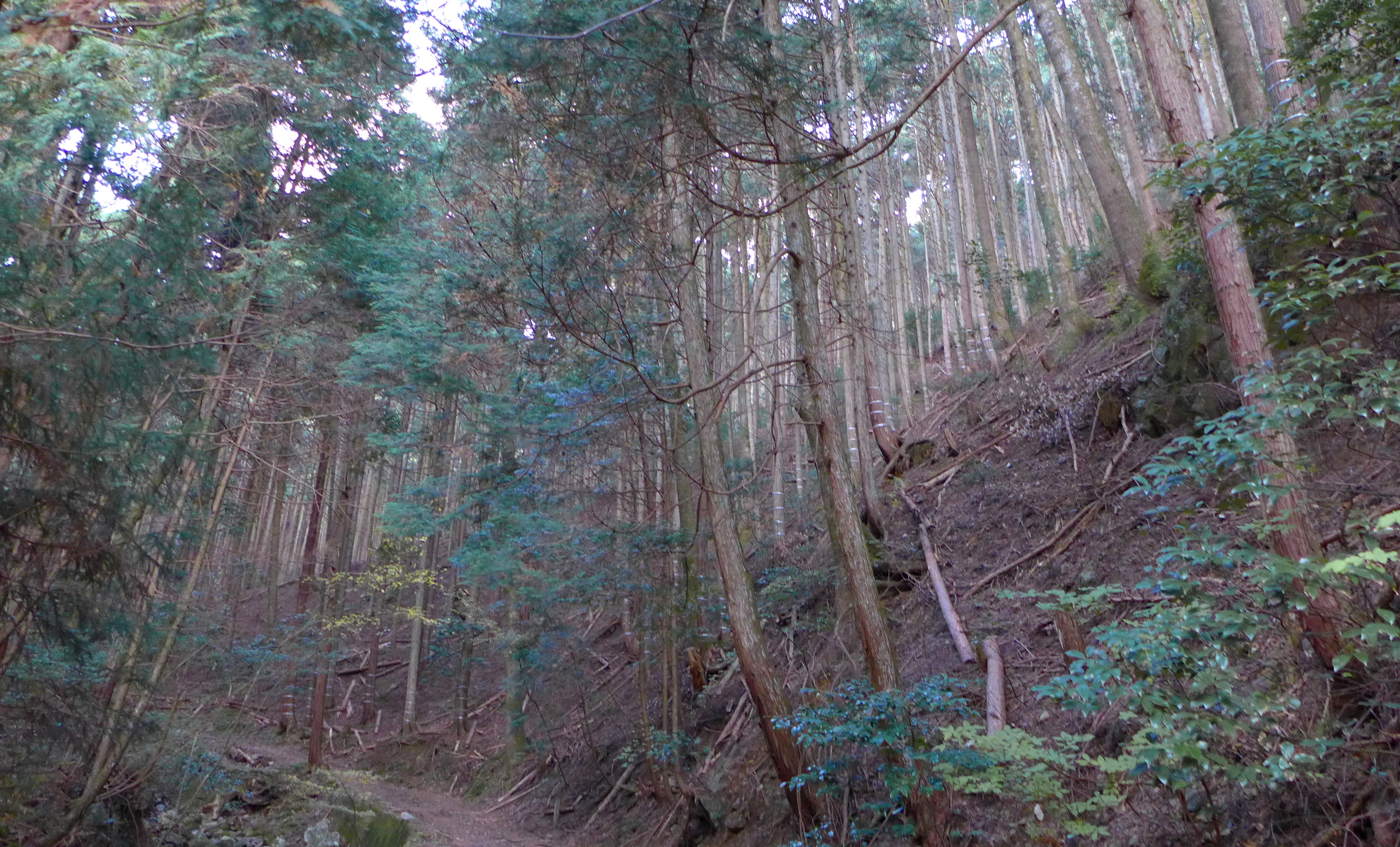
The maples near the dam were spectacular and the dam itself looked pretty old. It felt a little eerie to me, there’s something about seemingly abandoned man-made structures that don’t fit in with nature that gives me slight chills. We followed the path past the dam and had a look at the forest – it was pretty dark (much darker than the pictures make it look) and the path seemed to go on forever. As soon as we stepped into the forest the sound of water from the nearby dam was muffled -the forest was very silent with perfectly straight trunks up to the canopy of leaves. A part of me felt like this might be the start of a horror film. I was quite glad to get out of the forest, away from the dam and back towards Ohara.

P1020461P1020466P1020483P1020508P1020486 P1020490 P1020498 P1020500

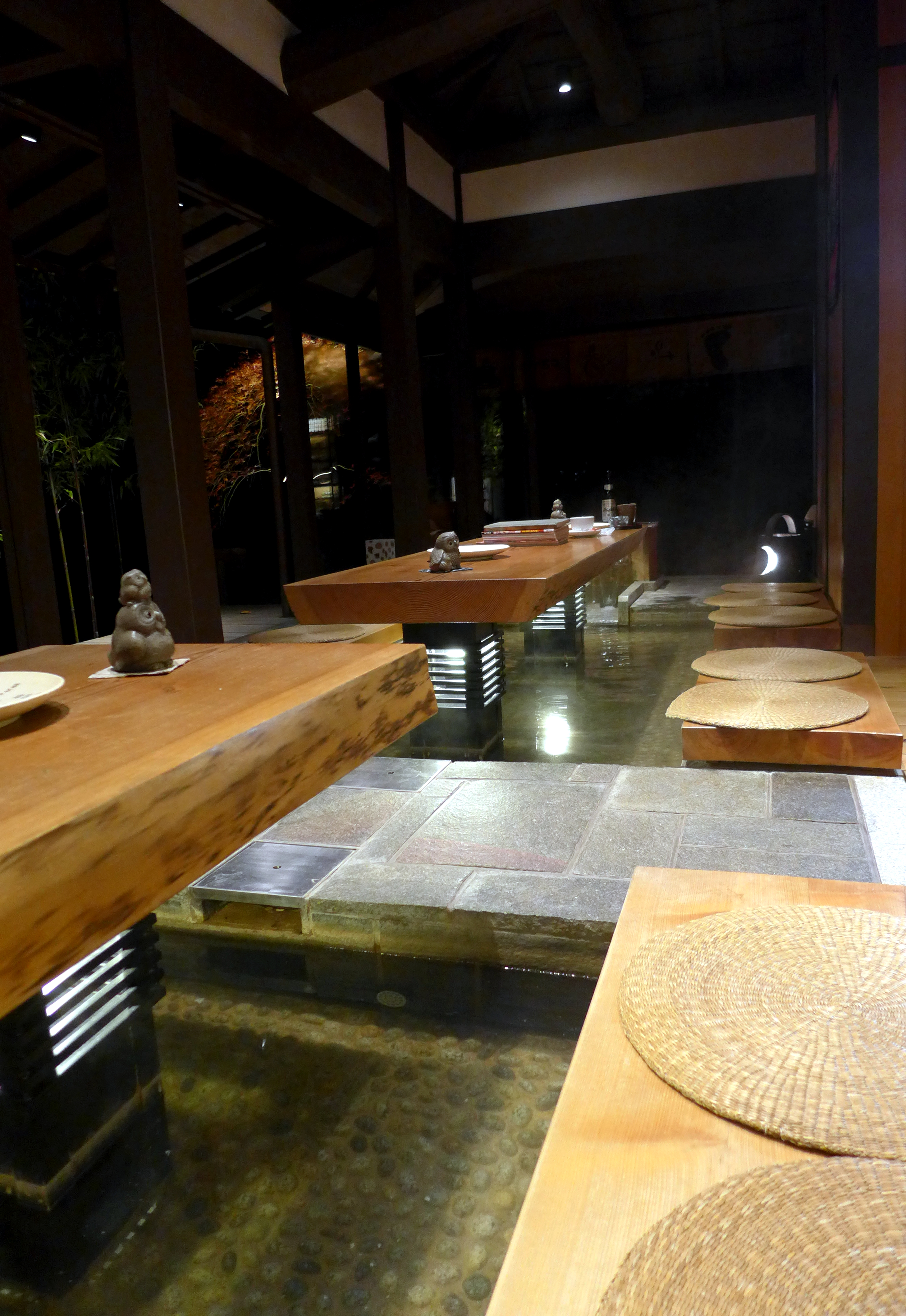
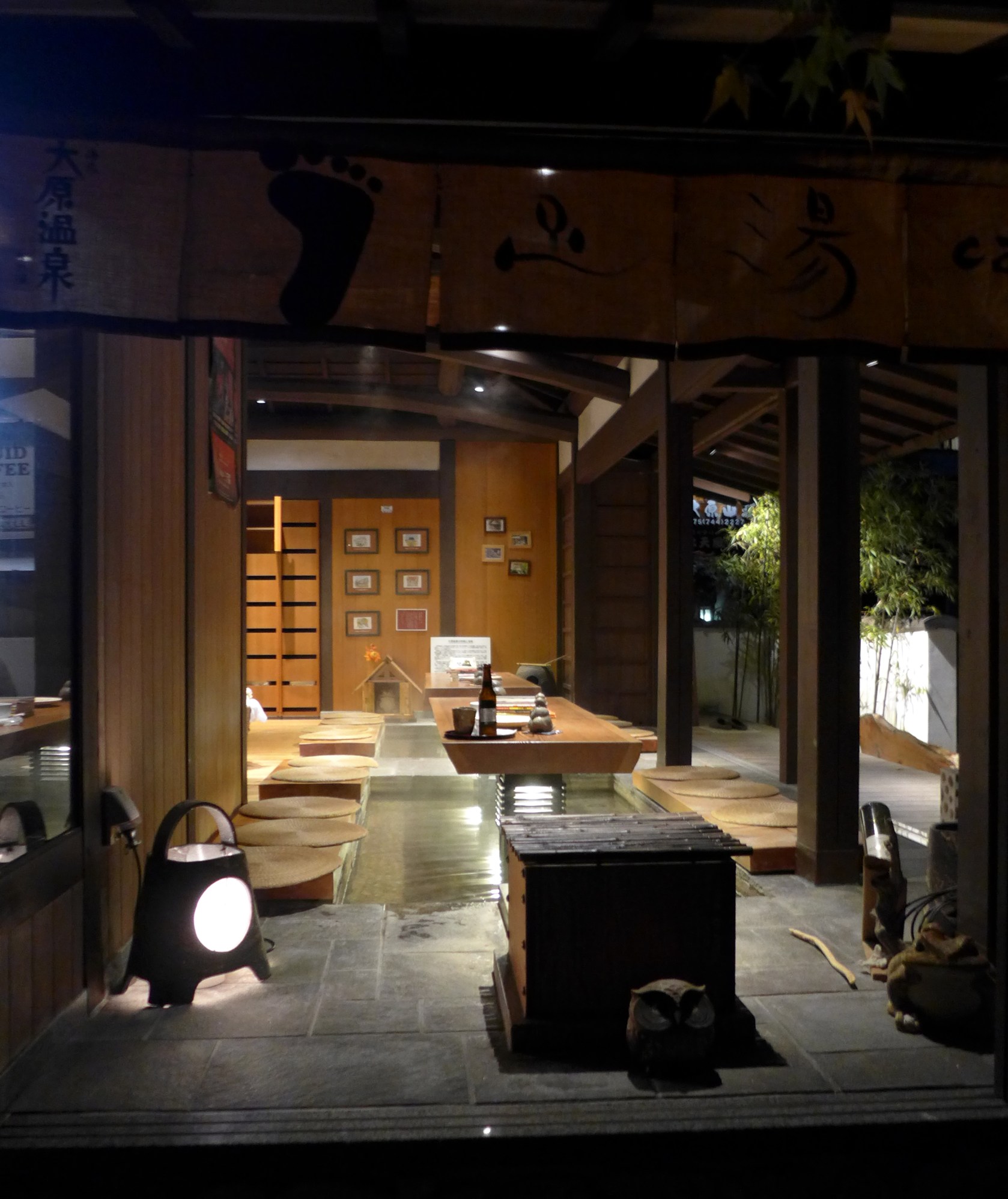
The last stop on our trip was a cafe we had spotted on the way up to the temple. This was no ordinary cafe – you sit with your feet submerged in water from the local hot spring. It was really refreshing and relaxing for our feet, especially as we had done a lot of walking.

Embarassingly, I managed to get my jeans stuck. It sounds stuipd, yes, but I had rolled up my skinny jeans over my calves to submerge my feet. Only, I had got the fabric wet, and when I tried to pull it down it wouldn’t really move. I succeeded in rolling one trouser leg down but the other one was not moving. The guy at the counter ended up coming over and helping me. So there was me sitting with this guy trying to pull down my jeans and we were all laughing. It was pretty traumatic. Eventually we succeeded and I left with at least a little of my dignity – I had had visions of getting the bus back with one trouser leg rolled up.

P1020547P1020546P1020519P1020526 P1020529 P1020548

I would definitely recommend spending at least half a day in Ohara – we left at 2 in the afternoon and I feel like we could have made a day of it and visited the other temple. I definitely intend to go back – they also have an onsen (hot spring bath) that I’d love to go to. Total price for all the activities (including the drink at the cafe) was around 2,400円 (£13), so a pretty cheap day out with loads to do.

Sorry I haven’t been posting  as frequently as I would like – I recently caught a cold and got a part time job. Hopefully when I shake off this cold I’ll be able to write more!